
Best Kitchen Runners for Hardwood Floors: Top 5 Picks
Style and Warmth: Find the Best Kitchen Runners for Hardwood Floors
In today’s world of home design, the best kitchen runners for hardwood floors seamlessly blend style with functionality, adding both warmth and color to your kitchen space. Whether you’re seeking something easy to clean or stylish to complete your decor, kitchen runners can be both practical and beautiful. It’s essential to choose wisely to get the perfect balance of durability, elegance, and foot comfort.
To give your hardwood floors the care they need while uplifting your kitchen’s aesthetic, consider these top choices in kitchen runners:
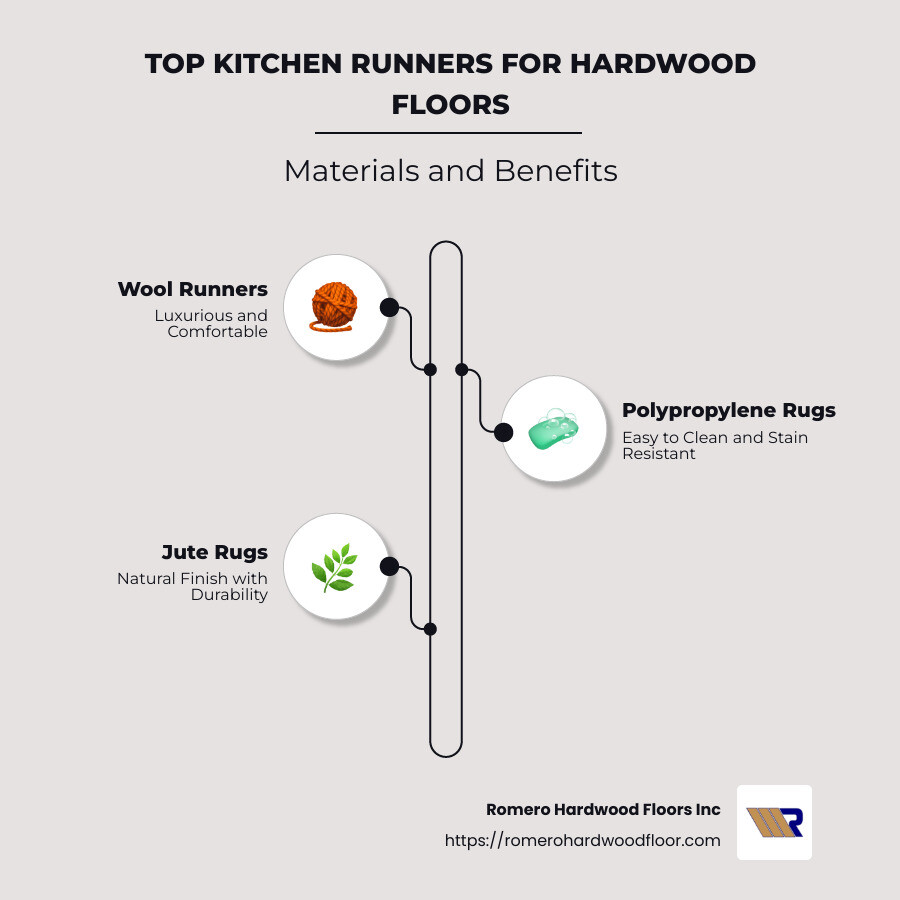
- Wool Runners: Perfect for adding luxury and comfort.
- Polypropylene Rugs: Ideal for easy cleaning and stain resistance.
- Jute Rugs: Adds a natural finish with durability.
As Francisco Romero, I have spent over 15 years enhancing homes with quality hardwood flooring at Romero Hardwood Floors Inc. in Revere, MA. My insights into the best kitchen runners for hardwood floors draw from experience in crafting beautiful yet practical spaces.
Best kitchen runners for hardwood floors vocab to learn:
– best engineered wood flooring for kitchen
– best solid hardwood flooring
– best wood floor for kitchen
Best Kitchen Runners for Hardwood Floors
When selecting the best kitchen runners for hardwood floors, durability, style, and material are key factors to consider. Each contributes to how well the runner will perform in your space, both in function and in aesthetics.
Durability
Your kitchen is a high-traffic area, so it’s crucial that your runner can withstand daily wear and tear. Consider runners made from durable materials like polypropylene. Known for its resilience, polypropylene is resistant to stains and easy to clean, making it an excellent choice for busy kitchens.
Another durable option is wool. Although it may require a bit more care, wool is naturally resistant to dirt and stains. Its durability ensures that it will maintain its beauty over time, even in high-traffic areas.
Style
Style is where you can let your personality shine. Whether you prefer bold patterns or subtle textures, there’s a kitchen runner to match your aesthetic. For instance, a vintage-style runner can add a touch of elegance and charm, while a modern geometric design can bring a contemporary flair.
Material
The material of your runner not only affects its durability but also its comfort underfoot. Here are some popular materials to consider:
- Wool: Offers warmth and a plush feel, perfect for those who spend a lot of time standing in the kitchen.
- Polypropylene: Provides an easy-to-clean surface, ideal for homes with kids or pets.
- Jute: Adds a natural, eco-friendly touch with a bit of texture.
In selecting the right material, think about your lifestyle and how much maintenance you’re willing to commit to. If easy maintenance is a priority, polypropylene may be your best bet. For a more luxurious feel, wool might be worth the extra care.
Conclusion
Choosing the right kitchen runner can improve both the look and functionality of your kitchen. By focusing on durability, style, and material, you can find the perfect runner that complements your hardwood floors beautifully. This attention to detail not only protects your floors but also lifts your kitchen’s overall ambiance.
Top Materials for Kitchen Runners
When choosing a kitchen runner, the material is a crucial factor that influences both durability and style. Let’s explore some popular materials: wool, polypropylene, and jute.
Wool
Wool is a classic choice for kitchen runners. It’s known for its natural resistance to dirt and stains, making it a durable option for high-traffic areas like the kitchen. Wool runners offer a plush feel underfoot, providing comfort for those long hours spent cooking or cleaning. Although wool requires a bit more maintenance than synthetic options, its luxurious texture and warmth make it a favorite for many homeowners.
- Pros: Warm, plush, naturally stain-resistant
- Cons: Requires more maintenance, typically more expensive

Polypropylene
For those seeking a low-maintenance option, polypropylene is a top contender. This material is water-resistant and easy to clean, perfect for environments prone to spills and stains. Polypropylene runners are also budget-friendly and come in various styles and colors, allowing you to find a design that matches your kitchen’s aesthetic. Its durability makes it a practical choice for families with children or pets.
- Pros: Water-resistant, easy to clean, affordable
- Cons: Less luxurious feel compared to natural fibers

Jute
Jute brings a natural, eco-friendly touch to your kitchen. Its earthy texture adds a rustic charm, creating a cozy and inviting atmosphere. However, jute is sensitive to moisture and not as easy to clean as synthetic materials. It’s best suited for kitchens where spills are less frequent or for those who prefer a natural, textured look over convenience.
- Pros: Eco-friendly, natural texture
- Cons: Sensitive to moisture, harder to clean

Conclusion
Selecting the right material for your kitchen runner depends on your lifestyle and aesthetic preferences. Wool offers luxury and comfort, polypropylene provides practicality and ease of care, and jute adds a natural touch with its unique texture. Each material has its strengths, so consider what matters most to you for your hardwood haven.
How to Choose the Right Size for Your Kitchen Runner
Selecting the right size for your kitchen runner is crucial for both functionality and aesthetics. Let’s break down the key considerations: measurements and space considerations.
Measurements
Before purchasing a runner, measure your kitchen space carefully. The ideal kitchen runner should fit comfortably in the designated area without obstructing doors or appliances. A typical kitchen runner ranges from 2 to 3 feet in width and 6 to 14 feet in length. Common sizes include 2’x8′, 2’x10′, and 2’x12′.
Measurement Tips:
– Width: Ensure the runner covers the high-traffic path but leaves a few inches of exposed floor on either side.
– Length: For a galley kitchen or between counters and an island, choose a runner slightly shorter than the space to avoid a cramped look. For example, if your island is 8 feet long, opt for a runner that is 7 feet or less.
Space Considerations
Consider the layout and flow of your kitchen. The runner should improve functionality without becoming a tripping hazard.
Space Tips:
– Door Clearance: Ensure there is enough clearance for doors and cabinet drawers to open without catching the runner.
– Movement Flow: Place the runner where you spend the most time standing, like in front of the sink or stove, to provide comfort underfoot.
– Visual Balance: The runner should complement the kitchen’s design, acting as a focal point or blending seamlessly with existing decor.
By taking accurate measurements and considering the kitchen’s layout, you can find the perfect size runner that improves both style and functionality in your hardwood haven.
Maintaining Your Kitchen Runner
Keeping your kitchen runner in tip-top shape is key to maintaining a clean and stylish kitchen. Here’s how you can ensure your runner remains a beautiful and functional part of your hardwood haven.
Cleaning Tips
Regular cleaning is essential to prolong the life of your kitchen runner. Here’s a simple routine to follow:
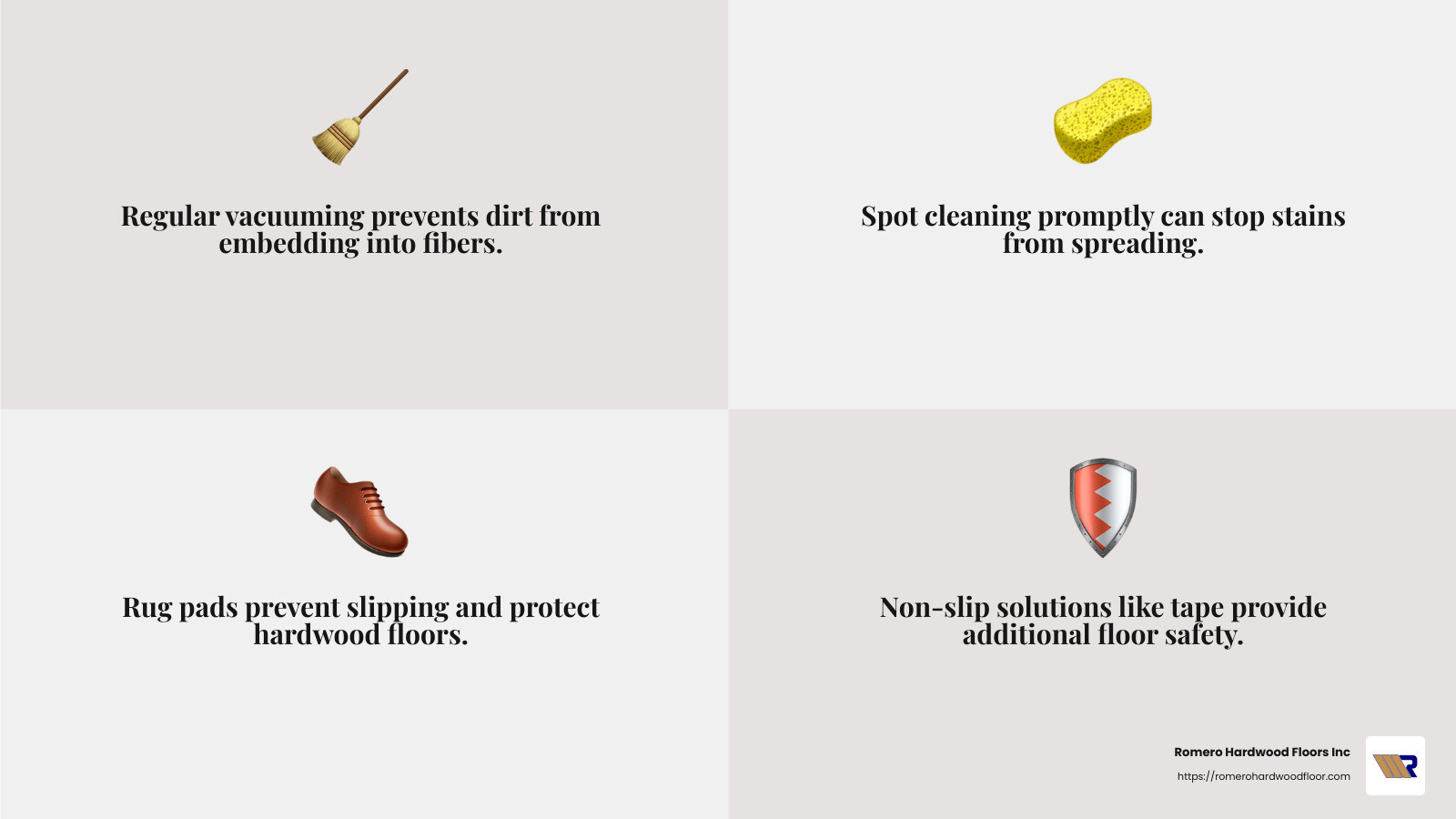
- Vacuum Regularly: To prevent dirt and crumbs from embedding into the fibers, vacuum your runner at least once a week. This is especially important in high-traffic areas.
- Spot Clean: For small spills, blot the area with a clean, damp cloth. Avoid rubbing, as this can spread the stain. Mild detergent can be used for tougher spots, but always test it on a small area first.
- Deep Clean: Depending on the material, consider a professional cleaning once or twice a year. This will help maintain the runner’s color and texture.
Rug Pads
A rug pad is a must-have accessory for your kitchen runner. It offers several benefits:
- Prevents Slipping: Rug pads keep your runner in place, reducing the risk of accidents on hardwood floors.
- Adds Cushioning: They provide extra comfort underfoot, which is especially welcome when standing for long periods.
- Protects Flooring: A rug pad acts as a barrier, preventing scratches and damage to your hardwood floors.
Non-Slip Solutions
If a rug pad isn’t enough, consider these additional non-slip solutions:
- Double-Sided Tape: Apply a few strips of double-sided rug tape to the underside of the runner. This provides a strong grip but can be removed without damaging the floor.
- Non-Slip Backing: Some runners come with a built-in non-slip backing. If yours doesn’t, you can purchase a separate non-slip spray or adhesive to apply.
By incorporating these cleaning tips and non-slip solutions, you can enjoy a safe and stylish kitchen runner that improves your hardwood floors.
Next, we’ll tackle some frequently asked questions to help you make the best choice for your kitchen runner.
Frequently Asked Questions about Kitchen Runners
Choosing the ideal kitchen runner for your hardwood floors can be a bit overwhelming. Here, we answer some common questions to help guide your decision.
What kind of runner is best in the kitchen?
When selecting a kitchen runner, consider the material and style that best suits your needs. Wool runners are a popular choice due to their durability and natural stain resistance. They offer a luxurious feel and can withstand heavy foot traffic, making them perfect for busy kitchens.
Vintage runners can add a touch of charm and character to your space. These often feature intricate patterns and rich colors, which can complement traditional or eclectic kitchen designs.
For those seeking practicality and ease of maintenance, polypropylene runners are an excellent option. This synthetic material is stain-resistant and easy to clean, making it ideal for kitchens where spills and messes are common.
How do you keep a kitchen runner from sliding?
A sliding runner is not only annoying but can also be a safety hazard. Here are some effective solutions to keep your runner firmly in place:
- Rug Pads: A rug pad is the simplest way to prevent slipping. It adds a layer of grip between the runner and the floor, ensuring it stays put.
- Double-Sided Tape: This is another effective method. Double-sided tape can be applied to the underside of the runner to secure it to the floor. It’s a great solution if you prefer not to use a rug pad.
- Non-Slip Backing: Some runners come with a built-in non-slip backing. If yours doesn’t, consider using a non-slip spray or adhesive to improve grip.
What is the best material for a kitchen runner?
The best material for a kitchen runner depends on your specific needs and preferences:
- Wool: Known for its durability and comfort, wool is a great choice for those who want a long-lasting and soft runner. It’s naturally resistant to dirt and stains, making it ideal for busy kitchens.
- Synthetic Fibers: Materials like polypropylene are perfect for those who prioritize easy maintenance. These runners are often more affordable and are designed to withstand spills and stains.
- Natural Fibers: Options like jute or sisal can add texture and a natural look to your kitchen. While they are eco-friendly, they may require more care to maintain their appearance.
By understanding the benefits of different materials and using the right non-slip solutions, you can select the perfect kitchen runner for your hardwood floors.
Next, we’ll explore how to choose the right size for your kitchen runner to ensure a perfect fit.
Conclusion
Choosing the right kitchen runner is an essential step in enhancing the beauty and functionality of your hardwood floors. At Romero Hardwood Floors Inc, we understand that your home is an investment, and selecting the perfect runner is part of preserving and enhancing that value.
Our expertise in hardwood flooring installation ensures that your floors are not only stunning but also durable and long-lasting. A well-chosen runner complements this by adding warmth, style, and protection to high-traffic areas like the kitchen.
Enhancing Property Value
Investing in quality flooring and the right accessories, like kitchen runners, can significantly boost your property’s value. Hardwood floors are a timeless choice that never goes out of style, and when paired with a beautiful runner, they create a welcoming and neat atmosphere.
Beyond aesthetics, a good kitchen runner can protect your floors from scratches, spills, and wear, extending their life and maintaining their appeal. This is where our expertise at Romero Hardwood Floors Inc shines. We guide you in selecting runners that not only match your style but also contribute to the long-term value of your floors.
Expert Flooring Solutions
Since 2006, we’ve been committed to providing expert flooring solutions to our clients across Massachusetts. Our team is dedicated to offering personalized advice and high-quality installations that meet your unique needs. Whether you’re renovating or building anew, we ensure that your hardwood floors and their accompanying runners are a perfect match for your home.
For more on how our services can improve your property, visit our hardwood flooring installation page.
By combining our expert knowledge with your vision, we help you create a stylish and functional kitchen space that you will enjoy for years to come. Thank you for choosing Romero Hardwood Floors Inc for your flooring needs.
