
Hardwood flooring installation guide: 4-Phase Ultimate
Why Professional Hardwood Installation Knowledge Matters
A hardwood flooring installation guide is your roadmap to changing a space with durable, beautiful floors. The process has four critical phases: planning and material selection, installation techniques, finishing details, and ongoing maintenance.
Quick Installation Overview:
- Acclimate flooring for 3-7 days at 65-75°F and 30-55% humidity.
- Prepare subfloor to be level within 3/16″ in 10 feet, clean, and dry.
- Plan layout, determining board direction and snapping chalk lines.
- Install first row with face nails, maintaining a 3/4″ expansion gap.
- Continue installation with a pneumatic nailer every 6-8 inches.
- Stagger joints a minimum of 6 inches between adjacent rows.
- Handle obstacles with careful cuts.
- Finish installation with face-nailed final rows and trim.
Properly installed wood floors can last for generations. It’s a testament to their durability that some wood floors in Europe are over five centuries old. However, success depends on following correct procedures. Wood is hygroscopic, meaning it expands and contracts with humidity. Poor acclimation or subfloor preparation can lead to gaps, squeaks, or buckling.
I’m Francisco Romero, owner of Romero Hardwood Floors Inc. With over 15 years of experience in the Revere, MA area, my team has delivered flawless results for residential and commercial clients since 2006, improving property value and beauty with every project.
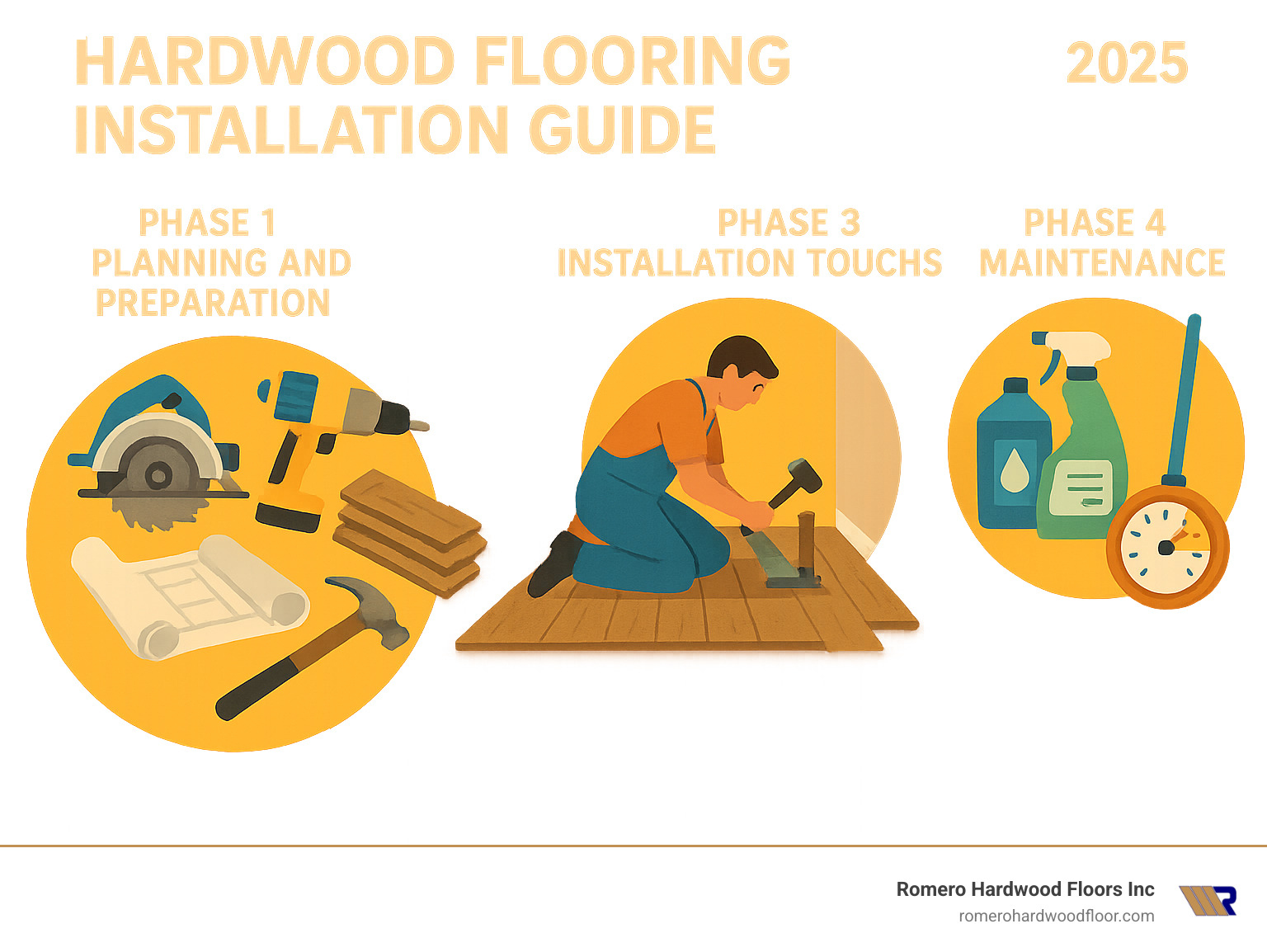
Hardwood flooring installation guide basics:
Phase 1: Planning, Materials, and Preparation
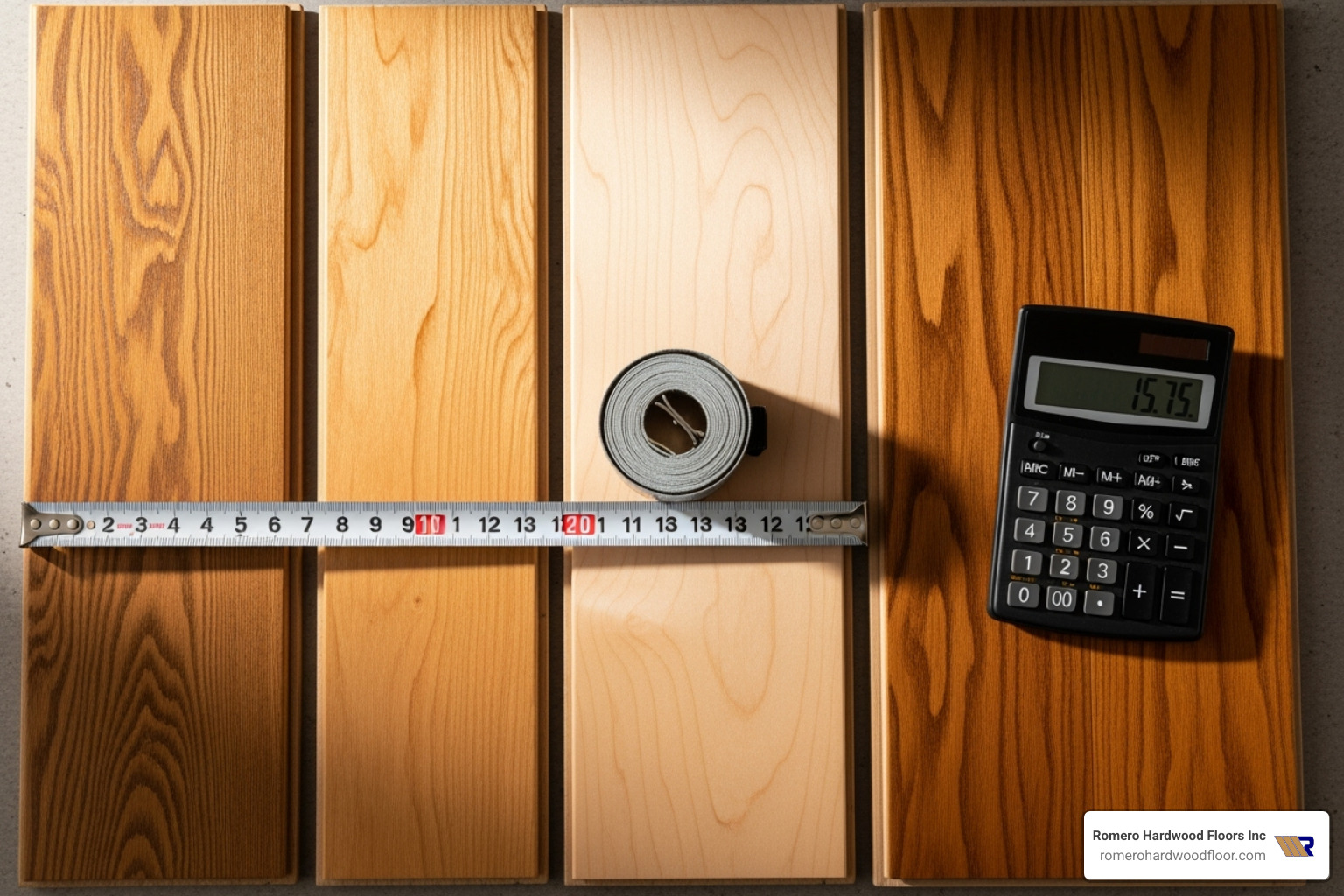
Success in any hardwood flooring installation guide begins with careful planning. This phase covers choosing the right wood, gathering tools, and preparing your subfloor for a lasting, beautiful result.
Choosing Your Hardwood Flooring
The first decision is between solid hardwood and engineered hardwood. Solid hardwood is a single piece of wood, typically 3/4-inch thick, that can be sanded and refinished multiple times. It expands and contracts significantly with humidity changes.
Engineered hardwood has a real hardwood veneer over a core of plywood or high-density fiberboard. This construction makes it more stable and resistant to moisture, making it suitable for basements or areas where solid wood might warp.
| Feature | Solid Hardwood | Engineered Hardwood |
|---|---|---|
| Construction | Single piece of wood | Multiple layers (plywood/HDF core + hardwood veneer) |
| Thickness | Typically 3/4″ | Varies, often 3/8″ to 5/8″ |
| Durability | Very durable, can be refinished multiple times | Durable, more stable, can be refinished (fewer times) |
| Moisture Resist. | Less resistant to moisture, prone to expansion/contraction | More moisture-resistant, greater dimensional stability |
| Installation | Nail-down (mostly); not for below-grade | Glue-down, click-lock (floating), staple-down; on/below grade |
| Cost | Generally higher upfront | Can be more budget-friendly |
| Lifespan | Generations (sanded/refinished multiple times) | Decades (less refinishing capacity) |
Common wood species include:
- Oak: A classic choice with a prominent grain and excellent durability.
- Maple: Offers a subtle grain and is one of the hardest domestic woods, great for busy homes.
- Cherry: Known for its fine grain and rich color that deepens over time.
- Hickory: One of the hardest domestic woods, ideal for high-traffic areas.
The wood cut (plain-sawn, quarter-sawn, rift-sawn) affects the grain pattern and stability. You can also choose between pre-finished flooring, which is ready to install, and unfinished flooring, which is sanded and finished on-site for a custom look.
Learn about the best hardwood flooring options.
Essential Tools and Materials
Having the right tools makes the project easier and ensures better results. You’ll need hand tools like a tape measure, chalk line, pry bar, tapping block, pull bar, and spacers for the expansion gap.
Power tools are essential for efficiency. A table saw or circular saw is needed for straight cuts, while a jigsaw handles intricate cuts around vents or pipes. The most important tool is the pneumatic flooring nailer, which requires an air compressor.
Safety gear is non-negotiable. Always use knee pads, safety glasses, ear protection, and a dust mask. Work gloves and sturdy, closed-toe shoes are also recommended.
Your materials list includes the hardwood flooring, an appropriate underlayment or vapor barrier, the correct fasteners, matching wood putty, and baseboards and trim for a finished look.
Calculating and Acclimating Your Flooring
To calculate your needs, measure the room’s length and width to get the square footage. For complex rooms, divide them into rectangles and add the areas together.
Always order 5-10% extra flooring to account for cuts, mistakes, and defective boards. For diagonal installations, increase this to 10-15% due to more cutting waste.
Acclimation is a critical step in any hardwood flooring installation guide. Wood is hygroscopic and must adjust to your home’s environment to prevent future gapping or buckling. Let the flooring acclimate in the installation room for 3-7 days. Maintain a temperature between 65-75°F and humidity between 30-55%. Open the boxes and stack the boards to allow air circulation. A moisture meter should be used to confirm the flooring’s moisture content is within 2-4% of the subfloor’s before you begin.
Preparing the Subfloor for Installation
A solid subfloor is the foundation of a great hardwood floor. Start by removing existing flooring and baseboards. Be cautious of lead paint (pre-1978 homes) or asbestos (pre-1986 homes).
For wood subfloors (plywood or OSB), ensure they are securely fastened to the joists to prevent squeaks. For concrete subfloors, ensure they are fully cured (at least 30 days) and dry. A moisture test is necessary, and a vapor retarder may be required if moisture levels are high.
Leveling is mandatory. The subfloor must be flat to within 3/16 inch over 10 feet. Sand down high spots and use a leveling compound for low spots.
Finally, clean the subfloor thoroughly. Sweep and vacuum all dirt and debris to ensure a smooth, problem-free installation.
More on installing hardwood over concrete.
Phase 2: The Ultimate Hardwood Flooring Installation Guide
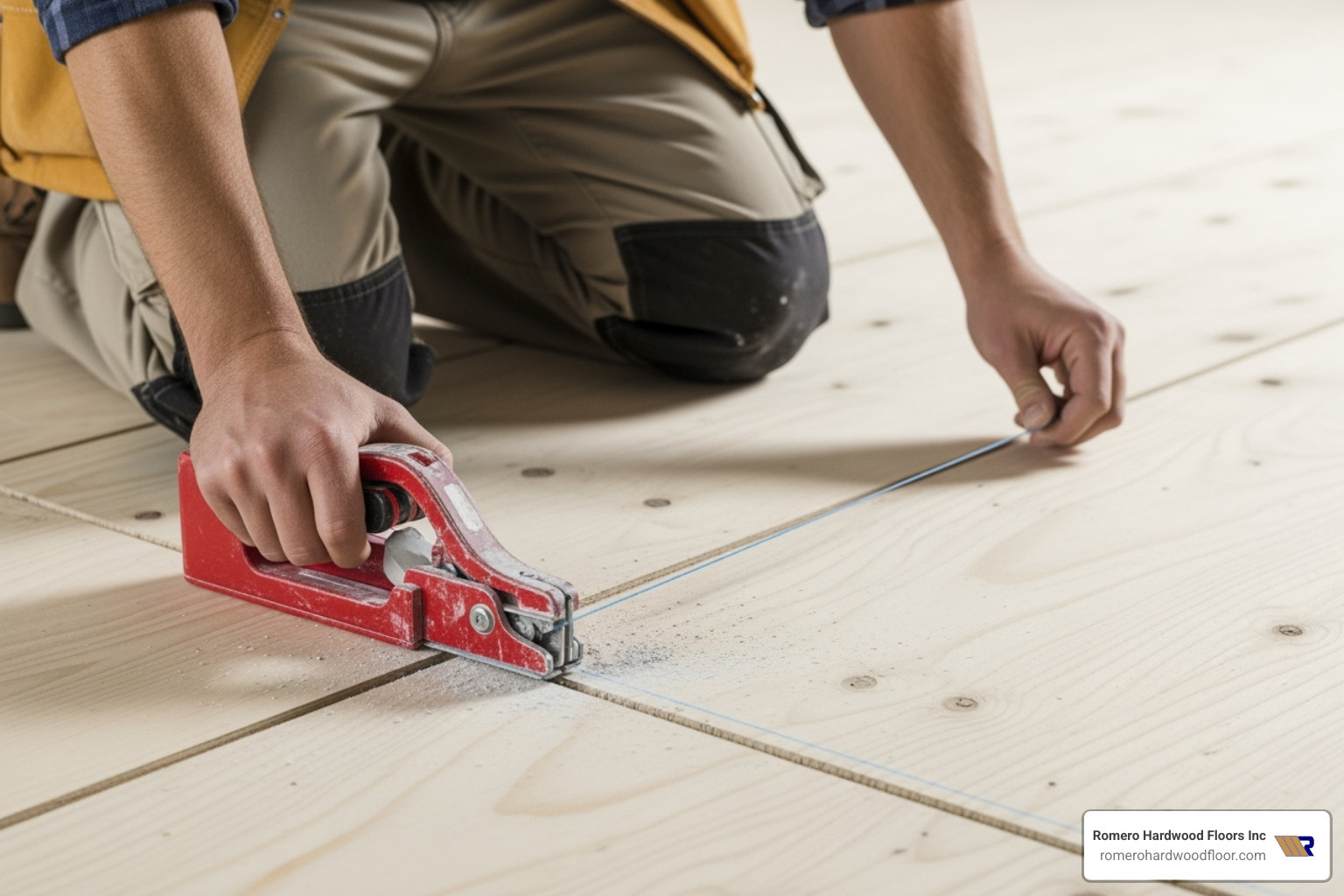
This section details the core installation process, from laying the first board to securing the main field of the floor, covering the most common methods used by professionals.
Planning Your Layout
Smart planning is key to a professional-looking floor. The board direction is an important decision. Typically, boards run perpendicular to the floor joists for maximum stability. In long, narrow rooms, running them parallel to the longest wall can make the space feel larger.
Staggering joints is crucial for both strength and appearance. End joints in adjacent rows should be at least 6 inches apart. Avoid creating “H” patterns where joints line up. Mix boards from several boxes as you work to blend natural color and grain variations.
Remember to leave a three-quarter-inch expansion gap around the entire perimeter of the room. Use spacers to maintain this gap, which allows the wood to expand and contract with humidity changes.
How to Install the First Row
The first row must be perfectly straight. Snap a chalk line parallel to your starting wall, measuring from several points to ensure it’s straight, as walls rarely are.
Since a pneumatic nailer won’t fit near the wall, you’ll need to face-nail the first row by hand. Drill small pilot holes through the face of the board (about 1/2-inch from the groove edge) every 6 inches to prevent splitting. Drive the nails, then use a nail set to sink them just below the surface. These holes will be covered by baseboard trim.
Place the first row with the groove side facing the wall and the tongue facing into the room, ready for the next row.
Installation Methods: Nail-Down, Glue-Down, and Click-Lock
Different flooring and subfloors require different installation methods.
The nail-down method is the standard for solid hardwood over a wooden subfloor. A pneumatic flooring nailer drives fasteners through the tongue of each board at the correct angle, hiding the nails from view. Fasten each board every 4 to 6 inches for a strong, permanent installation.
Glue-down installation is used for engineered flooring, particularly over concrete. A specialized adhesive is spread with a notched trowel in small sections. This method provides good sound dampening and is a solid choice for concrete slabs.
The click-lock floating method is common for engineered planks. The boards snap together without nails or glue, “floating” over an underlayment pad. This is an excellent option for installation over concrete or radiant heat systems.
Each method has its place in a hardwood flooring installation guide, and the right choice depends on your flooring and subfloor.
Details on the installation process.
Phase 3: Handling Obstacles and Finishing Touches

This section covers the finer details that give your installation a professional look, from making intricate cuts to installing the final trim.
Making Special Cuts for a Perfect Fit
Every room has obstacles, and handling them correctly is a mark of quality work in any hardwood flooring installation guide.
- Cutting around vents: Measure and mark the vent opening on the board. Use a jigsaw to cut out the marked area, leaving a small gap for expansion. The vent cover will hide the gap.
- Undercutting door jambs: This creates a seamless look. Place a scrap piece of flooring against the door jamb and use it as a guide to cut the bottom of the casing with a jamb saw or oscillating multi-tool. The new flooring will then slide neatly underneath.
- Irregular shapes: For obstacles like fireplace hearths, create a paper template by tracing the shape. Transfer the template to the flooring plank and cut with a jigsaw for a precise fit.
How to Install the Final Rows
As you approach the final wall, the space will be too tight for the pneumatic nailer. The last few rows must be face-nailed, similar to the first row. Pre-drill pilot holes to prevent splitting the wood.
To ensure a tight fit, use a pull bar. This tool hooks onto the edge of the last board and allows you to lever it tightly against the previous row before nailing. If the last board needs to be cut lengthwise, remember to account for the 3/4-inch expansion gap.
Finishing Your Hardwood Floor Installation
With all boards installed, it’s time for the final touches.
Fill any visible nail holes from face-nailing with wood putty that matches your floor’s color. Smooth it flush for a clean finish.
Next, install baseboards and trim. This molding covers the expansion gap around the room’s perimeter and provides a finished look. Important: Nail the trim to the wall, not the floor, to allow the hardwood to move freely.
Finally, use transition strips where the hardwood meets other flooring types, such as tile or carpet. These strips protect the edges of the flooring and provide a safe, smooth transition between surfaces.
Learn about floor patterns and design.
Phase 4: Aftercare, Troubleshooting, and Safety
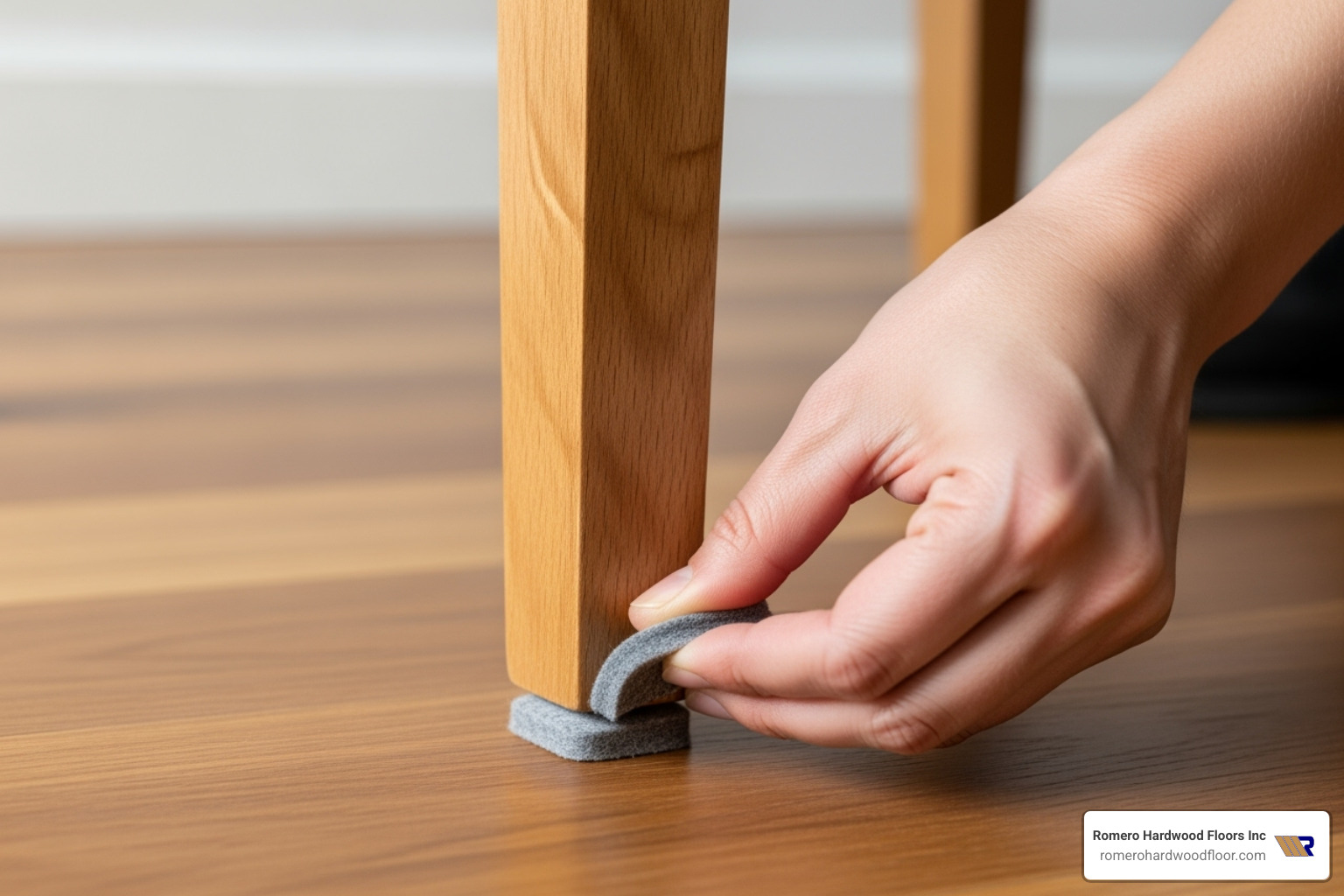
Once the floor is installed, proper care and knowledge of how to handle common issues will ensure it looks beautiful for decades.
Essential Maintenance for New Hardwood Floors
Your new floor requires proper care to maintain its beauty. Follow these tips from our hardwood flooring installation guide:
- Initial Cleaning: After installation, sweep or vacuum up all dust. If your floor was finished on-site, wait 24-48 hours for the finish to cure before using any liquid cleaners.
- Regular Cleaning: Sweep or vacuum regularly with a soft-bristled attachment. Avoid using a vacuum’s beater bar, as it can scratch the finish.
- Spills: Clean up spills immediately with a dry cloth. Standing water can damage wood.
- Deep Cleaning: Use a slightly damp mop with a pH-neutral cleaner specifically designed for wood floors. Avoid harsh chemicals like bleach or ammonia.
- Protection: Apply felt pads to the bottom of all furniture legs to prevent scratches. Lift furniture when moving it; don’t drag it.
- Humidity Control: Maintain indoor humidity between 30% and 50% year-round to prevent gapping or buckling.
- Sunlight: Use curtains or blinds to protect the floor from prolonged direct sunlight, which can cause discoloration over time.
More wooden floor maintenance tips.
Troubleshooting Common Installation Issues
Even with a careful installation, some issues can arise.
- Gaps between boards: This is often caused by low humidity, which makes the wood contract. Using a humidifier during dry seasons can often resolve the issue. Persistent gaps may require wood filler or professional repair.
- Squeaky floors: Squeaks usually indicate movement between the floorboards and the subfloor. Sometimes, a strategically placed finish nail can solve the problem. If the subfloor is accessible from below, adding shims or blocking can provide a more permanent fix.
- Burn marks: Minor surface burns can sometimes be repaired by lightly sanding the area, applying a matching stain, and sealing with polyurethane. Deeper burns may require replacing the affected board.
How to fix floorboard squeaks provides more detailed solutions.
Safety Precautions and Industry Regulations
Safety is paramount during any installation project.
- Personal Protective Equipment (PPE): Always wear safety glasses, ear protection when using loud tools, and a dust mask or respirator.
- Tool Safety: Read and follow the manufacturer’s instructions for all power tools. Ensure safety guards are in place.
- Dust Control: Use dust collection systems attached to saws to minimize airborne wood dust, which is a health hazard.
- Hazardous Materials: In homes built before 1978, be aware of potential lead paint. In homes built before 1986, asbestos may be present. Follow proper testing and handling protocols if these materials are disturbed.
- Industry Standards: Adhering to established industry guidelines ensures a quality, safe installation.
Frequently Asked Questions about the Hardwood Flooring Installation Guide
Here are answers to common questions about hardwood flooring installation guide projects.
What is the most critical step when installing hardwood floors?
Two steps are equally critical: subfloor preparation and proper acclimation. The subfloor must be flat (within 3/16″ over 10 feet), clean, and dry to prevent squeaks, gaps, and movement. Acclimation is also essential. Allowing the wood to sit in the room for 3-7 days at normal living conditions (65-75°F, 30-55% humidity) lets it adjust to the environment, preventing buckling or gapping after installation.
How much extra hardwood flooring should I buy?
Always purchase 5-10% more flooring than your calculated square footage. This extra material, known as a waste factor, covers cuts made during installation, potential mistakes, and allows you to discard any boards with undesirable blemishes. For a diagonal installation, increase the waste factor to 10-15% because the angled cuts produce more waste.
Can I install solid hardwood flooring in a basement?
No, solid hardwood is not recommended for basements or any below-grade installation. Concrete slabs can transmit moisture, which causes solid wood to expand, warp, and buckle. For basements, engineered hardwood flooring is the ideal choice. Its layered construction provides dimensional stability, making it resistant to the moisture and humidity changes common in below-grade spaces.
Conclusion
This hardwood flooring installation guide has walked you through the entire process, from selecting the right wood to the final finishing touches. Installing hardwood floors is a rewarding project that adds significant value and timeless beauty to your home.
We’ve covered the four essential phases for success: planning and preparation, methodical installation, handling details, and proper maintenance. Following these steps helps ensure a durable, professional-looking result that your family can enjoy for generations.
While this guide provides extensive knowledge, a flawless installation requires precision, patience, and specialized tools. Mistakes in subfloor preparation or acclimation can lead to costly future repairs. For this reason, many homeowners choose to hire professionals.
At Romero Hardwood Floors Inc., we bring over 15 years of expertise to every project in the Revere, MA area. Since 2006, we have steerd every possible installation challenge, ensuring our clients’ investments deliver lasting beauty and durability.
Whether you DIY or partner with our team, we hope you end up with floors you love. To discuss your project with an expert, explore our hardwood floor installation services.
Like us on Facebook!
