
How do you install hardwood flooring on stairs: Easy 3-Step
Transform Your Home’s Focal Point with Professional-Grade Installation
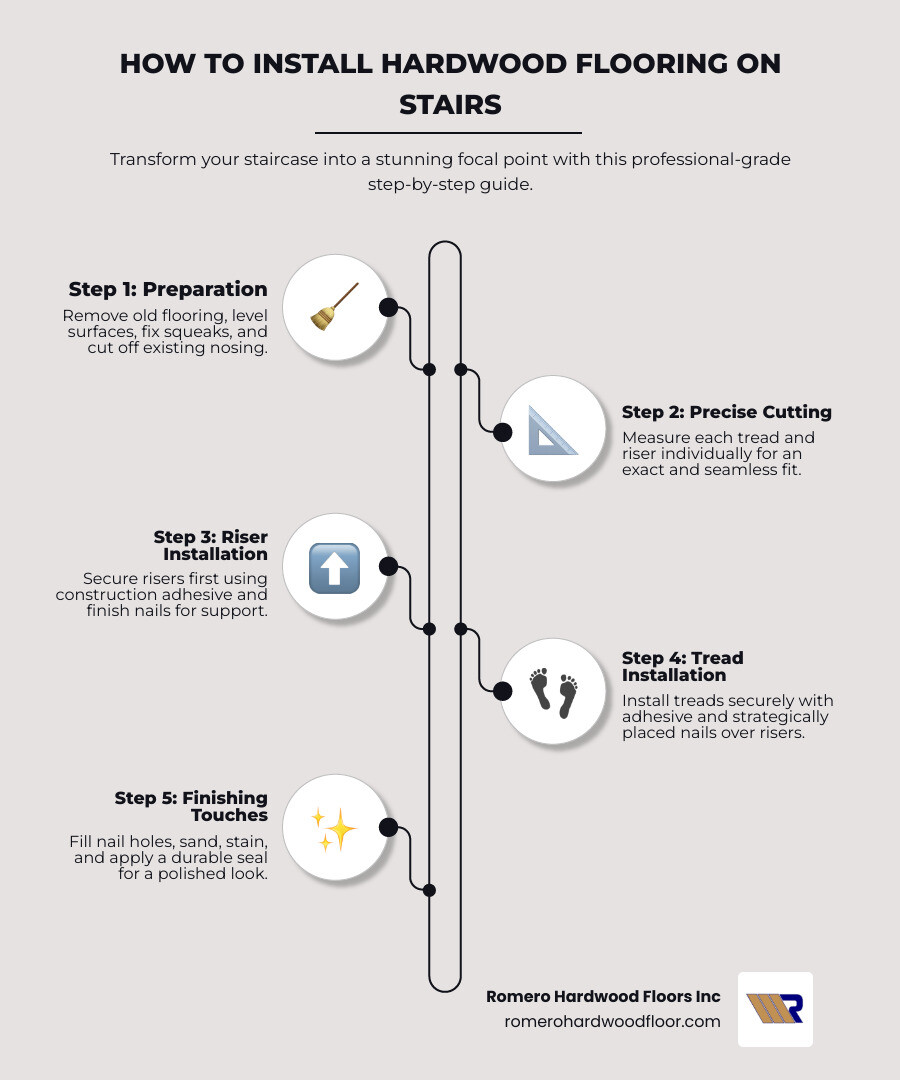
How do you install hardwood flooring on stairs is a common question for homeowners looking to upgrade their home’s most visible feature. The essential process involves:
- Remove old flooring: Strip away carpet, padding, and tack strips.
- Prepare the stairs: Level surfaces, fix squeaks, and cut off the existing nosing.
- Cut materials precisely: Measure each step individually for a perfect fit.
- Install risers first: Use construction adhesive and finish nails.
- Install treads next: Secure with adhesive and strategic nailing.
- Add finishing touches: Fill nail holes, sand, stain, and seal.
Your staircase is a centerpiece, and hardwood flooring on stairs adds immediate value, timeless elegance, and long-lasting durability that carpet can’t match.
While professional installation typically costs $3,000 to $5,500 (based on internet averages), a DIY approach can save money, with materials costing around $2,000. However, this project demands precision and patience to achieve professional results.
This guide covers every step, from material selection to the final finish, providing techniques for a professional, durable result.
I’m Francisco Romero, owner of Romero Hardwood Floors Inc. With over 15 years of experience, my team and I have transformed hundreds of staircases in the Revere, MA area. I’m excited to share our proven methods with you.
How do you install hardwood flooring on stairs helpful reading:
- cost of hardwood floor installation
- diy hardwood floor installation
- engineered hardwood flooring installation
Planning Your Stairway Change: Materials and Costs
Before you wonder how do you install hardwood flooring on stairs, proper planning is essential. This phase is your roadmap to success, involving choosing the right materials, understanding the financial investment, and gathering the necessary tools. Skipping this stage can lead to extra hardware store trips or squeaky stairs.
Choosing the Right Hardwood for Your Stairs
Stairs endure heavy traffic, so choosing the right hardwood is about durability as much as aesthetics. When considering how do you install hardwood flooring on stairs, prioritize durability. The Janka hardness rating measures a wood’s resistance to dents and wear—a higher rating means a more durable wood.
- Oak: The gold standard, offering a balance of beauty and toughness (Janka 1290). It’s widely available, stains well, and is affordable.
- Maple: A step up in hardness (Janka 1450), with a fine grain and clean, modern look.
- Hickory: A top domestic option for durability (Janka 1820), with bold grain patterns for a rustic charm.
- Luxury Options: Walnut offers rich, dark tones, while Brazilian Cherry provides exotic beauty and incredible hardness (Janka 2350).
For material type, solid hardwood is a single piece of wood that can be refinished many times, offering maximum longevity. Engineered hardwood has a real wood veneer over multiple layers, providing better stability against humidity changes.
A common mistake is using individual flooring planks instead of pre-made stair treads. Planks lack the built-in nosing crucial for safety and a professional look, and can create color variations. Pre-made treads with integrated nosing are worth the investment.
Finally, choose between prefinished wood (saves time) and unfinished wood (complete control over color and finish).
For more detailed information, check out our guide: More info about hardwood floors for stairs.
| Hardwood Species | Durability (Janka Hardness) | Appearance | Cost (Avg. per tread, uninstalled) |
|---|---|---|---|
| Red Oak | High (1290) | Prominent grain, reddish tones | $30 – $60+ |
| Maple | Very High (1450) | Fine grain, light, smooth | $35 – $70+ |
| Hickory | Extremely High (1820) | Bold grain, varied color | $40 – $80+ |
| Walnut | Medium-High (1010) | Rich dark brown, distinctive grain | $50 – $100+ |
| Brazilian Cherry | Very High (2350) | Reddish-brown, wavy grain | $70 – $150+ |
Essential Tools and Materials Checklist
The right tools are essential for a satisfying project. For how do you install hardwood flooring on stairs, you’ll need precision tools for accurate cuts.
- Power Saws: A miter saw for angled and straight cuts, a table saw for wider boards, and a jigsaw for tricky cuts around posts.
- Fastening: A nail gun (finish or brad nailer) for secure, fast installation.
- Preparation: A pry bar for removing old flooring, a level to ensure flat steps, and a measuring tape.
- Specialty Tools: A stair tread jig helps transfer angles and lengths accurately.
- Adhesives & Fillers: High-quality, urethane-based construction adhesive is crucial to prevent squeaks. You’ll also need wood filler, sandpaper, stain (if using unfinished wood), and polyurethane.
- Miscellaneous: Shims, a rubber mallet, and pliers.
- Safety Gear: Always use eye protection, hearing protection, gloves, and a dust mask.
Budgeting for Your Project: DIY vs. Professional
The cost difference between DIY and professional installation is significant, as are the potential results.
Please note: these cost estimates are average figures based on internet data and are not actual costs for Romero Hardwood Floors Inc. Your actual costs may vary significantly.
- DIY Cost: Expect to invest $1,500 to $4,500 in materials, including treads, risers, adhesive, and finishing supplies. The range depends on wood species and staircase size.
- Professional Installation Cost: This typically ranges from $3,000 to $15,000+. Some sources quote $100-$150 per step, excluding additional fees. A standard 13-step staircase often costs between $3,000 and $5,500.
Factors affecting the final cost include the number of stairs, wood type, landings, staircase complexity (curved, spiral), and existing conditions requiring repair.
DIY installation can take several days. If you lack confidence, mistakes can be costly. For skilled DIYers, the savings are substantial.
For homeowners in Revere, MA and surrounding areas, we offer competitive pricing and guaranteed workmanship. Learn more: More info about hardwood flooring installation contractors.
Step-by-Step Guide: How Do You Install Hardwood Flooring on Stairs?
Let’s explore the heart of how do you install hardwood flooring on stairs. This process requires precision and patience, but these proven techniques will help you achieve professional results.
First, prioritize safety. Always wear safety glasses, hearing protection, gloves, and a dust mask. Keep your workspace clean and well-lit to prevent mistakes.
Step 1: Preparing the Stairs for a Flawless Finish
Proper preparation is critical and should not be rushed. This step is the foundation for your entire project.
- Remove old flooring: Use a utility knife to cut carpet into manageable strips for easier removal. Use a pry bar to lift the carpet, padding, and tack strips.
- Remove all fasteners: Pull out every single staple and nail with pliers. Leftover fasteners can cause squeaks or prevent the new flooring from sitting flush.
- Inspect and repair the subfloor: Walk the stairs to find any squeaks or loose spots. To fix squeaks, drive 3-inch screws through the treads into the stringers to anchor them. For persistent squeaks, you may need to reinstall the riser with construction adhesive.
- Level surfaces: Ensure each step is flat. Sand down high spots and use shims to build up low areas.
- Cut off the existing stair bullnose: The rounded overhang on the existing steps must be removed so new treads can sit flush. Mark the riser plane on top of the tread and make a careful plunge cut with a circular saw just outside the line. Use a chisel to clean up any remaining wood. This is a cleaner solution than adding plywood to the riser.
- Acclimate your hardwood: Let your new wood materials sit in the installation area for at least 3-5 days. This allows the wood to adjust to your home’s temperature and humidity, preventing future warping.
Step 2: How Do You Properly Measure and Cut Hardwood for Stairs?
Patience is key in this step, as every stair is unique. Measure twice, cut once to save on materials.
- Measure each step individually: Never assume treads and risers are the same size. Use a measuring tape to record the width and depth of each tread and the height and width of each riser.
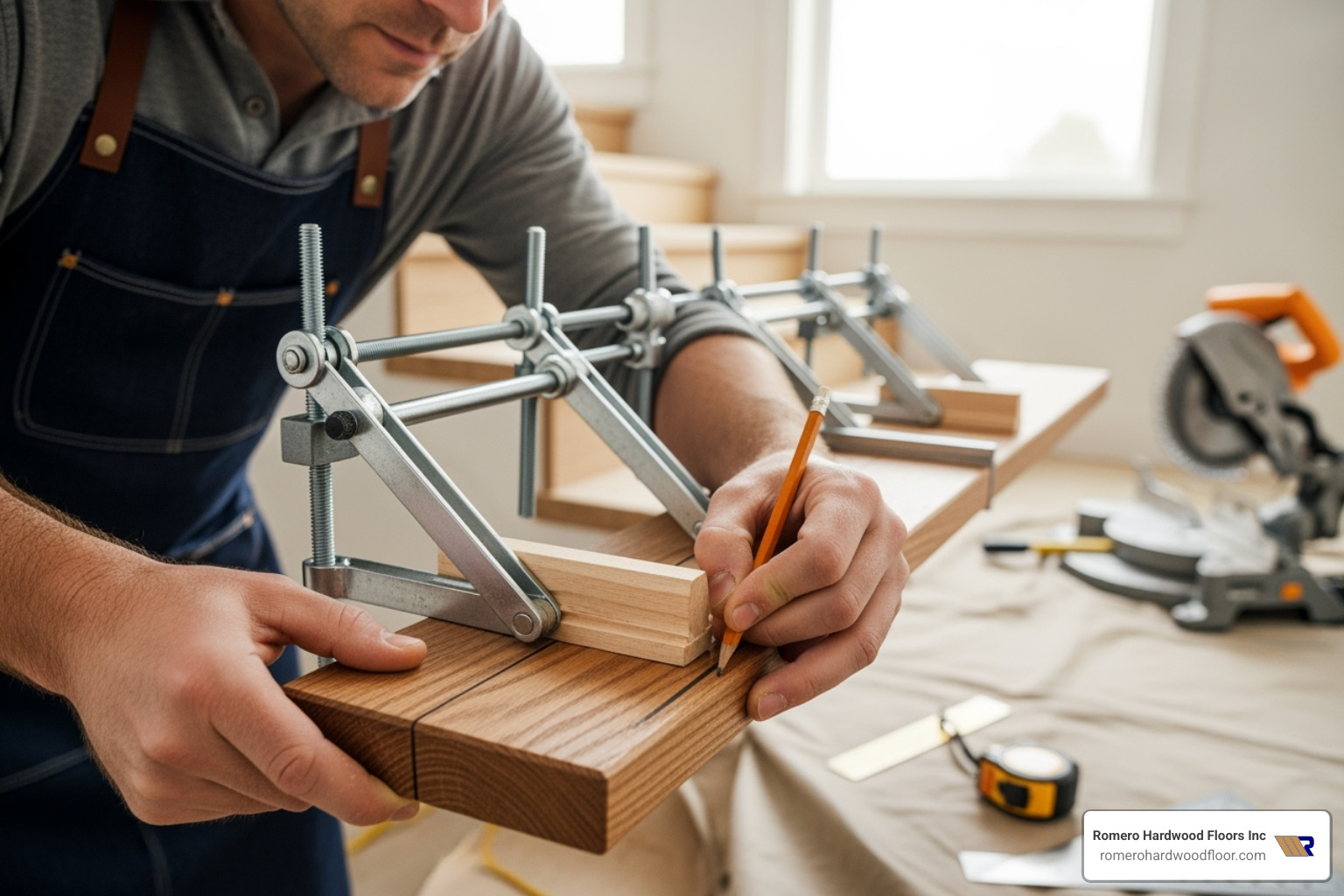
- Use a stair tread template: A stair tread jig or scribing tool is invaluable. This adjustable tool captures the exact angle and length of each step, accounting for wall irregularities.
- Cut risers and treads: Use your template and measurements to cut the risers to fit snugly between the stringers. When cutting treads, account for the nosing overhang. For open-sided staircases, you’ll need treads with a return—a piece that wraps around the open end.
Step 3: The Installation Process: Assembling Your New Staircase
Start from the bottom step and work upward. This allows you to stand on completed steps as you work.
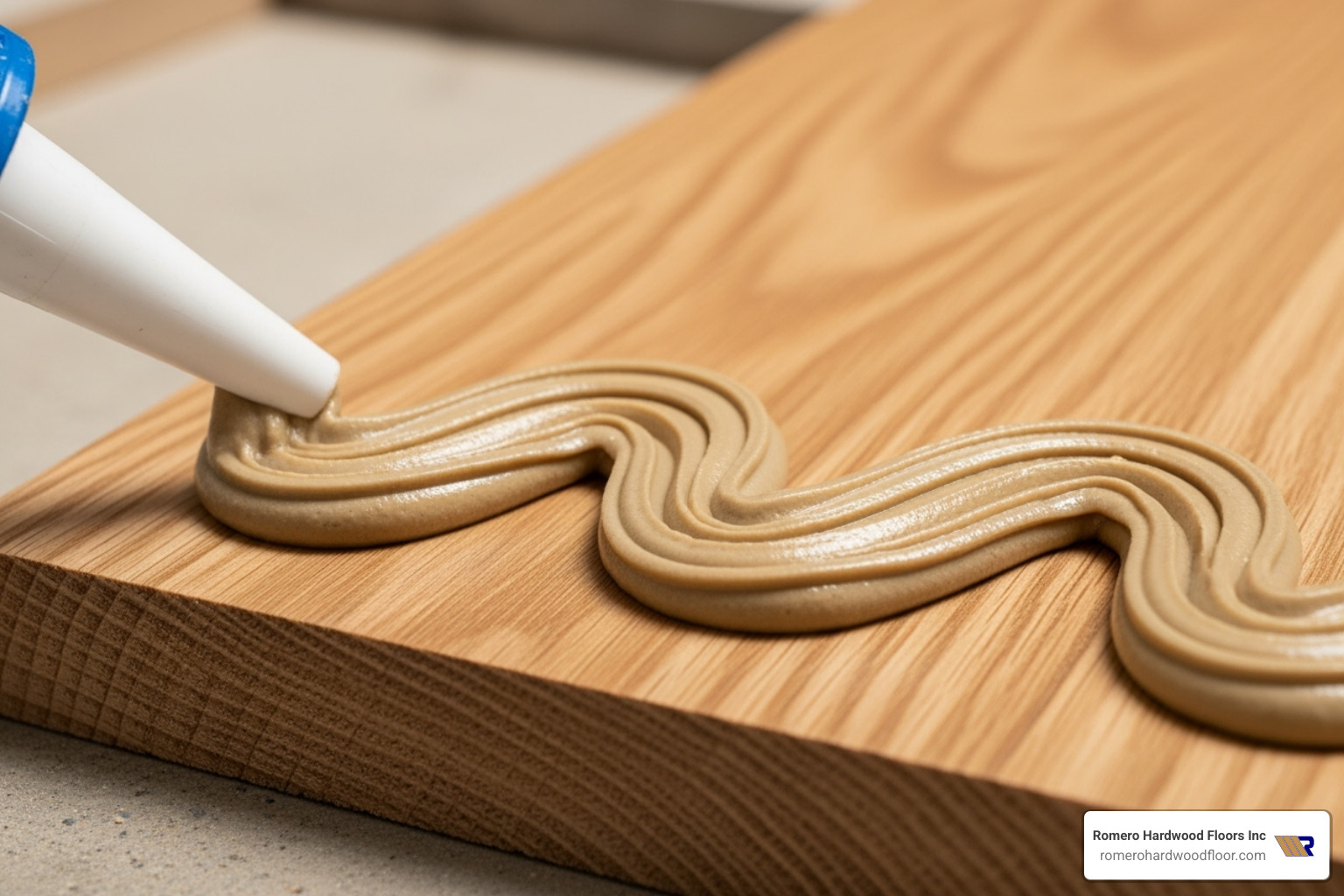
- Install risers first: This provides crucial support. Apply a quality construction adhesive to the back of the riser, position it against the vertical support, and check that it’s plumb and square. Secure it with finish or brad nails (we suggest three per stringer) while the adhesive cures.
- Install treads securely: Apply construction adhesive generously to the sub-tread and the top edge of the newly installed riser. Position the hardwood tread, ensuring it’s aligned and fits snugly. Secure it with finish nails, typically where the tread meets the riser and angled through the back of the tread into the riser and stringer. Tap the tread with a rubber mallet to ensure full adhesive contact. Walk on the step to check for squeaks and address them immediately with more adhesive or shims.
Repeat this process for each step, checking your work as you go. For more installation techniques, explore our guide: More info about the hardwood flooring installation process.
Achieving a Professional Look: Finishing Touches and Transitions
Finishing touches are what lift a good installation to a great one, turning your staircase into a true focal point that adds value to your home.
How Do You Handle Stair Nosing and Transitions?
Properly handling the nosing and transitions is a key differentiator between amateur and professional results. The stair nosing provides safety and a clean, finished look.
- Install the top stair nosing: This piece connects your new staircase to the upper floor or landing. It must be perfectly aligned and secured with both construction adhesive and finish nails. The overhang should be between 3/4 inch and 1 1/4 inches.
- Create a seamless transition: If the upper floor is also hardwood, match the grain and color as closely as possible for a continuous look. For transitions to other flooring types like carpet, use a transition strip or molding to bridge gaps and prevent debris collection.
- Fill nail holes: Use a high-quality wood filler that matches your wood color. Apply with a putty knife, let it dry, and sand lightly to make nail holes virtually invisible.
- Caulk gaps: Apply a thin bead of paintable caulk where risers and treads meet the walls. This creates a crisp, finished look and seals against dust.
Staining and Finishing for Durability and Beauty
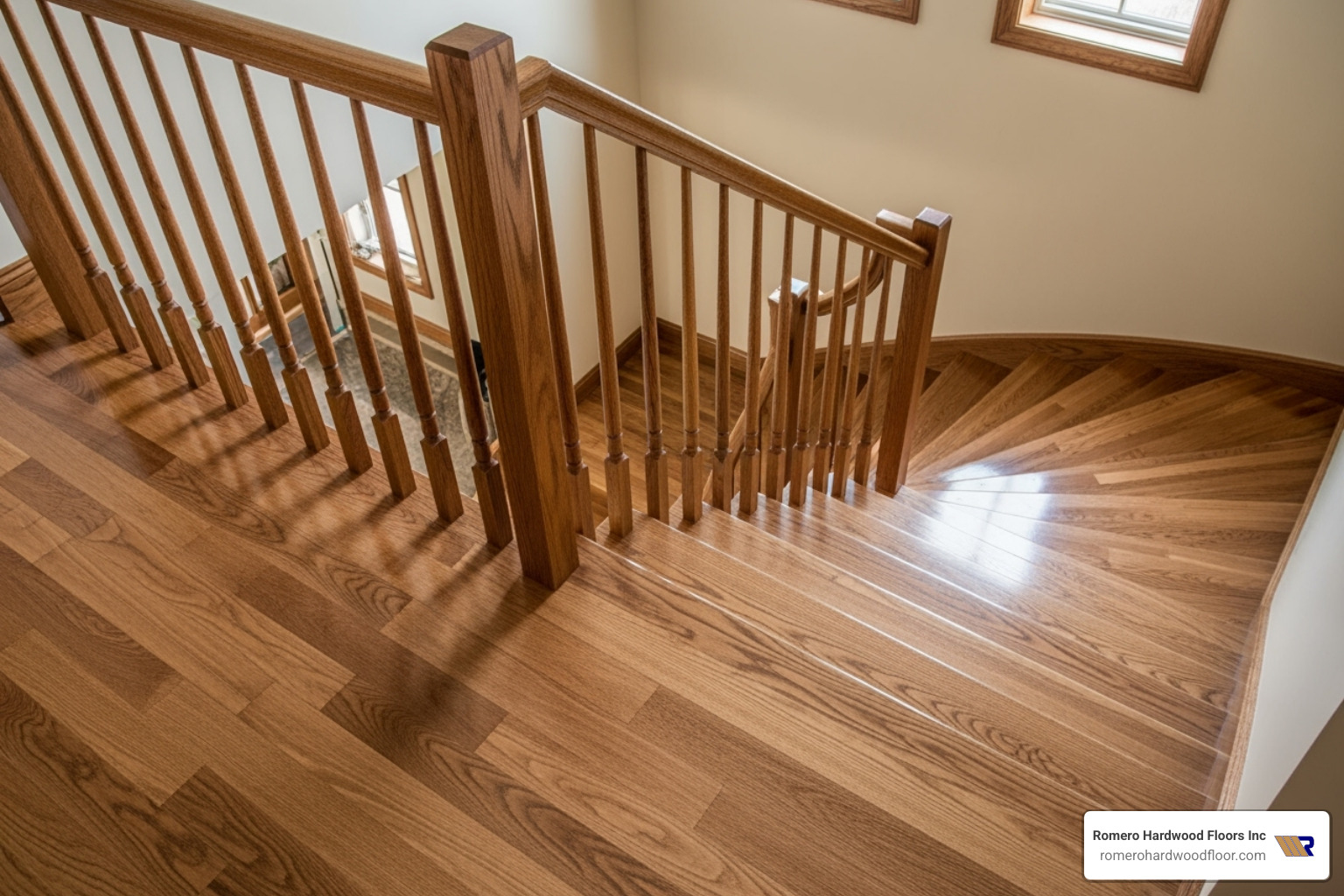
For unfinished hardwood, staining and finishing not only create the final look but also protect your investment.
- Sanding: Start with medium-grit sandpaper and progress to finer grits, always sanding with the grain until the wood is silky smooth. A thorough sanding is crucial, as imperfections will be magnified by the finish. Vacuum all dust and wipe with a tack cloth.
- Staining: Apply stain evenly with a foam brush or lint-free cloth, working with the grain and maintaining a wet edge. Wipe away excess stain after a few minutes to prevent blotching and allow it to dry completely.
- Polyurethane Protection: Stairs endure heavy wear, so apply at least three coats of polyurethane. Allow each coat to dry completely (usually overnight) and lightly sand with 220-grit paper between coats to ensure proper adhesion and a smooth finish.
- Choosing a Sheen: The finish sheen affects both appearance and safety. Satin is often recommended for stairs as it hides minor imperfections and provides better traction. Semi-gloss offers more shine and is easy to clean, while gloss provides maximum richness but can be more slippery.
For more on our finishing techniques, visit: More info about flooring installation.
Common Challenges and Long-Term Maintenance
Even with careful planning, you may encounter challenges when learning how do you install hardwood flooring on stairs. Here’s how to handle common problems and maintain your new stairs for lasting beauty.
Overcoming Common Installation Problems
Here’s how to handle common installation hiccups like a pro.
- Squeaky stairs: Squeaks are usually caused by movement between the tread and stringer or riser. First, pinpoint the source of the squeak. If you can access the underside, insert wooden shims into gaps or apply construction adhesive into the joint. If not, you may need to drive 3-inch screws from the top, countersink them, and fill the holes with matching wood filler.
- Uneven walls: In older homes, walls may not be perfectly straight. To fit treads or risers against an uneven wall, you’ll need to “scribe” them. Place the board against the wall, trace the wall’s contour onto the wood with a compass or scribing tool, and cut along the line with a jigsaw for a snug, professional fit.
- Variations in stair height: Building codes typically allow only a 3/8-inch difference between the shortest and tallest riser. To correct larger variations, use shims under treads or behind risers. Extreme variations may require modifying the stringers, a task often best left to professionals.
For more DIY tips, check out our guide: More info about DIY hardwood floor installation.
Maintaining Your Hardwood Stairs for Lasting Beauty
With proper care, your hardwood stairs will last for decades. Regular attention is key due to heavy foot traffic.
- Regular Cleaning: Sweep daily with a soft-bristle broom to remove debris that can scratch the finish. For deeper cleaning, use a vacuum with a soft brush attachment (avoid beater bars).
- Wipe Up Spills Immediately: Use a clean, dry cloth to wipe up any liquid right away to prevent damage.
- Use Proper Cleaners: When mopping, use a damp (not wet) mop and a cleaner specifically designed for hardwood floors. Avoid harsh chemicals, abrasive pads, and steam cleaners.
- Add Protection: A carpet runner can reduce wear, improve safety by adding traction, and cut down on noise. It can also be a stylish design element.
- Refinishing: Hardwood’s long-term value comes from its ability to be refinished. Most stairs need refinishing every 5-8 years. A standard 3/4-inch tread can be refinished multiple times, potentially lasting for over 80 years.
A few minutes of daily care will keep your hardwood stairs looking stunning for generations.
Frequently Asked Questions about Hardwood Stair Installation
When homeowners research how do you install hardwood flooring on stairs, several common questions arise. Here are answers to the most frequent ones.
Can I install regular hardwood flooring planks on my stairs?
While technically possible, we strongly advise against using regular flooring planks on stairs. Pre-made solid stair treads are specifically engineered for this purpose. They feature an integrated, rounded nosing that is crucial for safety and provides a more polished, professional appearance. Using individual planks can result in a less secure installation, an unfinished look, and noticeable color variations between steps.
Should I install the riser or the tread first?
Always install the riser first. This is a non-negotiable rule for a quality installation. The riser provides essential structural support for the back of the tread, preventing it from sagging or bouncing over time. This sequence also ensures a clean, tight fit where the two pieces meet, resulting in a more professional finish.
How do you make hardwood stairs less slippery?
Safety is a top concern with hardwood stairs. Fortunately, there are several effective ways to improve traction.
- Choose a Lower Sheen Finish: Satin or matte finishes are naturally less slick than high-gloss options and provide more grip.
- Add a Carpet Runner: A runner is an excellent solution that provides traction, reduces noise, protects the wood, and adds a decorative element.
- Use Non-Slip Strips: Clear, adhesive non-slip strips can be applied directly to the treads. They are nearly invisible but offer an effective layer of grip.
- Consider a Textured Finish: Some prefinished treads come with a slightly textured surface that improves traction while maintaining the wood’s natural look.
Conclusion: Enjoy Your Beautiful New Staircase
Congratulations on learning how do you install hardwood flooring on stairs. This rewarding project transforms the heart of your home.
You’ll enjoy substantial long-term benefits. Your home value has increased, and the timeless beauty of hardwood creates a stunning focal point. Most importantly, you’ve invested in durability that will last for decades with proper care.
For the skilled DIYer, this project is a significant achievement. The precision, patience, and attention to detail will bring a sense of pride with every step.
However, we understand this demanding project isn’t for everyone. The complexity of dealing with uneven walls, varying step heights, or intricate transitions can be overwhelming.
For homeowners in the Revere, MA area and surrounding communities like Beverly, Chelsea, Danvers, and Salem, Romero Hardwood Floors Inc. offers a trusted professional option. Since 2006, our team has provided the expertise, specialized tools, and guaranteed workmanship to ensure your staircase becomes the stunning centerpiece you envision.
Ready to take the next step? Whether you’re planning a DIY project or prefer professional installation, we’re here to help.
Ready to transform your stairs? Learn more about our hardwood flooring installation services.
Like us on Facebook!
