
Average Cost to Install Click Engineered Hardwood Floor 2025: Top Powerful Savings
Understanding Click Engineered Hardwood Floor Costs
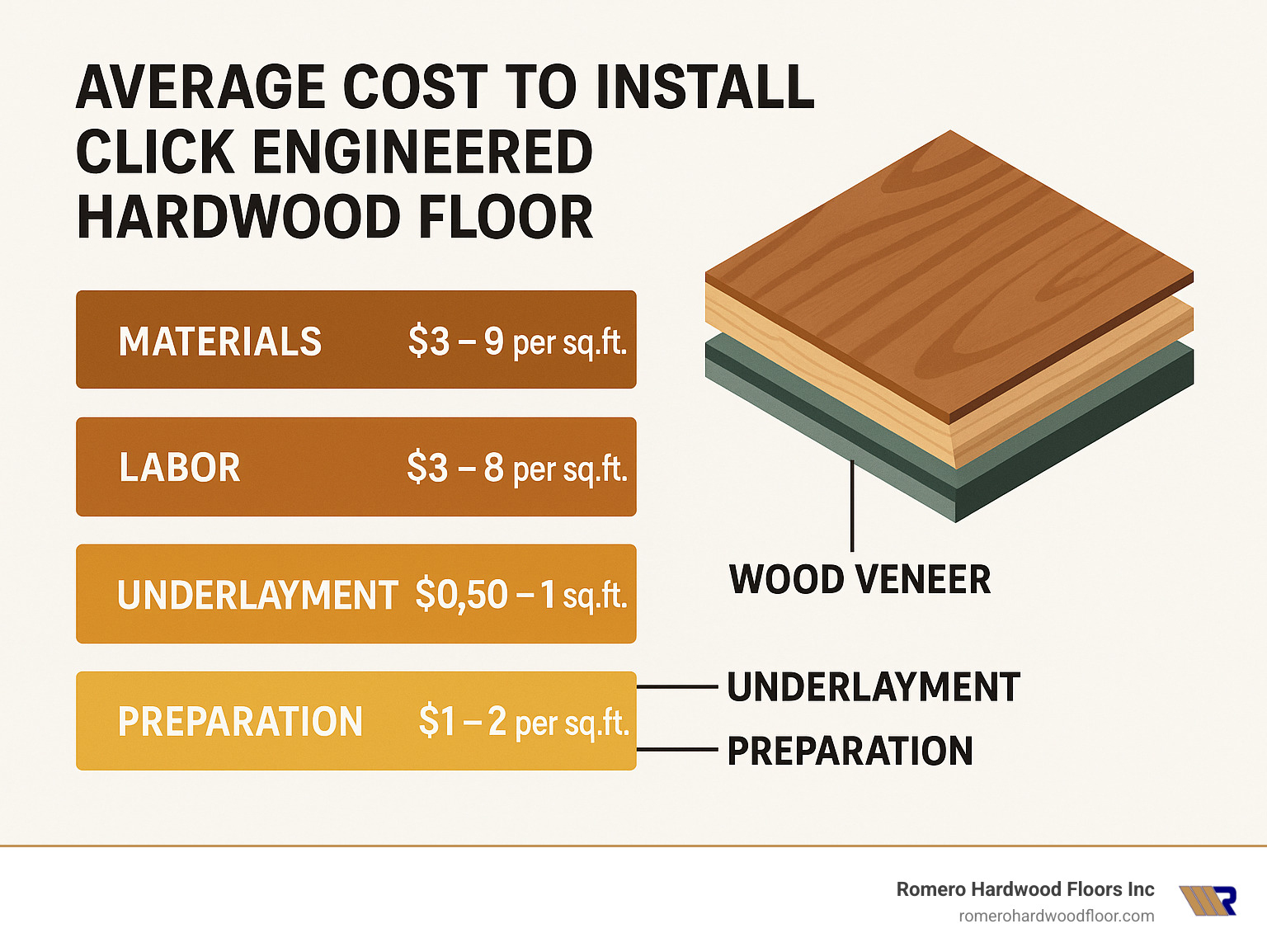
The average cost to install click engineered hardwood floor ranges from $6 to $20 per square foot, with most homeowners paying between $7 and $12 per square foot for materials and labor combined. Here’s a quick breakdown:
| Cost Component | Price Range |
|---|---|
| Materials | $3 – $9 per sq ft |
| Labor | $3 – $8 per sq ft |
| Total Installed | $6 – $20 per sq ft |
| Average 1,000 sq ft project | $6,000 – $12,000 |
Click engineered hardwood flooring has become increasingly popular for homeowners seeking the beauty of hardwood with easier installation and better moisture resistance. Unlike traditional solid hardwood, engineered flooring consists of a real wood veneer bonded to multiple layers of plywood or fiberboard, creating a stable and durable product that can be installed in more locations throughout your home.
What makes click (also called floating or click-lock) engineered hardwood unique is its installation method. The planks feature interlocking edges that click together without nails or glue, making installation faster and often less expensive than traditional methods.
I’m Francisco Romero, owner of Romero Hardwood Floors Inc. with over 15 years of experience installing engineered wood flooring throughout Massachusetts, and I’ve helped hundreds of homeowners understand the average cost to install click engineered hardwood floor for their specific project needs.
Average Cost to Install Click Engineered Hardwood Floor in 2025
If you’re planning a flooring project in 2025, you’ll be pleased to know that the average cost to install click engineered hardwood floor continues to offer excellent value compared to traditional hardwood options. Based on current market trends, most homeowners pay between $6 and $20 per square foot for a complete installation, with the national average sitting comfortably in the $7 to $12 per square foot range.
Your total investment typically divides almost evenly between materials and labor (about 50% each), though this balance can shift depending on your specific choices. Choose an exotic wood species or have a room with an unusual layout? You might see the scale tip toward either higher material or labor costs.
Where you live matters too! Here in Revere, MA and the greater Boston area, labor rates tend to run higher than the national average. Meanwhile, homeowners in more rural areas like West Virginia might pay just $3 to $5 per square foot for labor, compared to our urban rates of $6 to $12 per square foot.
One thing many homeowners don’t realize is just how smart an investment engineered hardwood can be. According to the National Association of Realtors, hardwood flooring installations can deliver up to 118% ROI when selling your home. That’s right – you could actually get back more than you spend! It’s not just beautiful flooring; it’s a financial win.
Here’s how the costs typically break down by quality tier:
| Quality Tier | Materials Only | Installed Cost | Features |
|---|---|---|---|
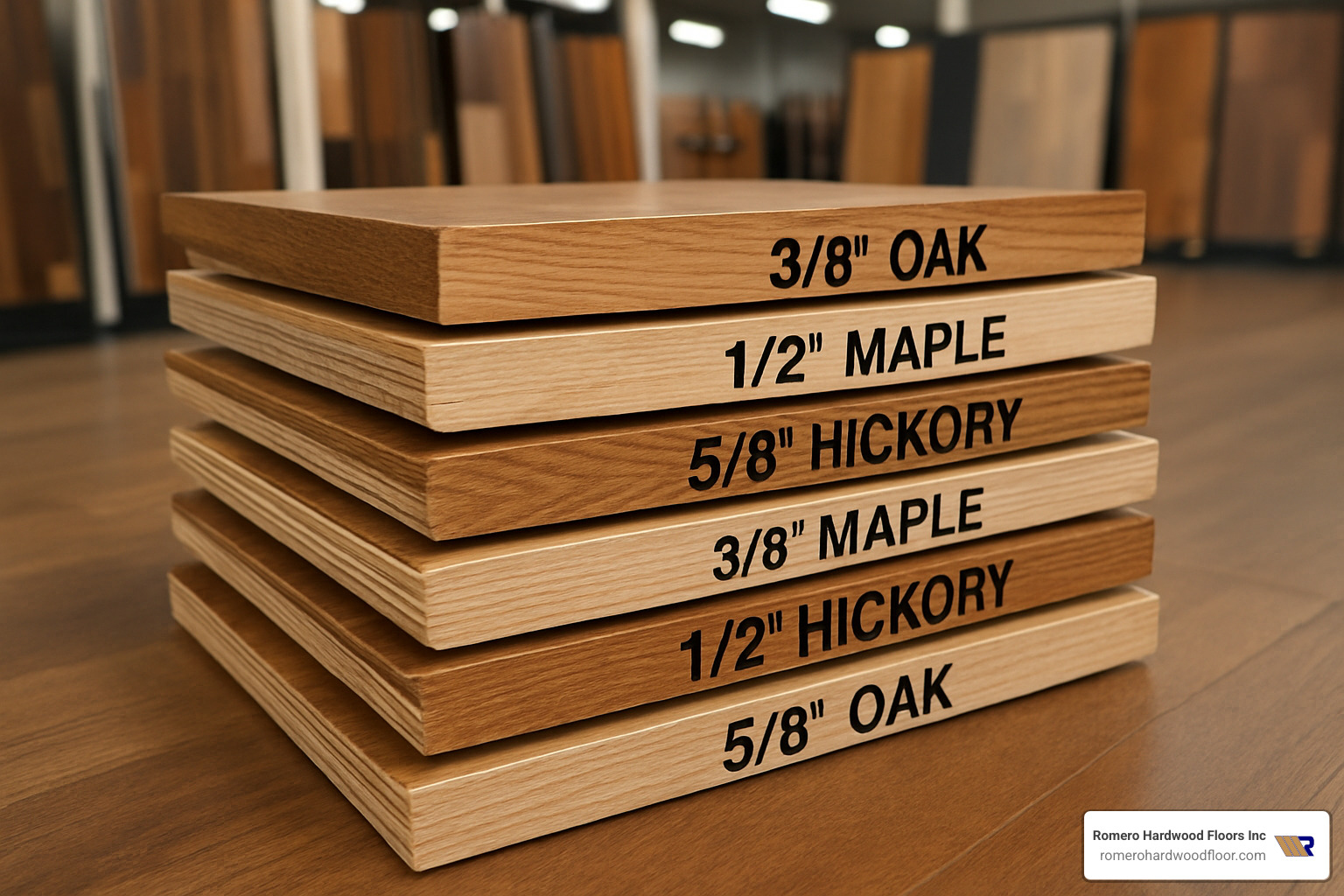
| Low-End (3/8″) | $3-$5/sq ft | $6-$9/sq ft | Basic species, thin veneer, limited warranty |
| Mid-Range (1/2″) | $5-$8/sq ft | $8-$14/sq ft | Popular species, medium veneer, 25+ year warranty |
| High-End (5/8″-3/4″) | $8-$13/sq ft | $12-$20/sq ft | Exotic woods, thick veneer, premium finish, lifetime warranty |
Per-Square-Foot Breakdown & 1,000 sq ft Examples
Let’s make these numbers more concrete by breaking down the average cost to install click engineered hardwood floor for a typical 1,000 square foot home:
Your materials will run between $3 and $9 per square foot ($3,000 to $9,000 total), while labor costs typically range from $3 to $8 per square foot ($3,000 to $8,000). Don’t forget about underlayment at $0.50 to $1 per square foot ($500 to $1,000) and that all-important waste allowance – always add about 10% to your material costs ($300 to $900 extra) to account for cuts and mistakes.
If you’re replacing existing flooring, factor in removal costs of $0.09 to $1.55 per square foot depending on what’s currently there ($90 to $1,550 total). And don’t forget those disposal fees, which typically run $100 to $300 depending on local rates.
For a 1,000 square foot home, your total investment might look like:
– Budget-friendly: $6,000 to $9,000 (average $7,500)
– Middle-of-the-road: $8,000 to $14,000 (average $11,000)
– Premium installation: $12,000 to $20,000 (average $16,000)
Good news if you’re doing a larger space – the per-square-foot cost often decreases slightly as project size increases. On the flip side, tiny projects under 500 square feet might cost a bit more per square foot due to minimum labor charges and setup costs.
What’s Included in “Installed” Pricing
When you see an “installed” price, it helps to know exactly what you’re getting. Typically, a complete installation includes:
Your beautiful new engineered hardwood planks, underlayment (usually foam or cork), and a moisture barrier (especially important if you’re installing in basements or areas prone to dampness). You’ll also get trim and transition pieces like quarter round and reducers, the actual floating installation labor, basic furniture moving within the same room, and project cleanup when it’s all done.
That said, what’s included can vary dramatically between contractors. At Romero Hardwood Floors Inc., we believe in transparency. We provide detailed, itemized quotes so you know exactly where every dollar is going before work begins.
Please note that all pricing information shared in this article represents average costs based on internet data and industry research, not actual quotes from Romero Hardwood Floors Inc. For a personalized estimate custom to your specific project, we recommend reaching out to us directly for a consultation.
Key Factors Driving Your Final Bill
When planning your budget for new flooring, understanding what drives costs can help you make smart choices. The average cost to install click engineered hardwood floor isn’t just one fixed number – it’s influenced by several key factors that can either trim your budget or push it higher.
After installing hundreds of floors throughout Massachusetts, I’ve noticed that homeowners are often surprised by which elements impact their final bill the most. Let’s walk through these factors so you can plan more effectively.
Material Choices: Species, Grade, Width
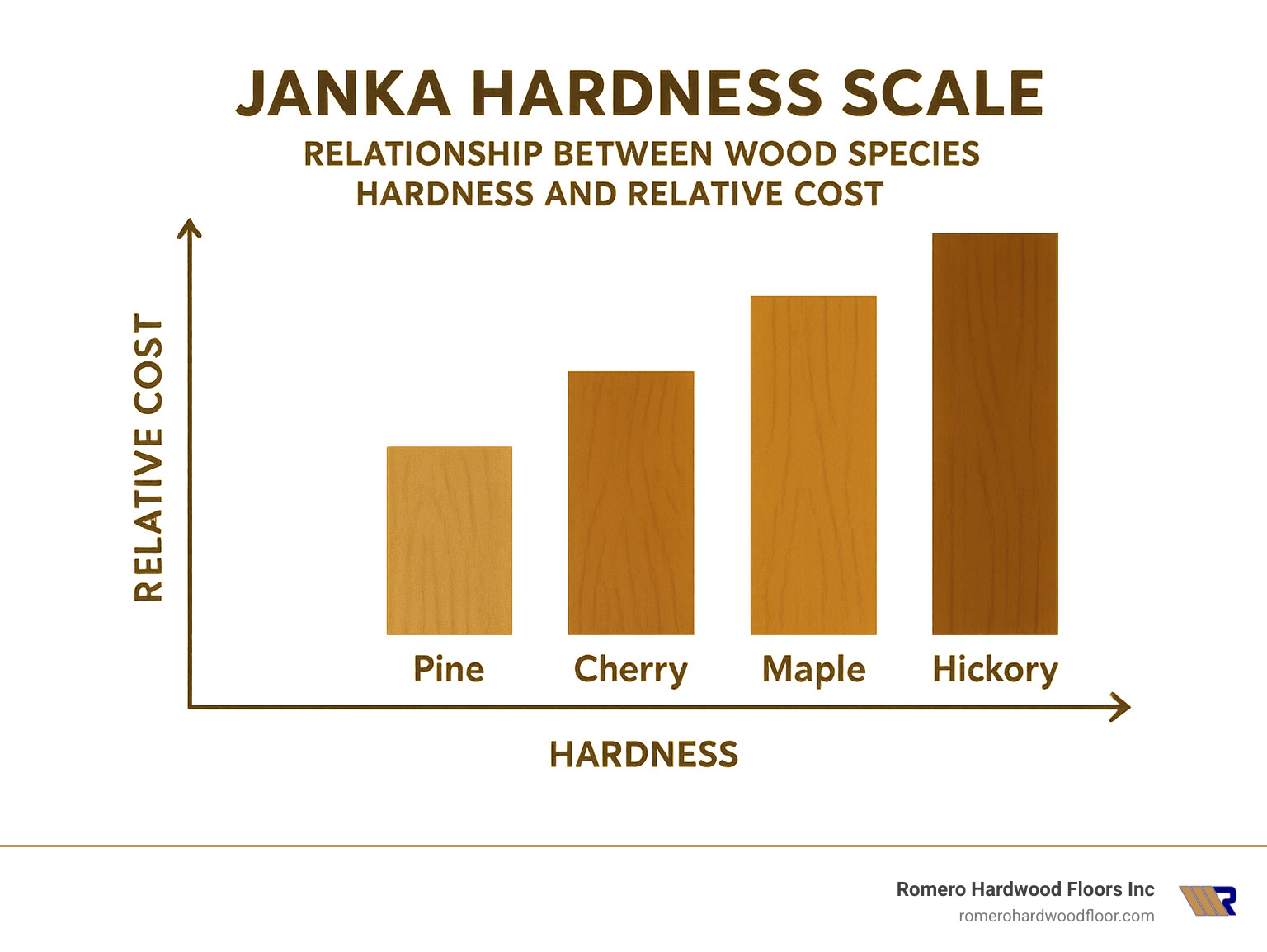
The wood species you select plays perhaps the biggest role in your material costs. Think of it like choosing between a Toyota and a Mercedes – both are cars, but there’s a significant price difference!
Oak remains the most popular choice at $4-$8 per square foot, offering that classic hardwood look with excellent durability. It’s the “Goldilocks” of hardwoods – not too soft, not too hard, and not too expensive.
Maple steps things up at $5-$9 per square foot with its clean, bright appearance and tight grain pattern. Many homeowners love maple for its modern look and how it brightens up spaces.
If durability is your priority, hickory at $6-$10 per square foot might be your best friend. With its distinctive grain and impressive hardness, it stands up beautifully to active households.
For those looking for something truly special, exotic woods like Brazilian Cherry, Walnut or Teak run $7-$13+ per square foot. These woods offer unique colors and grain patterns you simply can’t find in domestic species.
Beyond species, the grade of wood affects both appearance and price. Select Grade woods have consistent coloring and minimal knots, creating a uniform look. Character Grade (sometimes called Natural Grade) shows more personality with color variations and small knots. Builder Grade offers the most rustic look with significant variation – and usually the lowest price point.
Plank width also matters more than most people realize. Wider planks (over 5″) create a luxurious, open feel but typically cost more per square foot than standard (3″-5″) or narrow planks (under 3″). The silver lining? Wider planks can sometimes reduce installation time since fewer pieces need to be installed.
Don’t overlook veneer thickness – it’s the actual hardwood layer on top of your engineered floor. Thicker veneers (3mm+) cost more upfront but can be refinished multiple times, potentially saving money over the lifetime of your floor.
Labor Variables & Subfloor Preparation
While click-lock systems are generally faster to install than traditional hardwood, several factors can affect your labor costs. Complex room layouts with lots of corners, closets, or islands require more cutting and fitting, adding time to the project.
Your subfloor condition can significantly impact costs. According to research from the Bureau of Labor Statistics, subfloor preparation often accounts for unexpected cost increases in flooring projects. Concrete slabs frequently need leveling ($500-$800 for an average room) and moisture testing to ensure your new floor performs well long-term.
Geographic location plays a huge role too. Here in the Boston area, labor rates tend to run higher than the national average, with professional installation typically costing $5-$8 per square foot compared to $3-$5 in more rural areas.
Most professionals charge either by the square foot ($3-$8) or hourly ($60-$80). At Romero Hardwood Floors, we prefer square-foot pricing because it gives our customers a clearer picture of their total investment upfront.
Proper subfloor preparation is especially crucial for click-lock installations. These floating floors require a level substrate – otherwise, you might end up with movement, gaps, or the dreaded floor squeaks that drive homeowners crazy!
Hidden & Optional Expenses
I always recommend that homeowners budget for a few “hidden” costs that might not appear in initial quotes. These can make a significant difference in your final bill.
Old floor removal costs vary widely depending on what’s currently in place. Carpet removal runs about $1-$2 per square foot, while tile removal is more labor-intensive at $2-$3.50 per square foot. Then there’s debris disposal, which can add another $100-$300 depending on volume and local rates.
If your project includes stairs, expect to pay $100-$200 per step for engineered hardwood installation. Stairs require precise cutting and fitting, making them more labor-intensive than standard flooring areas.
Baseboards often need to be removed and reinstalled when new flooring goes in, adding $1-$3 per linear foot to your project. Some homeowners choose to install new baseboards entirely, which can freshen up the look of the room but adds to the bottom line.
While rarely required for residential flooring projects, some municipalities may require permits, so it’s worth checking local regulations before starting your project.
Don’t forget to factor in any joist repairs ($350-$1,000 per joist) if needed. These structural elements must be sound before installing any type of flooring.
Understanding these cost factors helps you budget more effectively and avoid surprises during your flooring project. While the average cost to install click engineered hardwood floor provides a helpful starting point, your specific choices in materials, preparation needs, and optional features will ultimately determine your final investment.
Please note that the pricing information throughout this article represents average costs based on internet data and industry research, not actual quotes from Romero Hardwood Floors Inc.
DIY Floating Install vs. Hiring a Pro
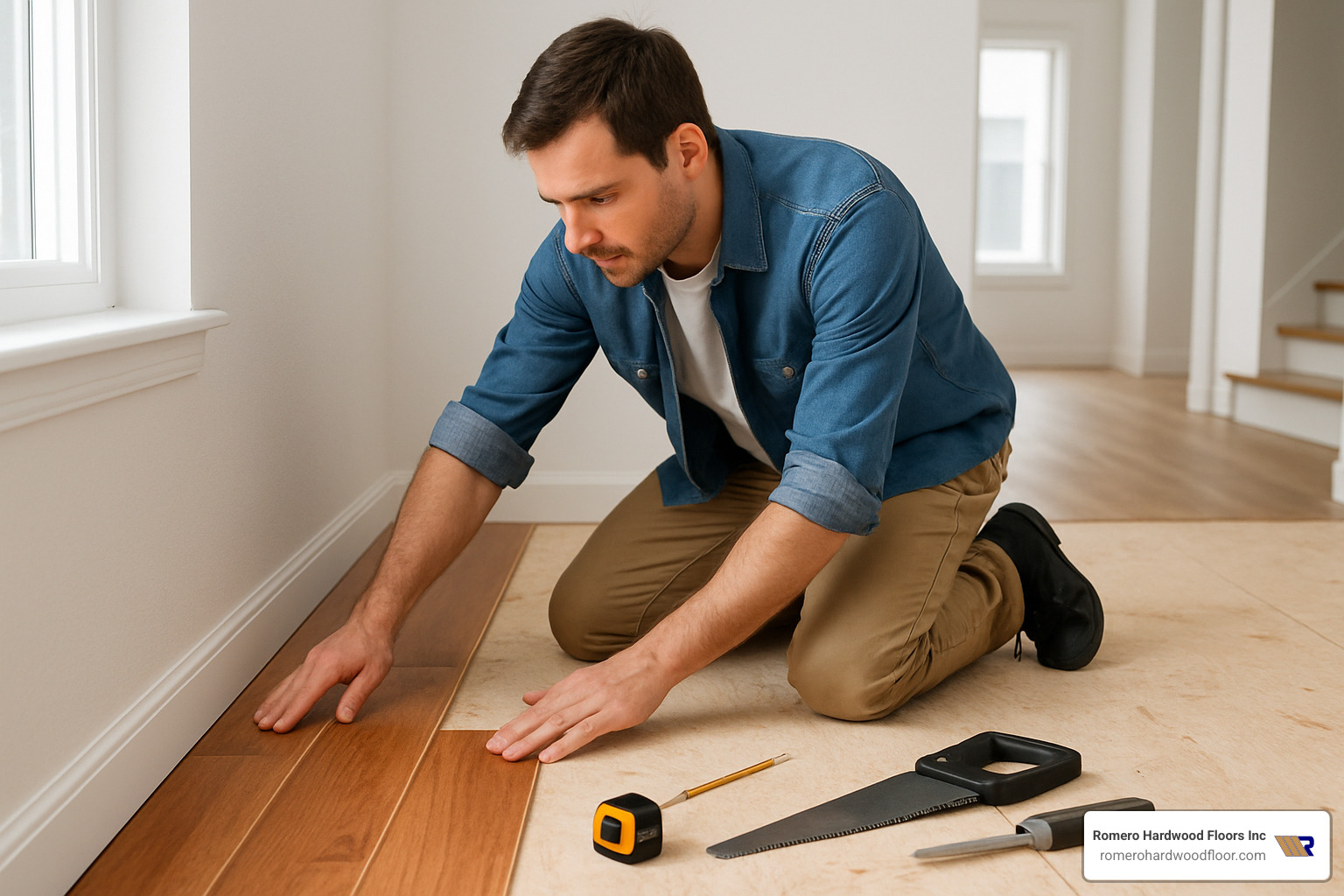
One of the most appealing aspects of click-lock engineered hardwood is that you can potentially install it yourself. The floating installation method doesn’t require nails or glue, making it much more approachable for handy homeowners. But before you decide to save on labor costs, let’s weigh the pros and cons of DIY versus professional installation.
If you’re considering the DIY route, you’ll need some essential tools in your arsenal. A quality tape measure and chalk line will ensure straight rows, while a miter saw or circular saw handles most straight cuts. For those tricky spots around doorjambs or pipes, a jigsaw becomes invaluable. Don’t forget the specialty flooring tools like a pull bar, tapping block, and rubber mallet – these are absolute necessities for proper click-lock installation. Rounding out your toolkit should be spacers for maintaining expansion gaps, a utility knife, and proper safety equipment to protect yourself.
DIY Cost Comparison
When comparing costs, the math seems straightforward at first glance. The average cost to install click engineered hardwood floor as a DIY project runs about $2 to $9 per square foot for materials only, while professional installation typically costs $6 to $12 per square foot all-in. On a 1,000 square foot project, that could mean pocketing $3,000 to $6,000 in savings.
But those savings come with important trade-offs. What many homeowners don’t consider is the significant time investment – while our professional teams at Romero can complete 500-1,000 square feet in a single day, a DIY project might consume your entire weekend or longer. There’s also the matter of quality assurance. Professionals ensure proper expansion gaps, level installation, and secure connections that prevent future problems like buckling or squeaking.
Another consideration is warranty protection. Some manufacturers actually void their product warranties if the flooring isn’t professionally installed. And don’t forget to factor in tool rental costs – if you don’t already own specialty flooring tools, you’re looking at $50-$100 per day in rental fees.
In my years of experience, I’ve seen many DIY installations that ended up costing more in the long run when homeowners had to call us to fix preventable mistakes. DIY works best if you have previous flooring experience, are working with simple rectangular rooms, have properly prepared subfloors, and can dedicate adequate time to doing the job right.
Choosing the Right Contractor
If you decide professional installation makes more sense for your situation, selecting the right contractor becomes your next important decision. I always recommend verifying credentials first – make sure they’re properly licensed and insured, with specific experience installing engineered hardwood.
Always request detailed, line-item quotes from at least three contractors so you can make accurate comparisons. Don’t just focus on the bottom line – pay attention to what each quote includes and excludes. Check references carefully by asking for photos of previous click-lock installations and speaking with past clients about their experience.
Before signing anything, review the contract thoroughly. It should clearly outline the timeline, payment schedule, and warranty details. Confirm subfloor preparation is included in the scope of work – inadequate preparation is the number one cause of flooring failures we see in the industry.
At Romero Hardwood Floors Inc., we’ve been installing engineered hardwood floors throughout Massachusetts since 2006. Our service area includes communities from Revere to Salem, Beverly to Somerville, and many locations in between. Our technicians receive specialized training in click-lock installation techniques to ensure your floors look beautiful and perform flawlessly for years to come.
For more information about our installation process and expertise, visit our engineered hardwood flooring installation page.
Ways to Save & Maximize ROI

Let’s face it – beautiful floors are an investment, but that doesn’t mean you can’t be smart about your spending. There are plenty of ways to bring down the average cost to install click engineered hardwood floor without cutting corners on quality.
One of the easiest money-savers is simply timing your purchase right. Flooring retailers frequently run seasonal sales with discounts of 10-20% off regular pricing. Just like buying patio furniture in September, shopping for flooring during industry slow periods (typically late fall and winter) can lead to better deals and more negotiating power with contractors who are eager to fill their schedules.
Want to save $1-$3.50 per square foot? Roll up your sleeves and handle the demolition yourself. Removing old carpet or vinyl is relatively straightforward for most homeowners with basic tools and some elbow grease. Just be sure to properly dispose of the materials – many contractors will still haul away debris for a reduced fee even if you do the removal.
Pre-finished planks are another smart choice for budget-conscious homeowners. These factory-finished floors eliminate the need for on-site sanding and finishing, saving both time and money. Plus, the factory-applied finishes are often more durable than those applied in the field.
Don’t overlook the value of wider planks. While they might cost a bit more per square foot, wider boards cover more area with fewer pieces. This can translate to faster installation times and potentially lower labor costs, especially in larger rooms.
For the best balance of quality and value, mid-tier engineered hardwood often hits the sweet spot. These products typically feature decent veneer thickness (2-3mm) with reliable warranties without the premium price tag of exotic species or ultra-thick wear layers.
Here’s a tip many homeowners miss: investing in quality underlayment not only improves the comfort and acoustics of your new floor but can also reduce heating costs through better insulation. A good underlayment might add $0.50-$1 per square foot to your project, but the energy savings and improved comfort make it worthwhile.
By implementing several of these strategies together, you could potentially trim 15-30% off your total project cost without compromising on the quality of your new floors.
Return on Investment & Home Value
Installing engineered hardwood isn’t just an expense—it’s a smart investment that pays dividends when you sell. According to the National Association of Realtors, hardwood flooring installations can yield up to 118% ROI when selling your home. That’s right—hardwood flooring is one of the few home improvements that can actually return more than what you spent.
Real estate professionals consistently report that homes with hardwood floors sell faster and command higher prices than similar properties with carpet or vinyl flooring. In competitive markets, well-maintained hardwood floors can boost a home’s value by 3-5% compared to homes with other flooring types.
To maximize this return on your investment, focus on timeless species and colors that appeal to a broad range of potential buyers. Medium-tone finishes tend to complement various decorating styles and show less wear than very light or very dark options. Oak, maple, and hickory remain perennially popular for good reason—they offer excellent durability and aesthetic appeal without the premium price of exotic species.
Professional installation with proper transitions between rooms is crucial for that high-end look that buyers appreciate. Even the most beautiful flooring can look amateur if transitions and trim work aren’t handled correctly.
Don’t forget to maintain your floors properly to preserve their appearance and condition. A well-maintained engineered hardwood floor can look beautiful for decades, while neglected flooring might need replacement much sooner.
When it comes time to sell, be sure to highlight your hardwood floors in listing photos and marketing materials. Good staging and photography that showcases your beautiful floors can make a significant difference in attracting potential buyers and justifying your asking price.
At Romero Hardwood Floors Inc., we’ve seen how quality engineered hardwood installations have transformed homes throughout Massachusetts, not just in terms of livability but also in measurable property value increases. While we can’t predict exact ROI for every home, our experience shows that few home improvements deliver the combination of daily enjoyment and financial return that hardwood floors provide.
Installation Timeline & What to Expect
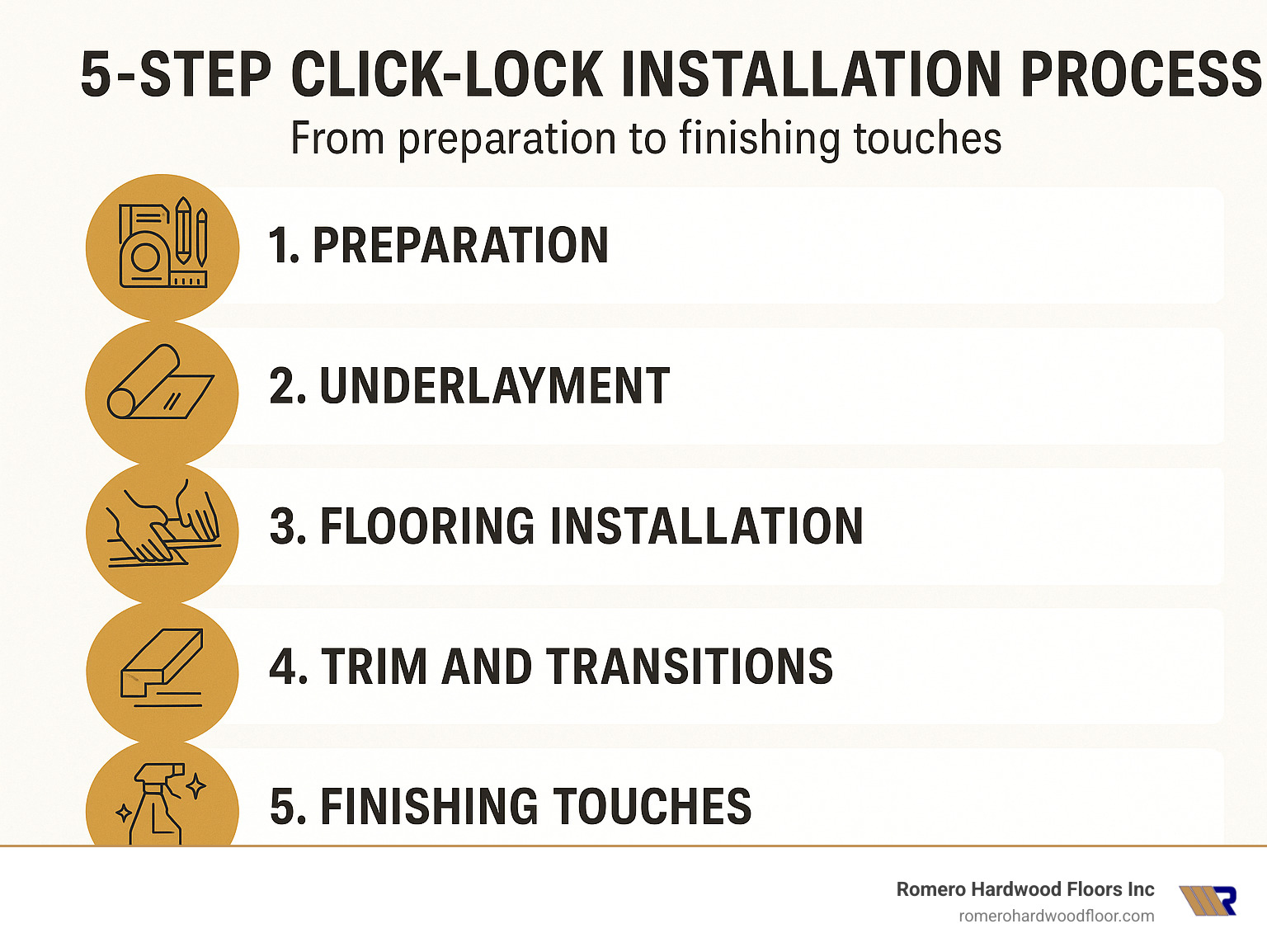
Planning a new floor can feel overwhelming, but knowing what to expect makes the process much smoother. Let me walk you through the typical timeline for a professional click-lock engineered hardwood installation.
Before any planks are laid, you’ll spend about 1-2 weeks in the planning phase. This includes selecting your perfect materials, getting accurate measurements, and waiting for delivery. Once your beautiful new flooring arrives, patience is key—those planks need 48-72 hours to acclimate to your home’s unique temperature and humidity conditions. This isn’t just a suggestion; it’s essential for preventing warping or gaps down the road.
When installation day arrives, here’s what typically happens for a 500 square foot space:
– Day 1: Removal of existing flooring (about 1 day) and beginning subfloor preparation
– Day 1-2: Completing subfloor preparation (timeline varies based on condition)
– Day 2-3: Installation of underlayment and laying the new flooring
– Day 3-4: Installing trim and transitions, followed by thorough cleanup
Professional teams like ours at Romero Hardwood Floors Inc. typically install between 500-1,000 square feet per day, meaning a standard 1,000 square foot project usually takes 2-3 days from start to finish when subfloor conditions are good. After installation, you’ll need to wait just 24 hours before moving heavy furniture back into place.
Common Mistakes to Avoid
After installing hundreds of engineered hardwood floors throughout Massachusetts, we’ve seen homeowners make the same costly mistakes time and again. Save yourself headaches and money by avoiding these common pitfalls:
Skipping moisture testing is like gambling with your new floor. Even engineered products can warp and buckle with excess moisture, especially in our variable New England climate. Always test before installing.
Rushing the acclimation process might seem tempting when you’re excited about your new floors, but those 48-72 hours are crucial. Wood is natural and needs time to adjust to your home’s environment.
Forgetting expansion gaps around the perimeter is a rookie mistake that can lead to buckling. Even engineered wood expands and contracts with seasonal changes.
Ignoring existing subfloor problems like squeaks or unevenness is like building a house on sand—eventually, those issues will resurface and compromise your beautiful new floor.
Under-ordering materials is surprisingly common. Always add 10-15% to your measurements for waste, cuts, and to keep some planks for potential future repairs. There’s nothing worse than running short mid-installation or trying to match colors years later.
Neglecting transition pieces between rooms or different flooring types isn’t just an aesthetic issue—these pieces serve crucial functional purposes in allowing for movement and preventing edge damage.
Choosing solely based on price often leads to disappointment. While the average cost to install click engineered hardwood floor is important to consider, extremely low-cost options usually sacrifice durability and appearance, costing more in the long run.
By understanding the timeline and avoiding these common mistakes, you’ll be well on your way to enjoying beautiful, long-lasting engineered hardwood floors that add both comfort and value to your home.
Maintenance & Long-Term Costs
One of the most appealing aspects of click-lock engineered hardwood is its relatively simple maintenance routine. When homeowners ask me about long-term care, I often tell them it’s one of the most hassle-free flooring options available today.
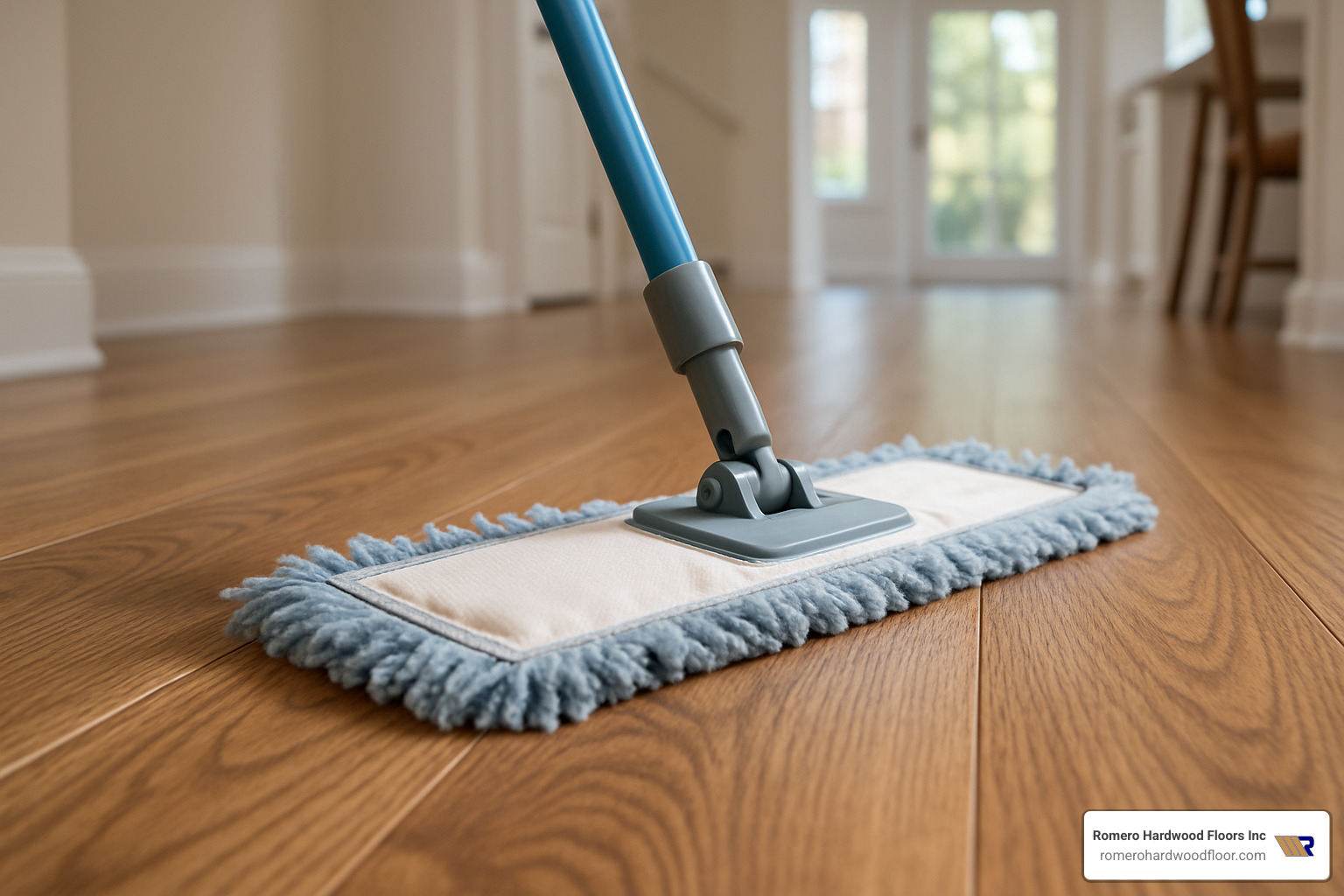
Your day-to-day maintenance will be straightforward: a quick sweep or vacuum with a hard floor attachment a few times each week keeps surface dirt at bay. Monthly, you’ll want to use a slightly damp (never wet!) microfiber mop with a manufacturer-approved cleaner. This simple routine prevents scratches from grit and preserves your floor’s natural beauty.
Spill response is another critical maintenance habit. Unlike solid hardwood, engineered products have slightly better moisture resistance, but I still advise my customers to wipe up spills promptly. This prevents liquid from seeping into seams and potentially causing damage over time.
The average cost to install click engineered hardwood floor is just the beginning of your investment. Long-term, you’ll spend approximately $50-$100 yearly on cleaning supplies—a small price for maintaining your beautiful floors. Quality microfiber mops, manufacturer-recommended cleaners, and felt furniture pads are all worthy investments that protect your flooring.
One significant advantage of engineered hardwood is the ability to replace individual damaged planks without tearing up the entire floor. If a section becomes damaged (perhaps from a dropped pot or furniture drag), replacement typically costs $15-$25 per square foot—substantially less than replacing an entire room.
Regarding refinishing, this is where veneer thickness becomes crucial. Floors with at least 2mm of hardwood veneer can usually be refinished once or twice during their lifetime, costing around $3-$5 per square foot every 10-20 years. Thinner veneers (1-2mm) generally cannot be refinished, so factor this into your initial product selection if longevity is a priority.
The indoor environment plays a surprising role in floor longevity too. Maintaining humidity between 30-50% prevents excessive expansion and contraction that can damage connections between planks. In New England’s seasonal climate, this sometimes means using humidifiers in winter and dehumidifiers in summer.
With proper care, quality engineered hardwood can last 30-50 years before needing replacement—an impressive lifespan that makes the initial investment quite reasonable when amortized over decades. This longevity is why many of our Massachusetts customers see engineered hardwood as not just a flooring choice, but a legacy addition to their homes that will serve their families for generations.
Frequently Asked Questions about Click-Lock Engineered Hardwood Costs
How do regional labor rates affect the average cost to install click engineered hardwood floor?
When budgeting for your flooring project, location matters—a lot! Regional labor rates create significant swings in what you’ll pay for installation. Here in the Northeast, particularly around our home base of Revere and throughout the greater Boston area, labor costs typically run 20-30% higher than the national average.
What does this mean in dollars and cents? While homeowners in rural areas might pay just $3-$5 per square foot for installation labor, our Massachusetts customers often see rates of $6-$12 per square foot. This regional difference is why those national averages you see online need a local adjustment.
At Romero Hardwood Floors Inc., we work hard to offer competitive rates throughout our Massachusetts service areas while never compromising on quality. We understand the local market and price accordingly—no surprises, just honest pricing for excellent craftsmanship.
Are there extra fees for installing over concrete slabs?
Yes, concrete subfloors do require some special attention—and that means additional costs. But don’t worry, these extra steps are investments in the longevity of your beautiful new floors.
Concrete typically needs proper preparation, including:
– Leveling (usually $500-$800 for an average room)
– Professional moisture testing ($50-$200)
– Moisture barrier installation ($0.50-$1 per square foot)
These steps aren’t optional extras—they’re essential safeguards. Moisture issues are the number one reason flooring fails over concrete, and skipping these preparations is penny-wise but pound-foolish.
The good news? Click-lock engineered hardwood is actually one of your best options for concrete slabs. Its dimensional stability handles the inherent moisture challenges of concrete much better than solid hardwood ever could. The additional preparation costs pay dividends in longevity and performance.
How long will a click-lock engineered floor last before needing refinishing?
The lifespan before your first refinishing depends primarily on two factors: veneer thickness and how much daily traffic your floors endure. With a standard 2-3mm wear layer, most engineered floors in typical homes can go 15-20 years before needing refinishing.
Your mileage may vary, of course. High-traffic areas like entryways and kitchens might show wear sooner (10-15 years), while those guest bedrooms that rarely see footsteps might extend well beyond the 20-year mark.
It’s worth noting that unlike solid hardwood, which can be refinished multiple times, engineered products typically can only be refinished once or twice throughout their lifetime. This limitation makes your initial selection particularly important—choosing a durable finish and appropriate wood species for your lifestyle will maximize your floor’s beauty for decades.
Many of our Massachusetts customers find that with proper care and maintenance, their click-lock engineered floors maintain their beauty for decades with minimal intervention. The right care routine can significantly extend the time between refinishing projects.
Please note that the pricing information provided throughout this article represents average costs based on internet data and industry research, not actual quotes from Romero Hardwood Floors Inc. For a personalized estimate custom to your specific project, we recommend contacting us directly.
Conclusion
The average cost to install click engineered hardwood floor offers homeowners an excellent balance of timeless beauty, practical durability, and overall value. With total installed costs ranging from $6 to $20 per square foot, this versatile flooring option accommodates various budgets while bringing the warmth and elegance of genuine hardwood into your home.
Here at Romero Hardwood Floors Inc., we’ve been guiding Massachusetts homeowners through their flooring journeys since 2006. Our skilled teams have transformed countless homes throughout Revere, Salem, Beverly, Somerville, and neighboring communities with expertly installed click-lock engineered hardwood that not only improves daily living but also boosts property values.
While we’ve done our best to provide comprehensive information about industry-standard pricing, your specific project may vary based on several factors. Your home’s unique characteristics, the materials you select, and current market conditions all play important roles in determining your final investment. The most reliable way to understand your actual costs is through a personalized, in-home consultation.
We’d love to help you bring your flooring vision to life! Our approach combines transparent pricing, guaranteed craftsmanship, and a commitment to punctuality that has made us a trusted flooring partner throughout Massachusetts. When you work with us, you’re not just getting new floors – you’re getting peace of mind knowing professionals are handling every aspect of your installation.
For a more detailed breakdown of engineered hardwood flooring costs custom to your specific project, we invite you to explore our Engineered Hardwood Flooring Installation Cost page or give us a call today. We’re happy to schedule a free, no-obligation consultation and provide a quote customized to your unique needs.
The prices discussed throughout this article represent averages based on public data sources – not actual quotes from Romero Hardwood Floors Inc. Your investment in beautiful, durable engineered hardwood flooring deserves personalized attention, and we’re here to provide exactly that.
