
Best Engineered Wood Flooring for Kitchen: Top 5 Choices
The best engineered wood flooring for kitchen spaces combines beauty with unparalleled durability. As a homeowner or property manager, the kitchen’s flooring not only needs to withstand the hustle and bustle of daily life but also contribute to the overall aesthetic of one of the home’s most vital rooms. Engineered wood flooring offers a resilient solution that harmonizes with modern design while enduring the high-traffic demands of kitchen environments.
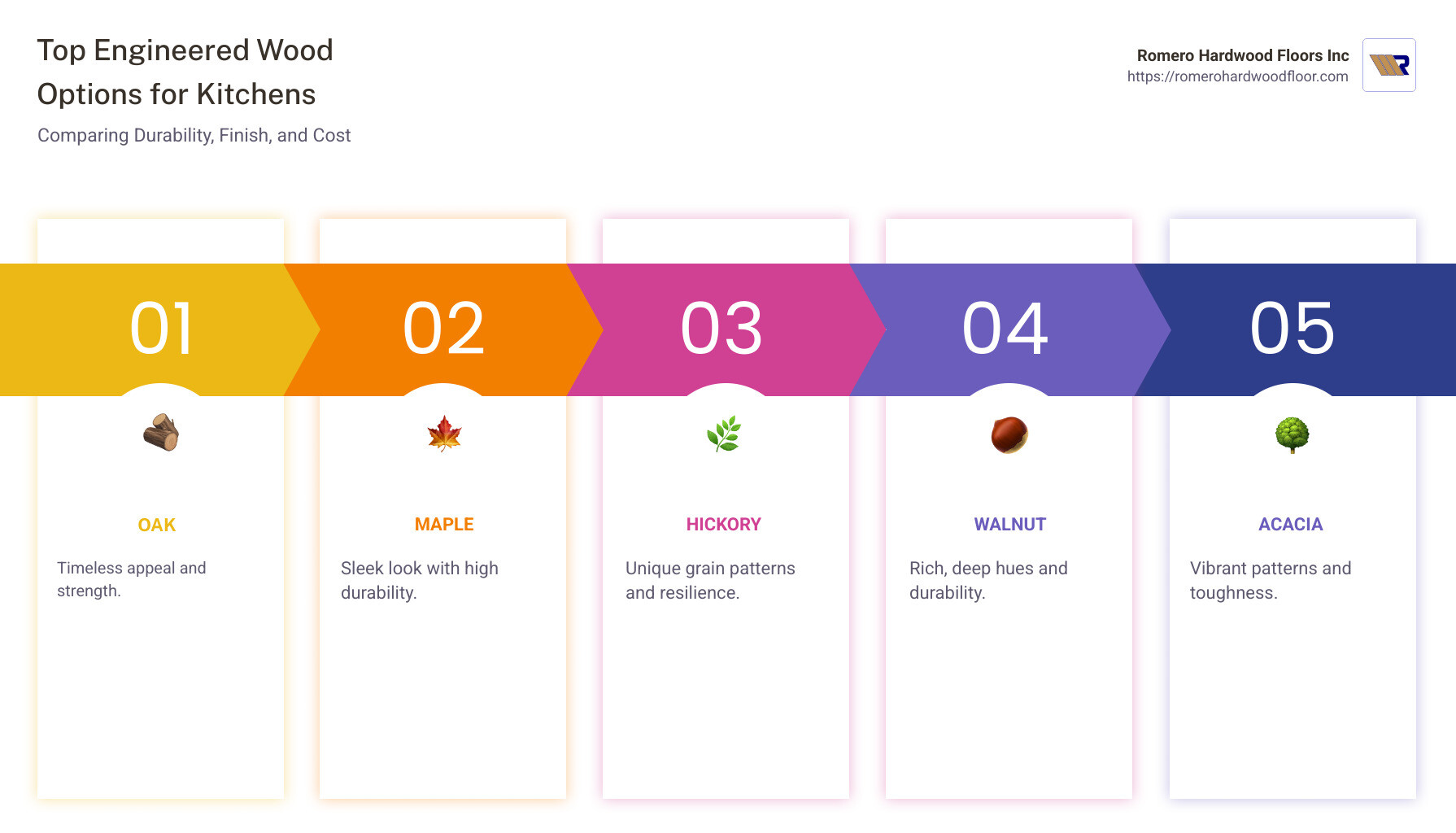
- Oak: Renowned for its timeless appeal and strength.
- Maple: Offers a sleek look and is highly durable.
- Hickory: Provides unique grain patterns and resilience.
- Walnut: Known for rich, deep hues and durability.
- Acacia: Boasts vibrant patterns and toughness.
Selecting the right kind of engineered wood is essential for ensuring both beauty and longevity in your kitchen. With its impressive stability and range of finishes, engineered wood resists warping and can handle the occasional spills and humidity better than traditional hardwood.
As Francisco Romero, owner of Romero Hardwood Floors Inc., I’ve dedicated over 15 years to changing kitchens with premium engineered wood flooring. My expertise has guided countless homeowners in Revere, MA, toward choosing the best engineered wood flooring for kitchen renovations that improve both function and beauty.
Best engineered wood flooring for kitchen word guide:
– Engineered vs solid hardwood
– best wood floor for kitchen
Why Choose Engineered Wood for Kitchens?
When it comes to kitchen flooring, engineered wood stands out for its stability, moisture resistance, and aesthetic appeal. These features make it a top choice for homeowners looking to combine style with practicality.
Stability
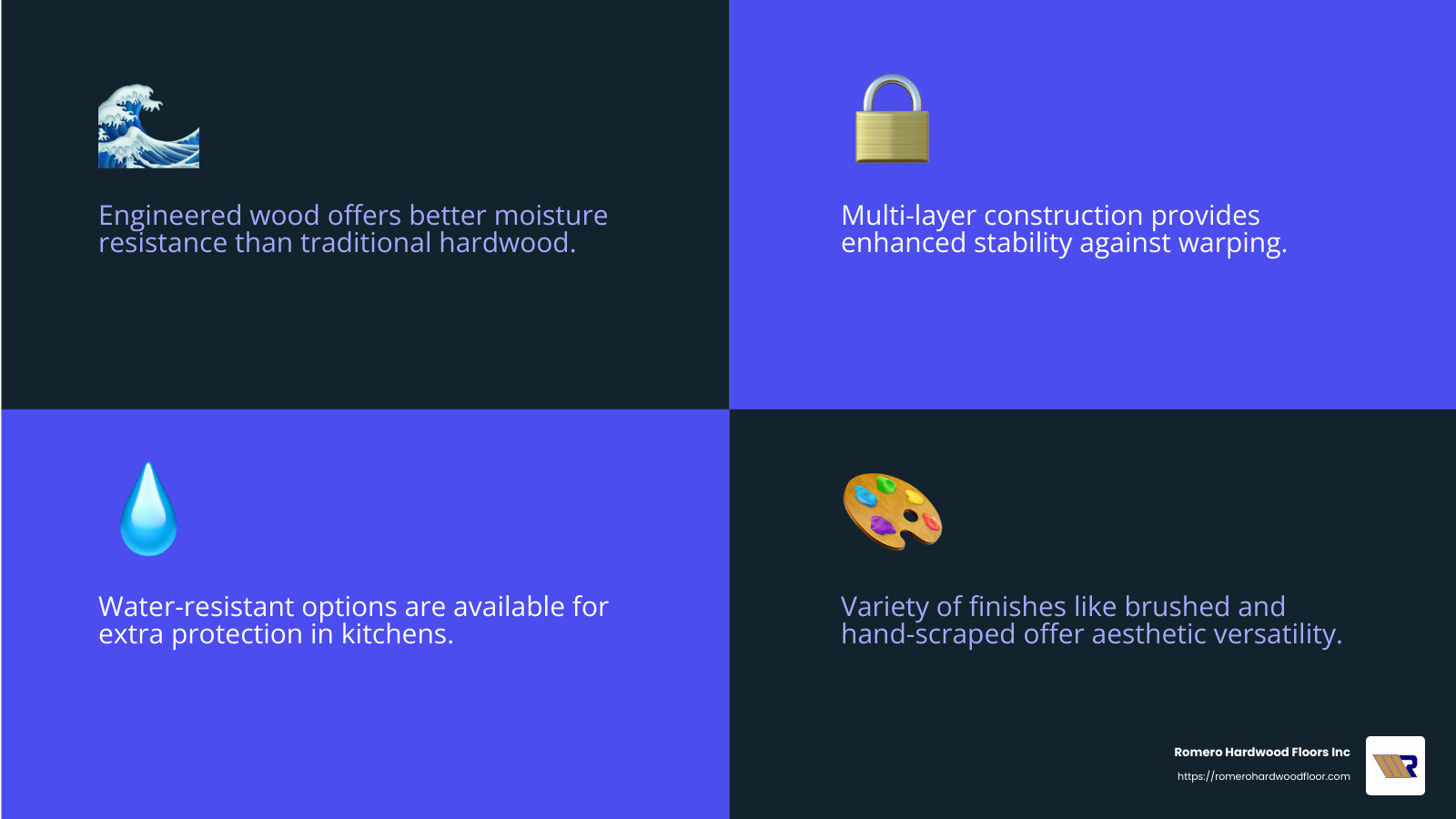
Engineered wood is crafted to handle the kitchen’s fluctuating climate. Its multi-layer construction, with a solid wood top layer bonded to layers of plywood or MDF, provides exceptional stability. This design reduces the risk of warping and bowing, common issues with solid wood when exposed to temperature and humidity changes. As the kitchen is a high-traffic area, this stability ensures your floor remains intact and beautiful over time.
Moisture Resistance
Kitchens often face spills and splashes. While engineered wood is not completely waterproof, it offers better moisture resistance than traditional hardwood. Its layered construction helps it withstand minor spills when cleaned up promptly. For those seeking extra protection, options like water-resistant engineered hardwood are available, providing peace of mind without sacrificing style.
Aesthetic Appeal
The aesthetic versatility of engineered wood is best. Whether you prefer the classic charm of oak or the rich tones of walnut, there’s a style to match every kitchen decor. With a variety of finishes available, from brushed to hand-scraped, you can customize the look to fit your personal taste. This adaptability means engineered wood can complement both rustic and modern kitchen designs, enhancing the space’s overall visual appeal.
In summary, engineered wood flooring is a smart choice for kitchens, offering a blend of durability, moisture resistance, and aesthetic variety. It provides a resilient and stylish foundation that can handle the demands of a busy kitchen while maintaining its beauty for years to come.
Best Engineered Wood Flooring for Kitchen
When selecting the best engineered wood flooring for kitchen spaces, you have a variety of options that balance style and function. Here, we’ll explore some popular choices: oak, maple, hickory, walnut, and acacia. Each has unique characteristics that make it suitable for the kitchen environment.
Oak
Oak engineered hardwood is a timeless classic. Known for its strength and durability, oak resists wear and tear, making it ideal for high-traffic areas like kitchens. White oak, in particular, offers excellent water resistance, a crucial feature for kitchen flooring. Its grain pattern and color versatility allow it to fit seamlessly into both traditional and contemporary designs.
Maple
Maple engineered hardwood is another great option for kitchens. It has a smooth grain and light color, which can brighten up your kitchen space. Maple is highly durable, capable of withstanding the hustle and bustle of a busy kitchen. Its subtle appearance makes it a flexible choice for various kitchen styles, from modern to rustic.
Hickory
Hickory engineered hardwood stands out for its extreme durability. With its distinct grain pattern, hickory adds character and warmth to any kitchen. It’s one of the hardest woods available, which means it can handle heavy foot traffic and the occasional dropped pot or pan without showing signs of damage.
Walnut
For those who prefer a darker, richer look, walnut engineered hardwood is a fantastic choice. While slightly softer than oak or hickory, walnut’s deep tones can effectively mask minor scratches and wear. This makes it a practical option for families or households with pets, as it maintains its neat appearance over time.
Acacia
Acacia engineered hardwood offers an exotic flair with its unique grain patterns and rich hues. Acacia is not only visually striking but also incredibly durable, making it suitable for the daily demands of a kitchen. Its natural resistance to moisture and wear ensures longevity while adding a touch of sophistication to your home’s heart.
Each of these wood types brings its own set of benefits to the table. When choosing the best engineered wood flooring for your kitchen, consider factors such as durability, color preference, and how well it complements your overall kitchen design. With options like these, you’re sure to find a flooring solution that improves both the functionality and aesthetics of your kitchen space.
Key Features to Consider
When selecting the best engineered wood flooring for kitchen use, focus on three key features: wear layer thickness, finish options, and water resistance. These elements will significantly impact the durability, appearance, and practicality of your kitchen flooring.
Wear Layer Thickness
The thickness of the wear layer is crucial for determining the floor’s durability and lifespan.
- Less than 2mm: Suitable for low-traffic areas but not recommended for kitchens due to limited refinishing potential.
- 2mm – 4mm: Ideal for moderate traffic areas like kitchens. These can be refinished once or twice, extending the floor’s life.
- 4mm or greater: Best for high-traffic kitchens. These floors can typically be refinished multiple times, offering the longest lifespan.
Consider your kitchen’s foot traffic, the presence of kids or pets, and how often you plan to refinish when choosing wear layer thickness.
Finish Options
The finish of your engineered wood flooring not only affects its appearance but also its resistance to wear and spills.
- Lacquered Finish: Offers a shiny, smooth surface that’s easy to clean. It’s great for modern kitchens but can show scratches more easily.
- Oiled Finish: Provides a more natural look and feel. It can hide scratches better but may require more maintenance.
- Brushed or Hand-Scraped Finish: Adds texture and character, which can help conceal wear and tear.
Choose a finish that aligns with your kitchen’s style and your maintenance preferences.
Water Resistance
Kitchens are prone to spills and moisture, making water resistance a top priority.
- Standard Engineered Hardwood: While more stable than solid wood, it can still suffer from prolonged exposure to moisture.
- Water-Resistant Options: Many brands now offer water-resistant engineered wood, designed to withstand spills and humidity better than traditional options.
- Waterproof Selections: Products like the H2OME line use advanced technology to create a true waterproof seal, ideal for busy kitchens.
Opt for water-resistant or waterproof engineered wood to ensure your kitchen floor remains beautiful and durable.
By focusing on these key features, you’ll find an engineered wood flooring option that meets the demands of your kitchen while enhancing its beauty and functionality.
Pros and Cons of Engineered Wood in Kitchens
When considering the best engineered wood flooring for kitchen use, it’s important to weigh both the benefits and drawbacks. Here’s a quick rundown of the key pros and cons:
Durability
Engineered wood flooring is known for its robust construction, making it a popular choice for kitchens. The layered design provides excellent stability and resistance to temperature and humidity changes.
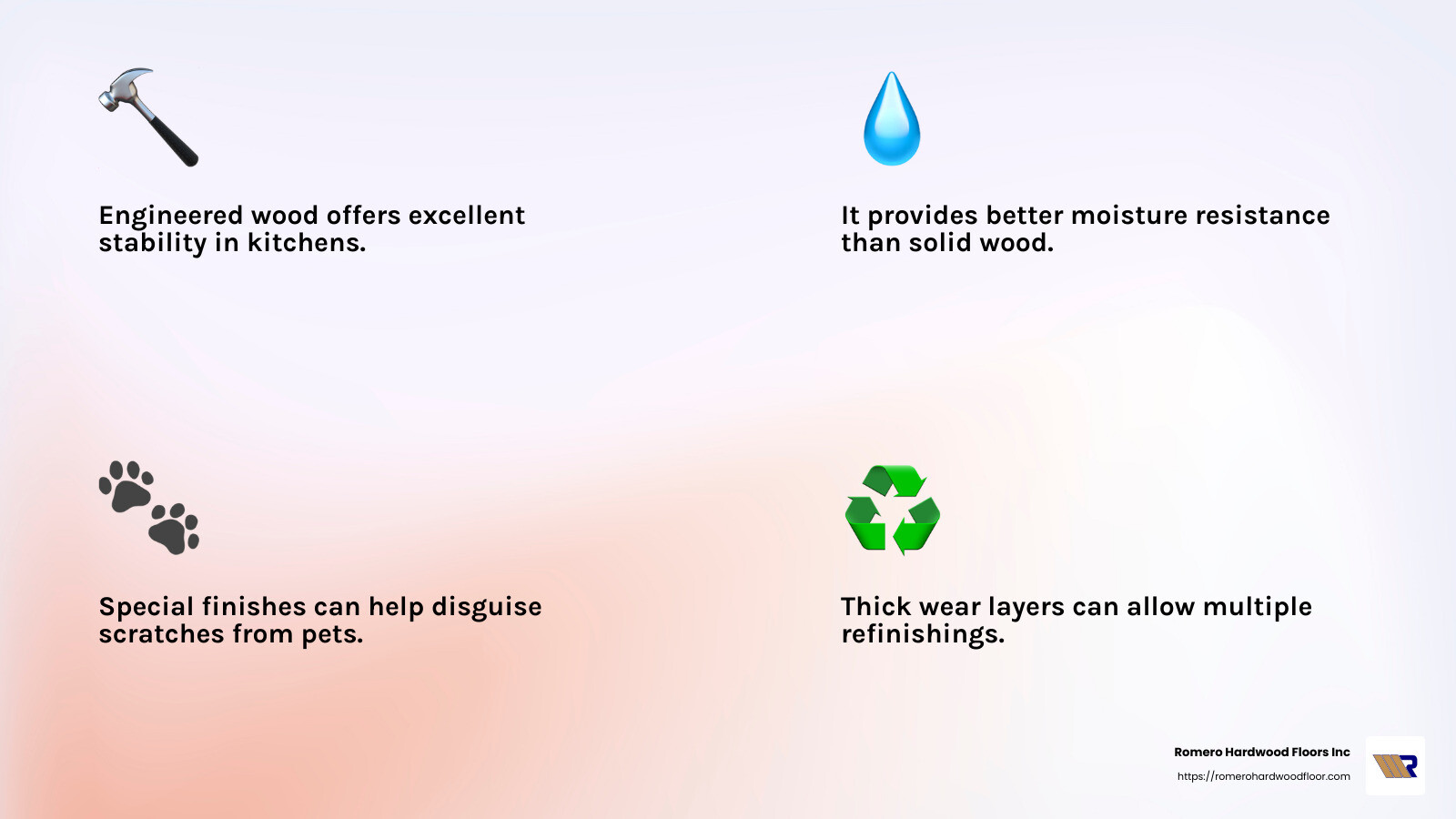
- Pros: Engineered wood is less likely to warp or buckle compared to solid hardwood, especially in a kitchen environment where moisture and temperature fluctuations are common.
- Cons: Although durable, engineered wood can still show signs of wear over time, especially in high-traffic areas.
Water Damage
Kitchens are a hotspot for spills and moisture, which can be a concern for any wood flooring.
- Pros: Engineered wood offers better moisture resistance than solid wood. Some options, like the H2OME line, even offer waterproof protection for added peace of mind.
- Cons: Despite its resistance, engineered wood is not completely waterproof. Prolonged exposure to water can lead to swelling, warping, or staining if spills aren’t cleaned up promptly.
Scratches
In a busy kitchen, scratches can happen easily from dropped utensils, high heels, or pet claws.
- Pros: Certain finishes, like a brushed or hand-scraped texture, can help disguise minor scratches and dents, maintaining a fresh appearance.
- Cons: Engineered wood is not immune to scratches. Protective pads on furniture and regular pet nail trims can help, but some wear is inevitable.
Refinishing Limitations
Refinishing can refresh worn floors, but the ability to refinish depends on the wear layer thickness.
- Pros: Engineered wood with a thicker wear layer (4mm or greater) can be refinished multiple times, extending its lifespan.
- Cons: Floors with a thinner wear layer (less than 2mm) may not be suitable for refinishing, limiting their long-term usability.
In summary, engineered wood flooring brings a blend of beauty and practicality to your kitchen, but it’s crucial to consider these factors to ensure it meets your needs.
Frequently Asked Questions about Engineered Wood Flooring
Is engineered wood flooring suitable for kitchens?
Absolutely! Engineered wood flooring is a fantastic choice for kitchens due to its moisture resistance and stability. Unlike solid hardwood, engineered wood is constructed with multiple layers that improve its ability to withstand humidity and temperature changes, which are common in kitchen environments. This layered design helps prevent issues like warping and bowing, making it a reliable choice for areas prone to spills and moisture.
How durable is engineered wood flooring in a kitchen setting?
Durability is one of engineered wood flooring’s standout features, especially in high-traffic areas like kitchens. Thanks to its cross-ply construction, it can handle the hustle and bustle of a busy kitchen without losing its charm. The top veneer layer, often made from hardwood, provides a robust surface that can resist daily wear and tear. However, while engineered wood is durable, it’s still wise to take precautions, like using felt pads under furniture and keeping pet nails trimmed, to prolong its lifespan.
Can engineered wood flooring be refinished?
Yes, engineered wood flooring can be refinished, but there are some refinishing limitations to keep in mind. The potential for refinishing largely depends on the wear layer thickness. Floors with a thicker wear layer (typically 4mm or greater) can be refinished multiple times, allowing you to refresh the surface and extend the floor’s life. However, if the wear layer is thinner (less than 2mm), refinishing might not be feasible, limiting the floor’s longevity. Always consider the wear layer thickness when choosing your engineered wood flooring to ensure it aligns with your maintenance expectations and the level of wear it will face in your kitchen.
Conclusion
Choosing the best engineered wood flooring for your kitchen is a significant decision that can improve not only the functionality of your space but also its aesthetic appeal. At Romero Hardwood Floors Inc, we understand the impact that expertly installed flooring can have on your home. With over a decade of experience in hardwood flooring installation, our team is committed to delivering quality workmanship that stands the test of time.
Investing in engineered wood flooring is not just about improving the look of your kitchen. It’s also about boosting your property value. According to the National Association of REALTORS, real wood floors can increase the sales price of your home by as much as 2.5%. This makes engineered wood a smart choice for homeowners looking to improve their home’s marketability.
Our expert installation services ensure that your flooring is laid perfectly, providing durability and elegance that can withstand the daily demands of a kitchen. Whether you choose oak, maple, or any other wood type, our team will guide you through the selection process, ensuring you find the perfect match for your style and needs.
At Romero Hardwood Floors Inc, we are dedicated to helping you create a beautiful and lasting foundation in your home. With our competitive pricing, punctuality, and guaranteed workmanship, you can trust us to deliver flooring solutions that are engineered to impress.
Ready to transform your kitchen with the best-engineered wood flooring? Contact us today to learn more about our services and how we can help you achieve your dream kitchen.
