
Best Flooring for Wood Subfloor: 5 Ultimate Choices
Why Your Subfloor Matters: Finding the Perfect Match
Choosing the best flooring for wood subfloor is a big step in any home renovation. But before you pick that perfect color or style, it’s important to know what lies beneath. Your subfloor is the hidden foundation that supports your entire floor system. Picking the right top layer for it is key to long-lasting beauty and performance.
If you’re looking for a quick answer on what works best, here are the top choices for homes with a wood subfloor:
- Solid Hardwood: A classic choice, very durable, and can be refinished many times.
- Engineered Hardwood: Offers good moisture resistance and works well with wider planks.
- Luxury Vinyl Tile (LVT) / Plank (LVP): Fully waterproof, making it great for kitchens and bathrooms.
- Ceramic & Porcelain Tile: Extremely durable and waterproof, but needs extra subfloor preparation.
- Laminate Flooring: A cost-effective option that looks like wood and is quite scratch-resistant.
I’m Francisco Romero, owner of Romero Hardwood Floors Inc. With over 15 years of experience, my team and I specialize in high-quality hardwood floors for homes and businesses. We are dedicated to helping you choose and install the best flooring for wood subfloor, ensuring every project improves your property’s beauty and value.
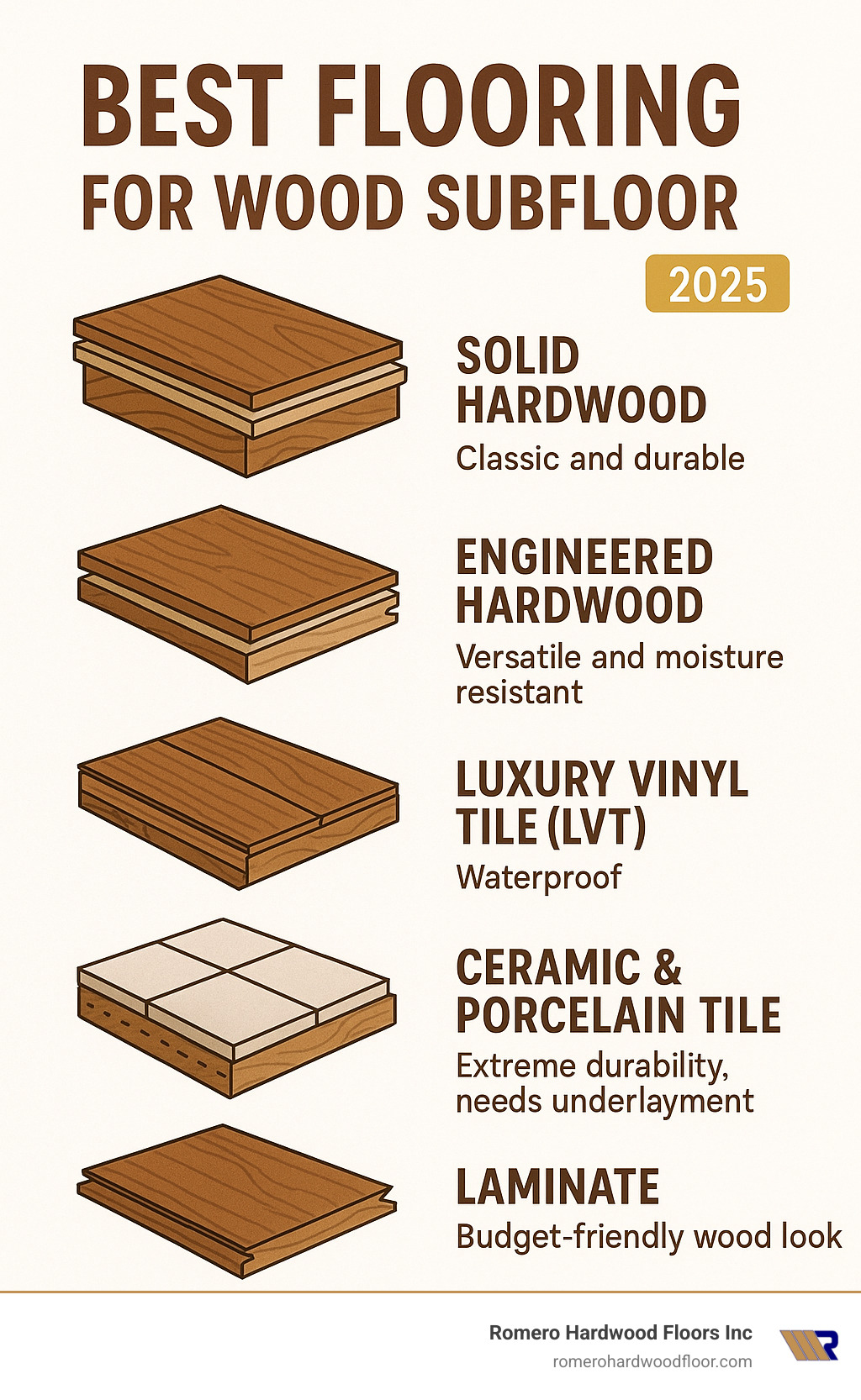
Simple best flooring for wood subfloor word guide:
Understanding Your Foundation: Wood Subfloors 101
Before choosing your finished flooring, understand the subfloor. This is the strong, continuous base that covers your floor joists and acts as the foundation for your entire floor system. A solid, well-installed subfloor is critical for the performance, stability, and longevity of any flooring you choose. It’s the backbone of your floor’s structural integrity.
While the term “wood subfloor” might sound simple, there are two main types: plywood and Oriented Strand Board (OSB). Both are engineered wood products with distinct characteristics. If you’d like to explore how plywood is manufactured and its wide range of uses, the Plywood article on Wikipedia offers an excellent overview.
More info about different kinds of flooring
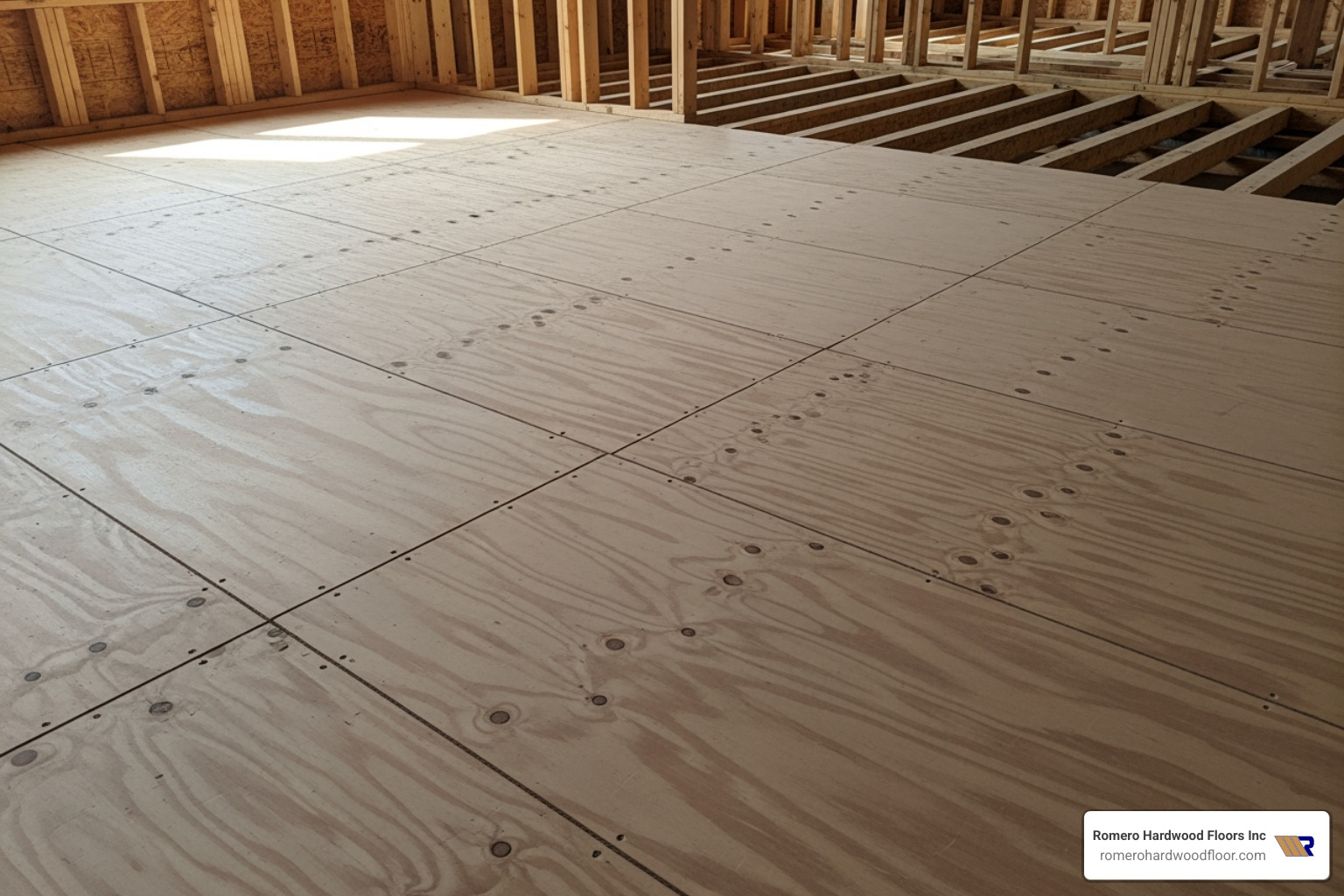
What is a Subfloor vs. an Underlayment?
This is a common question, and it’s crucial to get it right as they serve very different purposes.
The subfloor is the primary structural layer, typically a thick sheet of plywood or OSB fastened directly to the floor joists. It provides a stable, continuous surface that bears the weight of the room’s contents, transferring the load to the joists. A poor subfloor can lead to bouncy floors, squeaks, or other structural problems.
An underlayment is a thinner layer installed on top of the subfloor, just beneath the finished flooring. Its purpose is to create a smooth, clean surface for the final floor. Depending on the type, it can also correct minor subfloor imperfections, provide sound absorption, or act as a moisture barrier. For hardwood floors, a specific underlayment is often used for moisture control and to prevent creaks.
In short: the subfloor is the strong foundation, and the underlayment is the smooth, protective base that helps your finished floor perform its best.
Hardwood Floor Underlayment Types
Common Wood Subfloor Materials: Plywood vs. OSB
When it comes to wood subfloors, plywood and OSB are the two heavyweights you’ll encounter.
Plywood: This material has been a popular subfloor choice since the 1950s. It’s made of thin wood veneers layered with alternating grain directions, giving it excellent strength and stability. It is about 10 percent stiffer than OSB, making it ideal for flooring like ceramic tile that requires a rigid base. Plywood is also more resistant to swelling from moisture and dries faster, and it has slightly better holding power for fasteners. A 4×8 sheet of 3/4-inch plywood typically costs $21.50 to $65.
OSB (Oriented Strand Board): Used since the 1970s, OSB is made from compressed and bonded wood strands. It’s often a more budget-friendly option, with a 4×8 sheet of 23/32-inch OSB costing $16.50 to $50. While slightly more flexible than plywood, OSB has superior horizontal shear strength, making it suitable for certain applications. However, its edges are more prone to swelling when wet, and it holds moisture longer than plywood.
Note: All prices mentioned here are estimates based on general market data and do not reflect specific pricing from Romero Hardwood Floors. Costs can vary significantly based on materials, location, and market fluctuations, potentially reaching 3x the average or more.
Here’s a quick comparison to help you visualize the differences:
| Feature | Plywood | OSB (Oriented Strand Board) |
|---|---|---|
| Cost (avg. 4×8) | ~$21.50 – $65 (3/4-inch) | ~$16.50 – $50 (23/32-inch) – often $3-$5 less |
| Stiffness | ~10% stiffer between joists | Slightly more flexible |
| Water Resistance | Better resistance to permanent swelling, dries faster | Edges swell more significantly if wet, holds moisture longer |
| Nail Holding | Slightly better holding power | Good, but slightly less than plywood |
| Best Use Cases | General subflooring, preferred under heavy tile | General subflooring, cost-effective for large areas, attics/sheds |
In most residential applications, both plywood and OSB are perfectly acceptable subfloor materials if properly installed and kept dry. Our team in Revere, MA, and across the greater Boston area, works with both, always ensuring the right material is chosen for your project to ensure you get the best flooring for wood subfloor that lasts.
What is the Best Flooring for a Wood Subfloor? A Detailed Comparison
Now for the fun part: picking the finished flooring! When considering the best flooring for wood subfloor, we evaluate several factors: its durability, aesthetics, installation methods, and cost. Each option has its own personality, and finding the perfect match is about aligning its strengths with your lifestyle and your home’s needs.
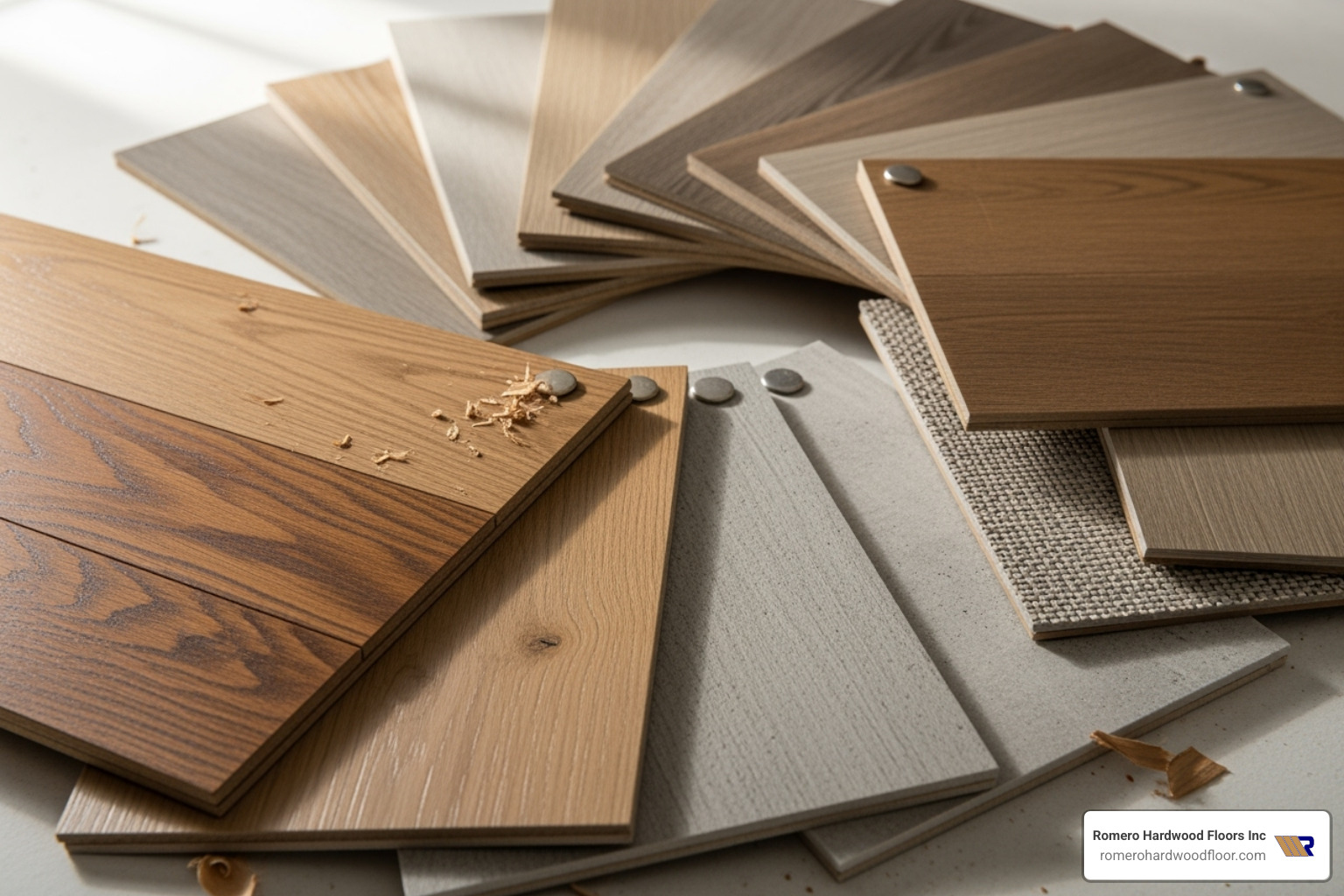
Solid Hardwood: The Classic Choice for a Wood Subfloor
Solid hardwood exudes a timeless warmth and elegance, making it an excellent, natural fit for homes with a wood subfloor.
It is renowned for its incredible longevity, often lasting over 50 years. Its key advantage is that it’s completely refinishable; a professional sanding and refinishing can restore it to its original beauty after decades of wear. This makes it a wise long-term investment that also adds significant resale value to your home.
However, solid hardwood is moisture sensitive, expanding and contracting with humidity changes. This makes it unsuitable for wet areas like bathrooms or basements; we recommend it only for above-grade installations. Installation is typically a nail-down process that requires expert hands.
Solid hardwood can start between $4-$5 per square foot for basic options and go well over $12 per square foot for premium species or finishes.
Note: All prices are estimates based on general market data and do not reflect specific pricing from Romero Hardwood Floors. Costs can vary significantly based on materials, location, and project complexity, potentially reaching 3x the average or more.
Engineered Hardwood: Versatility for Your Wood Subfloor
Engineered hardwood features a real wood veneer over a stable core, offering the classic appeal of solid wood with improved performance. We find it offers incredible versatility, especially for those seeking moisture resistance or wider planks.
Its layered construction makes it more moisture resistant than solid wood, making it suitable for all levels of a home, including basements (with proper moisture control). It’s an excellent choice for wide plank floors due to its stability. Installation is also flexible, with floating, glue-down, or nail-down options available.
While engineered wood has a real wood top layer, it’s usually thinner than solid hardwood, meaning it has limited refinishing potential (once or twice). Its lifespan is generally a very respectable 20-30 years.
Engineered hardwood can cost anywhere between $4 per square foot to over $10 per square foot.
Note: All prices are estimates based on general market data and do not reflect specific pricing from Romero Hardwood Floors. Costs can vary significantly based on materials, location, and project complexity, potentially reaching 3x the average or more.
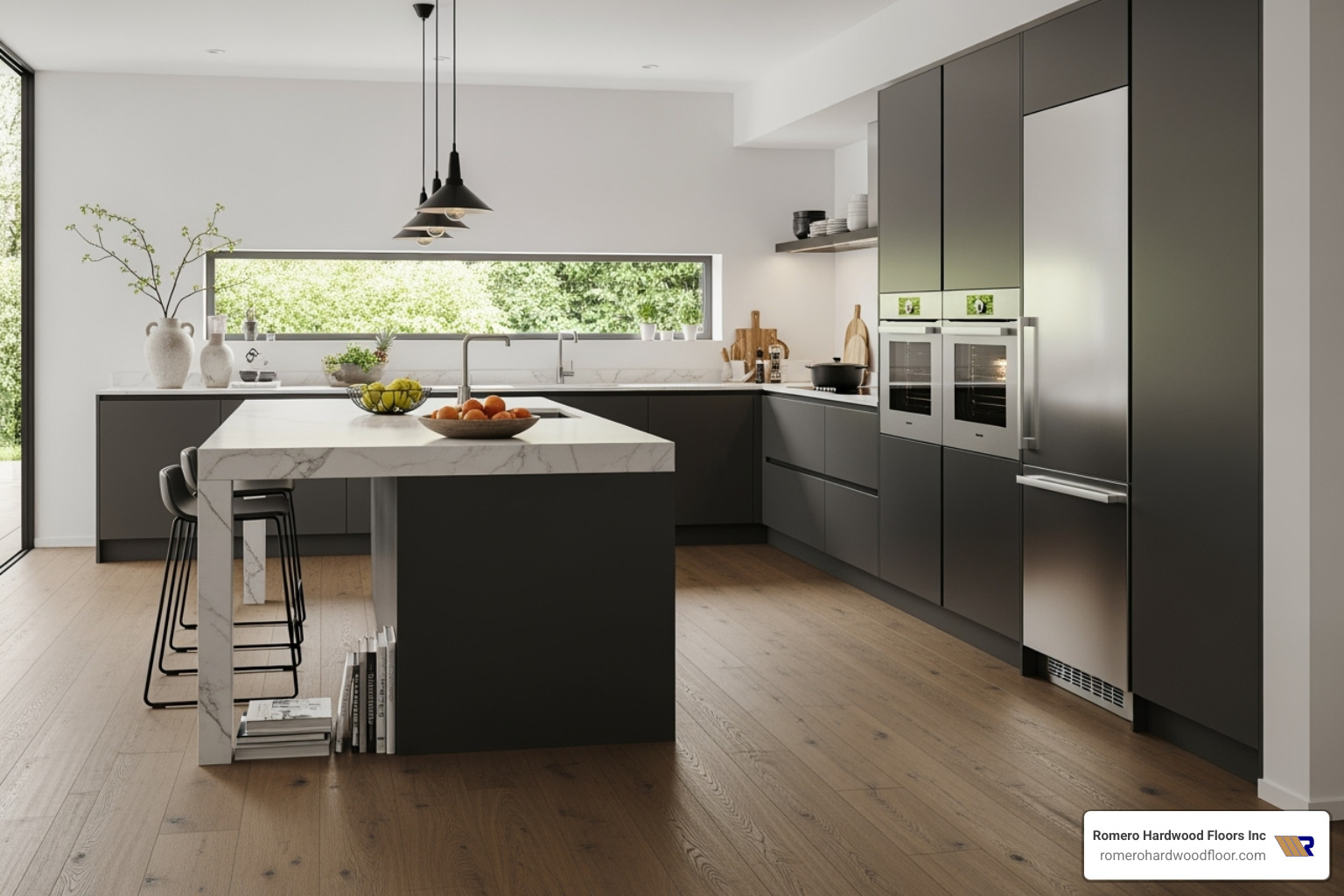
Luxury Vinyl Tile/Plank (LVT/LVP): The Waterproof Wonder
LVT and LVP offer incredibly realistic wood or stone looks with impressive performance, making them a fantastic option for wood subfloors, especially in areas prone to spills.
The main advantage of LVT/LVP is that it’s 100% waterproof, making it ideal for kitchens, bathrooms, and laundry rooms. It’s also highly durable, resisting scratches and dents from daily activity. Installation is often simple with click-lock systems, making it a popular DIY choice. Compared to tile, it’s warmer and more comfortable underfoot, and many products come with integrated padding.
While the visuals are stunning, some find that LVT/LVP can feel less premium than real wood. Also, quality varies significantly. We recommend choosing products with a minimum 5mm thickness for the best performance. Most LVT/LVP is installed as a floating click-lock system.
Laminate Flooring: The Budget-Friendly Mimic
Laminate flooring is a multi-layered synthetic product that offers the look of hardwood or tile without the premium price tag.
Laminate is a great choice for a stylish look on a budget. It’s highly affordable and features a very scratch-resistant top layer, making it practical for homes with kids and pets. It comes in a wide variety of styles that realistically mimic wood or stone. Installation is typically a straightforward easy click-lock floating system.
However, traditional laminate is not truly waterproof. Spills can damage its fiberboard core, leading to warping. It can sometimes sound a bit hollow when walked on without a quality underlayment. Laminate cannot be refinished; damaged planks must be replaced.
Engineered Hardwood Versus Laminate
Ceramic & Porcelain Tile: The Rigid Contender
For ultimate toughness and water resistance, ceramic and porcelain tile shine, even over wood subfloors, provided the proper preparation is done.
Tile is exceptionally durable, resisting heavy traffic, scratches, and stains. When installed and grouted correctly, it is completely waterproof, perfect for wet areas. The design options are nearly endless, and it is also hygienic and easy to clean.
The main consideration for tile over a wood subfloor is its need for an absolutely rigid subfloor to prevent cracks. Tile can also feel cold underfoot and requires regular grout maintenance. It offers no give, which can be tiring to stand on.
Installing tile over a wood subfloor requires a cement backer board (or similar underlayment) to be installed first. This extra layer provides the rock-solid, unmoving base that tile demands.
The Critical First Step: Preparing Your Wood Subfloor for Installation
Once you’ve chosen the best flooring for wood subfloor, the next critical step is preparing the subfloor itself. A well-prepared subfloor is like a perfect canvas for a painting; it’s essential for the long-term success and beauty of your new floors. Our team at Romero Hardwood Floors Inc., serving areas like Peabody, Reading, and Saugus, knows that this foundational work is the key to a lasting installation.
Wood Floor Leveling Contractors
Inspection and Repair
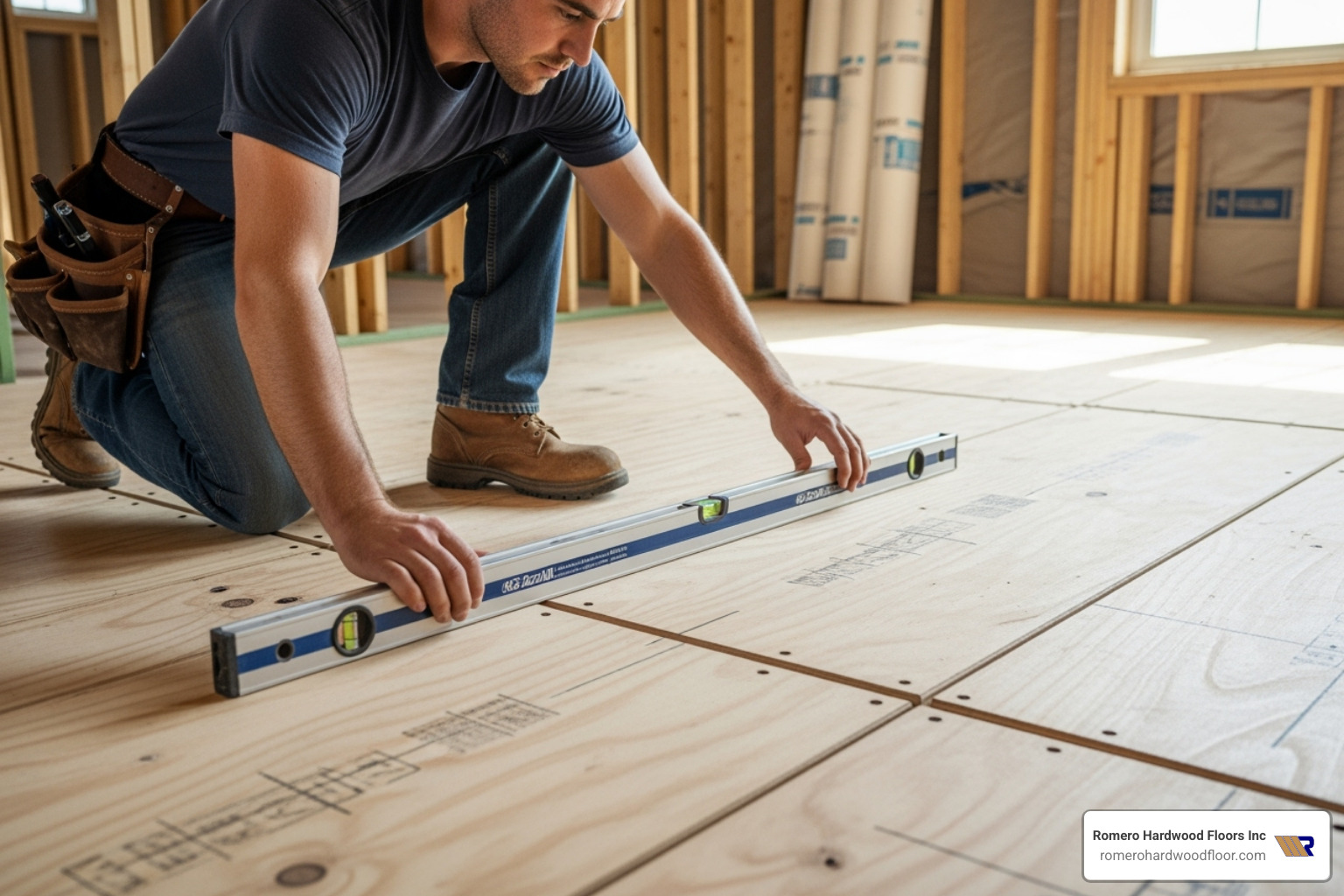
A thorough subfloor inspection is the first step. We look for any signs of damage, such as water stains or soft spots that could indicate rot. We walk the entire floor to find and address squeaks, which are usually caused by loose panels that need to be screwed down to the joists. Using a long level, we check for unevenness, as high spots or dips can affect the final look and wear of your new flooring. We also ensure the subfloor is properly supported by the joists. Any issues found, from minor squeaks to damaged panels needing replacement, must be professionally repaired before proceeding. Skipping this step can compromise your entire flooring investment.
Cleaning, Leveling, and Moisture Control
After repairs, the subfloor must be prepared for installation. First, it needs to be thoroughly cleaned of all debris, dust, and old adhesives. Next comes leveling. We sand down high spots and use a self-leveling compound to fill in dips, ensuring the surface meets the flooring manufacturer’s flatness requirements. Moisture control is also crucial. We use a moisture meter to check the subfloor and ensure it’s within the acceptable range for your new flooring. A vapor retarder or moisture barrier is typically installed to protect the floor from moisture from below. Finally, the new flooring materials must be acclimated to your home’s temperature and humidity before installation to prevent future expansion or contraction issues.
Frequently Asked Questions about Flooring on Wood Subfloors
We get a lot of great questions from homeowners in places like Lynnfield, Malden, and Medford. Here are some of the most common questions we hear about wood subfloors:
How do I fix a squeaky wood subfloor before installing new flooring?
Squeaks usually happen because of movement between your subfloor panels and the floor joists. To fix them, locate where the squeak is loudest and drive screws through the subfloor into the floor joists below. This pulls everything together tightly, eliminating the movement. Adding construction adhesive into any small gaps can also help. Fixing squeaks before your new flooring goes down is crucial, as it’s much harder to address later.
Can I install new flooring directly over an old wood floor?
The answer is: it depends. An existing hardwood floor can sometimes serve as a subfloor if it is structurally sound, flat, and clean. However, for many modern flooring types like tile or vinyl, it’s better to install a new underlayment over the old floor. This creates the perfectly smooth, stable surface required for the new material. For older plank subfloors, we recommend re-securing them with screws before installing anything on top. A professional assessment is the best way to determine if your existing floor is a suitable base.
See our installation guide for more details.
What is the best flooring for a bathroom with a wood subfloor?
For bathrooms with a wood subfloor, a waterproof flooring material is essential. The two best choices are Luxury Vinyl Tile (LVT) and Porcelain Tile.
- Luxury Vinyl Tile (LVT): This is an excellent option because it’s 100% waterproof, easy to install with a click-lock system, and comes in many realistic wood or stone designs.
- Porcelain Tile: This is another completely waterproof and highly durable choice. However, to prevent cracking over a wood subfloor, it requires an additional layer of cement backer board to be installed first. This provides the necessary rigidity for a long-lasting tile installation in a wet environment.
Conclusion: Your Floor’s Success Starts from the Ground Up
Choosing the best flooring for wood subfloor involves more than just aesthetics; it’s about building a durable system from the ground up. We’ve covered the top options, from the timeless appeal of solid hardwood and the versatility of engineered wood, to the waterproof performance of LVT, the budget-friendliness of laminate, and the ultimate durability of tile.
The success of any new floor depends on a properly prepared subfloor. Inspecting, repairing, leveling, and controlling moisture are non-negotiable steps for a long-lasting result.
At Romero Hardwood Floors Inc., based in Revere, MA, and serving communities from Woburn to Winthrop, we specialize in these details. We combine artistry with technical expertise to ensure your flooring investment improves your home’s beauty and value for years to come. For an expert installation that starts from the ground up, trust our professional team.
Contact us for your hardwood flooring installation project.
