
Best Hardwood Floors 2025: Top Choices Revealed

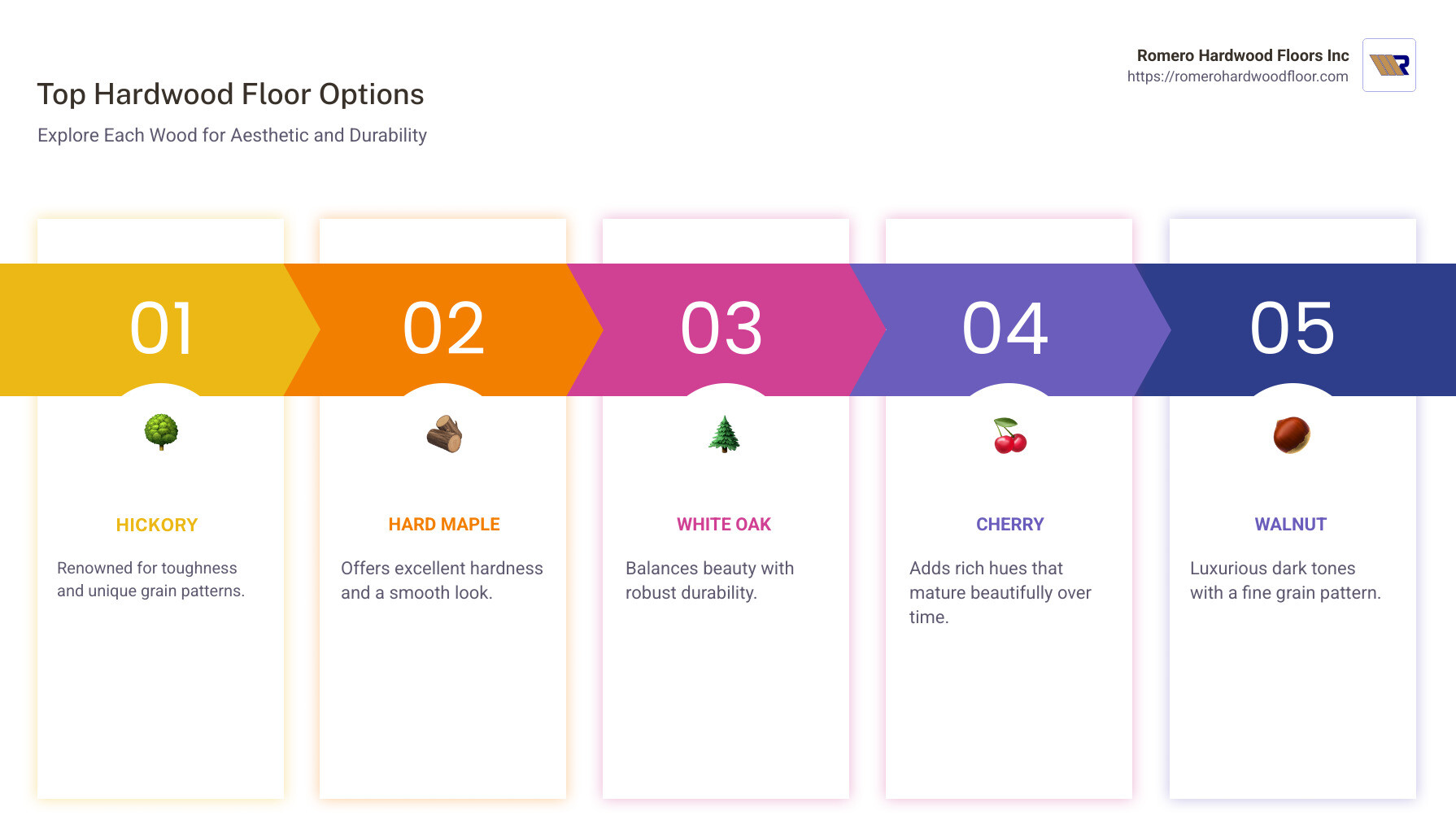
Finding the Best Hardwood Floors for your home or commercial space can transform your interiors with style and function. Here are some of the top choices for the best hardwood floors known for durability and aesthetics:
- Hickory: Renowned for its toughness and unique grain patterns.
- Hard Maple: Offers excellent hardness and a smooth look.
- White Oak: Balances beauty with robust durability.
- Cherry: Adds rich, deep hues that mature beautifully over time.
- Walnut: Luxurious dark tones with a fine grain pattern.
Choosing the right hardwood can significantly improve your property’s beauty and longevity.
As Francisco Romero, owner of Romero Hardwood Floors Inc., I’ve been passionate about helping homeowners and property managers in Revere, MA, find the Best Hardwood Floors to meet their needs. With over 15 years of experience, we focus on changing spaces with high-quality hardwood floors that are both aesthetically pleasing and enduring.
Key terms for Best Hardwood Floors:
– different kinds of flooring
– different types of wood
– what is best to clean hardwood floors
Types of Hardwood Flooring
When it comes to choosing hardwood flooring, the variety of options can be both exciting and overwhelming. Let’s break down some popular types to help you make an informed decision.
Oak
Oak remains a classic choice for many homeowners. It’s incredibly durable and versatile, with a wide range of stains and finishes available. Oak’s distinct grain patterns add character to any room, making it a favorite for those seeking both strength and style.
Maple
Maple is known for its light, natural appearance and smooth finish. It’s a harder wood, which makes it resistant to dents and scratches. This durability, combined with its subtle grain pattern, makes maple a great option for high-traffic areas.
Cherry
Cherry wood is cherished for its rich, deep colors that darken beautifully over time. While softer than oak or maple, its luxurious appearance makes it a popular choice for spaces where elegance is a priority.
Bamboo
Although technically a grass, bamboo is often included in hardwood selections due to its sustainability and hardness comparable to traditional hardwoods. It’s an eco-friendly option that offers a modern look and feel.
Walnut
Walnut provides a luxurious, deep color with a smoother grain, perfect for creating a high-end look. While it’s softer than some other hardwoods, its rich tones make it ideal for low-traffic areas where aesthetics are key.
Ash
Ash stands out with its light color and unique grain patterns. It’s a durable and flexible wood, making it suitable for various design styles. However, its rarity can sometimes make it harder to find.
Mahogany
Mahogany is prized for its deep, reddish-brown color and excellent durability. Often used in high-end installations, it offers a timeless, neat look. However, its limited availability can make it a more expensive option.
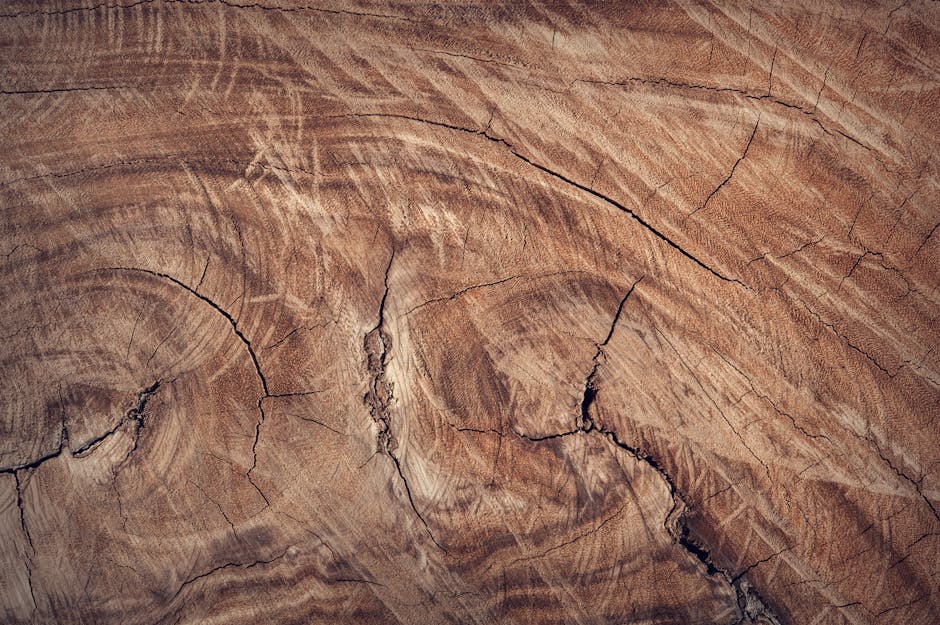
Understanding the characteristics of each wood type helps in selecting the Best Hardwood Floors for your needs. Whether you prioritize durability, color, or grain pattern, there’s a hardwood option to suit every style and function.
Best Hardwood Floors for Durability
When it comes to durability, choosing the right hardwood is crucial. Hickory, Hard Maple, White Oak, Pine, and Cherry are standout options that offer strength and resilience, each with unique benefits.
Hickory
Hickory is one of the toughest domestic woods available. Its scratch resistance makes it perfect for high-traffic areas like hallways or kitchens. Hickory’s distinct grain patterns also add a rustic charm to any space. This wood is ideal for families with pets or children due to its robust nature.
Hard Maple
Known for its fine, even grain, Hard Maple is another excellent choice for durability. It withstands dents and scratches, making it suitable for busy households. Its lighter appearance can brighten up any room, while its hardness ensures it stands the test of time.
White Oak
White Oak offers a classic look with high resistance to wear and tear. It’s slightly harder than Red Oak and can handle heavy foot traffic with ease. The wood’s ability to take on a wide range of stains makes it versatile, fitting various design styles from traditional to contemporary.
Pine
While softer than other hardwoods, Pine is valued for its affordability and natural charm. It develops a beautiful patina over time, which can improve its appeal. Pine is best used in areas where the rustic, worn look is desired, such as in country-style or vintage-inspired homes.
Cherry
Cherry wood may not be as hard as Hickory or Maple, but its luxurious appearance is best. Over time, Cherry darkens to a rich, deep hue, adding elegance to any room. It’s best suited for spaces where aesthetics are prioritized over heavy use, such as formal living rooms or dining areas.
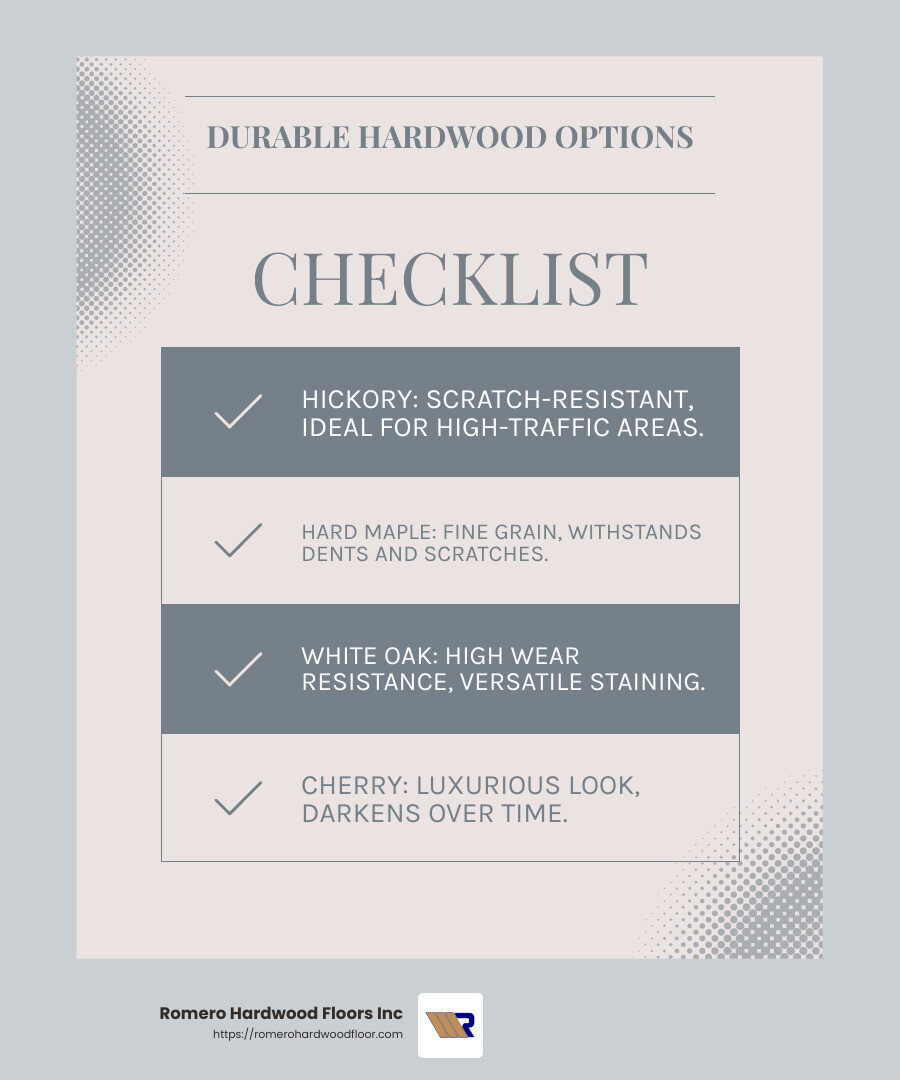
Each of these woods offers something unique, whether it’s the rugged durability of Hickory or the neat aging process of Cherry. Choosing the Best Hardwood Floors for durability means considering both the practical needs and the aesthetic desires of your space.
Prime Grade Hardwood Flooring
When you’re looking for the best hardwood floors, Prime Grade or AB-grade wood is your top choice. This grade represents the pinnacle of quality and elegance, perfect for those who want a flawless look.
What is AB-Grade Wood?
AB-grade wood is the cream of the crop. It showcases the natural beauty of hardwood with very few imperfections. This means you get a smooth, uniform appearance that’s ideal for creating a luxurious and sophisticated ambiance.
Minimal Defects
Prime Grade hardwood flooring is known for having minimal defects. Here’s what that means:
- Knots: These are small or non-existent in Prime Grade wood. Knots are where branches once grew, and fewer knots mean a cleaner look.
- Sapwood: This is the lighter wood from the outer part of the tree. Prime Grade wood has less sapwood, resulting in a more consistent color throughout the floor.
- Grain Irregularities: While some grain patterns can add character, too many can make a floor look busy. Prime Grade wood offers a more uniform grain pattern for a sleek and polished finish.
Why Choose Prime Grade?
- Aesthetic Appeal: The minimal defects and uniform appearance make Prime Grade hardwood flooring ideal for a high-end look.
- Durability: With fewer imperfections, Prime Grade wood is generally more durable and less prone to damage over time.
- Value: While it may cost more upfront, the long-term benefits and improved beauty make it a worthwhile investment.
Choosing Prime Grade hardwood means opting for the best in both appearance and durability. It’s the go-to choice for those who want their floors to be a standout feature of their home.
Next, let’s dive into the differences between Engineered vs. Solid Hardwood Flooring and help you decide which is right for your home.
Engineered vs. Solid Hardwood Flooring
When deciding between engineered wood and solid wood for your flooring, it’s important to consider factors like moisture resistance, longevity, and environmental impact.
Engineered Wood
Engineered wood flooring is a modern marvel. It features a thin layer of real hardwood on top, with layers of plywood or OSB underneath. This structure gives it several advantages:
- Moisture Resistance: Engineered wood is better at handling moisture and temperature changes. This makes it a great choice for basements or areas with high humidity, like kitchens.
- Environmental Impact: Because it uses less hardwood, engineered wood is often more sustainable. It’s an eco-friendly option, especially when sourced from certified manufacturers.
- Cost: Generally, engineered wood is more budget-friendly. It’s less expensive than solid wood, both for materials and installation.
However, engineered wood has its downsides. You can only sand and refinish it a few times before the hardwood layer wears thin. Also, quality can vary between manufacturers, so it’s crucial to choose a reputable brand.
Solid Wood
Solid wood flooring is the classic choice. Made entirely of hardwood, it offers best beauty and longevity:
- Longevity: Solid wood can be sanded and refinished multiple times, making it a long-term investment. It can last for decades, or even generations, with proper care.
- Natural Beauty: Solid wood provides the authentic look and feel of real wood, enhancing any room’s aesthetic appeal.
- Durability: It’s generally more durable and can withstand daily wear and tear better than engineered wood.
However, solid wood is sensitive to moisture. It can warp or swell in humid conditions, so it’s not ideal for bathrooms or basements. It also requires more hardwood per plank, which can be less sustainable.
Which is Right for You?
The choice between engineered and solid hardwood flooring depends on your specific needs. If you want a cost-effective, moisture-resistant option, engineered wood might be the way to go. But if you’re looking for longevity and classic beauty, solid wood is hard to beat.
Next, we’ll explore the Pros and Cons of Prefinished Hardwood Flooring to help you make an informed decision.
Pros and Cons of Prefinished Hardwood Flooring
When considering Best Hardwood Floors, prefinished hardwood is a popular choice for many homeowners. Let’s look at its advantages and drawbacks.
Pros
1. Installation Ease
Prefinished hardwood flooring is remarkably easy to install. The planks come already sanded and sealed, which means you can walk on them right after installation. This saves time and avoids the mess of on-site finishing.
2. Consistent Finish Quality
Because prefinished hardwood is coated in a factory setting, the finish is consistent and durable. Factory-applied finishes often include multiple layers of sealant, which means the flooring is better protected from wear and tear compared to on-site finishes.
3. Less Dust and Fumes
Since there’s no need for on-site sanding or finishing, prefinished hardwood generates less dust and fewer fumes. This makes it a cleaner option, especially beneficial for households with allergies or sensitivities.
Cons
1. Bevels
One downside is the presence of bevels or slight grooves between the planks. These grooves can trap dirt and dust, making cleaning a bit more challenging. While some appreciate the textured look, others may prefer the seamless appearance of site-finished floors.
2. Level Surface
Prefinished floors might not be as perfectly level as site-finished hardwood. The bevels between planks create tiny gaps that can disrupt the smoothness of the floor. For those who desire a perfectly flat surface, unfinished hardwood finished on-site may be a better choice.
Understanding these pros and cons will help you decide if prefinished hardwood is the right fit for your home. Next, we’ll dive into Frequently Asked Questions about Best Hardwood Floors to address common queries and assist you further in your flooring journey.
Frequently Asked Questions about Best Hardwood Floors
Choosing the Best Hardwood Floors can be tricky. Here are some common questions and answers to help you make the right decision.
What is the best hardwood flooring?
When it comes to durability and beauty, Hickory, Hard Maple, and White Oak are top contenders.
- Hickory: Known for its exceptional hardness and scratch resistance, Hickory is ideal for high-traffic areas in your home.
- Hard Maple: Offers a fine, even grain and is highly resistant to dents and scratches, making it perfect for families with kids or pets.
- White Oak: This wood is not only durable but also has a classic look that fits various design styles. Its resistance to wear and tear makes it a favorite among homeowners.
What is the best grade of hardwood flooring?
For a clean and uniform look, prime grade or AB-grade wood is the way to go.
- Prime Grade: This grade of wood has minimal defects, knots, and sapwood, ensuring a consistent and sleek appearance. It’s ideal for modern, neat spaces.
- AB-Grade Wood: Slightly lower than prime grade, it still offers minimal imperfections and a smooth look, making it a popular choice for residential installations.
What is number 1 wood flooring?
In terms of popularity and performance, Hickory, Hard Maple, and White Oak often top the list.
- Hickory: Its toughness makes it the go-to option for areas that see a lot of foot traffic.
- Hard Maple: Known for its durability and fine grain, it stands up well to everyday wear and tear.
- White Oak: Offers a timeless appeal and resilience, making it a versatile option for various interior styles.
These options are not just about looks—they’re about ensuring your floors stand the test of time. Whether you prioritize durability, appearance, or both, these woods provide excellent choices for your home.
Conclusion
At Romero Hardwood Floors Inc, we understand that choosing the right flooring is more than just a decision—it’s an investment in your home’s future. Our expert flooring solutions are custom to meet your specific needs, ensuring that you receive not only the finest materials but also the best advice and service.
We pride ourselves on offering competitive pricing without sacrificing quality. Our partnerships with top brands mean you get premium hardwood options like Hickory, Hard Maple, and White Oak at prices that won’t break the bank. These woods are renowned for their durability and beauty, making them ideal choices for any home.
Our commitment to guaranteed workmanship means you can trust us to deliver flawless installations. We pay attention to every detail, from the initial consultation to the final polish. Our NWFA-trained specialists ensure your floors not only look stunning but are built to last.
Choosing Romero Hardwood Floors Inc means choosing a company that values customer satisfaction above all else. We are dedicated to making sure you’re thrilled with your new flooring, providing a seamless and rewarding experience from start to finish.
For more information or to schedule a consultation, visit our service page. Let us help you transform your space with beautiful, durable hardwood floors that you’ll cherish for years to come.
