
Best Solid Hardwood Flooring: Top 5 Durable Picks 2024
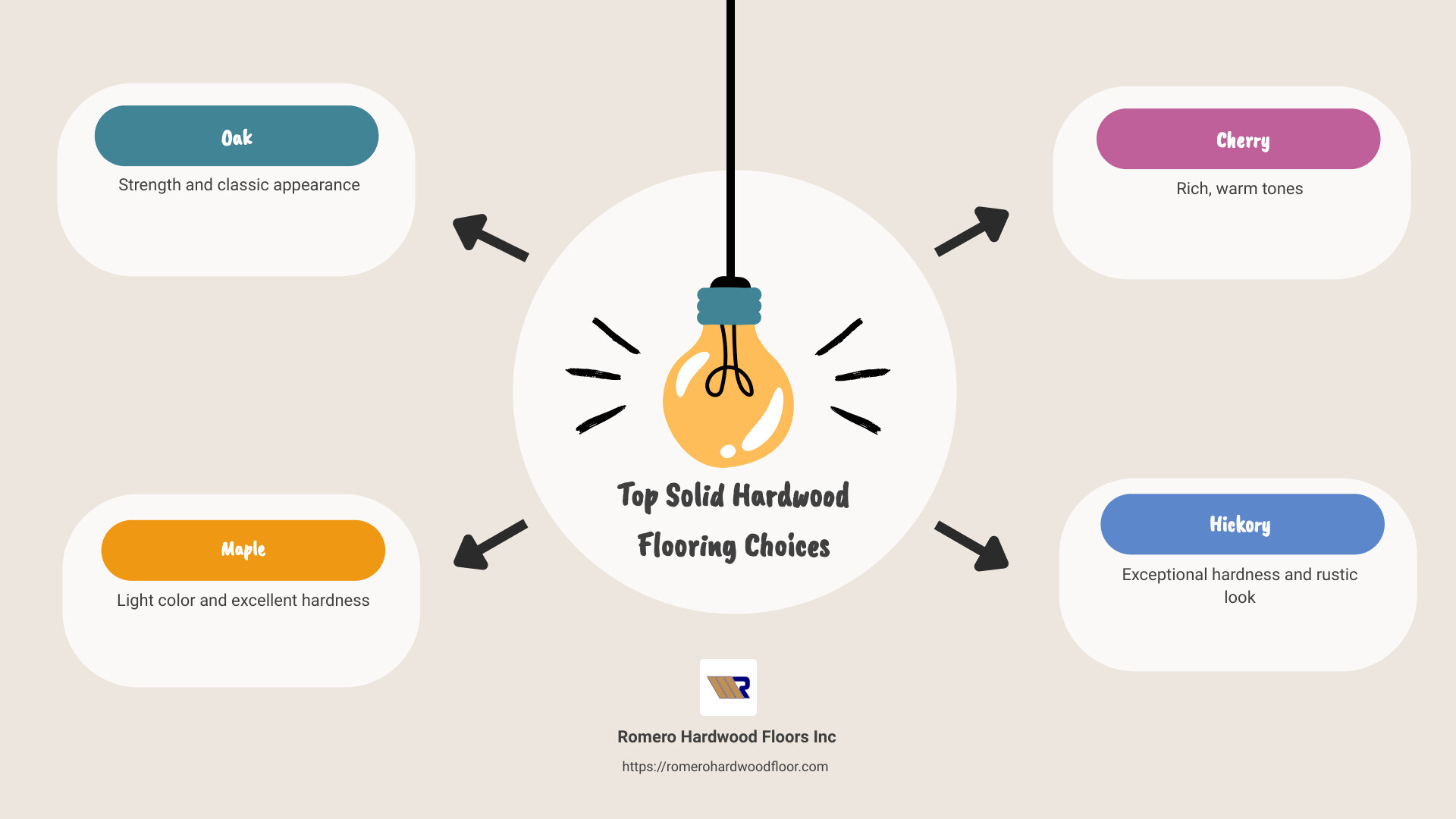
Best solid hardwood flooring combines the beauty and lasting durability that homeowners and commercial property managers in Revere, MA, look for. If you’re seeking reliable, cost-effective options, consider these top choices:
- Oak: Renowned for its strength and classic appearance.
- Maple: Offers a light color and excellent hardness.
- Cherry: Known for its rich, warm tones.
- Hickory: Offers exceptional hardness and a rustic look.
- Walnut: Provides rich, dark hues that exude elegance.
Each of these options brings a unique combination of durability and aesthetics to spaces, making them stand the test of time.
As Francisco Romero, owner of Romero Hardwood Floors Inc., I’ve spent over 15 years perfecting the installation and selection of the best solid hardwood flooring. Our mission is to pair timeless elegance with best durability, ensuring your floors not only look stunning but withstand daily wear.
Types of Solid Hardwood Flooring
When choosing the best solid hardwood flooring for your home, understanding the different types of wood available can make a significant difference in aesthetics and durability. Here’s a quick guide to some of the most popular types:
Oak
Oak is a classic choice, often celebrated for its strength and timeless appearance. It comes in two main varieties: Red Oak and White Oak.
- Red Oak: Known for its warm tones and prominent grain patterns, it’s great for hiding scratches.
- White Oak: Slightly harder, with a more subtle grain, it can take on various stains beautifully.
Cost: $5 to $11 per square foot

Maple
Maple offers a light, natural finish and is known for its hardness, making it more durable than Oak.
- Pros: Its tight grain pattern gives a clean look.
- Cons: It’s more challenging to stain darker colors.
Cost: $6 to $14 per square foot
Cherry
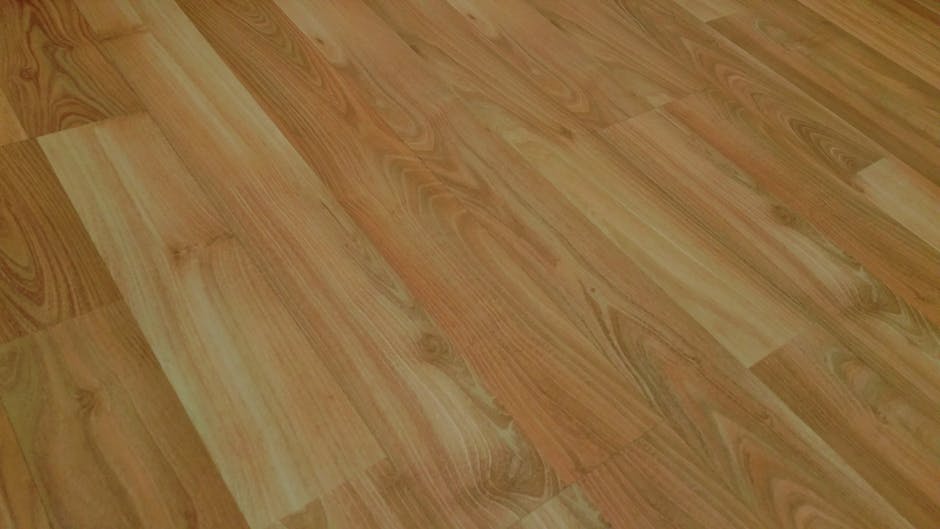
Cherry hardwood is prized for its rich, deep colors that darken with age, adding warmth and elegance to any room.
- Pros: Offers a luxurious appearance.
- Cons: Softer than Oak and Maple, making it more prone to dents.
Cost: $7 to $15 per square foot
Walnut
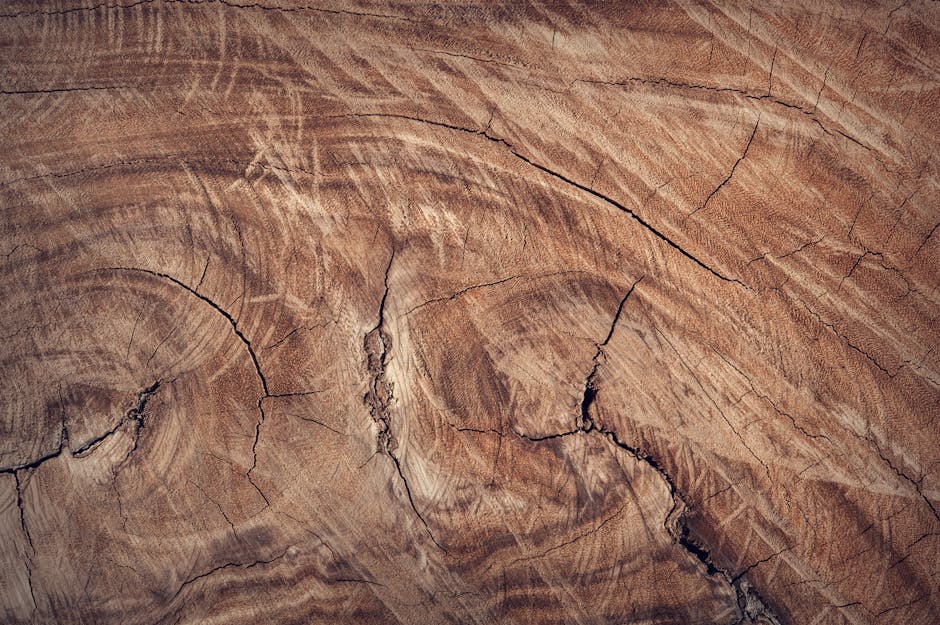
Walnut is known for its deep, rich color and smooth grain, providing a sophisticated look.
- Pros: Its darker hues add a touch of elegance.
- Cons: It’s softer than other hardwoods, so it may scratch more easily.
Cost: $8 to $16 per square foot
Ash
Ash is a versatile choice, offering a light color and a distinctive grain pattern that can improve both modern and traditional interiors.
- Pros: Highly durable and shock-resistant.
- Cons: Less commonly available, which can affect pricing.

Mahogany
Mahogany is renowned for its rich, reddish-brown color and fine grain, making it a favorite for high-end installations.
- Pros: Offers exceptional beauty and is relatively stable.
- Cons: Can be more expensive due to its exotic nature.
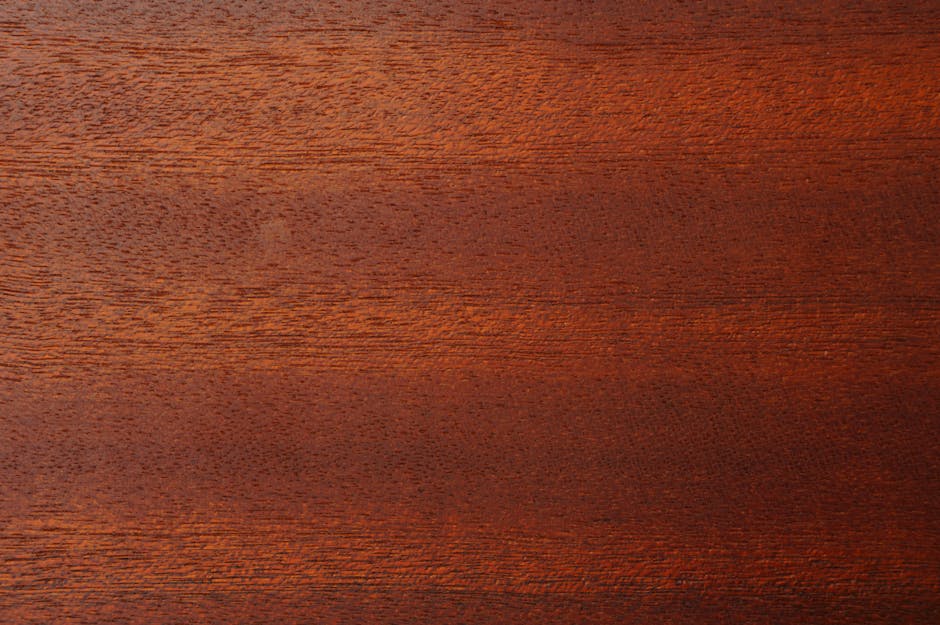
Each type of wood offers unique benefits and characteristics, allowing you to find the perfect match for your home’s style and needs. Whether you prioritize durability or aesthetic appeal, these solid hardwood options provide a range of possibilities to improve your space.
Best Solid Hardwood Flooring for Durability
When it comes to choosing the best solid hardwood flooring for durability, understanding the Janka hardness rating is key. This rating measures the resistance of wood to wear and denting, providing a clear indication of a wood’s toughness.
Janka Hardness Rating
The Janka hardness rating is an industry standard used to gauge the hardness of wood species. A higher number means the wood is harder and more resistant to dents and scratches.
Let’s look at some of the top choices for durable hardwood flooring:
Hickory
Hickory stands out as one of the hardest domestic woods, with a Janka rating of 1,820. This makes it an excellent choice for high-traffic areas like kitchens or hallways. Hickory’s natural color variations also add a unique character to any room.
- Pros: Extremely durable, great for busy households.
- Cons: Its hardness can make it challenging to cut and install.
Hard Maple
Hard Maple, known for its light, natural appearance, boasts a Janka rating of 1,450. This makes it more durable than Red Oak and a popular choice for those seeking a clean and modern look.
- Pros: Durable and resistant to wear.
- Cons: Difficult to stain darker colors, limiting design flexibility.
White Oak
White Oak is another excellent option, with a Janka rating of 1,360. It’s slightly harder than Red Oak and can handle a variety of stains, making it versatile for different interior styles.
- Pros: Hard and durable, with a subtle grain that suits various designs.
- Cons: Can yellow over time with sun exposure.
Choosing the right hardwood flooring involves balancing aesthetics with durability. Hickory, Hard Maple, and White Oak are top contenders for those prioritizing toughness and longevity in their flooring choice.
Next, we’ll explore the differences between engineered and solid hardwood flooring to help you decide which is right for your home.
Prime Grade Hardwood Flooring
When it comes to prime grade hardwood flooring, you’re looking at the cream of the crop. This is also known as AB-grade wood, and it’s the top choice for those who want their floors to look flawless.
What is AB-Grade Wood?
AB-grade wood is a premium selection that highlights the natural beauty of wood. It has very few imperfections, making it perfect for creating a high-end look.
Minimal Defects
One of the standout features of prime grade hardwood is its minimal defects. This means fewer knots, less sapwood, and a smoother grain pattern. The result? A uniform appearance that adds elegance to any room.
Knots and Sapwood
- Knots: These are the spots where branches once grew. In prime grade wood, knots are tiny or not there at all.
- Sapwood: This is the lighter part of the wood near the tree’s outer edge. Prime grade wood has less sapwood, ensuring a consistent color.
Aesthetic Appeal
The aesthetic appeal of prime grade hardwood flooring is best. With its minimal defects and uniform appearance, it offers a luxurious and sophisticated look that stands the test of time.
- Benefits:
- Smooth Finish: The even grain and lack of imperfections give a sleek, polished finish.
- Color Consistency: Less sapwood means the color is more consistent across the floor.
Choosing prime grade hardwood is an investment in both beauty and durability. It may be pricier, but the long-term benefits and improved aesthetics make it a worthwhile choice for anyone looking to improve their home’s interior.
Next, we’ll dig into the differences between engineered and solid hardwood flooring to help you make the best choice for your home.
Engineered vs. Solid Hardwood Flooring
When you’re choosing between engineered wood and solid wood flooring, it’s important to understand the key differences that can impact your home.
Engineered Wood
Engineered wood flooring consists of a thin layer of real hardwood on top of several layers of plywood or high-density fiberboard. This construction makes it more stable and less likely to warp in humid conditions.
Benefits of Engineered Wood:
- Moisture Resistance: Thanks to its layered construction, engineered wood handles moisture better than solid wood. This makes it a great choice for areas like basements or bathrooms.
- Cost-Effective: Generally, engineered wood is more budget-friendly, both in terms of material and installation costs.
- Sustainability: Uses less hardwood per plank, making it a more eco-friendly option.
However, engineered wood has its limitations. It can only be sanded and refinished a few times before the veneer layer is worn through. This means it might not last as long as solid wood in the long run.
Solid Wood
Solid wood flooring is made from a single piece of hardwood. It’s known for its durability and classic beauty.
Advantages of Solid Wood:
- Longevity: Solid wood can be sanded and refinished multiple times, potentially lasting for decades.
- Natural Beauty: Offers a timeless look that can improve the aesthetic appeal of any room.
- Durability: Generally more durable and can withstand heavy foot traffic over time.
On the downside, solid wood is more sensitive to moisture and can warp or swell in damp conditions. It’s also typically more expensive to purchase and install.
Making the Right Choice
Your decision between engineered and solid hardwood flooring will depend on several factors:
- Location: If you’re installing flooring in a moisture-prone area, engineered wood might be the better choice.
- Budget: Engineered wood is often more affordable upfront, while solid wood is an investment in longevity.
- Sustainability: Engineered wood uses less hardwood, which can be a more environmentally friendly option.
Understanding these differences will help you choose the best solid hardwood flooring for your needs. Next, let’s answer some frequently asked questions about solid hardwood flooring to provide further clarity.
Frequently Asked Questions about Solid Hardwood Flooring
What is the most durable solid hardwood flooring?
When it comes to durability, not all hardwoods are created equal. If you’re looking for floors that can withstand heavy foot traffic and wear, consider these top contenders:
- Brazilian Walnut: Known for its exceptional hardness, Brazilian walnut scores high on the Janka hardness scale, making it one of the toughest options available. It’s perfect for areas that see a lot of action.
- Brazilian Cherry: This wood is not just about beauty; it’s also incredibly durable. Its rich, deep colors coupled with its strength make it a popular choice for those who want both elegance and resilience.
- Hickory: Often found in high-traffic areas, hickory is a domestic hardwood that offers excellent scratch resistance. Its unique grain patterns also add a touch of rustic charm to any space.
What is the best grade for solid wood flooring?
When selecting the best solid hardwood flooring, the grade plays an essential role in its appearance and quality:
- Prime Grade: Also known as AB-grade, this is the highest quality grade available. It features minimal defects, knots, and sapwood, offering a clean and uniform look. If you want a sleek and modern appearance, prime grade is the way to go.
- AB-Grade: Slightly lower than prime, AB-grade still provides a refined appearance with fewer imperfections. It’s a great choice for residential installations where a balance of quality and cost is desired.
What is the best thickness for solid wood flooring?
The thickness of solid wood flooring can impact both its durability and installation:
- Standard Thickness: Typically, solid hardwood flooring comes in a thickness of 3/4 inch. This standard size allows for multiple refinishes over the years, ensuring longevity.
- Installation Considerations: Thicker planks are generally more stable and durable, but they might require more expertise during installation. It’s important to ensure the subfloor is properly prepared to support the weight and thickness of the wood.
Understanding these aspects will help you make informed decisions about your flooring options. Whether you’re prioritizing durability, appearance, or installation ease, there’s a solid hardwood flooring solution that meets your needs.
Conclusion
At Romero Hardwood Floors Inc, we believe that choosing the right hardwood flooring is about more than just picking a type of wood—it’s about enhancing your home’s value and style with a solution that stands the test of time. Our commitment to quality, sustainability, and expert guidance ensures that you receive the best solid hardwood flooring for your needs.
Quality You Can Trust
Our reputation for quality is built on years of dedicated service and craftsmanship. We partner with top brands to provide you with premium hardwood flooring options that are both beautiful and durable. Our NWFA-trained specialists are here to guide you through the entire process, from selecting the right wood to ensuring a flawless installation.
Commitment to Sustainability
We understand the importance of making environmentally responsible choices. That’s why we offer flooring options that prioritize sustainability, such as those made from sustainably sourced materials. By choosing us, you’re not only investing in your home but also contributing to a healthier planet.
Expert Guidance Every Step of the Way
Our team is dedicated to providing personalized service to help you make informed decisions. We take the time to understand your unique needs and preferences, ensuring that your new floors complement your lifestyle and improve your home’s comfort and value.
Ready to transform your space with the best solid hardwood flooring? Let us help you bring your vision to life. Visit our hardwood flooring installation page to learn more about our services and schedule a consultation today.
At Romero Hardwood Floors Inc, we are committed to your satisfaction and look forward to helping you create a home that you will cherish for years to come.
