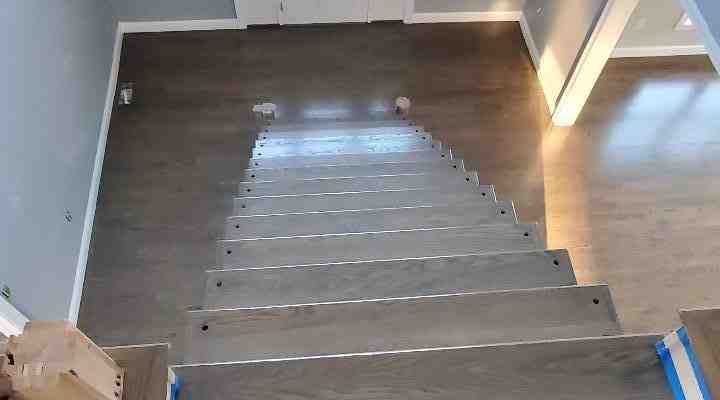
Why Finding the Right Floor Installation Contractor Matters for Your Home
A floor installation contractor is your key partner in changing your space with new flooring. Here’s what you need to know when hiring one:
Quick Answer: What to Look for in a Floor Installation Contractor
- Verify credentials – Check for proper licensing, insurance, and bonding
- Review their experience – Look for at least 5-10 years in the business
- Get multiple quotes – Compare 3-5 written estimates (internet-sourced national averages show many projects range ~$1,000-$10,000+; not Romero pricing)
- Check references – Ask for recent customer reviews and completed projects
- Review the contract – Ensure timeline, materials, warranties, and costs are clearly outlined
- Confirm warranty coverage – Both workmanship (typically 1+ year) and material warranties
Choosing the right flooring is a smart investment that can yield up to a 70% return when you sell your home. However, the wrong contractor can turn your renovation into a nightmare of delays and poor workmanship. While DIY might seem cost-effective, improper subfloor preparation or incorrect installation can lead to gapping, buckling, and voided warranties. A qualified floor installation contractor brings the expertise and specialized tools to handle any challenge.
Based on internet-sourced national data (not Romero pricing), the average homeowner spends around $3,000 on flooring installation, with a broad range roughly $1,000 to $10,000+ depending on the material and project scope. Hardwood flooring often runs about $6-$25+ per square foot, while linoleum can be roughly $2-$10+ per square foot—again, these are internet averages and not prices from Romero Hardwood Floors Inc. Understanding these costs helps you budget appropriately.
I’m Francisco Romero, owner of Romero Hardwood Floors Inc., and I’ve spent over 15 years helping homeowners and businesses in Revere, MA achieve beautiful, lasting floors through quality craftsmanship. As an experienced floor installation contractor, I’ve seen how the right professional partnership transforms a space.
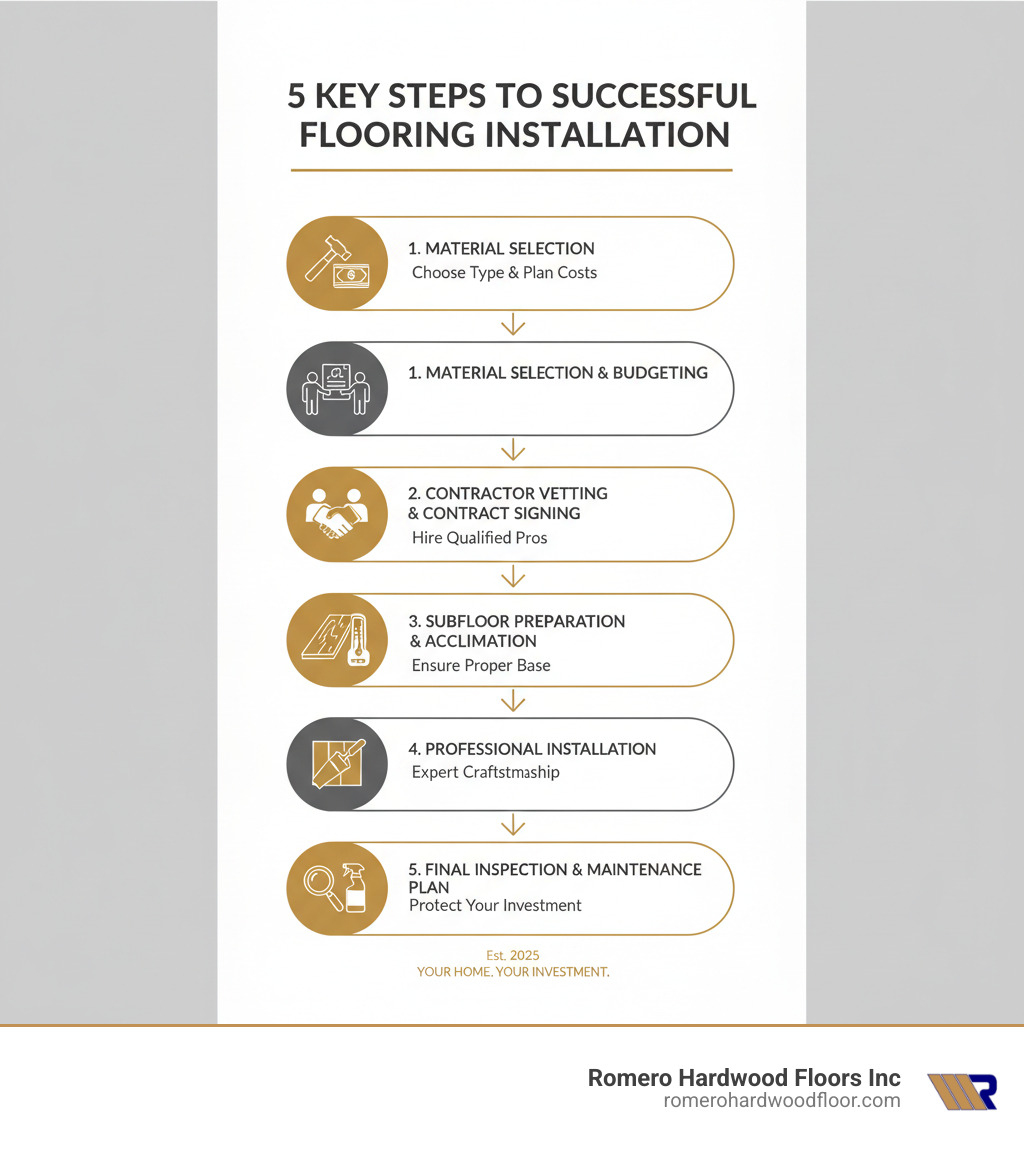
Essential floor installation contractor terms:
Choosing Your Perfect Floor: Materials and Considerations
Picking the right flooring should be exciting. As a floor installation contractor, I know the perfect floor is where beauty meets practicality, and your lifestyle meets your budget.
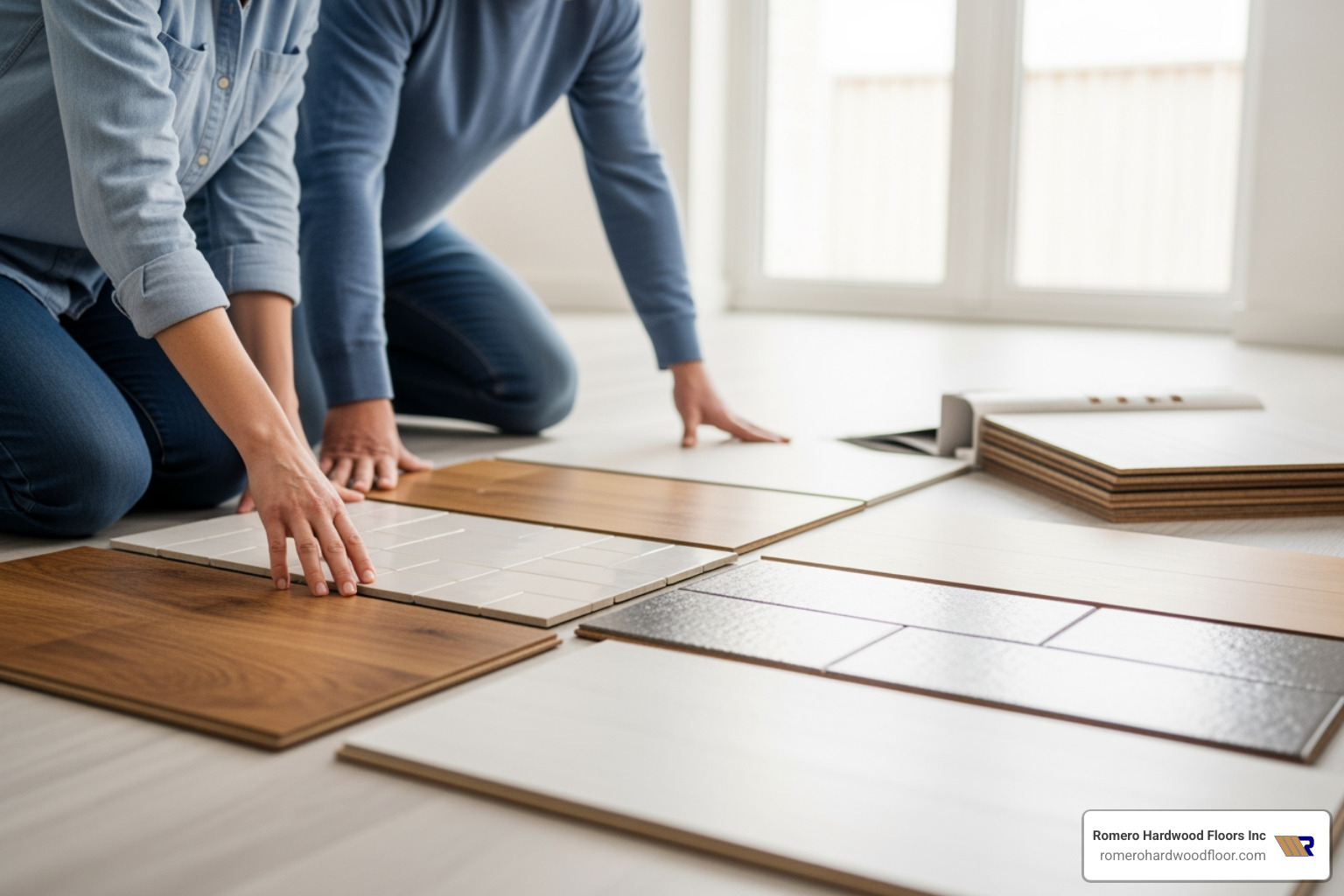
We help clients consider real-life factors: Do you have kids and pets? Is this a high-traffic entryway or a quiet bedroom? These details determine which floor you’ll love for years.
A Guide to Popular Flooring Materials
Here’s a look at the most popular flooring options.
| Material | Cost (per sq ft)* | Durability | Maintenance | Best For |
|---|---|---|---|---|
| Hardwood | $6 – $25+ | High | Moderate | Living rooms, bedrooms, dining areas; Timeless elegance |
| Laminate | $2 – $10+ | Moderate-High | Low | High-traffic areas, mimicking wood/stone, budget-friendly |
| Vinyl (LVP/LVT) | $3 – $15+ | High | Low | Kitchens, bathrooms, basements, active households, water-prone areas |
| Tile | $5 – $30+ | Very High | Moderate | Bathrooms, kitchens, entryways, high-moisture areas |
| Carpet | $2 – $12+ | Moderate | Moderate-High | Bedrooms, living rooms, noise reduction, insulation |
*Disclaimer: The cost ranges provided are national averages based on online data and do not represent actual pricing for Romero Hardwood Floors Inc. or any specific company. Costs can vary widely based on specific product, location, and project complexity.
Hardwood flooring brings timeless warmth and character, and it can be refinished for decades of beauty. It’s an neat choice for living rooms, bedrooms, and dining areas.
Laminate flooring today convincingly mimics wood or stone. It’s tough, scratch-resistant, and easy to clean, making it a versatile, budget-friendly option.
Vinyl flooring (LVP/LVT) is practically bulletproof and ideal for kitchens, bathrooms, or basements where moisture is a concern. It offers exceptional water resistance and durability for active households.
Tile flooring offers ultimate durability for high-traffic, high-moisture areas like bathrooms and entryways, with endless design possibilities.
Carpet flooring provides best softness, warmth, and noise reduction, making it perfect for bedrooms and cozy living spaces.
Key Factors and Climate Considerations
Your room’s function, foot traffic, and presence of pets or children are crucial in selecting a material. Your budget and personal style also play a major role. Quality flooring is an investment, with new hardwood floors offering up to a 70% ROI. Browse our project gallery for inspiration.
In New England, our humid summers and dry winters cause wood to expand and contract. As a local floor installation contractor, I know this climate makes proper installation and material choice vital. Hardwood requires an acclimation period in your home before installation to prevent future gapping or buckling. For moisture-prone areas like basements, engineered hardwood offers better stability against temperature and humidity swings. We also specialize in addressing subfloor issues common in older homes throughout the North Shore, ensuring your floors last through every New England season.
The Professional Advantage: DIY vs. Hiring a Pro
Homeowners often wonder: should I install floors myself or hire a professional floor installation contractor? While DIY can seem appealing, flooring installation is more complex than it looks.
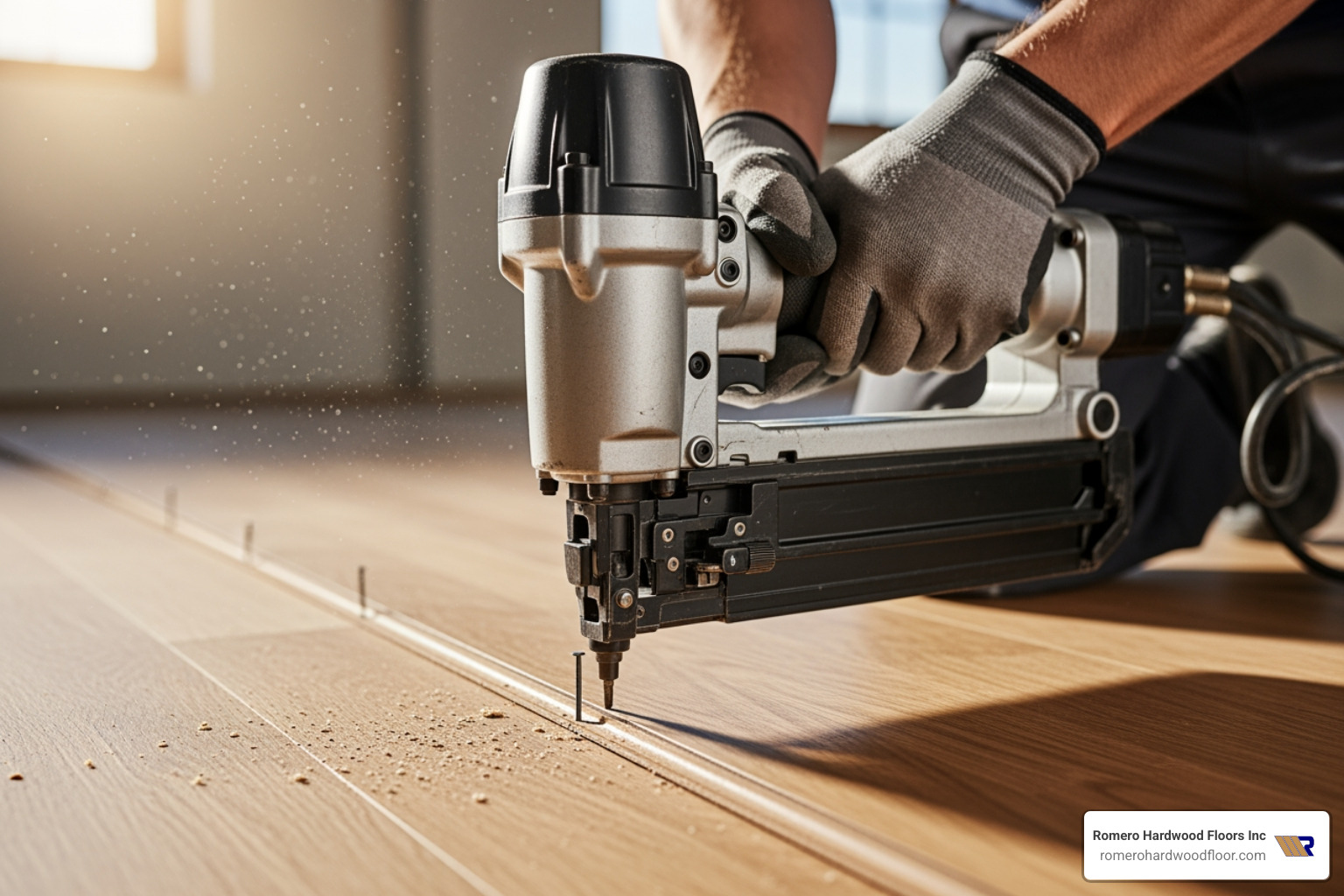
The Allure and Risks of a DIY Installation
The main appeal of DIY is saving on labor costs. However, the risks are significant. The most common DIY mistake is improper subfloor preparation, which leads to squeaks, gaps, and uneven surfaces. Without knowledge of expansion gaps, floors can buckle or gap as humidity changes. Furthermore, most flooring manufacturers require professional installation to validate their warranties. Factoring in tool rentals and the time required, DIY savings can quickly disappear, especially if mistakes require a professional to fix them later.
Benefits of a Professional Installation
Hiring a professional floor installation contractor provides expertise, efficiency, and peace of mind. Key benefits include:
- Guaranteed Workmanship: We stand behind our work with a written warranty. If an installation issue arises, we fix it.
- Expertise and Efficiency: Professionals have the right tools and problem-solving skills to handle any challenge, from uneven subfloors to complex room layouts. A pro crew can install 800-1,000 square feet per day, minimizing disruption.
- Proper Preparation: We use moisture meters to detect hidden dampness and leveling compounds to ensure a perfectly flat subfloor—the foundation of a lasting floor.
- Lasting Value: A professionally installed floor not only looks better but also adds more value to your home. Potential buyers can spot the difference.
Don’t just take our word for it. Read our reviews to hear from homeowners who’ve experienced the professional difference.
Vetting and Hiring Your Ideal Floor Installation Contractor
Finding the right floor installation contractor is the most critical step of your project. It’s about finding a partner who delivers quality work and stands by it. Rushing this decision can lead to shoddy work and surprise costs.
The Step-by-Step Hiring Process
Follow these steps to find a reputable contractor:
- Do Your Research: Start with online searches for local contractors. Look for professional websites with project galleries.
- Ask for Referrals: Word-of-mouth recommendations from friends, family, or neighbors are invaluable.
- Get Multiple Written Estimates: Contact at least three contractors for a free, detailed in-home estimate. Be wary of bids that are unusually high or low.
- Compare Bids Carefully: Don’t just look at the price. Compare the quality of materials, scope of work (including prep and removal), and warranties offered.
- Check References: Ask for and call recent clients. Inquire about their experience with the contractor’s communication, timeliness, and quality.
- Sign a Detailed Contract: Before work begins, ensure you have a written contract that outlines the project scope, materials, timeline, payment schedule, and warranties.
Key Questions to Ask a Potential Floor Installation Contractor
During your interviews, ask these essential questions:
- How long have you been in business?
- Are you licensed and insured? (This is non-negotiable—ask for proof.)
- Can you provide references from recent projects?
- What is your estimated project timeline?
- What warranties do you offer on your workmanship?
- How do you handle project changes or unexpected issues?
- What is included in your estimate? (e.g., removal, prep, cleanup)
- What steps do you take to prepare the subfloor?
Signs of a Reputable Floor Installation Contractor
A trustworthy floor installation contractor exhibits clear signs of professionalism. Look for transparent pricing with detailed written proposals and a comprehensive contract. They should readily provide proof of liability insurance and have consistent positive reviews on reputable online sites. Professional communication, local expertise, and longevity in the business are also strong indicators of reliability. You can also check credentials with the Better Business Bureau to identify any patterns of complaints.
Understanding the Flooring Installation Process and Costs
When you understand the installation process and what drives costs, your project becomes much less overwhelming. As your floor installation contractor, we believe in transparency from start to finish.
What to Expect: The Typical Project Timeline
While every project is unique, most follow these key steps:
- Initial Consultation: We discuss your vision, review material options, and assess your space.
- Material Acclimation: Flooring, especially hardwood, must sit in your home for several days to adjust to the temperature and humidity. This crucial step prevents future warping.
- Preparation: We remove old flooring and prepare the subfloor. This is the most critical step and involves inspecting, repairing, and leveling the surface to create a perfect foundation.
- Installation: Our skilled crew works efficiently to install your new floors. A two-person team can typically install 800 to 1,000 square feet per day.
- Finishing Touches: We install trim, clean the site thoroughly, and conduct a final walkthrough with you to ensure your complete satisfaction.
Most residential projects of 500-1000 square feet can be completed in 1-3 days.
De-mystifying Installation Methods
Different materials require different techniques. A professional knows which method is best for your home.
- Nail-down: The traditional method for securing solid hardwood to a wooden subfloor, creating a highly stable, long-lasting floor. See our hardwood floor installation process.
- Glue-down: Used for engineered wood, vinyl, and tile, this method involves adhering the flooring to the subfloor for excellent stability, especially on concrete.
- Floating: Planks click together over an underlayment without being fixed to the subfloor. This is common for laminate and vinyl, allowing for natural expansion and contraction.
Breaking Down the Average Cost of Professional Installation
Disclaimer: The following are national averages based on online data and do not represent actual pricing for Romero Hardwood Floors Inc. or any specific company. Costs can vary widely based on location, materials, and project complexity.
The average flooring project costs around $3,000, with a broad typical range of about $1,000 to $10,000+. Material choice is the biggest cost factor. Hardwood can range from $6 to $25+ per square foot installed, while laminate is $2 to $10+ per square foot, and vinyl (LVP/LVT) is $3 to $15+ per square foot. Labor is a significant part of the investment, paying for the expertise that protects your material investment and ensures a durable, beautiful result. Additional costs may include old floor removal and subfloor repair.
After the Installation: Maintaining Your New Floors
Your new floors look stunning, but the work of a floor installation contractor isn’t truly done until you know how to care for them. Proper maintenance is simple and ensures your investment remains beautiful for decades.
Best Practices for Hardwood Floor Care
With proper care, hardwood floors can last a lifetime. The secret is consistency.
- Sweep Regularly: Dust and dirt act like sandpaper on your floor’s finish. Sweep or vacuum (with a soft brush attachment) high-traffic areas a few times a week.
- Use the Right Cleaner: Avoid harsh chemicals or excessive water. Stick to pH-neutral cleaners specifically designed for hardwood floors.
- Prevent Scratches: Use felt pads under all furniture legs, keep pet nails trimmed, and place area rugs in high-traffic zones.
- Control Humidity: In New England, aim to keep indoor humidity between 35-55% year-round using humidifiers and dehumidifiers to prevent gapping or buckling.
- Refinish When Needed: After 7-10 years, professional sanding and refinishing can remove surface wear and make your floors look new again.
Maintenance Tips for Laminate, Vinyl, and Tile
These resilient floors are designed for busy lives but still benefit from regular care.
- Follow Manufacturer Guidance: Use the cleaning products recommended by the flooring manufacturer to avoid damaging the finish or leaving residue.
- Wipe Spills Promptly: While water-resistant, it’s best to clean up spills to prevent moisture from seeping into seams or grout lines.
- Clean Gently: Avoid abrasive scrubbers or steel wool. A soft mop or microfiber cloth is all you need.
- Maintain Grout: For tile floors, clean grout lines with a dedicated grout cleaner and consider having them professionally sealed to resist stains.
Protecting Your Investment with Proper Staining
For hardwood, stain is more than just color—it’s protection. A quality stain improves the wood’s natural grain, adds depth, and provides crucial UV protection to prevent fading from sunlight. Our professional floor staining services ensure your hardwood is not just beautifully colored but also properly sealed with durable finishes that stand up to daily life.
Frequently Asked Questions about Flooring Installation
As a trusted floor installation contractor, we believe in providing clear answers to your most common questions.
Does new flooring add value to my property?
Yes, absolutely. New flooring is one of the smartest home improvements for increasing property value. Quality materials professionally installed offer significant aesthetic and financial returns. Hardwood flooring, in particular, can yield a return on investment (ROI) of up to 70% or more. In competitive markets like the ones we serve around Boston, new floors can make your home sell faster and for a better price.
How long does it take to install flooring?
The timeline depends on the project size, material, and subfloor condition. However, we work efficiently to minimize disruption. A typical residential project of 500-1000 square feet can often be completed in 1-3 days, including removal, preparation, and installation. A skilled two-person crew can typically install 800 to 1,000 square feet of flooring per day.
What kind of warranty should I expect from a floor installation contractor?
You should expect two types of warranties. The first is a workmanship warranty from your contractor, which covers any issues arising from the installation process itself. Reputable contractors offer this for at least one year. This is our promise that we stand behind our skill and quality. The second is the manufacturer’s warranty, which covers defects in the flooring material. We provide all warranty information in writing, so you have peace of mind that your investment is protected.
Conclusion
Your journey to beautiful new floors depends on two things: choosing the right material and partnering with a skilled floor installation contractor. A professionally installed floor is a smart investment that improves your home’s comfort, style, and value, potentially yielding up to a 70% return.
For homeowners and businesses throughout the Revere, MA area—including our neighbors in Chelsea, Danvers, East Boston, Gloucester, Lynnfield, Malden, Manchester by the Sea, Marblehead, Medford, Melrose, Nahant, Peabody, Reading, Rockport, Salem, Saugus, Somerville, Stoneham, Swampscott, Wakefield, Winchester, Winthrop, and Woburn—Romero Hardwood Floors Inc. has delivered top-tier flooring solutions since 2006. We are known for competitive pricing, punctuality, and guaranteed workmanship.
Ready to transform your space? We’d love to hear about your project. Get a free, no-obligation estimate today, and let’s start creating the floors you’ve been dreaming about.