
Cost to Install a Hardwood Floor: Top Guide 2024
When considering home improvements, the cost to install a hardwood floor is a key factor for many homeowners and property managers. While prices can vary, with estimates ranging from $10 to $25 per square foot, understanding the specifics can guide you in making informed decisions that align with your budget and aesthetic goals.
Hardwood flooring is a timeless choice, prized for its durability, classic appeal, and low maintenance. It’s not only about aesthetics; the installation can significantly improve your property’s value. Investing in hardwood floors means investing in longevity and minimal upkeep, as these floors are known to withstand heavy usage and maintain their elegance over decades. Unlike other flooring options, hardwood does not trap dust or allergens, making it an ideal choice for safe and clean indoor environments.
I’m Francisco Romero, the owner of Romero Hardwood Floors Inc. in Revere, MA, with over 15 years of experience in hardwood floor installation. I understand the nuances of balancing high-quality craftsmanship and cost when considering the cost to install a hardwood floor. In this guide, I’ll walk you through essential aspects of installation costs, ensuring a seamless understanding as you start on your flooring project.
Average Hardwood Flooring Cost
Installing hardwood floors is a popular home improvement choice, and understanding the cost to install a hardwood floor is crucial for effective budgeting. Let’s break down the national averages, cost ranges, and factors that can influence these expenses.
National Average and Cost Range
The cost to install a hardwood floor typically ranges from $2,000 to $6,300, with a national average of $4,200. This estimate includes materials and labor. However, prices can fluctuate based on several variables, such as room size and wood type.
Factors Affecting Cost
Several key factors can influence the overall cost of hardwood floor installation:
- Room Size: The size of the space is a major cost determinant. Larger rooms require more materials and labor, increasing the total cost. For example, a 200-square-foot room might cost around $1,200, while a 500-square-foot space could reach up to $12,000.
- Wood Material: The type of wood chosen significantly impacts cost. Engineered hardwood is generally more affordable than solid hardwood. The material cost for engineered hardwood ranges from $3 to $11 per square foot, whereas solid hardwood can range from $8 to $15 per square foot.
- Geographic Location: Installation costs can vary by region due to differences in labor rates and material availability. In areas with a higher cost of living, expect to pay more for installation services.
- Labor Costs: Professional installation ensures quality and longevity but can account for a significant portion of the total cost. Labor costs typically range from $3 to $10 per square foot.
By understanding these factors, homeowners can better anticipate the expenses involved in installing hardwood floors and make informed decisions. Whether you’re looking to improve your home’s aesthetic or increase its resale value, knowing the cost to install a hardwood floor is the first step in planning your project effectively.
Hardwood Flooring Cost Breakdown
When planning to install hardwood floors, understand the various factors that contribute to the overall cost. Let’s explore these elements to help you budget effectively.
Room Size
The size of the room is one of the most significant factors affecting the cost of hardwood flooring. Larger rooms require more materials and labor, increasing the total cost. For example, installing hardwood in a 1,000-square-foot area can range from $6,000 to $12,000, while a 500-square-foot room might cost between $3,000 and $6,000.
Wood Material
The type of wood you choose greatly impacts the cost to install a hardwood floor. Engineered hardwood is typically less expensive than solid hardwood. Here’s a quick look at the material costs per square foot:
- Engineered Hardwood: $3 – $11
- Solid Hardwood: $8 – $15
Each type of wood offers different benefits, so consider your needs and budget when selecting the material.
Wood Width
The width of the planks also affects the cost. Wider planks are generally more expensive but can reduce labor costs as fewer planks are needed to cover the same area. Three-inch planks can cost between $2,000 and $6,000, whereas wider planks (around six inches) can range from $5,000 to $12,000.
Wood Thickness
Thicker planks are more durable and can last longer, but they come at a higher price. The cost for 3/4-inch-thick planks ranges from $3 to $8 per square foot, while thinner planks (around 5/16 inch) can cost between $2 and $5 per square foot.
Wood Grade
The grade of wood refers to its appearance and quality. Higher-grade woods, which have fewer knots and imperfections, are more expensive. Choosing a lower-grade wood can save money if you prefer a more rustic look.
Wood Pattern
The pattern in which the wood is laid can also influence costs. Complex patterns like herringbone or parquet require more labor and precision, thus increasing installation expenses. Simpler patterns, like straight planks, are more cost-effective.
Wood Finish
The finish applied to the wood can add to the cost. Prefinished hardwood, which comes with a factory-applied finish, is generally less expensive than unfinished wood that requires sanding and finishing on-site. Prefinished options range from $6 to $18 per square foot.
Understanding these factors will help you plan your budget and make informed choices about your hardwood flooring project. Now, let’s explore the cost to install a hardwood floor in more detail, considering labor, materials, and other additional costs.
Cost to Install a Hardwood Floor
When planning your hardwood flooring project, understanding the cost to install a hardwood floor is crucial. This section breaks down the main components: labor costs, material costs, additional costs, and geographic location.
Labor Costs
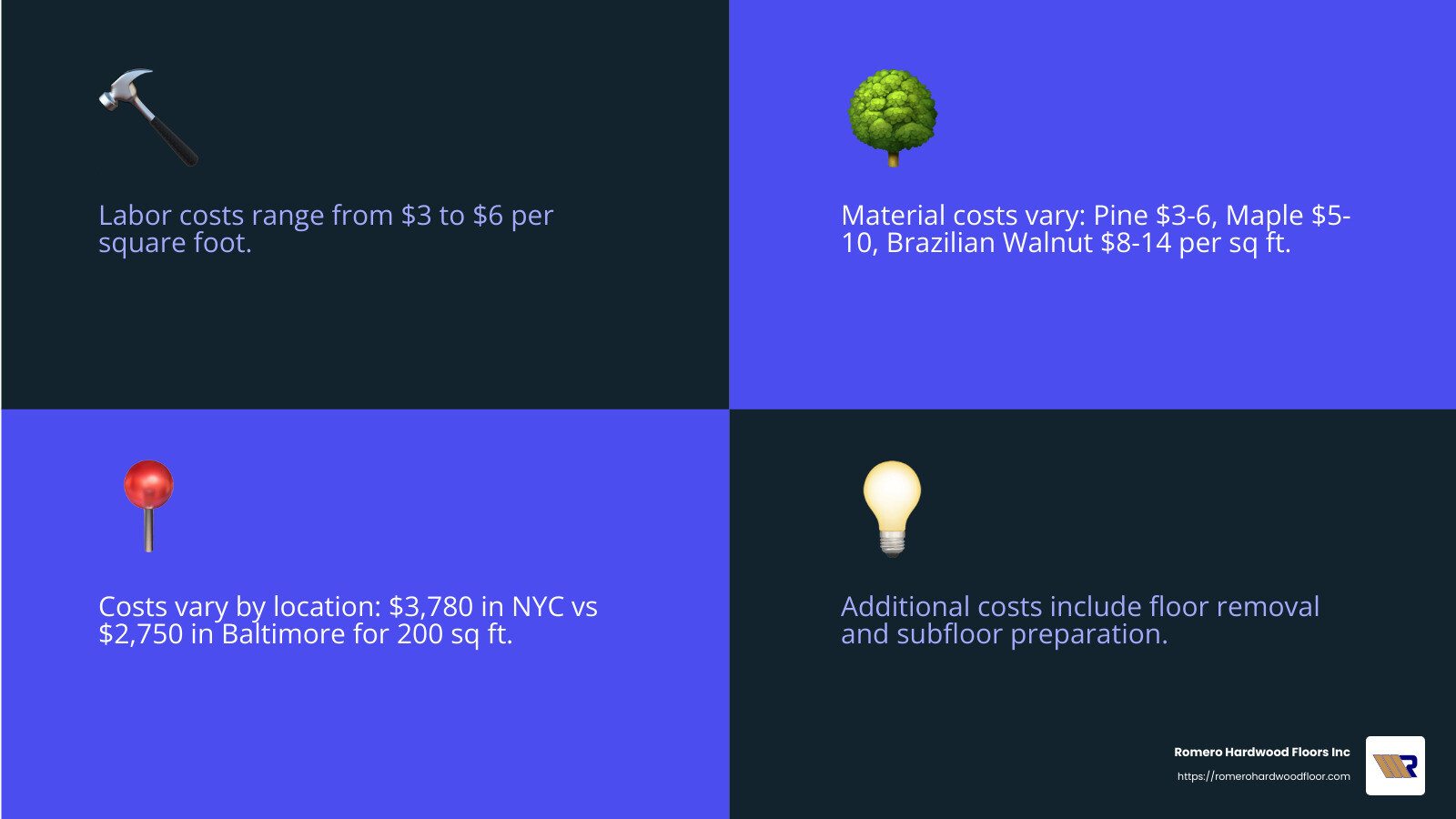
Labor is a significant part of the installation cost. On average, labor costs range from $3 to $6 per square foot. This includes removing old flooring, preparing the subfloor, and installing the new hardwood. The complexity of the installation and the experience of the installer can affect these costs. For example, intricate patterns like herringbone may increase labor charges.
Material Costs
The type and quality of wood you select will heavily impact your material costs. Here’s a quick comparison:
- Pine: $3 – $6 per square foot
- Maple: $5 – $10 per square foot
- Brazilian Walnut: $8 – $14 per square foot
Engineered hardwood is often cheaper than solid hardwood. The choice between prefinished and unfinished wood can also affect costs. Prefinished hardwood is generally more cost-effective as it doesn’t require on-site finishing.
Additional Costs
Several additional costs can arise during hardwood floor installation:
- Floor Removal: Removing old flooring can cost an extra $1 to $2 per square foot.
- Subfloor Preparation: If your subfloor needs leveling or repair, expect additional charges.
- Finish and Coating: Adding a moisture-resistant finish might be necessary in areas prone to moisture, adding to the total cost.
Geographic Location
Your location can significantly influence the cost of installing hardwood floors. Areas with a high cost of living, like New York City, generally have higher installation costs compared to places like Baltimore. This is due to higher labor rates and material costs. For instance, installing 200 square feet of oak flooring costs about $3,780 in New York City compared to $2,750 in Baltimore.
Understanding these factors helps you budget and plan effectively for your hardwood flooring project. Next, we’ll explore the costs associated with different types of hardwood flooring.
Hardwood Flooring Cost by Type
When choosing the right hardwood flooring, it’s important to know how costs vary by type. Each type has its unique characteristics and price range. Let’s break down the costs and features of each type.
Engineered Hardwood
Cost Range: $4.50 to $16 per square foot
Average Cost: $10.25 per square foot
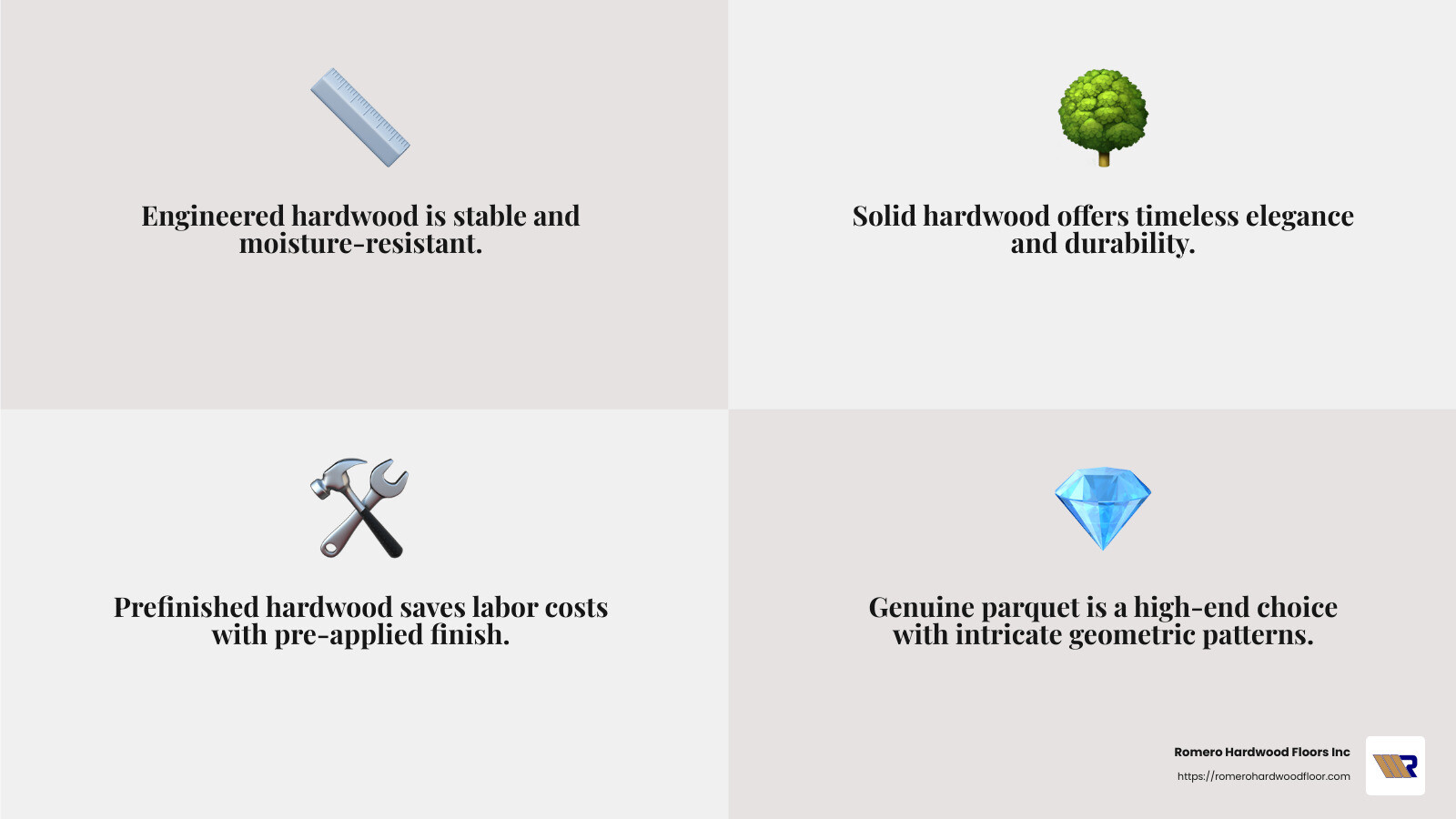
Engineered hardwood combines layers of real wood and high-quality plywood. This makes it stable and resistant to moisture and temperature changes. It’s a practical choice for those who love the look of hardwood but need something more adaptable. It’s also more cost-effective than solid hardwood.
Solid Hardwood
Cost Range: $5 to $28 per square foot
Average Cost: $16.50 per square foot
Solid hardwood is made from a single piece of wood, offering timeless elegance and durability. It can be refinished multiple times, making it a long-term investment. However, it comes at a higher price due to its premium quality.
Prefinished Hardwood
Cost Range: $6 to $12 per square foot
Average Cost: $9 per square foot
Prefinished hardwood is ready to install with a protective finish already applied. This saves on labor costs since no on-site finishing is needed. It’s a convenient option for those looking to minimize installation time.
Faux Parquet
Cost Range: $7 to $15 per square foot
Average Cost: $11 per square foot
Faux parquet mimics the intricate patterns of traditional parquet flooring but at a lower cost. Made from materials like laminate or luxury vinyl, it’s durable and easy to maintain. This option is ideal for homeowners seeking a sophisticated look without breaking the bank.
Genuine Parquet
Cost Range: $20 to $45 per square foot
Average Cost: $32.50 per square foot
Genuine parquet is known for its luxurious geometric patterns. It’s a high-end choice that adds a stunning focal point to any room. However, its intricate installation process makes it one of the more expensive options.
Understanding the costs associated with each type of hardwood flooring can help you make an informed decision that aligns with your budget and design preferences. Next, we’ll dive into additional costs and considerations that can impact your flooring project.
Additional Costs and Considerations
When planning for the cost to install a hardwood floor, it’s crucial to consider several additional factors that can affect your budget. Let’s explore some of these key considerations:
Floor Removal
Before installing new hardwood flooring, you might need to remove the existing floors. This could involve getting rid of old hardwood, carpet, or other materials. Floor removal isn’t always included in the installation package, so it’s important to check with your installer. On average, expect to pay about $1.50 to $3.50 per square foot for hardwood removal and $0.70 to $1.60 per square foot for carpet removal.
Subfloor Replacements
The condition of your subfloor can significantly impact your installation costs. If there are issues like squeaky floors, mold, or water damage, you might need to replace parts of the subfloor. Subfloor replacements can cost between $2.20 and $4.75 per square foot. In more severe cases, replacing floor joists could range from $350 to $1,000 per joist.
Material Grade
The quality of the wood you choose affects both the appearance and cost of your flooring. Material grade options vary from Prime Grade, which offers a uniform look with minimal imperfections, to Select Grade, which includes more knots and color variations. Prime Grade wood tends to be more expensive due to its limited availability and superior quality.
Room Size and Layout
The size and shape of the room also play a role in determining costs. Larger rooms may incur higher expenses for both materials and labor. Additionally, complex room layouts with many angles or obstructions can increase labor costs due to the precision required during installation.
Type of Installation
Different installation methods can affect your overall costs. Glue-down installations are more labor-intensive and typically cost more, while nail-down installations are simpler and more cost-effective. The choice of installation type can also depend on the wood type and the condition of the subfloor.
These additional considerations are essential when calculating the total cost to install a hardwood floor. Being aware of these factors helps you plan your budget more effectively and avoid unexpected expenses. Next, we’ll compare DIY installation to hiring a professional, helping you decide the best approach for your project.
DIY Hardwood Flooring Installation vs. Hiring a Professional
When it comes to the cost to install a hardwood floor, one major decision is whether to take on the project yourself or hire a professional. Let’s explore the cost comparison, tools and skills needed, and the importance of proper installation.
Cost Comparison
DIY Installation
- Pros: You can save on labor costs, which typically range from $3 to $10 per square foot. By doing it yourself, you might cut down these expenses significantly.
- Cons: Mistakes can be costly. Errors in cutting or laying the wood can lead to wasted materials and the need for professional repairs.
Professional Installation
- Pros: While it costs more upfront, professional installation ensures a high-quality finish. The national average for professional installation is about $4,200, but it can range from $2,000 to $6,300 depending on the size and complexity of the project.
- Cons: Higher initial expense due to labor costs, but this often pays off in the long run with fewer mistakes and a more durable floor.
Tools and Skills Needed
DIY Installation
- Tools: You’ll need a saw, hammer, measuring tape, spacers, and a flooring nailer or stapler. These tools can add to your costs if you don’t already own them.
- Skills: Accurate measuring and cutting are crucial. You also need to understand how to accommodate for expansion gaps and how to securely fasten boards. Mistakes can lead to uneven floors or gaps that can cause long-term issues.
Professional Installation
- Tools: Professionals come equipped with specialized tools and equipment, ensuring a faster and more efficient installation process.
- Skills: Professionals have the expertise to handle complex layouts and unexpected issues, ensuring a seamless finish.
Importance of Proper Installation
Proper installation is key to the longevity and appearance of your hardwood floors. Poorly installed floors can lead to walking hazards, sagging, or even mold growth. Additionally, many manufacturers require certified installers to maintain the warranty on the materials.
Hiring a professional can save you from costly mistakes and ensure the job is done right the first time. As Mahogany Taylor, a general contractor, advises, “Investing in professional installation can save you from costly mistakes and ensure a flawless finish that improves your home’s value.”
In the next section, we’ll explore ways to save money on hardwood flooring, whether you choose to DIY or hire a pro.
How to Save Money on Hardwood Flooring
Shop Around for the Best Price
Don’t settle for the first quote you get. It’s essential to gather estimates from multiple flooring installers. This way, you can compare prices and find the best deal for your budget. Prices can vary significantly based on location, installer reputation, and even the time of year.
Prefinished hardwood comes ready to go—sanded, stained, and sealed. This can save you money on labor costs since the installer won’t need to do these tasks on-site. Plus, it speeds up the installation process, getting you back to enjoying your space sooner.
Choose a Less Expensive Wood
Some wood species are pricier than others. If you’re looking to save, consider options like pine or other budget-friendly hardwoods. These materials offer a beautiful look at a lower cost. While they might not have the prestige of oak or mahogany, they can still provide a stunning finish for your floors.
Explore Cost-Effective Installation Methods
If you’re looking to save on installation, consider methods that might reduce labor time and costs. Discuss with your installer about options that could be more budget-friendly while still achieving the desired look and durability for your floors.
By applying these strategies, you can manage the cost to install a hardwood floor more effectively. Whether you’re opting for a DIY approach or hiring a professional, these tips can help you stay within budget while achieving the look you desire.
In the next section, we’ll dive into frequently asked questions about hardwood floor installation costs to help you make informed decisions.
Frequently Asked Questions about Hardwood Floor Installation Costs
How much does it cost to install 1,000 square feet of hardwood floors?
Installing 1,000 square feet of hardwood flooring can vary quite a bit in cost. On average, homeowners can expect to pay between $6,000 and $12,000. This range depends on factors like the type of wood you choose, the quality of materials, and the complexity of the installation. Location also plays a role—areas with higher living costs might see higher installation fees. It’s a good idea to get quotes from at least three installers to find the best price for your project.
Is it cheaper to install hardwood floors yourself?
Choosing to install hardwood floors yourself can save you money on labor costs, which typically range from $3 to $10 per square foot. For a 1,500-square-foot space, doing it yourself might reduce costs from $7,000-$25,000 to $4,000-$15,000 for materials. However, DIY installation requires tools, skills, and time. You’ll need equipment like a pneumatic floor nailer and a miter saw, which can be rented, but these rentals add to your costs. Mistakes during installation can be costly, so weigh the potential savings against the risks and challenges.
How long does it take to install 1,000 sq ft of hardwood floor?
The time it takes to install 1,000 square feet of hardwood flooring can vary. Typically, professional installers can complete this in several days, depending on the complexity of the job and the number of workers. If you opt for prefinished hardwood, the process might be quicker since there’s no need for on-site sanding or staining. If you’re doing it yourself, plan for more time, especially if it’s your first attempt. Proper preparation, including acclimating the wood and preparing the subfloor, is crucial for a successful installation.
Conclusion
In wrapping up our guide on the cost to install a hardwood floor, it’s clear that hardwood flooring is a significant investment. However, the benefits of durability, timeless appeal, and potential to increase property value make it worthwhile. Understanding the various costs involved, from materials to labor, can help you make an informed decision that fits your budget and needs.
At Romero Hardwood Floors Inc, we pride ourselves on delivering quality and value. Based in Revere, MA, we’ve been providing expert hardwood flooring solutions since 2006. Our commitment to competitive pricing, punctuality, and guaranteed workmanship ensures that your investment in hardwood flooring will improve your property’s value for years to come.
When considering hardwood flooring installation, it’s crucial to weigh the costs and benefits. A professional installation can prevent costly mistakes and ensure a flawless finish. While DIY might seem like a cost-saving option, the expertise and efficiency of professionals often outweigh the initial labor costs.
For those ready to explore their hardwood flooring options, we invite you to contact Romero Hardwood Floors Inc for personalized advice and expert installation services. Our team is here to help you create a beautiful, lasting foundation for your home. Thank you for considering us for your flooring needs, and we look forward to working with you on your next project.
