
Diagonal wood floor layout: Uncover 3 Stunning Designs
Why Diagonal Wood Floor Layouts Are Changing Modern Homes
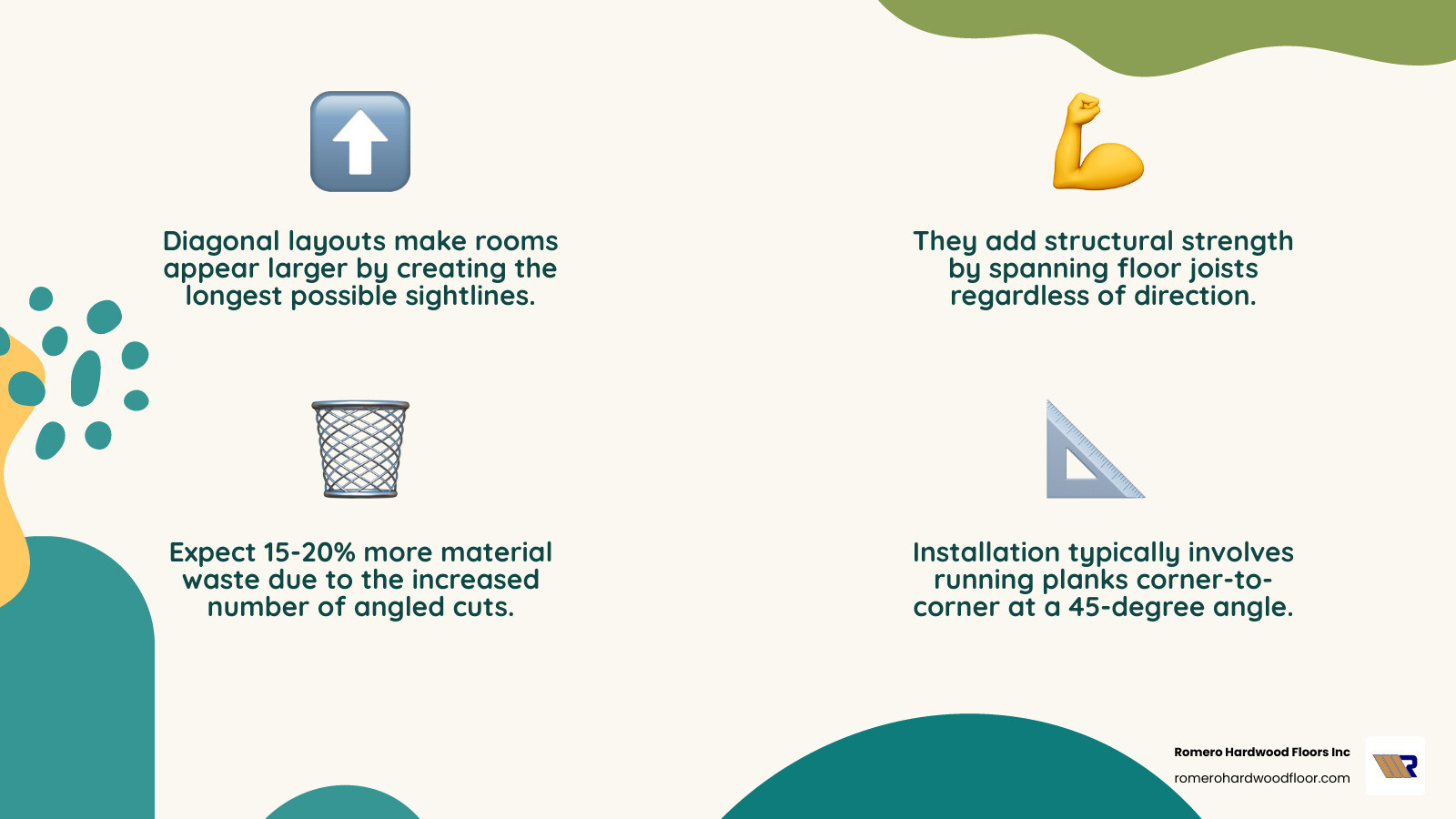
Diagonal wood floor layout creates stunning visual effects that can completely transform how a room looks and feels. This installation method runs planks at a 45-degree angle from corner to corner, rather than parallel to the walls.
Key Benefits of Diagonal Wood Floor Layouts:
- Makes rooms appear larger by creating the longest possible sight lines
- Adds structural strength by spanning floor joists regardless of direction
- Creates unique visual interest with dynamic, energetic patterns
- Hides imperfections in non-square rooms better than straight layouts
- Provides design flexibility with herringbone, chevron, and custom angle options
Main Considerations:
- Higher installation costs due to increased labor time
- 15-20% more material waste from angled cuts
- Requires skilled installation for professional results
- Can look dated if not executed properly
Research shows that diagonal installations are much less common because few contractors suggest them, yet neighbors often compliment these unique floors once installed. The pattern naturally draws attention to room corners rather than walls, creating an illusion of expanded space.
As Francisco Romero, owner of Romero Hardwood Floors Inc. with over 15 years of experience, I’ve installed countless diagonal wood floor layout projects that have transformed ordinary spaces into stunning showcases. My team specializes in the precise measurements and skilled craftsmanship required to execute these complex installations flawlessly.
Explore more about Diagonal wood floor layout:
Why Choose a Diagonal Wood Floor Layout? The Pros and Cons
Deciding on your hardwood floor direction might seem like a small detail, but trust me – it’s one of those choices that can completely change how your home feels. A diagonal wood floor layout isn’t just different for the sake of being different. It brings some pretty amazing benefits, though like any good thing, it comes with a few trade-offs too.
Let me walk you through what makes diagonal floors so special, and help you decide if they’re right for your space.
The Aesthetic and Spatial Benefits
Here’s where diagonal floors really shine – they’re like magic for making rooms feel bigger. When you run planks from corner to corner, you’re creating the longest possible sight lines in any room. Your eye naturally follows these extended diagonals, and suddenly that cozy living room feels surprisingly spacious.
This trick works especially well in smaller spaces like condos or apartments. I’ve seen cramped rooms transform into what feels like grand spaces, just by changing the plank direction. It’s one of those “wow” moments that makes homeowners smile every time they walk into the room.
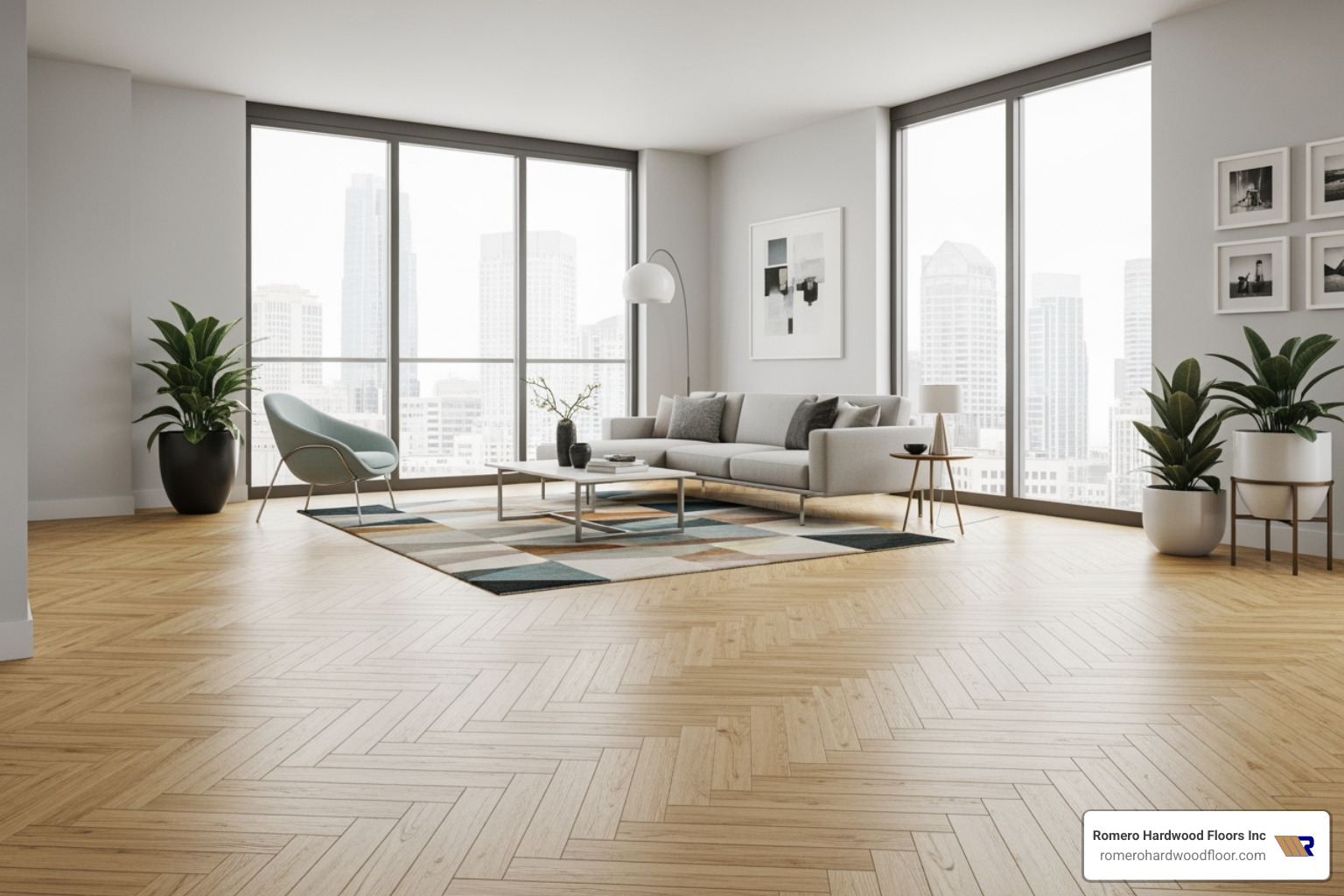
But there’s more to it than just making rooms look bigger. A diagonal wood floor layout adds this dynamic, energetic feel that straight floors just can’t match. Instead of that static, predictable look, you get movement and visual interest that turns your floor into a conversation starter.
And here’s a little secret – diagonal floors are incredibly forgiving. Got walls that aren’t perfectly square? (And let’s be honest, most of us do.) A diagonal pattern cleverly hides those out-of-square walls that would stick out like a sore thumb with straight planks. The diagonal lines draw attention away from imperfect walls and put the focus where it belongs – on your beautiful hardwood.
You can even use this layout to create a focal point in specific areas. Want to highlight your dining space or draw attention to that gorgeous fireplace? A diagonal floor naturally guides the eye exactly where you want it to go.
For more creative ways to transform your space, check out our Floor Pattern Design Ideas.
The Structural and Practical Advantages
Now, here’s something most people don’t expect – diagonal floors can actually make your floor system stronger. With traditional installations, we worry about floor joist direction because planks should ideally run perpendicular to the joists for the best support.
But with a diagonal wood floor layout, the planks naturally span across joists no matter which direction they run. This means you get added structural strength automatically. The load spreads more evenly across your subfloor, which can prevent issues like sagging or boards pulling apart over time.
This is especially helpful in older homes where the original subfloor stability might be questionable. Sometimes we’re working with thick plank subfloors or even installing directly over joists. In these situations, a diagonal installation can solve problems before they start.
The diagonal approach also eliminates what we call the “ladder effect” – that repetitive pattern you sometimes see in long, narrow hallways where all the joints line up. Nobody wants their beautiful hardwood to look like a ladder!
Potential Drawbacks to Consider
I’d be doing you a disservice if I didn’t mention the challenges that come with diagonal installations. The biggest one? It’s going to cost more.
Higher installation cost is probably the main reason more people don’t choose diagonal layouts. The installation takes longer because every single board needs precise angled cuts. We’re talking about maintaining that perfect 45-degree line across your entire room, which requires skill, patience, and time.
Then there’s the increased material waste. While a straight installation might waste 5-10% of your materials, diagonal layouts typically waste 15-20%. All those angled cuts at the walls add up to more expensive off-cuts that can’t be used elsewhere.
The longer installation time also means higher labor costs. What might take two days for a straight layout could easily take three or four days for a diagonal installation. Every measurement has to be perfect, every cut precise.
Some people worry that diagonal floors can look “busy” or even dated. I’ve heard folks mention that diagonal patterns remind them of the 1970s. But here’s the thing – with today’s beautiful wood species and modern finishes, a well-executed diagonal wood floor layout looks absolutely stunning and contemporary. It’s all about the craftsmanship and choosing the right pattern for your home’s style.
The bottom line? Diagonal floors aren’t for every budget or every homeowner, but when done right, they create something truly special that you’ll love for years to come.
Exploring Diagonal Wood Floor Patterns
When most people think of a diagonal wood floor layout, they picture planks running simply corner-to-corner at a 45-degree angle. But diagonal patterns is actually much richer and more varied than that single approach. From intricate parquet designs to custom angles that break all the rules, diagonal flooring offers countless ways to make your home uniquely yours.
The Classic 45-Degree Diagonal Wood Floor Layout
The standard 45-degree diagonal wood floor layout remains the most popular choice for good reason. This timeless pattern runs planks at a precise 45-degree angle to your room’s walls, creating those beautiful long lines that stretch from corner to corner. It’s this simple geometry that works the magic of making rooms feel larger and more open.
What makes this pattern so effective is its clean, uncluttered approach. The single consistent angle allows the natural beauty of your wood grain to take center stage, while that diagonal direction adds just enough visual surprise to lift the entire space. We’ve installed countless 45-degree diagonal floors in everything from cozy condos to sprawling open-concept homes, and the change is always dramatic.
This pattern works especially well when you want maximum visual impact without overwhelming complexity. The corner-to-corner installation creates those longest possible sight lines that trick the eye into seeing more space than actually exists.
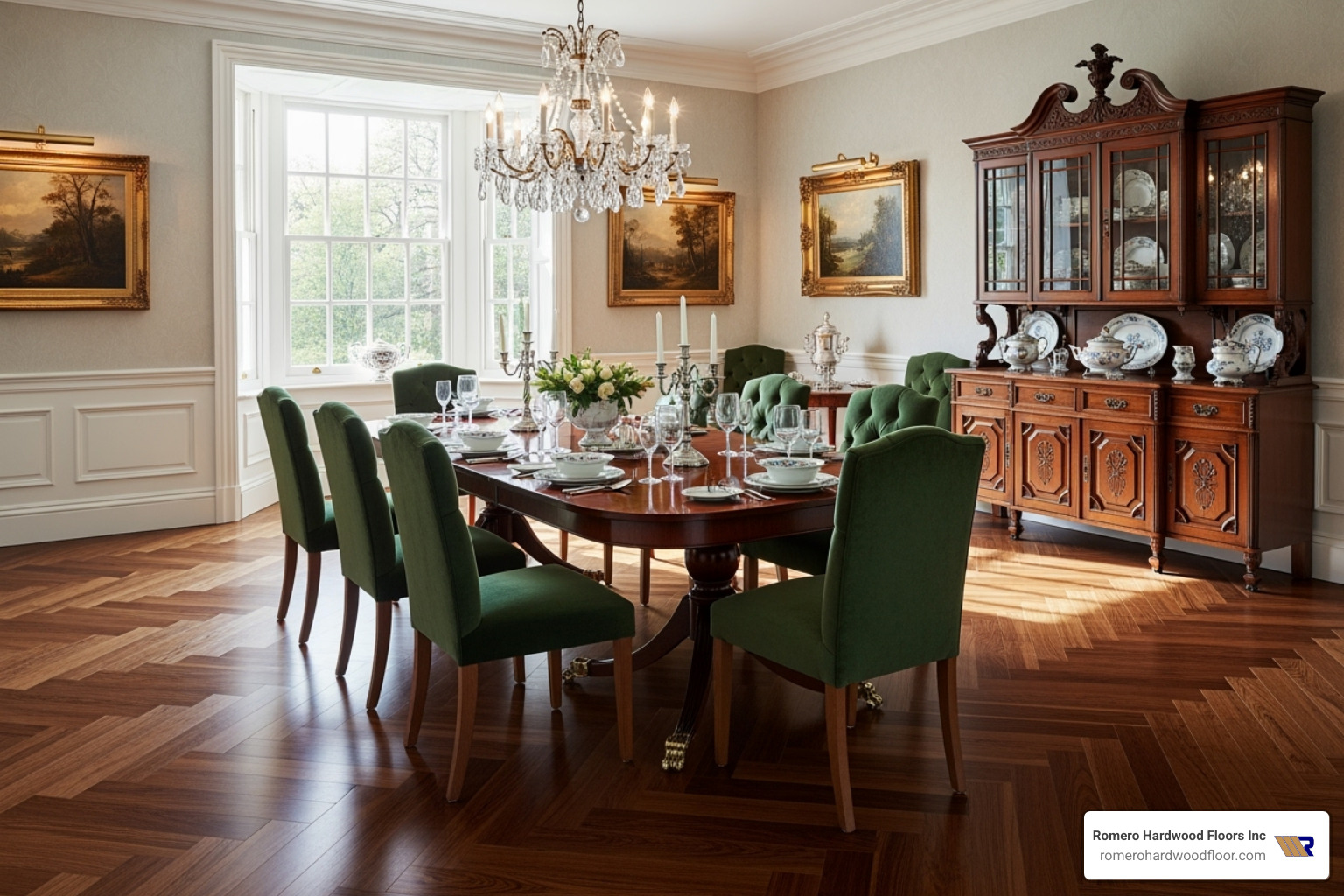
For homeowners who appreciate timeless elegance with a contemporary twist, the 45-degree diagonal delivers every time. You can explore more examples of how this classic approach transforms spaces in our Classic Wood Floor Designs gallery.
Parquet Patterns: Herringbone vs. Chevron
Now here’s where things get really exciting. Parquet flooring takes diagonal patterns into intricate territory with herringbone and chevron designs. While both create stunning diagonal effects, they’re actually quite different in how they’re constructed and how they look.
The herringbone pattern creates its magic through a staggered zigzag arrangement. Picture rectangular planks meeting at 90-degree angles, where the end of one plank meets the side of another. This creates those distinctive broken V-shapes that give the pattern its name – it really does look like the bone structure of a fish! What’s fascinating is that this design dates all the way back to Roman times and was a favorite in those neat 1800s Parisian apartments.
Chevron patterns take a more refined approach. Born in 17th-century French palaces (talk about royal pedigree!), chevron requires each plank to be cut at precise angles – usually between 30 and 45 degrees. The planks then meet point-to-point along a centerline, forming continuous V-shapes that flow seamlessly across your floor. The result is bold and sophisticated, with those strong diagonal lines making even small spaces appear longer and wider.
The key difference? Herringbone uses square-end planks that create broken zigzags, while chevron uses mitered planks that form continuous V-shapes. Both require expert installation – every angle must be perfect to achieve that flawless flow we’re known for.
These parquet patterns do require more time and create more waste since every board needs precise cutting. But when you see the finished result, most homeowners agree it’s absolutely worth the investment. Learn more about the elegance and sophistication of chevron on our Chevron Pattern Hardwood Floors page.
Custom Angles and Creative Layouts
Here’s where we really get to flex our creative muscles. While 45-degree angles and classic parquet patterns are beautiful, they’re just the beginning of what’s possible with diagonal layouts. Custom angles open up a whole world of unique design possibilities that can make your floor truly one-of-a-kind.
Consider a subtle 10-degree layout that offers just a whisper of diagonal movement. It’s not as dramatic as the full 45-degree approach, but it adds enough visual interest to lift your space from ordinary to intriguing. These non-standard angles require even greater precision in measuring and cutting, but the results can be absolutely stunning.
Creative combinations take things even further. Imagine a diagonal pattern in your main living area framed by a straight border that defines the space. Or picture a custom diagonal medallion creating a breathtaking centerpiece in your entryway. We’ve created floors that combine different angles, mix diagonal patterns with traditional borders, and even incorporate multiple wood species to create truly artistic results.
These bespoke designs allow you to express your personal style in ways that go far beyond standard flooring options. Every cut, every angle, every transition is carefully planned to create something that’s uniquely yours. It’s like turning your floor into a work of art that you get to walk on every day.
If you’re dreaming of something completely unique, our team specializes in bringing Custom Hardwood Floor Designs to life, ensuring your flooring is as individual as your vision.
Installation and Cost: What to Expect
Starting on a diagonal wood floor layout project means signing up for a journey that requires precision, patience, and a bit more investment than a traditional straight installation. But the stunning results, in our humble opinion, are absolutely worth it.
The Installation Process: Key Considerations
Installing a diagonal wood floor layout is a nuanced process that demands a higher level of skill and attention to detail compared to a straight lay. Here are some of the key considerations we carefully address:
- Subfloor Preparation: Regardless of the layout, a perfectly prepared subfloor is paramount. This means ensuring it’s clean, dry, level, and structurally sound. For diagonal installations, especially when spanning joists for added strength, we pay extra attention to the subfloor’s integrity, sometimes adding an additional layer of plywood to ensure optimal support and prevent any future sagging.
- Finding a Starting Line: This is arguably the most critical step for a diagonal layout. While traditional installations often start along a wall, a diagonal lay typically begins from a central point or a carefully calculated corner. For standard 45-degree installations, we accurately snap a chalk line at the precise angle, ensuring every subsequent board follows this guide. In complex or L-shaped rooms, starting from a corner can be challenging, but experienced installers use methods like the 3-4-5 rule to establish a perfectly square reference point, even if the room itself isn’t square.
- Complex Angle Cuts: Every board that meets a wall or an obstruction will require a precise miter cut. This means more cutting, and for patterns like chevron or custom angles, every single board might need to be cut at a specific angle. We use specialized tools and techniques to ensure these cuts are consistently accurate, minimizing waste and ensuring tight seams.
- Using Splines for Direction Changes: In some cases, especially when transitioning between rooms or changing the direction of the wood within a large space (though less common with a pure diagonal), splines can be used. These thin strips of wood are inserted into the groove of a board to create a new tongue, allowing for a seamless change in direction.
- Expansion Gaps: Just like any hardwood installation, maintaining a consistent expansion gap around the perimeter of the room is crucial. This allows the wood to expand and contract naturally with changes in humidity without buckling. For diagonal layouts, ensuring this gap is uniform, especially when starting from a corner, requires careful planning and the use of wedges to keep the installation aligned row by row.
- Perimeter Bending: With long diagonal runs, there’s a risk of the perimeter boards bending or curving slightly if not properly supported. We counteract this by inserting wedges against the wall or base after every row or two, keeping the installation perfectly aligned and preventing any unwanted bowing.
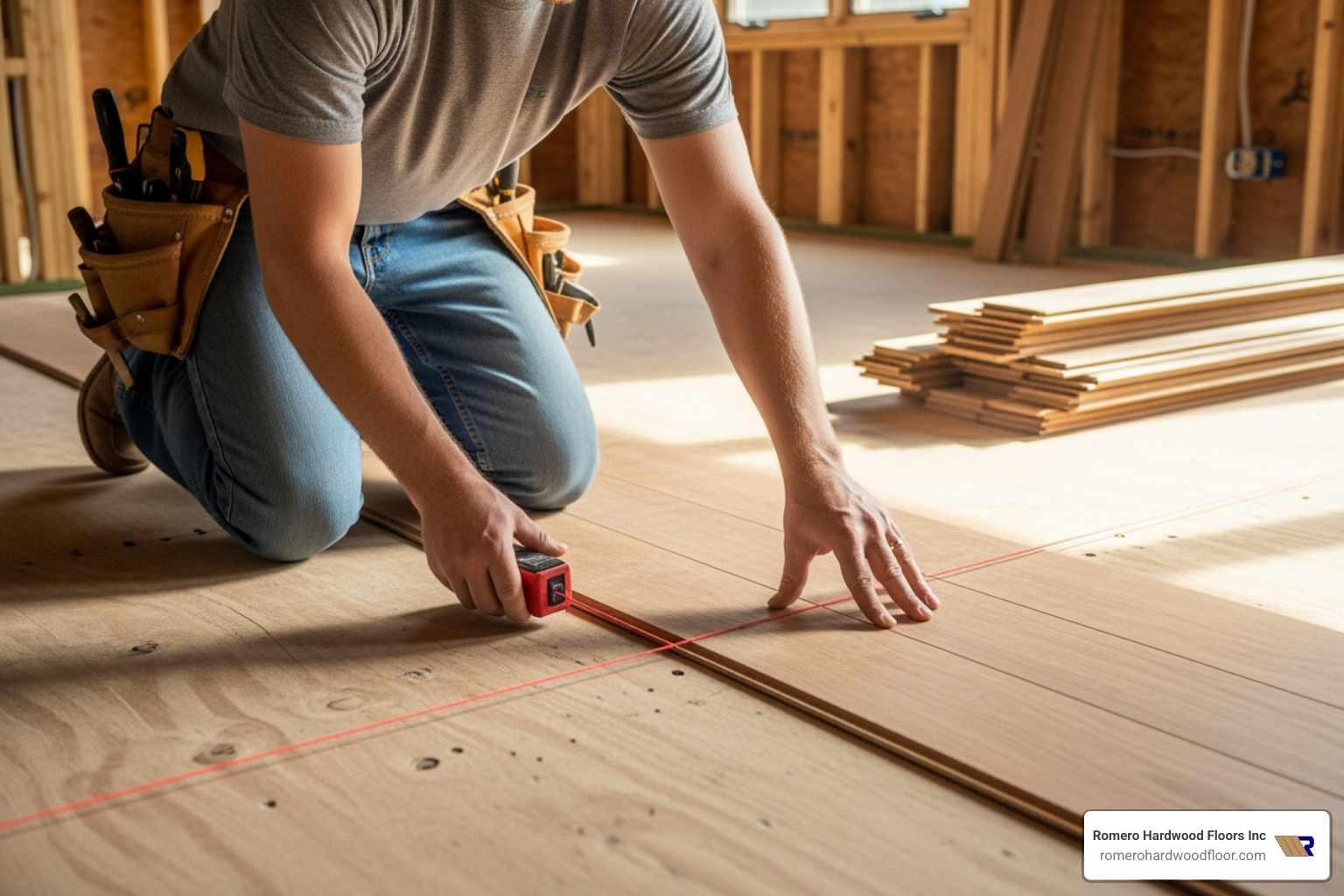
Our team at Romero Hardwood Floors Inc. has honed these techniques over years, ensuring a flawless Hardwood Flooring Installation Process for every project, no matter how complex.
The Cost of a Diagonal Wood Floor Layout
When budgeting for a diagonal wood floor layout, it’s important to understand that the final cost will generally be higher than a traditional straight installation. This is primarily due to two factors: increased material waste and higher labor costs.
Material Costs: As mentioned, a diagonal installation typically results in 15-20% material waste, sometimes even more for intricate patterns like chevron or custom angles. This compares to a more economical 5-10% waste for straight layouts. This means you’ll need to purchase more square footage of wood to cover your space, directly increasing your material expenditure.
Labor Costs: The increased complexity, precision cutting, and longer installation time associated with diagonal patterns translate into higher labor rates. Installers need more skill and more time to complete the job. While we strive to offer competitive pricing for all our services, a diagonal wood floor layout simply requires more hours of expert craftsmanship.
To give you a general idea, here’s a comparison of estimated costs, keeping in mind these are average costs based on internet data and not actual costs for Romero Hardwood Floors. Actual project costs will vary significantly based on your specific wood choice, room size, subfloor condition, and the complexity of the pattern chosen.
| Factor | Straight Layout (Estimated Average) | Diagonal Layout (Estimated Average) |
|---|---|---|
| Material Waste | 5-10% | 15-20% (or more) |
| Installation Time | Standard | 25-50% longer |
| Labor Rate | Standard | 20-40% higher |
| Total Cost | Base | 1.2x – 2.5x Base (or more for complex patterns) |
For example, if a straight lay might cost $6-$12 per square foot for material and installation, a diagonal lay could range from $8-$30+ per square foot, demonstrating the wide range and the potential for higher costs, especially with complex patterns or challenging room layouts. We always provide a transparent and detailed estimate for your specific project after a thorough assessment.
Frequently Asked Questions about Diagonal Wood Floors
After years of installing diagonal wood floor layout projects, we’ve heard just about every question you can imagine. These unique installations spark curiosity, and rightfully so! Let’s tackle the most common questions we get from homeowners considering this stunning flooring option.
Does a diagonal floor make a room look bigger?
This is hands down our most popular question, and the answer is a resounding yes! A diagonal wood floor layout is like magic for making spaces feel more expansive. Here’s why it works so well.
When planks run diagonally from corner to corner, they create the longest possible lines your eye can follow in any room. Think about it – the distance from one corner to the opposite corner is always longer than the distance across the width or length of a room. Your eye naturally follows these extended diagonal lines, which tricks your brain into perceiving more space.
Instead of focusing on the walls (which can make a room feel boxed in), a diagonal pattern draws your attention to the corners and creates a sense of flow and movement. We’ve had clients tell us their friends walk into the room and immediately comment on how spacious it feels, even though the actual square footage hasn’t changed one bit.
This effect is especially dramatic in smaller spaces like condos, apartments, or narrow hallways. We recently installed a diagonal oak floor in a cramped dining room, and the change was incredible – what once felt tight and confined now feels open and inviting.
How much more waste is there with a diagonal layout?
Let’s be honest about this – a diagonal wood floor layout will definitely cost you more in materials. While a straight installation typically generates about 5-10% waste, diagonal patterns bump that up to 15-20% minimum. Sometimes we see even higher waste percentages, especially with complex patterns or oddly shaped rooms.
Why so much more waste? Every single board that meets a wall needs to be cut at an angle. That means lots of triangular off-cuts that can’t be used elsewhere. Unlike straight installations where you can often use cut-offs from one end of the room at the other end, diagonal cuts create pieces that are much harder to repurpose.
Intricate patterns like herringbone or chevron can push waste even higher – sometimes reaching 25% or more. Each board in these patterns requires precise angled cuts, and there’s less flexibility to work around natural variations in the wood.
We always factor this waste into our material estimates upfront, so there are no surprises. Yes, it means buying more flooring than your actual square footage, but the stunning visual impact is worth every extra plank.
Can you install a diagonal layout yourself?
This question makes us chuckle a bit, because we’ve seen some pretty ambitious DIY attempts over the years! While we admire the spirit, installing a diagonal wood floor layout is genuinely challenging, even for experienced DIYers.
Here’s what you’re up against: maintaining that perfect 45-degree angle across an entire room requires constant precision. One small error early on can throw off the entire installation. Then there’s the complexity of starting the layout correctly – unlike straight floors that can begin along any wall, diagonal patterns need a carefully calculated starting point.
Every cut along the perimeter needs to be a perfect miter, and trust us, there are a lot of them. L-shaped rooms add another layer of complexity that can quickly overwhelm even skilled weekend warriors. We’ve had several clients call us halfway through their DIY attempts, frustrated and ready to have professionals take over.
That said, if you’re an experienced woodworker with the right tools, patience, and plenty of time, it’s technically possible. But for most homeowners, the risk of costly mistakes and the time investment make professional installation the smarter choice.
Our team has the specialized tools and years of experience to handle these complex installations efficiently. We guarantee our workmanship, so you can enjoy your beautiful new floors without the stress and potential headaches of a DIY project gone wrong. If you’re curious about the installation process, check out our comprehensive Hardwood Flooring Installation Guide for more insights.
Conclusion: Is a Diagonal Layout Right for Your Home?
After exploring all the ins and outs of diagonal wood floor layout options, you might be wondering if this bold choice is the right fit for your home. The answer really depends on what you’re hoping to achieve and how much you value making a unique design statement.
If you’re dealing with a smaller space that feels cramped, a diagonal wood floor layout could be your secret weapon. The way these patterns create those long, sweeping sight lines from corner to corner genuinely makes rooms feel more spacious and open. We’ve had clients tell us their friends can’t believe it’s the same room after installation.
Maybe you have one of those older homes where the walls aren’t perfectly square – don’t worry, most of us do! A diagonal pattern is incredibly forgiving and can cleverly hide those little imperfections that straight planks would highlight. Plus, if you’re tired of seeing the same old straight-laid floors in every home, going diagonal instantly sets your space apart.
The structural benefits are just a bonus. Knowing that your diagonal wood floor layout is actually adding strength by spanning those floor joists gives you peace of mind along with beauty.
Of course, you’ll need to factor in the higher costs – both for materials and installation. That extra 15-20% waste and the additional labor time do add up. But for many homeowners, the stunning results and the “wow factor” make it worthwhile. Think of it as an investment in your home’s character and value.
The key is working with experienced professionals who understand the complexities involved. At Romero Hardwood Floors Inc., we’ve been perfecting these challenging installations since 2006. Our team knows how to handle everything from the tricky starting lines to those precise angle cuts that make or break the final look.
Whether you’re in Revere, Beverly, Chelsea, or anywhere in between, we’re here to help you decide if a diagonal layout matches your vision and budget. Our guaranteed workmanship means you can feel confident in your investment.
For a professional consultation on the best hardwood floor installation patterns for your specific space, contact our team today. We’ll walk through your options, discuss costs honestly, and help you create a floor that you’ll love for years to come.
Like us on Facebook!
