
Engineered Hardwood versus Laminate: Top Guide 2025
Engineered hardwood versus laminate is a popular topic for homeowners in Revere, MA, looking to upgrade their flooring. Both options provide unique benefits that cater to different needs and preferences. To put it simply:
- Engineered Hardwood
- Cost: Generally more expensive upfront
- Durability: Durable and can be refinished, longest lifespan
- Look: Offers a natural and authentic wood appearance
- Laminate
- Cost: Typically more budget-friendly
- Durability: Resistant to scratches with moderate lifespan
- Look: Mimics natural wood or stone, offering a wide range of styles
Choosing between the two materials depends on what’s most important to you: authenticity and long-term investment, or affordability and ease of installation.
As Francisco Romero, owner of Romero Hardwood Floors Inc. with over 15 years of expertise in flooring solutions, I can help steer the choices between engineered hardwood versus laminate. Our commitment to quality ensures that no matter your choice, you’ll receive outstanding flooring that improves your property’s charm.

Engineered hardwood versus laminate further reading:
– engineered hardwood floor refinishing
– engineered wood floor acclimation
– engineered wood floor cleaning
Composition and Appearance
When comparing engineered hardwood versus laminate, understanding their composition and appearance is crucial. Both materials offer distinct features that influence their overall look and feel.
Engineered Wood
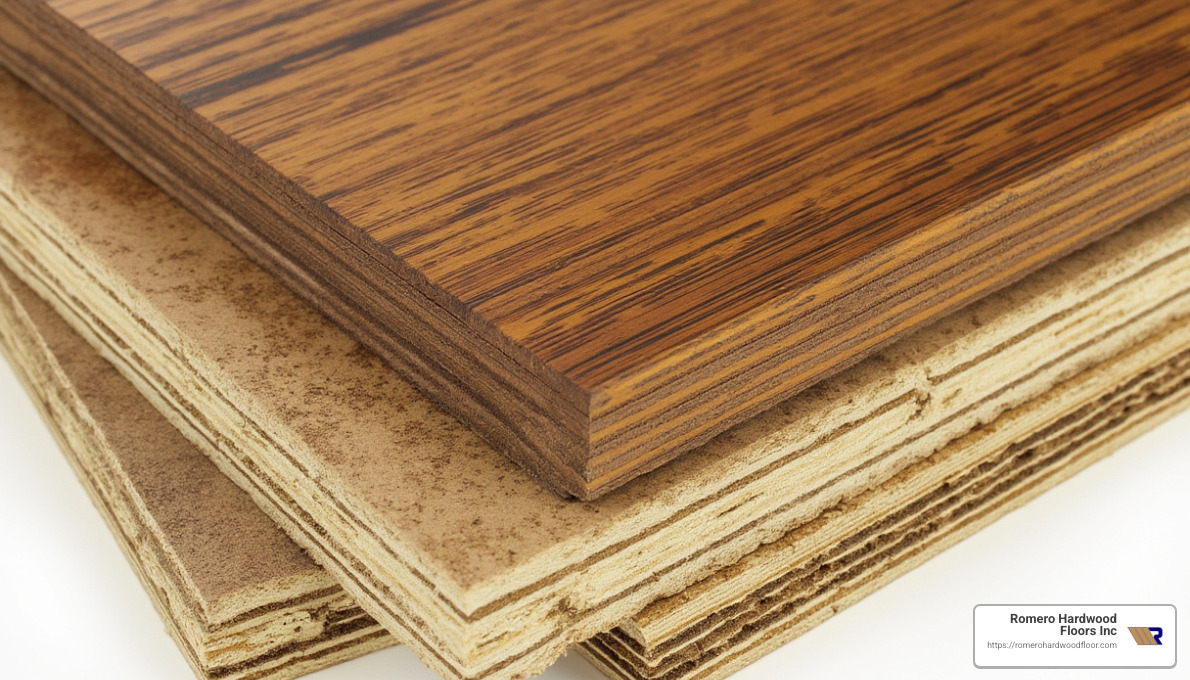
Engineered hardwood is crafted from multiple layers. The top layer is a real wood veneer, providing the authentic look and feel of solid hardwood. This veneer is bonded over layers of plywood or high-density fiberboard (HDF), giving it added stability and resistance to moisture.
The real wood veneer allows engineered hardwood to offer the same natural beauty and warmth as traditional wood floors. Each plank showcases unique grain patterns and color variations, making every installation one-of-a-kind.
Laminate Flooring
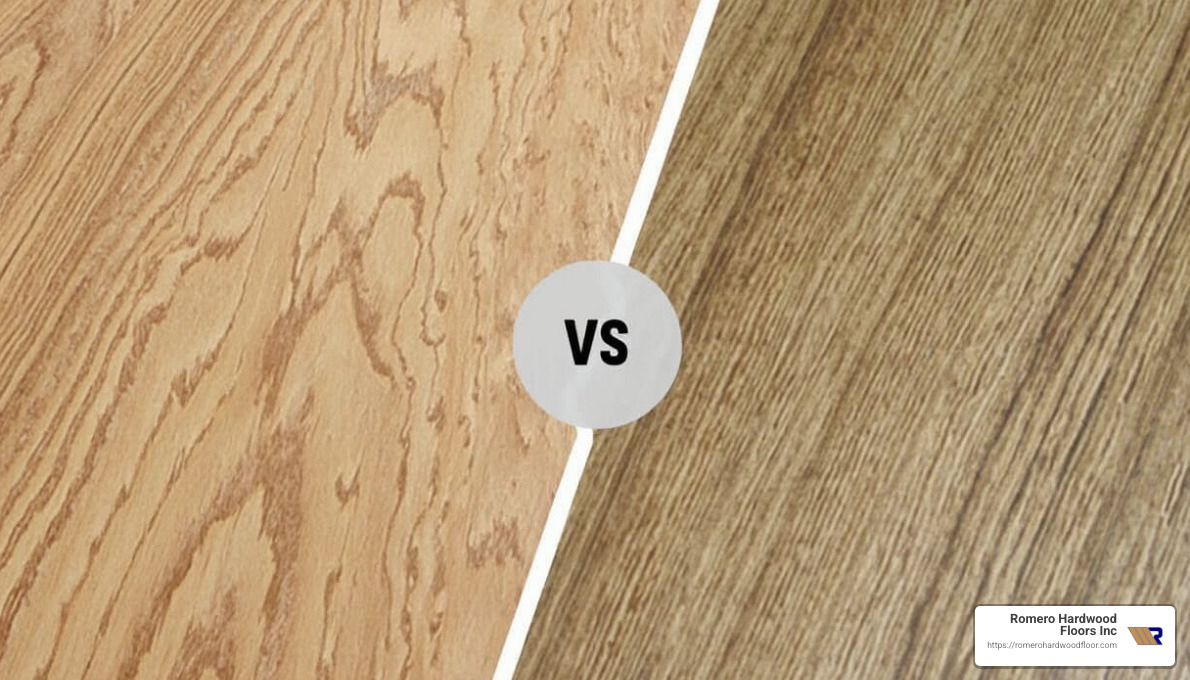
Laminate flooring, on the other hand, is composed of several synthetic layers. The top layer is a clear protective coating that guards against wear and tear. Beneath this is a photographic layer that mimics the appearance of natural materials like wood or stone.
This photographic layer can replicate a wide array of designs, offering homeowners diverse style options. While it doesn’t provide the same authenticity as real wood, laminate’s visual versatility and affordability make it an attractive choice for many.
Comparing the Two
- Appearance: Engineered hardwood’s real wood veneer offers a genuine, timeless look. Laminate’s photographic layer provides a variety of styles, though it lacks the depth and texture of real wood.
- Composition: Engineered wood combines natural and synthetic materials for durability and authenticity. Laminate is entirely synthetic, focusing on cost-effectiveness and design flexibility.
Both engineered hardwood and laminate flooring have their unique advantages in terms of composition and appearance. Your choice will depend on whether you prioritize the natural beauty of wood or the diverse style and budget-friendly benefits of laminate.
Pros and Cons of Engineered Hardwood
When considering engineered hardwood versus laminate, weigh the pros and cons of each option. Here, we’ll focus on engineered hardwood, examining its natural look, refinishing capabilities, lifespan, and susceptibility to water damage.
Natural Look
Engineered hardwood is prized for its authentic appearance. The top layer is a real wood veneer, which gives it the same natural beauty and warmth as solid hardwood. This means you get the unique grain patterns and color variations that make each floor distinct. If you value the timeless elegance of wood, engineered hardwood is a top choice.
Refinishing
One of the significant advantages of engineered hardwood is its ability to be refinished. Depending on the thickness of the veneer, engineered wood can be sanded and refinished once or twice during its lifespan. This allows homeowners to refresh the floor’s appearance and extend its life, making it a long-term investment.
Lifespan
Engineered hardwood is designed to last. With proper care, it can endure for decades, similar to solid hardwood floors. Its layered construction provides stability and resistance to changes in temperature and humidity, which helps prevent warping and prolongs its lifespan.
Water Damage
While engineered hardwood is more resistant to moisture than solid wood due to its layered construction, it’s not completely immune to water damage. Excessive moisture can still cause problems, such as warping or swelling. It’s best to avoid installing engineered hardwood in areas prone to high humidity or spills, like bathrooms or basements.
In summary, engineered hardwood offers a natural look, the potential for refinishing, and a long lifespan, making it a popular choice for homeowners who want the beauty of real wood. However, be mindful of its limitations with water exposure.
Next, we’ll explore the pros and cons of laminate flooring, focusing on its affordability, scratch resistance, installation ease, and lifespan.
Pros and Cons of Laminate Flooring
When you compare engineered hardwood versus laminate, laminate flooring stands out for several reasons. Let’s explore its affordability, scratch resistance, installation ease, and lifespan.
Affordability
Laminate flooring is known for being budget-friendly. It offers the appearance of more expensive materials, like hardwood or stone, at a fraction of the cost. This makes it a great choice if you’re looking to refresh your floors without breaking the bank. Plus, its cost-effectiveness doesn’t mean you’re skimping on style—laminate comes in a variety of designs that can mimic the look of natural wood or stone.
Scratch Resistance
One of the biggest advantages of laminate is its durability against scratches. Thanks to its tough, clear protective layer, laminate flooring is perfect for homes with pets, kids, or high foot traffic. This scratch resistance helps maintain its appearance over time, which is a significant factor for many homeowners.
Installation
Laminate flooring is often easier to install than other options. It typically uses a floating installation method, where the planks click and lock together over the subfloor. This method doesn’t require glue or nails, making it a popular DIY choice. The ease of installation can also reduce labor costs if you decide to hire professionals.
Lifespan
While laminate is durable, its lifespan is generally shorter than that of engineered hardwood. Most laminate floors last between 10 to 20 years, depending on the quality and how well they’re maintained. Unlike engineered hardwood, laminate cannot be refinished, so once it shows wear, replacement is the only option.
In summary, laminate flooring offers affordability, excellent scratch resistance, and ease of installation, making it a practical choice for many homeowners. However, its inability to be refinished and shorter lifespan compared to engineered hardwood are important considerations.
Next, we’ll discuss the key differences between engineered hardwood and laminate, including cost comparison, installation methods, resale value, and maintenance.
Engineered Hardwood versus Laminate: Key Differences
When deciding between engineered hardwood versus laminate, understanding their key differences can help you make the best choice for your home. Let’s break it down into four main areas: cost comparison, installation methods, resale value, and maintenance.
Cost Comparison
Engineered Hardwood tends to be more expensive than laminate. This is because it features a real wood veneer, which gives it a natural look. While the initial investment is higher, many homeowners find the authentic appearance worth the cost.
Laminate, on the other hand, is very budget-friendly. It mimics the look of natural materials at a lower price point, making it an attractive option for those on a tight budget.
Installation Methods
Both materials offer different installation methods:
- Engineered Hardwood can be installed using staple, nail down, or glue down methods. These methods often require professional installation, adding to the overall cost but ensuring a stable and lasting floor.
- Laminate is typically installed using a floating method. The planks click and lock together, making it a straightforward DIY project. This ease of installation can save you money on labor costs.
Resale Value
Engineered Hardwood generally adds more value to your home. Its natural appearance and longer lifespan are appealing to potential buyers. Homes with hardwood floors often sell faster and at higher prices.
Laminate offers less in terms of resale value. While it looks good and is durable, it doesn’t have the same market appeal as real wood.
Maintenance
- Engineered Hardwood requires regular maintenance to keep it looking its best. It can be refinished multiple times, which helps maintain its beauty over its lifespan.
- Laminate is easier to maintain day-to-day due to its scratch-resistant surface. However, it cannot be refinished, so once it starts showing wear, replacement is necessary.
In summary, when choosing between engineered hardwood versus laminate, consider your budget, installation preferences, resale goals, and maintenance capabilities. Each option has its strengths and trade-offs, so think about what matters most to you and your home.
Next, we’ll tackle some frequently asked questions about these flooring options to help you make an even more informed decision.
Frequently Asked Questions about Engineered Hardwood versus Laminate
What is better, laminate or engineered hardwood?
When choosing between laminate and engineered hardwood, consider three key factors: maintenance, lifespan, and appearance.
Maintenance: Laminate flooring is known for its easy upkeep. Thanks to its scratch-resistant surface, it handles daily wear and tear well. Engineered hardwood, however, requires a bit more care. You’ll need to clean it regularly and occasionally refinish it to maintain its natural beauty.
Lifespan: Engineered hardwood typically lasts longer. Its real wood veneer can be refinished multiple times, extending its life. Laminate, while durable, cannot be refinished. Once it shows significant wear, replacement is the only option.
Appearance: If a natural wood look is your priority, engineered hardwood is the winner. It offers the elegance of real wood, which many homeowners prefer. Laminate mimics this look but might not satisfy those seeking authenticity.
Do engineered wood floors scratch easily?
Engineered wood floors have a hardwood veneer that is more susceptible to scratches compared to laminate. However, the ability to refinish engineered wood multiple times helps mitigate this issue. Proper care, like using rugs and felt pads under furniture, can also reduce the risk of scratching.
What is the downside to laminate flooring?
While laminate flooring is affordable and scratch-resistant, it does have some downsides, particularly in terms of moisture resistance and durability.
Moisture Resistance: Laminate is not as water-resistant as vinyl or tile. Water can seep into the seams, causing the planks to swell and warp. This makes it less suitable for areas prone to moisture, like bathrooms or basements.
Durability: Although laminate is quite durable, it cannot be refinished. Once it starts showing signs of wear, such as deep scratches or fading, replacement is necessary. This can be a drawback if you’re looking for a long-term flooring solution.
These insights should help you weigh the pros and cons of engineered hardwood versus laminate based on your specific needs and preferences. Next, we’ll explore how Romero Hardwood Floors Inc can assist you in choosing the best flooring solution for your home.
Conclusion
Choosing the right flooring is a big decision, and at Romero Hardwood Floors Inc, we understand its impact on your home’s beauty and value. Whether you’re leaning towards the authentic charm of engineered hardwood or the practical benefits of laminate, we are here to guide you every step of the way.
Why Choose Romero Hardwood Floors Inc?
We specialize in providing expert flooring solutions custom to your needs. Our team ensures that each installation not only improves your home’s aesthetic but also boosts its long-term property value. With over a decade of experience, we pride ourselves on our commitment to quality and customer satisfaction.
Enhancing Property Value
Investing in quality flooring can significantly increase your home’s value. Engineered hardwood, with its timeless appeal and durability, often attracts potential buyers and adds to the resale value. Laminate, with its affordability and easy maintenance, is another excellent option for those looking to upgrade without breaking the bank.
Our Promise
At Romero Hardwood Floors Inc, we guarantee workmanship that stands the test of time. We focus on delivering not just a service but a partnership in creating a space you’ll love. Our punctuality and competitive pricing ensure a seamless experience from start to finish.
Ready to transform your home? Let us help you choose the perfect flooring solution. Visit our Engineered Hardwood Flooring page for more information or to schedule a consultation. We look forward to helping you create a beautiful foundation for your home.
