
Engineered vs Solid Hardwood: Top 5 Expert Tips 2024
Engineered vs solid hardwood is a common consideration for homeowners and commercial property managers alike, often sparking a debate about which option is right for their space. Here’s a quick breakdown:
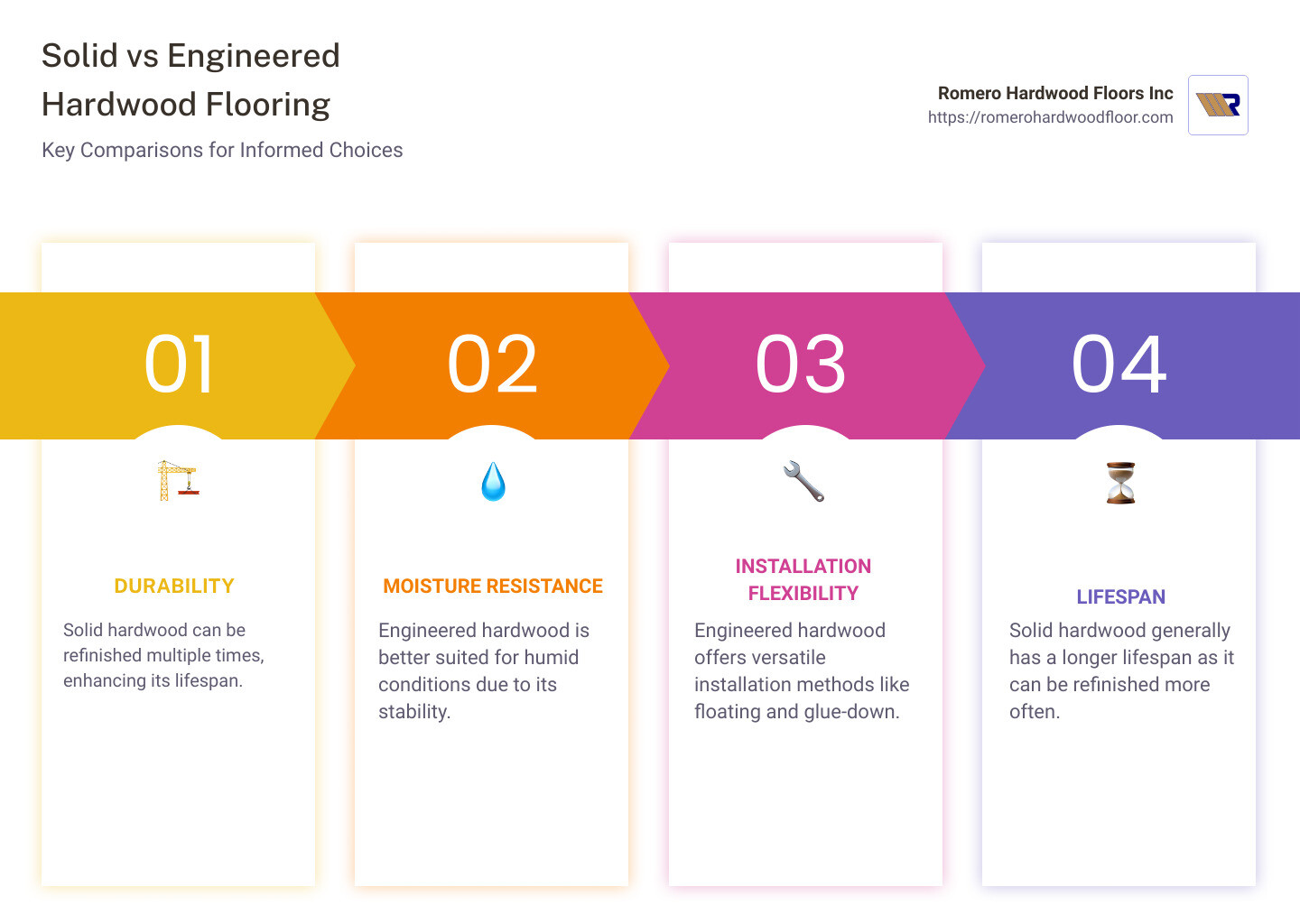
- Durability: Both are durable, but solid hardwood can be refinished more times than engineered hardwood.
- Moisture Resistance: Engineered hardwood performs better in environments with fluctuations in humidity.
- Installation Flexibility: Solid hardwood requires a more traditional installation method, while engineered hardwood can often be installed in more versatile ways, such as floating or glue-down techniques.
- Lifespan: Solid hardwood has a longer lifespan due to its ability to be refinished multiple times.
Choosing between these options involves understanding their differences, benefits, and limitations, which can significantly impact the comfort and aesthetics of your living or working space.
As the owner of Romero Hardwood Floors Inc., I, Francisco Romero, bring over 15 years of experience in delivering high-quality flooring solutions, focusing on the strengths and nuances of Engineered vs solid hardwood floors. My goal is to help you make an informed decision that improves your property’s value and functionality.
Engineered vs Solid Hardwood: Key Differences
When deciding between engineered vs solid hardwood, understand their composition and structure, as well as their durability and lifespan. Let’s break it down.
Composition and Structure
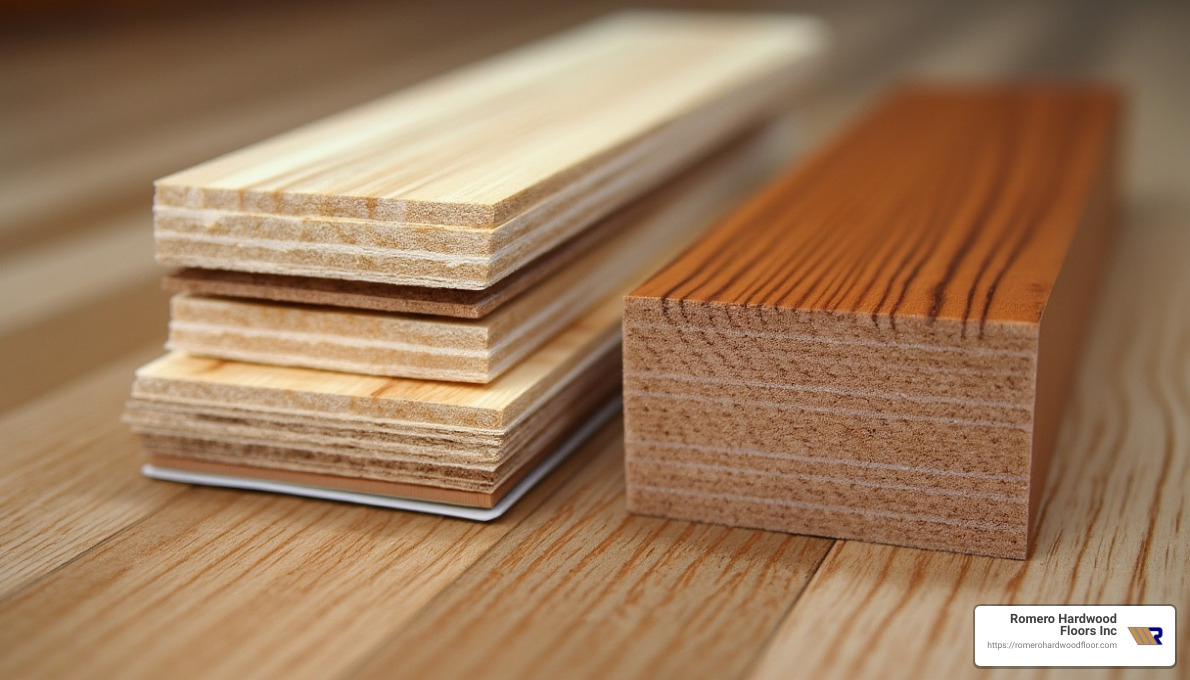
Solid Hardwood is exactly what it sounds like—flooring made from a single piece of wood. This gives it a natural beauty and uniformity. The thickness of solid wood allows for multiple sandings over its lifetime, which can be several decades or even centuries.
Engineered Hardwood consists of a top veneer of real hardwood bonded to multiple layers of plywood or high-density fiberboard (HDF). This layered construction makes it more stable than solid wood, especially in areas with varying humidity levels. The core layers, often made of plywood, add to the dimensional stability, reducing the risk of warping or cupping.
Durability and Lifespan
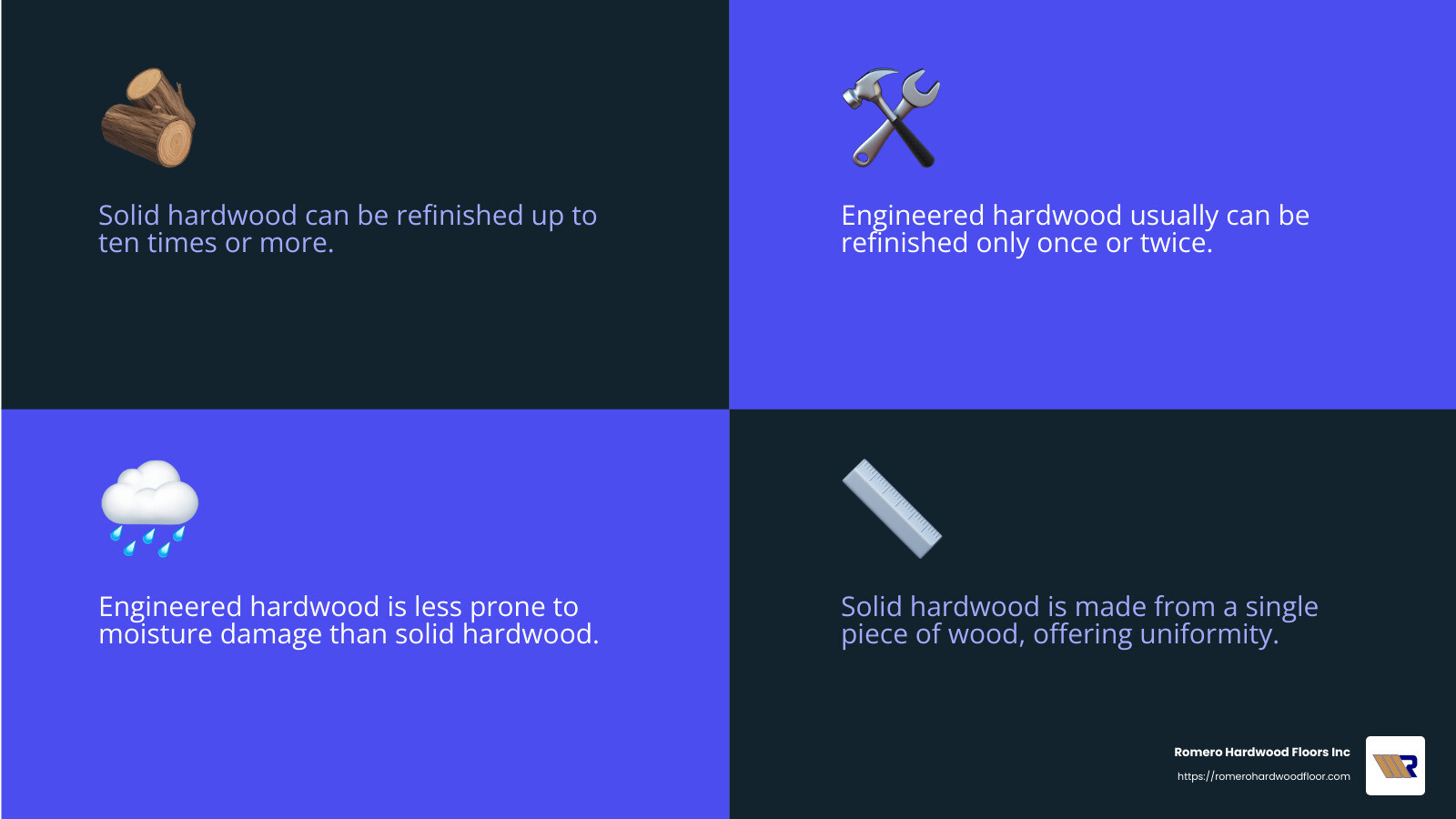
Durability is a crucial factor for any flooring choice. Solid hardwood is known for its strength and can last a lifetime with proper care. Its ability to be refinished multiple times—up to ten times or more, depending on the thickness—extends its lifespan significantly. This makes it a sustainable choice for those looking to maintain their floors over generations.
Engineered hardwood, on the other hand, can typically be refinished only once or twice due to the thinner veneer layer. However, its structural stability makes it less prone to damage from moisture and temperature changes, which can be a significant advantage in certain environments.
Maintenance for both types involves regular cleaning and occasional refinishing. Solid hardwood may require more frequent refinishing due to its susceptibility to scratches and dents. Engineered hardwood is generally more resistant to surface wear, but care must be taken not to sand through the veneer layer during refinishing.
Understanding these differences can guide you in choosing the right type of hardwood for your specific needs. Solid hardwood offers timeless appeal and longevity, while engineered hardwood provides versatility and stability in challenging environments. Both add value and beauty to your home, making them worthwhile investments.
Cost Considerations
When choosing between engineered vs solid hardwood, understanding the cost implications is crucial. Let’s explore the initial costs and long-term value of these flooring options.
Initial Costs
Solid Hardwood flooring is often seen as a premium option. It typically ranges from $5 to $28 per square foot, depending on the wood grade and finish. The price reflects the quality and durability of the material, as well as its ability to be refinished multiple times. Installation costs can add significantly to the total, as solid hardwood requires professional installation, often involving nailing or gluing on wood subfloors.
Engineered Hardwood tends to be more budget-friendly upfront. Prices usually range from $6 to $12 per square foot for prefinished options. This is partly because engineered wood uses less of the expensive hardwood in its construction. Installation is often less labor-intensive, as it can be floated, glued, or stapled, making DIY installation a viable option for some homeowners.
Long-term Value
Resale Value is an important consideration when investing in flooring. Solid hardwood is often seen as a high-end feature in homes, potentially increasing resale value due to its long lifespan and classic appeal. Its ability to be refinished multiple times means it can maintain its beauty for decades, if not centuries, with proper care.
Engineered Hardwood also adds value to a home, especially in environments where moisture and temperature fluctuations are concerns. While it may not last as long as solid hardwood due to its refinishing limitations, its stability and resistance to warping can be a selling point in climates with high humidity or in areas like basements.
Investment in either option can improve the aesthetic appeal and functionality of your home. Solid hardwood offers a more traditional investment with potential for long-term appreciation, while engineered hardwood provides a more flexible solution with lower initial costs and easier installation.
Choosing between these options depends on your budget, installation preferences, and the specific environment of your home. Understanding these cost considerations will help you make an informed decision that aligns with your financial and aesthetic goals.
Performance in Different Environments
When deciding between engineered vs solid hardwood, consider how each performs under various environmental conditions. Let’s explore their moisture resistance, climate adaptability, and suitable installation areas.
Moisture and Climate Resistance
Solid Hardwood is vulnerable to moisture and significant temperature changes. It can warp, cup, or expand when exposed to high humidity or wet conditions. This makes it less ideal for areas with fluctuating climates. For example, in places like Illinois, where winters can be extremely dry and summers very humid, solid hardwood may expand and contract, leading to gaps or warping over time.
Engineered Hardwood, on the other hand, is designed to handle moisture and temperature variations better. Its multi-layered construction provides greater dimensional stability, making it less prone to warping or cupping. This makes engineered hardwood a preferred choice in environments with high humidity or temperature swings. According to the research, engineered wood does not warp or cup during climatic changes, making it suitable for installation over radiant heat sources and in rainy climates.
Suitable Locations
Bathrooms, Kitchens, and Basements are areas where moisture is a significant concern. Installing solid hardwood in these areas can be risky due to its susceptibility to water damage. It’s generally advised to avoid solid wood in such spaces unless they are exceptionally well-controlled for humidity.
Engineered Hardwood is much more adaptable. Its resistance to moisture makes it suitable for areas like kitchens and basements, where spills and humidity are common. There are even waterproof options available, allowing for installation in bathrooms. This flexibility makes engineered hardwood a practical choice for homeowners who want the look of wood in moisture-prone areas without the risk of damage.
In summary, when considering engineered vs solid hardwood for your home, think about the environment where you plan to install it. Engineered hardwood offers superior moisture resistance and climate stability, making it a versatile choice for various locations within the home.
Installation and Maintenance
When it comes to installing and maintaining your hardwood floors, understanding the methods and best practices can make a world of difference. Let’s explore the installation methods and maintenance tips for both engineered and solid hardwood.
Installation Methods
DIY-Friendly vs. Professional Installation
Engineered Hardwood is a favorite among DIY enthusiasts due to its versatile installation options. The floating installation method, where planks click and lock together, is particularly popular. It’s easy to set up and doesn’t require nails or glue, making it ideal for those who want to tackle the project themselves. This method is also forgiving on uneven subfloors, adding to its DIY appeal.
Solid Hardwood, on the other hand, often demands professional installation. It typically uses a nail down method, which involves securing each plank to the subfloor with nails. This requires specialized tools and skills, making it less DIY-friendly. However, professional installation ensures a stable and long-lasting floor.
Glue-Down Installation is another option for both types of wood. This method involves adhering the planks directly to the subfloor with a strong adhesive. It’s a meticulous process but offers excellent noise reduction, making it a great choice for multi-story buildings or busy areas.
Maintenance Tips
Keeping your hardwood floors looking their best involves regular maintenance and care. Here are some practical tips:
Cleaning:
- Daily: Sweep with a soft broom or dry mop to remove dust and prevent scratches.
- Weekly: Vacuum with a soft brush attachment to get rid of deeper dirt.
- As Needed: Clean spills immediately with a damp cloth to prevent water damage.
Refinishing:
Solid Hardwood can be sanded and refinished multiple times throughout its lifespan. This allows you to restore its original beauty and even change the color if desired. However, this process is best left to professionals to ensure a smooth, even finish.
Engineered Hardwood has a veneer layer that limits the number of times it can be refinished. Depending on the thickness of the veneer, it may only be refinished once or twice. It’s crucial to consult with a flooring expert to understand the refinishing potential of your engineered wood.
General Care:
- Use felt pads under furniture to prevent scratches.
- Avoid using abrasive cleaners or steam mops that can damage the wood.
- Maintain a consistent indoor climate to prevent warping or gaps.
Choosing the right installation method and following proper maintenance routines can significantly improve the longevity and appearance of your hardwood floors. Whether you opt for engineered vs solid hardwood, understanding these aspects will help keep your floors in top condition for years to come.
Frequently Asked Questions about Engineered vs Solid Hardwood
Is engineered hardwood better than solid hardwood?
Stability and Adaptability
Engineered hardwood is often praised for its stability. It’s designed with multiple layers, usually a plywood or high-density fiberboard core, topped with a hardwood veneer. This layered construction makes it more resistant to changes in temperature and humidity compared to solid hardwood. If you live in an area with fluctuating climates or if you’re installing floors in a basement, engineered hardwood is likely the better choice.
Lifespan and Longevity
Solid hardwood, however, typically has a longer lifespan. It can be sanded and refinished multiple times, allowing for a fresh new look and increased durability over time. This makes solid hardwood a great investment if you’re planning to stay in your home for many years. Engineered hardwood can be refinished, too, but only once or twice due to the thinner veneer layer.
What are the disadvantages of engineered hardwood?
Refinishing Limits
The main drawback of engineered hardwood is its limited refinishing capability. The top veneer layer can only be sanded down a couple of times. If you anticipate the need for frequent refinishing, solid hardwood might be more suitable.
Cost Considerations
While often more affordable upfront than solid hardwood, engineered hardwood can sometimes be more costly in the long run if it needs to be replaced sooner. It’s important to weigh initial savings against potential future expenses.
Which is more scratch-resistant, engineered hardwood or hardwood flooring?
Surface Wear and Protection
Both engineered and solid hardwood have comparable surface wear resistance, especially if they are factory-finished. However, deep scratches can be more problematic for engineered hardwood. If a scratch penetrates through the veneer, it can expose the core and become more difficult to repair.
Veneer Vulnerabilities
Solid hardwood, lacking a veneer, doesn’t have this issue. Scratches can be sanded out more easily, making it a better choice for homes with pets or heavy foot traffic.
Understanding these differences can help you make an informed decision when choosing between engineered vs solid hardwood. Whether you prioritize stability, refinishing potential, or scratch resistance, each option has its unique benefits and limitations.
Conclusion
At Romero Hardwood Floors Inc, we pride ourselves on offering expert solutions that cater to your specific needs, whether you’re leaning towards engineered or solid hardwood. Our team understands the nuances of each type of flooring and is ready to guide you through the decision-making process.
Enhancing Your Property Value
Choosing the right flooring is more than just a design choice; it’s an investment in your property. Solid hardwood floors, with their timeless appeal and longevity, can significantly boost your home’s resale value. Engineered hardwood, with its versatility and stability, offers a modern alternative that can adapt to various environments without compromising aesthetics.
Expert Installation and Service
Since 2006, we’ve been committed to delivering high-quality installations and services that improve both residential and commercial properties. Our skilled craftsmen ensure that every installation is done with precision and care, guaranteeing a flawless finish that stands the test of time.
Whether you choose solid hardwood for its durability or engineered hardwood for its adaptability, Romero Hardwood Floors Inc is here to provide the expertise and craftsmanship you deserve. Trust us to transform your space with flooring solutions that combine beauty, durability, and value.
For more information on how we can help you with your hardwood flooring needs, visit our service page. Let us be your partner in creating a beautiful foundation for your home or business.
