
Estimated Cost of Hardwood Floor Repair: 5 Smart Tips
Why Understanding Repair Costs Matters Before You Commit
The estimated cost of hardwood floor repair typically ranges from $480 to $1,706 nationally, with an average of $1,073. However, costs can vary dramatically, from $100 for minor scratch repairs to over $5,000 for extensive structural damage.
Quick Cost Breakdown by Damage Type:
- Minor scratches and surface damage: $1–$8 per square foot
- Water damage and cupping: $8–$100 per square foot
- Rot and severe structural issues: $50–$250 per square foot
- Squeaky floors and gaps: $2–$50 per square foot
- Board replacement: $7–$25 per square foot
Seeing your once-pristine hardwood floors scarred by daily life can be disheartening. The good news is that a repair might cost less than you think. The final bill depends on the type of damage, the size of the area, the wood species, and local labor rates.
This guide breaks down what you can expect to pay for different repairs in 2025. We’ll explore the factors that drive costs, help you decide between repair and replacement, and show you how to save money without compromising on quality.
I’m Francisco Romero, owner of Romero Hardwood Floors Inc., and I’ve been helping homeowners in the Greater Boston area with hardwood floor repair decisions since 2006. With over 15 years of experience, I know that the best decisions start with understanding what you’re paying for—and why.
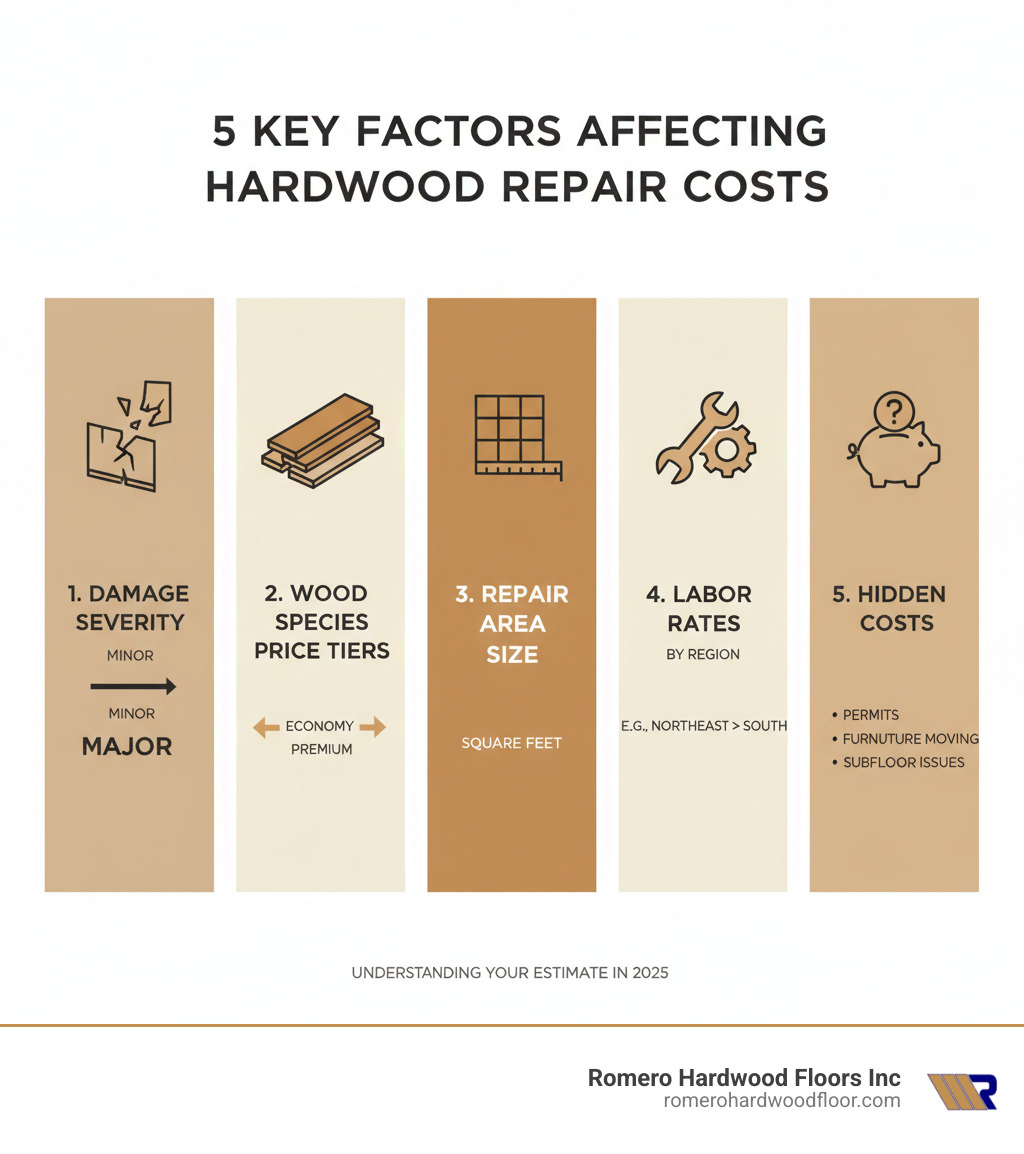
What Factors Drive Hardwood Floor Repair Costs?
When a homeowner asks for the estimated cost of hardwood floor repair, the answer depends on several key factors. Your final bill is shaped by everything from the wood under your feet to the neighborhood you live in. Let’s break down what moves the needle on your final cost.
Please note, the costs mentioned in this guide are average costs based on internet data and not actual costs for Romero Hardwood Floors Inc. For a precise estimate custom to your specific needs, we always recommend contacting us directly.
How Damage Severity Impacts the Price
The single biggest factor is the extent of the damage.
- Minor cosmetic damage like light scratches or scuffs is an easy fix. These surface-level repairs generally run $1 to $8 per square foot.
- Moderate structural issues include deeper gouges, minor water stains, cupping, or squeaky floors. These repairs might require patching or replacing a few boards and cost $8 to $25 per square foot.
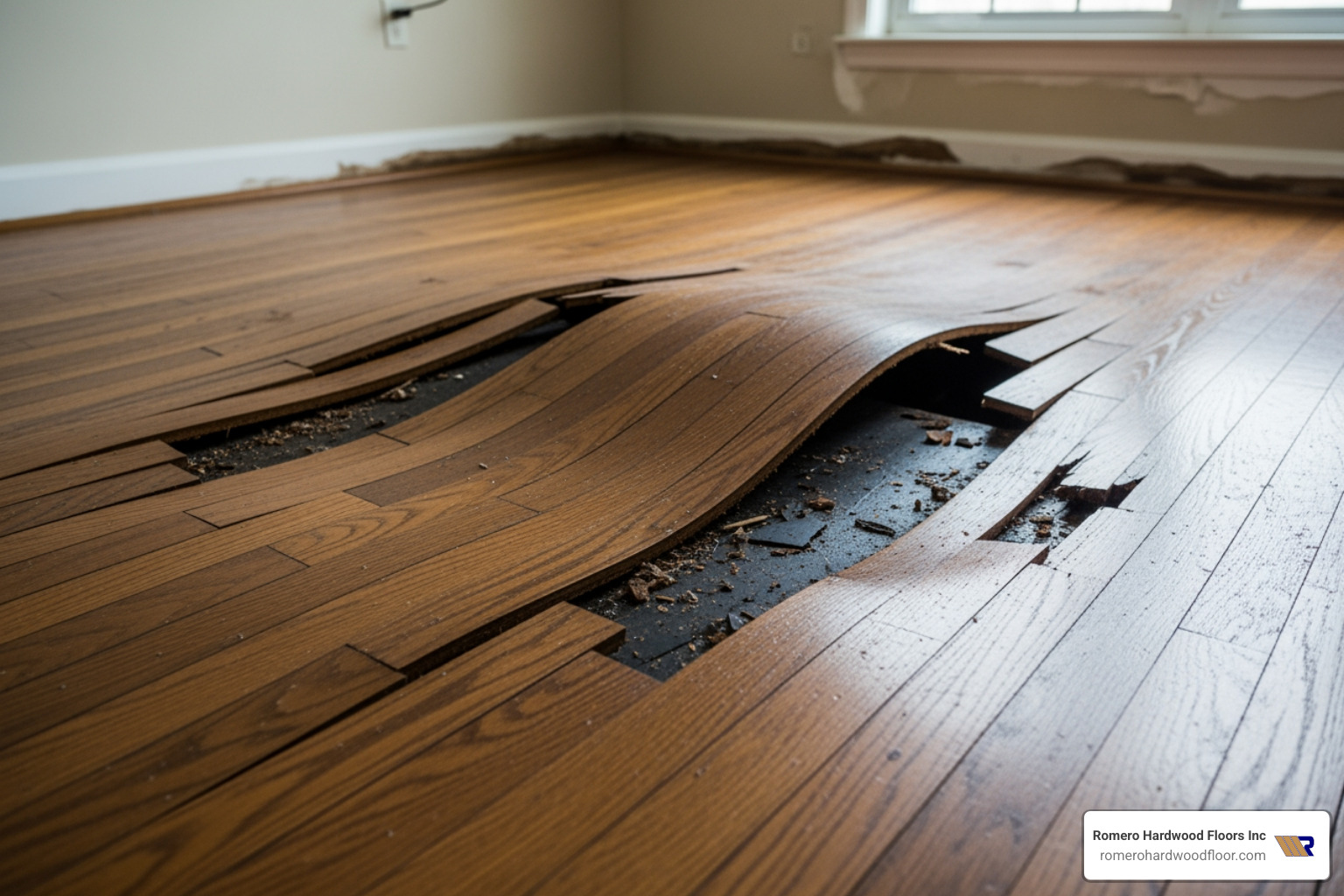
- Major structural problems like extensive water damage, rot, severe buckling, or subfloor issues are the most expensive. These are complex repairs that can range from $25 to $250 per square foot, sometimes more if the home’s foundation is involved.
The subfloor condition is a major variable. What seems like a simple board replacement can become more expensive if we find rot underneath. A client in Winthrop saw their $750 estimate jump to $2,400 after we found hidden subfloor damage. It’s better to fix it right than to put new hardwood over a rotting foundation.
Why Wood Type and Finish Matter
Not all woods cost the same to repair.
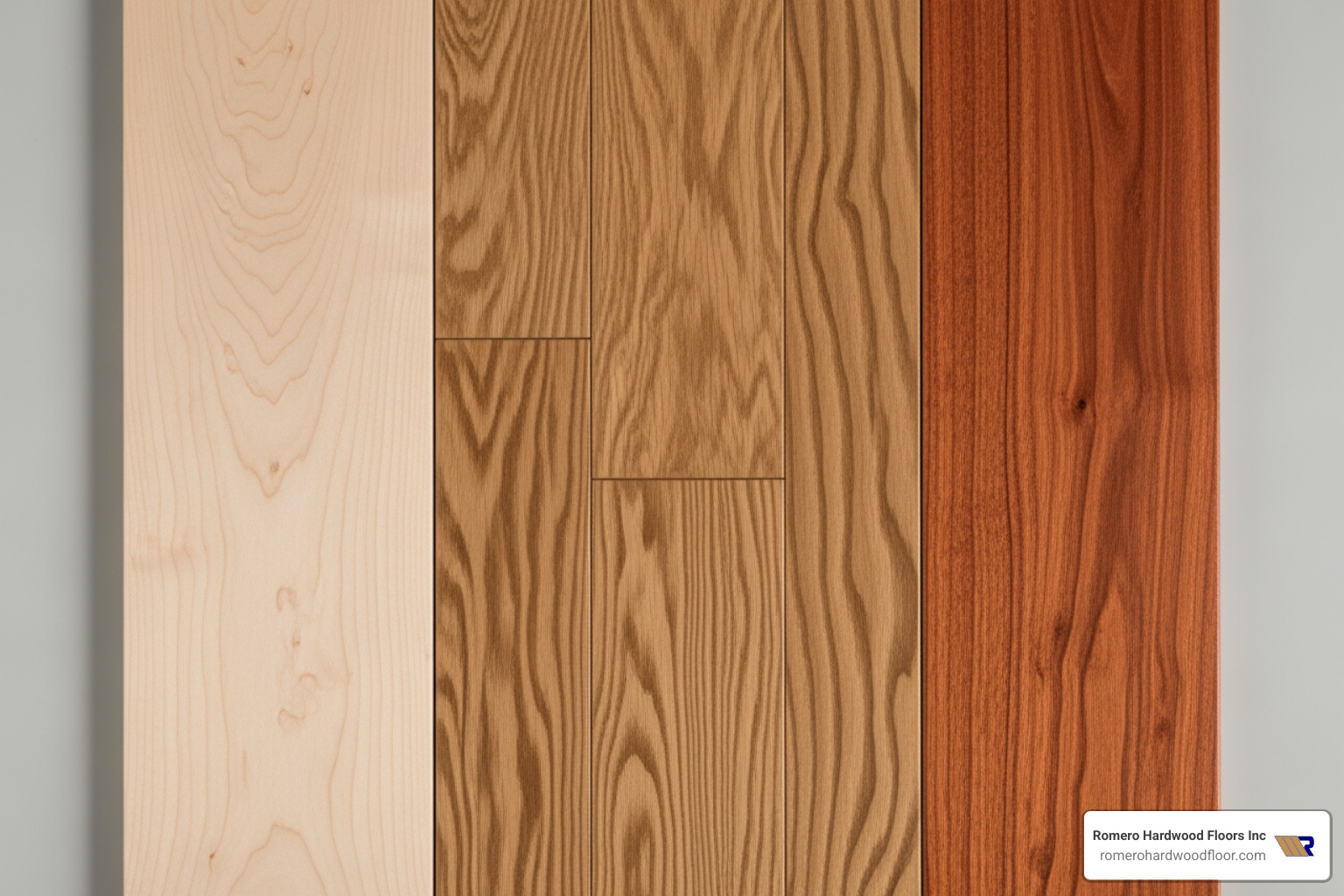
- Economy woods like pine or red oak are common and affordable to source. Repairs typically run $2 to $8 per square foot.
- Mid-range species like white oak, maple, and hickory are popular and readily available. Expect to pay $8 to $15 per square foot for repairs.
- Premium exotic woods like Brazilian cherry or teak are expensive and can be difficult to match. Repairs often start at $15 per square foot and can easily exceed $25.
A custom stain or specialty finish also adds complexity and cost, as matching it perfectly takes skill. Sometimes, the only way to get a seamless look is to refinish the entire room, which adds $3 to $8 per square foot to the project.
Labor Rates, Geographic Location, and Greater Boston Costs
Nationally, hardwood floor repair labor runs $65 to $100 per hour. In Greater Boston—including Revere, Chelsea, and Medford—rates are often at the higher end of that range, sometimes reaching $125 per hour for specialized work. Urban areas may see a 10-20% premium due to higher operating costs.
The size of the repair area also matters. Smaller repairs often have a higher per-square-foot cost due to minimum charges for labor and setup.
Want to dig deeper? Check out our hardwood floor cost estimator for a detailed breakdown. For national labor trends, the Bureau of Labor Statistics offers good context.
The Estimated Cost of Hardwood Floor Repair by Damage Type
Let’s get into the specifics of what you might pay based on the problem. The estimated cost of hardwood floor repair varies dramatically depending on whether you’re dealing with a surface scratch or a compromised subfloor.
Before we dive in, a reminder: these costs are national averages, not specific quotes from Romero Hardwood Floors Inc. For an accurate assessment, please contact us directly. We typically price larger repairs per square foot and smaller, isolated problems on a project basis.
Calculating the estimated cost of hardwood floor repair for Minor Surface Issues
Most surface damage is affordable to fix. These cosmetic issues don’t threaten your floor’s structure and are manageable for most homeowners.
- Scratches: Light scratches can often be fixed with a touch-up kit for $1 to $3 per square foot. Medium scratches may need light sanding and refinishing, costing $3 to $5 per square foot. Deep scratches require filling and careful stain matching, pushing costs to $5 to $8 per square foot. Learn more about filling deep scratches in wood.
- Dents and Gouges: Minor dents can sometimes be steamed out. Deeper dents and gouges need wood filler, sanding, and refinishing, typically costing $5 to $25 per square foot. For more, see our guide on fixing dents in wood.
- Filling, Buffing, and Polishing: Using wood filler generally adds $1 to $5 per square foot. A professional buff and polish to restore shine can cost $100 to $300 for a small area.
The overall cost for minor issues ranges from $1 to $25 per square foot.
Budgeting the estimated cost of hardwood floor repair for Major Structural Problems
Structural problems, often caused by moisture, are serious and more expensive. The damage can quickly escalate beyond the surface.
- Water Damage: The cost depends on the severity. Minor surface stains might only need sanding and refinishing for $8 to $15 per square foot. A client in Revere paid about $1,200 to repair 35 square feet of water-damaged oak.
- Cupping and Buckling: Cupping (when board edges rise) may resolve if the moisture source is fixed, followed by refinishing for $2 to $8 per square foot. Severe cupping or buckling (when boards lift off the subfloor) requires board replacement, costing $8 to $15 per square foot or more. Our guide on repairing warped hardwood floors has more details.
- Rot and Mold: When water causes rot, you’re in expensive territory. Localized rot repair costs $50 to $80 per square foot. If rot reaches the subfloor or joists, costs can hit $80 to $250 per square foot. A Peabody client paid $950 to replace just five water-damaged boards. If mold is present, remediation adds another $15 to $30 per square foot. For help, see our page on repairing a water-damaged hardwood floor.
The cost for major structural problems spans $8 to $250 per square foot.
Addressing Gaps and Squeaks
These issues can be annoying but are usually less expensive to fix than structural damage.
- Gaps: Small, seasonal gaps can be filled for $3 to $5 per square foot. Larger, structural gaps that signal bigger issues may cost $5 to $12 per square foot to address.
- Squeaks: Simple squeaks from loose boards can often be fixed for $2 to $4 per square foot. More complex squeaks involving the subfloor can run $4 to $10 per square foot, or $200 to $1,000 per room. Our page on fixing floorboard squeaks offers detailed solutions.
The cost for gaps and squeaks ranges from $2 to $50 per square foot.
Repair vs. Replace: Which Is More Cost-Effective?
Homeowners often ask, “Should I repair my floors or just replace them?” The good news is that repairing hardwood floors is generally 30-70% cheaper than a complete replacement. If your car has a dent, you fix the dent—you don’t buy a new car. The same logic often applies to your floors.
| Feature | Repair | Replacement |
|---|---|---|
| Cost | Generally 30-70% cheaper than replacement. Average: $480-$1,706. | Significantly higher. Average: $2,500-$7,100 (installed, $6-$25/sq ft). |
| Time | Faster, especially for localized damage. Days to a week. | Longer project duration, including removal, preparation, and installation. Weeks. |
| Home Value | Well-maintained, repaired original floors increase value (3-5%). High ROI (70-100% of cost recouped). | New floors also increase value, but the initial outlay is higher. |
| Environmental Impact | More eco-friendly, as it extends the life of existing materials and reduces landfill waste. | Higher environmental footprint due to new material production and disposal of old flooring. |
Please note these costs are average estimates based on industry data, not specific pricing from Romero Hardwood Floors Inc. For an accurate quote, we’d be happy to provide a detailed assessment.
The “30% rule” is a helpful guideline: if less than 30% of your floor is damaged, repair is almost always the better financial choice. Beyond that, replacement may be more practical. Repair also offers a strong 70-100% return on investment and is more eco-friendly.
When Repair is the Smarter Choice
In most homes I visit in the Greater Boston area, repair is the clear winner.
- Localized Damage: If damage is confined to one area, like from a leaky dishwasher, there’s no need to replace the entire floor. A client in Winthrop saved over $4,000 by repairing one section and refinishing, rather than replacing their 1920s oak floors.
- Preserving Historic Floors: Original hardwood in older homes has irreplaceable character. Restoring old floors maintains your home’s historical integrity and boosts its value.
- Budget Constraints: Targeted repairs let you fix urgent problems without breaking the bank. A family in Medford paid $1,950 to repair a few boards and refinish their living room, saving them from a $6,000 replacement.
- First-Time Refinishing: If your solid hardwood floors have never been refinished, sanding can make them look new again by removing years of surface damage.
When to Consider Full Replacement
Sometimes, replacement is the better long-term investment.
- Widespread Damage: If over 30% of your floor is damaged by rot or buckling, the cost of repair can approach or exceed that of replacement.
- Severe Subfloor Issues: If the subfloor is compromised by water, mold, or structural problems, the hardwood often must be removed to fix it. At that point, installing new flooring is more efficient. The HUD study on floor system connections offers technical details on these repairs.
- Multiple Previous Refinishes: Solid hardwood can only be sanded 4-5 times. If the wear layer is too thin, it’s time for replacement.
- Pest Infestation: Extensive termite damage to flooring and sub-structures often makes replacement the only viable option.
- Aesthetic Overhaul: If you want a completely new look (different wood, plank width, or color), replacement is the way to go. Our guide on the cost of installing hardwood floors breaks down what to expect.
How to Save on Repairs and Avoid Hidden Costs
No one wants to overspend on floor repairs. The smartest approach combines proactive maintenance with realistic expectations about what you can handle yourself versus what requires a professional.

DIY Fixes vs. Hiring a Professional
You can tackle some minor surface issues yourself. Surface scratch kits ($30-$80) work well for light scratches, and specialized screw kits for squeaks ($15-$50) can quiet a noisy floorboard if you’re handy with a drill. Our guide on hardwood floor repair techniques can walk you through these simple fixes.
However, I urge caution with more complex tasks. Sanding and refinishing requires expensive rental equipment and skill—one mistake can create costly gouges. Board replacement and achieving a seamless look also demand experience. Structural work involving water damage, rot, or subfloor repairs should always be left to professionals. A DIY mistake can easily cost three times more to fix than hiring a pro from the start.
Potential Hidden Costs to Budget For
When planning your estimated cost of hardwood floor repair, I recommend adding a 15-20% contingency fund for unexpected expenses. Here are common costs that can surprise homeowners:
- Furniture Moving: If you can’t move it yourself, expect to pay $100 to $300.
- Debris Disposal: Hauling away old wood can cost $100 to $500.
- Building Permits: For major structural work, permits can range from $50 to $500.
- Unexpected Subfloor Rot: This is the biggest surprise. We can’t see what’s underneath until we remove damaged boards, which can significantly increase the scope and cost.
- Mold Remediation: If mold is finded, professional treatment is essential and typically adds $15 to $30 per square foot.
- Custom Stain Matching: Perfectly matching the patina of an older floor can require custom blending, adding $200 to $500 to the project.
- Technical Services: Optional services like moisture testing ($75-$200) or using dustless sanding equipment ($100-$300 extra) can add to the final bill.
Our hardwood floor estimates ultimate guide covers these potential costs in more detail.
Frequently Asked Questions about Hardwood Floor Repair Costs
Homeowners in Reading, Stoneham, and Winchester often ask the same questions. Doing your homework is smart, so let’s tackle the most common queries about the estimated cost of hardwood floor repair.
How do I estimate my own repair budget?
While a professional quote is always best for accuracy, you can create a ballpark estimate.
- Measure the damaged area in square feet.
- Assess the damage severity. Is it a light scratch or deep water damage?
- Identify your wood type. Pine is cheaper to repair than an exotic species.
- Apply per-square-foot averages: Use ranges like $1-$8 for minor issues, $8-$25 for moderate problems, or $25-$250+ for major structural damage.
- Add a 15-20% contingency fund. Hidden issues like subfloor rot are common, so it’s wise to budget for surprises.
For a precise, honest assessment without any guesswork, the best step is to get a professional quote.
Does repairing hardwood floors increase my home’s value?
Yes, absolutely. Well-maintained hardwood floors can increase your property value by 3-5%. Floor restoration projects often return 70-100% of their cost in added home value. Furthermore, more than half of home buyers say they are willing to pay a premium for homes with hardwood floors, seeing it as a sign of quality. We’ve seen homes sell within weeks of a floor restoration after sitting on the market for months. It’s a powerful investment, which is why we’re so passionate about our hardwood restoration services.
How many times can my floors be refinished before they must be replaced?
The answer depends on your flooring type.
- Solid Hardwood: Typically 3/4-inch thick, these floors can usually be sanded and refinished 4-5 times. Each refinishing removes a thin layer of wood. Older homes built before 1950 may have even thicker boards, allowing for more refinishings.
- Engineered Hardwood: This type has a thin top layer (veneer) of real wood. The thickness of this wear layer determines how many times it can be refinished. Budget-friendly options may only allow for one refinishing (or none at all), while premium products can handle 2-3 refinishings.
Once the wear layer is gone, the floor cannot be sanded again and must be replaced. Proper maintenance can significantly extend the time between refinishings.
Conclusion: Making an Informed Decision for Your Floors
Hopefully, the estimated cost of hardwood floor repair feels less mysterious now. We’ve covered everything from minor scratches to major structural issues. While costs vary, understanding the driving factors puts you in control.
Here are the key takeaways: repair is almost always more cost-effective than replacement, often saving you 30-70%. The severity of the damage is the biggest cost factor, and local labor rates, like those in the Greater Boston area, also play a role.
The biggest mistake homeowners make is waiting too long to address small problems or attempting complex DIY repairs. A professional assessment is crucial. What looks like a simple stain could be hiding costly subfloor damage, while a seemingly ruined floor might only need a targeted repair and refinishing.
At Romero Hardwood Floors Inc., we’ve been helping homeowners make these decisions since 2006. We serve communities across the Greater Boston area, including Beverly, Chelsea, Danvers, East Boston, Gloucester, Lynnfield, Malden, Manchester by the Sea, Marblehead, Medford, Melrose, Nahant, Peabody, Reading, Revere, Rockport, Salem, Saugus, Somerville, Stoneham, Swampscott, Wakefield, Winchester, Winthrop, and Woburn. We believe your floors are a key investment in your home’s beauty and value.
Ready to see what’s possible for your floors? For a precise, in-home assessment, the experts at Romero Hardwood Floors Inc. can provide a detailed plan that balances budget with lasting quality. We’ll give you honest answers and a clear estimate. Request a professional estimate today and let’s bring your floors back to life.
