
Faux wood tile floor: The #1 Durable Choice
Why Faux Wood Tile Floor Is Taking Over Modern Homes
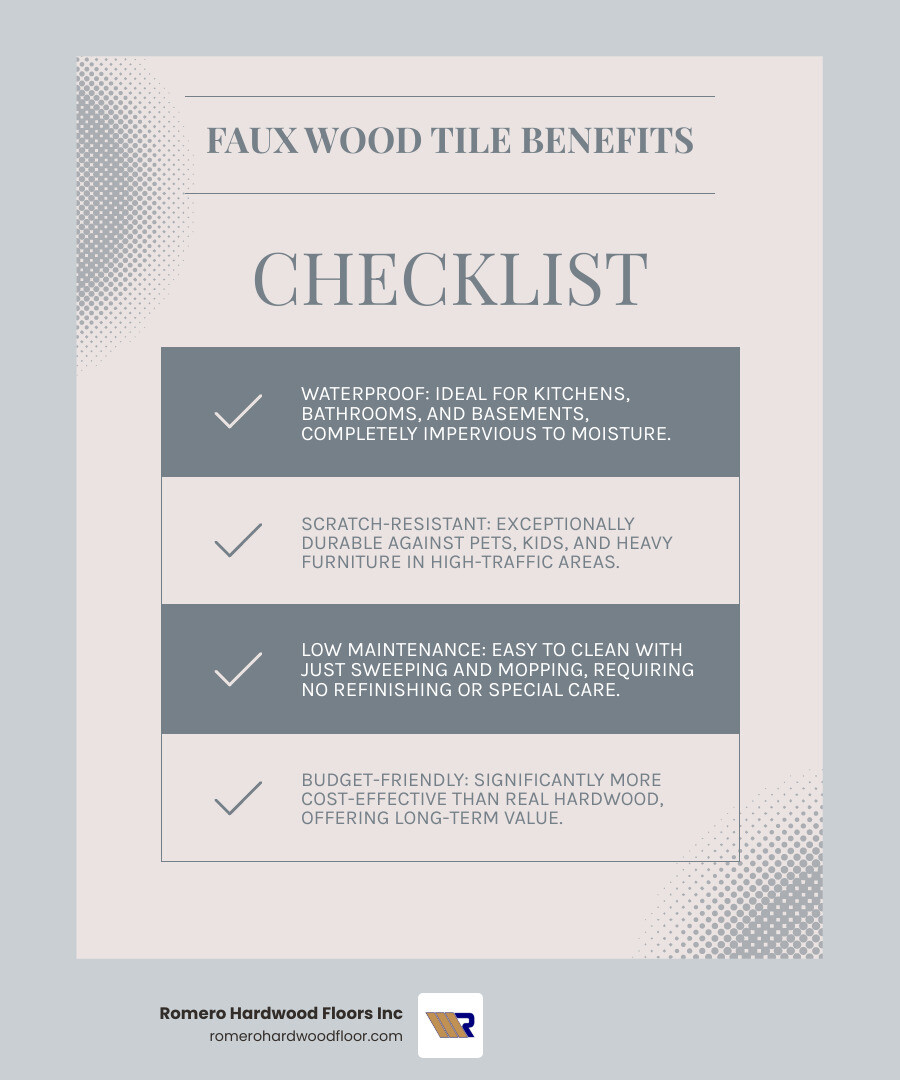
Faux wood tile floor combines the timeless beauty of hardwood with the durability that busy homeowners actually need. Here’s what makes it the smart choice for today’s homes:
Top Benefits of Faux Wood Tile:
- Waterproof – Perfect for kitchens, bathrooms, and basements
- Scratch resistant – Stands up to pets, kids, and heavy furniture
- Low maintenance – Just sweep and mop, no refinishing needed
- Budget-friendly – Costs 50-70% less than real hardwood
- Long-lasting – Porcelain tile has the longest lifespan of any flooring
Traditional hardwood floors look amazing, but they come with real problems. Water damage from spills can warp boards. Scratches from pets show up easily. And refinishing every few years gets expensive fast.
Faux wood tile flooring solves these issues without sacrificing style. Modern printing technology creates incredibly realistic wood grains and textures. Many homeowners can’t tell the difference between high-quality wood-look tile and real hardwood – even up close.
The surge in popularity makes sense. Wood look tiles can withstand heavy foot traffic, stains, and scratches while being water and stain-resistant. This makes them ideal for mudrooms and basements where real wood would fail.
I’m Francisco Romero, owner of Romero Hardwood Floors Inc., and I’ve been helping homeowners in Revere, MA choose the perfect flooring for over 15 years. While I specialize in traditional hardwood, I’ve seen how faux wood tile floor options have revolutionized home design by offering durability that real wood simply can’t match.
Why Choose Faux Wood Tile Over Traditional Hardwood?
Let’s be honest – we all love the look of real hardwood floors. But if you’ve ever lived with them, you know they can be a bit high-maintenance. That’s where faux wood tile floor comes to the rescue, offering all the beauty you want with none of the headaches you don’t.
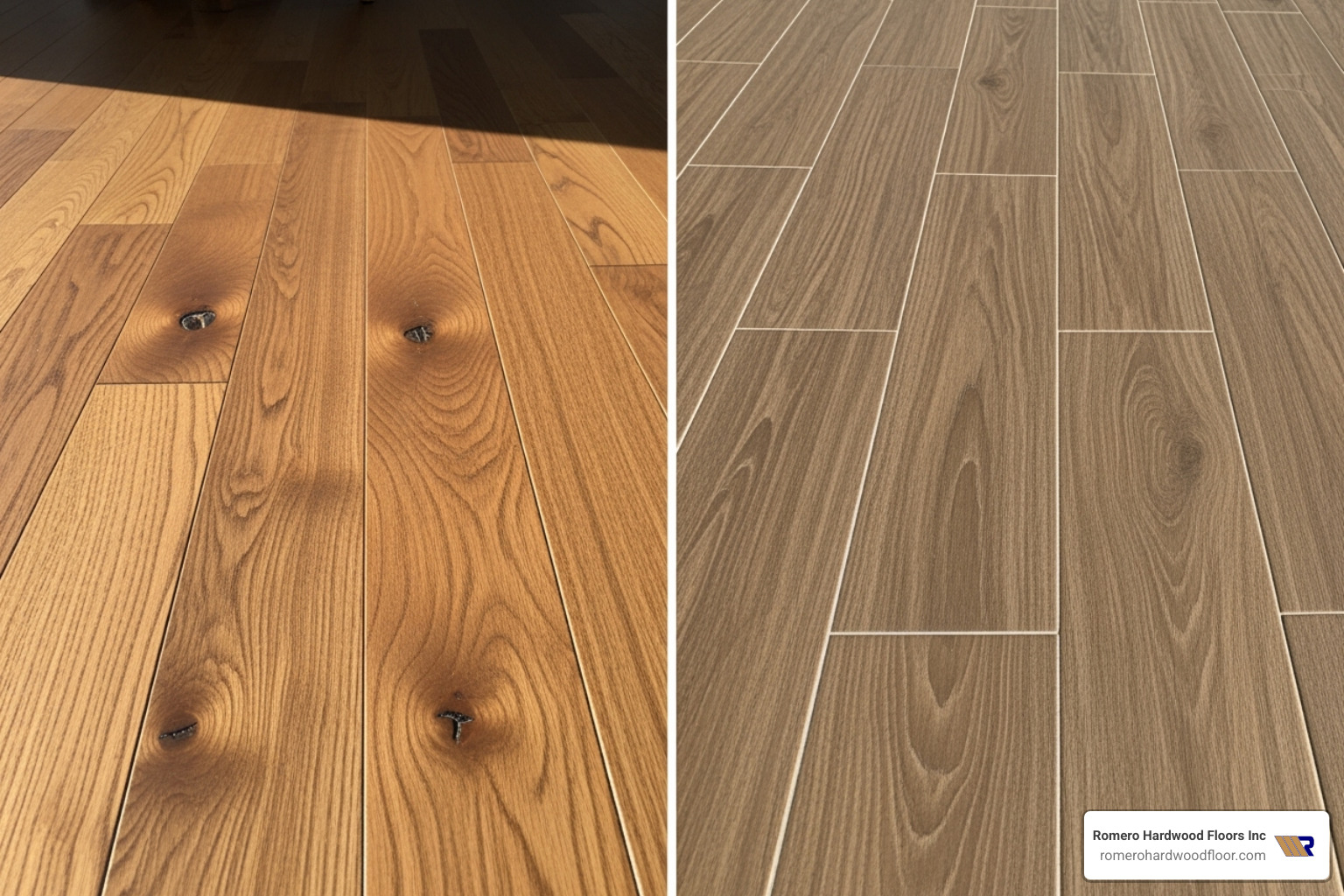
Durability is where faux wood tile really shows off. Unlike real hardwood that can get scratched by your dog’s nails or dented by dropped toys, wood-look tile just shrugs off daily life. Got kids who love to drag furniture around? No problem. Pets with claws? Bring it on. Faux wood tile flooring is built tough enough for high-traffic areas like hallways and living rooms where traditional hardwood would start looking worn within a few years.
Here’s something that might surprise you – water doesn’t scare faux wood tile floor one bit. While real hardwood will warp, swell, or even develop mold from spills and moisture, wood-look tile is completely waterproof. This means you can finally have that gorgeous wood look in your kitchen, bathroom, or basement without holding your breath every time someone spills their coffee. For more ideas about kitchen flooring, check out our guide on flooring for kitchens.
The maintenance difference is like night and day. Real hardwood needs special cleaners, periodic refinishing, and careful attention to prevent damage. With faux wood tile, you just sweep and mop with regular cleaner – that’s it. No refinishing every few years, no special treatments, no stress about using the wrong cleaning product.
And let’s talk money. Faux wood tile flooring typically costs much less upfront than real hardwood, but the real savings come over time. You’ll never pay for refinishing, sanding, or replacing damaged boards. It’s an investment that keeps paying you back year after year.
| Feature | Faux Wood Tile | Real Hardwood |
|---|---|---|
| Durability | Highly resistant to scratches, dents, and heavy traffic | Susceptible to scratches, dents, and wear |
| Water Resistance | Impervious to water, ideal for wet areas | Prone to warping, swelling, and damage from moisture |
| Maintenance | Easy to clean; no refinishing, sanding, or sealing | Requires specific cleaning, periodic refinishing and sealing |
| Cost | Generally lower material cost, significant long-term savings | Higher material and installation costs, ongoing maintenance expenses |
The bottom line? Faux wood tile gives you the warm, inviting look of hardwood with the peace of mind that comes from knowing your floors can handle whatever life throws at them.
A Buyer’s Guide to Faux Wood Tile Floor Options
Choosing the right faux wood tile floor can completely transform your home, giving you that gorgeous wood look with all the practical benefits that real hardwood just can’t match. But here’s the thing – with so many options out there, it’s easy to feel overwhelmed. Don’t worry, I’ve got you covered.
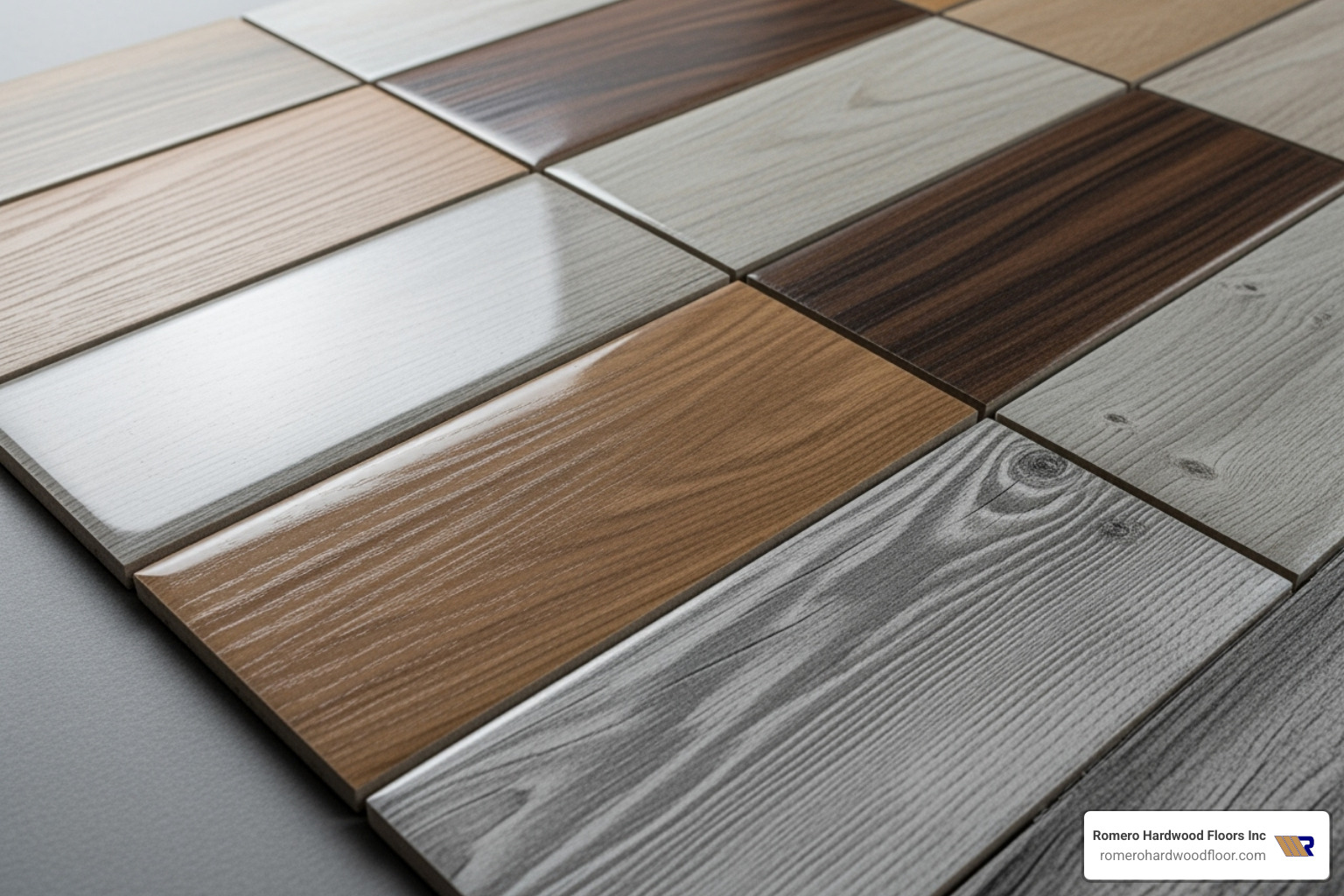
The first big decision you’ll face is choosing between porcelain and ceramic tiles. Trust me, this choice matters more than you might think. Porcelain is the clear winner for most homes – it’s tougher, less porous, and handles moisture like a champ. The PEI rating tells you how well a tile handles foot traffic, and you’ll want at least a PEI 4 for residential floors. Don’t forget to check the water absorption rate too – the lower, the better.
Next up is the finish, and boy, does this make a difference in how your floor looks and feels. Matte finishes give you that natural wood vibe and hide everyday wear beautifully. Glossy finishes create a neat, modern look but can be slippery when wet. Textured finishes feel the most like real wood and offer better slip resistance – perfect for busy households.
Size matters too when it comes to faux wood tile floors. Long, narrow planks in sizes like 6×24, 8×36, or even 9×48 inches create that authentic hardwood appearance. You can arrange them in classic rectangles, trendy herringbone, or sophisticated chevron patterns. For more inspiration on timeless layouts, check out our guide on classic wood floor designs.
Material Matters: Porcelain vs. Ceramic
Let’s talk about what really separates these two materials, because understanding this will save you headaches down the road.
Porcelain is the heavyweight champion of tile materials. It’s denser, less porous, and fired at higher temperatures than ceramic, which makes it incredibly tough. Think of it as the overachiever of the tile world – it absorbs less than 0.5% water, making it practically waterproof. Many porcelain tiles also feature through-body color, meaning if you get a small chip, it won’t show as much because the color goes all the way through.
Ceramic tiles are the more budget-friendly cousin. They’re softer and more porous than porcelain, which makes them easier to cut during installation. This can sometimes mean lower labor costs, but there’s a trade-off. Ceramic doesn’t handle moisture as well and might show wear sooner in busy areas.
Here’s where porcelain really shines: it’s the best choice for wet areas. If you’re planning to install faux wood tile floor in bathrooms, kitchens, or basements, porcelain’s superiority becomes crystal clear. It laughs in the face of moisture while ceramic might eventually cry uncle.
Finding Your Finish: Matte, Glossy, and Textured
The finish you choose affects both how your faux wood tile floor looks and how it performs in your home. Each option has its own personality, so let’s find the right match for you.
Matte finish is like that reliable friend who always looks good without trying too hard. It gives you the most natural look, mimicking unfinished hardwood perfectly. The best part? It hides smudges and everyday dirt like magic, and offers better slip resistance than glossy options. If you want that authentic wood vibe without the high maintenance, matte is your friend.
Glossy or polished finish is the showstopper of the bunch. It creates a neat and modern look that reflects light beautifully, making rooms feel bigger and brighter. But here’s the catch – it can be slippery when wet, and it shows every footprint and water spot. Think of it as the high-maintenance beauty of the tile world.
Textured finish is where things get really exciting. This is the closest you’ll get to the real wood experience with your faux wood tile floor. The surface mimics everything from natural grain patterns to that trendy hand-scraped look. Plus, all that texture means improved traction – your feet (and your family’s safety) will thank you.
Sizing Up Your Faux Wood Tile Floor
Getting the size right is crucial for that convincing wood look you’re after. This isn’t the time for traditional square tiles – we’re talking long and narrow planks that actually look like wood boards.
The most popular plank sizes include 6×24, 8×36, and 9×48 inches, though some manufacturers now offer planks up to 72 inches long. These elongated dimensions are what sell the illusion – they mimic real wood boards perfectly.
The aesthetic impact of your size choice is bigger than you might think. Wide planks create a modern feel and make spaces look larger and more open. Narrow planks give you a traditional look that feels cozy and classic. It’s like choosing between a sleek contemporary home and a charming farmhouse – both beautiful, just different vibes.
Layout patterns take your faux wood tile floor from good to absolutely stunning. The classic staggered brick pattern is the most natural-looking, offsetting each row just like real hardwood installation. Herringbone adds sophistication with its zigzag V-shapes, while chevron creates clean, continuous lines for a more geometric modern look. For detailed inspiration on chevron layouts, explore our guide on chevron pattern hardwood floors.
One heads-up about those gorgeous long planks – they can be tricky to install perfectly. Professional installers know how to handle the slight warpage that can occur and prevent lippage (where tile edges don’t line up perfectly). It’s one of those times when calling in the pros really pays off.
Installation, Cost, and Maintenance Insights
Planning your faux wood tile floor project goes far beyond picking the prettiest tiles. The real magic happens when everything comes together – from understanding the true costs to ensuring proper installation and knowing how to keep your floors looking amazing for years to come.
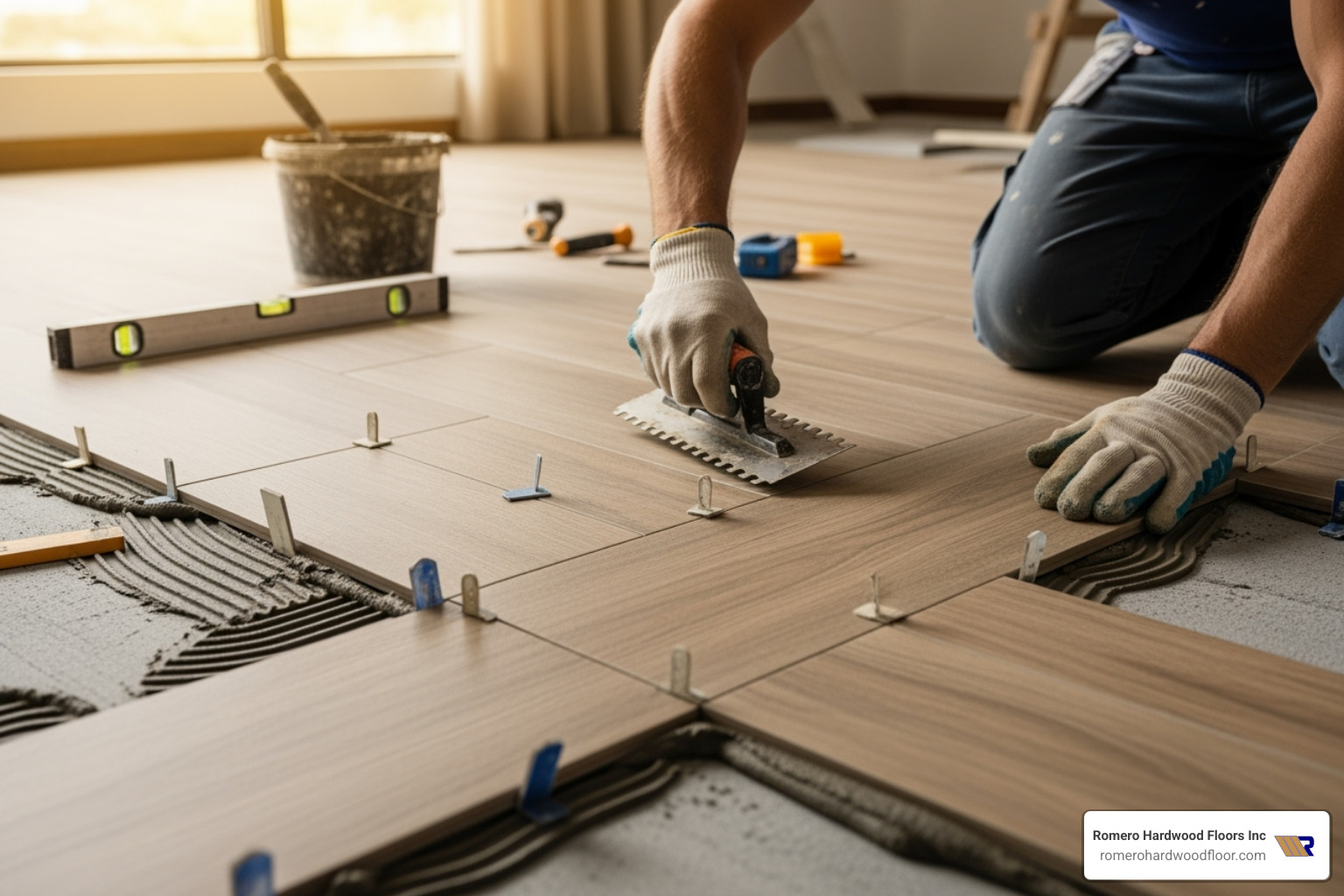
Here’s something most homeowners don’t realize: the installation process for faux wood tile is actually more complex than traditional square tiles. Those beautiful long planks that make your floor look so realistic? They require serious skill to install properly. One small mistake in leveling or alignment, and you’ll have what professionals call “lippage” – where one tile sits higher than its neighbor. Trust me, it’s not something you want to find after the project is done.
The good news is that once your faux wood tile floor is properly installed, maintenance becomes incredibly simple. No more worrying about water rings from forgotten glasses or scratches from your dog’s nails. A quick sweep and occasional mop with a pH-neutral cleaner is usually all it takes.
But let’s be honest about costs upfront. While faux wood tile is generally more budget-friendly than real hardwood in the long run, the initial investment varies widely depending on your choices. The material type makes a big difference – porcelain costs more than ceramic but offers superior durability. Highly textured finishes that feel amazingly realistic will cost more than basic smooth options. And those gorgeous large format tiles? They often come with a premium price tag.
The installation process starts with your subfloor, which needs to be absolutely perfect. Any bumps, dips, or flex in the subfloor will show through your beautiful new tiles. This is where many DIY projects run into trouble. Professional installers know exactly how to prepare surfaces and select the right grout to make your floor look seamless.
For detailed information on professional flooring services, you can Learn about professional installation to understand what goes into a quality job.
Budgeting for Your Project: What’s the Real Cost?
Let’s talk numbers, because understanding the real costs helps you make smart decisions for your faux wood tile floor project.
Material costs can surprise people with their wide range. Based on average internet data, you might pay anywhere from $2 to over $30 per square foot for the tiles themselves. That’s quite a spread! Here’s why: basic ceramic wood-look tiles start at the lower end, while premium porcelain planks with incredibly realistic textures and large formats can cost significantly more.
Porcelain consistently costs more than ceramic, but remember – you’re paying for density, durability, and that near-zero water absorption rate that makes it perfect for any room in your house. The most realistic-looking tiles, with hand-scraped textures and through-body color, command premium prices because the manufacturing process is more complex.
Installation costs vary even more dramatically. Professional installation can range from $5 to $40+ per square foot, depending on several factors that many homeowners don’t consider initially. Please note these are average costs based on internet data and not actual quotes from Romero Hardwood Floors Inc.
Geographic location plays a huge role – labor rates in major metropolitan areas can be double what you’d pay in smaller towns. Project complexity matters too. Installing tiles in a simple rectangular room costs less than creating intricate herringbone patterns or working around multiple doorways and fixtures.
Subfloor condition can make or break your budget. If your existing floor needs extensive leveling or repair work, those costs add up quickly. Tile size also affects labor costs – those beautiful large format planks require more careful handling and specialized techniques to prevent breakage and ensure perfect alignment.
Here’s where faux wood tile really shines financially: the long-term savings. Real hardwood needs refinishing every 7-10 years, which can cost $3-8 per square foot each time. Over 20 years, those refinishing costs can equal or exceed your original faux wood tile floor investment. Add in the fact that your tiles won’t scratch, dent, or water damage like real wood, and the financial benefits become clear.
The high durability of quality porcelain tiles means you’re essentially making a one-time flooring investment for many decades. That’s pretty appealing when you think about it.
Preparing for Your Faux Wood Tile Floor Installation
Getting ready for your faux wood tile floor installation is like preparing a canvas for a masterpiece – the foundation determines everything that follows.
Your subfloor requirements are non-negotiable. The surface must be clean, flat, and rigid – and I mean really flat. Any variation larger than 1/8 inch over a 10-foot span will show through your finished floor. Professional installers use long straightedges and laser levels to check this, because even small imperfections become obvious once those beautiful long planks are in place.
Most installations over concrete require either proper concrete preparation or installation of cement backer board. This creates the stable, suitable surface that tile needs to perform properly. Skipping this step is like building a house on sand – everything looks fine until problems start showing up.
Grout choices might seem like a minor detail, but they significantly impact your floor’s final appearance and longevity. Modern faux wood tile often features rectified edges – precisely cut, perfectly straight sides that allow for very narrow grout lines. We’re talking as little as 3/16 of an inch, which makes the tiles look more like continuous wood planks.
Grout line width affects the whole aesthetic. Narrow lines create that seamless wood look, while slightly wider lines can emphasize the individual plank pattern. Grout color is equally important – matching your tile color makes grout lines nearly disappear, while slightly contrasting colors can highlight the wood plank pattern.
The choice between sanded and unsanded grout depends on your grout line width, but your installer will know exactly what works best for your specific tiles and layout.
Here’s the truth about professional expertise: installing faux wood tile floor, especially large format planks, requires skills that most DIY enthusiasts simply don’t have. The precision needed to minimize lippage, ensure consistent spacing, and create perfectly aligned grout lines takes years to master.
Those long, beautiful planks that make your floor look so realistic? They’re also more challenging to work with. They require specialized tools, careful handling to prevent breakage, and techniques that prevent the slight warpage that can occur in any manufactured tile.
For a flawless finish in the Revere, MA area, it’s crucial to hire qualified tile floor installation companies near me. The investment in professional installation pays off in a floor that not only looks amazing but performs perfectly for decades.
Maintenance tips for your new floor are refreshingly simple. Regular sweeping removes the grit that could eventually dull any surface. Mopping with pH-neutral cleaner keeps tiles looking fresh without harsh chemicals that might affect grout. Grout sealing after installation and periodic resealing protects those narrow grout lines and keeps your floor looking perfect.
Frequently Asked Questions about Faux Wood Tile
When homeowners start exploring faux wood tile floor options, they naturally have questions about what to expect. After helping countless families in Revere, MA with their flooring decisions over the past 15+ years, I’ve noticed the same concerns come up again and again. Let me address the most common ones to help you make an informed choice.
How do you clean and maintain faux wood tiles?
Here’s the beautiful thing about faux wood tile floor – it’s almost embarrassingly easy to maintain. While real hardwood requires special cleaners, careful moisture control, and periodic refinishing, your tile floors will look great with minimal effort.
Daily routine cleaning is as simple as sweeping or vacuuming regularly. Do this every few days (or daily in high-traffic areas) to remove loose dirt and debris. Even though these tiles are incredibly scratch-resistant, removing abrasive particles helps maintain that pristine appearance.
Deep cleaning couldn’t be simpler. Just mop with a pH-neutral cleaner mixed with water. That’s it. No special wood cleaners, no worrying about water damage, no complex procedures. Avoid harsh chemicals or abrasive scrubbers – they’re unnecessary and can potentially damage grout over time.
Grout care is the one area that needs a bit of attention. While your tiles are completely non-porous, the grout lines can absorb dirt and moisture. Seal your grout after installation and reseal every 1-2 years depending on traffic. This simple step keeps your grout looking fresh and makes cleaning even easier. For more comprehensive floor care advice, check out our More wooden floor maintenance tips.
Is wood-look tile a passing trend?
This is probably the question I hear most from homeowners who are hesitant to invest in something that might look dated in a few years. The short answer? Faux wood tile floor isn’t going anywhere.
Unlike some flooring fads that come and go, wood-look tile has timeless appeal because it mimics wood – one of the most enduring materials in home design. Wood aesthetics have been popular for centuries, and that’s not changing anytime soon.
The technological improvements we’ve seen are remarkable. Early wood-look tiles were obviously fake, but today’s advanced printing and texturing create surfaces that fool even flooring professionals. I’ve had clients’ friends ask about their “beautiful hardwood floors” without realizing they’re looking at tile.
Most importantly, its popularity isn’t just about looks – it’s about durability and practicality. Modern families need floors that can handle spills, pets, kids, and heavy use without constant worry. Faux wood tile delivers the beauty people want with the performance they actually need. This combination of form and function ensures it remains a smart choice for years to come.
Are faux wood tiles a sustainable flooring option?
Environmental consciousness is increasingly important to homeowners, and faux wood tile floor actually presents a compelling sustainability story.
The longevity factor is huge. Porcelain tile can last 50+ years with proper care, making it one of the longest-lasting flooring options available. When you choose a floor that lasts this long, you’re dramatically reducing replacement needs and keeping materials out of landfills for decades.
Composition-wise, these tiles are made primarily from natural clay and sand – abundant, earth-friendly materials. While the high-temperature firing process does require energy, many manufacturers are adopting cleaner production methods and renewable energy sources.
Many producers also incorporate recycled content into their tiles, using pre-consumer waste to reduce environmental impact. When shopping, ask about the manufacturer’s sustainability practices and recycled material percentages.
Compare this to harvesting natural forests (which can contribute to deforestation if not managed properly) or manufacturing synthetic floors with shorter lifespans, and faux wood tile becomes an increasingly attractive eco-friendly choice. For more sustainable flooring ideas, explore our guide on Eco-friendly hardwood flooring options.
Conclusion
After exploring all the benefits and possibilities, it’s clear why faux wood tile floor has become such a game-changer for modern homeowners. This innovative flooring solution truly delivers the perfect blend of wood’s timeless beauty with tile’s best resilience – giving you everything you love about hardwood without the headaches.
The key benefits we’ve covered speak for themselves: complete waterproof protection that lets you install beautiful wood looks in kitchens and bathrooms, scratch resistance that stands up to pets and kids, low maintenance that saves you time and money, and budget-friendly pricing that makes luxury looks accessible. Add in the longest lifespan of any flooring option, and you’ve got a winning combination that’s hard to beat.
What makes faux wood tile flooring so versatile is its ability to work anywhere in your home. Whether you’re dealing with a busy entryway, a moisture-prone basement, or just want that gorgeous wood aesthetic without the worry, these tiles deliver. The realistic textures and grains available today mean guests often can’t tell the difference from real hardwood – even when they’re looking closely.
The most important advice I can share is to choose the right tile for your specific space and budget. Consider porcelain for the best performance, especially in wet areas. Think about matte or textured finishes for that authentic wood feel and better safety. And don’t forget that proper installation makes all the difference in achieving that flawless, professional look.
Here in the Revere, MA area, we’ve seen countless homeowners fall in love with their faux wood tile floor installations. At Romero Hardwood Floors Inc., we bring over 15 years of flooring expertise to every project, ensuring you get competitive pricing, on-time completion, and guaranteed workmanship that improves your property value.
Ready to explore your options? Take time to find all the possibilities and find the best fake hardwood floors that perfectly match your vision and lifestyle. Your dream floor is waiting – and with the durability and beauty of modern wood-look tile, it’s a decision you’ll be happy with for decades to come.
Like us on Facebook!
