
Filling deep scratches in wood: Easy DIY 2025
Why Filling Deep Scratches in Wood Matters for Your Home
Filling deep scratches in wood is essential for maintaining the beauty and value of your hardwood floors and furniture. Whether caused by pets, moving furniture, or everyday wear, deep scratches can make even the most beautiful wood surfaces look damaged and neglected.
Quick Answer: How to Fill Deep Scratches in Wood
- Clean the scratched area with mineral spirits
- Choose the right filler (wood filler, epoxy, or wax sticks)
- Apply filler slightly above the wood surface
- Sand smooth with progressively finer grits (180 to 220)
- Stain to match the surrounding wood
- Seal with polyurethane or matching topcoat
The good news? Most deep scratches can be repaired at home with basic tools and materials. According to industry data, consumers spend an average of $50-$150 on DIY solutions for moderate furniture scratch repairs, while the global wood furniture market continues to grow – making proper maintenance more valuable than ever.
It happened to the best of us: Scratches on solid wood furniture are common, but don’t let them cause you worry. With the right approach, you can make these scratches virtually disappear and restore your wood’s original beauty.
As Francisco Romero, owner of Romero Hardwood Floors Inc. with over 15 years of experience, I’ve helped countless homeowners in Revere, MA tackle everything from minor surface scratches to complex filling deep scratches in wood projects. My team and I have seen how proper repair techniques can completely transform damaged wood surfaces, saving homeowners thousands in replacement costs.
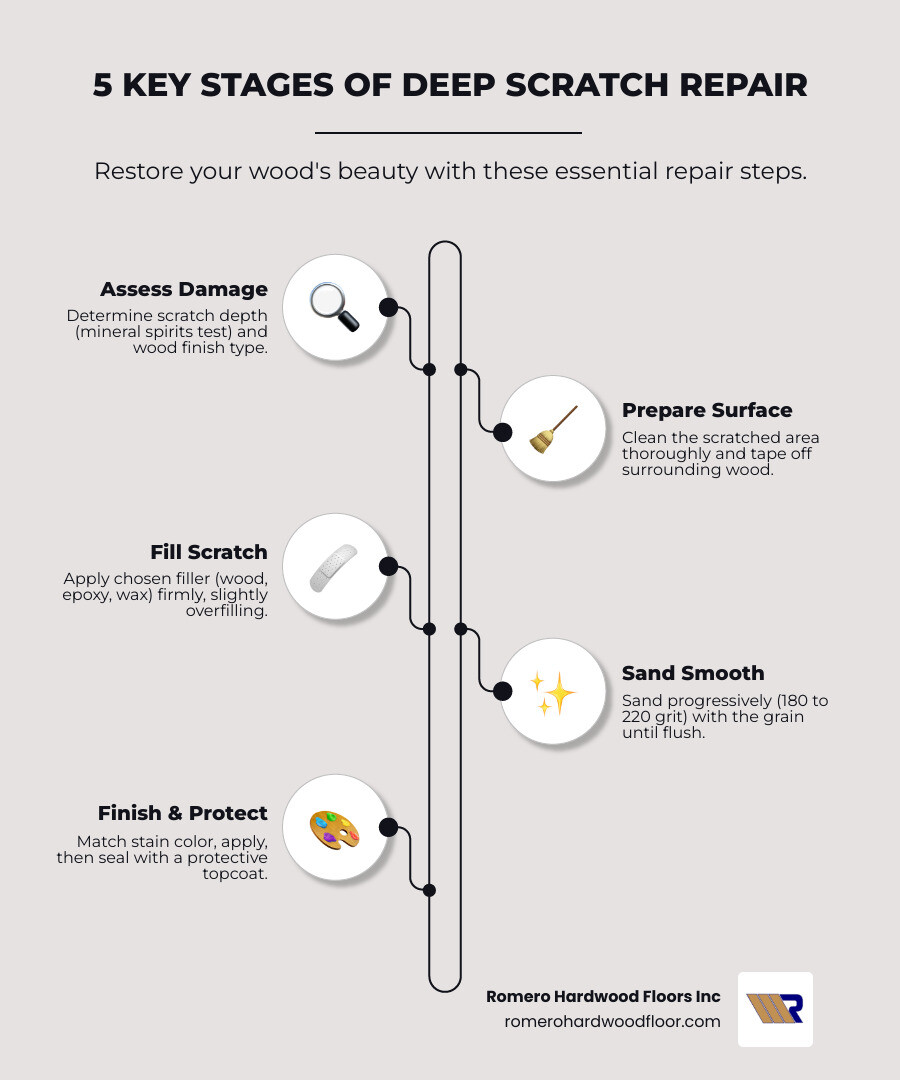
Assess the Damage & Gather Your Supplies
Think of this step as being a detective – you need to understand exactly what you’re dealing with before you can solve the case. Filling deep scratches in wood starts with knowing whether you’re facing a minor surface issue or a more serious repair job.
The best way to assess your scratch is with what we call the “mineral spirits test.” Simply wipe the damaged area with mineral spirits and watch what happens. If the color stays the same, you’re lucky – only the protective finish is damaged. If the area changes color to match the surrounding wood, the finish has been penetrated but the wood fibers are still okay. But if the spot turns darker, that tells us the wood fibers are actually cut and absorbing the mineral spirits. That’s your true deep scratch that needs our attention.
While you’re at it, try to identify what type of finish you’re working with. Is it polyurethane, lacquer, shellac, or a water-based finish? This matters because different finishes play nicely with different repair products. Lacquer and shellac are usually more forgiving because new finish can actually bond with the old stuff, while polyurethane can be a bit more stubborn.
For more comprehensive information on addressing various types of damage, check out our guide on hardwood floor damage repair.
Understanding Scratch Types
Not all scratches are created equal, and knowing the difference helps you choose the right battle plan.
Surface scratches are the gentle ones – they only affect the top protective layer. Think of them as a paper cut on your finish. You can often buff these out or hide them with simple tricks.
Finish-level damage goes a bit deeper, cutting through the protective coating but leaving the actual wood fibers intact. The wood underneath might peek through, but when you run your finger over it, the surface still feels relatively smooth.
Deep scratches are where things get serious. These bad boys actually cut or tear the wood fibers themselves. When you drag your fingernail across them, you’ll feel a distinct valley. They often look lighter than the surrounding wood because you’re seeing raw, unstained wood underneath. This is exactly what we’re targeting when filling deep scratches in wood.
Gouges take it up another notch – they’re like deep scratches’ bigger, meaner cousin. These involve significant wood removal and are both wider and deeper. They need more filling material and extra patience.
The most extreme cases involve missing wood material – actual chunks of wood that have gone AWOL. These require building up the area from scratch, almost like wood surgery.
Essential Tools and Materials
Getting your tools ready ahead of time is like mise en place in cooking – it makes everything flow smoothly and prevents those frustrating mid-project trips to the hardware store.
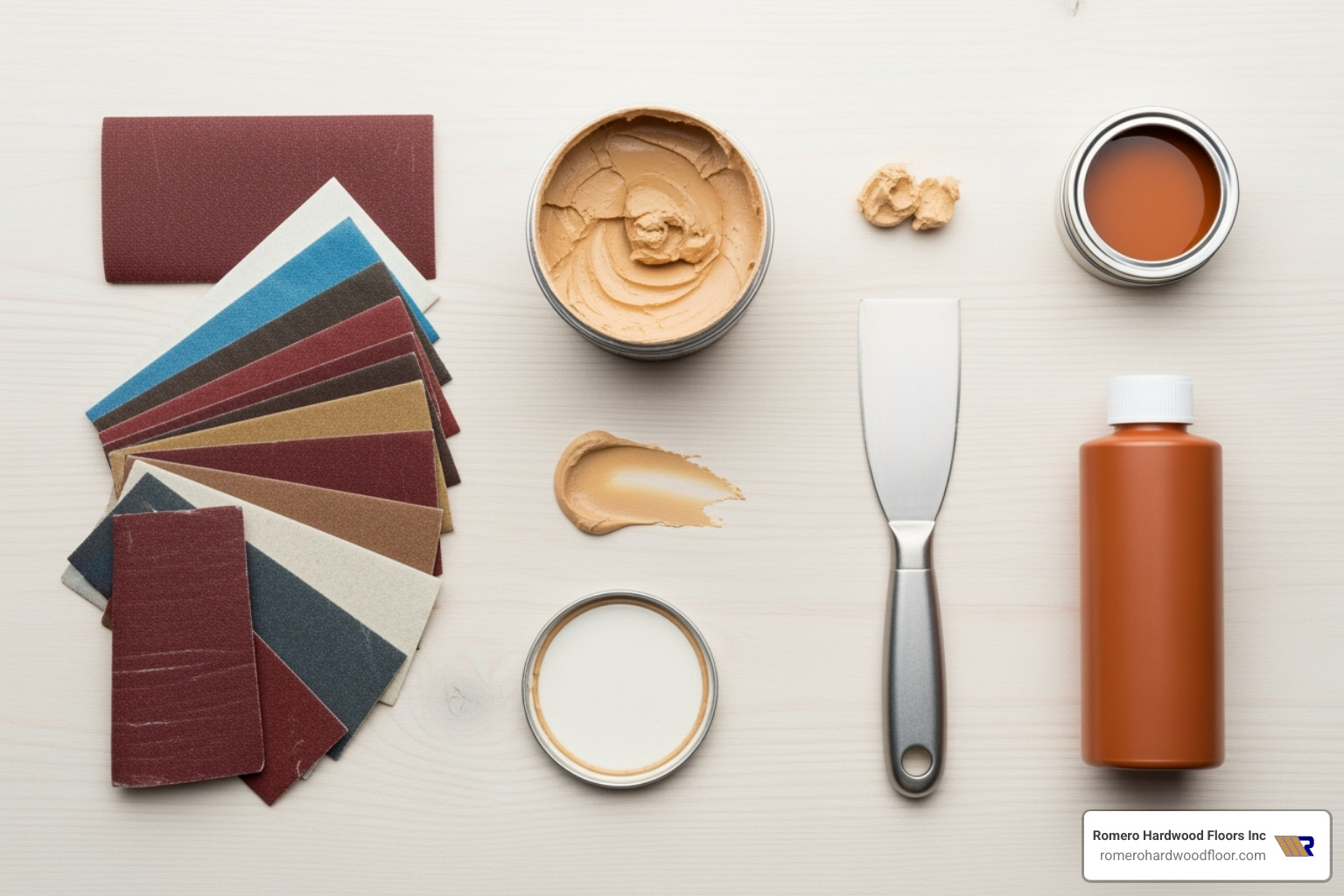
Wood filler is your star player for filling deep scratches in wood. Make sure you get the stainable kind if you want to match your wood’s color perfectly. You’ve got options here – pre-colored latex wood filler, epoxy wood filler, or wax filler sticks all have their place.
A putty knife is essential for applying and smoothing your filler. Go with plastic rather than metal to avoid creating new scratches while you’re fixing the old ones.
Sandpaper comes in different grits for different jobs. 120-grit handles the heavy lifting if you need aggressive material removal. 180-grit is perfect for shaping and blending your filler. 220-grit gives you that baby-smooth finish before staining and sealing.
Tack cloth might seem like a small detail, but it’s crucial for wiping away dust and debris after sanding. A clean surface makes all the difference in your final result.
Wood stain helps your repair disappear into the surrounding wood like it was never damaged. Sealant – whether polyurethane or lacquer – protects your hard work and matches the sheen of the existing finish.
Don’t forget soft cloths for cleaning and applying stain (microfiber works great), painter’s tape to protect undamaged areas, mineral spirits for cleaning, and basic safety gear like gloves and eye protection. Trust me, your eyes will thank you when you’re sanding.
Having everything ready before you start makes the whole process smoother and helps ensure professional-looking results.
Step-by-Step Guide to Filling Deep Scratches in Wood
DIY home improvement spending in the US reached an impressive $450 billion in 2022, with furniture repair and refinishing being a significant segment. This shows just how much homeowners value fixing things themselves! While professional services are always an option, many deep scratch repairs can be handled with a DIY approach, saving you money.
Based on internet data, the average cost for DIY furniture scratch repair materials can range anywhere from $20 to $150, depending on the products you choose and the extent of the damage. These are general estimates and not actual costs for services from Romero Hardwood Floors Inc. For more detailed instructions on various repair techniques for your hardwood floors, check out our comprehensive guide on hardwood floor repair techniques.
Step 1: Prepare the Wood Surface
Preparation is paramount. A clean surface ensures that your filler adheres properly and your stain blends seamlessly. It’s like painting a wall – you wouldn’t just slap paint over dirt, would you?

- Clean the Scratch Thoroughly: Use a soft, damp cloth to wipe away any dirt, grime, or loose debris from the scratched area. For stubborn residue or old wax buildup, a little mineral spirits on a cloth can work wonders. Just make sure the cloth is damp, not dripping.
- Remove Debris: Ensure no tiny wood splinters or dust particles are left inside the scratch. A vacuum cleaner with a brush attachment or compressed air can help here.
- Use Mineral Spirits (Again, if needed): If your initial test showed severed wood fibers (where the scratch turned dark), a quick clean with mineral spirits will ensure the area is free of contaminants that could hinder adhesion. Let it dry completely.
- Tape Off the Area (Optional but Recommended): For precise work, especially on floors or furniture with intricate designs, apply painter’s tape around the scratch. This protects the surrounding undamaged wood from accidental sanding or filler overflow.
Step 2: Choosing the Right Product for Filling Deep Scratches in Wood
Selecting the correct wood filler is critical for a durable and aesthetically pleasing repair. The market offers various options, each with its strengths. For more in-depth information on different types of fillers and their applications, including for hardwood floors, visit our detailed article on hardwood floor filler repair.
Here’s a comparison of common types we use for filling deep scratches in wood:
| Type of Wood Filler | Pros | Cons | Best Use Cases -|
| Stainable Wood Filler | Easy to apply, sandable, paintable. | Can shrink or crack if applied too thickly. May not accept stain exactly like real wood. -|
| Epoxy Filler | Extremely durable, waterproof, and won’t shrink. Can be drilled, sanded, and painted. | More complex to mix (two-part system), shorter working time, and can be difficult to stain evenly. -|
| Wax Filler Sticks | Quick and easy to apply, no drying time needed. | Not as durable as other fillers, can melt or soften in high heat, and not suitable for large or deep repairs. -|
Step 3: Applying the Filler
Now for the hands-on part. Applying the filler correctly is crucial for a seamless repair. Take your time and work carefully.
- Mix (if necessary): If you’re using a two-part epoxy, mix it according to the manufacturer’s instructions. Only mix as much as you can use within the product’s working time.
- Apply the Filler: Using a flexible putty knife, press the filler firmly into the scratch. The goal is to overfill it slightly, creating a small mound that sits just above the wood’s surface. This is important because most fillers shrink a bit as they dry.
- Smooth the Surface: Scrape the putty knife across the filled area to remove excess product, leaving it as smooth as possible. For deeper gouges, you might need to apply the filler in layers, allowing each layer to dry before adding the next.
Step 4: Sanding and Finishing
This is where the magic happens. Proper sanding and finishing will make your repair virtually invisible.
- Let it Dry: Patience is key. Allow the filler to dry completely according to the product’s instructions. This can take anywhere from 15 minutes to several hours.
- Sand it Smooth: Start with a medium-grit sandpaper (around 120-grit) to sand the excess filler down until it’s flush with the surrounding wood. Then, switch to a finer grit (220-grit) to smooth the surface and blend it seamlessly. Always sand in the direction of the wood grain to avoid creating new scratches.
- Clean the Area: Use a tack cloth or a slightly damp rag to remove all sanding dust. This is a critical step for a flawless finish.
- Stain to Match: Apply a matching wood stain to the repaired area using a small brush or a clean cloth. It’s a good idea to test the stain on a scrap piece of wood or an inconspicuous area first to ensure the color is a perfect match. You may need to apply a second coat to achieve the desired shade.
- Apply the Finish: Once the stain is completely dry, apply a clear protective finish (like polyurethane or lacquer) to seal the repair and match the sheen of the original finish. You might need a few thin coats, lightly sanding with very fine-grit sandpaper (320-grit or higher) between coats for the best results.
By following these steps, you can effectively repair deep scratches and restore the beauty of your wood surfaces. For more complex repairs or if you’re unsure about any step, don’t hesitate to contact a professional. At Romero Hardwood Floors, we’re always here to help you keep your floors looking their best.
Deep Scratches in Wood? Here’s How to Make Them Disappear
There’s nothing quite as heartbreaking as finding a deep scratch running across your beautiful hardwood floor or that antique dining table you’ve cherished for years. Maybe it happened when you moved that heavy bookshelf without proper protection, or perhaps your furry friend decided to practice their tap dancing routine on your pristine oak flooring.
The good news? Most deep scratches aren’t the end of the world – or your wood surfaces. With the right approach and a little patience, you can make even the most stubborn scratches virtually disappear.
Deep scratches are different from surface-level damage. While minor scuffs might only affect the protective finish, deep scratches actually cut into the wood fibers themselves. When you run your fingernail across them, you can feel that telltale groove. These scratches often appear lighter than the surrounding wood because they’ve exposed the raw material underneath.
Filling deep scratches in wood isn’t just about aesthetics – it’s about protecting your investment. Left untreated, these gouges can collect dirt and moisture, potentially leading to more serious damage down the road. Plus, proper repairs can maintain or even restore your property’s value.
The repair process itself is surprisingly straightforward, though it does require attention to detail. You’ll be cleaning the damaged area, choosing the right filler material, applying it carefully, and finishing with stain and sealant to match the surrounding wood perfectly.
Don’t worry if this sounds intimidating – thousands of homeowners successfully tackle these repairs every year. With basic tools and materials that you can find at any home improvement store, you’ll have everything needed to restore your wood surfaces to their former glory.
The key is understanding that this isn’t a race. Taking your time with each step, especially the preparation and finishing phases, makes the difference between a repair that blends seamlessly and one that stands out like a sore thumb.
Why Filling Deep Scratches in Wood Matters for Your Home
Filling deep scratches in wood is essential for maintaining the beauty and value of your hardwood floors and furniture. Whether caused by pets, moving furniture, or everyday wear, deep scratches can make even the most beautiful wood surfaces look damaged and neglected.
Quick Answer: How to Fill Deep Scratches in Wood
- Clean the scratched area with mineral spirits
- Choose the right filler (wood filler, epoxy, or wax sticks)
- Apply filler slightly above the wood surface
- Sand smooth with progressively finer grits (180 to 220)
- Stain to match the surrounding wood
- Seal with polyurethane or matching topcoat
The good news? Most deep scratches can be repaired at home with basic tools and materials. According to industry data, consumers spend an average of $50-$150 on DIY solutions for moderate furniture scratch repairs, while the global wood furniture market continues to grow – making proper maintenance more valuable than ever.
It happened to the best of us: Scratches on solid wood furniture are common, but don’t let them cause you worry. With the right approach, you can make these scratches virtually disappear and restore your wood’s original beauty.
As Francisco Romero, owner of Romero Hardwood Floors Inc. with over 15 years of experience, I’ve helped countless homeowners in Revere, MA tackle everything from minor surface scratches to complex filling deep scratches in wood projects. My team and I have seen how proper repair techniques can completely transform damaged wood surfaces, saving homeowners thousands in replacement costs.
Assess the Damage & Gather Your Supplies
Think of this step as being a detective – you need to understand exactly what you’re dealing with before you can solve the case. Filling deep scratches in wood starts with knowing whether you’re facing a minor surface issue or a more serious repair job.
The best way to assess your scratch is with what we call the “mineral spirits test.” Simply wipe the damaged area with mineral spirits and watch what happens. If the color stays the same, you’re lucky – only the protective finish is damaged. If the area changes color to match the surrounding wood, the finish has been penetrated but the wood fibers are still okay. But if the spot turns darker, that tells us the wood fibers are actually cut and absorbing the mineral spirits. That’s your true deep scratch that needs our attention.
While you’re at it, try to identify what type of wood finish you’re working with. Is it polyurethane, lacquer, shellac, or a water-based finish? This matters because different finishes play nicely with different repair products. Lacquer and shellac are usually more forgiving because new finish can actually bond with the old stuff, while polyurethane can be a bit more stubborn.
For more comprehensive information on addressing various types of damage, check out our guide on hardwood floor damage repair.
Understanding Scratch Types
Not all scratches are created equal, and knowing the difference helps you choose the right battle plan.
Surface scratches are the gentle ones – they only affect the top protective layer. Think of them as a paper cut on your finish. You can often buff these out or hide them with simple tricks.
Finish-level damage goes a bit deeper, cutting through the protective coating but leaving the actual wood fibers intact. The wood underneath might be peeked through, but when you run your finger over it, the surface still feels relatively smooth.
Deep scratches are where things get serious. These bad boys actually cut or tear the wood fibers themselves. When you drag your fingernail across them, you’ll feel a distinct valley. They often look lighter than the surrounding wood because you’re seeing raw, unstained wood underneath. This is exactly what we’re targeting when filling deep scratches in wood.
Gouges take it up another notch – they’re like deep scratches’ bigger, meaner cousin. These involve significant wood removal and are both wider and deeper. They need more filling material and extra patience.
Missing wood material – in the most extreme cases, you might have actual chunks of wood that have gone AWOL. These require building up the area from scratch, almost like wood surgery.
Essential Tools and Materials
Getting your tools ready ahead of time is like mise en place in cooking – it makes everything flow smoothly and prevents those frustrating mid-project trips to the hardware store.

Wood filler is your star player for filling deep scratches in wood. Make sure you get the stainable kind if you want to match your wood’s color perfectly. You’ve got options here – pre-colored latex wood filler, epoxy wood filler, or wax filler sticks.
A putty knife is essential for applying and smoothing your filler. Go with plastic rather than metal to avoid creating new scratches while you’re fixing the old ones.
Sandpaper comes in different grits for different jobs. 120-grit handles the heavy lifting if you need aggressive material removal. 180-grit is perfect for shaping and blending your filler. 220-grit gives you that baby-smooth finish before staining and sealing.
Tack cloth might seem like a small detail, but it’s crucial for wiping away dust and debris after sanding. A clean surface makes all the difference in your final result.
Wood stain helps your repair disappear into the surrounding wood like it was never damaged. Sealant – whether polyurethane or lacquer – protects your hard work and matches the sheen of the existing finish.
Don’t forget soft cloths for cleaning and applying stain (microfiber works great), painter’s tape to protect undamaged areas, mineral spirits for cleaning, and basic safety gear like gloves and eye protection. Trust me, your eyes will thank you when you’re sanding.
Having everything ready before you-start makes the whole process smoother and helps ensure professional-looking results.
Step-by-Step Guide to Filling Deep Scratches in Wood
DIY home improvement spending in the US reached an impressive $450 billion in 2022, with furniture repair and refinishing being a significant segment. This shows just how much homeowners value fixing things themselves! While professional services are always an option, many deep scratch repairs can be handled with a DIY approach, saving you money.
Based on internet data, the average cost for DIY furniture scratch repair materials can range anywhere from $20 to $150, depending on the products you choose and the extent of the damage. These are general estimates and not actual costs for services from Romero Hardwood Floors Inc. For more detailed instructions on various repair techniques for your hardwood floors, check out our comprehensive guide on hardwood floor repair techniques.
Step 1: Prepare the Wood Surface
Preparation is paramount. A clean surface ensures that your filler adheres properly and your stain blends seamlessly. It’s like painting a wall – you wouldn’t just slap paint over dirt, would you?
- Clean the Scratch Thoroughly: Use a soft, damp cloth to wipe away any dirt, grime, or loose debris from the scratched area. For stubborn residue or old wax buildup, a little mineral spirits on a cloth can work wonders. Just make sure the cloth is damp, not dripping.
- Remove Debris: Ensure no tiny wood splinters or dust particles are left inside the scratch. A vacuum cleaner with a brush attachment or compressed air can help here.
- Use Mineral Spirits (Again, if needed): If your initial test showed severed wood fibers (where the scratch turned dark), a quick clean with mineral spirits will ensure the area is free of contaminants that could hinder adhesion. Let it dry completely.
- Tape Off the Area (Optional but Recommended): For precise work, especially on floors or furniture with intricate designs, apply painter’s tape around the scratch. This protects the surrounding undamaged wood from accidental sanding or filler overflow.
Step 2: Choosing the Right Product for Filling Deep Scratches in Wood
Selecting the correct wood filler is critical for a durable and aesthetically pleasing repair. The market offers various options, each with its strengths. For more in-depth information on different types of fillers and their applications, including for hardwood floors, visit our detailed article on hardwood floor filler repair.
Here’s a comparison of common types we use for filling deep scratches in wood:
| Type of Wood Filler | Pros | Cons | Best Use Cases -|
| Stainable Wood Filler | Easy to apply, sandable, paintable. | Can shrink or crack if applied too thickly. May not accept stain exactly like real wood. -|
| Epoxy Filler | Extremely durable, waterproof, and won’t shrink. Can be drilled, sanded, and painted. | More complex to mix (two-part system), shorter working time, and can be difficult to stain evenly. -|
| Wax Filler Sticks | Quick and easy to apply, no drying time needed. | Not as durable as other fillers, can melt or soften in high heat, and not suitable for large or deep repairs. -|
