
Floor Installations: 7 Best Tips for Perfect Results 2024
Floor installations are more than just a task; they’re an art that lifts the entire look and feel of your space. Whether you’re updating your home or a commercial property, selecting the perfect floor and getting it properly installed is crucial. Here’s a quick glance to get you started:
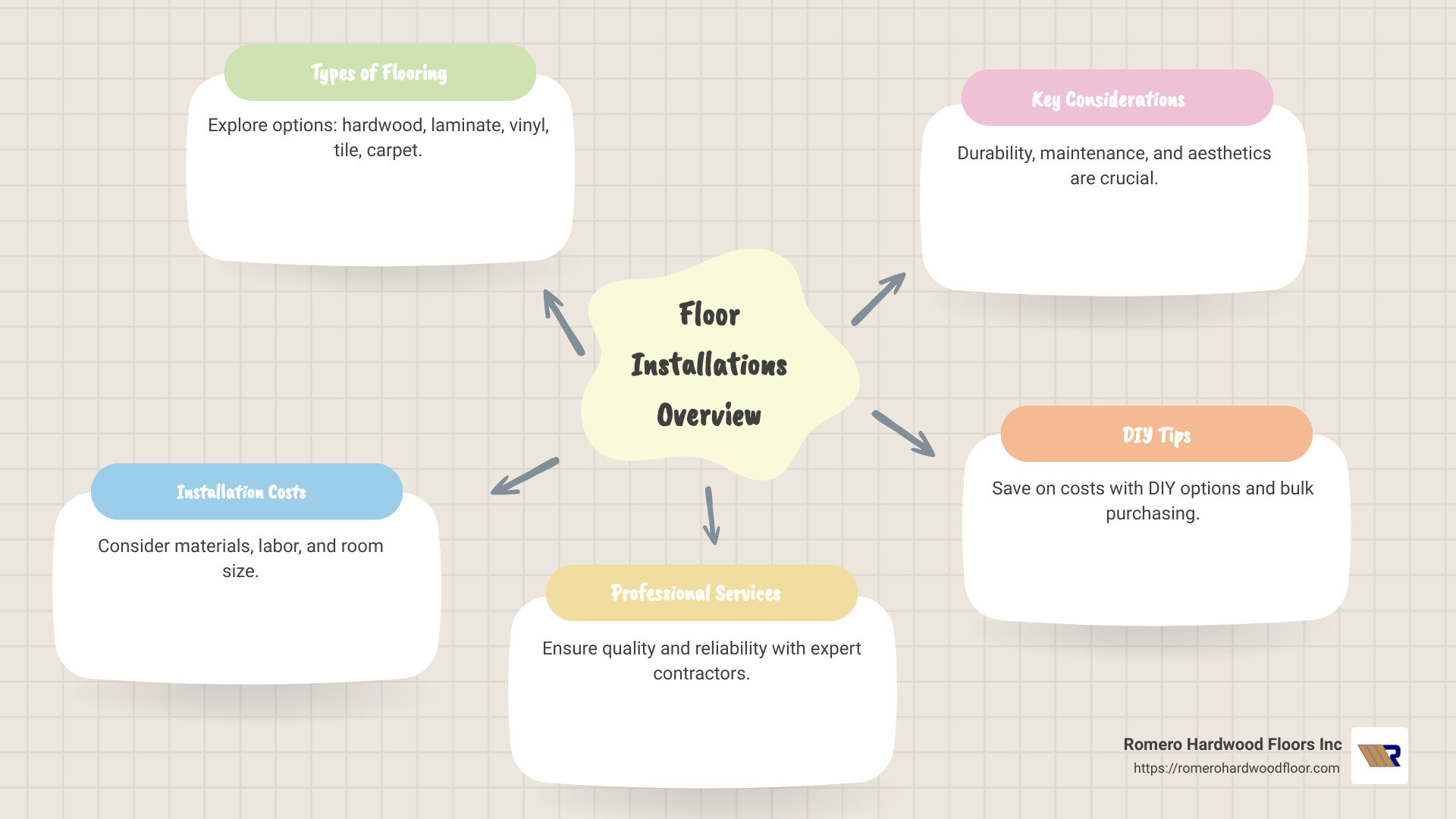
- Types of Flooring: Hardwood, laminate, vinyl, tile, and carpet all offer unique benefits.
- Installation Costs: Factor in materials, labor, and room size for accurate budgeting.
- Professional Services: Ensure quality, reliability, and cleanliness with expert contractors.
As the owner of Romero Hardwood Floors Inc., I, Francisco Romero, have spent over 15 years perfecting the craft of floor installations. Our mission is to ensure your space in Revere, MA, is both beautiful and durable, while we manage every detail of the installation process.
Quick floor installations terms:
– engineered hardwood flooring
– hardwood flooring refinishing contractors
– hardwood floor repair contractors
Types of Flooring Materials
Choosing the right flooring material can significantly impact the aesthetics and functionality of your space. Let’s explore the different types of flooring materials available and their unique benefits.
Hardwood Flooring
Hardwood floors are synonymous with timeless elegance and durability. They add a warm, natural beauty to any room and can last for decades with proper care. One of the standout features of hardwood is its ability to be refinished multiple times. This means you can sand and stain the floors to refresh their appearance or change the color to match evolving decor trends.
Romero Hardwood Floors Inc. specializes in installing various types of hardwood, ensuring that your floors not only look stunning but also stand the test of time.
Laminate Flooring
For those seeking a cost-effective yet durable option, laminate flooring is a great choice. It’s known for its easy installation process and ability to mimic the appearance of more expensive materials like hardwood or stone. Laminate is ideal for high-traffic areas due to its scratch-resistant surface. Plus, it offers a wide range of designs and colors, making it versatile for different interior styles.
Vinyl Flooring
Vinyl flooring is a popular choice for areas prone to moisture, such as kitchens and bathrooms. Luxury vinyl plank (LVP) offers the look of real wood or stone, but with added benefits like waterproofing and affordability. Maintenance is a breeze with vinyl, as it requires minimal effort to keep clean and looking new.
Tile Flooring
Tile flooring is celebrated for its durability and moisture resistance, making it perfect for bathrooms and kitchens. Whether you choose ceramic or porcelain, tiles provide a long-lasting solution that can withstand heavy use. They come in a variety of colors and patterns, allowing for creative customization to suit any decor.
Carpet Flooring
Carpet flooring offers comfort and insulation, making it a cozy choice for bedrooms and living areas. With a wide variety of textures, colors, and patterns, carpet can add warmth and style to your home. The installation process is straightforward, and modern carpets are designed to be durable and easy to clean.
Each flooring type has its strengths, and the best choice depends on your specific needs and preferences. Whether you prioritize durability, aesthetics, or cost, understanding these materials will help you make an informed decision for your next flooring project.
Cost of Floor Installations
When planning for floor installations, understanding the costs involved is crucial. These costs can vary widely based on material, labor, and other factors. Let’s break down what you can expect.
Material Costs
The cost of flooring materials is a significant part of your budget. Here’s a quick overview of the average costs per square foot:
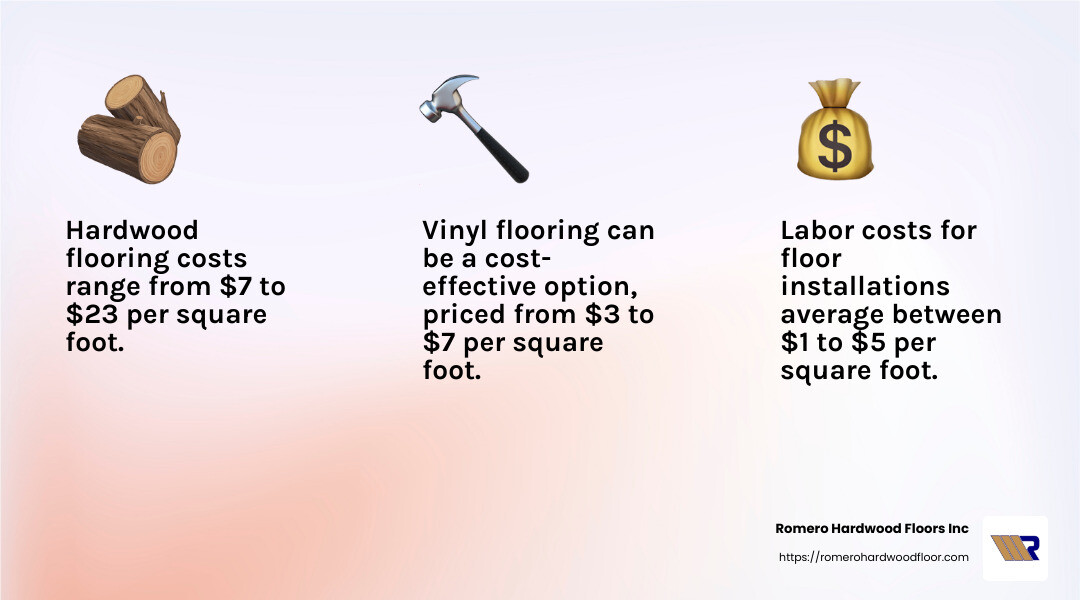
- Hardwood: Known for its beauty and durability, hardwood ranges from $7 to $23. It’s an investment that can last for decades.
- Laminate: A budget-friendly alternative to hardwood, laminate costs between $3 and $10. It offers the look of wood or stone without the high price.
- Vinyl: A versatile and waterproof option, vinyl flooring typically costs $3 to $7. It’s ideal for moisture-prone areas.
- Tile: Durable and easy to clean, tile flooring ranges from $6 to $20. The price varies based on the complexity of the design.
- Carpet: Offering comfort and warmth, carpet costs between $3 to $12. It’s a popular choice for bedrooms and living rooms.
Labor Costs
Labor costs can significantly impact the total expense of your flooring project. On average, labor costs range from $1 to $5 per square foot. However, several factors can affect this:
- Room Size: Larger rooms require more labor, increasing costs.
- Complexity: Intricate patterns or challenging layouts can raise labor expenses.
- Location: Labor rates can vary by region, with urban areas typically costing more.
Cost-Saving Tips
Here are some strategies to help you save on your flooring project:
- DIY Options: If you’re handy, consider installing laminate or vinyl yourself. This can save on labor costs.
- Bulk Purchasing: Buying materials in bulk can lead to discounts.
- Seasonal Discounts: Look for sales during off-peak seasons.
- Financing Options: Many retailers offer financing plans to spread out payments.
By understanding these cost factors and employing savvy strategies, you can manage your flooring budget effectively. Whether you choose hardwood, laminate, or another material, being informed will help you make the best financial decisions for your home.
Choosing the Right Flooring for Your Space
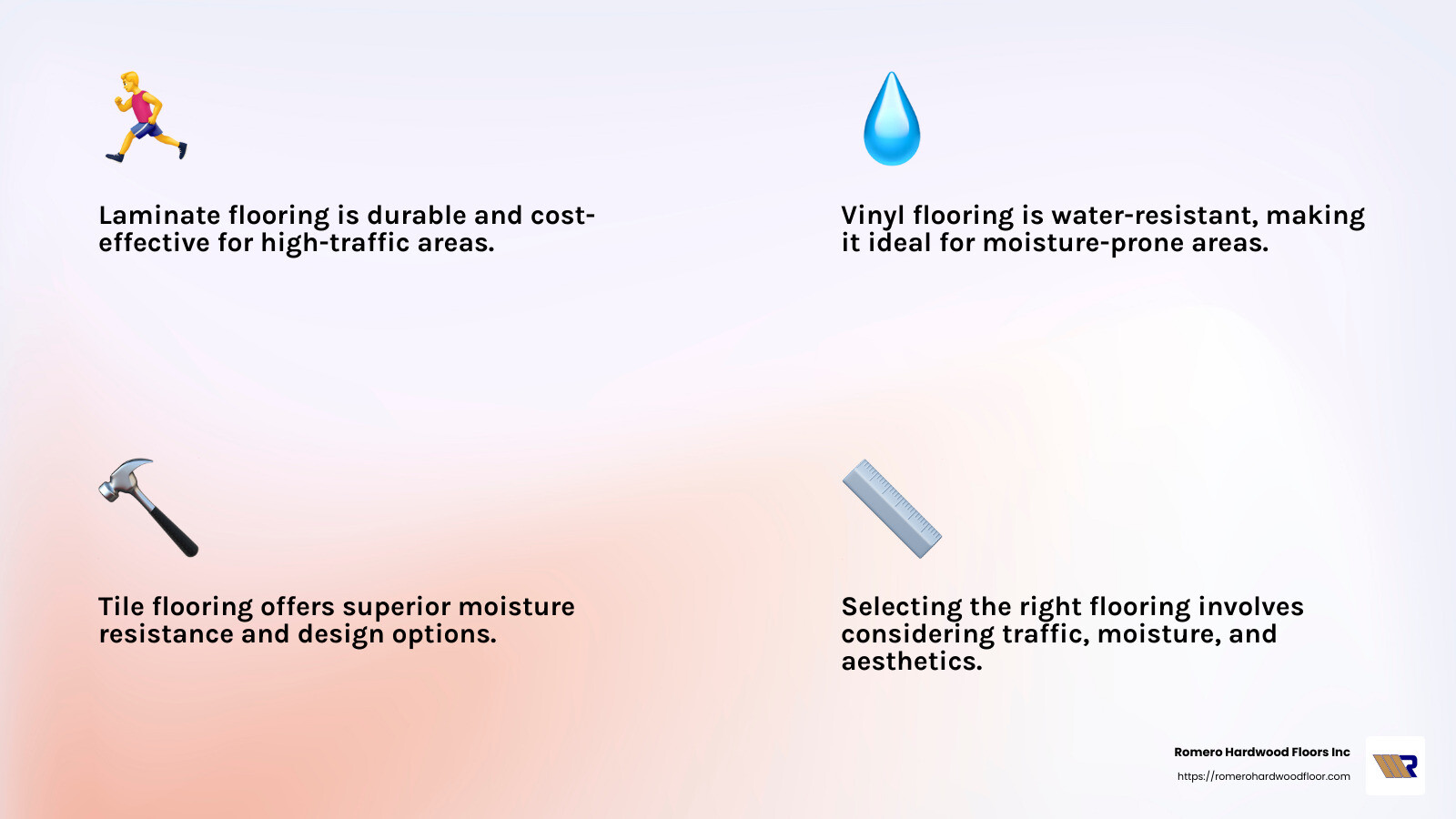
Selecting the right floor installations for your home involves considering several important factors, such as room type, traffic levels, moisture levels, and aesthetic preferences. Each of these elements plays a crucial role in determining the most suitable flooring material for your needs.
High-Traffic Areas
Spaces like hallways, kitchens, and living rooms often see a lot of foot traffic. For these areas, durability and ease of maintenance are key. Laminate flooring is a popular choice due to its ability to withstand heavy use while still being cost-effective. Another excellent option is vinyl plank flooring, known for its resilience and comfort underfoot. Both materials are designed to handle wear and tear, making them ideal for busy households.
Moisture-Prone Areas
Bathrooms, basements, and kitchens are areas where moisture is a concern. Here, waterproof options are essential to prevent damage and ensure longevity. Vinyl flooring is a top pick for moisture-prone spaces due to its water-resistant properties and affordability. Tile flooring, particularly ceramic or porcelain, is also an excellent choice, offering superior moisture resistance and a wide range of design options.
Aesthetic Considerations
Beyond functionality, the look and feel of your flooring are vital to achieving the right aesthetic for your home. Consider the color, texture, and pattern of the flooring to ensure it complements your decor. Hardwood flooring offers a timeless appeal with its natural beauty and variety of finishes. If you’re seeking warmth and comfort, carpet flooring provides a cozy touch and is available in numerous colors and styles to match any decor.
When choosing flooring, think about how it will fit with your overall design scheme. For a modern look, sleek tile flooring or smooth vinyl planks can create a clean, contemporary feel. For a more traditional or rustic appearance, hardwood or textured laminate might be the best fit.
By considering these factors—traffic levels, moisture concerns, and aesthetic preferences—you can select flooring that not only meets your practical needs but also improves the beauty of your space. Next, we’ll dive into the floor installation process, covering everything from preparation to post-installation care.
The Floor Installation Process
Preparation
Before starting any floor installations, proper preparation is key to achieving the best results. This begins with a site assessment to evaluate the space and identify any potential challenges. The installer will check for moisture issues, uneven surfaces, and any structural concerns that might affect the flooring.
Material selection is the next step. Choosing the right type of flooring for your specific needs is crucial. Factors such as room usage, aesthetic preferences, and budget all play a role in this decision. Once materials are chosen, precise measurement of the area ensures that you purchase the right amount of flooring, minimizing waste and cost.
Installation Steps
With preparation complete, the installation process can begin. This involves several critical steps:
- Cutting: Each piece of flooring is carefully cut to fit the dimensions of the room. Precision is vital to ensure a seamless look.
- Placement: The flooring pieces are then placed, starting from one corner and working across the room. This step requires attention to detail to maintain alignment and pattern consistency.
- Finishing Touches: Once all pieces are in place, the installer will add finishing touches. This might include installing baseboards or trim to cover gaps and create a polished appearance.
- Inspection: After installation, a thorough inspection ensures everything is correctly installed and meets quality standards. Any adjustments needed are made at this stage.
Post-Installation Care
Proper care after installation is essential to maintain the beauty and longevity of your new floors. Start with a careful cleaning to remove any dust or debris left from the installation process. Regular maintenance, such as sweeping and mopping, helps keep your floors looking new.
Understanding the warranty provided by the manufacturer or installer is crucial. This will guide you on the dos and don’ts for caring for your floors and what to do in case of any issues.
By following these steps, you can ensure a smooth and successful floor installation process. Up next, we’ll answer some frequently asked questions about floor installations to help you make informed decisions.
Frequently Asked Questions about Floor Installations
How much does it cost to put down a floor?
The cost of floor installations can vary widely based on several factors. On average, the cost can range from $3 to $22 per square foot. This range includes both materials and labor. Here are some factors that affect the cost:
- Material Type: Hardwood flooring is typically more expensive, ranging from $7,000 to $23,000 for 1,000 sq ft. It’s a great investment for enhancing property value and offers natural beauty and long lifespan.
- Labor Costs: Labor costs can also vary, with the national average being around $2 to $8 per square foot. Complex installations or those requiring extensive preparation can increase these costs.
- Room Size: Larger rooms often have lower per-square-foot costs due to economies of scale, but the total cost will, of course, be higher.
Understanding these factors can help you budget more accurately for your project.
What is the most cost-effective flooring to have installed?
If you’re looking for cost-effective options, consider engineered hardwood or bamboo flooring. These materials offer a balance between cost and performance:
- Engineered Hardwood: Known for its affordability compared to solid hardwood, engineered hardwood provides a similar aesthetic and is easier to install.
- Bamboo Flooring: Cost-effective and eco-friendly, bamboo is durable and offers a unique look. It’s a great choice for those seeking sustainability.
What is the best type of flooring to install?
Choosing the best flooring depends on your specific needs and preferences. Here are some popular choices:
- Hardwood: Known for its natural beauty and long lifespan, hardwood can last over 40 years with proper care. It’s a great investment for enhancing property value.
- Engineered Hardwood: Offers durability and ease of installation, making it ideal for busy households. It’s also budget-friendly and comes in various styles.
Each type has its advantages, so consider factors like room usage, aesthetic preferences, and budget when making your choice.
These common questions highlight important considerations for anyone planning a floor installation. Understanding costs, material options, and the best choices for your space will help you make informed decisions.
Conclusion
At Romero Hardwood Floors Inc, we pride ourselves on delivering expert services that truly improve the value of your property. With our years of experience in the industry, we understand that choosing the right flooring is a significant investment. It’s not just about aesthetics—it’s about increasing the long-term value and functionality of your space.
Our commitment to quality craftsmanship ensures that every installation is done with precision and care. From the initial consultation to the final touches, our team works closely with you, ensuring that your flooring project aligns with your vision and needs. Our transparent process means you’re informed every step of the way, making the entire experience smooth and stress-free.
Choosing us means choosing a partner who values your satisfaction. We offer competitive pricing and guarantee our workmanship, so you can trust that your investment is in good hands. Whether you’re looking to install hardwood, laminate, or any other type of flooring, our expertise can help you make the best choice for your home or business.
Ready to transform your space with beautiful new floors? Contact us today to schedule a consultation and find how our flooring solutions can improve your property’s value and appeal. Let us bring your vision to life with floors that speak to quality, durability, and timeless style.
