
Floor Installers: 10 Proven Benefits for 2025 Success
Why Professional Floor Installers Make All the Difference
Floor installers are specialized contractors who prepare, install, and finish various flooring materials in both residential and commercial settings. If you’re looking to hire professional floor installers, here’s what you need to know:
- Average Cost: $3,000 for typical projects, ranging from $1,500 to $4,500 depending on size and materials
- Installation Types: Hardwood, laminate, vinyl, carpet, tile, and specialty flooring
- Benefits: Professional installation provides up to 70% ROI when selling your home
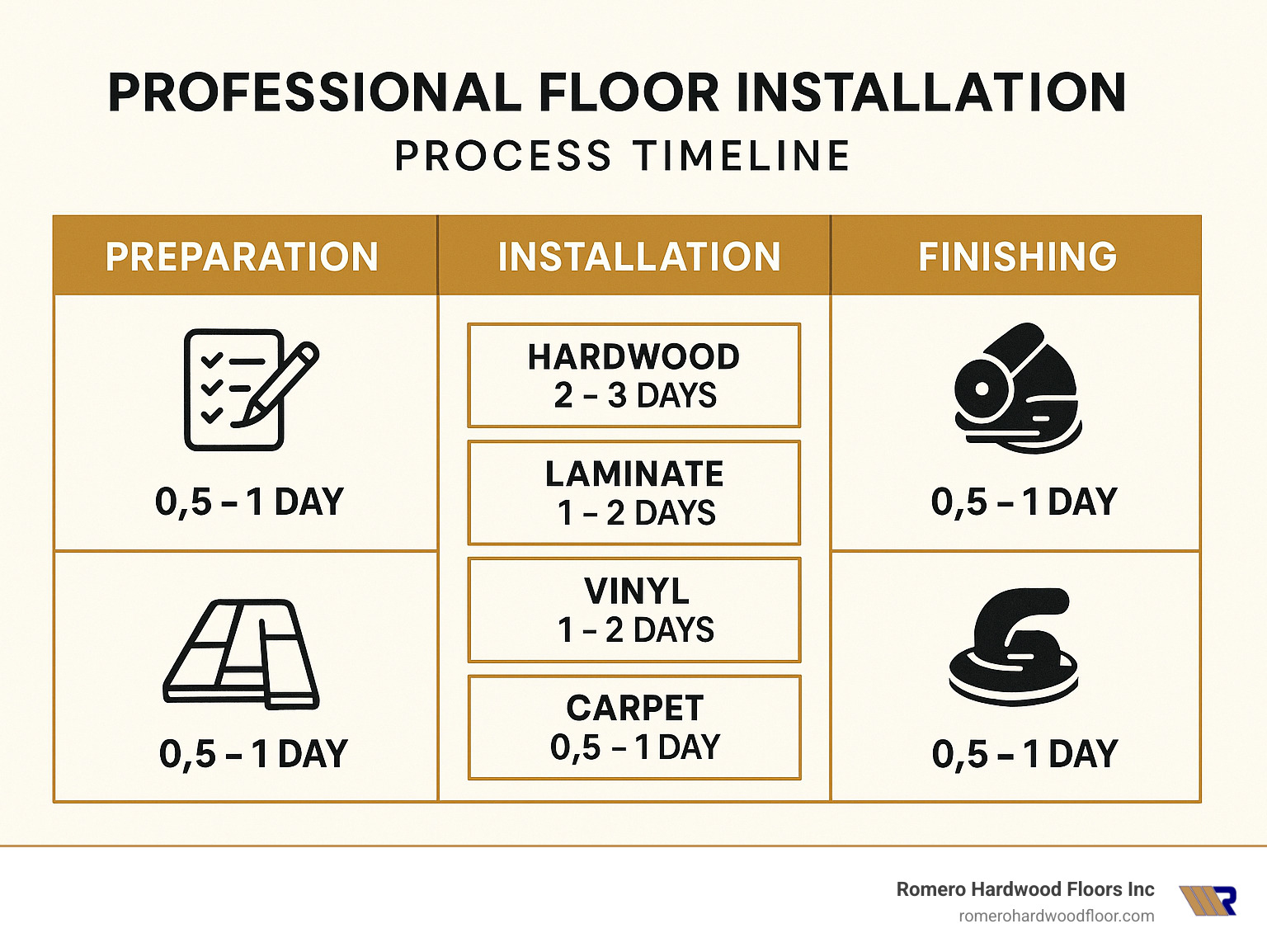
- Timeline: A professional crew can install 800-1,000 square feet in 1-3 days
- Qualifications: Look for licensed, insured, and certified installers (like CFI certification)
When it comes to changing your space with new flooring, the quality of installation matters just as much as the materials you choose. Professional floor installers bring specialized knowledge, proper tools, and years of experience that ensure your investment lasts for decades.
“Floor installation isn’t always easy,” as industry experts note, “but with the help of flooring specialists, you can get your beautiful new flooring set up with minimal hassle and maximum efficiency.”
Whether you’re updating your home’s worn carpet, installing hardwood in a restaurant, or adding durable vinyl planks to a medical facility, professional installation prevents costly mistakes like buckling, hollow spots, or moisture damage that often plague DIY attempts.
I’m Francisco Romero, owner of Romero Hardwood Floors Inc., with over 15 years of experience working with professional floor installers to deliver exceptional results for both residential and commercial clients throughout Revere, MA and surrounding areas.
Basic floor installers glossary:
– flooring installation
– floor sanding contractors near me
– vinyl plank flooring installers
Floor Installers: Roles, Materials & Certifications
When you hire professional floor installers, you’re getting much more than someone who simply lays down new flooring. These skilled craftspeople bring a comprehensive approach to changing your space from the ground up.
Before the first plank or tile is placed, floor installers carefully evaluate your existing subfloor, checking for levelness, structural integrity, and moisture content. This crucial preparation work prevents future problems like squeaky boards or premature wear. They’ll then move on to precise material installation, expert trimming around edges and obstacles, and meticulous finishing that brings out the beauty of your new floors.
For commercial projects, these professionals often work during evenings or weekends to minimize disruption to your business operations. They’ll coordinate with your facility management team to ensure proper temperature and humidity levels are maintained during and after installation—a detail that prevents costly expansion or contraction issues down the road.
Types of flooring floor installers handle
Professional floor installers work with an impressive variety of materials, each requiring its own specialized techniques:
Hardwood flooring remains a timeless choice that demands precise nailing or gluing techniques. Your installer will ensure proper acclimation of the wood to prevent warping after installation.
Engineered wood offers the beauty of hardwood with added stability, making it suitable for environments where solid hardwood might struggle, like basements or over radiant heat.
Laminate flooring with its click-lock systems requires specific expansion gaps and appropriate underlayment to perform properly for years to come.
Luxury Vinyl Plank (LVP) has become incredibly popular for its durability and water resistance. Whether it’s glue-down, click-lock, or loose-lay, each variety requires different installation approaches.
Carpet tile shines in commercial settings where damaged sections can be easily replaced without disrupting the entire floor.
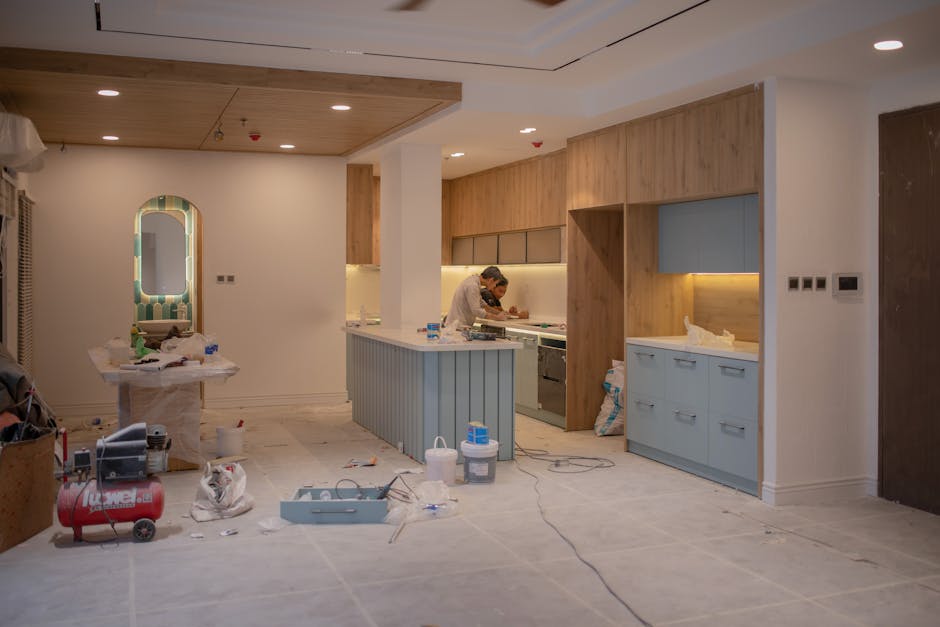
Essential licenses and certifications floor installers must carry
When entrusting your flooring project to professionals, verifying proper credentials is essential:
State contractor license requirements vary depending on your location, but most states require specialized licensing for flooring contractors handling projects above a certain dollar amount.
CFI certification levels from the International Certified Flooring Installers organization demonstrate an installer’s expertise with specific flooring types.
Manufacturer training certificates show that installers have been specifically trained to work with certain products, often allowing them to offer extended warranties.
Liability insurance and bonding protects your property from potential damages. Professional floor installers should carry at least $1 million in liability coverage.
OSHA safety compliance is particularly important for commercial installations where public safety concerns exist.
For more detailed information about professional installation standards, visit our flooring installation page. If you’re specifically looking for a qualified contractor in your area, our guide on how to find a flooring contractor provides helpful tips to make the right choice.
Why Hire Pros vs. DIY
Thinking about installing new floors yourself to save money? Before you grab that rental tool from the hardware store, let’s talk about why professional floor installers might be worth every penny.

I’ve seen countless property owners start with enthusiasm and end with regret after attempting DIY flooring projects. As one client told me after we fixed their DIY gone wrong: “I thought I was saving $2,000, but it ended up costing me $3,500 to repair the damage I caused.”
The truth is that proper flooring installation is both an art and a science. Professional floor installers bring valuable expertise that protects your investment in several important ways:
- Your manufacturer’s warranty stays intact when pros handle the installation. Most warranties become immediately void with DIY installation.
- Time is money, especially in commercial settings. While you might spend several weekends on a DIY project, a professional crew can transform an 800-1,000 square foot space in just 1-3 days.
- Professional floor installers arrive with specialized equipment like moisture meters, laser levels, and pneumatic nailers that would cost thousands to purchase for a one-time project.
- According to industry research, professionally installed flooring delivers up to a 70% ROI when selling your property.
For scientific insight into the importance of proper tools and techniques, the Home Depot blog features research on ergonomic tool use and its impact on installation quality.
Top benefits of certified floor installers
When you hire certified floor installers, you’re investing in peace of mind and professional-grade results:
- Precise layout planning, calculating exactly how materials should be positioned for optimal visual appeal and minimal waste
- Proper moisture testing of both your subfloor and the ambient environment to prevent future warping, cupping, or mold issues
- Pattern accuracy ensuring that decorative tile patterns align properly and hardwood runs in the most aesthetically pleasing direction
- Furniture moving and replacement as part of the package
- Removal and disposal of old flooring safely and efficiently
- Thorough cleanup, leaving your space ready to enjoy immediately
Common DIY pitfalls to avoid
Even the most enthusiastic DIYer can fall victim to these common flooring installation mistakes:
- Hollow spots and loose boards create that telltale hollow sound when walked upon
- Buckling and warping occur when proper expansion space isn’t left or materials aren’t allowed to acclimate
- Uneven joints and gaps between boards are immediately visible and collect dirt
- Using the wrong adhesive can cause complete installation failure
- Forgetting to install moisture barriers can lead to mold growth and complete flooring failure
- Improper pattern alignment becomes glaringly obvious once furniture is in place
For more detailed information about professional installation versus DIY approaches, visit our page on how to find a flooring contractor that meets your specific needs.
Choosing the Right Floor Installer for Your Commercial Project
Finding the perfect floor installers for your commercial space isn’t just about getting the lowest bid. It’s about finding professionals who understand your business needs and can deliver quality work with minimal disruption.
Start by verifying all credentials carefully. Make sure their licenses are current, insurance is adequate, and certifications are legitimate. Next, dive into their reputation through online reviews and Better Business Bureau ratings.
“When we chose our commercial flooring team, seeing their portfolio of similar office installations gave us confidence they understood our needs,” shares one facility manager. “The photos showed attention to detail that matched exactly what we wanted.”

Always collect at least three detailed estimates to understand what different floor installers include in their service packages. Some might offer furniture moving or after-hours installation at no extra charge, while others consider these premium add-ons.
According to Angi’s consumer data, floor installers who maintain verified status on their platform undergo rigorous background checks and must maintain minimum customer satisfaction ratings.
Don’t skip calling references! A quick conversation with previous commercial clients can reveal volumes about how a contractor handles challenges, maintains schedules, and resolves unexpected issues.
Need more guidance on finding qualified flooring professionals in your area? Our detailed guide on How to Find a Flooring Contractor walks you through the entire process step by step.
Key questions to ask floor installers before signing
Before you sign on the dotted line with any floor installers, have a frank conversation covering these essential points:
- “What experience do you have with similar buildings or businesses?” A contractor who’s worked in your industry will understand the unique demands of your space.
- “Can you work around our schedule constraints?” Good commercial installers should offer flexible scheduling options, including evenings, weekends, or phased installation approaches.
- “What are the current wait times for our selected materials?” This can prevent nasty surprises that delay your project.
- Ask about warranty terms. While manufacturers cover the materials, the floor installers themselves should stand behind their labor with clear, written guarantees.
- “How do you handle unexpected problems?” Their answer reveals a lot about their experience and problem-solving approach.
- Discuss dust and noise containment, especially if installation will happen while other areas remain operational.
Warranties & guarantees you should expect
Quality floor installers provide several layers of protection for your investment:
- A labor warranty covering at least 1-2 years of workmanship, protecting against installation-related problems like loose boards or adhesive failures.
- Manufacturer warranties typically range from 5 years for basic materials to 25+ years for premium products, but many manufacturers only honor these warranties when professional installation standards are followed.
- Satisfaction guarantees that demonstrate their confidence in their work.
Be aware that most warranties include specific exclusions. Water damage from plumbing failures, excessive sun exposure, and improper maintenance are typically not covered. Always request written warranty documentation before finalizing your contract.
Professional Installation Process, Timeline & Costs
The journey with professional floor installers follows a methodical process that ensures lasting results.
First comes the site inspection, where installers take precise measurements and evaluate your existing subfloor. Next, they’ll conduct moisture testing to prevent future warping, buckling, or mold issues. Once the assessment is complete, they’ll carefully remove your existing flooring.
Then comes the waiting game – floor installers know that proper acclimation (allowing materials to adjust to your space’s temperature and humidity for 24-72 hours) is non-negotiable for quality results.
“Rushing acclimation is like skipping breakfast before a marathon,” one veteran installer told me. “You might feel fine at first, but you’ll pay for it later.”
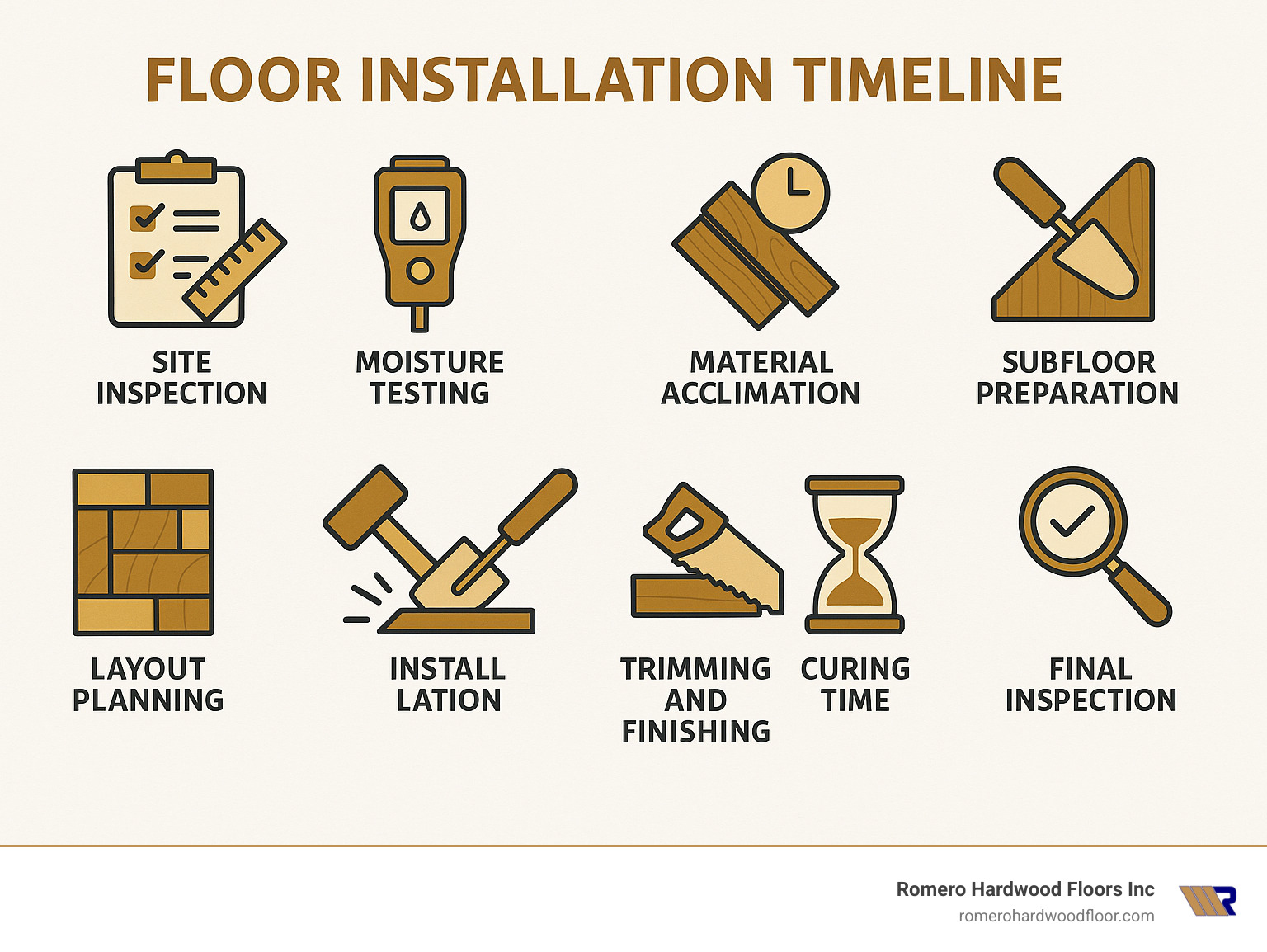
With materials properly acclimated, professionals prepare your subfloor – leveling uneven spots, addressing structural concerns, and installing appropriate moisture barriers. Only then do they begin the actual layout planning and installation, followed by trimming, finishing touches, and a thorough quality inspection.
Based on internet data, average flooring installation costs vary widely depending on material type and complexity. These market averages (not specific to Romero Hardwood Floors Inc.) typically range:
Carpet tile: $3-$12 per square foot
Vinyl plank: $4-$15 per square foot
Laminate: $3-$10 per square foot
Engineered hardwood: $8-$25 per square foot
Solid hardwood: $10-$30 per square foot
Ceramic tile: $7-$24 per square foot
Commercial installations often command premium pricing due to after-hours scheduling, higher durability requirements, and more complex logistics. And stairs? They’re in a category all their own, with costs ranging from $11 to $160 per step according to industry data.
How long different floors take to install
When planning your project timeline, the flooring material you choose makes all the difference:
- Carpet tile: A professional team can cover up to 1,000 square feet in just one day
- Click-lock vinyl or laminate: Typically 1-2 days for a 1,000 square foot installation
- Glue-down luxury vinyl plank: 2-3 days for 1,000 square feet, including subfloor preparation and adhesive setting time
- Traditional hardwood flooring: 3-7 days for 1,000 square feet, including acclimation, installation, and finishing
- Specialty floors: Epoxy needs 4-5 days minimum with multiple coating applications and curing periods, while ceramic tile installation spans 3-5 days before grout curing
These timelines assume standard conditions. Unexpected subfloor issues or complex building layouts can extend these estimates.
Factors that swing your final price
The estimate you receive initially might not be the final number on your invoice. Understanding these variables helps prevent sticker shock:
- Material grade significantly impacts cost, with premium options often requiring specialized installation techniques
- Subfloor condition is perhaps the most unpredictable variable, potentially requiring extensive leveling, moisture mitigation, or structural repairs
- Design choices like herringbone patterns require approximately 15-20% more material due to increased cutting waste and significantly more labor time
- Logistics for commercial clients often drive costs up, with after-hours or weekend work typically commanding 1.5-2x standard labor rates
- Regional factors play a role too – installation prices in metropolitan areas often run 30-40% higher than in rural locations
For commercial clients especially, we recommend budgeting an additional 10-15% beyond initial estimates to account for unforeseen conditions.
Preparation, Aftercare & Maintenance
Getting your space ready before floor installers arrive isn’t just helpful—it’s essential for a smooth, efficient installation.
Before your installation day, create a clear move-out plan. Decide which furniture needs to be completely removed and which pieces can simply be shifted around during the process.
“The preparation phase is just as important as the installation itself,” says Francisco Romero. “When a space is properly prepared, we can work more efficiently and deliver better results.”
Temperature and humidity control are surprisingly critical. Most flooring materials need specific environmental conditions during and after installation to prevent warping or other damage.
For commercial spaces that need to remain partially operational during installation, dust containment becomes a priority. Work with your floor installers to establish temporary barriers and improve air filtration.
Once your new floors are installed, proper maintenance becomes your path to longevity. Different flooring materials have specific care requirements—what works for hardwood might damage vinyl or carpet. Always follow the manufacturer’s cleaning guidelines provided by your installer.
Prevention is better than cure when it comes to flooring. Place entry mats at doorways, use felt pads under furniture legs, and consider chair mats in high-use areas. These simple protective measures can add years to your floor’s life.
For specific maintenance recommendations custom to your new floors, visit our guide on Best Hardwood Floor Installers Near Me for expert advice.
Residential vs. commercial floor installer requirements
The world of commercial floor installers operates under different rules than residential projects:
- Commercial floors must withstand significantly heavier traffic—sometimes thousands of footsteps daily, plus rolling carts and equipment
- Building code compliance becomes much more stringent in commercial settings, including fire ratings, slip resistance coefficients, and ADA accessibility requirements
- Timeline constraints are more challenging in commercial projects, requiring precise scheduling to minimize business disruption
- Commercial buildings typically have concrete subfloors rather than wood substructures, requiring different preparation techniques and installation approaches
Emerging trends & innovations
The flooring world is constantly evolving, with exciting new developments:
- Waterproof core luxury vinyl products have revolutionized commercial flooring, offering superior moisture resistance
- Antimicrobial treatments inhibit bacterial and fungal growth, making them valuable in healthcare facilities, schools, and food service areas
- Digital layout software allows floor installers to plan every detail before the first piece of flooring is laid
- Sustainability continues gaining momentum with rapidly renewable resources like bamboo and cork
- Quick-cure adhesives and finishes significantly reduce installation time and allow faster return to service
- Modular flooring systems provide practical solutions for high-traffic commercial areas with easy-to-replace sections
Frequently Asked Questions about Floor Installers
What qualifications should floor installers show before I hire them?
Before signing any contract, make sure your floor installers can provide a complete credentials package:
- A valid state contractor license (these vary by location)
- Proof of proper insurance coverage (at least $1 million in liability insurance plus worker’s compensation)
- Industry credentials like CFI (Certified Flooring Installers) certification
- Manufacturer training certificates for specific products
- References from similar commercial projects they’ve completed
- A portfolio of finished installations
“Don’t be shy about asking for references,” advises Francisco Romero. “Experienced floor installers should happily share contact information from similar commercial projects they’ve completed.”
How much of my facility will be unusable during installation?
Many commercial projects can be completed in phases, allowing you to keep portions of your facility operational while work progresses.
The flooring material you select significantly impacts downtime. Carpet tile installations allow for sectional work with minimal disruption, while epoxy flooring requires complete area closure during application and curing time.
Professional floor installers typically cover 800-1,000 square feet daily for most flooring types. Many commercial clients opt for after-hours or weekend installation to eliminate operational impact altogether.
Don’t forget about curing requirements – some flooring types need 24-72 hours of limited traffic after installation before resuming full operations.
Do professional floor installers handle furniture moving and disposal?
Yes! Most quality installation teams handle the entire process from start to finish:
- Furniture moving is typically included in standard installation packages, though particularly heavy items may incur additional charges
- Removal and disposal of your existing flooring materials
- Preparation of the subfloor, including addressing any leveling issues or damaged areas
- Installation of all transitions between different flooring types or rooms
- Thorough cleanup, removing all debris and leaving your space ready for immediate use
As one satisfied customer noted, “Having the installation team handle everything from moving our office furniture to cleanup meant we could focus on our business instead of coordinating logistics.”
For more information about what to expect during your flooring project, visit our page on flooring contractor near me.
Conclusion
The difference between a beautiful floor that lasts decades and one that shows problems within months often comes down to one crucial decision: hiring professional floor installers.
When you invest in quality flooring materials, pairing them with expert installation isn’t just a good idea—it’s essential. Professional floor installers bring a level of precision, knowledge, and craftsmanship that transforms your space while protecting your investment for years to come.
For commercial facilities especially, the advantages extend far beyond just good looks:
- The team arrives with a well-orchestrated plan, working efficiently to minimize your business downtime
- Your floor installers understand commercial building codes inside and out, ensuring your new flooring meets all regulations
- Professionals conduct thorough moisture testing and implement proper barriers, preventing devastating failures
- Manufacturer warranties typically require professional installation to remain valid
- Commercial spaces face unique challenges that professional installation accounts for
Here at Romero Hardwood Floors Inc., we’ve been changing spaces throughout Revere, MA and surrounding communities since 2006. Our team brings certified expertise to every project, whether you’re updating your home or renovating an entire commercial facility.
The flooring you choose makes a statement about your space. Whether it’s the warmth of hardwood, the practicality of luxury vinyl, the comfort of carpet tile, or the durability of specialty flooring, professional installation ensures that statement remains beautiful for years to come.
Ready to transform your space with flooring that’s installed right the first time? For more information about our services or to schedule a free consultation, please visit our page on flooring contractor near you. We proudly serve clients throughout Beverly, Chelsea, Danvers, East Boston, Gloucester, Lynnfield, Malden, and all surrounding Massachusetts communities.
