
Floor Pattern Design Ideas: Top 5 Stunning Trends
Floor pattern design ideas are gaining significant attention among homeowners and commercial property managers looking to improve their spaces with style and sophistication. Whether you’re considering classic options like herringbone and chevron, or modern trends like geometric shapes and parquet styles, exploring the latest floor pattern design ideas can give your flooring project a creative edge. Here’s a quick look at the top floor pattern design trends:
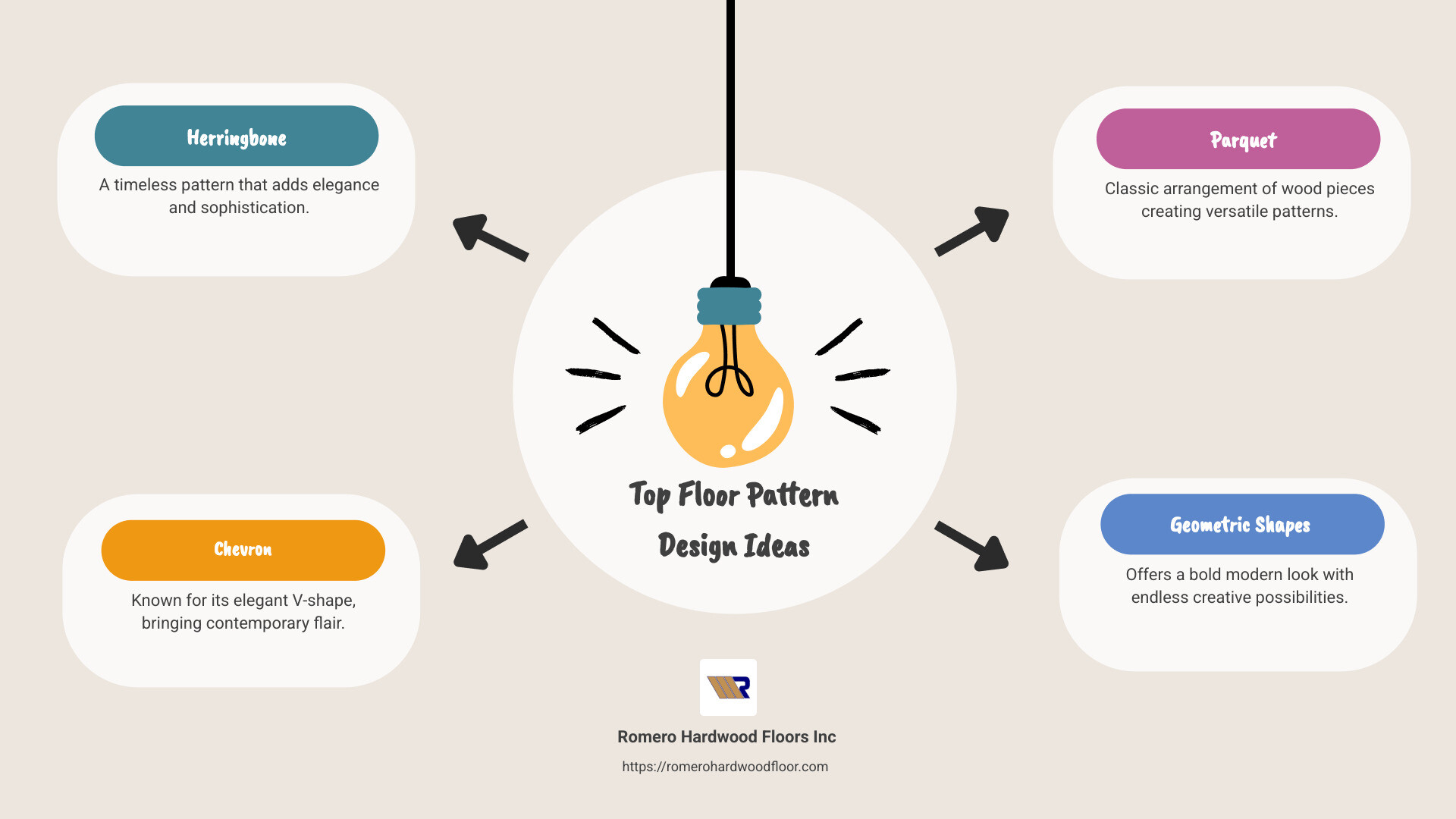
- Herringbone: A timeless pattern that adds elegance and sophistication.
- Chevron: Known for its neat V-shape, chevron patterns bring a contemporary flair.
- Parquet: This classic arrangement of wood pieces creates stunning patterns and is incredibly versatile.
- Geometric Shapes: For a bold and modern look, geometric patterns offer endless creativity.
Floor patterns have transcended basic functionality to become pivotal design elements that influence the atmosphere and perception of a room. Keeping up with design trends ensures that your flooring not only serves its purpose but also resonates with timeless beauty or modern flair.
I’m Francisco Romero, owner of Romero Hardwood Floors Inc. With over 15 years of experience in the business, I’ve helped transform numerous spaces with innovative floor pattern design ideas. My expertise in custom flooring solutions and hardwood installations makes me passionate about offering creative and practical design ideas for every home.
Stay tuned as we dig deeper into exciting flooring patterns and their applications in the sections that follow!
Floor pattern design ideas terms at a glance:
– Chevron pattern hardwood floors
– Hardwood Floor Installation Patterns
– Random width wood flooring
Top Wood Floor Pattern Design Ideas
When it comes to wood floor pattern design ideas, the possibilities are endless. Here are some of the most popular and creative options that can transform any space:
Wood Looks
Wood-look tiles are gaining popularity due to their ability to mimic the appearance of natural wood while offering the durability of tile. These tiles are a great choice for areas prone to moisture, such as kitchens and bathrooms, where genuine wood might not be practical. With advancements in printing technology, wood-look tiles are more realistic than ever, allowing you to enjoy the warmth and beauty of wood without the maintenance concerns.
Parquet
Parquet flooring is a classic choice that continues to captivate homeowners with its intricate and artistic patterns. Made up of small pieces of wood arranged in geometric patterns, parquet flooring can range from simple squares to complex designs like basket weave or Versailles. This style is perfect for adding a touch of elegance and history to living rooms or dining areas.
Herringbone
The herringbone pattern is a timeless favorite that brings a sense of sophistication and order to any room. It consists of rectangular planks laid in a zigzag pattern, creating a stunning visual effect that can make any space feel more refined. Herringbone works well in both traditional and modern settings, making it a versatile choice for various interior styles.
Chevron
Similar to herringbone, the chevron pattern is characterized by its V-shaped design. Unlike herringbone, where the ends of the planks are staggered, chevron planks are cut at an angle to form a continuous zigzag line. This creates a sleek and contemporary look that adds dynamic energy to a room. Chevron patterns are particularly effective in hallways and entryways, drawing the eye along the length of the space.
Geometric Shapes
For those looking to make a bold statement, geometric patterns offer endless creative possibilities. From hexagons to triangles, geometric shapes can be combined in various ways to create unique and eye-catching designs. This style is perfect for modern homes or spaces that aim to showcase a more artistic flair. Geometric patterns can be used as an accent in a room or as the main feature, depending on the desired effect.
Each of these floor pattern design ideas offers a distinct aesthetic that can improve the character and beauty of your home. Whether you prefer the classic charm of parquet or the modern edge of geometric shapes, there’s a wood floor pattern to suit every taste and style.

With careful selection and expert installation, these patterns can lift the look of your space and reflect your personal style. As we explore further, you’ll find how to choose the right pattern for your home and make the most of your flooring investment.
How to Choose the Right Floor Pattern Design
Choosing the right floor pattern design is crucial for creating a space that feels cohesive and inviting. Here are some key factors to consider:
Pattern Selection
Start by considering the overall style of your home. Do you lean towards classic, modern, or eclectic designs? For a timeless look, patterns like herringbone or parquet are ideal. If you’re aiming for a contemporary feel, geometric shapes or chevron might be more suitable.
Think about how each pattern interacts with the space. For example, herringbone can add sophistication, while geometric shapes can introduce a playful element.
Room Layout
The layout of the room plays a significant role in determining the best floor pattern. Large, open spaces can handle bold patterns like chevron, which draws the eye and adds movement. In contrast, smaller rooms might benefit from simpler patterns that don’t overwhelm the space.
Consider the function of the room as well. High-traffic areas might require more durable patterns and materials, like wood-look tiles, which combine aesthetics with practicality.
Color Shades
Color is a powerful tool in floor design. Light shades can make a room appear larger and more open, ideal for smaller spaces. Darker shades add warmth and coziness, perfect for creating an intimate atmosphere.
Mixing different shades within a pattern can add depth and interest. For instance, a parquet floor with varying tones can create a dynamic look that improves the room’s character.
Plank Direction
The direction in which planks are laid can influence the perception of space. Laying planks parallel to the longest wall can make a room feel larger. Diagonal patterns can add visual interest and guide the eye through the space.
Consider starting from a visible wall or focal point in the room to ensure the pattern flows naturally and improves the overall design.
Each of these elements plays a vital role in crafting a floor design that not only complements your home’s architecture but also aligns with your personal style. By carefully considering patterns, layout, colors, and directions, you can create a floor that is both beautiful and functional.
Floor Pattern Design Ideas for Small Spaces
Designing floor pattern ideas for small spaces can be a delightful challenge. With the right approach, you can use patterns to create optical illusions that make a room appear larger and more open.
Optical Illusions
To make a small space feel bigger, consider using diagonal or herringbone patterns. These designs draw the eye across the room, creating a sense of movement and expanding the perceived space. For example, a diagonal lay can make a narrow hallway look wider, while a herringbone pattern adds depth and interest.
Tile Planks
Tile planks that mimic wood can be a game-changer in small spaces. They offer the warmth and aesthetic of hardwood with the durability of tile. Opt for longer planks to elongate the room. When laid in a straight or diagonal pattern, tile planks can create a seamless flow that visually enlarges the space.
Mixed Widths
Playing with mixed widths in your flooring can add a unique touch. Using planks of different widths can break up the monotony and add texture without overwhelming a small room. This approach works well in both modern and rustic settings, providing a customized look that improves the room’s character.
Mixing widths can also help in balancing proportions. For instance, wider planks can be used in the central area, while narrower ones can frame the space, creating a harmonious layout.
By strategically selecting patterns and designs, you can transform even the smallest spaces into visually appealing and functional areas. These techniques not only maximize the room’s potential but also reflect your unique style.
Frequently Asked Questions about Floor Pattern Design Ideas
How do I choose a floor pattern?
Choosing the right floor pattern involves considering several factors. The offset pattern is a popular choice, especially with rectangular tiles. This involves staggering the tiles, typically by one-third or one-fourth of the tile length, to create a visually appealing layout. However, be cautious with the 50% offset pattern. While it might seem like a straightforward choice, this pattern can lead to lippage and warpage. Lippage occurs when adjacent tiles are not level with each other, creating an uneven surface. Warpage refers to the natural curve of tiles, which can become more pronounced with a 50% offset, leading to installation challenges.
What is the best way to lay flooring pattern?
When laying a flooring pattern, start by identifying a visible wall. This is the wall that catches the eye when you first enter the room. Begin your installation from this point to ensure the most aesthetically pleasing layout. The plank direction is crucial as well; laying planks parallel to the longest wall or in the direction of the main light source can improve the room’s appearance.
Your starting point is also vital. For patterns like herringbone or chevron, start in the center of the room and work your way outwards. This ensures symmetry and balance. For simpler patterns like straight or diagonal, starting from one corner can help maintain consistency throughout the space.
Why is 50% tile pattern not recommended?
The 50% offset pattern, while common, is not always recommended due to potential tile warpage and lippage issues. When tiles are offset by half their length, any natural curve in the tile can lead to uneven surfaces. This is especially true for larger tiles, where warpage is more noticeable. Offset issues can also arise, making it challenging to maintain a flat and even floor. To avoid these problems, consider using a one-third or one-fourth offset, which minimizes the impact of warpage and reduces the risk of lippage.
Conclusion
At Romero Hardwood Floors Inc, we understand that the right floor pattern design can significantly improve your home’s aesthetic and value. Our expertise in hardwood flooring installation allows us to offer custom solutions that align with your vision and needs.
Whether you’re drawn to the elegance of herringbone or the modern appeal of geometric shapes, our team is equipped to bring your ideas to life. We believe that every home deserves a floor that not only looks stunning but also stands the test of time.
Choosing the right floor pattern is not just about aesthetics; it’s also about improving property value. A well-installed, beautifully designed floor can make your home more attractive to potential buyers, providing a solid return on investment.
Our commitment to quality workmanship and customer satisfaction has made us a trusted partner in the flooring industry. With locations across Massachusetts, including Revere, Beverly, and Salem, we’re ready to help you transform your space with expert flooring solutions.
For more information on how we can assist with your flooring needs, visit our hardwood floor installation patterns page. Together, let’s create a foundation that improves both the beauty and value of your home.
