
Flooring and Installation: Top 6 Amazing Tips 2024
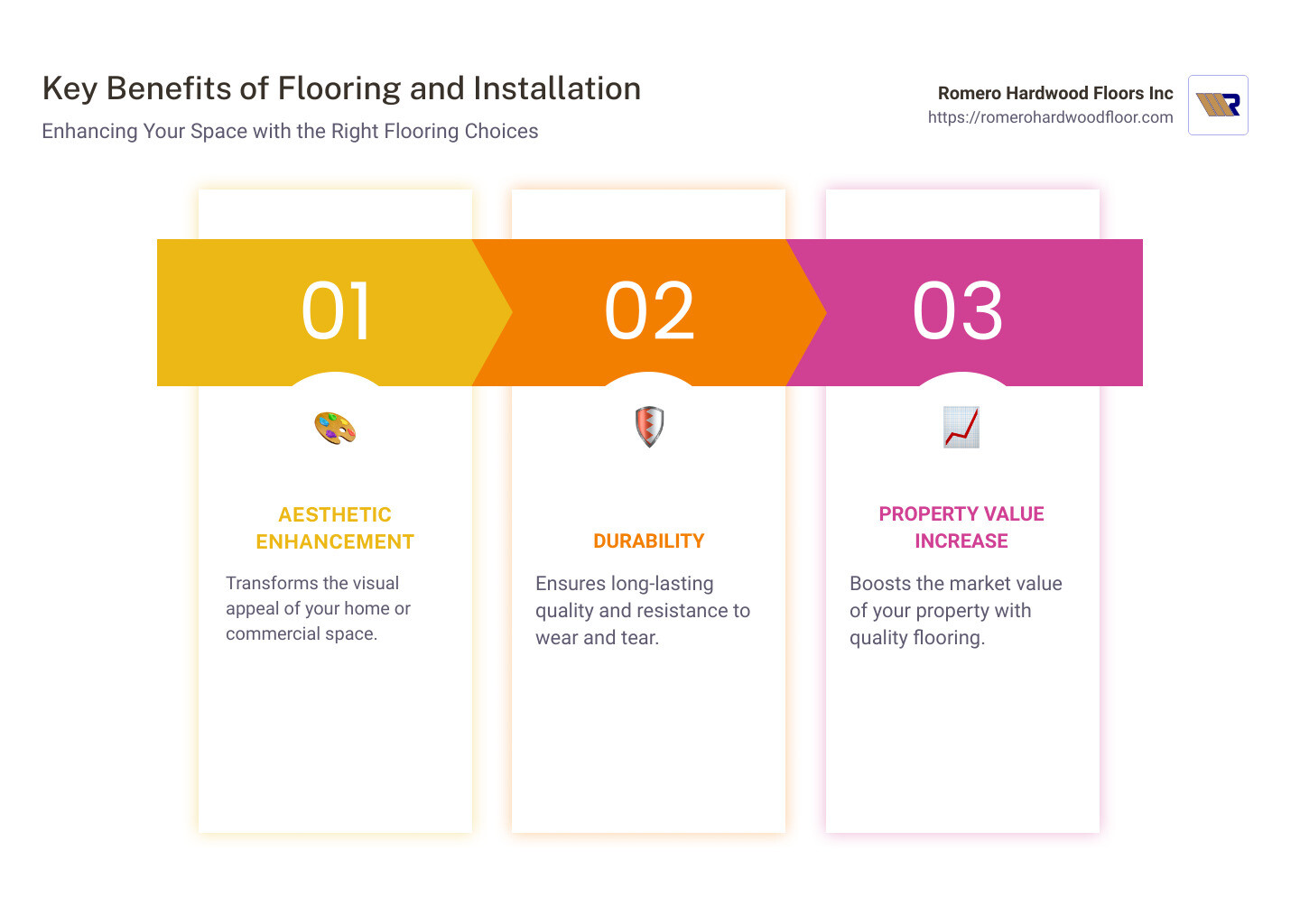
Flooring and installation fundamentally shape the look, feel, and functionality of any space, whether it’s a cozy home or a busy commercial property. At its core, this process encompasses everything from selecting the right materials to ensuring they are installed flawlessly. Why is this important? The right flooring not only improves the aesthetic appeal of your space but also delivers durability, comfort, and value. Here’s what you need to know at a glance:
- Benefits: Improves aesthetics, improves durability, and increases property value.
- Types: Includes options like hardwood, vinyl, tile, laminate, carpet, and concrete.
- Process: Involves preparation, selection, and a detailed installation procedure to ensure a perfect finish.
I’m Francisco Romero, owner of Romero Hardwood Floors Inc. in Revere, MA. With over 15 years of experience in flooring and installation, my team and I pride ourselves on changing spaces with high-quality hardwood floors that last. Our expertise extends to both residential and commercial projects, ensuring each one is executed with precision and care to meet the specific needs of our clients.
Flooring and installation word guide:
– commercial flooring installation companies
– floor tile installation companies near me
– laminate flooring installation companies
Types of Flooring
When it comes to choosing the right flooring for your home, there are several options to consider. Each type of flooring has its own unique benefits, aesthetics, and maintenance needs. Let’s explore some popular choices:
Hardwood Flooring
Hardwood floors are a classic choice known for their durability and timeless beauty. They add warmth and elegance to any room. While they can be susceptible to moisture and scratches, hardwood floors can be refinished to restore their original luster. Regular cleaning and using protective pads under furniture help maintain their appearance.
Laminate Flooring
If you’re looking for a cost-effective option, laminate flooring might be the right choice. It’s easy to install and comes in a variety of styles that mimic more expensive materials like hardwood and stone. Laminate is durable and scratch-resistant, making it ideal for high-traffic areas. Plus, it’s relatively low-maintenance, requiring only regular sweeping and occasional mopping.
Vinyl Flooring
Vinyl flooring is gaining popularity due to its water-resistant properties and ease of installation. It’s available in luxury options that closely resemble natural materials like wood and stone. Vinyl is also soft underfoot and can handle moisture, making it perfect for kitchens and bathrooms. Its affordability and durability make it a practical choice for many homeowners.
Tile Flooring
For those seeking durability and variety, tile flooring is an excellent option. It’s long-lasting and easy to clean, which is why it’s often used in kitchens and bathrooms. Tiles come in various shapes, sizes, and colors, allowing for extensive customization. They are hard and cold underfoot, so consider adding rugs for comfort.
Carpet Flooring
Carpet provides comfort and insulation, making it a cozy choice for bedrooms and living areas. It comes in a wide range of colors and textures to suit any decor style. While carpet is not as durable as other flooring types, regular vacuuming and professional cleaning can prolong its lifespan. It also offers noise reduction and warmth, ideal for homes with children or pets.
Concrete Flooring
For a modern look, concrete flooring is both durable and stylish. It’s easy to maintain and can be customized with stains, dyes, and textures to achieve the desired finish. Concrete floors are ideal for contemporary spaces and can withstand heavy use. Regular sealing will help protect the surface and maintain its appearance.
Choosing the right flooring involves considering your lifestyle, budget, and aesthetic preferences. Each type of flooring offers unique advantages, so weigh these factors carefully to make an informed decision for your home.
Flooring Installation Process
Preparation
Before diving into the flooring and installation process, proper preparation is crucial. This ensures a smooth and long-lasting finish.
- Subfloor Inspection: Begin by checking the subfloor for damage or unevenness. A clean, level base is essential for successful installation. Any cracks or irregularities should be addressed immediately.
- Moisture Testing: Moisture can wreak havoc on certain flooring types, especially hardwood and laminate. Use a moisture meter to test the subfloor. Ensure levels are within the acceptable range for your chosen flooring material.
- Removal of Old Flooring: Clear out any existing flooring. This might involve tearing out carpet, removing tiles, or scraping off old adhesive. Make sure all debris is removed to provide a clean slate for new flooring.
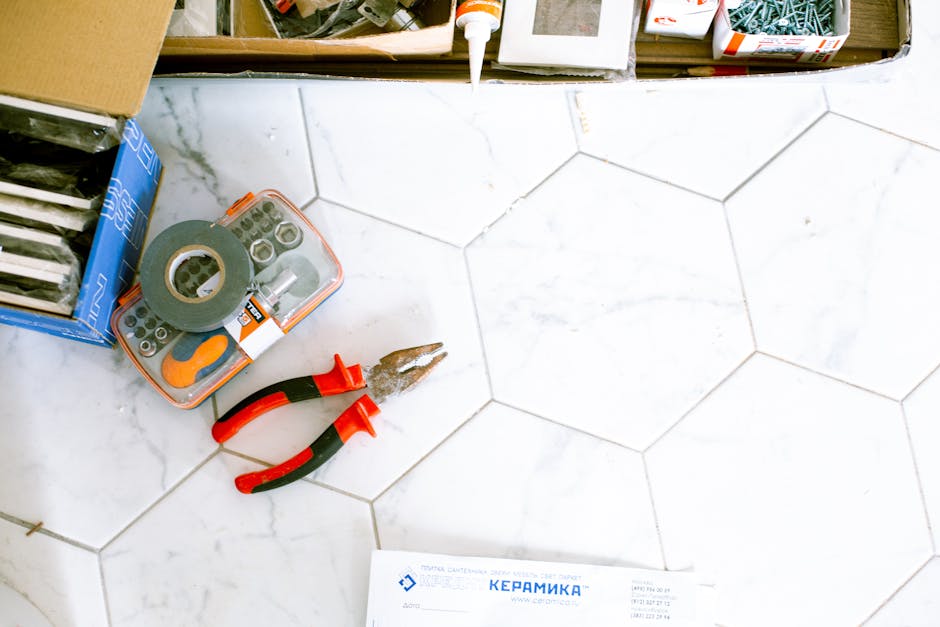
Tools Required
Having the right tools on hand can make the installation process much smoother. Here’s a list of essentials:
- Saws: A circular saw or jigsaw will help with cutting flooring materials to fit your space.
- Hammers: Useful for securing nails or tapping planks into place.
- Adhesives: Depending on the flooring type, you might need specific adhesives to secure materials.
- Measuring Tools: A tape measure and square are vital for ensuring precise cuts and alignment.
Installation Steps
Once preparation is complete and tools are ready, follow these steps to install your new flooring:
- Measuring: Begin by measuring the room accurately. This helps in determining how much material you’ll need and reduces waste. Remember to account for any patterns or layouts you plan to use.
- Cutting: Use your saw to cut the flooring materials to size. It’s often best to cut as you go, ensuring each piece fits perfectly in its designated space.
- Laying: Start laying the flooring from one corner of the room, typically along the longest wall. For planks, use spacers to maintain expansion gaps. For tiles, ensure even spacing and alignment.
- Finishing: Once all materials are laid, add any necessary trim or baseboards to cover expansion gaps and provide a polished look. For hardwood floors, consider sanding and sealing the surface for added protection.
By carefully preparing, using the right tools, and following these steps, you’ll achieve a professional-quality flooring installation that improves the beauty and functionality of your space.
Cost of Flooring and Installation
Average Costs
Understanding the average costs of flooring and installation is essential for budgeting your project. On a national level, costs can vary significantly based on the type of material and the complexity of the installation.
- Hardwood Flooring: Typically ranges from $7 to $23 per square foot, including both materials and labor. Hardwood is a premium choice due to its durability and aesthetic appeal.
- Vinyl Flooring: A more budget-friendly option, vinyl costs about $3 to $7 per square foot. It’s popular for its water resistance and versatility.
- Laminate Flooring: Costs range from $3 to $10 per square foot. Laminate is a cost-effective alternative that mimics the look of real wood or stone.
These figures include both materials and labor but can fluctuate based on location and specific project requirements.
Factors Affecting Cost
Several factors can influence the overall cost of your flooring project:
- Material Type: Different materials have different price points. Hardwood is generally more expensive than vinyl or laminate.
- Labor: Professional installation costs can vary depending on the complexity of the job and the expertise required.
- Location: Costs can differ based on geographic location due to variations in labor rates and material availability.
- Project Size: Larger projects might benefit from economies of scale, potentially reducing the per-square-foot cost.
Cost-Saving Tips
To make the most of your budget, consider these cost-saving strategies:
- DIY Options: If you’re handy, consider installing simpler flooring types like laminate or vinyl yourself. This can save on labor costs, but ensure you have the skills and tools needed.
- Bulk Purchasing: Buying materials in bulk can often lead to discounts. Measure accurately to buy just what you need, avoiding excess waste.
- Seasonal Discounts: Keep an eye out for sales, especially during slower seasons for home improvement projects. Retailers might offer discounts on materials or installation services.
By understanding these costs and factors, you can make informed decisions and potentially save money on your flooring project. This sets the stage for choosing the right flooring for your home, considering both financial and lifestyle factors.
Choosing the Right Flooring for Your Home
Selecting the perfect flooring for your home is more than just a choice of style. It involves considering your lifestyle, budget, and aesthetic preferences to ensure the flooring meets your needs and improves your living space.
Lifestyle Considerations
Your lifestyle plays a crucial role in determining the best flooring and installation for your home. Consider the following factors:
- Foot Traffic: High-traffic areas, like hallways and living rooms, require durable flooring. Options like hardwood are excellent for these spaces due to their resilience.
- Pets: If you have pets, especially dogs, you’ll want scratch-resistant and easy-to-clean flooring. Hardwood is a great choice as it withstands scratches and is easy to maintain.
- Children: For families with children, consider flooring that is both durable and comfortable. Hardwood provides a resilient surface for play areas and offers ease of cleaning.
Budget Considerations
Balancing initial costs with long-term value is essential when choosing flooring. Here’s what to think about:
- Initial Cost: Set a realistic budget for both materials and installation. Hardwood may have a higher upfront cost but offers long-term benefits.
- Long-Term Value: Consider how the flooring will hold up over time. Hardwood can add significant value to your home and last for decades with proper care.
- Maintenance Costs: Factor in the cost of maintaining the flooring. Hardwood might require periodic refinishing but offers enduring beauty and value.
Aesthetic Considerations
Your flooring should complement your home’s style and your personal taste. Consider these aspects:
- Home Style: Match the flooring to your home’s architecture. Hardwood suits traditional styles and can also be adapted to modern aesthetics.
- Color Schemes: Choose colors that harmonize with your existing decor. Light-colored hardwood can make spaces feel larger, while darker tones add sophistication.
- Personal Preference: Your personal preference should guide your choice. Whether you love the warmth of hardwood or its timeless appeal, select what makes you feel at home.
By carefully weighing these considerations, you can choose flooring that not only fits your lifestyle and budget but also improves the beauty of your home. Up next, we’ll address some frequently asked questions to help you steer the flooring installation process with confidence.
Frequently Asked Questions about Flooring and Installation
Choosing the right flooring is only half the battle. Understanding the costs and options for installation is crucial to making an informed decision. Here, we address some common questions to help you steer this process.
How much do most contractors charge to lay flooring?
The cost of laying flooring can vary widely depending on several factors, including the type of material and the complexity of the job. On average, contractors charge between $1.50 and $4.00 per square foot for labor. This price range typically covers basic materials like laminate or vinyl. However, for more intricate installations, such as hardwood or ceramic tile, labor costs can climb to $5.00 to $10.00 per square foot.
These are just labor costs. You must also consider the price of materials, which can significantly impact the overall expense.
How much does it cost to install 1000 sq ft vinyl plank flooring?
Vinyl plank flooring is a popular choice due to its affordability and ease of installation. The cost to install 1000 square feet of vinyl plank flooring can range from $3,000 to $7,000. This includes both materials and labor.
- Standard Vinyl: Typically costs around $3.00 to $5.00 per square foot installed.
- Luxury Vinyl: More upscale options can cost between $5.00 and $7.00 per square foot installed.
These costs can vary based on your location and any additional preparation needed for installation, such as subfloor leveling or old flooring removal.
What is the cheapest flooring to have installed?
When budget is a primary concern, certain flooring options stand out for their cost-effectiveness:
- Vinyl Sheet: Often the least expensive, vinyl sheet flooring can cost as low as $1.00 per square foot for the material, with installation adding a similar amount.
- Laminate: Offers a good balance of affordability and durability, typically costing $2.00 to $4.00 per square foot installed.
- Carpet Tiles: These are another budget-friendly option, costing around $2.00 to $5.00 per square foot installed, depending on the quality and style.
Each of these options provides a cost-effective way to update your floors without breaking the bank. However, it’s important to consider the long-term implications, such as maintenance and lifespan, when selecting the cheapest flooring option.
Understanding these costs and options can help you make the best decision for your home and budget. Next, we’ll explore the conclusion of our comprehensive guide on flooring and installation.
Conclusion
In this guide, we’ve digd into flooring and installation, exploring various flooring types, installation processes, and cost considerations. From the timeless elegance of hardwood to the budget-friendly appeal of vinyl, each flooring option comes with its unique set of benefits and challenges.
Choosing the right flooring involves more than just aesthetics—it’s about finding a balance between durability, cost, and your lifestyle needs. For instance, if you have a busy household with kids and pets, you might prioritize durability and ease of maintenance. On the other hand, if you’re aiming for a sleek, modern look, materials like tile or polished concrete might be your go-to.
At Romero Hardwood Floors Inc, we understand these nuances and are committed to helping you find the perfect flooring solution. Based in Revere, MA, we specialize in hardwood flooring installations that improve the beauty and value of your property. Our team prides itself on competitive pricing, punctuality, and guaranteed workmanship, ensuring that your flooring project is completed to the highest standards.
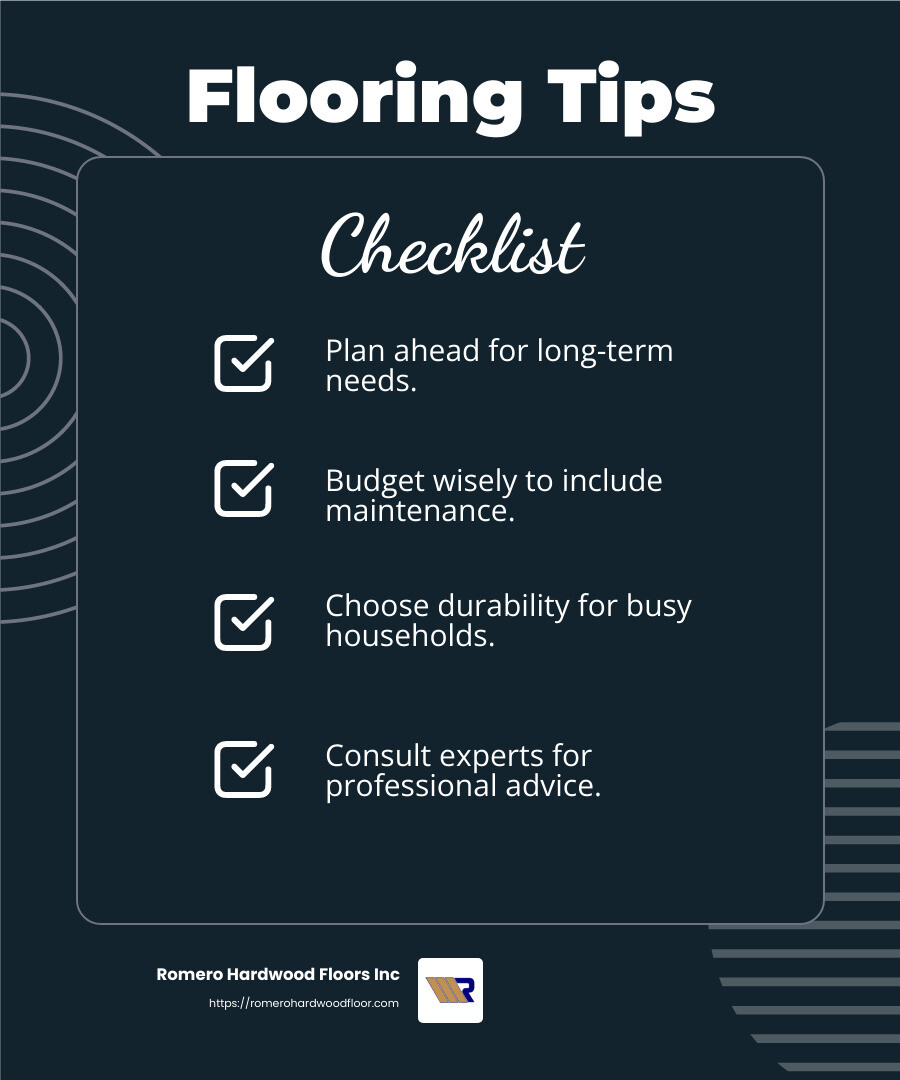
As you start on your flooring journey, here are a few final tips:
- Plan Ahead: Consider your long-term needs and how your flooring choice will fit into your lifestyle.
- Budget Wisely: Factor in both initial costs and long-term maintenance expenses to avoid surprises.
- Consult Experts: Professional advice can save you time and money, ensuring a seamless installation process.
For personalized advice and expert installation services, consider reaching out to us at Romero Hardwood Floors Inc. We’re here to guide you every step of the way, ensuring your flooring not only looks fantastic but also stands the test of time.
Thank you for considering us for your flooring needs. We look forward to helping you create a beautiful and lasting foundation in your home.
