
Why Water-Damaged Wood Demands Immediate Attention
How do you repair water damaged wood? The process involves stopping the moisture, drying the wood, cleaning it, repairing damage, sanding, and refinishing. Here’s the essential roadmap:
- Stop the water source – Fix leaks, address flooding, or eliminate moisture.
- Dry thoroughly – Use fans and dehumidifiers for at least 24-48 hours.
- Clean and treat – Remove mold and treat stains with appropriate solutions.
- Repair damage – Fill cracks or remove rotted sections.
- Sand smooth – Use progressively finer sandpaper (e.g., 120-grit to 220-grit).
- Refinish and seal – Apply stain or paint, then seal with polyurethane.
Water is wood’s natural enemy. Its porous structure absorbs moisture, leading to stains, warping, structural damage, and mold. While minor damage from a quick spill is often reversible with DIY methods for under $200, ignoring the problem is a costly mistake. Mold can grow within 24-48 hours, and what starts as a small issue can escalate into major structural repairs.
According to industry data, professional water damage restoration averages $2,500 nationally, with costs ranging from $1,000 to over $8,000 depending on the severity. Acting quickly is key to controlling costs and damage.
I’m Francisco Romero, owner of Romero Hardwood Floors Inc. With over 15 years of experience serving Revere, MA, I’ve seen how proper repair techniques can save beautiful hardwood from being needlessly replaced. Understanding how do you repair water damaged wood is the first step to preserving your investment.
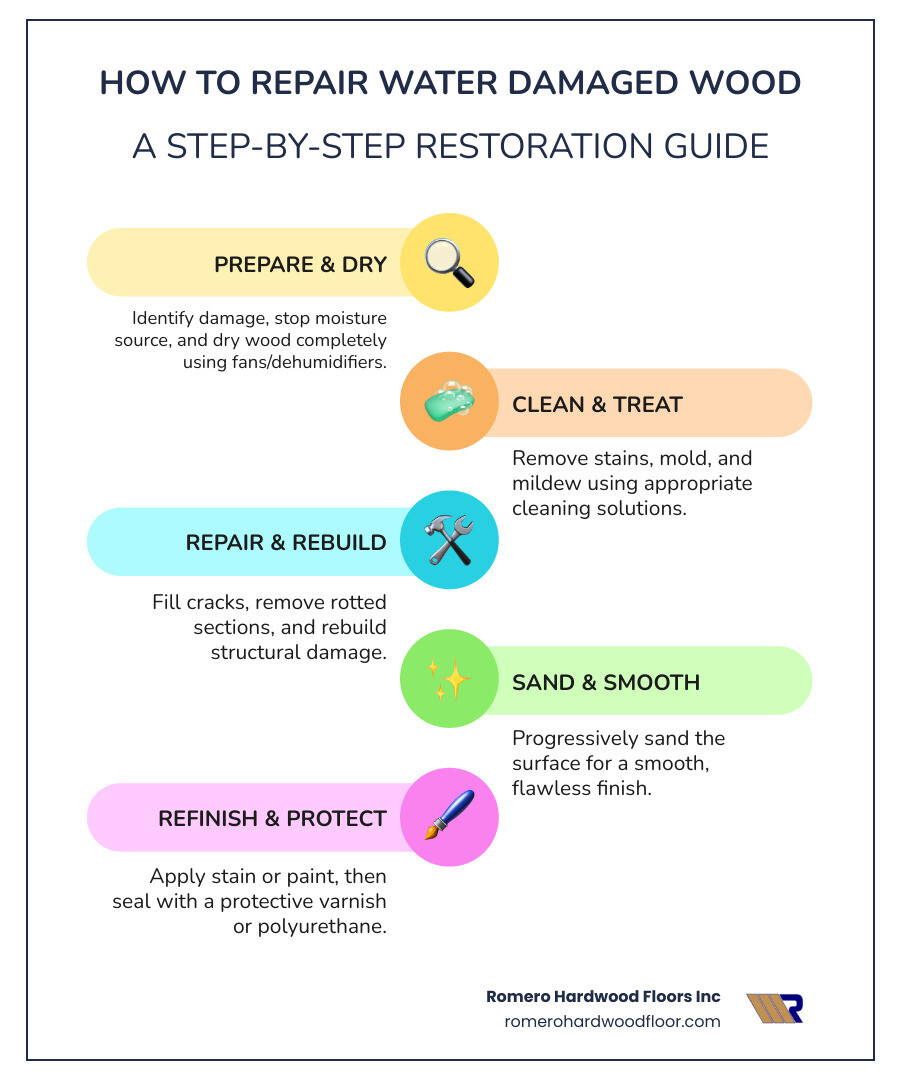
Quick look at how do you repair water damaged wood:
Understanding the Enemy: Identifying Causes, Signs, and Risks
Water damage often starts small and unnoticed. Understanding its causes, signs, and risks is the first step in protecting your wood.
Common Causes:
- Leaks: Slow, hidden leaks from roofs or plumbing are frequent culprits.
- Flooding: Natural disasters or burst pipes can cause immediate, extensive damage.
- High Humidity: Poor ventilation in basements or bathrooms leads to gradual swelling and warping.
- Spills: Everyday spills can cause stains if not cleaned up promptly.
- Appliance Failures: Malfunctioning dishwashers, washing machines, or ice dams can release unexpected water.
Signs of Water Damage:
- Discoloration: Look for dark spots, which indicate deep water penetration, or white rings, which show moisture trapped in the finish.
- Changes in Shape: Wood may swell, warp, or crack as it absorbs water and dries unevenly. On floors, this can appear as cupping (edges are higher than the center) or buckling, where boards lift from the subfloor. You may need to look into warped wood repair or how to repair buckled hardwood floor.
- Texture Changes: If wood feels soft, spongy, or crumbles, it’s a sign of advanced rot.
- Peeling Finish: Paint or varnish may bubble, blister, or peel as water breaks its adhesion.
- Musty Odors: A persistent earthy smell signals hidden moisture and potential black mold on hardwood floors.
Risks of Inaction: Ignoring water-damaged wood leads to progressive deterioration. The consequences include:
- Structural Weakening: Rotting fungi feed on damp wood, compromising its integrity and creating safety hazards.
- Pest Infestations: Damp wood attracts termites and carpenter ants.
- Health Hazards: Mold growth can cause allergies, respiratory issues, and other serious health effects of mold. The presence of signs of mold under hardwood floors indicates a significant moisture problem.
- Higher Repair Costs: A small problem can escalate into a major expense. Professional water damage restoration can cost from $1,000 to over $8,000, and delaying repairs will only increase the final bill.
How Do You Repair Water Damaged Wood? A Step-by-Step Guide
Repairing water-damaged wood is a manageable task if you follow a systematic approach. This guide will walk you through the process, from safety checks to final finishes, to restore your wood’s integrity and beauty.
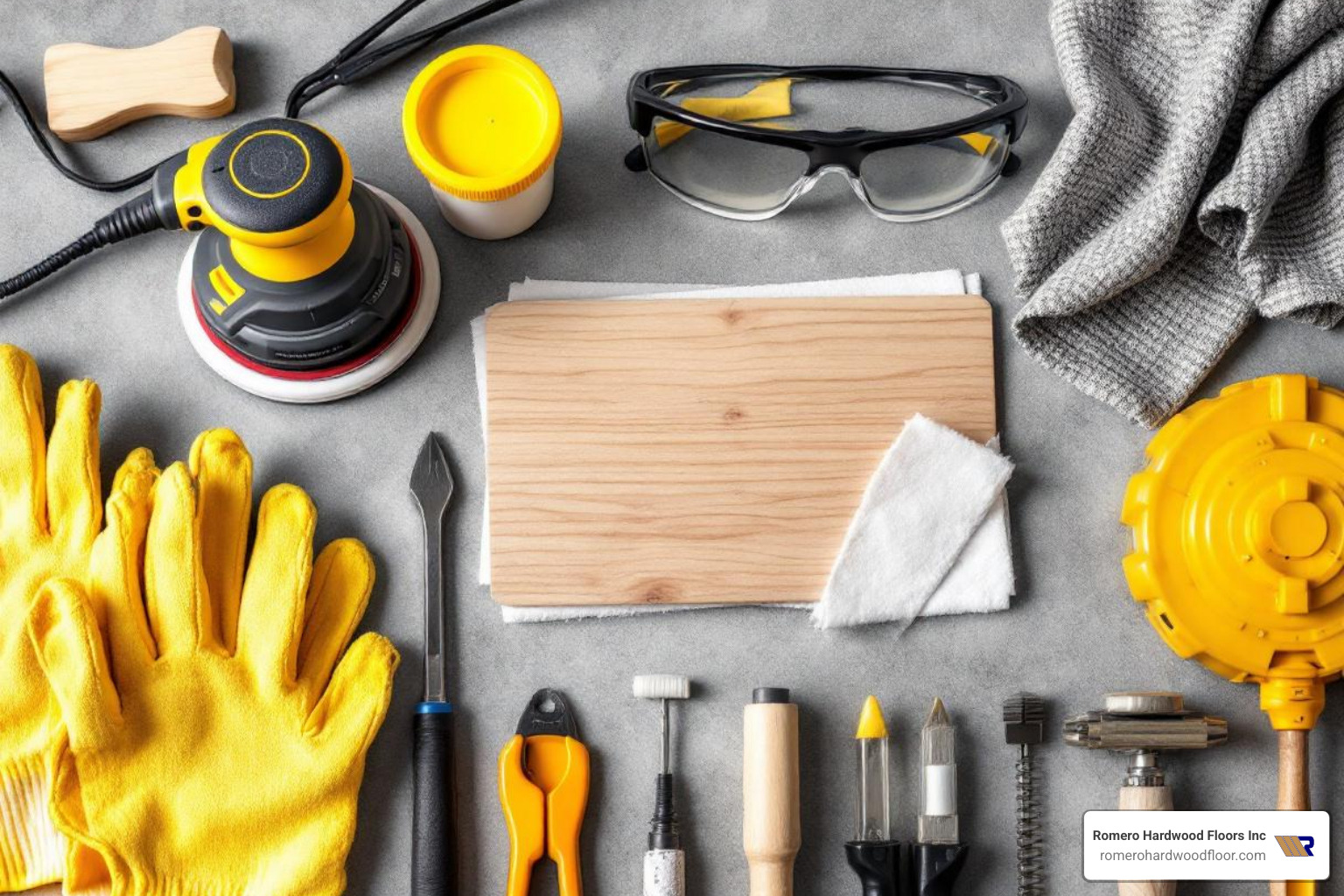
For floor-specific repairs, see our step by step hardwood floor repair techniques.
Step 1: Safety, Assessment, and Stopping the Source
Safety is the first priority. Always wear gloves, safety glasses, and a mask, especially if you suspect mold. Ensure the area is well-ventilated. Next, assess the damage: is it superficial (stains) or structural (rot)? Finally, and most critically, find and fix the water source to prevent future damage. Whether it’s a leaky pipe or poor ventilation, this problem must be solved before repairs begin. Our guide on hardwood floor damage repair offers more on this.
Step 2: Drying the Wood Completely
Patience is key. Rushing this step can lead to mold or warping. Wipe up any standing water, then use fans and dehumidifiers to circulate air and remove moisture. For serious damage, a moisture meter is a great tool to confirm the wood is dry (ideally below 12% moisture content) before proceeding. This can take anywhere from a few days for furniture to over a week for hardwood floors. For large areas, consult our guide on how to fix wood floor water damage.
Step 3: Cleaning and Treating Stains, Mold, and Mildew
Once dry, tackle the visible after-effects.
- Light Stains (White Rings): For moisture trapped in the finish, try applying mayonnaise, petroleum jelly, or a paste of baking soda and water. Let it sit for a few hours, then wipe clean. Mineral spirits can also remove cloudy films.
- Dark Stains (Black/Gray): These indicate deeper water penetration. Oxalic acid is highly effective. Wearing protective gear, apply a saturated solution to the stained area, let it work, then neutralize and clean it off with water.
- Mold Removal: For surface mold, spray a 1:1 solution of white vinegar and water, let it sit for an hour, and scrub clean. A 3% hydrogen peroxide solution can also be used for tougher spots.
Step 4: Repairing and Rebuilding Damaged Areas
Now, address the physical damage.
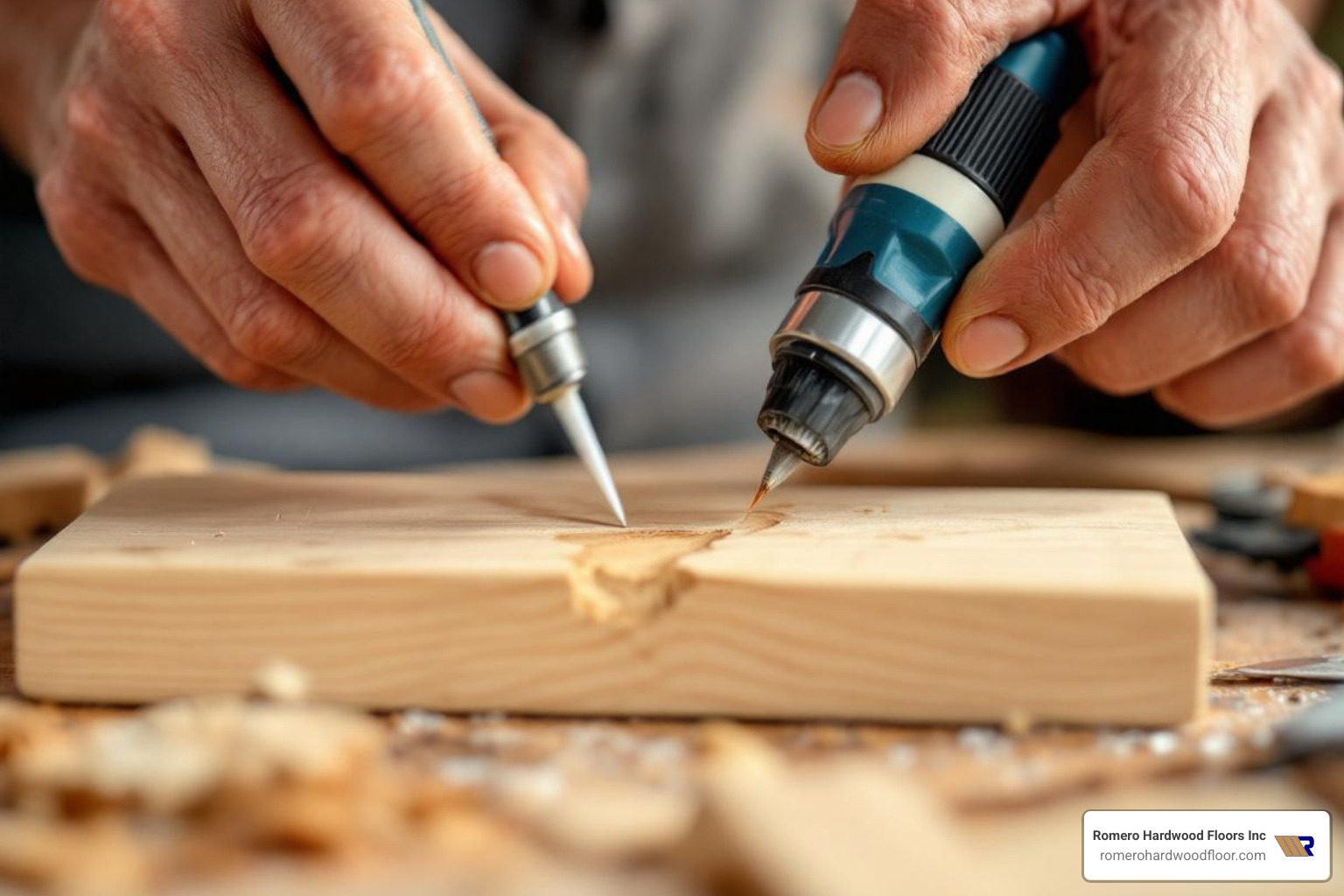
- Remove Rotted Wood: Use a chisel or putty knife to scrape away any soft, crumbling wood until you reach a solid surface.
- Fill Gaps: Use wood fillers for minor cracks and holes. For larger or structural voids, a two-part epoxy filler provides superior strength. See our guide on hardwood floor filler repair for more.
- Structural Repairs: If furniture joints are loose, they may need to be re-glued with wood glue and clamped. Buckled floorboards might require re-nailing or replacement.
Step 5: Sanding and Smoothing for a Flawless Finish
Sanding creates a smooth, uniform surface for refinishing.
- Sanding Progression: Start with a medium-grit sandpaper (e.g., 120-grit) to level fillers and remove imperfections. Move to a fine grit (e.g., 220-grit) for a smooth finish. An orbital sander is great for flat surfaces.
- Technique: Always sand in the direction of the wood grain to avoid scratches.
- Clean Up: After sanding, vacuum all dust and wipe the surface with a tack cloth for a pristine finish. For floors, see our hardwood floor sanding guide.
Step 6: Refinishing and Protecting Your Work
This final step restores the wood’s appearance and protects it from future damage.
- Staining or Painting: Apply a pre-stain wood conditioner for an even finish, then apply your chosen stain or paint. For floors, we can help with professional floor staining.
- Sealing: This is your wood’s armor. Apply 2-3 coats of a durable varnish or polyurethane, lightly sanding between coats. This creates a hard, water-resistant barrier. For other options, see our guides on wood floor varnish and non-toxic floor finishes.
The Big Decision: DIY Repair vs. Calling a Professional
When faced with water-damaged wood, you must decide: can you fix it yourself, or is it time to call a professional? The answer depends on the extent of the damage and your comfort level with the repair process.
DIY vs. Professional: How do you repair water damaged wood effectively?
For many situations, a DIY approach is a viable and cost-effective option.
- Good for DIY:
- Minor cosmetic issues like white water rings or light stains.
- Slight warping on a few floorboards or small furniture pieces.
- Surface scuffs that can be sanded and refinished.
- When to Call a Professional:
- Extensive Mold: If mold covers more than 10 square feet or you suspect it’s in your walls or subfloor, professional remediation is crucial for health and safety.
- Structural Damage: If rot has compromised structural beams, subfloors, or critical furniture supports, an expert is needed to ensure a safe repair.
- Widespread Damage: Large areas of damaged flooring require commercial-grade drying equipment and expertise for a successful restoration.
- Valuable Antiques: To avoid devaluing a cherished piece, trust a professional restorer.
For complex floor issues, wood floor repair contractors like us can provide an accurate assessment. We specialize in hardwood floor repair and refinishing.
Understanding the Costs of Water Damage Repair
The cost varies dramatically based on damage severity and repair method.
| Repair Type | DIY Costs | Professional Costs |
|---|---|---|
| Minor Damage | Under $20 (e.g., stain removal, small furniture) | $100 – $500 (e.g., professional stain removal, minor refinishing) |
| Moderate Damage | $50 – $200 (e.g., filling, sanding, refinishing furniture) | $500 – $2,000 (e.g., localized floor repair, water damage restoration for small area) |
| Extensive Damage | $200 – $500+ (e.g., new plywood top, extensive fillers) | $2,000 – $12,000+ (e.g., structural repairs, widespread floor replacement/refinishing) |
Please note: Cost estimates are based on national averages from online sources and do not reflect the pricing of Romero Hardwood Floors. Costs can vary significantly based on location and the extent of damage.
DIY costs primarily cover materials like sandpaper, filler, and stains. Professional costs include labor, specialized equipment, and materials. The national average for water damage restoration is around $2,500, but costs can range from $1,000 to over $8,000. Repairing water-damaged hardwood floors can range from $500 for a small patch to over $4,000 for more significant issues.
Handling Special Cases and Different Wood Types
Not all wood reacts to water in the same way. The type of wood and its construction—solid, veneer, or engineered—will influence the best repair strategy.
Special Cases: How do you repair water damaged wood on veneer or engineered surfaces?
- Veneer: This thin layer of real wood is glued to a core material (like particleboard or MDF). Water can weaken the adhesive, causing the veneer to blister or lift. Minor blisters can sometimes be fixed by injecting glue underneath and clamping. However, if the core material has swollen and crumbled, the piece may be beyond simple repair.
- Engineered Wood: This flooring has a real wood top layer over a plywood or HDF core. While generally stable, the top layer can still stain and warp. It can be sanded and refinished like solid wood, but the top layer is thinner, limiting how many times this can be done. For severe damage, individual planks may need replacement. Learn more about engineered hardwood flooring and its engineered hardwood benefits.
- MDF (Medium-Density Fiberboard): Often used in furniture, MDF swells and crumbles when wet, and the damage is usually irreversible. A creative fix for a swollen MDF top is to cover it with a new piece of plywood and trim.
How Wood Type Affects the Restoration Process
- Softwoods (e.g., Pine, Fir): These woods are more porous and absorb water quickly, making them highly susceptible to swelling and rot. Thorough drying is critical, and their softness requires a gentle touch during repairs.
- Hardwoods (e.g., Oak, Maple): Denser and less porous, hardwoods offer better natural resistance to water but are not immune. Prolonged moisture can still cause warping and cupping. The finish also plays a role; a compromised surface sealant can trap water against the wood, causing damage. Our guide to the best wood for floors often favors hardwoods for their durability.
Frequently Asked Questions About Wood Water Damage Repair
Here are concise answers to some of the most common questions we receive about repairing water-damaged wood.
Can wood fully recover from water damage?
It depends. Yes, for minor damage. Superficial issues like light stains or minor swelling can often be completely reversed with proper repair. No, for severe damage. Wood with extensive rot, deep structural warping, or pervasive mold has lost its integrity and typically requires replacement. Our experience in restoring old floors helps us make the right call.
How long does it take for wood to dry after water damage?
Drying time varies from a few days to over a week. It depends on the wood’s saturation level, its type (softwood vs. hardwood), and environmental conditions like humidity and airflow. Using fans and dehumidifiers is essential to speed up the process and prevent further damage.
How can you tell if wood is too damaged to repair?
Wood is likely beyond repair if it exhibits these signs:
- Extensive Rot: The wood is soft, spongy, or crumbles easily.
- Severe Warping: The wood is so buckled or twisted that it cannot be flattened.
- Pervasive Mold: Mold has penetrated deep into the wood, causing staining and weakness.
- Core Failure: The core of engineered wood or veneer has delaminated and disintegrated.
When in doubt, a professional hardwood floor water damage repair assessment is your best bet.
Conclusion: Restoring Beauty and Value to Your Wood
Water-damaged wood can be a daunting problem, but knowing how do you repair water damaged wood empowers you to act decisively. From stopping the water source to applying the final coat of sealant, a systematic approach can restore your wood’s beauty and function.
Speed is critical. The faster you begin the drying process, the better the outcome. Prevention is also key; regular maintenance, humidity control, and protective finishes are your best defense. While many minor issues are perfect for a DIY project, extensive mold, structural issues, or widespread floor damage require professional expertise.
At Romero Hardwood Floors Inc., we specialize in restoring the beauty and integrity of hardwood floors across Beverly, Chelsea, Danvers, Gloucester, Lynnfield, Malden, Manchester by the Sea, Marblehead, Medford, Melrose, Peabody, Reading, Revere, Rockport, Salem, Saugus, Somerville, Stoneham, Swampscott, Wakefield, and Winthrop, MA. With over 15 years of experience, we are equipped to handle any water damage scenario.
If the damage seems overwhelming, don’t hesitate to seek professional help. Your home and your hardwood floors deserve the best care.
For a professional assessment and a reliable estimate on your hardwood floor water damage repair needs, please don’t hesitate to contact us today. We’re here to help you turn soggy back into stunning.
