
Hardwood Floor Contractors: Top 10 Expert Tips 2024
Hardwood floor contractors play a crucial role in changing your home or commercial space with beautiful, lasting floors. Whether you’re installing new hardwood or refinishing existing floors, selecting the right contractor ensures high-quality workmanship and a smooth experience. Here are some quick tips for choosing the perfect contractor:
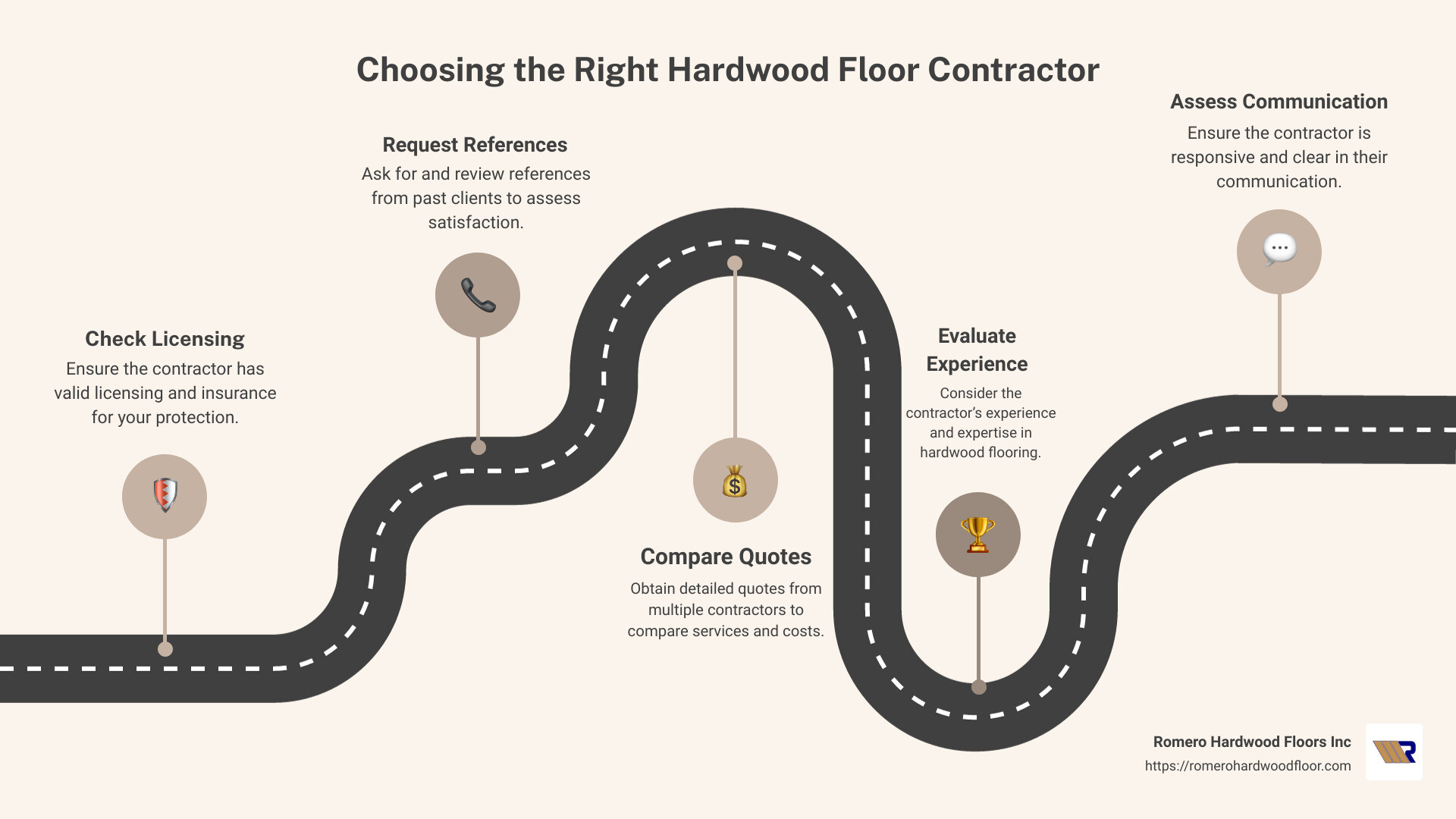
- Check for valid licensing and insurance to ensure compliance with local standards and protection during the project.
- Ask for references from past clients to gauge their satisfaction and the contractor’s reliability.
- Get multiple detailed quotes to compare costs and services included.
Choosing a contractor with expertise in hardwood flooring not only improves the aesthetics of your space but also boosts your property’s value, offering you a return on investment.
As Francisco Romero, the owner of Romero Hardwood Floors Inc. with over 15 years of experience, I understand the nuances of selecting and working with hardwood floor contractors. My team and I are dedicated to delivering unparalleled craftsmanship and customer satisfaction.
Understanding Hardwood Flooring
When it comes to hardwood flooring, the choices are plentiful and can significantly impact both the look and functionality of your space. Here’s a simple breakdown of what you need to know.
Types of Hardwood
Solid Hardwood vs. Engineered Hardwood
- Solid Hardwood is exactly what it sounds like: planks made from a single piece of wood. This traditional option is known for its durability and can be sanded and refinished multiple times. However, it may not be ideal for places with high humidity.
- Engineered Hardwood consists of multiple layers of wood bonded together. This structure provides better moisture resistance and stability, making it a suitable choice for areas like basements. It can be sanded and refinished, but only once or twice.
Pros and Cons
Pros:
- Durability: Hardwood floors are known for their long lifespan. With proper care, they can last for decades.
- Aesthetic Appeal: They offer a timeless look that can improve the beauty of any home, fitting various styles from classic to modern.
- Easy Maintenance: Unlike carpets, hardwood floors are easy to clean. A simple sweep or mop is often enough to keep them looking great.
Cons:
- Cost: Hardwood flooring can be more expensive upfront compared to other flooring options like vinyl or laminate.
- Susceptibility to Scratches and Dents: While durable, hardwood can still be prone to scratches, especially in high-traffic areas.
- Moisture Sensitivity: Solid hardwood can warp or swell in areas with high humidity unless properly sealed.
Cost Factors
Understanding the cost factors involved in hardwood flooring can help you budget effectively:
1. Material Costs:
- Different types of wood come with varying price tags. For instance, Oak, a popular choice, ranges from $5 to $11 per square foot due to its durability and classic appeal. Meanwhile, exotic woods like Brazilian Cherry can cost significantly more.
2. Labor Costs:
- Installation costs can vary based on the complexity of the job and your location. Hiring experienced hardwood floor contractors ensures a high-quality finish but may come at a premium.
3. Additional Expenses:
- Don’t forget to factor in costs for underlayment, finishes, and potential subfloor repairs. These can add up, especially if your existing floor needs to be removed.
Choosing the right type of hardwood and understanding its pros, cons, and costs can guide you in making an informed decision. Up next, we’ll explore how to find the best hardwood floor contractors to bring your vision to life.
How to Find the Best Hardwood Floor Contractors
Finding the right hardwood floor contractors is crucial to ensuring a successful installation or refinishing project. Here’s how you can identify the best professionals for the job:
Google Reviews
Start by checking Google reviews for feedback on local contractors. Look for businesses with high ratings and positive comments about their professionalism, timeliness, and quality of work. For instance, satisfied customers often highlight punctuality and dedication, just like Jason, who “showed up on time (actually early!) and worked tirelessly through the week.”
Yelp Reviews
Yelp is another valuable resource. It provides detailed reviews from previous clients, allowing you to gauge a contractor’s reputation. Pay attention to reviews that mention specific projects similar to yours, as they can offer insights into the contractor’s expertise in handling your type of flooring.
Social Media
Don’t overlook social media platforms like Facebook and Instagram. Many contractors showcase their work online, giving you a visual sense of their craftsmanship. Engage with their posts or read comments to see how they interact with clients and handle feedback.
Local Stores
Visit local flooring stores and ask for recommendations. Store owners often have connections with reputable contractors and can suggest professionals who use high-quality materials. This first-hand referral can be invaluable in finding trustworthy contractors.
Real Estate Brokers
Real estate brokers can also be a great source of information. They frequently work with contractors to prepare homes for sale and can recommend reliable professionals. Brokers might know which contractors have a track record of increasing home value through quality flooring work.
By leveraging these resources, you can confidently choose a contractor who will meet your needs and expectations. Up next, we’ll discuss the key questions to ask potential contractors to further ensure you’re making the right choice.
Key Questions to Ask Potential Contractors
When choosing hardwood floor contractors, asking the right questions can make all the difference. It ensures you select a professional who will deliver quality work and meet your expectations. Here are essential questions to consider:
Experience
Start by asking about their experience. How many years have they been in business? Do they specialize in hardwood flooring? Experience is crucial because it often translates to expertise and reliability. Contractors like Randy Stewart’s Hardwood Flooring, who have a proven track record, are often more adept at handling complex projects, such as refinishing Brazilian Cherrywood floors, which can be challenging.
References
Request references from previous clients. Speaking directly to past customers can provide insights into the contractor’s work quality and professionalism. Look for contractors who have glowing testimonials, like those from Kyle Heustess or J. S. Kahl, who praised their contractors for being professional, friendly, and efficient.
Materials Used
Inquire about the materials they use. Are they using high-quality hardwood? Do they offer a variety of options? The type of wood and finish can significantly affect the durability and aesthetics of your floor. Contractors who provide detailed information about their materials, like Romero Hardwood Floors Inc, demonstrate transparency and commitment to quality.
Project Timeline
Ask about the project timeline. How long will the installation take? Can they accommodate your schedule? Knowing the timeline helps you plan and ensures the project aligns with your expectations. For example, some contractors are praised for completing projects early, which can be a significant advantage.
Warranty
Finally, discuss the warranty. What kind of warranty do they offer on their work? A solid warranty is a sign of confidence in their craftsmanship and provides peace of mind. Ensure the warranty covers both materials and labor to protect your investment.
By asking these questions, you can better evaluate potential contractors and choose one that aligns with your needs and expectations. Next, we’ll dig into cost considerations to help you understand what to expect financially.
Cost Considerations
When planning for hardwood flooring, understanding the costs involved is crucial. Let’s break down the main components: material costs, labor costs, and the choice between DIY vs professional installation. We’ll also look at how costs vary by square footage.
Material Costs
The type of hardwood you choose can greatly affect the price. Hardwood options range from more affordable choices like pine ($3-$6 per square foot) to premium selections such as Brazilian walnut ($8-$14 per square foot). Each type of wood offers different aesthetics and durability, so it’s important to balance your budget with your desired look and longevity.
Labor Costs
Labor is another significant part of the total cost. Professional installation typically ranges from $3 to $6 per square foot. This includes tasks like removing old flooring, preparing the subfloor, and installing the new hardwood. Hiring professionals ensures that the job is done right, minimizing potential problems down the line.
DIY vs Professional Installation
You might consider installing the flooring yourself to save on labor costs. However, DIY installation requires time, skill, and tools. While it might seem cheaper upfront, mistakes can lead to higher expenses for repairs or corrections later. Professional installers, like those at Romero Hardwood Floors Inc, ensure the flooring is installed according to specifications, preserving warranties and extending the floor’s lifespan.
Cost by Square Footage
The overall cost also depends on the size of the area. For example, installing hardwood in a 1000 square foot area can range from $7,000 to $23,000, depending on the wood type and complexity of the job. It’s wise to get detailed quotes from contractors to understand what is included in the price and to compare bids effectively.
Taking these factors into account will help you budget effectively for your hardwood flooring project. Up next, we’ll explore how to evaluate contractor proposals to ensure you’re getting the best deal.
Evaluating Contractor Proposals
When it comes to choosing the right contractor for your hardwood flooring project, evaluating proposals is a critical step. Let’s explore what you need to consider: detailed quotes, scope of work, payment terms, and comparing bids.
Detailed Quotes
A comprehensive quote is more than just a number. It should break down costs into materials, labor, and any additional services. For instance, does the quote include subfloor preparation, furniture moving, and clean-up? Knowing these details helps you understand what you’re paying for and prevents unexpected charges.
Scope of Work
Understanding the scope of work is essential. This section of the proposal should outline what the contractor will do, from start to finish. It should specify the type of wood, installation method, and any special treatments or finishes. A clear scope ensures both you and the contractor have the same expectations.
Payment Terms
Payment terms can vary widely among contractors. Some may require a deposit upfront with the balance due upon completion, while others might have a payment schedule tied to project milestones. Ensure you understand these terms and that they align with your budget and cash flow.
Comparing Bids
Comparing bids is not just about finding the lowest price. It’s about getting the best value. Look at what each bid includes and how it aligns with your needs. Consider the contractor’s reputation, experience, and customer reviews. A slightly higher bid from a reputable contractor might save you money in the long run by preventing costly mistakes.

By carefully evaluating contractor proposals, you can choose a professional who will deliver quality work and a smooth installation process. Up next, we’ll tackle some frequently asked questions about hardwood floor contractors to help you make informed decisions.
Frequently Asked Questions about Hardwood Floor Contractors
How much does it cost to install 1,000 square feet of hardwood floors DIY?
Installing hardwood floors yourself can be a cost-effective choice, but it comes with its own challenges. On average, the cost to install 1,000 square feet of hardwood flooring yourself can range from $3,000 to $8,000. This includes materials like the wood itself, underlayment, and necessary tools.
DIY Tools: To successfully install hardwood floors, you’ll need a few essential tools, such as a flooring nailer, saws, a pry bar, and measuring tools. Renting these tools can add to your costs, so factor this into your budget.
Time Investment: Be prepared to invest a significant amount of time. Installing 1,000 square feet can take several weekends, depending on your skill level and the complexity of the room layouts.
Is it cheaper to install hardwood floors yourself?
Cost Savings: DIY installation can save you money on labor costs, which can be substantial. However, it’s important to weigh these savings against the potential for mistakes, which can be costly to fix.
Pros and Cons: While DIY can save money, it requires a good deal of skill and patience. Mistakes in installation, like improper alignment or uneven flooring, can lead to long-term issues.
Skill Level Required: Installing hardwood floors is a complex task that requires precision. If you’re not confident in your carpentry skills, hiring a professional might be a better choice.
Do carpenters do hardwood floors?
Carpenter Roles: While carpenters might have the skills to install hardwood floors, they often focus on broader woodworking projects. Specialized hardwood floor contractors are usually the better choice for flooring projects.
Specialized Contractors: These professionals have specific expertise in flooring. They understand the nuances of different wood types and installation techniques, ensuring a high-quality finish.
Benefits of Specialists: Hiring a specialist can lead to a smoother installation process, fewer mistakes, and a better overall result. They bring experience and knowledge that can improve the longevity and beauty of your floors.
By understanding these aspects, you can make informed decisions about whether to tackle the project yourself or hire a professional. Up next, we’ll conclude with some final tips from Romero Hardwood Floors Inc on enhancing your property value through quality flooring.
Conclusion
Choosing the right hardwood floor contractors can make a significant difference in both the look and value of your home. At Romero Hardwood Floors Inc, we believe that quality flooring is not just a surface to walk on—it’s an investment in your property’s future.
Enhancing Property Value: Hardwood floors are known for their timeless appeal and durability. When you choose to install or refinish hardwood floors, you are making a decision that can improve your home’s market value and aesthetic appeal. According to research, the return on investment for hardwood floors is high, making them a wise choice for homeowners looking to increase their property’s worth.
Final Tips:
- Choose Quality Materials: Opt for high-quality wood and finishes. This ensures your floors will last longer and look better over time.
- Hire Experts: While DIY may seem tempting, professional installation by experts like Romero Hardwood Floors Inc can prevent costly mistakes and ensure a flawless finish.
- Regular Maintenance: To preserve the beauty and longevity of your floors, engage in regular maintenance. This includes cleaning, refinishing, and addressing any damage promptly.
By partnering with Romero Hardwood Floors Inc, you are choosing a team that values quality, reliability, and customer satisfaction. Our expertise in hardwood flooring ensures that your project is completed on time, within budget, and to the highest standards.
For more information on how we can help transform your space, visit our hardwood flooring contractors page. Let us assist you in enhancing your home’s value with beautiful, expertly installed hardwood floors.
