
Hardwood Floor Installation Warranty: Top 3 Important Facts
Hardwood floor installation warranty is a crucial aspect to consider when investing in new flooring. A comprehensive warranty not only protects your financial investment but also provides peace of mind, ensuring that your floors remain beautiful and functional for years to come. Here’s what you should know:
- What it Covers: Warranties typically cover structural defects and wear and tear to the floor’s finish.
- Duration: Coverage can range from 10 to 30 years, or even offer a lifetime warranty.
- Exclusions: Daily wear like scratches, or damage from improper installation or maintenance, are usually not covered.
We’ll explore the different types of warranties available for hardwood floors, the typical duration, and what is and isn’t covered.
My name is Francisco Romero, owner of Romero Hardwood Floors Inc. With over 15 years of experience in hardwood floor installation and warranty understanding, I am committed to providing you with high-quality and reliable flooring services in Revere, MA.
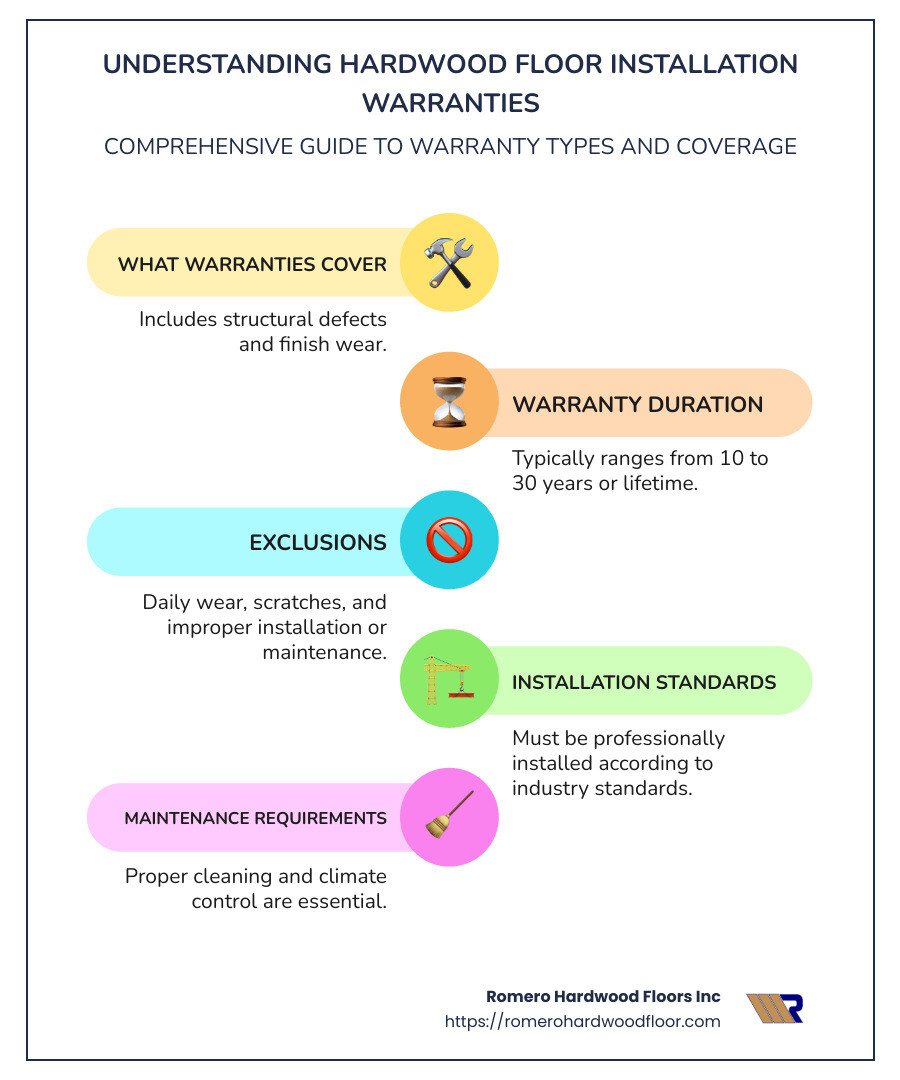
Hardwood floor installation warranty terms explained:
– affordable hardwood floor installation
– custom hardwood floor designs
Is There a Warranty on Hardwood Floors?
Yes, hardwood floors typically come with a warranty, but the specifics can vary greatly depending on the manufacturer and the type of flooring you choose. Understanding these warranties is essential to ensure you get the most out of your investment.
Types of Warranties
There are generally two main types of warranties for hardwood floors: structural warranties and finish warranties.
- Structural Warranties: These cover defects related to the structure of the hardwood floor. This means any issues with how the floorboards are made or assembled. For instance, if the wood layers in engineered hardwood separate, that would fall under a structural warranty.
- Finish Warranties: These apply to the finish and condition of the floor’s surface. If the finish starts peeling or wearing away sooner than expected under normal use, this warranty could cover repairs or replacements. However, it won’t cover normal wear and tear like scratches or dents from everyday use.
Manufacturer Specifics
The details and length of these warranties can vary by manufacturer. For example, some companies offer limited lifetime structural warranties, ensuring that the flooring remains free from material defects if installed and maintained correctly. Finish warranties might range from a few years to a lifetime, depending on the product and the manufacturer’s guidelines.
It’s crucial to read the fine print. Some warranties are only valid if the installation and maintenance follow specific procedures outlined by the manufacturer. Additionally, many warranties are not transferable, meaning they only apply to the original purchaser.
When considering a hardwood floor, ask about the warranty specifics. Knowing what is covered, for how long, and under what conditions can save you from future headaches. A good warranty is a sign of a quality product and a reliable manufacturer.
How Long is Flooring Under Warranty?
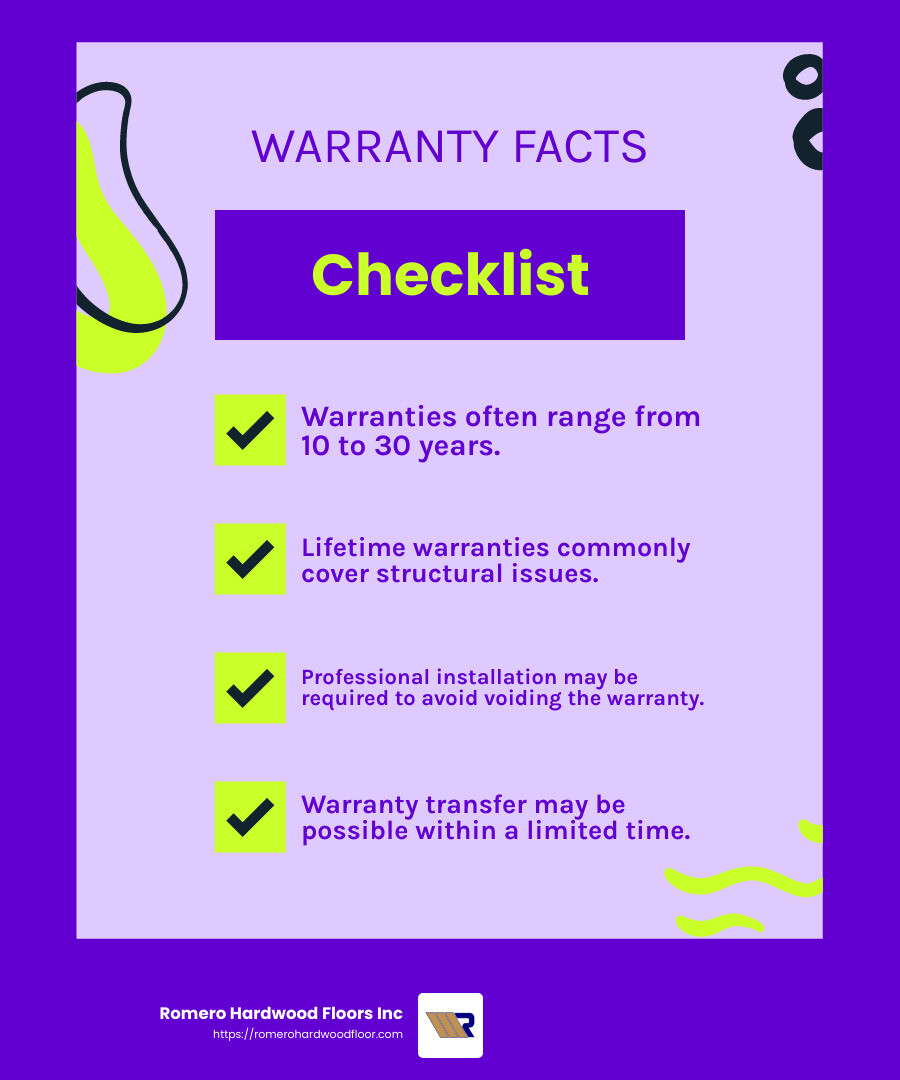
When it comes to hardwood floor installation warranties, the duration can vary significantly. Most warranties range from 10 to 30 years, but some may even extend to a lifetime. The length of the warranty often reflects the manufacturer’s confidence in their product’s durability and quality.
Warranty Duration
- 10 to 30 Years: This is the most common range for hardwood floor warranties. It provides a substantial period during which you can expect your floor to perform well under normal conditions.
- Lifetime Warranties: Some manufacturers offer lifetime warranties, particularly for structural issues. These warranties assure you that the floor will remain defect-free for as long as you own your home.
Conditions and Transferability
Understanding the conditions attached to your warranty is crucial. Warranties often come with specific requirements:
- Installation Conditions: The warranty might require professional installation to remain valid. DIY installations can sometimes void the warranty.
- Maintenance Conditions: Proper maintenance, as specified by the manufacturer, is often necessary to keep the warranty intact. This might include climate control and specific cleaning methods.
Another important aspect is whether the warranty is transferable. In many cases, warranties are only valid for the original purchaser. However, some companies allow the warranty to transfer to new owners, usually within a limited time frame. For example, All Pro Floors allows warranty transfer within the first two years after installation.
Reading the Fine Print
Always read the fine print of any warranty. Some warranties may have clauses that limit coverage, such as excluding damage from moisture or wear and tear. Knowing these details upfront can help you avoid actions that might void your warranty.
In summary, while the duration of a hardwood floor warranty can offer peace of mind, understand the conditions and limitations. By doing so, you ensure that your investment is protected for the long haul.
What Does a Hardwood Floor Installation Warranty Cover?
When you install hardwood floors, understanding what your warranty covers can save you from unexpected costs. A hardwood floor installation warranty typically includes two main types: structural warranties and finish warranties. Let’s break these down.
Structural Warranties
Structural warranties focus on the core integrity of your hardwood floor. They cover defects related to the structure of the floorboards. Think of issues like:
- Defects in material or workmanship. This might include problems with milling or assembly that affect the floor’s stability.
- Structural integrity failures, such as delamination, where the layers of engineered wood might separate.
However, there are exclusions. Structural warranties usually don’t cover:
- Installation issues caused by improper installation methods. This is why following professional and manufacturer standards is crucial.
- Damage from external factors like moisture, which can warp or weaken the boards.
Finish Warranties
Finish warranties are all about the surface layer of your hardwood floor. This warranty covers problems with the finish, such as:
- Finish wear: If the finish wears through or peels under normal residential use, it should be covered.
- Peeling or separation of the finish from the wood, indicating a failure in the protective layer.
But, similar to structural warranties, there are exclusions:
- Everyday wear and tear: Scratches, dents, and scuffs from regular use are generally not covered.
- Owner-caused damage: This includes damage from pets, high heels, or improper cleaning methods.
While these warranties provide a safety net for manufacturing defects and premature finish issues, they don’t cover every possible damage scenario. It’s vital to understand these specifics to take full advantage of your warranty and avoid voiding it.
What Can Void Your Hardwood Floor Installation Warranty?
Understanding what can void your hardwood floor installation warranty is essential to protect your investment. Let’s dive into the key factors that can nullify your warranty coverage.
Installation Procedures
1. Improper Installation
One of the most common reasons for voiding a warranty is improper installation. If the flooring isn’t installed according to industry standards and manufacturer guidelines, you might be left without coverage. This can include:
- Incorrect techniques: Not following recommended methods can lead to issues like gaps or buckling.
- Skipping acclimation: Failing to let the wood adjust to room temperature and humidity can cause warping.
2. DIY Installation
While DIY projects can be fun, installing hardwood floors yourself can be risky. Many warranties require professional installation to ensure that the job is done correctly. Hiring a professional not only helps maintain your warranty but also ensures a high-quality finish.
3. Purchasing from Unauthorized Dealers
Buying your flooring materials from unauthorized dealers can also void your warranty. Always purchase from reputable sources that are approved by the manufacturer.
Maintenance Requirements
1. Improper Maintenance
Proper maintenance is crucial for keeping your warranty intact. This includes:
- Regular cleaning: Using the correct cleaning products is vital. Harsh chemicals can damage the finish, voiding the warranty.
- Avoiding moisture: Moisture is a hardwood floor’s worst enemy. Clean up spills immediately and avoid excessive water during cleaning.
2. Climate Control
Maintaining the right climate conditions in your home is essential. Many warranties specify a range for temperature and humidity. For example, some manufacturers require keeping the temperature between 60° and 80° F and relative humidity between 30% and 50%. Failing to do so can lead to issues like expansion and contraction, which might not be covered.
3. Unauthorized Repairs
Attempting to repair the floor yourself or hiring an unauthorized repair service can void the warranty. Always consult with professionals who understand the specific requirements of your flooring.
By understanding these factors, you can ensure your hardwood floor installation warranty remains valid, providing peace of mind and protection for your beautiful floors.
Frequently Asked Questions about Hardwood Floor Installation Warranty
When it comes to hardwood floor installation warranties, there are common questions that homeowners often ask. Understanding these can help you make informed decisions and protect your investment.
Do hardwood floors come with a warranty?
Yes, most hardwood floors do come with a warranty. However, the type and specifics of the warranty can vary by manufacturer. Typically, there are two main types of warranties:
- Structural Warranty: This covers the integrity of the floorboards. It ensures that the boards won’t warp, split, or delaminate under normal conditions. Manufacturers like Shaw offer a “limited lifetime structural warranty” for their engineered hardwood floors, ensuring they are free from defects in material and workmanship.
- Finish Warranty: This protects against the finish wearing through or peeling off. The duration of this warranty can vary widely, from a few years to a lifetime, depending on the product and manufacturer.
It’s crucial to check the specific terms of the warranty provided by the manufacturer of your flooring.
How long is flooring warranty?
The duration of a hardwood floor installation warranty can range from 10 to 30 years, and in some cases, even offer a lifetime warranty. The length often depends on the type of warranty and the manufacturer.
- Structural warranties are typically longer, sometimes covering the lifetime of the floor.
- Finish warranties might last anywhere from 3 to 25 years, depending on the manufacturer and the quality of the finish.
It’s important to read the fine print, as warranties often have conditions. For example, some warranties are only valid for the original purchaser and may not be transferable. Companies like All Pro Floors allow transfer of their warranty to a new owner within the first two years.
Are hardwood floor scratches wear and tear?
Scratches are considered normal wear and tear and are generally not covered by any manufacturer’s warranty. Hardwood floors, being natural products, are susceptible to scratches from everyday use. Manufacturers typically exclude scratches from warranty coverage because they result from normal use rather than a defect in the product.
To minimize scratches, it’s advised to:
- Remove shoes indoors, especially those with hard soles or heels.
- Use floor protectors on furniture legs.
- Keep pets’ nails trimmed.
It’s also helpful to choose a finish that is more resistant to scratching, such as those with aluminum oxide.
Understanding these aspects of your hardwood floor installation warranty can help ensure you maintain coverage and get the most out of your investment.
Conclusion
Understanding your hardwood floor installation warranty is crucial for protecting your investment and ensuring peace of mind. These warranties can provide significant coverage for structural integrity and finish, safeguarding against unexpected issues.
At Romero Hardwood Floors Inc, we pride ourselves on offering expert flooring solutions in Revere, MA. With our extensive knowledge and commitment to quality, we ensure that your hardwood floors are installed with precision and care. Our team understands the nuances of different warranties and can guide you through the process, ensuring you know exactly what is covered and how to maintain your floors to keep the warranty valid.
Investing in hardwood flooring is a significant decision, and having a comprehensive warranty can make all the difference. It not only protects your floors but also improves the long-term value of your property. Our expert team at Romero Hardwood Floors Inc is here to help you steer these complexities with ease, providing you with beautiful, durable floors that stand the test of time.
Explore our hardwood flooring services to learn more about how we can help you achieve the perfect flooring solution for your home. Let us help you transform your space with our expert craftsmanship and attention to detail.
