
Hardwood floor scratch remover: Flawless Floors 2025
Why Your Hardwood Floors Deserve the Right Scratch Remover
Hardwood floor scratch remover solutions range from simple home remedies to professional refinishing, depending on the depth of the damage.
Quick Answer: Best Scratch Removers by Damage Type
| Scratch Type | Best Solution | Time Required |
|---|---|---|
| Surface Scuffs | Vinegar & olive oil mixture, or buffing with soft cloth | 5-10 minutes |
| Light Scratches | Stain-matching markers, wax crayons, or walnut rub | 10-15 minutes |
| Deep Scratches | Wood filler or putty, followed by spot refinishing | 1-2 hours |
| Severe Gouges | Professional sanding and refinishing | 1-3 days |
Hardwood floors add timeless beauty to your home, but scratches from pet claws, furniture, and daily wear can make them look neglected. The good news is that most scratches are fixable. The key is matching the right repair method to the type of damage.
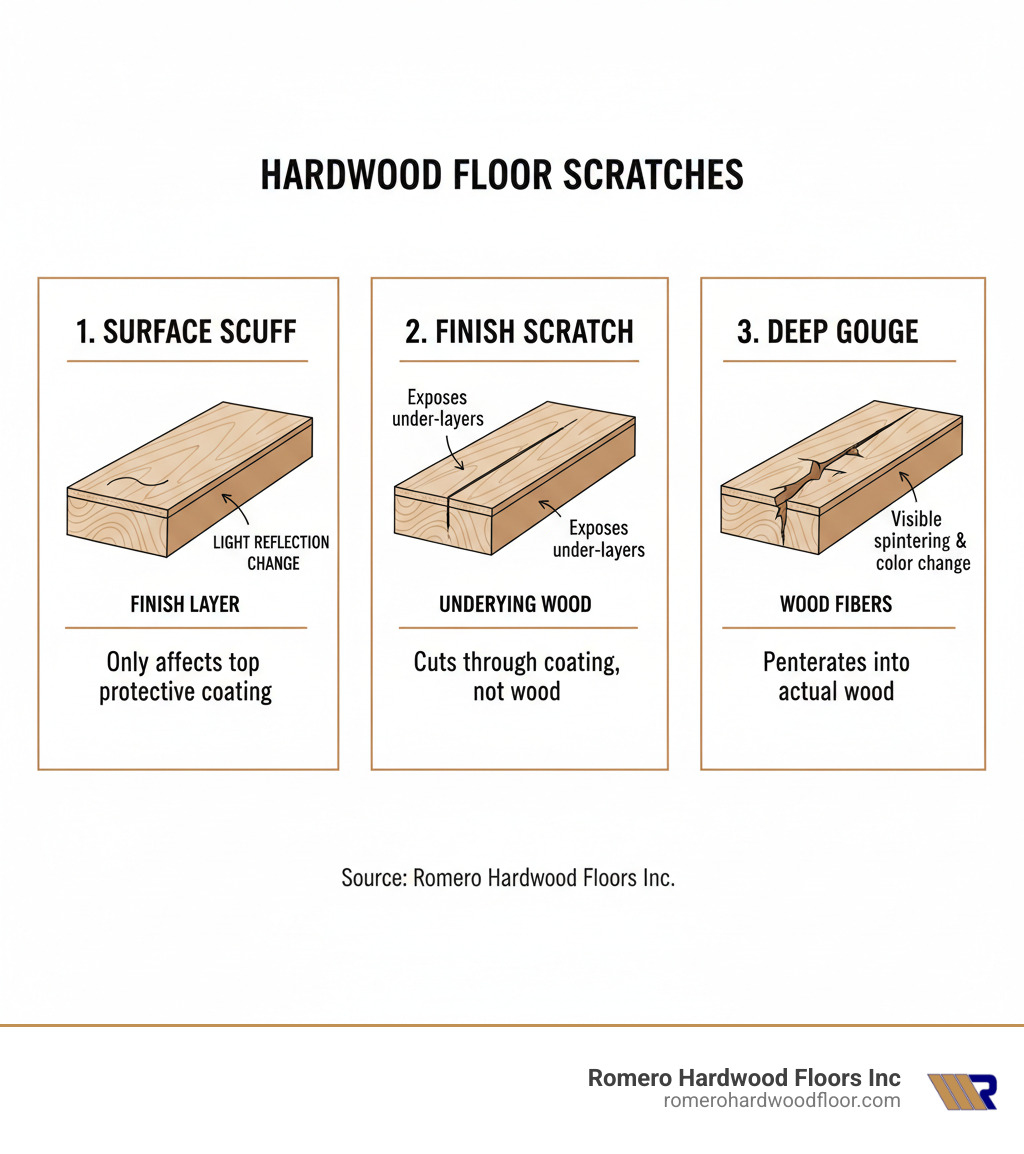
- Surface scuffs only affect the top finish layer.
- Finish scratches cut through the protective coating but don’t reach the wood.
- Deep gouges expose raw wood and require more intensive repair.
Understanding the scratch type saves you time and money and helps you avoid making the damage worse. I’m Francisco Romero, owner of Romero Hardwood Floors Inc., and for over 15 years, I’ve helped homeowners in Revere, MA, restore their floors. I’ve guided countless clients in choosing the right hardwood floor scratch remover, from quick DIY fixes to professional refinishing.
First, Identify the Scratch: From Surface Scuffs to Deep Gouges
Before you grab any hardwood floor scratch remover, you need to diagnose the problem. Using the wrong fix can waste time or make things worse.
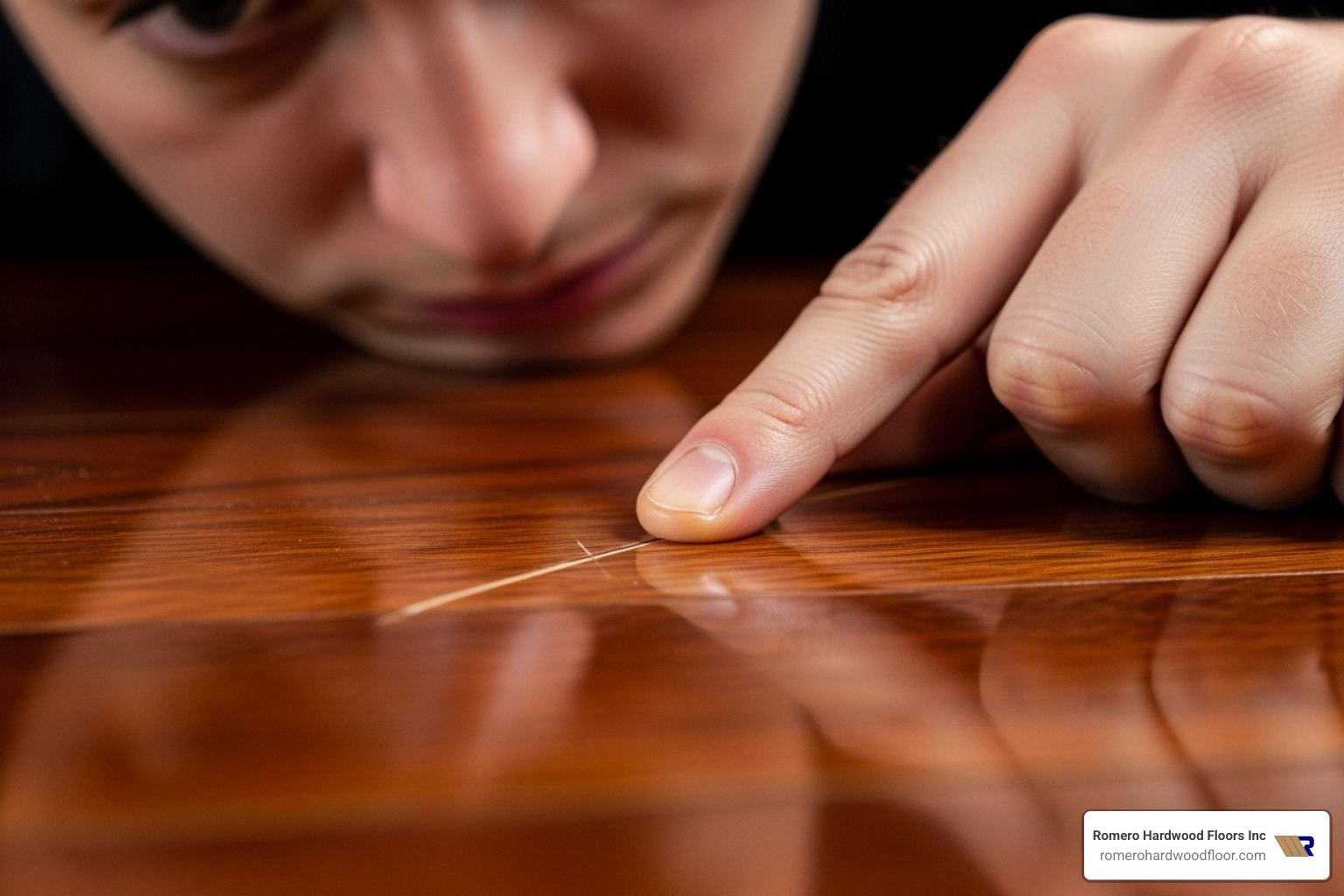
Common culprits include pet claws, furniture legs, high heels, and dirt or grit that acts like sandpaper. Even dropped toys or sliding furniture can leave marks.
The type of finish on your floor also matters. Polyurethane finishes form a protective top layer, so scratches often affect this coating first. Wax and oil-penetrating finishes soak into the wood, and scratches may require different repair techniques like buffing or re-oiling.
Surface Scuffs
Surface scuffs are minor scrapes that only touch the top layer of the finish. They often look like hazy, white, or cloudy marks that catch the light, but you won’t feel a groove when you run your fingernail across them. On polyurethane, they appear as light streaks; on wax, as dull spots; and on oil finishes, as slight discolorations. The good news is these often respond to simple cleaning and buffing rather than a heavy-duty hardwood floor scratch remover.
Deep Scratches and Gouges
These are more serious. Deep scratches and gouges have broken through the finish and damaged the wood fibers. You can clearly feel a groove or indentation. The exposed raw wood often looks lighter than the surrounding finished surface, though trapped dirt can make it appear darker. You might also see splintering along the edges.
A significant color change is the biggest clue that you’re dealing with damage to the wood itself. When a simple remover isn’t enough, you’ll need to fill the void, protect the exposed wood, and blend the repair with the existing finish. This typically involves wood fillers, sanding, and spot refinishing.
Top DIY Methods for Minor Hardwood Floor Scratch Repair
For annoying surface-level scratches, you may already have what you need for a quick, cost-effective fix. These DIY solutions are like first aid for your floors, perfect for everyday scuffs that don’t require professional help.
The Natural Polish Method (Vinegar & Olive Oil)
This traditional trick works well on older, waxed, or oil-finished floors for surface scuffs. It’s not a true hardwood floor scratch remover but rather a way to make scuffs less visible.
Mix 1/4 cup white vinegar and 3/4 cup olive oil. The oil conditions the wood, while the vinegar acts as a gentle cleaner. Dip a soft cloth in the mixture, rub it into the scuff along the wood grain, and let it sit for 5-10 minutes. Then, buff with a clean, dry cloth.
Important: This is a temporary fix for finish-level damage only. Use it sparingly, as overuse can cause issues for future refinishing.
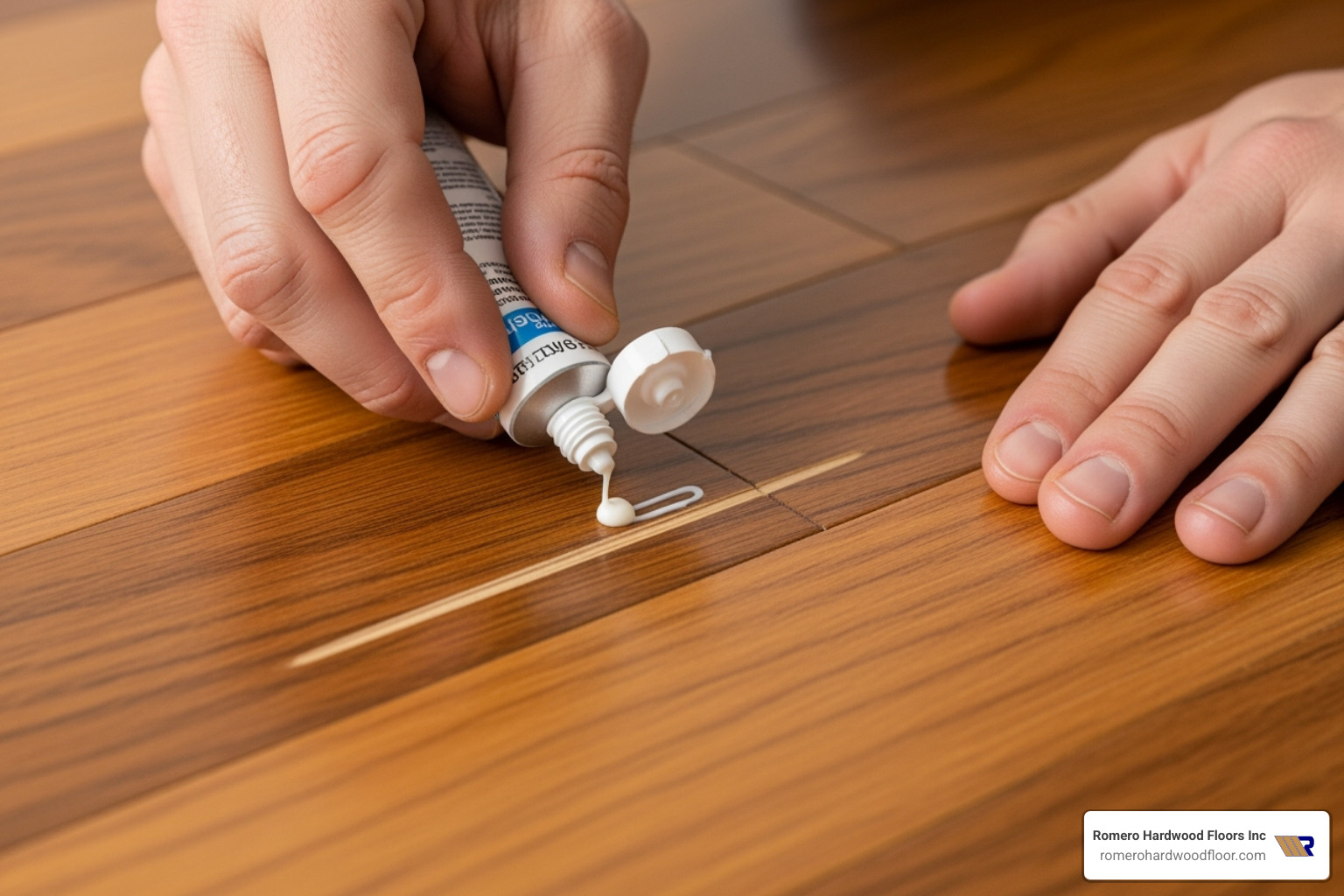
Concealing with Stain-Matching Markers and Crayons
Think of these as makeup for your floor. For light scratches that have broken the finish but aren’t deep, stain-matching markers or wax crayons are lifesavers.
Color matching is key. Always test in a hidden spot first (e.g., inside a closet). Clean the area, then apply the marker or crayon lightly along the scratch, following the grain. Build the color gradually and use a soft cloth to blend the edges. For wax crayons, gently warming the tip with a hairdryer can help with a smoother application.
- Pros: Quick, easy, affordable, and effective for hiding light scratches.
- Cons: Not a permanent repair; may need reapplication in high-traffic areas.
The Walnut Trick for Tiny Scratches
Yes, rubbing a nut on your floor works! This natural hardwood floor scratch remover is an old-school trick for a reason.
Walnuts (as well as pecans or Brazil nuts) contain natural oils and pigments that seep into the wood, conditioning and darkening the exposed area to help it blend in. Simply break a shelled walnut in half and rub the meat directly into the scratch, moving with the grain. Let the oils sit for 5-10 minutes, then buff away any residue with a soft cloth.
This method is best for light-colored woods and surface-level scratches, not deep gouges. For minor marks, it’s remarkably effective and costs next to nothing.
Advanced Solutions: Your Go-To Hardwood Floor Scratch Remover for Deeper Damage
When a scratch has cut through the finish and exposed the raw wood, you’re moving into real repair work. This involves filling the void, protecting the wood, and blending the repair so it becomes invisible. It’s like floor surgery, but it’s manageable with the right approach.
Choosing the Right Hardwood Floor Scratch Remover: Wood Filler vs. Wood Putty
Many DIYers confuse wood filler and wood putty, but they serve very different purposes. Using the wrong one will lead to a failed repair.
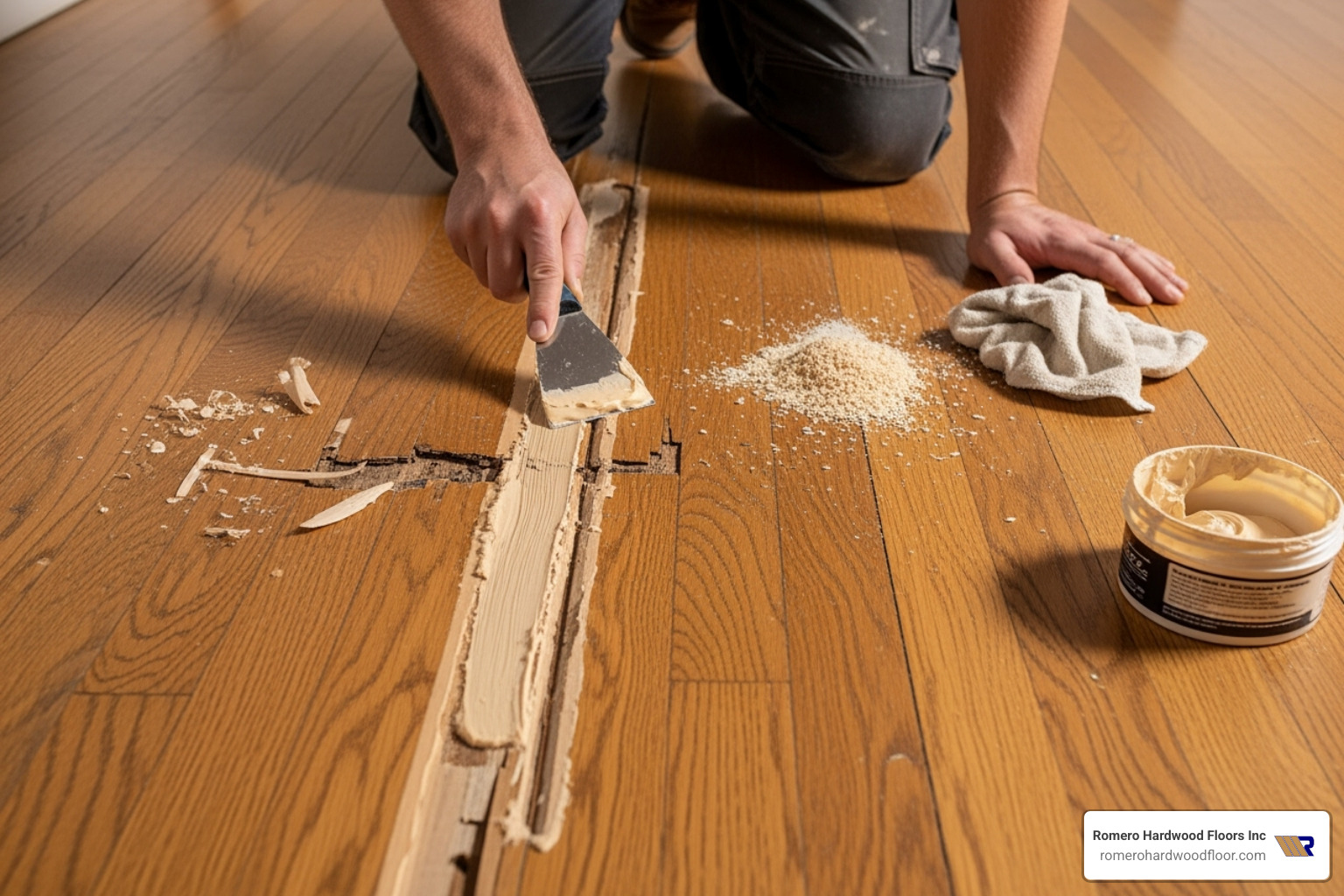
- Wood filler is a structural repair product made from wood fibers and a binder. It’s applied before finishing, hardens rigidly, and can be sanded and stained. It’s the correct choice for filling deep gouges.
- Wood putty is a non-hardening, flexible product used for cosmetic touch-ups after finishing, like hiding nail holes. It cannot be sanded effectively and doesn’t accept stain well.
| Feature | Wood Filler | Wood Putty |
|---|---|---|
| Composition | Wood dust/fibers + binder | Oil-based or plastic compounds |
| Hardening | Hardens rigidly | Stays flexible |
| Sanding | Sandable | Not sandable |
| Staining/Painting | Accepts stain and paint | Does not accept stain well |
| Use Case | Repairing gouges before finishing | Filling nail holes after finishing |
| Durability | Very durable, strong bond | Less structural, can shrink |
| Application | Applied to raw wood | Applied to finished wood |
For deep scratches, wood filler is your friend.
How to Spot-Sand and Refinish Deep Scratches
For one or two deep scratches, spot refinishing is a great option that avoids the cost of refinishing the entire room.
- Clean and Fill: Clean the area thoroughly. Use a putty knife to press wood filler into the gouge, slightly overfilling it to account for shrinkage. Let it dry completely.
- Sand Flush: Once dry, sand the filler flush with the floor using fine-grit sandpaper (180-220 grit). Be careful not to sand the surrounding undamaged finish.
- Tape and Feather: Use painter’s tape to create a boundary around the repair. Gently sand the edges of the taped-off area with very fine-grit sandpaper (220-320 grit) to create a gradual transition, or “feather,” from the old finish to the new.
- Clean Again: Remove all dust with a tack cloth or a barely-damp microfiber cloth.
- Apply Finish: Apply a thin, even coat of a finish that matches your floor’s sheen (e.g., satin, gloss). Use a small foam brush and feather the edges. Multiple thin coats are better than one thick coat. You may need to lightly scuff between coats (400-grit sandpaper) for better adhesion.
Safety First: Always work in a well-ventilated area and wear protection like gloves and a respirator, especially with oil-based products. You can check a product’s Safety Data Sheet (SDS) for specific safety information.
Using a Dedicated Hardwood Floor Scratch Remover Product
Specialized hardwood floor scratch remover products, from cover-ups to full kits, can be very convenient.
These products often come as pre-colored fillers (wax- or resin-based) that simplify color matching. They are available in clear or colored formulas and various sheens (gloss, matte) to match your floor. Always follow the manufacturer’s instructions for curing time and be aware that durability varies widely.
A critical warning: Some products, especially those with silicones or heavy oils, can leave a residue that causes adhesion risks for future refinishing. This can prevent new finish from bonding correctly, creating a costly problem down the road. If you plan to refinish your floors eventually, choose products carefully or stick to the traditional filler-and-refinish method. At Romero Hardwood Floors Inc., we’ve seen this issue and always caution homeowners about it.
Prevention, Costs, and When to Call a Professional
The best hardwood floor scratch remover is the one you never have to use. Prevention saves you time and money, but when damage occurs, it’s important to know the costs and when to call for backup.
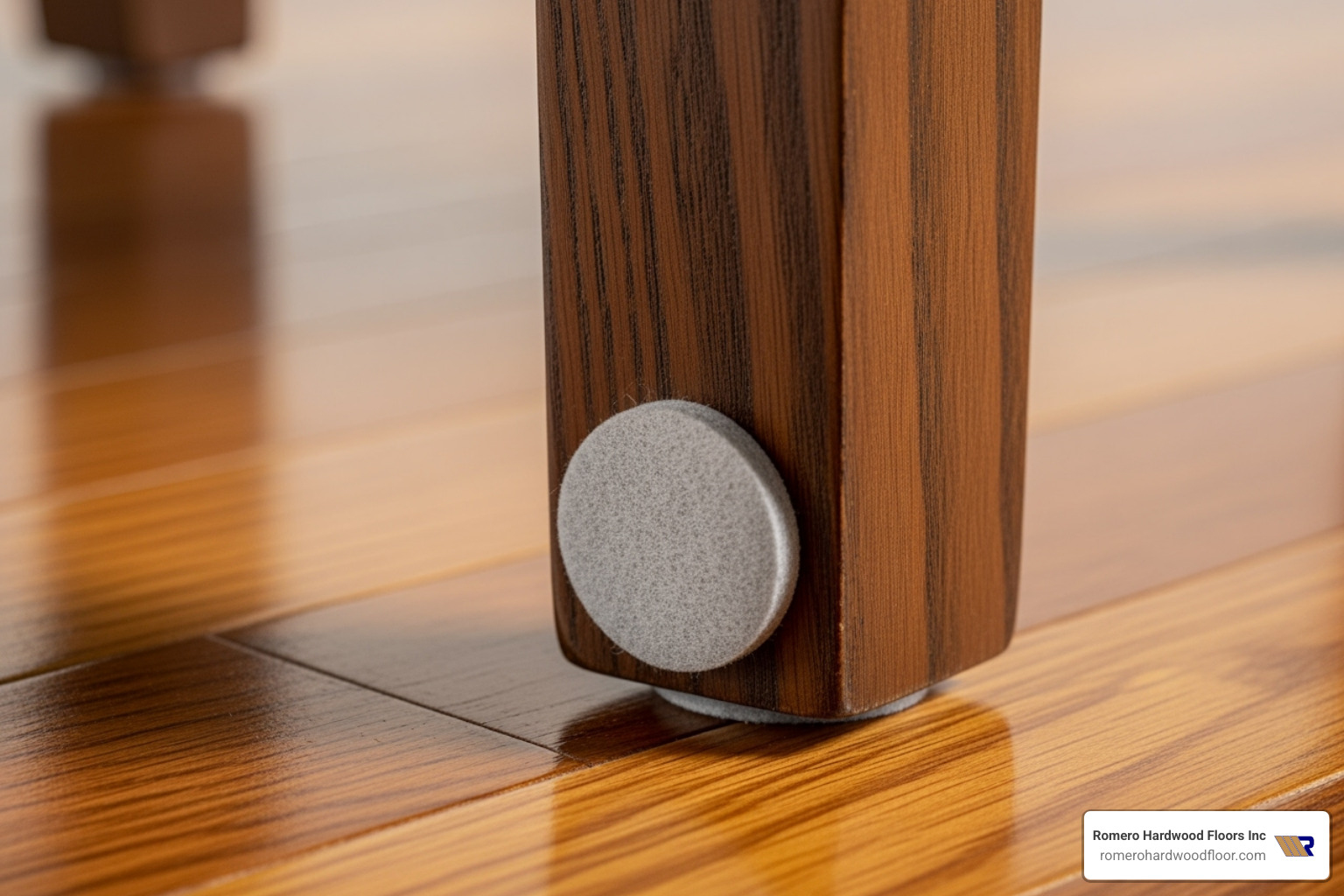
How to Prevent Future Scratches
A few simple habits can keep your hardwood looking new:
- Use Furniture Pads: Place felt pads on the legs of all furniture. Check and replace them periodically.
- Use Rugs: Place area rugs and runners in high-traffic areas like entryways and hallways.
- Clean Regularly: Sweep with a soft-bristle broom or vacuum (no beater bar) daily to remove abrasive dirt and grit.
- Adopt a No-Shoes Policy: This dramatically reduces grit and damage from heels.
- Trim Pet Nails: Regular nail trimming for pets makes a huge difference.
- Use Door Mats: Place durable mats at all exterior doors to trap dirt and moisture.
DIY vs. Professional Repair: A Cost Breakdown
Should you fix it yourself or call a pro? The answer depends on the damage and your budget.
DIY repairs are very budget-friendly. A walnut is free, while wax sticks, markers, or small hardwood floor scratch remover kits typically cost under $50. For a few isolated scratches, this makes perfect economic sense.
Professional refinishing is a larger investment but is sometimes the only real solution. Please note that the following are average cost estimates based on internet data and not actual costs for Romero Hardwood Floors. For a precise quote in the Greater Boston area, please contact us directly.
Generally, professional refinishing costs range from $1 to over $5 per square foot. For complex jobs with extensive repairs or board replacement, prices can climb to $15 or even $20+ per square foot. While it’s a significant investment, professional refinishing can make your floors look brand new and add real value to your property.
Knowing When to Call in the Experts
Sometimes, a DIY approach isn’t enough. It’s time to call a professional like Romero Hardwood Floors Inc. if you see:
- Widespread damage: Scratches covering large areas or multiple rooms.
- Deep gouges: Dozens of deep gouges spread throughout a room.
- Water damage: Any warping, cupping, or discoloration from moisture.
- Structural issues: Warped, cupped, or buckled planks.
When you want guaranteed workmanship and lasting results, a professional is your best bet. Since 2006, we’ve provided expert flooring solutions in Revere, MA, and the surrounding areas. If you lack the time, tools, or confidence for a repair, there’s no shame in calling for help. That’s what we’re here for.
Frequently Asked Questions about Hardwood Floor Repair
Here are answers to the most common questions homeowners ask about repairing scratched floors.
How do I perfectly match the color of my floor for a repair?
Color matching is often the hardest part of using a hardwood floor scratch remover. Even a slight mismatch can be obvious.
- Use a Kit: Color matching kits provide multiple shades you can blend to create a custom tone.
- Test First: Always test your color mix in an inconspicuous area (like a closet) and let it dry completely before applying it to the scratch. What looks right when wet can dry a different shade.
- Start Light: When mixing stains or fillers, it’s easy to add darker tones but almost impossible to lighten a mix that’s too dark.
- Use a Spare Plank: If you have leftover flooring, use it as a risk-free practice canvas.
Will DIY scratch removers damage my floor’s finish?
It depends. Finish compatibility is critical. A product that works on a wax finish might damage a polyurethane one. Always test first in a hidden spot and wait 24-48 hours to check for discoloration or dulling.
Be wary of oily products. The vinegar and olive oil mixture, if overused, can leave a residue that attracts dirt and may cause adhesion issues for future coats of finish. Some commercial scratch-cover products containing silicones or heavy waxes create an invisible barrier that prevents new finish from sticking, leading to peeling or other defects during a future refinish. When in doubt, stick to simpler, traditional repair methods that won’t compromise your floor’s future.
Can you use a cleaning eraser on hardwood floor scratches?
I’m asked this constantly, but the answer is almost always no. A cleaning eraser is essentially very fine sandpaper. Its abrasive action doesn’t remove the scratch; it removes the protective finish around it.
Using one creates a dull, hazy patch that is often more noticeable than the original scratch, especially on high-gloss finishes. A cleaning eraser is not a true scratch remover because it doesn’t fill or restore anything. It simply abrades the surface. While it might work for a rubber scuff mark on top of the finish, you risk damaging the finish itself. For actual scratches, stick to the proven methods outlined in this guide.
Conclusion
Now you have a complete guide to tackling frustrating scratches on your hardwood floors. The most important takeaway is that hardwood floor scratch remover solutions are not one-size-fits-all. Always identify the scratch type first—surface scuff, finish scratch, or deep gouge—and then choose the right repair method.
Prevention is your best friend. Simple habits like using felt furniture pads, regular sweeping, and a no-shoes policy are the smartest ways to maintain your floors.
Your hardwood floors are a significant investment that adds real value to your home. While many minor scratches can be fixed with simple DIY methods, widespread damage or deep gouges are best left to professionals. When you want the confidence of expert craftsmanship, it’s time to call for help.
At Romero Hardwood Floors Inc., we’ve been helping homeowners in Revere, MA, and the Greater Boston area restore their floors since 2006. Whether you need advice on a small repair or are considering a complete floor change, we’re here to help you keep your floors looking their best.
For more information about our comprehensive hardwood floor repair services, please visit: More info about hardwood floor repair services.
Like us on Facebook!
