
Hardwood Floor Shrinkage Repair: 2025 Guide
Understanding the Natural Process of Wood Floor Movement
Hardwood floor shrinkage repair becomes necessary when unsightly gaps appear between the planks of your wood floors. These gaps typically form when wood loses moisture and contracts, a common occurrence during dry winter months when heating systems reduce your home’s humidity.
Quick Solutions for Common Gap Sizes:
- Hairline gaps (1/16″ or smaller): Use color-matched wood putty or filler
- Small gaps (1/8″): Apply wood putty with a putty knife, smooth, and let cure
- Large gaps (1/4″ or wider): Fill with stained natural fiber rope or custom wood strips
- Gaps wider than a nickel: Call a professional for assessment
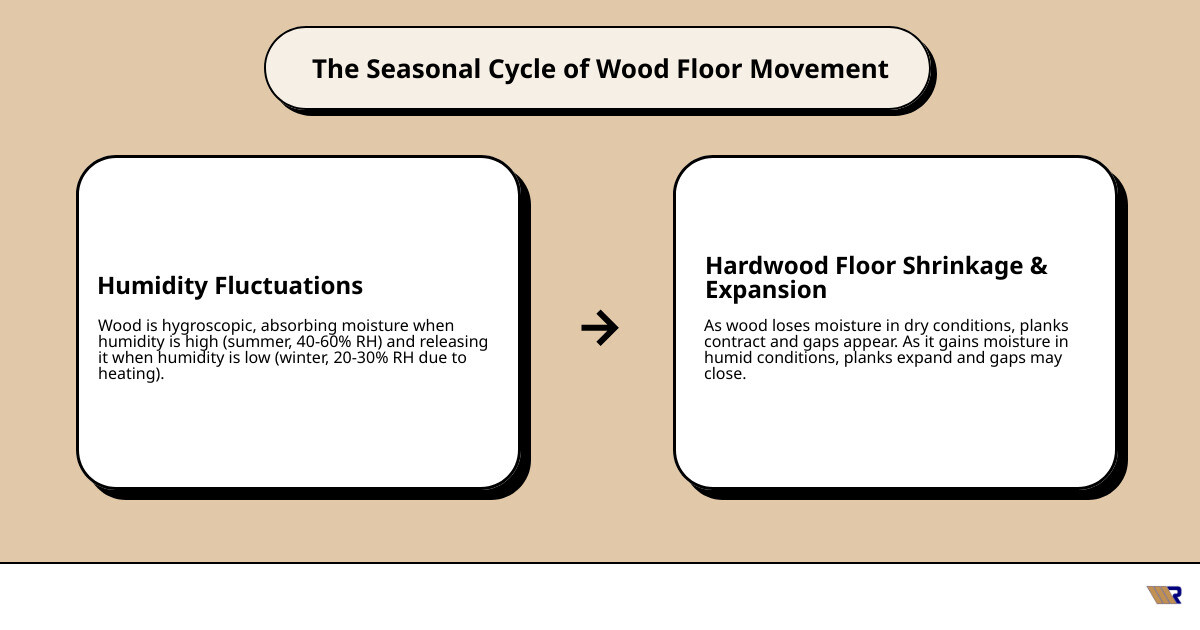
Wood is a hygroscopic material, meaning it naturally absorbs and releases moisture from the air. As your heating unit pulls moisture from the air, your hardwood flooring also dries out, causing planks to shrink and create gaps. Most shrinkage is minimal but can cause visible gapping.
Larger, wider floorboards will gap more than narrow boards because there are fewer joints to distribute the movement.
I’m Francisco Romero, owner of Romero Hardwood Floors Inc. With over 15 years of experience, I’ve helped many homeowners in Revere, MA, understand that hardwood floor shrinkage repair is manageable. This guide will walk you through DIY solutions and explain when professional help is necessary.
Know your hardwood floor shrinkage repair terms:
Why Do Hardwood Floors Shrink and Gap?
Wondering why gaps appear in your hardwood floors? The answer lies in understanding that wood is a natural material that constantly reacts to its environment. The primary causes for hardwood floor shrinkage repair needs are humidity changes, temperature swings, and preventable installation issues.
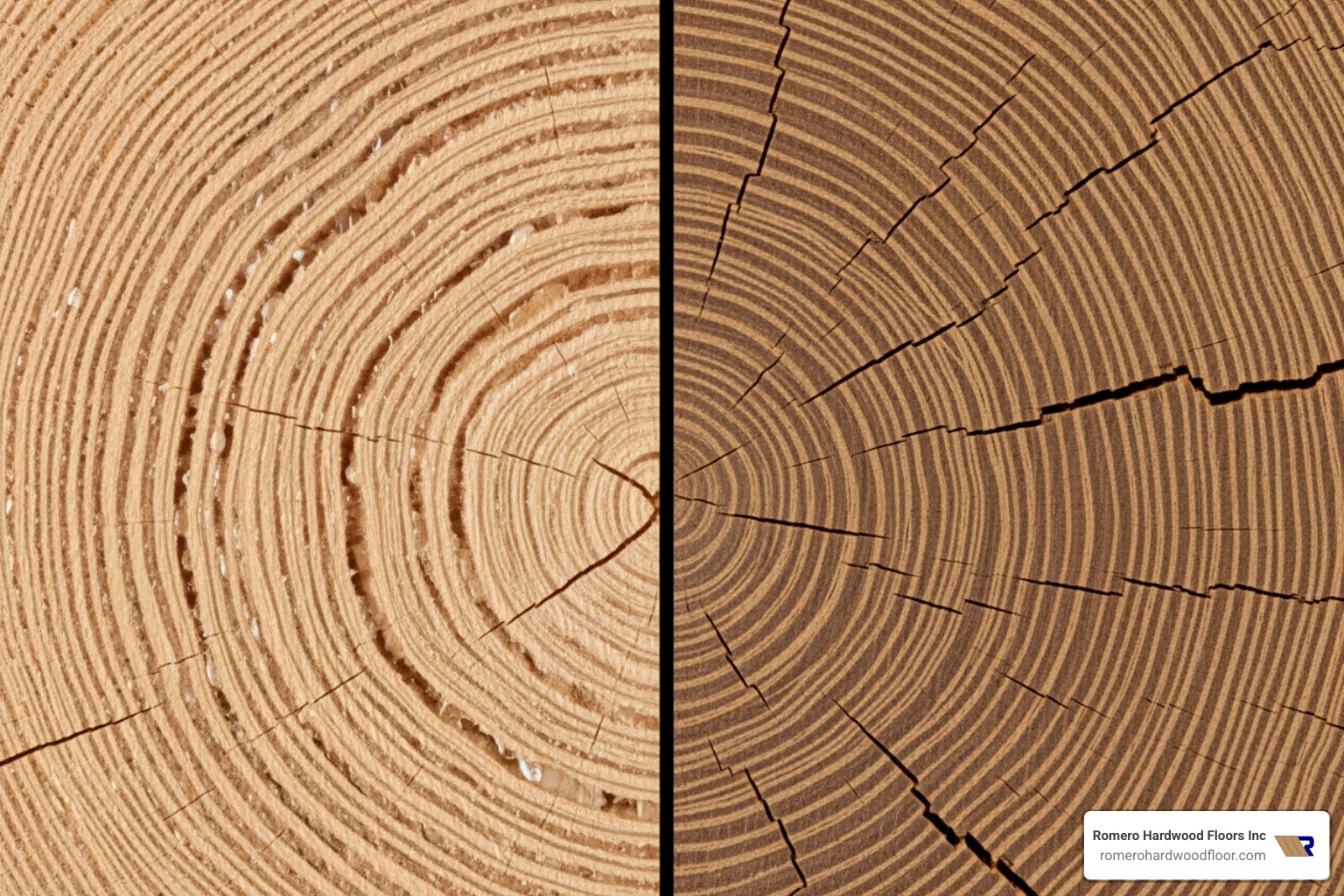
Humidity changes are the biggest culprit. Wood acts like a sponge; when humidity is high, it absorbs moisture and swells, and when it’s dry, it releases moisture and shrinks. This is why gaps often appear in winter and close up in summer.
Temperature fluctuations also play a role. Cooler temperatures cause flooring to contract slightly, while warmer temperatures make it expand.
Winter heating is a major factor. Your furnace removes moisture from the air, causing wood to dry out and shrink, which creates gaps between planks.
Improper acclimation before installation is a common cause of problems. Acclimation is the process of letting new flooring adjust to your home’s environment. Skipping this step can lead to dramatic expansion or contraction after installation.
Installation errors, such as insufficient expansion space around the room’s perimeter or inadequate nailing, can also contribute to excessive gapping.
Wide plank hardwood floors present a unique challenge. Larger, wider floorboards will gap more than narrow boards because there are fewer joints to distribute the natural movement. When a wide board shrinks, the resulting gap is more noticeable.
Wood species stability varies. Some species are naturally more stable and react less to moisture changes, while others are more sensitive.
Engineered wood floor acclimation is still necessary. While more stable than solid hardwood, engineered floors are not immune to extreme humidity changes or installation mistakes.
Normal Gapping vs. Problematic Gaps
Knowing the difference between normal and problematic gaps is key to determining if hardwood floor shrinkage repair is needed.
Seasonal Gaps: These are normal and show your wood is behaving naturally. They typically appear in dry winter months and shrink or disappear in humid summer months. This cycle is part of owning real wood floors and is not a cause for concern.
The Nickel Test: This is a handy way to gauge if gaps need attention. If a nickel can slide into a gap while standing on its edge, especially year-round, you may have a problem requiring professional assessment.
Year-round Gaps: Gaps that never close, regardless of the season, often indicate underlying issues like installation problems, excessive dryness, or subfloor issues.
Cupping: This occurs when plank edges are higher than their centers, creating a concave look. It usually points to a moisture imbalance.
Buckling: This is a serious issue where planks lift significantly from the subfloor, creating waves. It often indicates severe moisture problems or a lack of expansion space.
Splintering: Splintering around gap edges suggests excessive movement or extremely dry conditions stressing the wood.
Subfloor Issues: Consistent gaps over joists or in specific areas can indicate problems with the foundation beneath your flooring.
When you’re dealing with peaking, buckling, and cupping in wood floors, or need help with repairing warped hardwood floors, these issues go beyond normal seasonal movement and require professional attention.
A DIY Guide to Hardwood Floor Shrinkage Repair
Ready to tackle those gaps yourself? Many minor hardwood floor shrinkage repair projects are manageable for a DIY approach, and with the right technique, you can achieve professional-looking results.
Before you start, follow these fundamentals for a lasting repair:
- Clean First: Use a vacuum with a narrow attachment to remove all debris from the gaps. A clean surface ensures your filler will bond properly.
- Assess the Size: Hairline cracks require a different method than wider gaps.
- Time it Right: The best time for permanent gap filling is during humid summer months when wood is fully expanded. Filling gaps in winter can lead to buckling later.
- Prioritize Safety: Always wear gloves, eye protection, and a dust mask. If using power tools, ensure you are comfortable with their operation.
How to Fix Small, Hairline Gaps
For tiny, stable gaps, wood putty is your best friend. This method is ideal for cosmetic hardwood floor shrinkage repair.
Color matching is crucial. Test your chosen putty color in a hidden area first. Work the putty deep into the gap with a putty knife, then scrape away the excess, leaving the filler level with the floorboards.
Clean up immediately with a damp cloth. Once the putty cures, you can lightly sand if needed and apply a matching stain or clear coat. This method works best on stable gaps that don’t change dramatically with the seasons.
Best Methods for Filling Large Hardwood Floor Gaps
When gaps are wide enough to fit a nickel, you need a more substantial solution.
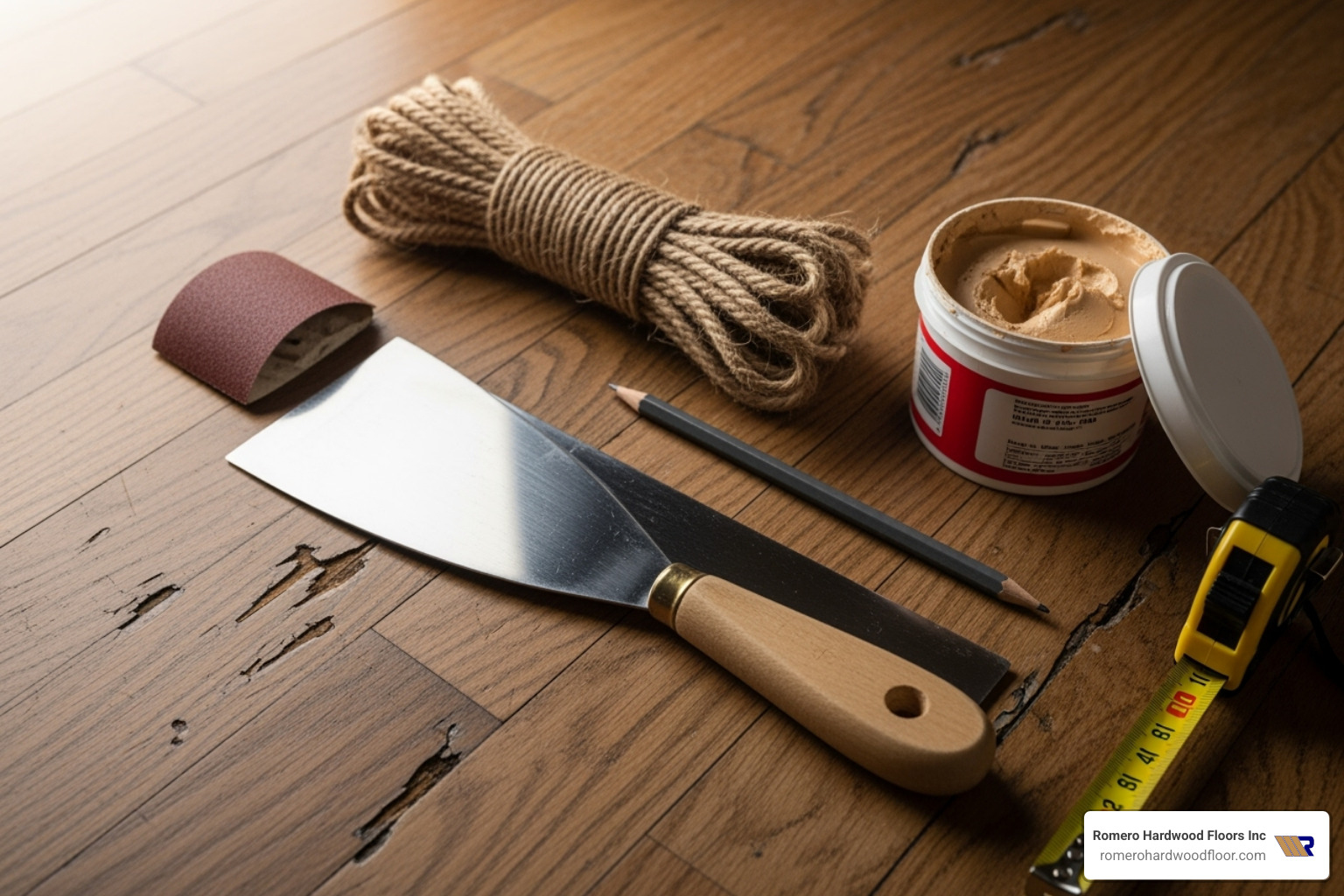
Gather your materials: You’ll need a vacuum, cleaning brush, natural fiber rope (jute or cotton), matching wood stain, a flexible wood glue, a putty knife, a utility knife, and fine-grit sandpaper. For custom strips, you’ll need spare hardwood and a table saw.
Natural fiber rope can create a surprisingly neat result, especially on rustic floors. Choose a rope slightly larger than the gap, stain it to match your floor, and let it dry. Safety Note: Oil-based stains on rope can pose a spontaneous ignition risk; ensure proper ventilation and safe disposal. Apply a thin bead of wood glue to the bottom of the gap and press the stained rope firmly into place. Trim any excess and consider sealing with a clear coat.
Wood strips provide the most seamless repair for larger gaps but require precision. Cut thin strips from matching wood slightly wider than the gaps for a tight fit. Table saw safety is critical—if you’re not experienced, consider professional help for this step. Apply wood glue to the strip sides, gently tap them into place with a rubber mallet, and clean excess glue immediately. Once dry, sand the strips flush with your floor and apply matching stain and finish.
This technique is common in professional hardwood floor repair and refinishing projects for its durable, natural-looking results.
Prevention: The Best Way to Avoid Future Gaps
The best hardwood floor shrinkage repair is the one you never have to do. Proactive prevention will save you time and money while extending the life of your investment. By providing stable conditions, you can enjoy years of beautiful, gap-free floors. Let’s explore the two pillars of prevention: proper acclimation and home climate control.
The Crucial Role of Acclimation in Preventing Hardwood Floor Shrinkage
Acclimation is arguably the most important step in preventing future gaps. It involves allowing new hardwood flooring to adjust to your home’s specific temperature and humidity before installation.
When wood is installed without acclimating, it will expand or shrink dramatically as it adjusts to the new environment, causing gaps or buckling. The goal is to reach moisture content equilibrium, where the wood’s moisture level matches that of the surrounding air.
While some manufacturers suggest a minimum of three days, I often recommend allowing hardwood to acclimate for up to two weeks or more, depending on the wood species and the difference in climate conditions. This patience pays off by dramatically reducing future problems. Proper acclimation is fundamental to any successful hardwood flooring installation.
Maintaining Ideal Home Conditions to Prevent Hardwood Floor Shrinkage
Once your floors are installed, maintaining a stable indoor environment is your ongoing mission.
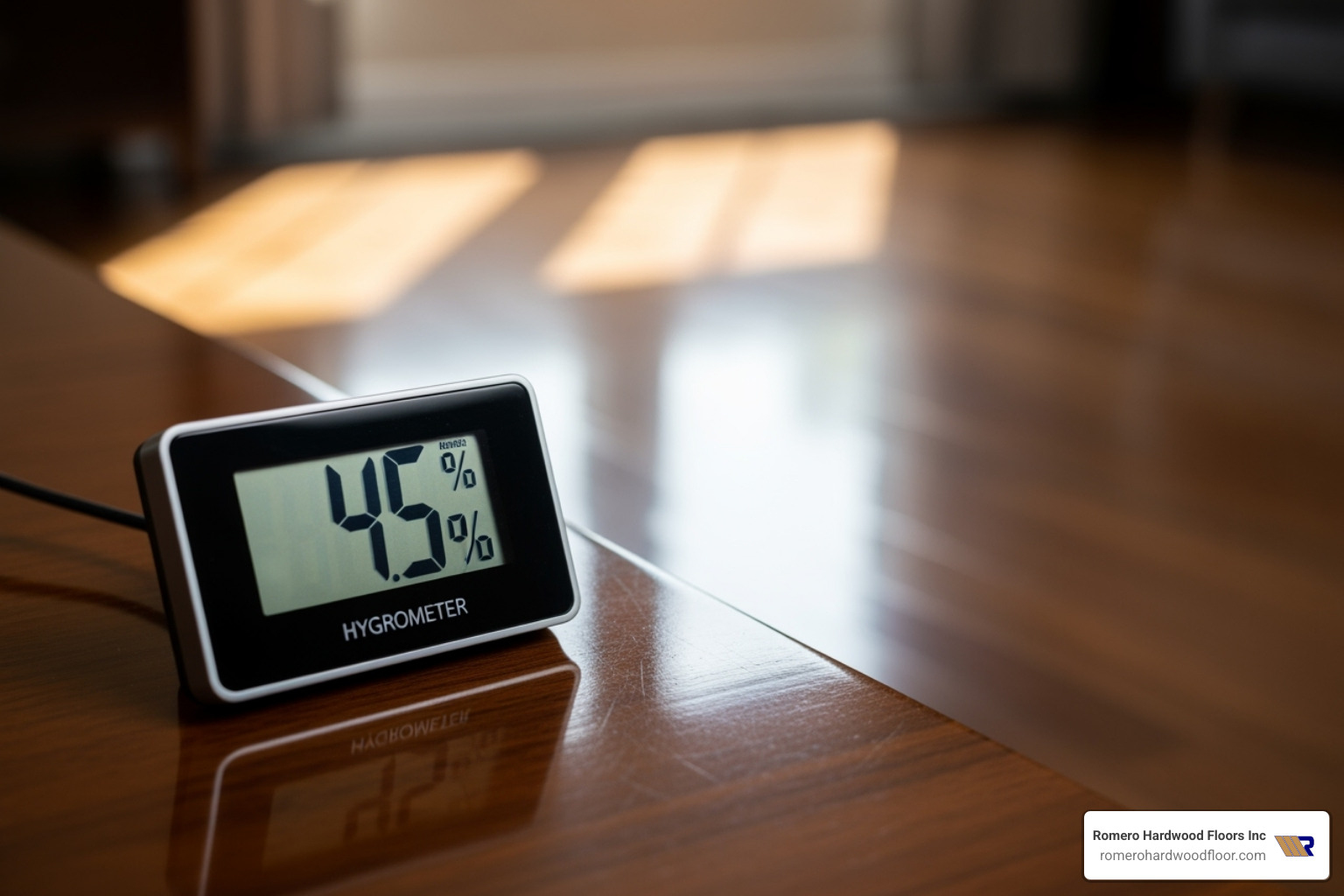
The ideal humidity range is 40-50% relative humidity year-round. This sweet spot minimizes wood’s expansion and contraction.
In dry winter months, a humidifier is your best friend. A whole-home unit is ideal, but portable units can also make a significant difference. In humid summer months, a dehumidifier or your air conditioning system will help remove excess moisture from the air.
Your HVAC system is key to climate control. Regular maintenance ensures it manages both temperature and humidity effectively, preventing the dramatic swings that stress wood floors.
Other smart habits include:
- Avoiding overuse of space heaters, which can over-dry wood.
- Wiping up spills immediately.
- Using rugs and mats in high-traffic areas and near entryways.
For more tips, see our hardwood floor care guide. A little prevention goes a long way toward avoiding future hardwood floor shrinkage repair projects.
When to Call a Professional for Hardwood Floor Repair
Sometimes, hardwood floor shrinkage repair requires professional expertise. Trying to tackle issues beyond your skill level can turn minor problems into major headaches.
Widespread Gapping: If gaps appear in multiple rooms or cover large areas, it often points to a systemic issue like humidity control problems or installation errors that require professional diagnosis.
Gaps Wider Than a Nickel: If gaps are consistently wide enough for a nickel to slide in, you’ve moved beyond simple DIY fixes. This often requires specialized techniques like custom wood strips or board replacement.
Cupping or Buckling Floors: These are serious warning signs of moisture problems or installation flaws. Do not simply sand them down; the root cause must be addressed by an expert to prevent recurrence.
Subfloor Damage: If your subfloor is uneven, moisture-damaged, or structurally compromised, any repair made on top will eventually fail. A professional can properly assess and repair the subfloor.
Tripping Hazards: Large gaps or raised boards are a safety concern. Professional repair ensures a smooth, level, and safe walking surface for your family.
When a Full Refinish is Needed: If your floors have multiple gaps, scratches, and wear, a complete refinishing project can address all issues at once. This is a job for professionals with specialized equipment.
Long-Term Consequences of Neglect: Ignored gaps collect debris, can damage board edges, and may compromise the floor’s structural integrity, leading to more extensive and costly repairs later.
Most flooring specialists agree professional help is needed for major issues. While average costs for professional hardwood floor repairs can range from around $200 for minor fixes to $2,000-$8,000 or more for extensive repairs, these are average costs based on internet data and not actual costs for Romero Hardwood Floors. We pride ourselves on competitive pricing and guaranteed workmanship.
For homeowners in and around Revere, MA, including Beverly, Chelsea, Danvers, East Boston, Gloucester, Lynnfield, Malden, Manchester by the Sea, Marblehead, Medford, Melrose, Nahant, Peabody, Reading, Rockport, Salem, Saugus, Somerville, Stoneham, Swampscott, Wakefield, Winchester, Winthrop, and Woburn, we are your local experts. Our team of flooring repair contractors is ready to provide an expert assessment.
Frequently Asked Questions about Hardwood Floor Shrinkage Repair
Here are answers to some of the most common questions about hardwood floor shrinkage repair.
Is it normal for my hardwood floors to have gaps?
Yes, small seasonal gaps are completely normal. Wood is a natural material that shrinks in dry winter air and expands in humid summer air. This “breathing” is a sign of healthy, real wood. However, gaps that are wide enough for a nickel to slide into and remain year-round may indicate a problem that needs attention.
Can I use caulk to fill gaps in my hardwood floor?
No, we strongly advise against using caulk. It is not designed for the movement of wood floors, cannot be stained to match, and collects dirt, creating an unsightly repair that will likely fail as the wood expands and contracts. Stick with proper hardwood floor shrinkage repair methods using wood putty or fillers.
Does the type of wood plank affect how much it shrinks?
Absolutely. Some wood species are naturally more stable and react less to humidity changes. More importantly, the plank’s size matters. Larger, wider floorboards will show more noticeable gaps than narrow boards because the natural movement is distributed across fewer joints. A small percentage of shrinkage on a wide board creates a much more visible gap.
Conclusion
Your hardwood floors tell a story of natural beauty and seasonal rhythms. Understanding hardwood floor shrinkage repair is about working with the living character of your floors.
- Gapping is natural: Seasonal gaps are not a flaw; they are a sign that your genuine wood floors are responding to their environment.
- Humidity control is key: Keeping your home’s humidity between 40% and 50% is the best prevention strategy, giving your floors the stable environment they need.
- DIY for minor issues: Small gaps can often be fixed with wood putty or the traditional rope method.
- Know when to call a pro: For wide gaps, cupping, buckling, or widespread issues, professional expertise is invaluable for a lasting, seamless solution.
At Romero Hardwood Floors Inc., we’ve been helping families in Revere, MA and the surrounding communities since 2006. We understand your floors are the foundation of your home’s warmth and character. Whether you live in Beverly, Chelsea, Danvers, East Boston, Gloucester, Lynnfield, Malden, Manchester by the Sea, Marblehead, Medford, Melrose, Nahant, Peabody, Reading, Rockport, Salem, Saugus, Somerville, Stoneham, Swampscott, Wakefield, Winchester, Winthrop, or Woburn, you can trust the guaranteed workmanship of Romero Hardwood Floors Inc.
Our commitment is to improve property value with expert flooring solutions, competitive pricing, and punctuality. For expert assessment and solutions to all your hardwood floor needs, explore our Hardwood Floor Repair services.
With the right care, your floors will continue to bring beauty and value to your home for decades to come.
