
Hardwood Flooring Cost Calculator: 7 Powerful Ways to Save 2025
Why Smart Homeowners Use a Hardwood Flooring Cost Calculator First
A hardwood flooring cost calculator gives you instant estimates for your flooring project before you call contractors. Most homeowners spend $2,500 to $7,500 for a standard living room, but costs vary wildly based on wood species, room size, and installation complexity.
Key components a hardwood flooring cost calculator includes:
- Material costs: $6-$18 per square foot for standard hardwood, up to $30 for exotic species
- Labor costs: $4-$8 per square foot for professional installation
- Additional services: Removal, disposal, underlayment, stairs, and trim work
- Waste factor: 5-10% extra material for cuts and future repairs
- Room variables: Square footage, layout complexity, and subfloor conditions
Note: These are average costs based on internet data and not actual costs for Romero Hardwood Floors.
Planning a hardwood floor installation without understanding the costs is like driving blindfolded. You might end up with sticker shock when contractors submit their bids, or worse – you might choose the wrong materials for your budget.
A good cost calculator helps you make informed decisions about wood species, installation methods, and project scope. It also shows you where you can save money and where you shouldn’t cut corners.
The biggest mistake homeowners make? They focus only on material costs and forget about labor, removal, and the dozen other expenses that add up fast. A comprehensive calculator prevents these costly surprises.
I’m Francisco Romero, and I’ve been installing hardwood floors in Massachusetts since 2006. Over the years, I’ve seen too many homeowners get blindsided by unexpected costs because they didn’t use a hardwood flooring cost calculator to plan their project properly.
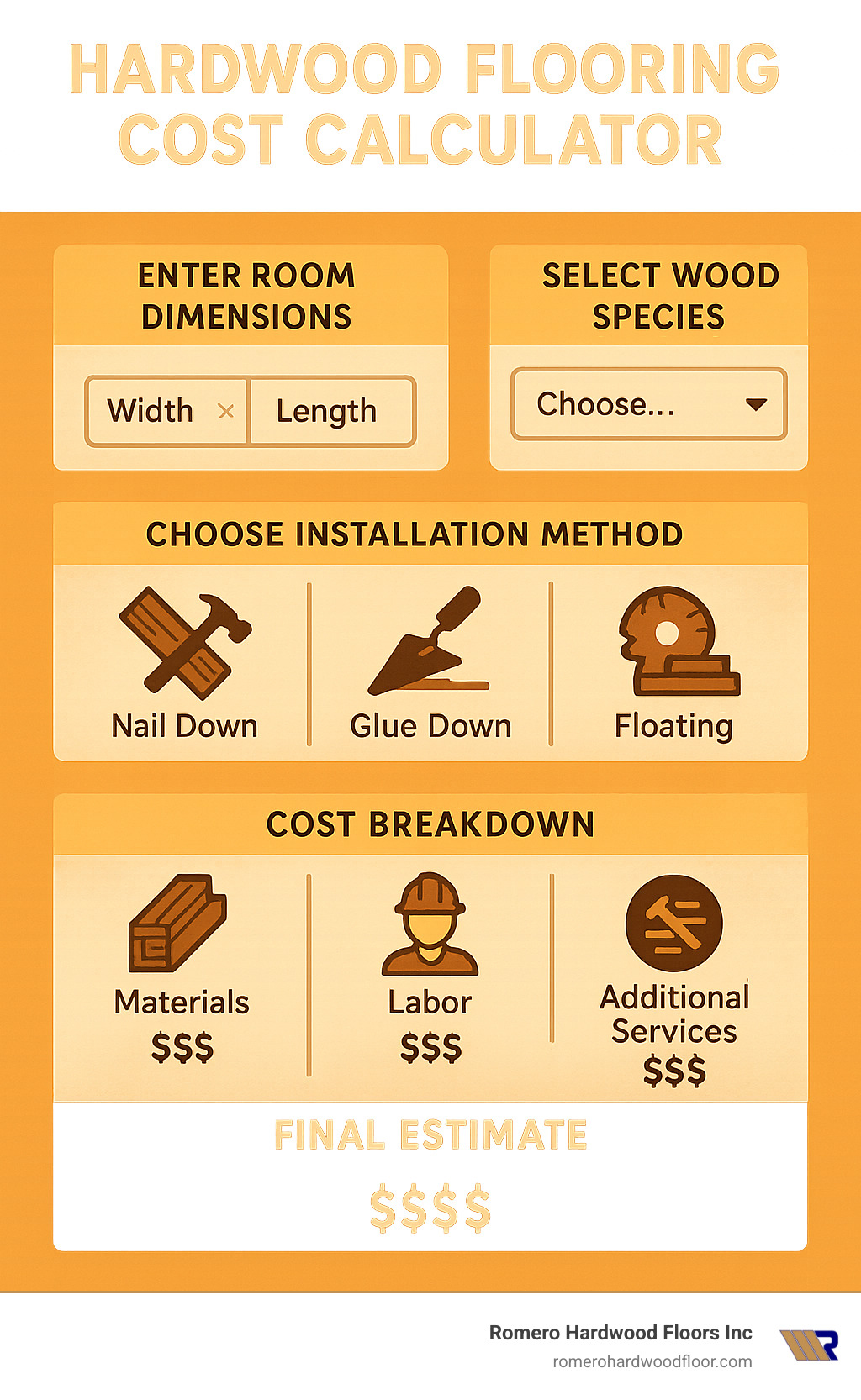
Simple guide to hardwood flooring cost calculator:
What Is a Hardwood Flooring Cost Calculator?
A hardwood flooring cost calculator is your digital crystal ball for flooring projects. It’s an online tool that takes your room measurements, material preferences, and installation needs, then spits out a realistic cost estimate faster than you can say “oak versus maple.”

Think of it as having a flooring contractor in your pocket – one who never gets tired of answering “what if” questions. Want to know how much you’d save choosing engineered over solid hardwood? The calculator shows you instantly. Curious about the cost difference between a simple installation and a fancy herringbone pattern? You’ll have your answer in seconds.
The best calculators use what professionals call the unit cost method. Instead of throwing out a vague ballpark number, they break down every single expense into line items. This transparency helps you understand exactly where your hard-earned money goes.
You won’t just see “Your project costs $5,000.” Instead, you’ll get a detailed breakdown showing materials at $2,100, labor at $1,800, removal of old flooring at $600, disposal at $200, and underlayment at $300. This clarity helps you make smart decisions about where to invest and where you might cut costs.
How a hardwood flooring cost calculator crunches the numbers
Modern hardwood flooring cost calculators work like financial detectives, analyzing every cost component that could impact your project.
Materials form the foundation of your estimate. The calculator considers your wood species choice, grade quality, and finish type. Budget-friendly pine might run $3-$6 per square foot, while exotic species like Brazilian cherry can reach $25 per square foot or more.
Labor calculations factor in your chosen installation method. Simple nail-down installation typically costs less than complex glue-assist methods or intricate patterns like herringbone. Professional installers generally charge between $70-$95 per hour, though this varies by region and project complexity.
Removal and disposal costs get calculated based on your existing flooring. Ripping out old carpet is relatively straightforward at $1-$2 per square foot, while removing glued-down hardwood or tile can cost $3-$5 per square foot due to the extra labor involved.
Underlayment requirements depend on your subfloor condition and installation method. Some projects need moisture barriers or sound-dampening materials, adding $0.50-$2 per square foot to your total.
The calculator also factors in additional services like stair installation, custom molding, and subfloor preparation. These extras can significantly impact your final cost, but knowing about them upfront prevents nasty surprises later.
Note: These are average costs based on internet data and not actual costs for Romero Hardwood Floors.
Key Factors That Drive Your Estimate
The difference between a $3,000 and $12,000 hardwood floor project often comes down to a few key decisions. When you’re plugging numbers into a hardwood flooring cost calculator, these factors will make or break your budget.
Wood species is your biggest cost driver, and the price jumps can be shocking. Domestic favorites like oak and maple typically run $5-$9 per square foot, while exotic beauties like Brazilian cherry or teak can hit $20-$30 per square foot. That’s the difference between a $2,000 material bill and a $6,000 one for the same room.
The choice between solid versus engineered hardwood affects more than just your upfront costs. Solid hardwood costs more initially but can be refinished multiple times over decades. Engineered wood offers better moisture resistance and often installs faster, which can save on labor costs.
Room size and layout complexity dramatically impact your labor expenses. A simple 300-square-foot living room costs much less per square foot than three small bedrooms with the same total area. All those doorways, closets, and odd angles add up fast. Most calculators automatically add 3.5-11% extra for complex layouts.
Your installation method depends on your wood type and subfloor conditions. Nail-down installation works best for solid hardwood on wooden subfloors. Glue-assist methods add stability but increase labor time and costs. Floating or click-lock systems install faster but only work with engineered floors.
Regional labor rates vary dramatically across the country. Here in Massachusetts, we’re at the higher end of the cost spectrum compared to rural areas. Urban markets like Boston typically see installation costs that are 20-40% higher than national averages.
According to the National Association of Realtors’ research, hardwood floors provide excellent return on investment, with some installations returning 118% of their cost at resale. That makes the upfront investment much easier to justify.
Other factors that smart calculators consider include stairs (which can add $40-$100 per step), trim and molding requirements, waste allowance for cuts and future repairs, and subfloor preparation needs. If your subfloor isn’t level or has moisture issues, expect additional costs that can range from $2-$8 per square foot.
The hidden extras most calculators miss
Even the best hardwood flooring cost calculator might miss some sneaky expenses that can add hundreds to your project.
Delivery charges catch many homeowners off guard. Hardwood is heavy and bulky – a typical room’s worth of materials can weigh over 1,000 pounds. Delivery fees range from $100 for local jobs to $500+ for rural areas or difficult access situations.
Acclimation time is rarely factored into cost calculators, but it’s essential for a successful installation. Your wood needs to adjust to your home’s humidity for 3-7 days before installation. This might mean paying for temporary storage or adjusting your contractor’s schedule.
Permits aren’t always required, but some municipalities require them for major flooring projects. These typically cost $50-$200 and can delay your project if you don’t plan ahead.
General contractor markup is the big one that many homeowners miss. If you’re working with a general contractor instead of a flooring specialist, expect a 13-22% markup on both materials and labor costs.
Note: These are average costs based on internet data and not actual costs for Romero Hardwood Floors.
Using Our Hardwood Flooring Cost Calculator Step-by-Step
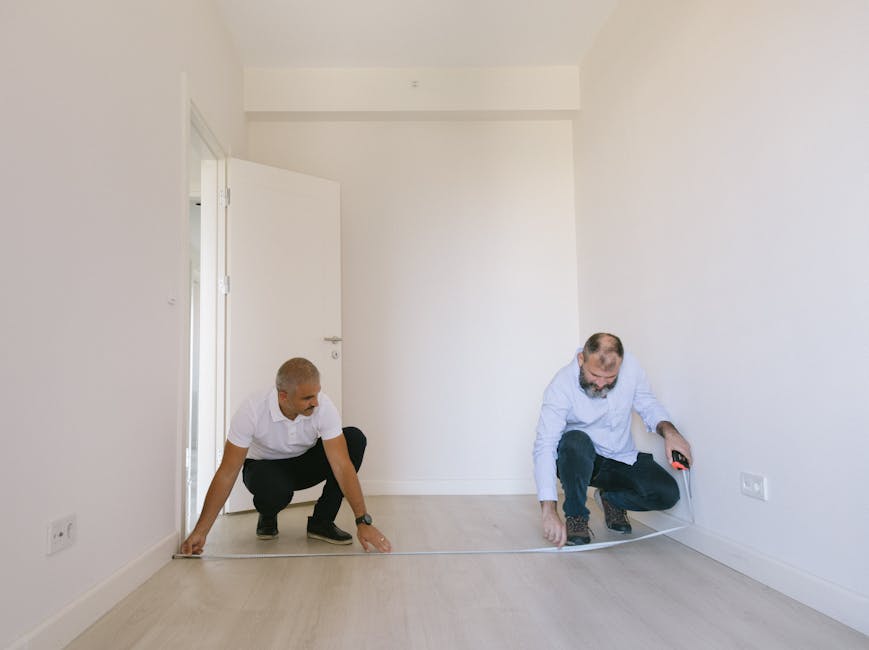
Getting accurate results from a hardwood flooring cost calculator isn’t rocket science, but it does require some prep work. Think of it like baking – you need the right ingredients in the right amounts to get a delicious result.
Before you even touch the calculator, grab your tape measure and walk through your space. You’ll want to measure every room that’s getting new floors, including those sneaky closets and awkward nooks that are easy to forget.
While you’re measuring, start thinking about your dream floors. Are you picturing the classic warmth of oak, the rich chocolate tones of walnut, or maybe something more exotic? Your material choice will be one of the biggest factors in your final estimate.
Consider whether you’re tackling this project all at once or room by room. Many homeowners find that doing multiple rooms together saves money on labor and materials. Plus, you’ll only have to deal with the installation chaos once instead of multiple times.
For detailed guidance on getting started, check out our Hardwood Floor Cost Estimator page.
Entering measurements into the hardwood flooring cost calculator
Here’s where precision pays off. Accurate measurements are the foundation of any reliable estimate, and it’s easier than you might think.
For simple rectangular rooms, just measure the length and width in feet, then multiply them together. A 12×15 living room gives you 180 square feet. Easy math, right?
Odd-shaped rooms require a bit more creativity. Break that L-shaped space or room with a bay window into smaller rectangles. Calculate each section separately, then add them all together. It’s like solving a puzzle – and way more fun than it sounds.
Don’t forget to add your waste factor – typically 10% extra material. This isn’t padding the estimate; it’s smart planning. You’ll need extra boards for cuts around obstacles, and having a few spare planks for future repairs is always wise. Most quality calculators include this automatically, but double-check to make sure.
Multiple rooms get entered separately in most calculators. This helps you see individual room costs and plan your budget accordingly. Maybe you’ll do the main living areas now and save the bedrooms for next year.
Customizing material and labor inputs in the hardwood flooring cost calculator
This is where your hardwood flooring cost calculator really shines. Modern calculators let you play with different options to see how they affect your bottom line.
The species selector is like a candy store for flooring enthusiasts. Domestic options like red oak and white oak offer classic beauty at reasonable prices. If you’re feeling adventurous, exotic woods like Brazilian cherry or teak create stunning floors that’ll make your neighbors jealous.
Finish type is another major decision point. Prefinished floors cost more per square foot but save time and mess during installation. Unfinished floors give you unlimited customization options but require on-site finishing, which adds time and complexity to your project.
Installation method depends on your wood choice and subfloor conditions. Nail-down installation works great for solid hardwood over wooden subfloors. Glue-assist adds extra stability but increases labor time. Floating or click-lock systems work well for engineered floors and can be faster to install.
The calculator also lets you toggle additional services like removal of existing flooring, disposal, underlayment, stairs, and trim work. Each option shows you exactly how it affects your total cost, so you can make informed decisions about what to include in your project.
Average Pricing & Comparisons You Should Know
Let’s talk real numbers. When you’re using a hardwood flooring cost calculator, you need to know what’s realistic in today’s market. After nearly two decades in this business, I’ve seen prices fluctuate, but here’s what homeowners in Massachusetts are actually paying.
Standard hardwood installation typically runs $12.30-$17.35 per square foot installed, including both materials and labor. That’s your sweet spot for popular species like oak, maple, and hickory with professional installation.
Exotic hardwood pushes the envelope to $13-$30 per square foot installed. Brazilian cherry, teak, and other premium species command top dollar, but they’re stunning and incredibly durable.
Labor costs alone range from $4-$8 per square foot for professional installation. The wide range reflects complexity – a simple rectangular room costs less than intricate patterns or challenging layouts.
Whole-house projects for a typical 2,000 square foot home run $14,700-$44,000. The massive range depends on your wood choice and whether we’re working over existing floors or dealing with subfloor issues.
Note: These are average costs based on internet data and not actual costs for Romero Hardwood Floors.
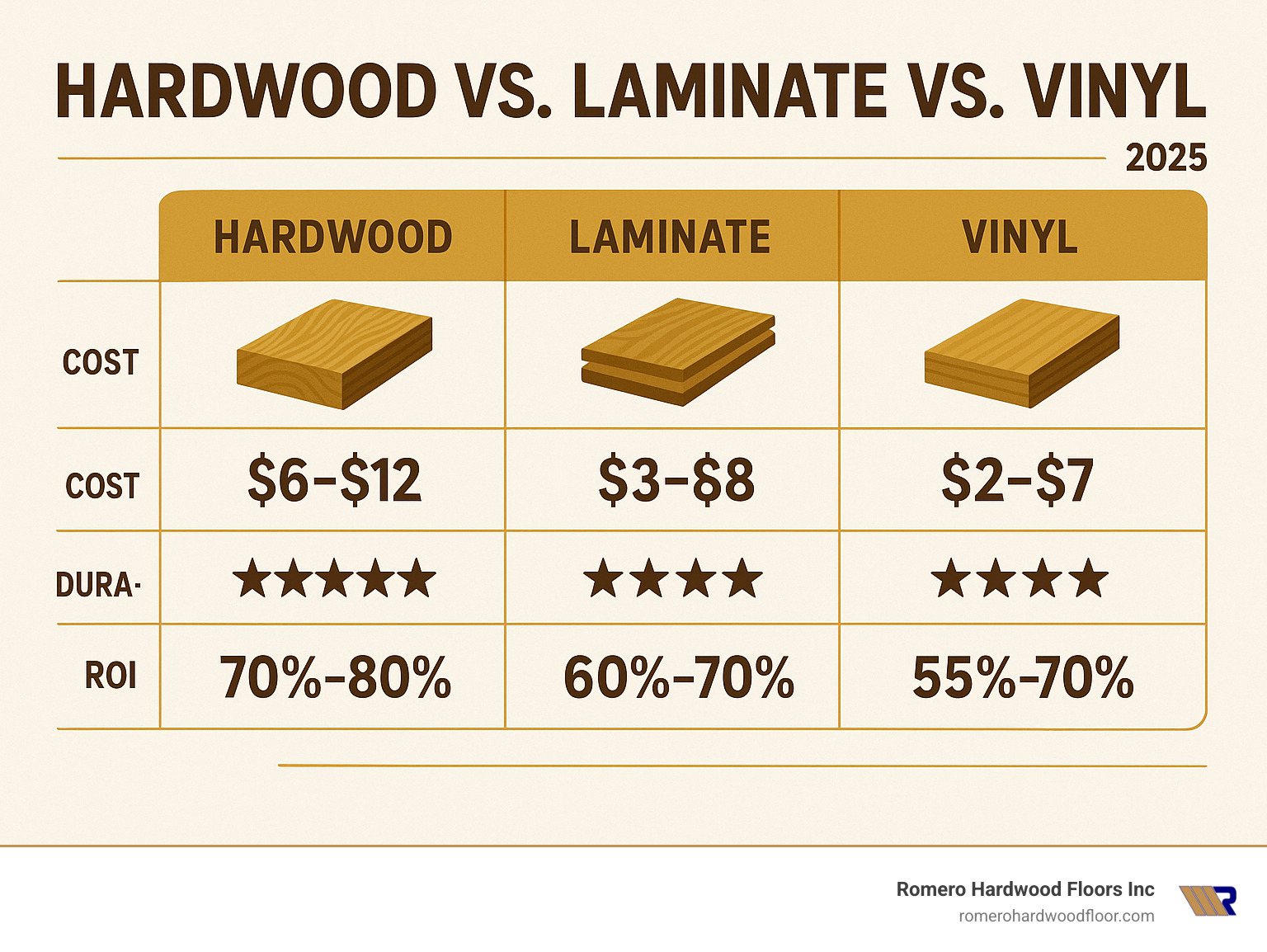
Here’s something many homeowners don’t consider: refinishing versus replacement. If your existing hardwood floors have good bones, refinishing costs just $3-$8 per square foot compared to $12-$17 for new installation. It’s like getting a brand new floor for a fraction of the cost.
Engineered hardwood deserves special mention. Quality engineered floors last 50+ years and can be refinished 4-6 times throughout their life. Yes, they cost more upfront than laminate, but they’re a genuine long-term investment that adds real value to your home.
Regional and store-to-store variations
Location matters more than you might think when interpreting your hardwood flooring cost calculator results. Here in Massachusetts, we see some interesting patterns.
Urban areas like Boston, Cambridge, and Somerville typically run 10-20% above suburban pricing. Higher labor costs, parking challenges, and building access issues all contribute to that premium. It’s not contractors being greedy – it’s just the reality of working in dense urban environments.
Seasonal timing can save you serious money. Winter months often bring 10-15% discounts on materials as suppliers clear inventory. If you can wait until January or February, your calculator estimates might be pleasantly conservative.
Online versus local pricing creates interesting dynamics. Online retailers often beat local prices on materials, but delivery costs and limited installation networks can eat up those savings quickly.
For current regional pricing that’s more specific to your area, Homewyse’s installed wood flooring prices provides localized estimates based on your zip code. It’s a helpful reality check against your calculator results.
The bottom line? Use these ranges as your baseline, but every project has unique factors that can push costs up or down. A good hardwood flooring cost calculator accounts for most variables, but nothing beats an in-person assessment for complex projects.
Money-Saving Tips and Common Estimating Mistakes
After 18 years installing hardwood floors in Massachusetts, I’ve watched homeowners make the same expensive mistakes over and over. The good news? A little planning can save you thousands on your project.
The biggest money-saver is buying in bulk when you’re flooring multiple rooms. Don’t tackle one room at a time – suppliers often knock 5-10% off large orders. It’s like buying toilet paper at Costco, but way more expensive if you get it wrong.
Off-season installation is another goldmine for savings. Schedule your project during winter months when contractors are hungry for work. Many offer discounts just to keep their crews busy instead of laid off.
Here’s where you can roll up your sleeves: DIY removal of old flooring saves $1-$3 per square foot. Rent a dumpster, grab some friends (pizza helps), and make it a weekend project. Your hardwood flooring cost calculator will thank you.
Accurate measurements seem obvious, but you’d be surprised how many people wing it. Overestimating by more than 10% wastes money on unused materials. Underestimating means rush delivery charges and potential delays when you run short.
Don’t let your calculator fool you about subfloor conditions. Never neglect subfloor prep – those squeaks and gaps six months later aren’t charming character features. They’re expensive problems that could have been prevented.
Always include the waste factor in your planning. That extra 5-10% isn’t padding the estimate – it’s insurance against color matching nightmares and project delays. Trust me, running short on flooring is like running out of gas on the highway. It’s going to cost you more than you saved.

Reclaimed wood offers a smart middle ground between budget and luxury. These planks come with built-in character and often cost less than new exotic species. Plus, your environmentally conscious friends will be impressed.
Finally, don’t overlook financing options. Many suppliers offer 0% financing for qualified buyers, letting you upgrade from basic oak to gorgeous walnut without emptying your savings account. It’s worth asking about – the worst they can say is no.
The most expensive mistake? Choosing a contractor based solely on the lowest bid. Sometimes that “great deal” costs more in the long run when you’re dealing with squeaky floors and gaps you could lose your keys in.
Frequently Asked Questions about Hardwood Flooring Cost Calculators
After helping hundreds of homeowners plan their flooring projects, I get the same questions about hardwood flooring cost calculators over and over. Here are the answers that matter most.
How accurate is an online hardwood flooring cost calculator?
Here’s the honest truth: a good hardwood flooring cost calculator gets you within 10-20% of actual costs for straightforward installations. That’s pretty impressive for a free online tool.
But here’s what they can’t see through your computer screen. Severely uneven subfloors that need extensive prep work. Custom millwork around fireplaces or built-ins. Tight staircases where getting materials upstairs becomes a puzzle.
I’ve walked into homes where the calculator said $8,000, but the reality was $12,000 because the subfloor looked like a roller coaster. Other times, everything goes smoothly and the final cost comes in under the estimate.
Think of calculators as your starting point for budgeting, not your final answer. They’re fantastic for comparing different wood species or seeing how room size affects costs. But always get professional estimates before making final decisions.
When should I pay for an in-home measurement instead?
Actually, you probably won’t need to pay anything. Most reputable contractors offer free estimates because they want your business.
But here’s when you definitely want that professional eye in your home. Complex room layouts with multiple angles, bay windows, or open floor plans that flow between rooms. Multiple levels where stairs and transitions get tricky. Questionable subfloor conditions where you’re hearing squeaks or seeing soft spots.
If you’re considering expensive materials like exotic hardwoods, professional measurement becomes even more important. Nobody wants to find they’re short three planks of $25-per-square-foot Brazilian cherry.
I also recommend professional consultation when you want to discuss installation methods and timeline. Maybe your calculator assumes nail-down installation, but your concrete subfloor requires glue-down. These conversations happen naturally during in-home visits.
What’s the ROI difference between refinishing and new hardwood?
This is where the numbers get really interesting. Refinishing existing hardwood typically costs $3-$8 per square foot and can make your floors look brand new again. New hardwood installation runs $12-$17 per square foot but adds more value to your home.
Note: These are average costs based on internet data and not actual costs for Romero Hardwood Floors.
If your existing floors are solid hardwood in decent structural condition, refinishing offers better bang for your buck. You’re spending less money and still getting that beautiful hardwood look buyers love.
But if your floors are thin from multiple refinishing, damaged beyond repair, or engineered wood that can’t be refinished again, replacement makes more financial sense.
Here’s the exciting part: both options provide excellent returns. The National Association of Realtors reports hardwood floors can return 70-118% of their cost at resale. That’s better than most home improvements.
The decision often comes down to your timeline and budget. Refinishing takes 3-5 days but requires moving furniture and dealing with dust. New installation takes longer but gives you a completely fresh start.
Conclusion
After 18 years of installing hardwood floors across Massachusetts, I’ve learned that the best projects start with good planning. A hardwood flooring cost calculator gives you that crucial foundation – helping you understand what you’re getting into before you commit to anything.
Think of it as your financial roadmap. You’ll still need professional estimates for the final details, but at least you won’t be flying blind when contractors start throwing numbers around.
At Romero Hardwood Floors Inc, we’ve been helping homeowners steer these decisions since 2006. We serve communities throughout the North Shore and Greater Boston area, including Beverly, Chelsea, Danvers, East Boston, Gloucester, Lynnfield, Malden, Manchester by the Sea, Marblehead, Medford, Melrose, Nahant, Peabody, Reading, Revere, Rockport, Salem, Saugus, Somerville, Stoneham, Swampscott, Wakefield, Winchester, Winthrop, and Woburn.
Here’s the thing about calculator estimates – they’re starting points, not gospel. Your actual costs will depend on a dozen factors that no online tool can fully capture. Maybe your subfloor needs extra prep work, or your Victorian home has quirky angles that complicate installation. These real-world details matter.
But that doesn’t make calculators useless. Far from it. They help you set realistic expectations and avoid sticker shock when you start getting quotes. They also show you where your money goes, so you can make smart decisions about where to splurge and where to save.
The biggest favor you can do yourself? Use the calculator, then get professional estimates. Compare them. Ask questions. Understand what’s included and what isn’t. Good contractors will explain any differences between your calculator estimate and their quote.
Ready to turn those calculator numbers into beautiful floors? We’re here to help you choose the right materials and installation approach for your home and budget. Every project is different, and we love helping homeowners find solutions that work for their specific situation.
For detailed information about what goes into professional installation costs, check out our Cost of Hardwood Floor Installation page.
Remember: The pricing ranges mentioned throughout this article are average costs based on internet data and not actual costs for Romero Hardwood Floors. Contact us for accurate, personalized estimates that reflect your specific project needs.
