
Hardwood floors for stairs: Top Benefits & Tips 2024
Hardwood floors for stairs offer an neat and durable upgrade to any home, seamlessly blending style with function. Whether you’re drawn to their timeless beauty, ease of maintenance, or the potential to increase property value, hardwood stairs are an excellent choice. However, installation is no small task, demanding skill and precision to ensure a long-lasting and beautiful finish. Consider these points before making a switch:
- Professional Installation: Trust experienced installers for a safe, aesthetic finish.
- Durability and Maintenance: Hardwood is strong and easy to maintain, just be aware of refinishing needs over time.
- Stair Safety: Adding runners can reduce slippage risks.
- Time and Cost Considerations: Expect professional installation to take several days.
As Francisco Romero, owner of Romero Hardwood Floors Inc., I bring over 15 years of expertise in changing stairs with beautiful hardwood solutions. My dedication ensures top-notch service for both homeowners and commercial properties, enhancing spaces with hardwood floors for stairs.
Key Hardwood floors for stairs vocabulary:
– Benefits of hardwood floors
– Best hardwood flooring options
– Hardwood floors design ideas
Why Choose Hardwood Floors for Stairs?
Hardwood floors for stairs are not just a stylish choice—they’re a smart investment. Let’s break down why many homeowners are making the switch.
Aesthetics
Hardwood stairs look stunning. They add a touch of elegance and sophistication to any home. The natural grain patterns and rich colors of wood create a warm, inviting atmosphere. Whether you prefer the classic charm of oak or the sleek look of mahogany, there’s a hardwood style to match your home’s decor.
Durability
Hardwood is tough. It stands up to the wear and tear of daily use, making it an ideal choice for high-traffic areas like stairs. Unlike carpet, which can wear out and look dingy over time, hardwood maintains its beauty for years.
Value Addition
Installing hardwood stairs can boost your home’s value. Real estate experts agree that homes with hardwood floors often sell faster and at higher prices than those with carpet.
This makes hardwood a wise investment if you’re thinking about selling in the future.
Maintenance
Hardwood stairs are easy to care for. Regular sweeping and occasional mopping keep them looking great. Plus, hardwood doesn’t trap dust and allergens like carpet does, making it a healthier choice for your home. While hardwood may need refinishing over time, this process can restore its original beauty, extending the life of your stairs.
In summary, hardwood floors for stairs offer best aesthetics, durability, and value. They’re a low-maintenance choice that can transform your home and improve its appeal.
Types of Hardwood for Stairs
When choosing hardwood floors for stairs, it’s crucial to understand the differences between hardwood and softwood. This knowledge will guide you in selecting the best wood type for your needs.
Hardwood vs. Softwood
Many assume that hardwood is always harder than softwood, but that’s not always the case. Hardwood comes from deciduous trees like oak and walnut, known for their dense and durable qualities. These woods are ideal for high-traffic areas because they resist wear and maintain their appearance over time. Softwood, on the other hand, comes from coniferous trees like pine. While softwoods can be beautiful, they are generally less dense and more prone to dents and scratches. For stairs, hardwood is typically the better choice due to its strength and longevity.
Popular Hardwood Options
Different types of hardwood offer unique aesthetics and benefits:
- Oak: Known for its durability and classic look, oak is a popular choice for stairs. It’s available in various finishes, allowing for customization to match your home’s decor.
- Ash: Ash is another strong option, with a light color and straight grain that gives a clean, contemporary look. It’s as durable as oak but offers a different aesthetic.
- Mahogany: This wood is prized for its deep, rich color and fine grain. Mahogany stairs exude luxury and sophistication, making it a sought-after option for high-end homes.
- Cherry: Cherry wood is known for its warm tones and smooth texture. It darkens with age, developing a rich patina that adds character to any staircase.
- Cypress: Cypress offers a unique appearance with its knotty grain and natural resistance to decay. It’s a great choice if you’re looking for something a bit different.
These hardwoods provide a range of options to suit any style and budget. Whether you prefer the timeless appeal of oak or the exotic allure of mahogany, there’s a hardwood option that can lift your staircase.
By understanding the characteristics of these woods, you can make an informed decision that balances aesthetics, durability, and cost. In the next section, we’ll explore how to prepare for the installation of your chosen hardwood.
Preparing for Installation
Before diving into the installation of hardwood floors for stairs, prepare thoroughly. This involves understanding the challenges, gathering the right tools, and considering professional help.
Professional Installation vs. DIY
Installing hardwood on stairs is not a simple task. It requires precision and experience. Professional installation is often recommended because experts have the skills and tools to handle complex stair designs and ensure a flawless finish.
Hiring a professional can save you time and prevent costly mistakes. It also ensures that your stairs are safe and meet building codes. While DIY might seem like a cost-saving option, the challenges can outweigh the benefits.
DIY Challenges
If you decide to go the DIY route, be aware of the potential problems. Cutting each piece of hardwood to fit the unique dimensions of your stairs can be tricky. Getting the perfect fit is crucial to avoid gaps or uneven surfaces.
Another challenge is handling the nosing, the front edge of each step. This requires precise cuts and secure attachment to prevent accidents.
Safety Gear and Tools Needed
Whether you choose to DIY or hire a professional, safety should be a priority. Here’s a list of essential safety gear and tools:
- Safety Gear: Wear safety goggles and gloves to protect yourself from wood splinters and dust. A dust mask or respirator is also recommended to avoid inhaling fine particles.
- Tools: You’ll need a circular saw, jigsaw, or miter saw for cutting the wood. A tape measure and carpenter’s square are essential for accurate measurements. For securing the treads, use a drill with screws or a nail gun. Sandpaper or a sander is necessary for smoothing edges and surfaces.
- Adhesive: A strong adhesive is crucial for securing the treads and nosings. Make sure it’s suitable for hardwood to ensure long-lasting results.
Preparing adequately will make the installation process smoother and help you achieve professional-looking results. With the right preparation, your hardwood stairs will not only look stunning but also last for years to come.
In the next section, we’ll provide a step-by-step guide to installing hardwood on stairs, covering everything from removing old carpet to securing each tread.
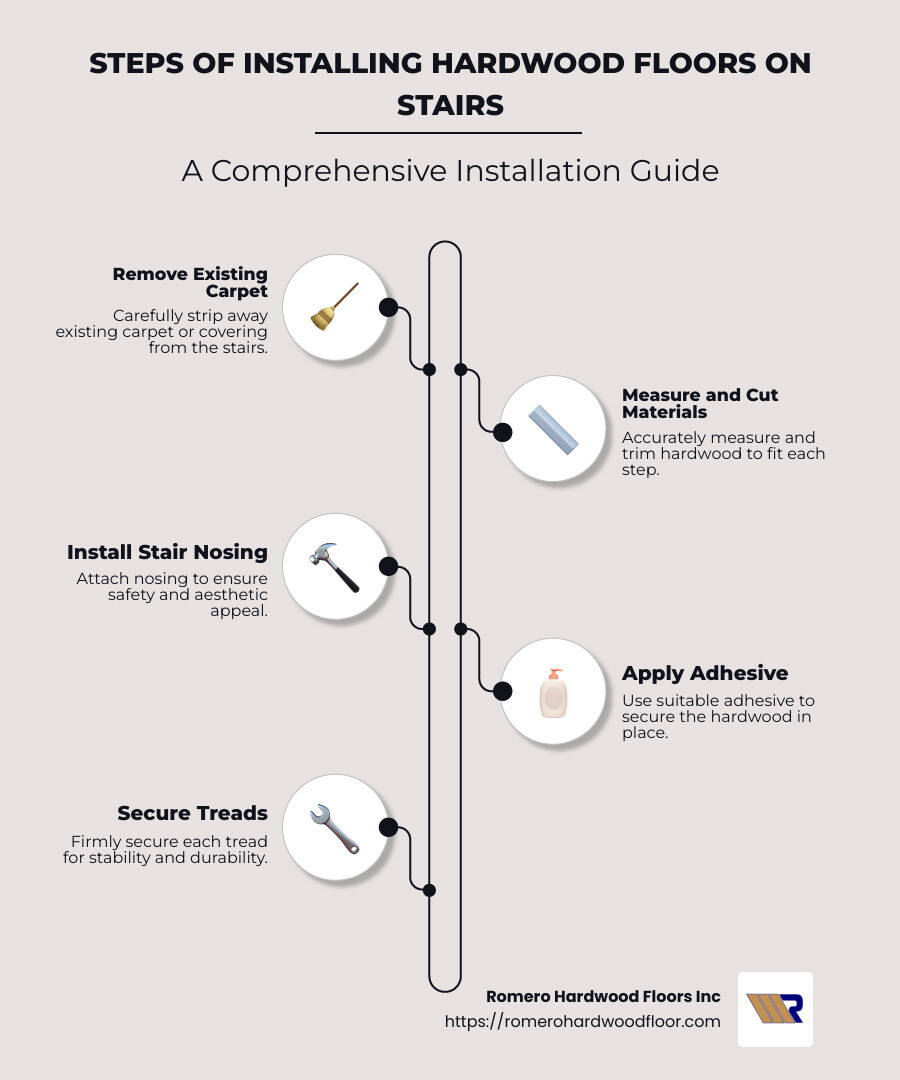
Step-by-Step Guide to Installing Hardwood on Stairs
Ready to transform your stairs with hardwood floors? Follow this guide to ensure a seamless installation.
Removing Carpet
First, remove the existing carpet. Use pliers to pull up the carpet from the edges, then continue to remove any staples or nails with a screwdriver or hammer claw. Be sure to wear gloves to protect your hands from sharp objects.
Measuring and Cutting
Accurate measurements are crucial. Measure each tread and riser individually, as stair dimensions can vary. Use a tape measure and a carpenter’s square for precision. Once measured, cut the hardwood pieces to size using a circular saw or miter saw.
Pro Tip: Always measure twice and cut once to avoid mistakes.
Nosing
The nosing is the front edge of the step and requires special attention. Cut the nosing to fit precisely, ensuring it aligns with the tread. Secure it firmly to avoid creating a trip hazard.
Adhesive
Apply a strong adhesive to the back of each tread and riser. This provides additional security and helps eliminate squeaks. Make sure the adhesive is designed for hardwood to ensure it bonds effectively.
Securing Treads
Once the adhesive is applied, position the tread on the step. Use a drill and screws or a nail gun to secure it in place. Be sure to countersink screws to avoid any protrusions.
Check for squeaks by stepping on each tread. If you hear any, add more screws or adhesive as needed.
Final Touches
After all the treads and risers are secured, sand any rough edges for a smooth finish. Clean up any adhesive that may have squeezed out during installation.
By following these steps, you’ll achieve a beautiful and durable hardwood staircase. In the next section, we’ll explore common issues like slippage and squeaks, and how to resolve them effectively.
Common Issues and Solutions
Even with a perfect installation, hardwood floors for stairs can present some challenges over time. Here’s how to tackle common issues like slippage, nosing problems, squeaks, and refinishing.
Slippage
Hardwood stairs can be slippery, especially if they lack adequate traction. This can lead to accidents, particularly in homes with children or elderly residents. To combat this, consider these options:
- Anti-Slip Treads: Install non-slip adhesive strips or treads. These are easy to apply and come in various designs to match your decor.
- Rug Runners: A carpet runner can add both safety and style. Ensure it is securely fastened to prevent movement.
- Non-Slip Finish: Use a finish that adds traction to the wood surface. Many products are available specifically for stairs to improve grip.
Nosing Problems
The nosing, or the edge of the stair tread, is crucial for safety and aesthetics. If not installed correctly, it can become a tripping hazard or wear down quickly.
- Proper Installation: Ensure that the nosing is accurately measured and securely attached. Double-check alignment with the tread to avoid creating a lip that could cause trips.
- Regular Inspection: Over time, nosing can loosen or wear. Regularly inspect and re-secure any loose sections with screws or adhesive.
Squeaks
Squeaky stairs are not only annoying but can indicate underlying issues with the installation. Here’s how to silence those creaks:
- Reinforce with Screws: If you hear squeaks, it might mean the wood is shifting. Add screws to secure loose treads and risers firmly.
- Use Adhesive: As mentioned earlier, a strong adhesive can help eliminate squeaks by preventing movement between the wood and the subfloor.
- Lubrication: For minor squeaks, consider applying a dry lubricant, like powdered graphite, between the boards.
Refinishing
Over time, the finish on hardwood stairs can wear down, leading to dullness or scratches. Refinishing can restore their beauty and protect the wood.
- Sanding: Begin by sanding the stairs to remove the old finish. Use a fine-grit sandpaper for a smooth surface.
- Staining: Choose a stain that complements your home’s aesthetic. Apply evenly and allow it to dry thoroughly.
- Sealing: Finish with a durable sealant to protect against wear and tear. Opt for a water-based sealant for quick drying and minimal odor.
By addressing these common issues, you can ensure your hardwood stairs remain safe, beautiful, and functional for years to come. Next, we’ll dive into the cost considerations of installing hardwood on stairs, helping you plan your budget effectively.
Cost Considerations
When it comes to installing hardwood floors for stairs, understanding the costs involved is crucial. Here’s what you need to know to budget wisely.
Installation Costs
Installing hardwood on stairs is more complex than laying it on flat floors, and the costs reflect this. On average, professional installation can range from $100 to $200 per step. This price includes materials, labor, and the intricate work required to fit each piece perfectly. The complexity of your staircase design can also impact the final cost.
Wood Types
The type of wood you choose significantly affects the cost. Premium hardwoods like mahogany or Brazilian cherry are more expensive than options like oak or ash. Here’s a quick breakdown:
- Oak: Known for its durability and classic look, oak is a popular and cost-effective choice.
- Mahogany: Offers rich color and high-end appeal, but at a higher price point.
- Cherry: Provides a warm, neat finish and falls in the mid-range for cost.
Professional vs DIY
While DIY installation might seem like a money-saving option, it’s important to weigh the risks. Installing hardwood on stairs requires precision and skill. Mistakes can lead to increased costs down the line, both in repairs and potential safety hazards. Hiring professionals ensures the job is done right, often with a warranty for peace of mind.
Long-Term Investment
Hardwood floors for stairs are an investment in your home’s value. While the upfront costs may be higher compared to other materials, hardwood’s durability and timeless appeal can improve your property’s resale value. Moreover, hardwood stairs require less frequent replacement than carpet, making them a cost-effective choice in the long run.
By considering these factors, you can make informed decisions that align with both your budget and aesthetic preferences. Next, we’ll tackle frequently asked questions about hardwood floors for stairs, providing you with even more clarity on this popular choice.
Frequently Asked Questions about Hardwood Floors for Stairs
What type of hardwood is best for stairs?
When choosing hardwood for stairs, oak and pine are common options. Oak is highly durable and offers a classic look, making it a popular choice. It’s strong enough to withstand heavy foot traffic, ensuring longevity. Pine, on the other hand, is softer and may show wear more quickly, but it offers a warm, rustic appeal.
If durability is your top priority, oak is often recommended due to its strength and ability to resist dents and scratches. For a more luxurious feel, consider mahogany or cherry. They provide a rich, neat finish but come at a higher cost.
Can you use hardwood flooring on stairs?
Yes, you can use hardwood flooring on stairs, but it’s not as straightforward as installing it on flat surfaces. For safety and durability, it’s best to use premade treads or custom-made treads specifically designed for stairs. These options ensure a snug fit and reduce the risk of slippage.
Safety is a key concern with hardwood stairs, as they can be slippery. To mitigate this, consider adding a stair runner or using non-slip finishes. Proper installation by professionals is crucial to ensure stability and safety.
Is it expensive to put hardwood on stairs?
The cost of installing hardwood on stairs can vary significantly. On average, you might expect to pay between $100 to $200 per step. This range includes the cost of materials and professional installation.
Several factors affect the cost:
- Wood Type: Premium woods like mahogany will increase costs, whereas oak might be more budget-friendly.
- Stair Design: Complex designs with curves or landings require more labor and materials, driving up the price.
- Installation: Professional installation is recommended for the best results, but it does add to the overall expense.
While the initial investment can be high, hardwood stairs offer durability and timeless beauty, making them a worthwhile addition to any home.
Conclusion
Choosing hardwood floors for stairs is more than just an aesthetic decision; it’s an investment in your home’s value and longevity. At Romero Hardwood Floors Inc, we understand the importance of getting this right and are here to ensure the process is seamless and rewarding.
Professional Installation Matters
While the allure of DIY projects is strong, installing hardwood on stairs is not the place to start. The precision required in measuring, cutting, and fitting each tread and riser is best left to professionals. Our team at Romero Hardwood Floors Inc has the expertise and tools to deliver flawless results, ensuring your stairs are both beautiful and safe.
Enhancing Property Value
Hardwood stairs do more than lift the look of your home—they improve its overall value. This timeless flooring option is known for its durability and classic appeal, making it a smart long-term investment. Professionally installed hardwood stairs can significantly boost your home’s resale value, offering a return on investment that few other upgrades can match.
For those considering this upgrade, contact us at Romero Hardwood Floors Inc for expert advice and installation. Our commitment to quality and customer satisfaction ensures that your hardwood flooring project will be a success, adding both beauty and value to your home for years to come.
