
Hardwood floors home value: Top 3 Proven Gains 2024
When considering hardwood floors home value, it’s crucial to understand the impact these floors have on a property’s worth. Hardwood flooring remains a popular choice among homeowners for its classic appeal and durability, but how exactly does it affect the value of your home?
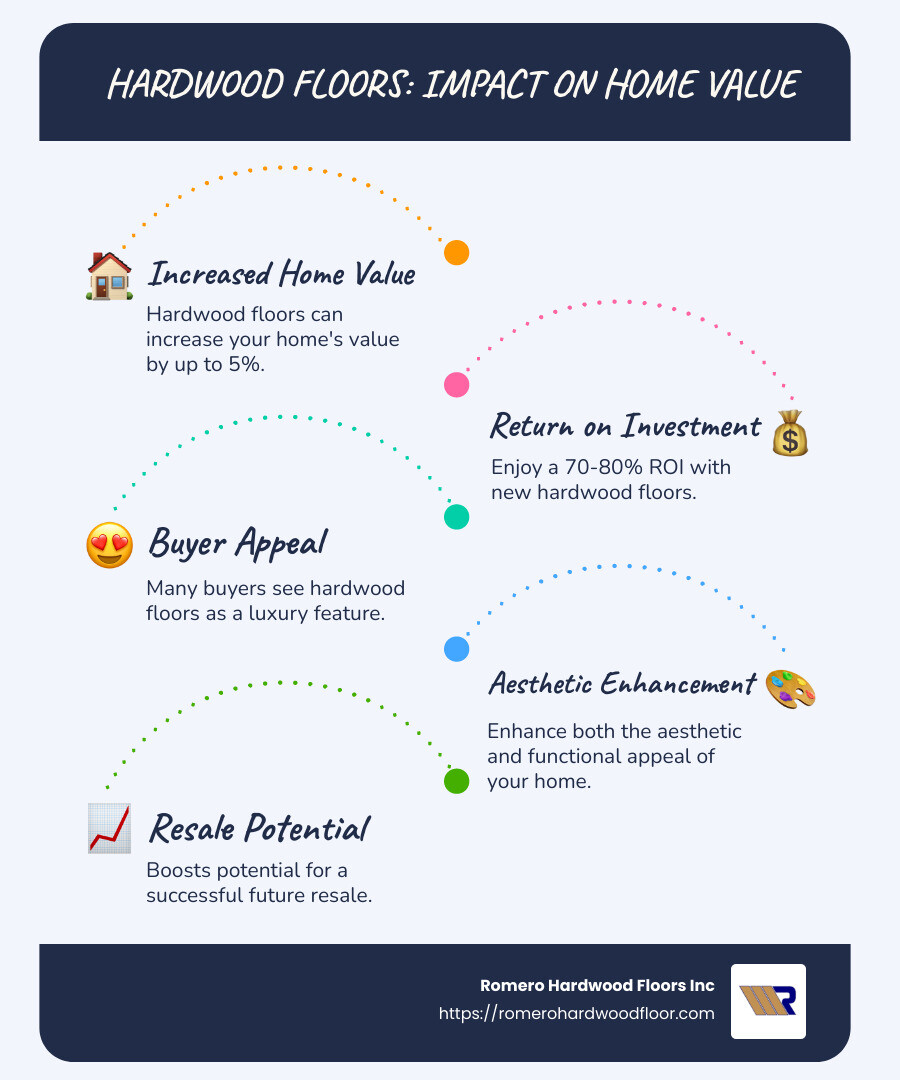
- Increase in Home Value: Installing hardwood floors can boost your home’s asking price by as much as 5%.
- Return on Investment: Hardwood floors generally offer a 70-80% ROI, potentially recouping most of your initial investment.
- Buyer Attraction: Many buyers view hardwood floors as a desirable feature, often associating them with quality and luxury.
By enhancing the aesthetic and functional appeal of your home, hardwood floors serve as a strategic investment in not only style but also in future resale potential.
My name is Francisco Romero, owner of Romero Hardwood Floors Inc. With over 15 years of experience in the hardwood flooring industry, I can confidently guide you on how hardwood floors home value can be maximized through expert installation and proper material selection. Let’s explore the transformative power of hardwood floors and how they can be a sound investment for your home.
Hardwood floors home value basics:
– Benefits of hardwood floors
– Best hardwood flooring options
– Hardwood floors design ideas
Do Hardwood Floors Increase Home Value?
Factors Influencing Value Increase
Hardwood floors are a popular choice for homeowners aiming to increase their property’s value. But what factors influence this value increase? Let’s break it down.
Resale Value and Buyer Appeal
Hardwood floors can improve your home’s resale value by 3-5%, according to a CNN report. This increase is significant and can make your home more appealing to potential buyers. Many buyers view hardwood floors as a sign of quality and luxury, making them a sought-after feature in the real estate market.
Competitive Market and Local Trends
In a competitive housing market, having hardwood floors can set your home apart. However, consider local market trends. In some areas, buyers might prefer other types of flooring, which could affect the value increase hardwood floors provide. Research your local market to understand what buyers are looking for.
Buyer Preferences
Buyers often have specific preferences when it comes to flooring. Some might prioritize the aesthetic appeal of hardwood, while others could be more interested in its durability. Knowing the preferences of buyers in your area can help you decide if installing or refinishing hardwood floors is the right move.
Installation Quality
The quality of installation plays a crucial role in how much value hardwood floors add to your home. Poorly installed floors can detract from your home’s appeal, while expertly installed floors can significantly improve it. It’s crucial to hire professionals who ensure a high-quality installation.
By understanding these factors, you can make informed decisions about investing in hardwood floors to maximize your home’s value.
How Much Value Do Hardwood Floors Add?
When considering hardwood floors home value, it’s crucial to look at their return on investment (ROI). This can help you decide if installing or refinishing hardwood floors is worth your time and money.
ROI for New Hardwood Floors
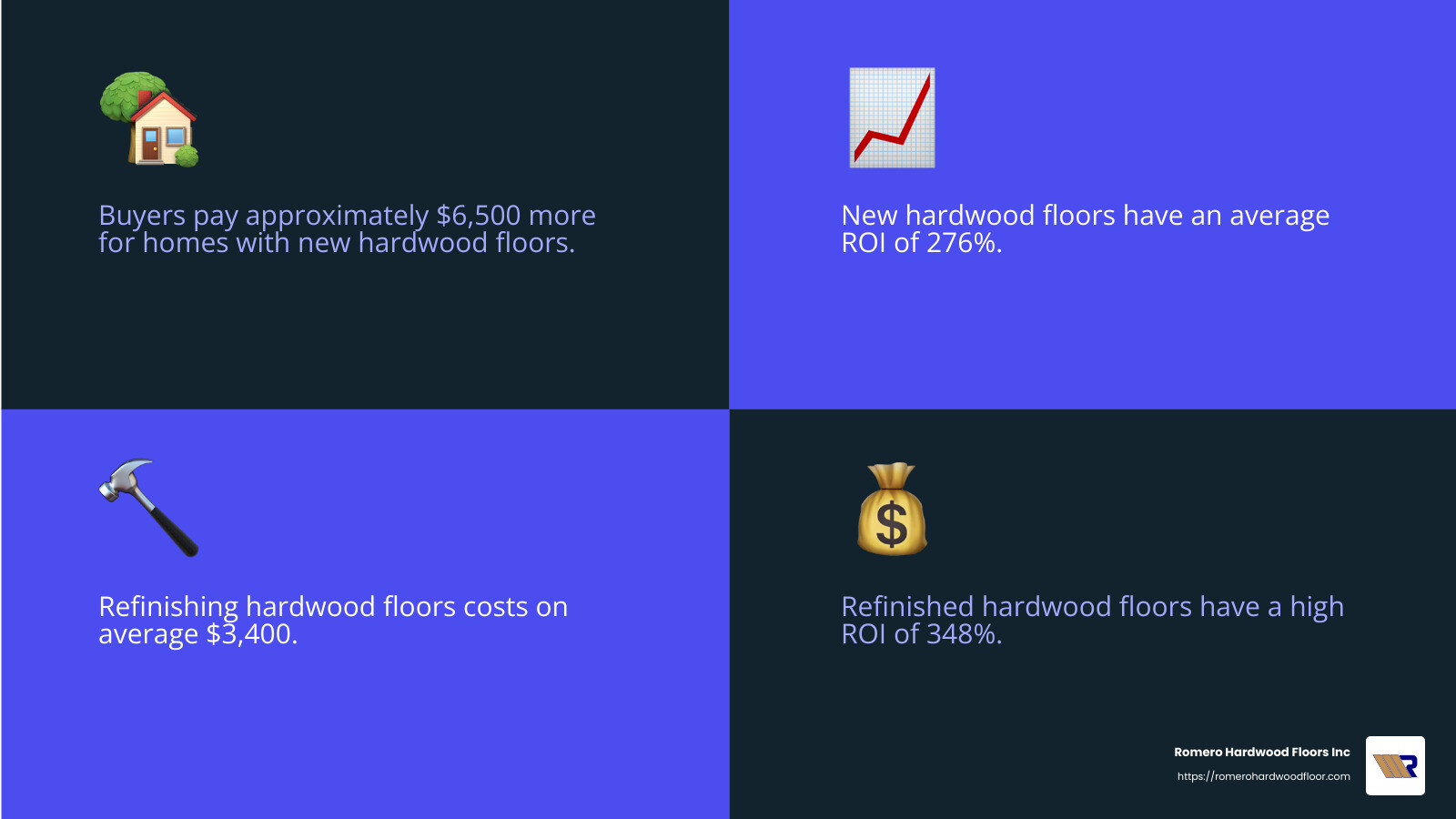
Installing new hardwood floors can be a significant investment. On average, the cost to install new hardwood floors is about $5,500. However, the ROI can be quite impressive. According to Curbio projects, the average ROI for new hardwood flooring is 276%. This means that for every dollar spent on new hardwood floors, you could see a return of $2.76 when you sell your home.
The National Association of REALTORS® also supports this, estimating that buyers are willing to pay approximately $6,500 for new wood flooring. This shows that new hardwood floors can increase your home’s value and appeal to potential buyers.
ROI for Refinished Hardwood Floors
If you already have hardwood floors, refinishing them can be a smart move. Refinishing costs are generally lower than installing new floors, averaging around $3,400. Despite the lower cost, the ROI for refinished hardwood floors is even higher than for new floors.
Curbio reports that the ROI for refinished floors is a remarkable 348%. This high return makes refinishing an attractive option for homeowners looking to boost their home’s value without the higher costs of new installation.
Refinishing your floors not only improves their appearance but also increases their durability, making them more appealing to buyers who prefer move-in-ready homes. This can lead to a quicker sale and potentially higher offers.
By understanding these ROI figures, you can make informed decisions about whether to invest in new or refinished hardwood floors to maximize your home’s value.
Cost of Hardwood Flooring
New Hardwood Floors
When planning to install new hardwood floors, understanding the costs involved is crucial. The price of hardwood flooring can vary based on several factors, including the type of wood, labor, and the size of the area.
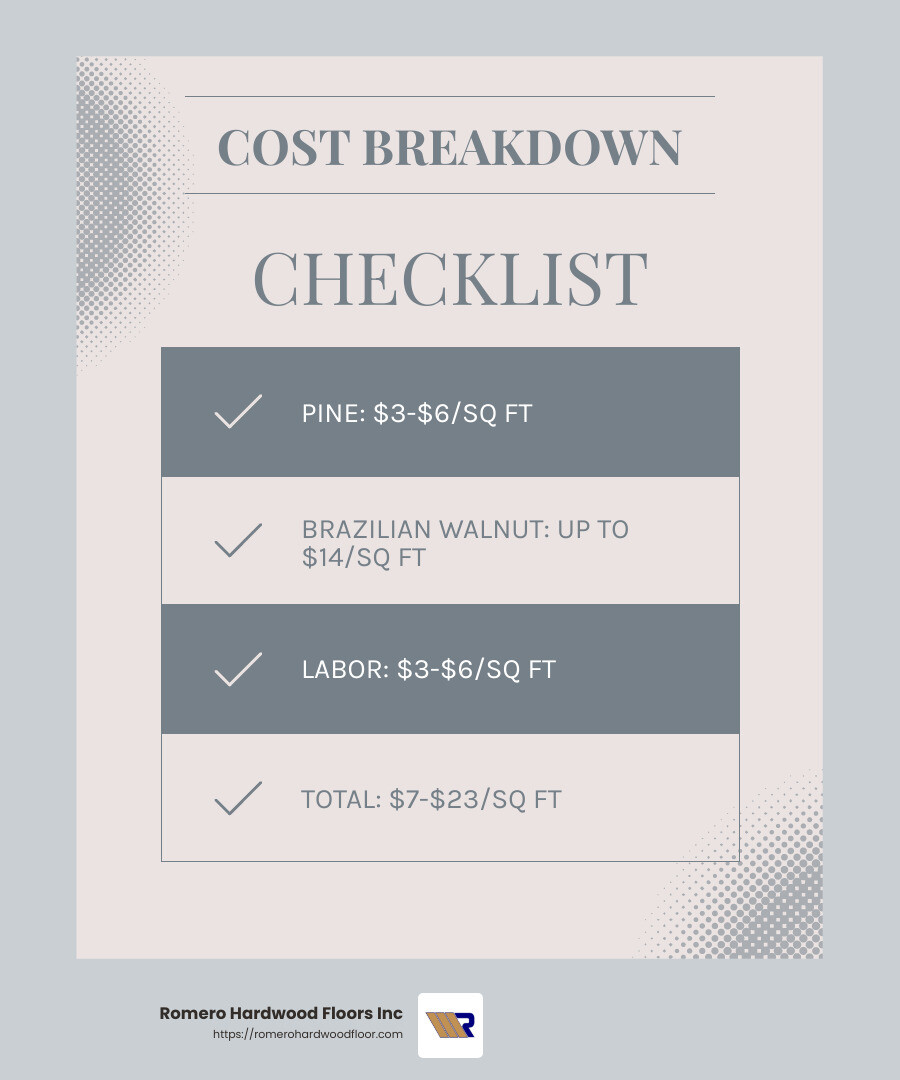
Material Costs: Hardwood flooring materials range widely in price. For instance, pine is on the lower end, costing between $3 and $6 per square foot, while Brazilian walnut can be as high as $14 per square foot.
Labor Costs: Labor for installation typically adds another $3 to $6 per square foot. This cost can vary depending on the complexity of the installation and the contractor’s experience.
Price Range: On average, the total cost for installing new hardwood floors can range from $7 to $23 per square foot. National averages suggest that a full installation will cost around $5,500, but this can be higher for larger areas or more expensive wood types.
Refinishing Hardwood Floors
Refinishing is a cost-effective alternative to installing new floors, especially if your existing hardwood is in decent shape.
Refinishing Costs: The cost to refinish hardwood floors is significantly lower, typically ranging from $2 to $7 per square foot. This includes sanding down the floors and applying a new finish.
Price Range: National averages place the total cost of refinishing around $3,400. This is a more affordable option for homeowners who want to improve their flooring without the expense of new installation.
Refinishing not only saves money but also helps preserve the character and integrity of your existing floors. Plus, with a high ROI of 348%, refinishing offers excellent value for those looking to improve their home’s market appeal.
Understanding these costs and options allows you to choose the best path for enhancing your home’s value with hardwood floors.
Hardwood vs. Other Flooring Options
When choosing flooring, it’s important to weigh the pros and cons of each option. Let’s compare hardwood floors home value with engineered wood, luxury vinyl plank (LVP), and carpet.
Hardwood vs. Engineered Wood
Material Differences:
- Hardwood is solid wood throughout. It’s durable and can be refinished multiple times.
- Engineered Wood has a thin layer of hardwood on top of plywood layers. It’s more stable in humid conditions but can only be refinished once or twice.
Cost Comparison:
- Hardwood costs between $5-$14 per square foot.
- Engineered wood is cheaper, ranging from $3-$10 per square foot.
Refinishing Potential:
- Hardwood can be refinished several times, extending its lifespan.
- Engineered wood’s refinishing is limited due to its thin top layer.
ROI: Both options can increase home value, but hardwood generally offers a higher return due to its longevity and ability to be refinished.
Hardwood vs. Luxury Vinyl Plank (LVP)
Appearance and Durability:
- Hardwood offers a classic, timeless look and is durable but can scratch easily.
- LVP mimics wood and is water-resistant, making it ideal for kitchens and bathrooms.
Cost and ROI:
- LVP is more cost-effective, with a potential ROI of up to 200% on a $5,000 investment.
- Hardwood has a lower ROI percentage, but its classic appeal often adds more to perceived home value.
Buyer Preferences: Many buyers still associate hardwood with luxury, which can improve its appeal in competitive markets.
Hardwood vs. Carpet
Installation Cost:
- Hardwood installation is costly but offers long-term value.
- Carpet is cheaper to install but wears out faster.
ROI and Buyer Preferences:
- Hardwood floors are preferred by most buyers due to their durability and style, offering a better ROI.
- Carpet is often seen as less desirable, especially in high-traffic areas.
Conclusion: While each flooring type has its benefits, hardwood floors often stand out for their ability to increase home value and appeal to buyers. They may require a larger initial investment but can offer significant returns over time.
Additional Tips to Maximize Hardwood Floors Home Value
Enhancing the value of your home with hardwood floors doesn’t stop at installation. Here are some additional tips to maximize hardwood floors home value.
Radiant Floor Heating
Comfort and Energy Efficiency:
Adding radiant floor heating under hardwood floors can significantly boost comfort. This system provides even heat distribution, ensuring no cold spots in your home. Plus, it’s energy-efficient, often using less energy than traditional heating methods.
Value Addition:
Homes with radiant heating are highly appealing to buyers who prioritize comfort and energy savings. This upgrade can make your home stand out in the market and potentially increase its resale value.
Customized Fixtures
Handrails and Design Options:
Consider complementing your hardwood floors with customized fixtures like neat handrails. Choose designs that match your home’s aesthetic for a cohesive look. Well-designed fixtures not only improve safety but also add a touch of luxury.
Safety and Style:
Safety is a priority for many buyers, especially those with young children or elderly family members. Stylish, sturdy handrails can offer peace of mind while adding a sophisticated touch to your home.
Kitchen Upgrades
Modern Appliances and Cabinetry:
Pair your hardwood floors with modern kitchen upgrades. Sleek appliances and updated cabinetry can transform your kitchen into a buyer’s dream. Opt for energy-efficient appliances to appeal to eco-conscious buyers.
Countertops:
Consider replacing old surfaces with durable, nonporous acrylic countertops. They are not only stylish but also easy to maintain, making them a practical choice for busy households.
These upgrades, combined with beautiful hardwood floors, can create an inviting and functional space that attracts potential buyers. By investing in these complementary features, you improve not only the aesthetic appeal but also the overall value of your home.
Frequently Asked Questions about Hardwood Floors Home Value
Do hardwood floors add value to your house?
Yes, hardwood floors home value is a real thing. They can increase your home’s value by about 3-5%, according to CNN. This boost in value makes hardwood floors a smart choice for homeowners looking to sell. Buyers are often drawn to the timeless look and durability of hardwood, which can make your home stand out in a competitive market.
Is it worth it to put hardwood floors in a house?
Absolutely. While the initial cost of installing hardwood floors can be significant—around $4-6 per square foot for materials and $4-8 per square foot for installation—the investment often pays off. The National Association of Realtors (NAR) found that 80% of homeowners feel a greater desire to be home after installing hardwood floors. Plus, the return on investment (ROI) can be around 75%. So, not only do you get a beautiful floor, but you also increase your home’s value.
What flooring adds the most value to a home?
When it comes to adding value, hardwood floors usually come out on top. Compared to other options like carpet or laminate, hardwood is preferred by many buyers for its durability and classic appeal. While carpet can make rooms feel cozy, it doesn’t offer the same resale value. Laminate can be a more affordable option, but it lacks the longevity and refinishing ability of hardwood. In terms of ROI, hardwood floors are a clear winner, making them the best choice for boosting home value.
Conclusion
In summary, installing hardwood floors is a wise investment for homeowners looking to increase their property’s value. Not only do they offer a potential 3-5% boost in home value, but they also appeal to buyers with their timeless beauty and durability. This makes hardwood an excellent choice, especially in a competitive real estate market.
At Romero Hardwood Floors Inc, we’re committed to providing top-notch hardwood flooring solutions that improve both the aesthetic and financial value of your home. Our expert team is dedicated to ensuring that every installation meets the highest standards of quality and craftsmanship. With our competitive pricing and guaranteed workmanship, you can trust us to deliver flooring that not only looks stunning but also stands the test of time.
As you consider upgrading your floors, hardwood offers a significant return on investment, with homeowners often recouping about 75% of the installation costs. Whether you’re planning to sell soon or simply want to enjoy the benefits of a beautiful, durable floor, hardwood is a smart choice.
For those ready to take the next step, contact us at Romero Hardwood Floors Inc to explore your options and find how our flooring solutions can transform your home. We look forward to helping you maximize your home’s value and enjoy the many benefits of hardwood floors for years to come.
