
Hardwood floors installation cost: 5 Key Price Factors
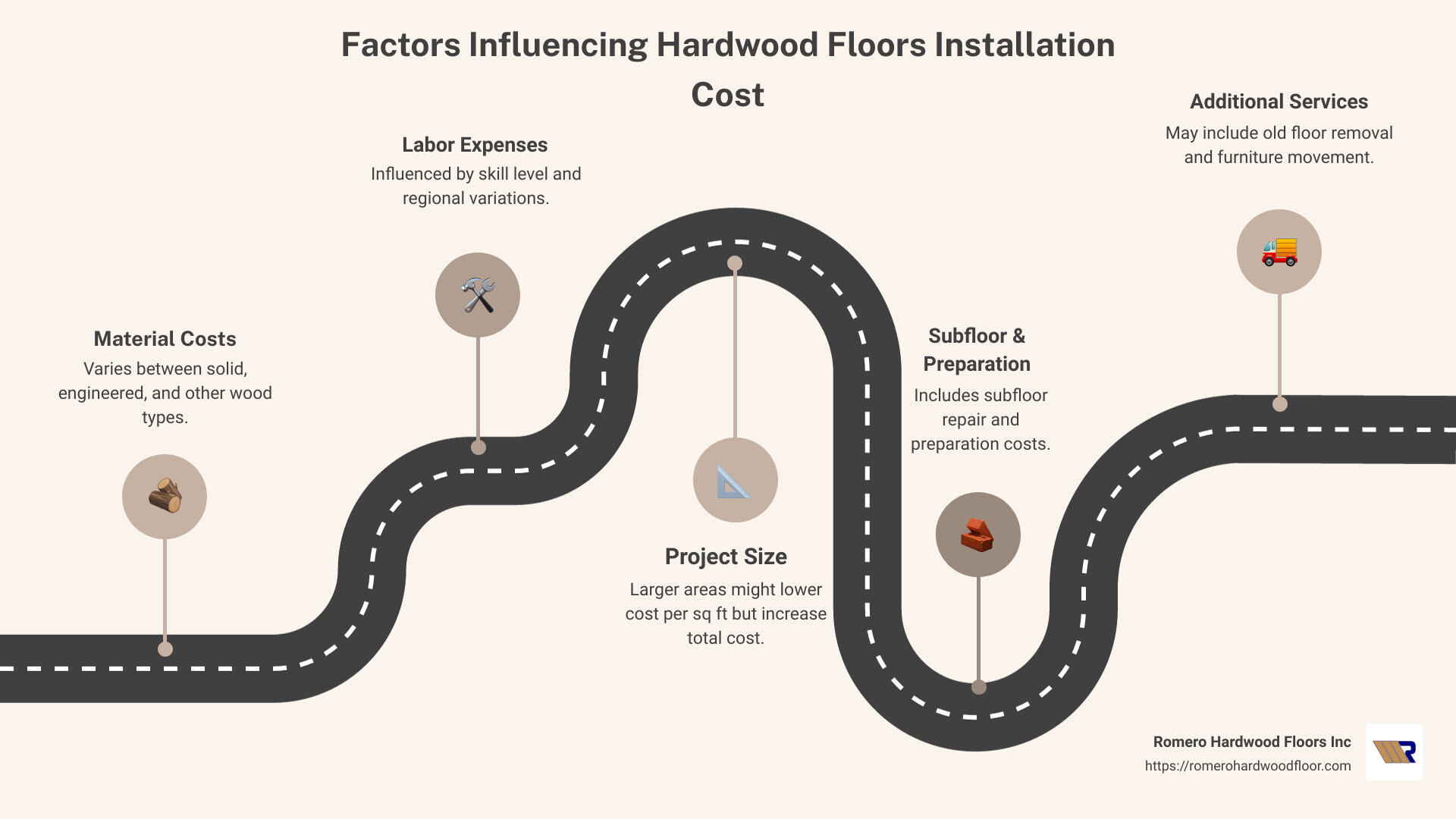
When considering a home upgrade, learning about hardwood floors installation cost is crucial for budgeting and planning. Hardwood flooring is a valuable investment, celebrated for its durability and timeless appeal. However, costs can be influenced by several key factors:
- Material Costs: They vary significantly between solid and engineered wood.
- Labor Expenses: Installing hardwood floors requires skilled craftsmanship, affecting overall cost.
- Project Size: Larger areas increase total expenses but may lower cost per square foot.
- Additional Services: These include the removal of old flooring and subfloor preparation.
Understanding these elements will help you make informed decisions that align with your budget and preferences, ensuring a blend of quality and cost-efficiency.
I am Francisco Romero, the owner of Romero Hardwood Floors Inc., with over 15 years of experience in the hardwood flooring industry. I specialize in providing transparent, high-quality flooring solutions and will guide you through everything you need to know about hardwood floors installation cost.
Hardwood floors installation cost vocab to learn:
– Benefits of hardwood floors
– Hardwood floors home value
– Hardwood floors for basements
Factors Affecting Hardwood Floors Installation Cost
When planning for hardwood flooring, it’s important to consider various factors that can influence the overall cost. Let’s break it down:
Project Size
Cost per Square Foot: The cost of installing hardwood flooring is typically calculated per square foot. Larger projects often have a lower cost per square foot due to economies of scale. However, the total cost will increase with the size of the area.
Total Area: For example, installing hardwood in a 200 square foot room could cost less per square foot compared to a smaller 100 square foot room. This is because labor and material costs are spread over a larger area.
Wood Type
Solid Hardwood: Known for its durability and longevity, solid hardwood is a classic choice. Prices can range from $5 to $10 per square foot, depending on the wood species.
Engineered Hardwood: This type offers stability and moisture resistance, making it ideal for areas with humidity. Costs range from $4 to $9 per square foot.
Prefinished Hardwood: Prefinished options save on labor costs since they don’t require sanding or finishing on-site. They can range from $6 to $12 per square foot.
Parquet and Faux Parquet: These styles offer aesthetic appeal but can be labor-intensive. Costs vary widely based on design complexity.
Labor Costs
Average Labor Costs: Labor costs can vary based on complexity and regional differences. In areas like New York City, labor might be more expensive than in rural locations.
Complexity: Intricate patterns or difficult installations increase labor costs. Simple installations with standard planks are typically less expensive.
Subfloor Preparation
Subfloor Installation and Replacement: Before installing hardwood, the subfloor must be prepared. This could involve installation or replacement, costing $2.20 to $4.75 per square foot.
Joist Repairs: If floor joists need repair due to damage or age, this could add $350 to $1,000 per joist to your project.
Room Layout and Obstacles
Room Shape: Irregularly shaped rooms or those with many angles can increase installation complexity and costs.
Obstacles: Features like stairs or transitions between rooms add to the labor and material costs. Stairs, in particular, require more time and materials.
Additional Services
Floor Removal: Removing old flooring can add $1.50 to $3.50 per square foot for hardwood and $0.70 to $1.60 for carpeting.
Furniture Movement: If you require furniture to be moved, this might incur additional charges.
Finishing and Coating: Applying finishes like polyurethane adds to the cost, but it’s crucial for protecting your floors.
Understanding these factors helps in planning and budgeting for your hardwood flooring project, ensuring you get the best value for your investment.
Cost Breakdown by Hardwood Type
When it comes to hardwood floors installation cost, the type of hardwood you choose plays a significant role in determining the overall expense. Each type offers unique benefits and price ranges. Let’s explore the various options:
Solid Hardwood
Durability and Longevity: Solid hardwood is renowned for its timeless elegance and robustness. It consists of single, solid pieces of wood, which can be refinished multiple times, extending its lifespan significantly.
Cost Range: The price for solid hardwood ranges from $5 to $28 per square foot. This variation depends on the wood species and quality. While it’s a higher upfront investment, the ability to refinish and its long-lasting nature make it a wise choice for many homeowners.
Engineered Hardwood
Stability and Moisture Resistance: Engineered hardwood is designed with multiple layers of wood and plywood, providing excellent stability. It handles moisture and temperature changes better than solid hardwood, making it ideal for basements or areas with fluctuating humidity.
Cost Range: Engineered hardwood is more budget-friendly, with costs ranging from $4.50 to $16 per square foot. Its versatility and adaptability to different environments make it a popular choice.
Prefinished Hardwood
Convenience and Labor Savings: Prefinished hardwood comes with a protective finish applied at the factory, saving time and labor costs during installation. This means no sanding or finishing is required on-site.
Cost Range: Prices for prefinished hardwood range from $6 to $12 per square foot. The convenience and reduced labor make it an attractive option for those looking to minimize disruption during installation.
Parquet and Faux Parquet
Aesthetic Appeal and Labor Intensity: Parquet flooring is composed of small wood pieces arranged in geometric patterns, offering a sophisticated and unique aesthetic. Faux parquet replicates this style using materials like laminate or vinyl.
Cost Range: Parquet flooring is on the higher end, ranging from $20 to $45 per square foot due to its intricate design and labor-intensive installation. Faux parquet offers a more affordable alternative, with costs between $7 and $15 per square foot, providing the look of parquet without the hefty price tag.
Choosing the right hardwood type involves balancing cost with desired aesthetics and functionality. Each option presents its own set of benefits and considerations, helping you tailor your flooring choice to your home’s needs and budget.
Hardwood Floors Installation Cost by Room Size
When planning for hardwood floor installation, the size of the room is a major factor in determining costs. Let’s break it down by room size.
Small Rooms (up to 500 sq ft)
In smaller spaces, the hardwood floors installation cost is generally lower due to the reduced amount of materials and labor required. On average, you can expect to pay between $3,000 and $6,000 for installing hardwood in a small room.
Cost per Square Foot: The cost typically ranges from $6 to $12 per square foot, depending on the type of wood and installation complexity.
Cost-Saving Tips:
– Choose Engineered Hardwood: It offers a similar look to solid wood but at a lower cost.
– DIY Preparation: If you’re handy, consider removing old flooring yourself. This can save you between $1 and $5 per square foot in labor costs.
Medium Rooms (500-1,000 sq ft)
Medium-sized rooms offer a balance between materials and labor costs. The average cost for these spaces ranges from $6,000 to $12,000.
Cost per Square Foot: Expect to pay between $6 and $12 per square foot, similar to small rooms, but the total cost increases with the larger area.
Cost-Saving Tips:
– Bulk Purchase Discounts: Buying materials in bulk can sometimes lead to discounts.
– Simplify Design: Opt for simpler patterns or plank layouts to reduce labor costs.
Large Rooms (1,000+ sq ft)
Larger rooms naturally incur higher costs due to the increased space. Installation costs can range from $12,000 to $24,000 or more, depending on the specifics.
Cost per Square Foot: The range remains consistent at $6 to $12 per square foot, but total costs rise significantly with room size.
Cost-Saving Tips:
– Thinner Planks: Consider using thinner planks, which are less expensive. However, note that they might not last as long.
– Professional Negotiation: Hiring professionals for large projects can sometimes allow for negotiation on labor rates, especially if you’re getting multiple rooms done at once.
Room size significantly impacts the overall cost of your hardwood floor installation. By understanding these costs and applying smart strategies, you can manage your budget effectively, ensuring you get the best value for your investment.
DIY vs. Professional Installation
When it comes to installing hardwood floors, deciding between doing it yourself (DIY) and hiring a professional is a big choice. Each option has its own set of costs, benefits, and challenges.
DIY Installation
Cost Savings:
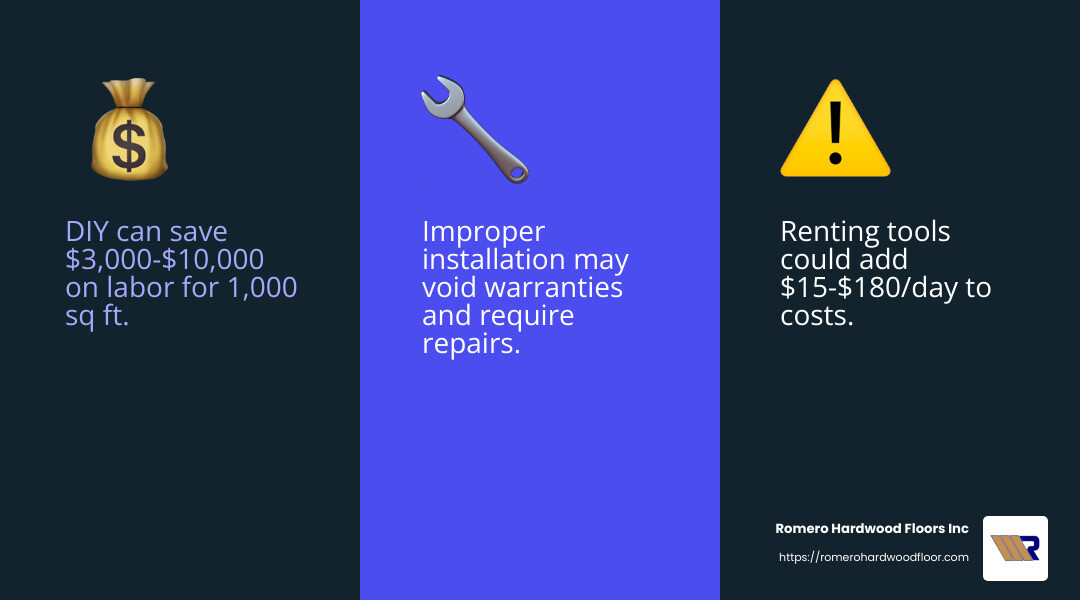
The primary advantage of a DIY approach is the potential for cost savings. By eliminating labor costs, which typically range from $3 to $10 per square foot, you can significantly reduce your expenses. For a 1,000 sq ft area, this could mean saving between $3,000 and $10,000.
Required Tools and Skills:
However, DIY installation isn’t for everyone. You’ll need a range of tools, including a pneumatic floor nailer, miter saw, and moisture meter. Familiarity with these tools is crucial.
Potential Pitfalls:
Mistakes can be costly. Improper installation might lead to issues like warping or creaking floors. These errors can void warranties and lead to additional repairs. Plus, renting equipment can add unexpected costs, ranging from $15 to $180 per day.
Professional Installation
Expertise and Warranties:
Hiring a professional brings expertise and peace of mind. Professionals ensure the job is done right the first time, adhering to manufacturer guidelines, which is key for maintaining warranties.
Long-term Savings:
Though the upfront cost is higher, professional installation can save money in the long run. Quality installation reduces the risk of future repairs and increases the lifespan of your flooring.
Additional Benefits:
Many professionals, like those at Romero Hardwood Floors Inc, offer warranties on their work, providing further protection for your investment. They also manage the entire process, including subfloor preparation and finishing, which can be complex and time-consuming for DIYers.
In summary, while DIY installation can initially save money, professional installation offers expertise and long-term value, safeguarding your investment in hardwood flooring.
Additional Cost Factors
When considering hardwood floors installation cost, several factors beyond the basics can influence the final price. These include the material grade, wood hardness, thickness, and the color and grain of the wood.
Material Grade
Material grade significantly affects the cost of hardwood flooring. There are typically two grades to consider: prime grade and select grade.
- Prime Grade: This is the highest quality wood, offering a uniform appearance with minimal knots and color variations. It is more expensive due to its premium look and feel. If you’re aiming for a flawless finish, prime grade is the way to go, but be prepared for higher costs.
- Select Grade: This grade includes more natural characteristics like knots and color variations, providing a rustic charm. It’s less expensive than prime grade and can be a great option if you’re looking for a balance between quality and budget.
Wood Hardness
The hardness of the wood you choose also plays a role in both the cost and the installation process. Harder woods like hickory or Brazilian walnut are more durable and resist wear and tear better than softer woods like pine.
- Installation Difficulty: Harder woods are tougher to cut and install, which can increase labor costs. Installers may charge more for the additional effort and specialized tools needed.
- Cost Implications: While harder woods might have a higher initial cost, their durability can lead to long-term savings, as they require less frequent replacement or refinishing.
Thickness
The thickness of the hardwood planks influences durability and cost. Thicker planks, such as those that are three-quarters of an inch thick, offer more durability and can be sanded and refinished multiple times.
- Durability: Thicker planks are more durable and can handle more wear, making them ideal for high-traffic areas.
- Cost Implications: The thicker the plank, the higher the cost. However, investing in thicker planks can save money in the long run due to their extended lifespan.
Color and Grain
The aesthetic aspects of hardwood, such as color and grain, also impact cost.
- Aesthetic Preferences: Exotic colors or unique grain patterns can increase the price due to their rarity and the additional processing required.
- Cost Implications: While choosing a unique color or grain can improve the beauty of your space, it often comes with a premium price tag. Balancing aesthetic desires with budget constraints is key.
Understanding these additional cost factors can help you make informed decisions about your hardwood flooring project. By considering material grade, wood hardness, thickness, and aesthetic preferences, you can better plan your budget and achieve the desired look and durability for your floors.
Frequently Asked Questions about Hardwood Floors Installation Cost
How much does it cost to install 1,000 sq ft of hardwood flooring?
Installing hardwood floors in a 1,000-square-foot area can vary widely in cost. On average, you might expect to pay between $6,000 and $12,000. This range depends on factors like the type of wood, the quality of materials, and the complexity of the installation. For instance, using exotic woods or opting for a more intricate installation pattern can drive costs up significantly.
Is it cheaper to install hardwood floors yourself?
While installing hardwood floors yourself can save on labor costs, it’s essential to weigh the pros and cons. Professional installation ensures expertise and often includes warranties, which can be valuable if issues arise later. DIY installation might save money upfront but can lead to costly mistakes if not done correctly. Consider your skill level and the complexity of the job before deciding to take it on yourself.
How long does it take to install hardwood floors?
The time required to install hardwood floors can vary based on several factors:
- Project Size: A single room might take a day or two, while a whole house could take a week or more.
- Complexity: Intricate patterns or additional features like stairs can add to the installation time.
- Team Size: More installers can speed up the process, but quality should not be compromised for speed.
Typically, installing hardwood floors in a standard-sized room takes about 2 to 5 days, including preparation and finishing. That some types of flooring, like solid hardwood, may require acclimation time before installation begins.
Conclusion
Installing hardwood floors is a wise investment for your home, offering durability, aesthetic appeal, and increased property value. Throughout this guide, we’ve broken down the hardwood floors installation cost and explored the various factors that can affect it, from wood type to room size and installation methods.
When considering a flooring project, it’s crucial to balance your budget with your desired outcome. Whether you choose solid or engineered hardwood, each option has its unique benefits and cost implications. Understanding these can help you make informed decisions that align with your expectations and financial plans.
At Romero Hardwood Floors Inc, we pride ourselves on delivering expert flooring solutions that improve the beauty and functionality of your space. Based in Revere, MA, we offer competitive pricing and guaranteed workmanship, ensuring your investment stands the test of time. Our team is committed to providing personalized service, whether you’re updating a single room or overhauling your entire home.
For those contemplating DIY installation, while it might save initial costs, professional installation offers long-term benefits, including warranties and expert handling of complex tasks. Trusting experts can prevent costly mistakes and ensure a flawless finish.
In conclusion, choosing the right hardwood flooring and installation method can transform your home, adding value and comfort for years to come. We invite you to explore our hardwood floor installation services at Romero Hardwood Floors Inc, where our expertise and dedication to quality ensure a seamless experience from start to finish.
Thank you for considering us for your flooring needs. We look forward to helping you create a beautiful and lasting foundation in your home.
