Hardwood Floors Sanding: Top 10 Pro Tips for Stunning Results 2025
Why Hardwood Floors Sanding Can Transform Your Home
Hardwood floors sanding is the process of removing the worn surface layer of wood flooring to reveal fresh wood underneath, followed by applying new stain and finish. This restoration technique can make old, scratched floors look brand new again.
Quick Answer for Hardwood Floors Sanding:
- When needed: Every 7-10 years or when scratches, fading, or water damage appears
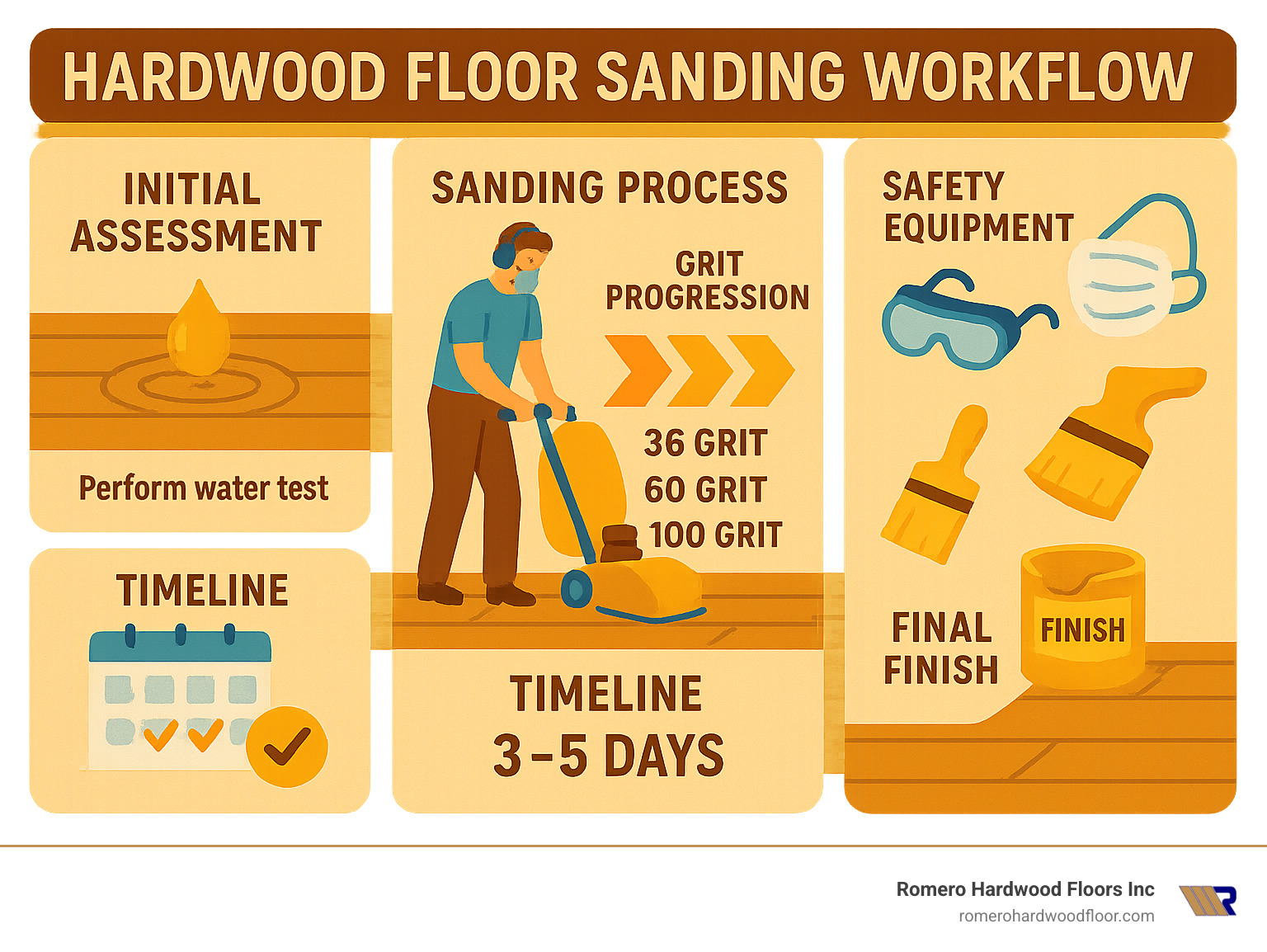
- Process: Coarse sanding (36-grit) → Medium (60-grit) → Fine (80-100 grit) → Stain → Finish
- Cost: DIY averages $1-4 per sq ft; Professional $3-12 per sq ft
- Time: 3-5 days including drying time
- Safety: Requires dust mask, eye protection, and proper ventilation
Your hardwood floors take a beating every day. Kids running around, pets scratching, furniture moving, and years of foot traffic all leave their mark. What once gleamed now looks dull and worn.
But here’s the good news: hardwood floors can last up to 100 years if properly maintained and refinished as needed. Most floors need refinishing every 7-10 years, and solid hardwood can typically be refinished 4-6 times over its lifetime.
The process might seem overwhelming, but it’s actually straightforward when you know the right steps. Start with a simple water-drop test to see if your floors need full sanding or just a light screen and recoat. Then follow the proven grit progression that pros use: coarse to remove old finish, medium to smooth scratches, and fine to prep for staining.
I’m Francisco Romero, owner of Romero Hardwood Floors Inc., and I’ve been perfecting hardwood floors sanding techniques for over 15 years in the Revere, MA area. Whether you’re tackling this as a DIY project or deciding to hire professionals, I’ll walk you through exactly what it takes to transform your floors from drab to fab.
Glossary for hardwood floors sanding:
Do You Really Need to Sand? Simple Tests Before You Start
Not every tired-looking floor needs the full hardwood floors sanding treatment. Before you rent that heavy drum sander or call in the pros, let’s figure out what your floors actually need.
The water-drop test is your best friend here. Just drop a small amount of water on your floor in a few different spots and watch what happens. If the water beads up like it’s sitting on a waxed car, your finish is still doing its job. You might just need some deep cleaning and polishing to bring back that shine.
But if that water soaks right into the wood like a sponge? Well, that’s your floor telling you the protective finish has given up the ghost. Time for refinishing.
Here’s a neat trick we use at Romero Hardwood Floors Inc. – the pencil-mark method. Make small pencil marks along the edges where you’re planning to test sand. When you run the sander over that area with 36-grit sandpaper, those pencil marks disappear right along with the old finish. It’s like having a built-in progress tracker.
Now, before you get too excited about sanding, you need to know what you’re working with. Solid hardwood floors with that classic 3/4-inch thickness are perfect candidates – they can handle being refinished up to 6 times over their lifetime.
Engineered hardwood is trickier. Those thin veneer layers on top might be too delicate for aggressive sanding. Sometimes you get lucky with thicker engineered floors, but many times you’re looking at replacement instead of refinishing.
More info about our professional assessment services
Signs It’s Time for hardwood floors sanding
Sometimes your floors make the decision easy by showing you clear signs that hardwood floors sanding isn’t just helpful – it’s necessary.
Deep scratches and gouges that you can feel when you run your hand over them mean the damage goes beyond the finish layer. These battle scars from furniture moves, pet claws, and years of living can’t be buffed away. They need to be sanded out completely.
Fading and sun damage create those frustrating light and dark patches where your rugs used to be or where sunlight streams through windows. UV rays are sneaky – they penetrate right into the wood grain, creating discoloration that no amount of cleaning products can touch.
Water damage shows up as those telltale gray or black stains that make your heart sink. When moisture soaks deep into the wood, it leaves marks that only sanding can remove.
When a Quick Screen & Recoat Is Enough
Good news – not every dull floor needs the full hardwood floors sanding treatment. Sometimes a screen and recoat can work magic at a fraction of the cost and hassle.
This lighter approach works beautifully when your existing finish is water-based polyurethane and the wood underneath is still in good shape. Instead of aggressive sanding, we use a fine-grit screen (usually 100-120 grit) on a buffer to gently roughen the surface, then apply a fresh coat of finish.
The whole process can be done in a day, and you’re back to walking on your floors much sooner. It’s perfect for floors that just look tired and worn but don’t have serious damage.
Gear Up: Tools, Materials & Safety Essentials
Getting the right equipment for hardwood floors sanding can feel overwhelming, but you only need a handful of key items.
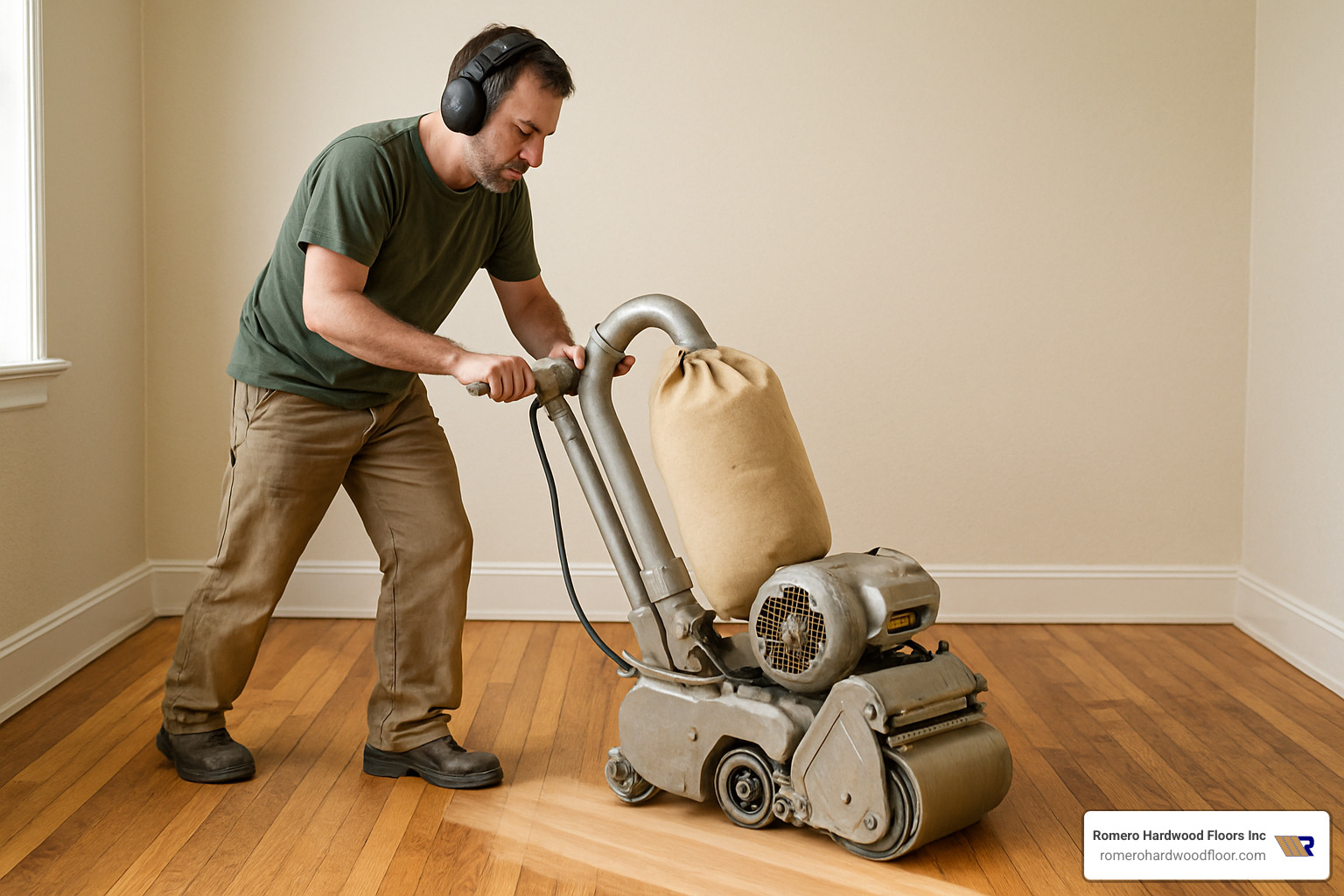
- Drum sander – covers large areas.
- Edge sander – cleans the 6-8″ perimeter.
- Detail or palm sander – finishes tight corners.
Sandpaper grits you actually need: 36 for finish removal, 60 for smoothing, 80-100 for final prep, and a 120-grit screen for buffing. Each belt usually lasts about 250 sq ft, so buy only what your square footage requires.
Safety gear is non-negotiable: N95 or P100 respirator, goggles, ear protection, and work gloves. Wood dust is classified as a Group 1 carcinogen by the International Agency for Research on Cancer—see the NIOSH wood-dust overview to understand the risks.
For finishing you’ll need quality wood filler, stain, and polyurethane plus plastic sheeting and a shop vac for dust control.
More info about our professional-grade equipment and techniques
Choosing the Right Sandpaper Grit
Think of grits as stages:
- Coarse (24-36) – only if multiple thick finish layers exist.
- Medium (60-80) – erases coarse scratches.
- Fine (100-120) – creates a smooth, stain-ready surface.
Always run a small 36-grit test patch first; adjust up or down based on results.
Safety Precautions That Pros Never Skip
- Respirator stays on from first pass to final sweep.
- Hearing protection – sanders exceed 85 dB.
- Ventilation – set a fan blowing outdoors, not into the rest of the house.
- Fire safety – lay oil-soaked rags flat to dry or submerge them in water; they can spontaneously combust.
Following these basics keeps your project efficient, safe, and on budget.
Step-by-Step Guide to Hardwood Floors Sanding
First, empty the room—furniture, rugs, even wall art. Remove doors that swing into the space and label any trim you pull off so it goes back exactly where it came from.
Seal vents and doorways with plastic; dust travels fast. Next, walk the floor and set any nail heads or pull carpet staples so they don’t shred your sanding belts.
Choosing Your Starting Grit
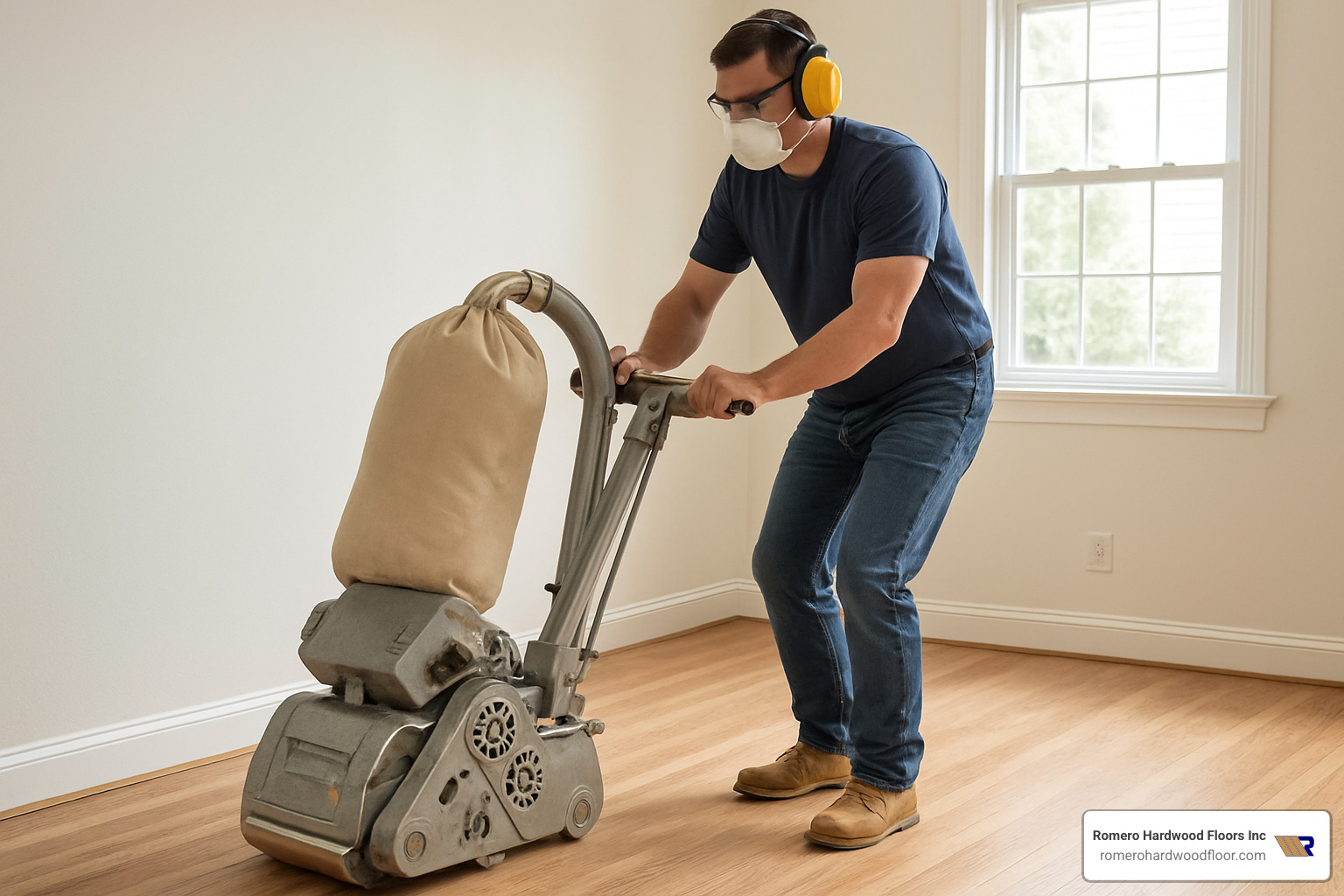
Run a 4 × 4 ft 36-grit test patch on the worst area:
- If bare wood appears after one pass, continue with 36 → 60 → 80.
- If finish remains, drop to 24-grit, then climb back up.
Edges, Corners & Trouble Spots
Match the edger disc grit to the drum sander’s current grit so scratches blend. Keep the edger moving to avoid gouges. Follow with a quick 80-100-grit palm sand to erase swirl marks.
Final Buff & Dust Removal
Screen the floor with a 120-grit pad in overlapping passes, then vacuum every nook and cranny. Finish with a tack cloth. Any dust you leave now will live forever under the polyurethane.
Beyond Sanding: Staining, Sealing & First 72-Hour Care
Sanding is only half the battle—the color and finish make your effort shine.
Test your stain in a closet or behind a door. Wood species, lighting, and previous finishes all change the final look.
Water popping (lightly misting the sanded surface and letting it dry) opens the grain for richer, more even color.
Stain choices:
- Oil-based – deep color, longer dry time, stronger odor.
- Water-based – faster dry, lower VOC, may need an extra coat.
Polyurethane sheens:
- Satin – hides everyday scuffs.
- Semi-gloss or gloss – maximum shine but shows more imperfections.
Plan for three oil-based or four water-based coats. Lightly sand with 220-grit between coats and vacuum thoroughly.
During the first 72 hours: socks only, no furniture, and definitely no rugs. Full cure takes about a week.
Cost, Maintenance & DIY vs. Pro Decisions
Average DIY hardwood floors sanding runs $1-4 per sq ft, while professional work typically falls between $3-12 per sq ft—all based on publicly available internet data, not Romero Hardwood Floors pricing.
DIY cost breakdown for a 500 sq ft room:
- Equipment rental: $200-400
- Sandpaper & supplies: $100-300
- Stain & finish: $150-400
- Safety gear: $50-100
Total: $500-1,200 on the low end, potentially $2,000+ with premium materials.
Pros bring commercial-grade machines, advanced dust containment, and speed—most jobs wrap in 2-3 days.
| Factor | DIY | Professional |
|---|---|---|
| Cost | $1-4/sq ft | $3-12/sq ft |
| Time | 4-7 days | 2-3 days |
| Quality | Variable | Guaranteed |
| Risk | High | Low |
| Equipment | Rental | Included |
| Dust control | Basic | Advanced |
Proper care—felt pads on furniture, area rugs in high-traffic spots, and UV-blocking shades—extends refinishing intervals to 7-10 years.
Frequently Asked Questions about hardwood floors sanding
How many times can my floor be sanded?
Most solid hardwood tolerates 4-6 full sandings. Each pass removes roughly 1/32-1/16 in. Ensure at least 1/8 in of wood remains above the tongue-and-groove.
What grit sequence works for typical wear?
Start with 36 → 60 → 80. If 36 doesn’t cut through the finish, drop to 24. For exceptionally light wear, begin at 60, but always run a small test patch first.
Can engineered hardwood be refinished?
Only if the wear layer is thick enough—generally 1/8 in or more. Many engineered floors allow one very light sanding; thinner products should be limited to a screen-and-recoat.
Conclusion
Hardwood floors sanding is more than just a home improvement project – it’s a complete change that breathes new life into your living space. When you see those first glimpses of beautiful wood grain emerging from beneath years of wear, you’ll understand why this process is so rewarding.
The journey from assessment to final finish might seem daunting at first, but breaking it down into manageable steps makes it achievable. Proper preparation beats rushing every time. Take your time with the water-drop test, choose the right grit progression for your specific floors, and never compromise on safety equipment.
Whether you decide to tackle this as a weekend warrior or call in the professionals depends on your comfort level, available time, and the condition of your floors. There’s no shame in recognizing when a project is beyond your skill level – we’ve rescued plenty of DIY attempts that went sideways!
At Romero Hardwood Floors Inc., we’ve been helping homeowners throughout Revere, MA and the greater Boston area since 2006. We’ve seen every type of floor challenge imaginable, from water-damaged planks to century-old hardwood that just needed some TLC. Our commitment to competitive pricing, punctuality, and guaranteed workmanship means you can trust us whether you need a consultation or complete refinishing services.
Your hardwood floors are an investment that keeps paying dividends. Properly maintained floors can last 100 years or more, and each refinishing cycle adds value to your home while creating a space you’ll love living in. The change from dull and scratched to gleaming and gorgeous never gets old.
Don’t let worn floors drag down your home’s beauty any longer. The path from drab to fab is clearer now, and you have the knowledge to make the right decision for your situation and budget.
More info about our comprehensive hardwood floor services