
Laminate Floor Installers: 3 Steps to Success
Why Choose Laminate for Your Next Project?
While professional laminate floor installers are in high demand, many homeowners are finding they can tackle this rewarding DIY project themselves. If you’re considering laminate, here’s what you need to know:
Key Benefits of Laminate Flooring:
- Cost-effective – Averages $6-$22 per square foot installed, offering the beauty of hardwood at a fraction of the cost. (Note: Pricing is based on general market data and not a quote from Romero Hardwood Floors Inc.)
- Durable – AC ratings ensure 15-25 years of life with proper care.
- Water-resistant – Many modern laminates are 100% waterproof.
- Easy installation – Click-lock systems make DIY possible.
- Variety – Realistic wood and stone looks are widely available.
When to Hire Professional Installers:
- Complex layouts with stairs or multiple rooms
- Severely uneven subfloors
- Limited time or tools
- Desire for a warranty and guaranteed results
Laminate’s advanced protective layers resist scratches and stains, while the high-density fiberboard core provides stability. Unlike carpet, which requires frequent replacement, laminate delivers superior durability and return on investment.
The click-lock installation system has revolutionized DIY flooring, making it possible for determined homeowners to complete a project in a weekend. However, proper preparation remains crucial for long-lasting results.
I’m Francisco Romero, owner of Romero Hardwood Floors Inc. With over 15 years of experience, I’ve worked alongside many laminate floor installers and understand what separates a successful DIY project from a costly mistake.
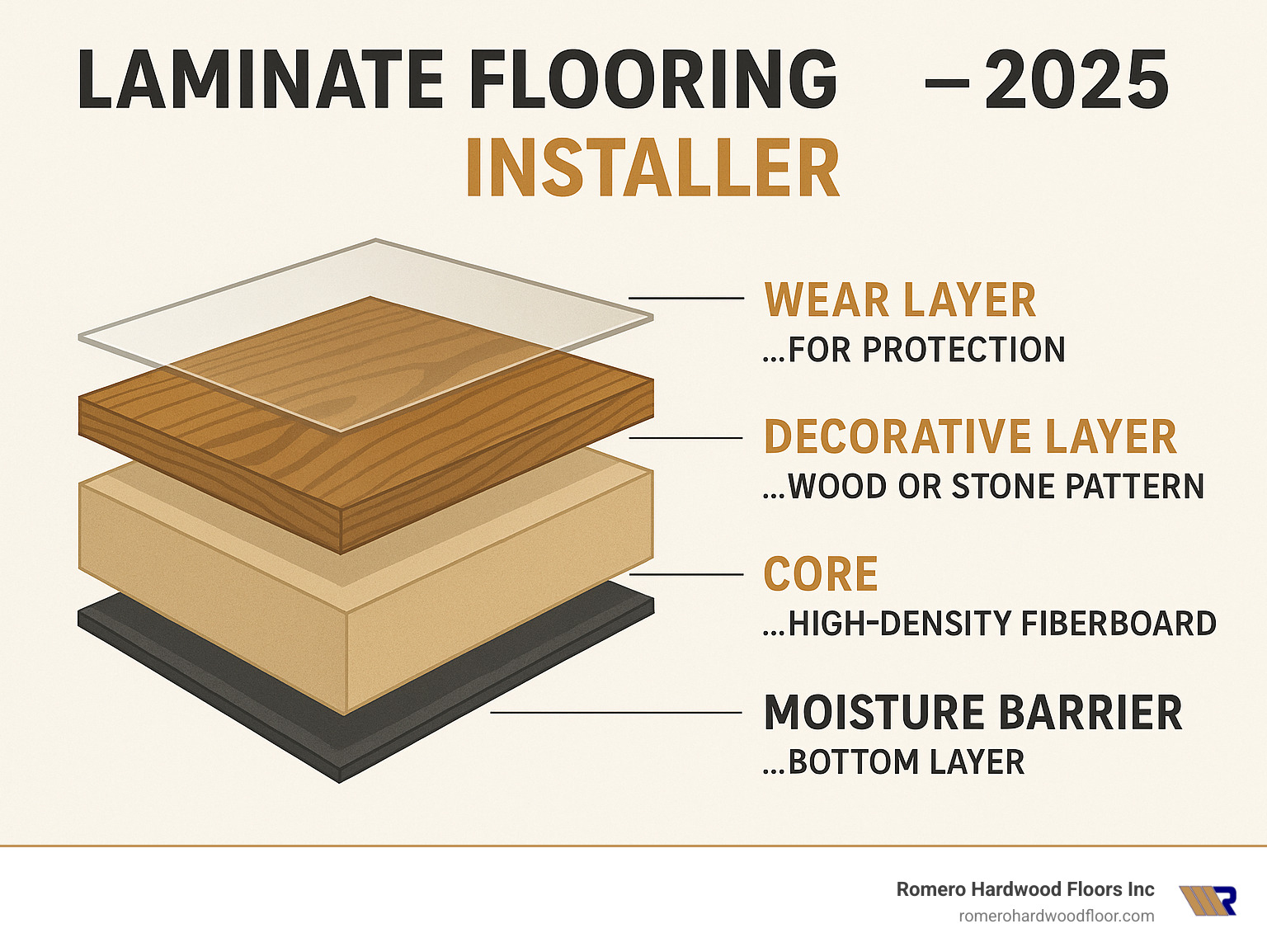
Basic laminate floor installers vocab:
- affordable laminate flooring installation
- high-quality laminate flooring
- laminate flooring for offices
Step 1: Planning and Preparation for a Flawless Finish
Proper preparation is the secret to a flawless laminate installation. Rushing this phase is a common mistake that leads to problems later. As a 15-year flooring veteran, I can tell you that this is where your beautiful floors are truly born.
Choosing Your Laminate Flooring
Modern laminate offers incredibly realistic looks. Here’s how to choose the right one:
- Types: Most residential laminate is Direct Pressure Laminate (DPL), where all layers are fused at once. High-Pressure Laminate (HPL) is a tougher, multi-step option ideal for high-impact areas.
- AC Ratings: This measures durability. AC1 is for light traffic (bedrooms), AC2 for moderate traffic (living rooms), and AC3 is a great all-around choice for busy homes and even light commercial use. AC4 and AC5 are for heavy commercial spaces. Expect to pay $1 to $3.50 more per square foot for higher ratings, but you’re buying longevity.
- Plank Thickness: While 6mm planks are available, 8mm to 12mm planks feel more solid, are more forgiving on imperfect subfloors, and offer better textures.
- Water Resistance: Many modern options are highly water-resistant or even 100% waterproof, making them suitable for kitchens and bathrooms. However, standing water should still be avoided.
- Underlayment: Some planks come with it attached. If not, you’ll need a separate roll for cushioning, sound dampening, and moisture protection. It’s often required to keep your warranty valid.
For deeper insights, check our guide on High Quality Laminate Flooring.
Tools and Materials Checklist
Having the right tools makes the job much smoother. You don’t need a full workshop, but these are essential.
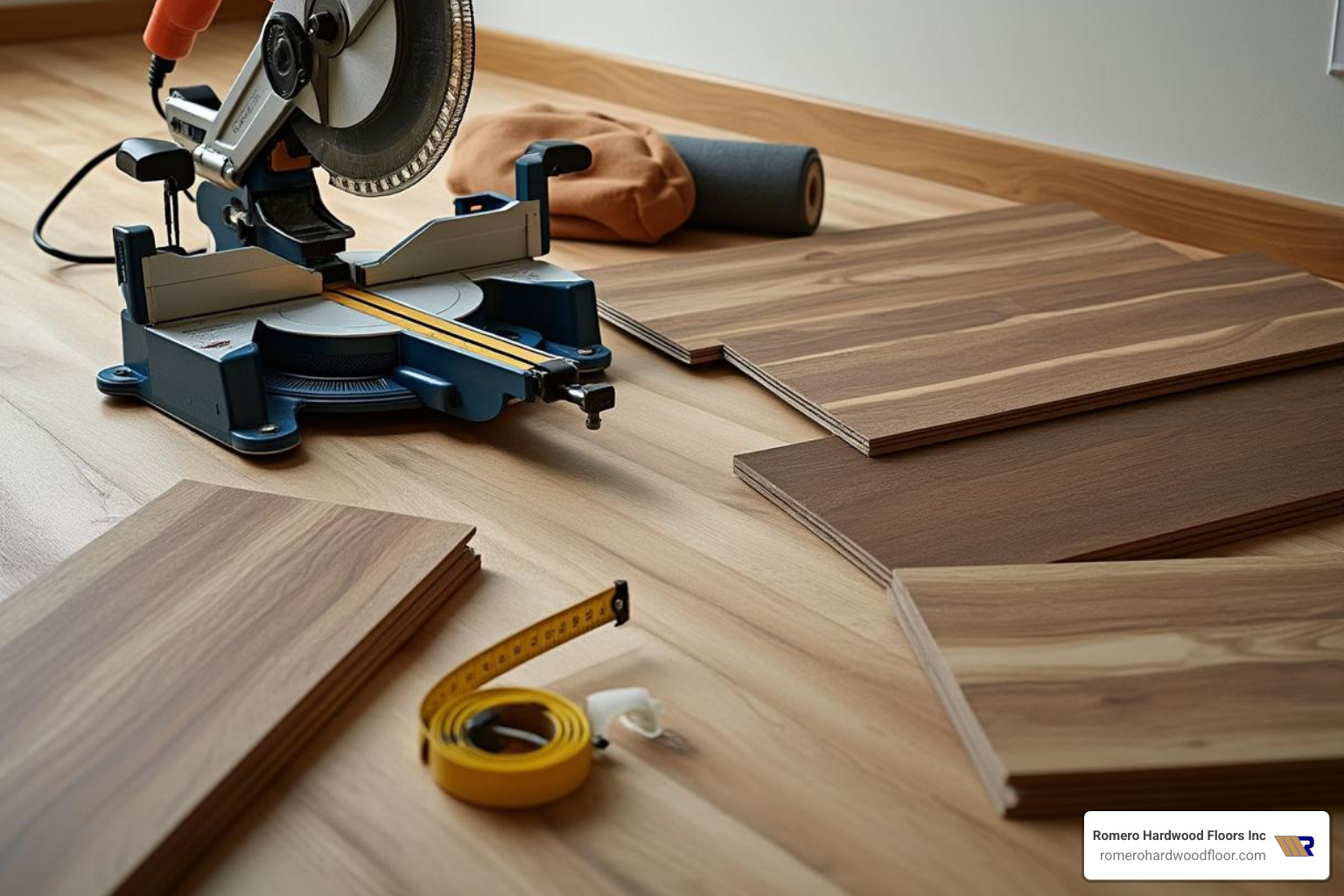
- Essential Tools: Miter saw (or circular saw), jigsaw, tape measure, pencil, tapping block, rubber mallet, pull bar, spacers, safety glasses, and knee pads.
- Materials: Your chosen laminate planks (buy 10-15% extra for cuts and mistakes), underlayment (if not attached), vapor barrier (for concrete subfloors), transition moldings, and baseboards or quarter round.
Preparing the Subfloor
Professional laminate floor installers know that a successful job depends on a perfect subfloor.
- Remove Old Flooring: Never install laminate over soft flooring like carpet. Start with a clean slate.
- Clean Thoroughly: Sweep, vacuum, and scrape away any debris, nails, or old adhesive. Anything left behind can create bumps or squeaks.
- Check for Levelness: Use a long level to find high and low spots. Most manufacturers require the floor to be flat within 1/8 inch over 10 feet. Use a leveling compound or sand down high spots as needed. It’s much easier to fix this now than to live with gapping floors later.
- Acclimate Your Flooring: This is a critical, non-negotiable step. Let the unopened boxes of laminate sit flat in the installation room for 48-72 hours. This allows the planks to adjust to your home’s temperature and humidity, preventing buckling or gapping after installation.
For more tips, explore our Laminate Floor Installation Tips.
Step 2: The Installation Process – A Step-by-Step Guide
With the prep work done, it’s time for the exciting part: laying the laminate. This is where your new floor takes shape, piece by piece.
Laying the Underlayment and First Row
First, we lay the foundation for your planks: the underlayment and vapor barrier. These provide cushioning, sound dampening, and moisture protection.
If you’re installing over concrete, a vapor barrier is essential to block moisture that can warp the planks. Roll out the plastic sheeting, overlapping the seams by 6-8 inches and sealing them with moisture-resistant tape. Run the barrier a few inches up the walls to be trimmed later.
Next, roll out the underlayment, butting the edges together without overlapping (unless the manufacturer specifies otherwise). Tape the seams to create a single, flat layer.
Now, plan your layout. It’s best to start along the longest, straightest wall. Measure the room’s width and divide by the plank width. If the last row will be too narrow (less than 2-3 inches), cut your first row lengthwise to ensure a balanced look.
Begin laying the first plank in a corner, with the tongue side facing the wall. A crucial rule from all experienced laminate floor installers is to use expansion gap spacers. Laminate expands and contracts with humidity changes. You must leave a 1/4 to 3/8-inch gap around the entire room’s perimeter to prevent the floor from buckling. These small spacers are vital for your floor’s long-term health.
Clicking Planks and Cutting to Fit
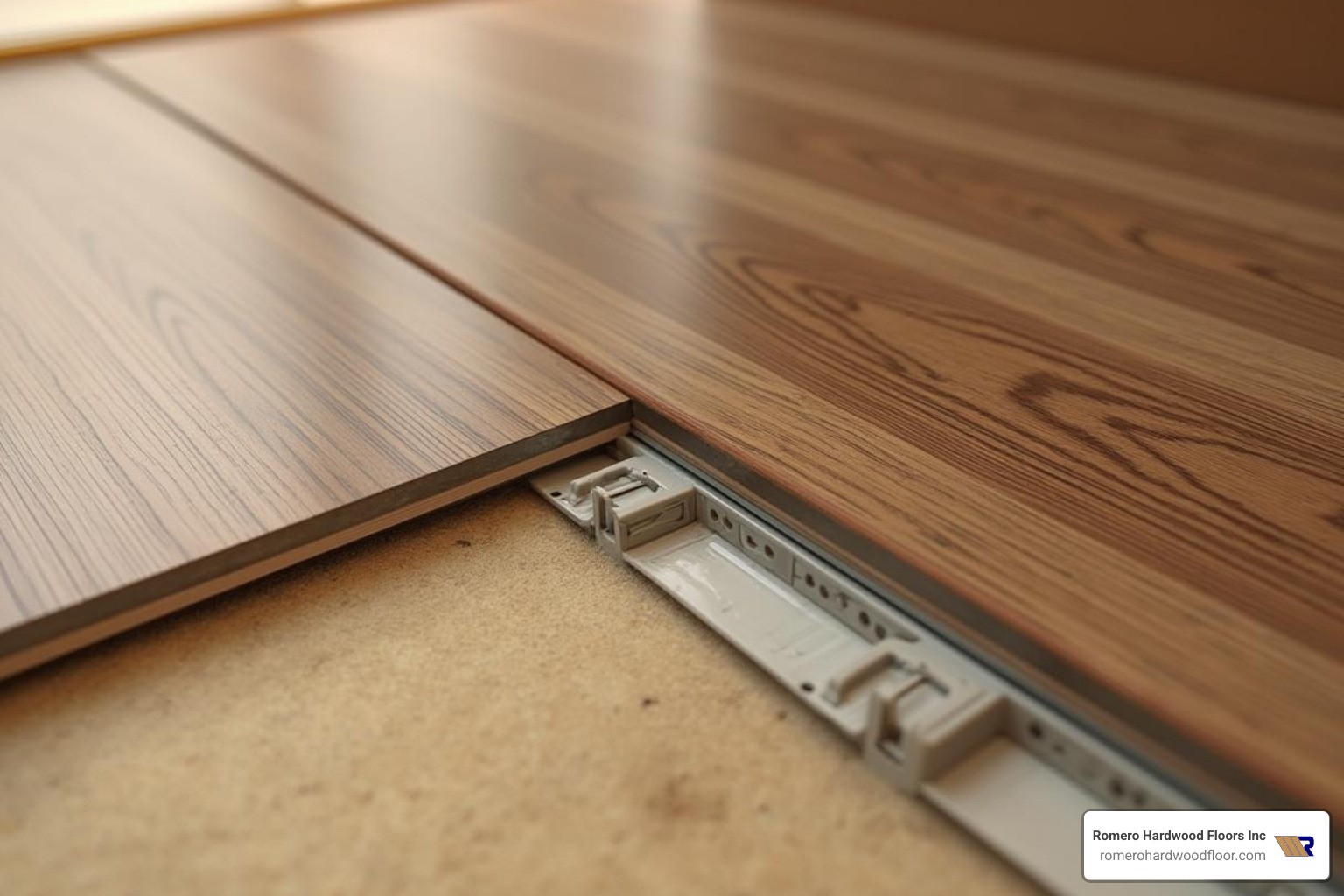
The click-lock system makes modern laminate installation intuitive. Angle the tongue of a new plank into the groove of the previous one and press down until it clicks. A gentle tap with a tapping block and mallet can ensure a tight seam.
To create a strong, natural look, stagger the seams between rows by at least 6-8 inches. A great way to minimize waste is to use the cut-off piece from the end of one row to start the next, as long as it’s over 8-12 inches long.
When you reach the end of a row, measure and cut planks to fit, remembering to subtract the expansion gap. A miter saw provides the cleanest cross-cuts.
For doorways and obstacles, it’s best to undercut the door frame. Use a scrap piece of laminate and underlayment as a height guide and cut the bottom of the frame with a jigsaw. This allows the plank to slide underneath for a clean, professional finish. Use a jigsaw for other obstacles like vents, always leaving an expansion gap.
For more detailed steps, see our Laminate Flooring Installation guide.
Finishing Touches and Common Challenges
These final steps give your project a polished look.
Installing the last row can be tricky. Cut the planks to the correct width (minus the expansion gap), then use a pull bar to hook behind the plank and tap it with a mallet, pulling it tight against the previous row.
Use transition strips where laminate meets other flooring types or at doorways. These cover the expansion gap and create a smooth transition. Most come with a track that is screwed to the subfloor, with the top piece clicking into place.
Finally, re-install your baseboards and trim. This covers the expansion gap around the room’s perimeter. Nail the trim to the wall, not the floor, to allow the laminate to move freely.
Be aware of common issues:
- Peaking and Gapping: Usually caused by an insufficient expansion gap or improper acclimation.
- Clicking/Creaking: Often traced to an uneven subfloor or debris trapped underneath.
- Water Damage: Even with water-resistant laminate, standing water is the enemy. Clean up spills immediately to prevent buckling and other damage.
When to Call Professional Laminate Floor Installers
While DIY laminate installation is rewarding, some situations call for professional laminate floor installers. Knowing when to hire an expert is smart planning, ensuring a flawless finish that a complex job demands.
Signs You Might Need Professional Laminate Floor Installers
Be realistic about your skill, time, and the project’s challenges. Calling an expert isn’t a failure; it’s a strategic decision. Here are signs you might need a pro:
- Complex Room Layouts: Rooms with many angles, curves, or a layout that connects multiple spaces require intricate cuts and precise measurements that are best handled by experienced installers.
- Stairs: Installing laminate on stairs is a specialized skill. It requires exact cuts for treads and risers to ensure a safe and professional result.
- Severely Uneven Subfloors: If your subfloor has significant dips or humps (more than 1/8 inch over 6 feet), it may require extensive leveling work that is beyond a typical DIY scope.
- Lack of Proper Tools or Time: A professional crew can complete a job in a few days that might take a DIYer much longer. If you lack the time or don’t want to invest in specialized tools, hiring a pro is more efficient and can prevent costly mistakes.
- Desire for a Guaranteed, Polished Look: For a truly seamless finish that improves property value, professional installation is the surest bet.
When you need a helping hand, finding Professional Laminate Floor Installers is the right move.
Understanding the Cost of Hiring Laminate Floor Installers
Understanding the potential costs is a key part of planning. Please note that the costs provided here are average costs based on internet data from various sources and are not actual costs for Romero Hardwood Floors Inc. Our pricing is determined by the specific details of each unique project.
Based on current internet data, you might see average installation ranges from $6 to $20 per square foot. However, complex projects, high-end materials, and local labor rates can push costs higher. The total cost for a flooring project can range from $1,500 to over $4,500, depending on the scope.
Several factors affect the final price tag: project size, subfloor condition (extensive prep work adds cost), regional labor rates, material choices (higher AC ratings or waterproof features cost more), and job complexity (stairs, intricate layouts). Old flooring removal and disposal will also be an additional charge.
While professional installation is an investment, it ensures a high-quality finish that improves your property’s value. For a customized estimate, it’s always best to contact professionals directly. You can also explore our Laminate Flooring Cost Estimate resources.
Questions to Ask a Potential Installer
Before hiring any laminate floor installers, ask these key questions to ensure you’re choosing the right team:
- Are you licensed and insured? This protects you from liability for accidents or damage.
- Can you provide references or a portfolio? Seeing past work provides peace of mind.
- What is the estimated timeline for my project? This helps you plan accordingly.
- What does your quote include? Get an itemized quote covering all costs (labor, materials, prep, removal) to avoid hidden fees.
- Do you offer a workmanship warranty? A reputable installer should stand behind their work.
- How do you handle subfloor preparation and expansion gaps? Their answer reveals their attention to critical details.
- What underlayment do you recommend and why? This demonstrates their knowledge of materials.
- How will you protect my home during installation? They should have a plan for covering furniture and cleaning up.
Post-Installation: Care and Maintenance for Lasting Beauty
Congratulations on your new laminate flooring! Whether you did it yourself or hired professional laminate floor installers, proper care is key to ensuring it looks fantastic for its entire 15- to 25-year lifespan.
Cleaning Your New Laminate Floors
Laminate is low-maintenance, but a simple routine is essential to protect the wear layer and keep your floors gleaming.
Regularly sweep or dust mop to remove grit and dirt that can scratch the surface over time. For a deeper clean, use a damp (not wet) mop with a laminate-specific, pH-neutral cleaner. A quick wipe is usually all that’s needed.
Important: Never wet mop or use a steam mop on laminate floors. Excessive water or steam can seep into the seams and cause the core to swell, leading to irreversible damage. Also, avoid harsh chemicals, wax-based cleaners, oil soaps, and abrasive scrubbers, as they can dull the finish or leave a residue.
For more detailed guidance, explore our Laminate Floor Cleaning Services insights.
Protecting and Repairing Your Floors
A few preventative measures can significantly extend the life of your floors.
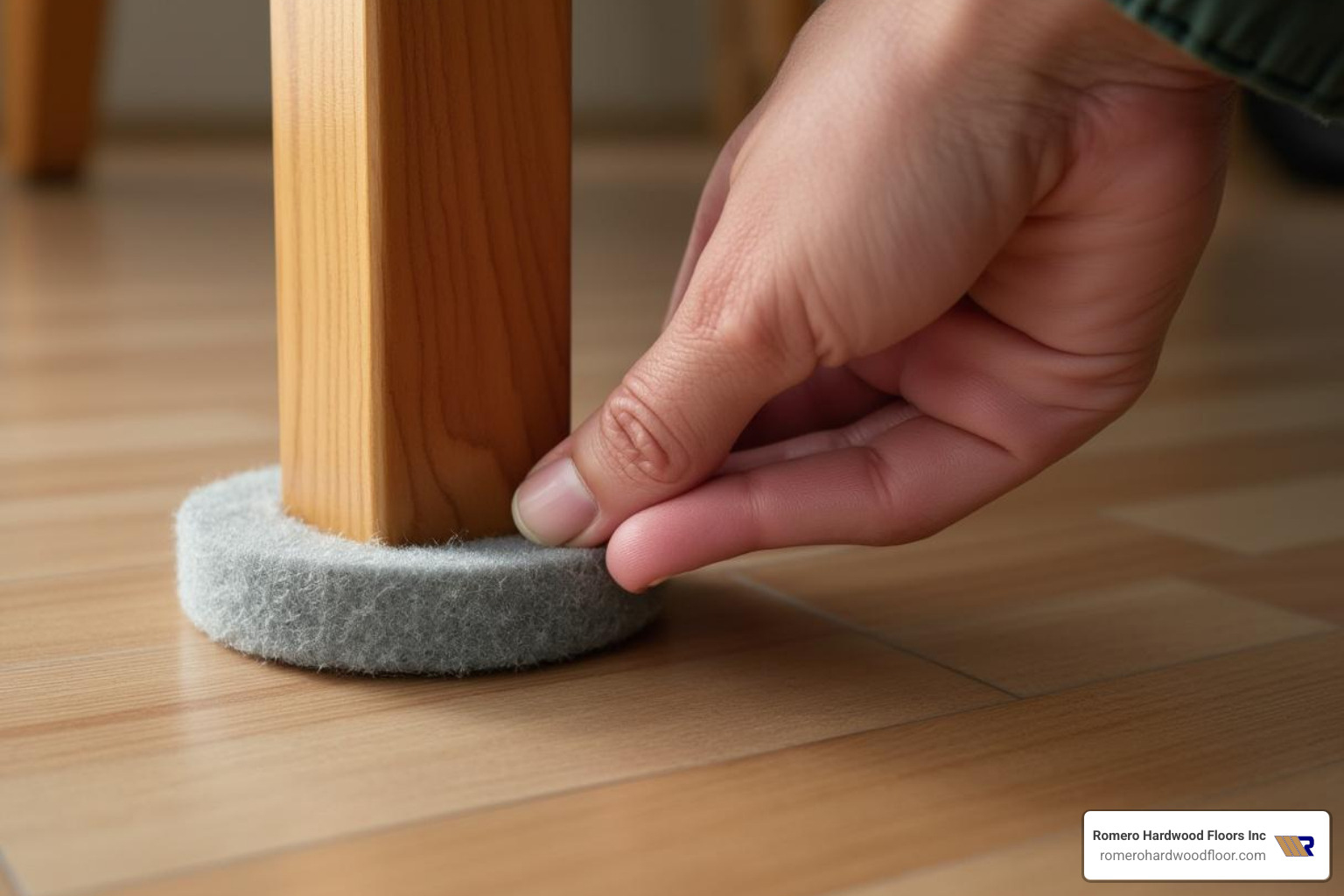
Applying felt pads to the legs of all furniture is one of the most effective ways to prevent scratches and scuffs. Also, be sure to wipe up any spills immediately with a clean, dry cloth to prevent moisture from seeping into the planks.
For minor scratches, laminate repair kits with color-matched fillers or pens can help camouflage the damage. For larger issues, however, you may need professional help.
If you have significant damage like deep gouges, widespread buckling from water, or other issues beyond a simple fix, it’s time to call the experts. Professional laminate floor installers or repair specialists can assess the damage and recommend the best solution, which may involve replacing individual planks to restore your floor’s beauty.
If your floors need professional attention, our Laminate Floor Repair Specialists are ready to assist.
Conclusion: Enjoy Your Beautiful New Floors
We’ve covered the entire process of installing laminate flooring, from planning and preparation to the final finishing touches and long-term care. Whether you choose to DIY or bring in the pros, it’s a rewarding home improvement project that adds significant value and style to your home.
Modern laminate offers the stunning look of wood or stone with incredible durability, a wide variety of styles, and a surprisingly easy to install click-lock system. It’s a smart, beautiful, and cost-effective choice.
Whether you acceptd your inner laminate floor installers and tackled the project yourself or wisely called in experts for a guaranteed result, you now have a refreshed living space to enjoy for years to come.
Here at Romero Hardwood Floors Inc., we’ve been helping homeowners in Revere, MA, and surrounding communities like Beverly, Chelsea, and Salem achieve their dream floors since 2006. We are known for fair pricing, punctuality, and guaranteed quality work. While hardwood is our specialty, our deep expertise extends to all flooring solutions, including laminate.
For a truly professional result on your next flooring project, or if you simply need expert advice, trust the experts. We’re here to help you create the perfect foundation for your home. Explore our services at Flooring Installation.
Like us on Facebook!
