
Protect Hardwood Floor: Top 5 Tips for Flawless Finish
Why Protecting Your Hardwood Floors Matters
To protect hardwood floor surfaces and keep them beautiful for decades, consistent care is essential. These floors are a significant investment, adding value and elegance to your home, but daily life can take a toll.
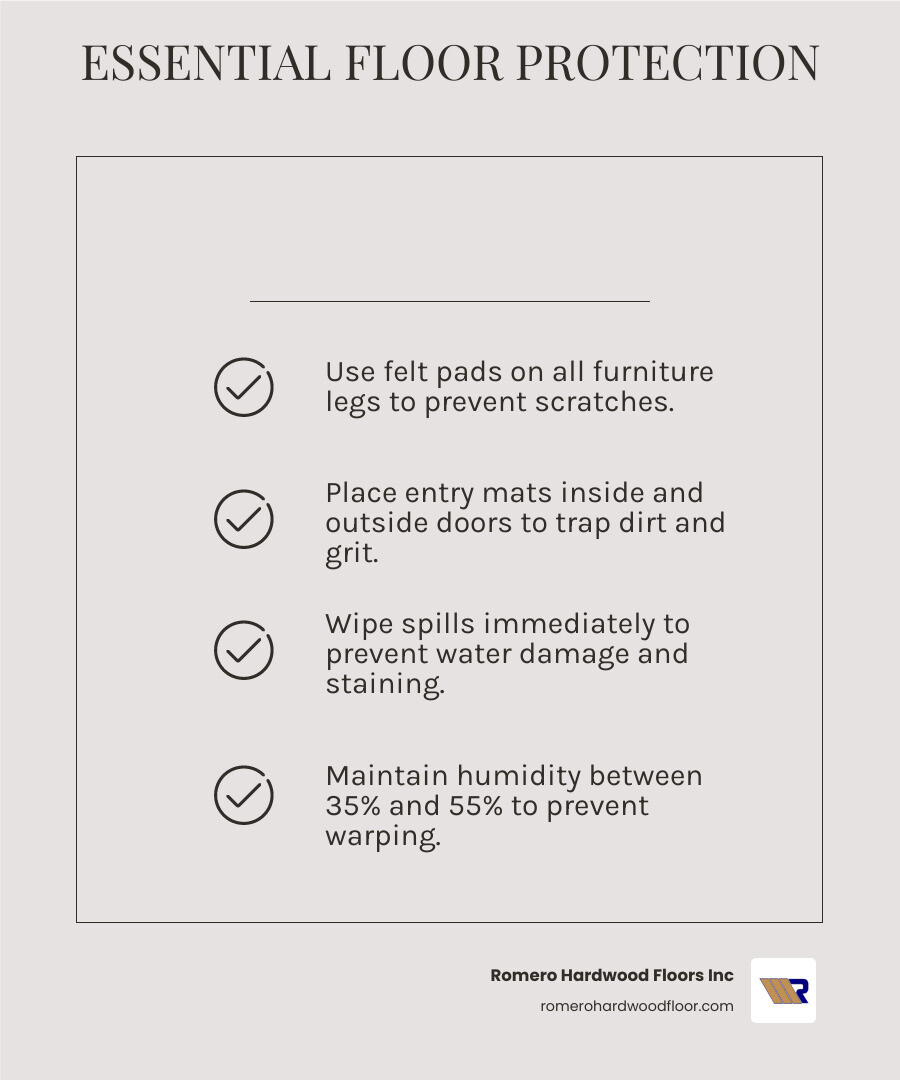
Quick Protection Checklist:
- Use felt pads on all furniture legs.
- Place entry mats at all doors.
- Wipe spills immediately to prevent water damage.
- Maintain humidity between 35% and 55%.
- Avoid wet mopping; use a damp microfiber mop.
- Trim pet nails regularly.
- Implement a no-shoes policy.
- Use UV-blocking window treatments.
Everyday threats like tracked-in grit, furniture legs, and water spills can cause scratches, dents, and warping. With the average cost of wood floor replacement potentially exceeding $12,000, prevention is far more cost-effective. The good news is that most damage is preventable with simple habits.
As Francisco Romero, owner of Romero Hardwood Floors Inc., I’ve spent over 15 years helping homeowners in Revere, MA, protect their floors. In this guide, I’ll share the key strategies to keep your floors looking flawless.
Understanding the Top Threats to Your Hardwood Floors
Your hardwood floors are durable, but they face daily threats. Understanding these culprits is the first step to effectively protect hardwood floor surfaces from harm.
Scratches, Dents, and Abrasions
The most common damage comes from physical wear and tear.
- Grit and dirt: Tiny particles of sand and dirt tracked in from outside act like sandpaper, grinding away at your floor’s finish with every step and causing it to look dull.
- Furniture movement: Dragging chairs or tables without protective pads concentrates immense pressure on small points, leading to deep scratches, scuffs, or gouges.
- Pet’s nails: Untrimmed claws on dogs and cats can easily scratch softer woods and even damage harder species over time.
- High heels: These can exert thousands of pounds of pressure per square inch, leaving behind telltale dents that can damage even concrete, let alone wood.
More serious impacts can cause scuffs (surface marks) or gouges (deep cuts into the wood), which often require professional repair.
Moisture, Spills, and Humidity
Water is wood’s mortal enemy. As a natural material, wood swells when it absorbs moisture and shrinks when it dries.
- Spills and Wet Mopping: Excess water causes boards to swell, leading to warping (twisting) and cupping (edges rising). Liquids like coffee, wine, or pet accidents can also cause permanent staining if not cleaned immediately.
- Humidity Fluctuations: Constant changes in indoor humidity cause wood to expand and contract. Too much humidity leads to swelling, while too little can cause gaps and cracking. This movement stresses the wood and its protective finish.
- Hidden Dangers: Trapped moisture can lead to mold growth and wood deterioration. It also breaks down the chemical bonds in your floor’s finish, leaving the raw wood vulnerable.
Sunlight and Chemical Damage
Some threats are slow and silent, causing damage over time.
- Sunlight: UV rays cause fading and discoloration in a process called photochemical oxidation. Areas exposed to direct sun will lighten or darken, creating “tan lines” on your floor where rugs or furniture once sat.
- Harsh Cleaners: Never use bleach on hardwood; it strips the finish and permanently discolors the wood. Other products containing ammonia, strong alkalis, or oil soaps can also strip the protective layer, leave a dull film, or create slippery surfaces.
This chemical damage leads to finish stripping, leaving the raw wood exposed and vulnerable to all other threats. Understanding these enemies is the key to creating a strong defense for your floors.
Everyday Strategies to Protect Your Hardwood Floor
Defending your floors doesn’t require extraordinary effort. To protect hardwood floor surfaces, it’s about building smart daily habits. An ounce of prevention is worth a pound of cure, and these strategies will help keep your floors looking new for decades.
How to Protect Hardwood Floor from Furniture Damage
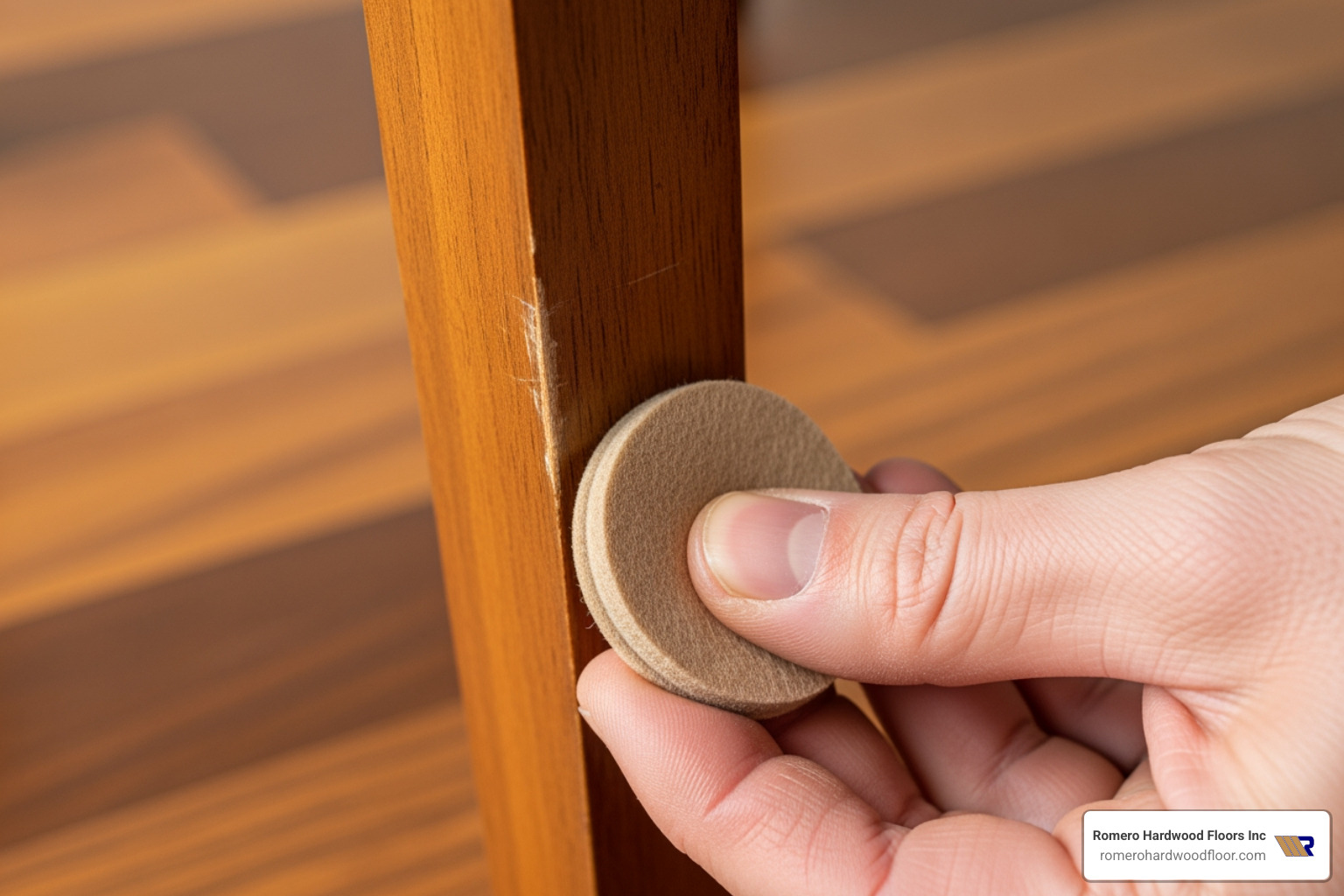
Your furniture can be a silent destroyer of your hardwood. The most effective step is to apply high-quality felt pads to every furniture leg—chairs, tables, sofas, and beds. Inspect them every few months and replace them when they wear down. For heavy, stationary items, use furniture coasters to distribute weight and prevent indentations.
When moving heavy appliances like a refrigerator, never drag them. Use ¼ inch plywood sheets as tracks or an appliance dolly to lift the item completely off the floor. Cardboard is not enough protection. For office chairs, use a dedicated mat or replace the hard plastic casters with softer, rollerblade-style wheels that glide gently.
The Critical Role of Rugs, Mats, and a “No-Shoes” Policy
What you track in causes significant damage. Create a two-mat system at every entrance: a coarse mat outside to scrape off debris and a softer walk-off mat inside to trap fine particles and moisture.
Area rugs protect high-traffic zones, but the pad underneath is crucial. Always use breathable rug pads made of felt or natural fibers. Avoid rubber or vinyl-backed rugs, as they can trap moisture, discolor the finish, or even adhere to the floor over time.
The most effective strategy is a no-shoes policy. This single habit eliminates most of the abrasive grit and moisture tracked indoors and removes the risk from damaging footwear like high heels. For guests, consider keeping disposable shoe covers by the door as a polite alternative.
Special Considerations to Protect Hardwood Floor from Pets
You can enjoy both happy pets and beautiful floors with a few precautions.
Keep your pet’s nails trimmed short and filed smooth to prevent scratches. Keep a towel by the door to wipe muddy paws. Place waterproof mats under food and water bowls to catch spills and protect the floor from standing water and saliva.
When choosing wood, consider the Janka hardness scale rating, which measures resistance to dents. Harder species like hickory (1880) or maple (1450) are more resistant to pet scratches than a standard red oak (1360). While no wood is completely “dog-proof,” a harder species makes a significant difference.
| Flooring Type | Durability (Scratch/Dent) | Water Resistance | Comfort (for pets) | Notes |
|---|---|---|---|---|
| Solid Hardwood | Good to excellent (varies by species) | Poor to moderate | Excellent | Choose harder species for better scratch resistance. Can be refinished multiple times. |
| Engineered Hardwood | Good to excellent | Moderate to good | Excellent | High-quality options can be very durable and are less prone to moisture damage. |
Both solid and engineered hardwood can work in pet-friendly homes with the right species choice and proper care.
Why Protecting Your Hardwood Floors Matters
Protect hardwood floor surfaces to preserve their beauty and your home’s value. Daily activities can lead to wear, but most damage is preventable with simple habits.
Threats like tracked-in grit, furniture scratches, and spills can cause significant damage over time. Considering the high cost of replacement, preventative maintenance is the most cost-effective strategy.
As Francisco Romero of Romero Hardwood Floors Inc., I’ve seen how proper care can extend a floor’s life for decades. This guide shares our most effective strategies for homeowners in Revere, MA, and beyond.
Understanding the Top Threats to Your Hardwood Floors
To protect hardwood floor surfaces, you must first know what you’re fighting against. Hardwood is tough, but several common culprits can diminish its beauty and lifespan.
Scratches, Dents, and Abrasions
Physical damage is the most visible threat.
- Grit and Dirt: These act like sandpaper underfoot, creating micro-scratches that dull your floor’s finish.
- Furniture and High Heels: Dragging furniture or walking in stilettos concentrates immense pressure, causing scratches, scuffs, and deep indentations.
- Pet Claws: Untrimmed nails can easily scratch and damage the wood surface.
Moisture, Spills, and Humidity
Water is hardwood’s most dangerous enemy. Wood naturally reacts to moisture, which can lead to serious issues.
- Spills: If not cleaned immediately, liquids cause boards to swell, warp, or cup. They can also lead to permanent stains and odors.
- Humidity: Extreme humidity fluctuations cause wood to expand and contract. Too much moisture leads to swelling, while dry air can cause gapping and cracks.
- Finish Damage: Excess moisture breaks down the protective finish, leaving the raw wood vulnerable.
Sunlight and Chemical Damage
These threats work slowly but cause significant harm.
- Sunlight: UV rays cause fading and discoloration, creating uneven “tan lines” on your floor.
- Improper Cleaners: Chemicals like bleach, ammonia, or oil soaps can strip the finish, discolor the wood, and leave a dull, slippery residue.
Understanding these threats is the first step toward effective, long-term floor protection.
Everyday Strategies to Protect Your Hardwood Floor
Protecting your hardwood floors is about establishing smart daily habits. An ounce of prevention is truly worth a pound of cure.
How to Protect Hardwood Floor from Furniture Damage
Furniture is a primary source of scratches and dents.
- Use Felt Pads: Apply heavy-duty felt pads to the legs of all furniture, especially items that move often like chairs and tables.
- Use Coasters: For heavy, stationary pieces like sofas, use furniture coasters to distribute weight and prevent indentations.
- Move Heavy Items Safely: Never drag heavy appliances. Use plywood sheets as tracks or an appliance dolly to lift them off the floor.
- Check Office Chairs: Use a floor mat or replace hard plastic casters with soft, rollerblade-style wheels to prevent scratching.
The Critical Role of Rugs, Mats, and a “No-Shoes” Policy
Control what comes in through the door to minimize damage.
- Use a Two-Mat System: Place a coarse doormat outside and a softer walk-off mat inside each entrance to trap dirt and moisture.
- Choose Proper Rugs: Use area rugs in high-traffic areas, but ensure they have a breathable felt or natural fiber pad. Avoid rubber or vinyl backing, which can trap moisture and damage the finish.
- Implement a “No-Shoes” Policy: This is one of the most effective ways to protect hardwood floor surfaces. It eliminates tracked-in grit and prevents damage from footwear like high heels. For guests, offer disposable shoe covers.
Special Considerations to Protect Hardwood Floor from Pets
With a few precautions, pets and hardwood floors can coexist beautifully.
- Trim Nails: Keep your pet’s nails trimmed short and filed smooth to prevent scratches.
- Clean Paws: Keep a towel by the door to wipe muddy paws.
- Use Mats: Place waterproof mats under food and water bowls to catch spills.
- Consider Hardness: When choosing wood, refer to the Janka hardness scale rating. Harder woods like Hickory (1880) or Maple (1450) resist pet damage better than softer woods.
| Flooring Type | Durability (Scratch/Dent) | Water Resistance | Comfort (for pets) |
|---|---|---|---|
| Solid Hardwood | Varies by species (Janka rating); susceptible to scratches and dents from pet nails | Low; prone to warping, cupping, and staining from prolonged moisture exposure | Moderate; natural warmth but can be slippery for some pets |
| Engineered Hardwood | Varies by species and wear layer thickness; generally more stable than solid hardwood | Better than solid; some advanced products offer water resistance for up to 24 hours | Moderate; typically more dimensionally stable, less prone to seasonal movement |
Proper care routines are essential for pet owners in communities like Chelsea, MA, and East Boston, MA, to protect their flooring investment.
The Right Way to Clean and Handle Spills
Proper cleaning is vital for protecting your hardwood floors, but the wrong methods can cause damage. At Romero Hardwood Floors Inc., we’ve seen beautiful floors harmed by incorrect cleaning, so let’s ensure it doesn’t happen to you.
Recommended Cleaning Routines and Products
Consistency is the secret to gorgeous floors.
- Daily: Sweep with a soft-bristled broom or use a microfiber dust mop. This removes the abrasive grit that grinds away at your floor’s finish. Focus on entryways and high-traffic areas.
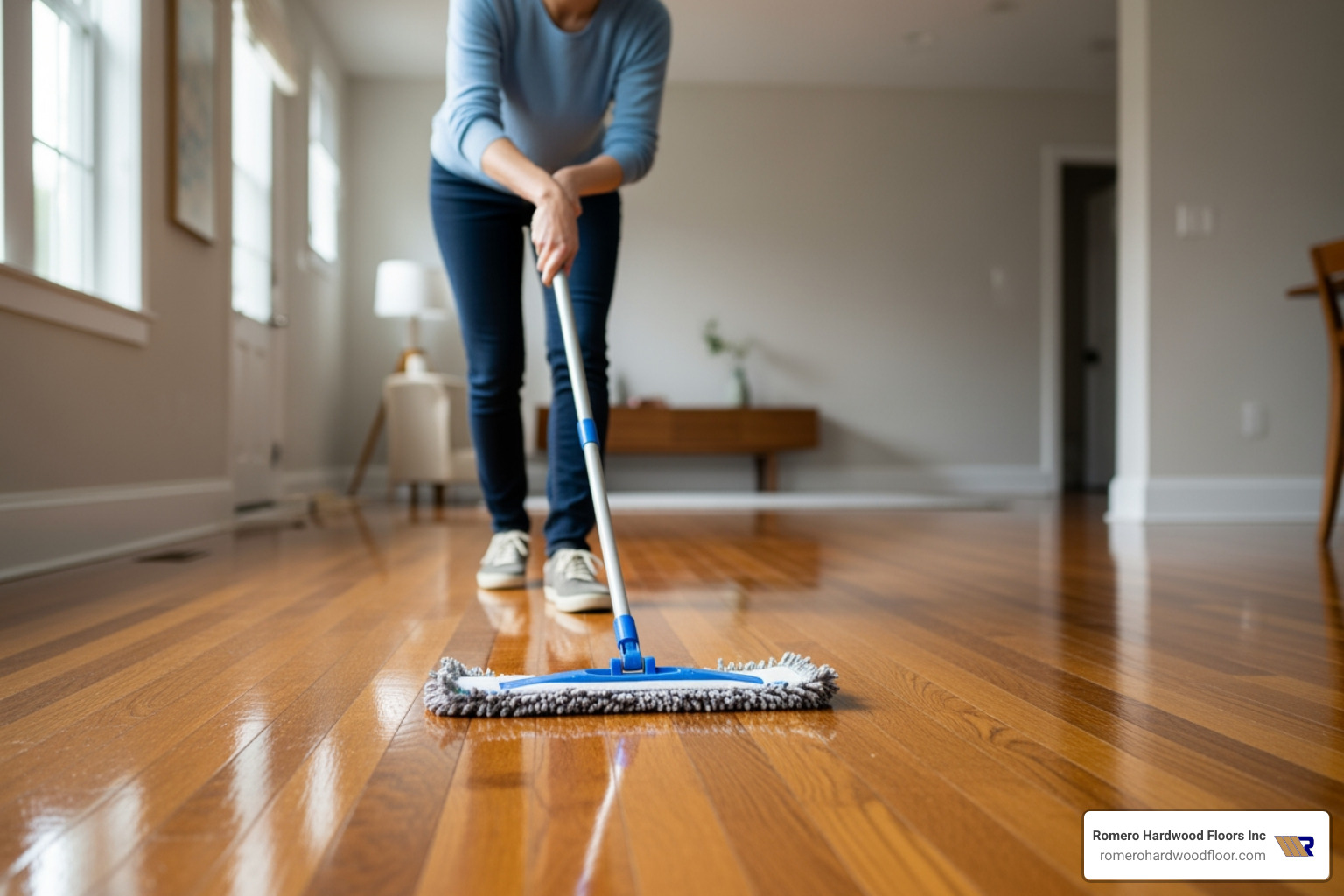
- Weekly: Damp mop your floors. Wring out a microfiber mop until it’s barely damp, not wet. Use a pH-neutral cleaner specifically formulated for hardwood. These cleaners won’t strip the finish or leave a dulling residue. Always sweep first, then damp mop. For more details, see our hardwood floor care guide.
How to Handle Spills and Stains Immediately
Spills are inevitable; your reaction time is what matters. The moment a spill occurs, blot it immediately with a clean, soft cloth. Blotting absorbs the liquid without spreading it.
- Water Stains: Quick blotting is usually enough. For a cloudy mark from a set-in stain, you can try gently rubbing with #0000 grade steel wool and wax, but test in a hidden spot first.
- Oil-Based Stains: After blotting, apply a paste of baking soda and water. Let it sit for 10 minutes to absorb the oil, then gently wipe away.
- Pet Accidents: Blot immediately, then use an enzymatic cleaner designed for pet stains on hardwood. These products break down the proteins that cause stains and odors without harming the wood.
Why You Should Never Use Bleach, Steam, or Excessive Water
Avoid these common but destructive cleaning methods to protect your investment.
- Bleach: This powerful oxidizer strips finishes and permanently discolors wood, leaving whitish patches that require sanding to fix.
- Steam Mops: The combination of high heat and moisture forces water into the wood, causing swelling, warping, and finish damage.
- Wet Mopping: Using too much water allows moisture to seep between boards, leading to cupping, warping, and finish degradation. Your mop should never be dripping wet.
- Harsh Chemicals: Avoid products with ammonia, which dulls the finish, and oil soaps, which leave a slippery, dulling residue. Waxes and silicones can also interfere with future recoating or refinishing.
The bottom line? To protect hardwood floor surfaces, use products made for hardwood, use minimal moisture, and act fast on spills.
Long-Term Maintenance and Professional Care
While daily habits form the foundation of floor care, protecting your hardwood floors for the long haul requires attention to environmental factors and knowing when to call in the experts. Think of it as the difference between brushing your teeth daily and getting regular dental checkups—both are essential for long-term health.
Managing Humidity and Sunlight Exposure
Your hardwood floors are constantly responding to the environment around them. Wood is a living, breathing material—or at least, it acts like one. It absorbs moisture from the air when humidity is high and releases it when the air is dry. This natural expansion and contraction is normal, but extreme fluctuations can cause real problems.
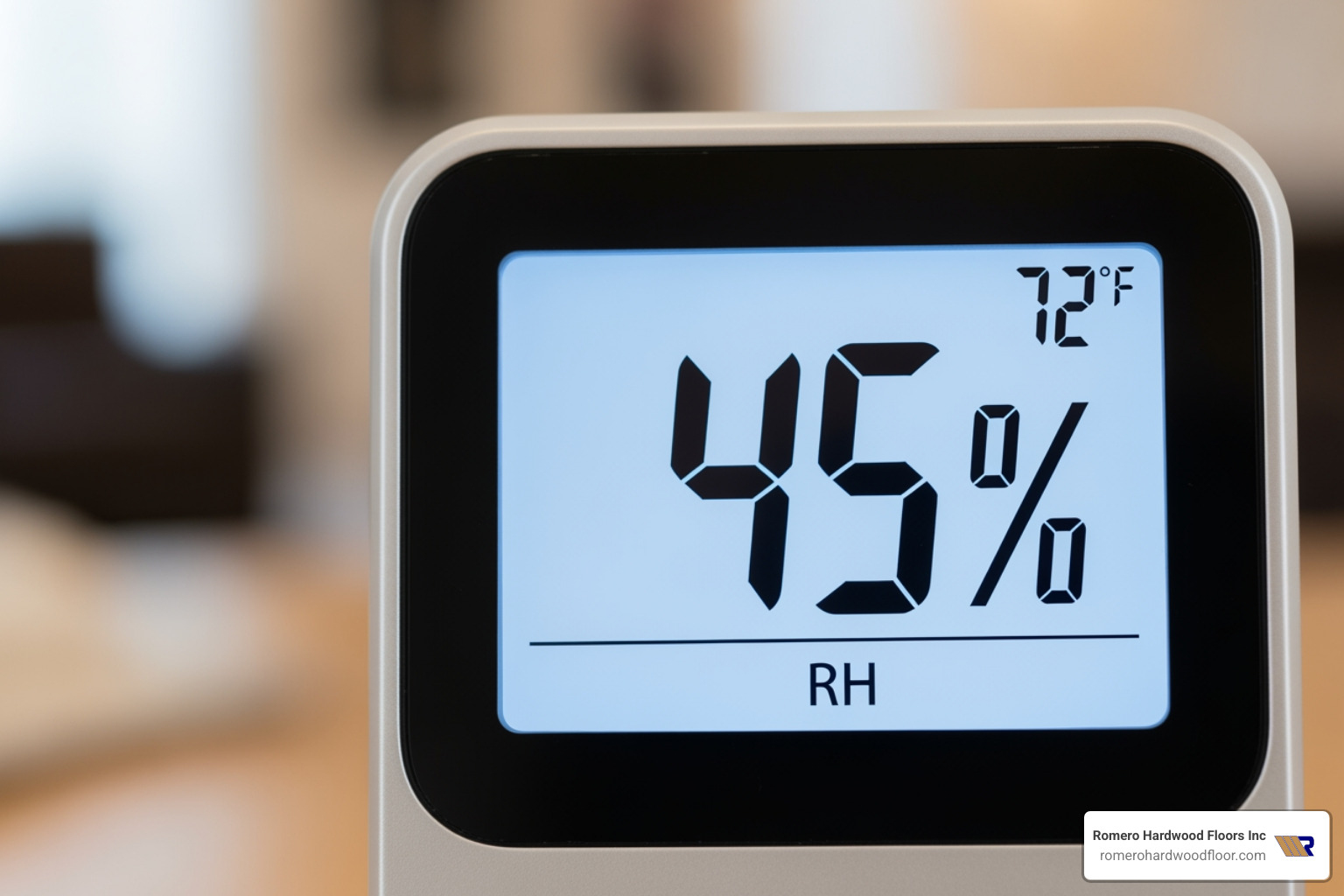
To protect hardwood floor surfaces from this stress, maintain an indoor humidity level between 35% and 55% year-round. Use a simple hygrometer to monitor levels. In dry winters, common in areas like Lynnfield, MA, use a humidifier to prevent gaps between boards. In humid summers, use a dehumidifier or air conditioning to prevent swelling and cupping.
Sunlight’s UV rays cause fading and discoloration. Use window treatments like blinds or curtains to filter direct sun. For rooms with significant exposure, UV-blocking window films are an excellent solution. Periodically rotating area rugs and furniture also helps the floor age evenly and prevents “tan lines.”
When to Consider Professional Recoating or Refinishing
Even well-kept floors eventually need professional attention. Look for signs like deep scratches, widespread wear in high-traffic areas, or a finish that remains dull even after cleaning. These indicate the protective layer is failing.
You have two main restoration options:
- Recoating (or Screening): A less invasive process where we lightly abrade the existing finish and apply a fresh top coat. It’s a great way to restore the protective layer and shine, recommended every 3-7 years depending on traffic.
- Refinishing: A full restoration for floors with deep gouges, stains, or severe wear. We sand the floor down to bare wood, repair damage, and apply a new stain and multiple layers of finish.
According to industry data, the average cost for replacing a wood floor can range from $6–$18 per square foot, with some projects exceeding $30 per square foot. This means a full replacement could cost $12,000 or more for an average room. Professional recoating or refinishing is a far more cost-effective solution that preserves your investment. If your floors in Salem, MA, or Saugus, MA, are showing their age, we can help. Learn more about floor refinishing and our restoration services.
Frequently Asked Questions about Protecting Hardwood Floors
What is the single most important thing I can do to protect my floors?
Controlling dirt and grit at the source is the most effective measure. Use high-quality entry mats both outside and inside every door and implement a “no-shoes” policy. This simple combination dramatically reduces the abrasive particles that cause most scratches and finish wear. It’s the highest-impact, lowest-cost way to preserve your floors.
Can I repair a deep scratch or gouge myself?
It depends on the depth. Minor surface scratches in the finish can often be concealed with DIY touch-up kits or stain markers. However, for deep scratches or gouges that penetrate into the wood, a professional repair is best. DIY fixes on deep damage often look obvious and don’t last. For a seamless, permanent solution, we recommend professional board replacement or refinishing.
Are engineered hardwood floors more durable than solid hardwood?
Not necessarily. Durability depends more on the wood species, finish quality, and wear layer thickness than on whether the floor is solid or engineered. A high-quality engineered floor with a thick wear layer can be extremely durable and offer better stability against humidity changes. Conversely, a solid floor made from a very hard wood like hickory will naturally resist dents better than a softer engineered product. Both can be excellent choices with proper care.
Conclusion: Preserve Your Investment for a Lifetime
Your hardwood floors are more than just a surface; they are a significant investment in your home’s value and comfort. Protecting them is simpler than you think.
Prevention is always your best friend. By building simple habits—using felt pads and entry mats, cleaning spills immediately, and managing humidity—you can save thousands in potential repair costs. A few minutes of daily care is far easier than dealing with premature deterioration. When you consider that replacing a wood floor can cost upwards of $12,000, these small efforts to protect hardwood floor surfaces are the smartest investment you can make.
At Romero Hardwood Floors Inc., we have spent nearly two decades helping homeowners in Revere, MA, and surrounding communities like Medford and Stoneham, MA, protect their investment. We take pride in our work and are here to help you with everything from installation to professional refinishing.
Don’t wait for minor wear to become major damage. Take control of your floor’s future today.
Ready to get started? Request an estimate for your flooring project with us, and let’s discuss how we can keep your hardwood floors looking flawless for a lifetime.
