
Sub flooring contractors near me: Best 2025 Guide
The Unseen Foundation of Your Home
Choosing the right sub flooring contractors near me can mean the difference between a beautiful, long-lasting floor and one that squeaks, sags, or fails prematurely. Your subfloor is the critical layer on top of the floor joists, providing a stable base for your finished flooring.
Quick Answer: Finding Sub Flooring Contractors Near You
- Flooring contractors – Best for subfloor replacement and installation over sound joists.
- Carpenters – Needed for joist repair, sistering, and structural wood issues.
- Structural engineers – Required for major sagging, foundation problems, or building code compliance.
- Average costs – $2.20-$4.75 per square foot for repairs, $440-$7,100 for larger projects.
- Timeline – Small repairs take hours, full room replacement 1-2 days, large projects 3-5+ days.
Many homeowners don’t realize their subfloor needs attention until problems like squeaky floors, sagging areas, or a spongy feeling underfoot become obvious. These are warning signs that shouldn’t be ignored.
As one flooring expert noted: “Subfloor repairs are one of the home projects we definitely recommend leaving to a professional. Attempting DIY joist repairs can be costly and dangerous.”
This structural layer distributes weight evenly across the joists, but water damage, poor installation, or age can compromise it, making professional assessment essential.
I’m Francisco Romero, owner of Romero Hardwood Floors Inc. in Revere, MA. With over 15 years of experience, my team and I have seen how proper subfloor work makes the difference between a floor that lasts decades and one that needs premature replacement.
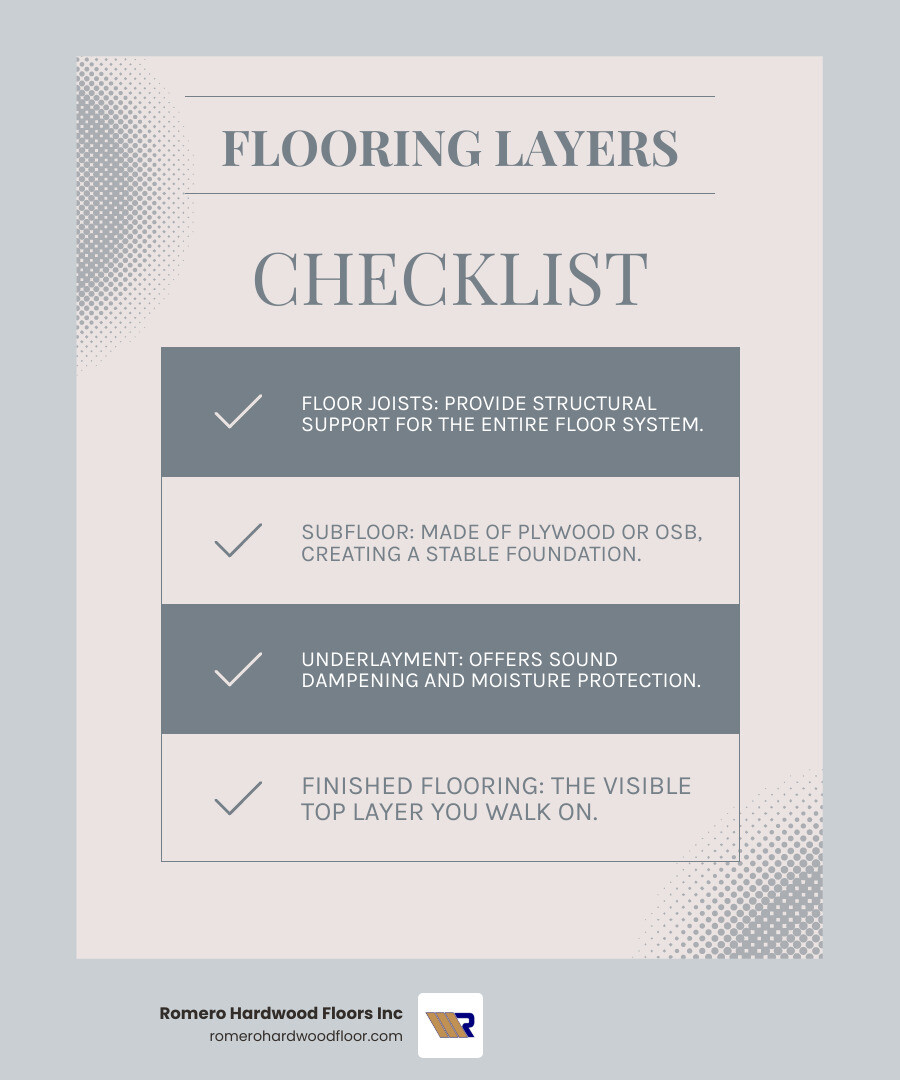
Sub flooring contractors near me terms at a glance:
Step 1: Identifying the Telltale Signs of Subfloor Damage
Before searching for sub flooring contractors near me, learn to spot the warning signs of a failing subfloor. Catching these issues early can save you from more extensive and costly repairs down the road.
- Squeaky or noisy floors: While a few squeaks are normal, widespread creaking often means the subfloor is no longer securely attached to the joists below.
- Sagging or uneven spots: Dips, humps, or a feeling of walking on rolling hills are serious red flags. This usually indicates the subfloor or the joists are failing due to water damage or rot.
- Bouncy or spongy feeling: A floor that flexes like a trampoline lacks the rock-solid support it needs. This flexing can damage your finished flooring over time.
- Musty smells from mold or mildew: An earthy, unpleasant odor often signals moisture has penetrated the subfloor, leading to rot and an unhealthy environment.
- Cupping or crowning floorboards: With hardwood floors, cupping (edges curl up) or crowning (center rises) are clear signs of excess moisture causing the wood to warp.
- Cracked tiles or grout: Tile requires a perfectly stable foundation. If the subfloor moves or settles, rigid tiles and grout will crack under the stress.
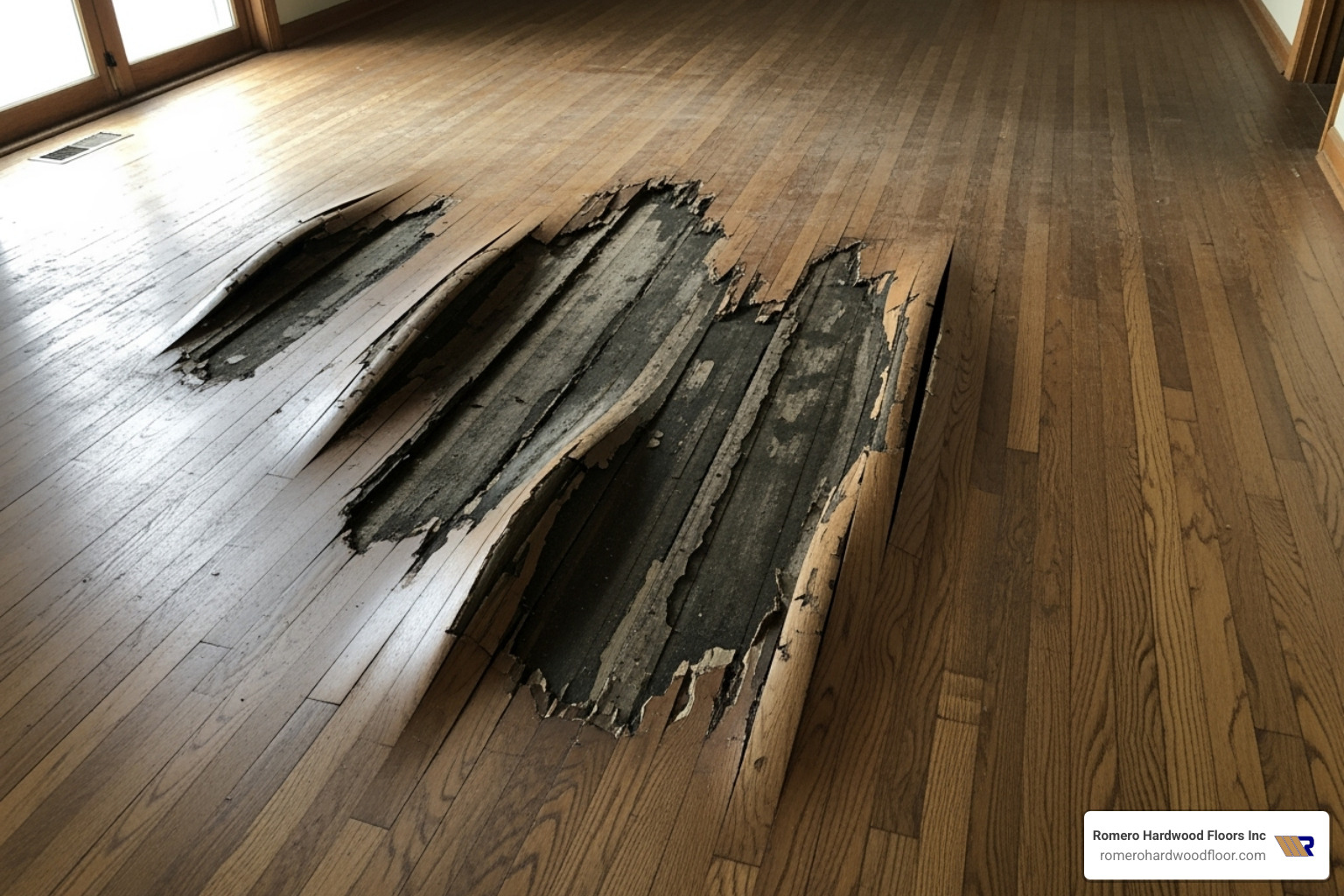
If you’re dealing with water-related issues that have affected your hardwood floors, our guide on Hardwood Floor Water Damage Repair can help you understand your options. Listening to your home’s warning signs is the first step to a less expensive and disruptive solution.
Step 2: Understanding Who to Call: The Right Pro for the Job
A search for sub flooring contractors near me can lead to different specialists. Choosing the right one is critical, as a simple subfloor issue can sometimes signal a larger structural problem. Hiring the wrong pro can lead to temporary fixes and wasted money. Here’s who to call and when.
When to Hire a Flooring Contractor
Hire a flooring contractor when your floor joists are sound, but the subfloor itself needs work. We specialize in preparing the foundation for your finished flooring.
- Subfloor replacement: If moisture, age, or wear has damaged your subfloor but the joists are intact, we can replace the damaged material with new plywood or OSB.
- Underlayment installation: We install this layer for sound control, moisture protection, and to create a smooth surface for the finished floor.
- Minor repairs over sound joists: For isolated damage, we can patch and repair the affected area, which is more cost-effective than a full replacement.
We understand the specific subfloor requirements for different flooring types, from hardwood to tile. You can learn more about our approach at Flooring Contractors Near Me.
When a Carpenter is Needed
If the problem lies with the structural floor joists, you need a skilled carpenter. They handle the framework that supports the entire floor.
- Joist repair or replacement: When support beams are warped, cracked, or rotted, they must be repaired or replaced. A new subfloor is useless over failing joists.
- Sistering joists: Carpenters can reinforce a weak or damaged joist by attaching a new one alongside it, adding strength to sagging areas.
- Structural wood repairs: For widespread framing problems, a carpenter can assess and repair the home’s structural woodwork.
When to Consult a Structural Engineer
For extensive or complex issues, a structural engineer is necessary to evaluate your home’s overall structural integrity.
- Widespread sagging: If you have sagging across multiple rooms, it may indicate a foundation issue that requires an engineer’s assessment.
- Foundation concerns: An engineer should be called for issues like foundation cracks or signs that the house is shifting.
- Major structural work & code compliance: For major repairs, an engineer provides the detailed plans required by building codes to ensure your home’s safety.
Getting the right professional diagnosis from the start is the key to a successful and lasting repair.
Step 3: The Cost and Timeline: What to Expect for Your Subfloor Project
The cost of subfloor work varies based on the extent of damage, your location, and project size. Understanding typical ranges helps you budget, but always get detailed estimates from qualified sub flooring contractors near me for accurate pricing.

Breaking Down Subfloor Repair Costs
Disclaimer: The figures shared here are average costs based on internet data and not actual costs for Romero Hardwood Floors Inc. Our pricing may vary. We provide detailed, written estimates for every project.
- Per Square Foot: Costs typically range from $2.20 to $12 or more. The lower end covers basic replacement, while the higher end reflects structural repairs or difficult access.
- By Project Size: A typical room (200-250 sq. ft.) might cost $440 to $3,000. Larger areas (800-1,500 sq. ft.) can range from $1,750 to $7,100, and potentially up to $20,000+ for severe damage requiring structural work.
- Joist Repairs: Individual joist replacement can run $100 to $300 per joist. Extensive work on multiple joists could cost $3,000 or more.
Factors like the extent of damage, material choices (plywood vs. OSB), labor rates, and accessibility will affect the final price. For more insight, see our guide on the Cost of Wood Floor Repair.
Project Duration and Subfloor Lifespan
- Timelines: Small patch repairs can take a few hours. A full room replacement usually takes 1-2 days. Large or complex projects with joist work can take 3-5+ days.
- Lifespan: A properly installed subfloor can last the life of the house. However, its lifespan can be shortened to 20-30 years by factors like water damage, poor installation, pests, or lack of maintenance. Addressing moisture issues promptly and using quality materials is key to longevity.
Step 4: Finding Reputable Sub flooring contractors near me
Choosing an inexperienced or unreliable contractor for subfloor work can turn a manageable repair into a costly nightmare. With a little research, you can find a professional who will get the job done right.
How to Find the Best Local Sub flooring contractors near me
- Online Searches: Start with targeted searches like “subfloor repair” plus your city to find local professionals.
- Word-of-Mouth Referrals: Ask neighbors, friends, or other trade professionals for recommendations. Personal experiences are invaluable.
- Online Reviews: Look beyond star ratings. Read reviews to learn about a contractor’s communication, punctuality, and how they handle unexpected issues.
- Verify Licenses and Insurance: This is a non-negotiable step. Check your local requirements for licensing and confirm they have both liability and workers’ compensation insurance to protect you.
For homeowners throughout the greater Revere area—including Beverly, Chelsea, Danvers, East Boston, Gloucester, Lynnfield, Malden, Manchester by the Sea, Marblehead, Medford, Melrose, Nahant, Peabody, Reading, Rockport, Salem, Saugus, Somerville, Stoneham, Swampscott, Wakefield, Winchester, Winthrop, and Woburn—we at Romero Hardwood Floors Inc. bring over 15 years of experience to every subfloor challenge.
Key Questions to Ask Before You Hire
Treat this as a final interview to vet your candidates.
- “How much experience do you have with subfloors like mine?” Ensure they have experience with your specific problem, especially for repairs in older homes.
- “Are you licensed and insured? Can I see proof?” A legitimate contractor will readily provide this documentation.
- “Can you provide recent references?” Call them and ask about work quality, communication, and if they would hire the contractor again.
- “What materials do you recommend and why?” A good contractor will explain the pros and cons of materials like plywood versus OSB for your situation.
- “What’s included in your written estimate?” The estimate should be detailed, breaking down labor, materials, and potential extra costs.
- “Do you offer warranties on your work?” Quality contractors stand behind their work. Ask what the warranty covers and for how long.
- “How do you handle unexpected issues?” They should stop work, explain the new problem, and get your approval before proceeding with additional repairs.
The cheapest bid isn’t always the best value when it comes to your home’s foundation.
DIY vs. Pro: Should You Tackle Subfloor Repair Yourself?
The potential to save on labor costs—roughly $100 to $300 per room—makes DIY subfloor repair tempting. However, it’s crucial to understand the significant risks before you begin.

The Pros and Cons of DIY Subfloor Work
The Appeal of Going DIY:
The primary benefit is cost savings on labor. For a homeowner with a strong background in carpentry and structural work, this can be a viable option.
The Reality Check – Why Most Should Hire a Pro:
For most people, the risks of DIY subfloor repair far outweigh the benefits.
- Structural Mistakes Can Be Catastrophic: Incorrectly repairing a subfloor or joists can compromise your home’s structural soundness. As one expert noted, “Attempting DIY joist repairs can be costly and dangerous.”
- Complexity and Hazard: The work is more than just cutting wood; it requires knowledge of load-bearing principles and moisture management. Working with joists in cramped spaces can be hazardous.
- Hidden Problems: A DIYer might miss underlying issues like extensive rot, mold, or pests that a professional sub flooring contractors near me would identify and address.
- Voided Warranties: Most flooring manufacturers’ warranties require the subfloor to meet specific standards. Improper DIY work can void your warranty.
- Time and Tools: The project requires specialized tools and can take a DIYer much longer than a professional team.
Our strong recommendation is to leave subfloor repairs to professionals. Unless you have experience in structural carpentry, the risk to your home’s integrity isn’t worth the potential savings. A pro ensures precision, safety, and a stable foundation for your floors. For less risky projects, you might find our guide on DIY Hardwood Floor Installation helpful, but for the subfloor, trust a professional.
Frequently Asked Questions about Subfloor Repair
Here are answers to the most common questions we hear from homeowners searching for sub flooring contractors near me.
What is a subfloor made of?
The material depends on your home’s age. Common types include:
- Plywood: A strong, stable, and popular choice that resists warping and holds fasteners well.
- Oriented Strand Board (OSB): Common in newer construction, it’s affordable but less resistant to moisture than plywood.
- Concrete Slab: In homes without a basement or crawlspace, the concrete foundation acts as the subfloor.
- Diagonal Planks: Found in older homes, these solid wood planks can be a solid base if in good condition but may need reinforcement.
Can you put new flooring over a damaged subfloor?
Absolutely not. It’s a tempting shortcut, but it will backfire. Installing new flooring over a damaged subfloor will:
- Void your flooring warranty: Manufacturers require a stable, level foundation.
- Cause the new floor to fail prematurely: Expect gaps, cupping, cracked tiles, or wavy planks.
- Ignore the root problem: You’re covering up moisture or structural issues that will only get worse.
Underlayment can smooth minor imperfections, but it cannot fix a structurally unsound subfloor. Always fix the foundation first.
How do I know if my floor joists are damaged?
Joist damage is a serious structural issue. While a professional diagnosis is always best, here are the key warning signs:
- Significant sagging: A visible dip in the floor or a feeling of walking uphill and downhill.
- Excessive bounciness: The floor feels like a trampoline, or dishes rattle when you walk by.
- Visible rot or pest damage: If you can see the joists from a basement or crawlspace, look for discolored or soft wood and signs of termites.
- Cracks in walls or ceilings: In severe cases, shifting joists can cause cracks in the structure below.
If you suspect joist damage, call a professional. These repairs are dangerous and require structural expertise.
Conclusion: Building a Solid Foundation for Your Floors
Your home’s subfloor is the hidden hero ensuring your floors last. Without a solid, stable subfloor, even the most beautiful and expensive finished flooring will eventually fail.
This guide has covered the essential steps for any homeowner facing subfloor issues:
- Recognize the warning signs like squeaks, sags, and spongy spots.
- Know who to call: a flooring contractor for subfloor replacement, a carpenter for joist repair, or a structural engineer for major issues.
- Understand the costs and timelines to budget effectively.
- Choose a professional over a risky DIY repair to protect your home’s structural integrity.
Investing in proper subfloor work pays dividends in the longevity of your floors and provides peace of mind that your home is safe and stable.
For homeowners in the Revere, MA area and surrounding communities, the expert team at Romero Hardwood Floors Inc. has provided professional assessments and high-quality flooring services since 2006. We understand that finding reliable sub flooring contractors near me can be a challenge, and we’re here to help.
Don’t let subfloor problems undermine your home’s comfort and value. A solid subfloor is an investment in your home’s future.
Like us on Facebook!