
Why Sustainable Wood Flooring Options Matter for Your Home

Sustainable wood flooring options combine environmental responsibility with lasting beauty and durability. Here are the main eco-friendly choices available:
Top Sustainable Wood Flooring Options:
- FSC or PEFC Certified Hardwood – Wood from responsibly managed forests with third-party verification
- Engineered Wood Flooring – Uses less raw timber per plank while maintaining durability
- Reclaimed Wood – Salvaged from old barns, factories, or river bottoms, giving timber a second life
- Locally Sourced Hardwood – Reduces transportation impact and supports regional forestry
- Low-VOC Finished Floors – Factory-sealed with eco-friendly finishes for healthier indoor air
Wood flooring stands out as one of the most environmentally sound choices you can make for your home. As a renewable resource, trees regrow after harvesting—and in the United States, hardwood forests are actually growing more than twice as fast as they’re being harvested. When properly maintained, wood floors can last well beyond 100 years, storing carbon throughout their service life. The USDA classifies wood flooring as a carbon neutral product because of this remarkable ability to lock away CO2 for generations.
Unlike carpets that wear out in just a few years or synthetic materials made from fossil fuels, sustainable wood flooring represents a long-term investment in both your home’s beauty and the planet’s health. The key is knowing what to look for—from forest certifications to finish choices—to ensure your flooring truly lives up to its eco-friendly promise.
I’m Francisco Romero, owner of Romero Hardwood Floors Inc., and over the past 15+ years, I’ve helped countless homeowners in Revere, MA steer sustainable wood flooring options that meet both their aesthetic goals and environmental values. This guide will walk you through everything you need to know to make an informed, eco-conscious choice for your space.
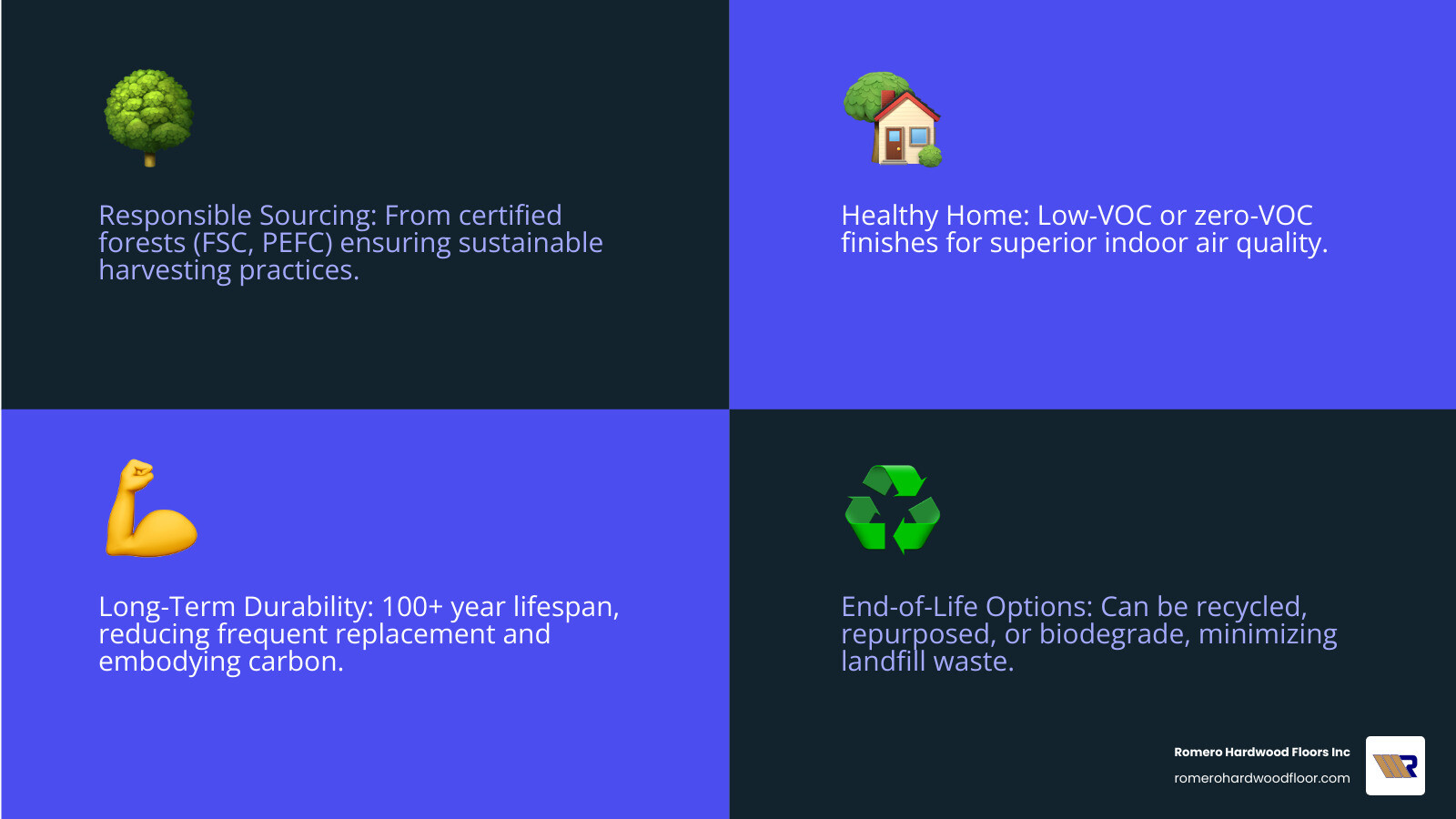
Sustainable wood flooring options word roundup:
The Natural Advantage: Why Wood is an Inherently Eco-Friendly Choice
When we talk about flooring, few options can match the inherent sustainability of wood. What makes wood flooring a truly sustainable choice compared to other flooring options? It boils down to its natural lifecycle and remarkable durability.
First and foremost, wood is a renewable resource. Unlike materials derived from finite resources like petroleum (found in many synthetic carpets and vinyl), trees can be replanted and regrown. In fact, in the United States, the hardwood forests that provide our beautiful flooring products are growing more than twice as fast as they are being harvested. This ensures a continuous supply for future generations, especially when sourced from responsibly managed forests.
Beyond renewability, wood acts as a powerful carbon sink. Trees absorb carbon dioxide (CO2) from the atmosphere as they grow, storing it in their wood fibers. When that wood is harvested and turned into flooring, it continues to store that carbon during its entire service life. This is why the U.S. Department of Agriculture (USDA) classifies wood flooring as a carbon neutral product. By choosing wood, you’re not just getting a floor; you’re essentially installing a long-term carbon storage unit in your home.
The environmental benefits extend to its incredible longevity and durability. Wood flooring can last well beyond 100 years when properly maintained. Imagine a floor that can serve your family for generations, potentially becoming a cherished part of your home’s history. This exceptional lifespan drastically reduces the need for frequent replacement, which in turn minimizes manufacturing, transportation, and disposal impacts. Compare this to carpets, which typically wear out in just a few years, leading to mountains of landfill waste. Hardwood flooring, by contrast, offers a much more sustainable alternative, significantly reducing landfill waste.
At the end of its long life, wood also offers environmentally friendly disposal options. It is biodegradable, meaning it can naturally break down, or it can be recycled into other wood products. It can even be used as a biofuel to generate energy, further reducing reliance on fossil fuels. This full-circle approach makes wood an exceptionally environmentally friendly material.
For a deeper dive into why we believe in hardwood, explore our Hardwood Flooring Advantages Guide.
Decoding Sustainability: Certifications and Standards to Trust
Navigating sustainable products can sometimes feel like a maze, especially with the rise of “green” claims. That’s why third-party certifications and standards are so crucial when choosing sustainable wood flooring options. These certifications provide independent verification that a product meets specific environmental and social criteria, giving you peace of mind that your choice is genuinely eco-friendly.
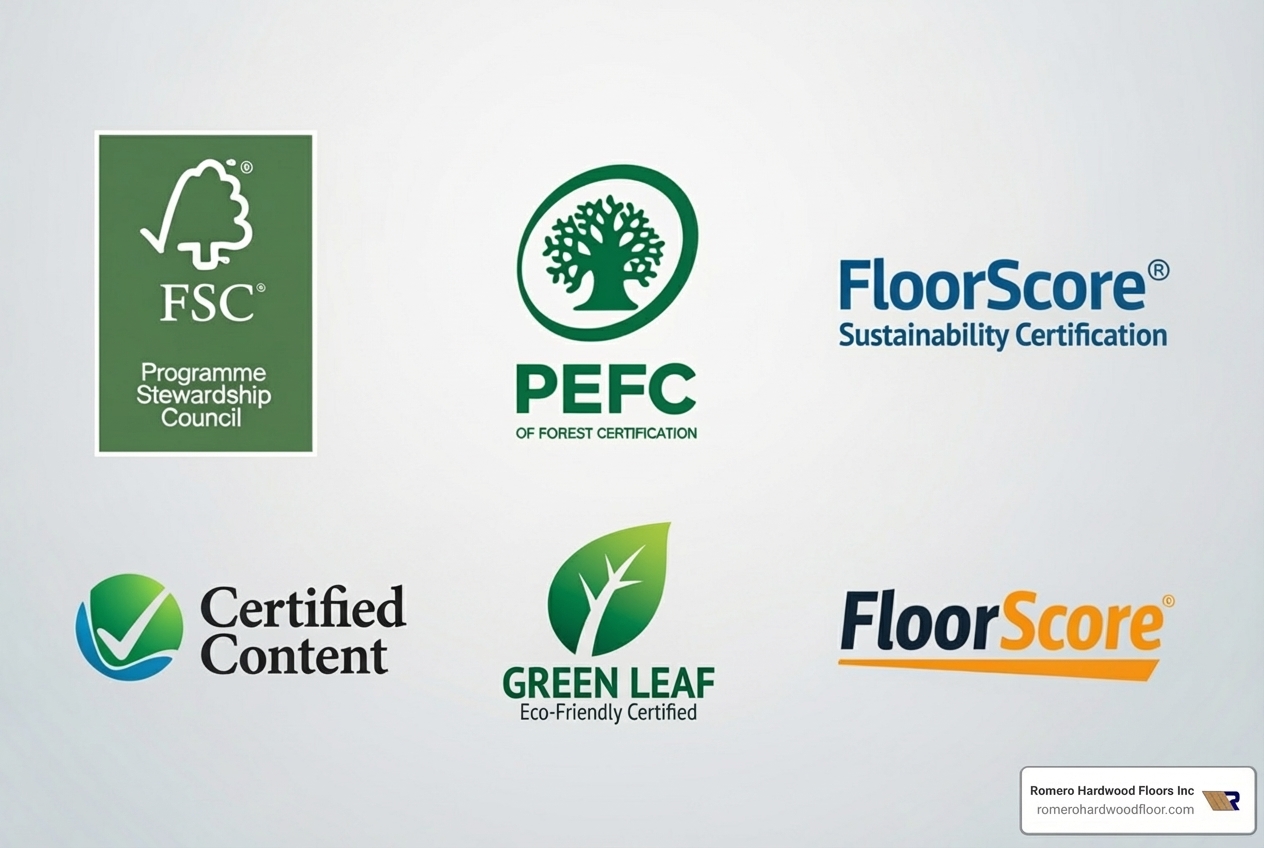
These certifications ensure everything from responsible forestry practices—preventing illegal logging and protecting biodiversity—to minimizing harmful chemicals in manufacturing. They’re our way of cutting through the noise and helping you make truly informed decisions. For comprehensive information on what to look for, our Understanding Hardwood Flooring Certification page is a great resource.
Key Certifications Explained
When we talk about sustainable wood flooring options, certain labels stand out as guides of environmental responsibility. Here’s a look at the most important certifications and standards you should know:
- FSC (Forest Stewardship Council): This is arguably the most recognized certification for forest management. FSC-certified wood comes from forests that are managed to strict environmental, social, and economic standards. This means the forests are managed responsibly, protecting biodiversity, water quality, and indigenous peoples’ rights, while ensuring the long-term viability of timber resources. When you see an FSC label, you know the wood’s journey from forest to floor is transparent and ethical. Many reputable manufacturers prioritize FSC certification for their products, ensuring their engineered and solid hardwood options meet these rigorous standards.
- PEFC (Programme for the Endorsement of Forest Certification): As the world’s largest forest certification organization, PEFC promotes sustainable forest management through independent third-party certification. Like FSC, PEFC-certified timber assures consumers that the wood comes from sustainably managed forests, supporting responsible sourcing and preventing deforestation.
- FloorScore: This certification specifically addresses indoor air quality (IAQ), a critical component of healthy homes. FloorScore-certified products meet stringent indoor air quality requirements for volatile organic compound (VOC) emissions. This means they contribute to a healthier indoor environment, free from harmful off-gassing. Many of the sustainable wood flooring options we recommend carry this certification.
- LEED (Leadership in Energy and Environmental Design): While not a product certification itself, LEED is a widely recognized green building rating system. Choosing wood flooring with FSC certification and low-VOC emissions can contribute significantly to earning LEED points for your home or commercial project, especially in categories like Indoor Environmental Quality. Products with these certifications, for example, often qualify for LEED points for low-emitting materials.
- CARB2 Compliance: This standard, originating in California, sets limits on formaldehyde emissions from composite wood products. It’s a crucial standard to look for, especially in engineered wood flooring, to ensure low formaldehyde levels and improved indoor air quality.
- E0 Compliance: Even stricter than CARB2, E0 is a European standard for formaldehyde emissions, indicating extremely low or negligible levels. Many high-quality engineered wood products aim for E0 compliance to ensure the healthiest possible indoor environment.
How to Spot and Avoid ‘Greenwashing’
Unfortunately, not every “eco-friendly” claim holds true. Greenwashing is the practice of deceptively marketing products or services as environmentally sound when they are not, or by exaggerating their environmental benefits. In the flooring industry, greenwashing can be tricky to spot, but we’ve learned a few tricks.
Here’s how to identify and avoid it:
- Vague or Unverified Claims: Be wary of general terms like “natural,” “eco-friendly,” or “sustainable” without specific details or third-party certifications to back them up. If a company claims its wood is “sustainably harvested” but can’t provide an FSC or PEFC certificate number, that’s a red flag.
- Misleading Use of Logos: Some manufacturers might use environmental logos creatively, placing them on packaging that is recycled, but not on the actual wood product itself. Always check that the certification specifically applies to the wood flooring material. We look for product-level certification to ensure authenticity.
- Focusing on One Green Attribute While Ignoring Others: A product might boast about being “recycled content” but be produced using highly polluting manufacturing processes or contain high levels of VOCs. True sustainability considers the entire lifecycle.
- Lack of Transparency: Reputable sustainable brands are usually eager to share details about their sourcing, manufacturing processes, and environmental impact. If information is hard to find or vague, it’s a cause for concern.
The key is to always look for credible, third-party verification. Certifications like FSC, PEFC, and FloorScore are your best allies in ensuring you’re making a truly sustainable choice for your home in Revere, MA.
A Guide to Sustainable Wood Flooring Options
Choosing sustainable wood flooring options for your home in the Revere, MA area means balancing beauty, durability, and environmental responsibility. At Romero Hardwood Floors Inc., we’re proud to offer a range of eco-friendly choices that meet these criteria, helping you make an informed decision for your home.
Solid vs. Engineered Hardwood: A Sustainability Comparison
One of the most common questions we get is about the difference between solid and engineered hardwood, especially from a sustainability perspective. Both offer unique benefits, and understanding these differences can help you choose the best option for your project.
| Feature | Solid Hardwood | Engineered Hardwood |
|---|---|---|
| Raw Material Usage | Made from a single, thick piece of wood. Uses more of a single tree per plank. | Uses a thin veneer of real wood over a core of plywood or high-density fiberboard (HDF). Uses much less of a tree per plank, making it more resource-efficient. |
| Lifespan | Can last 100+ years. | Typically 20-80 years, depending on the thickness of the wear layer. |
| Refinishing Potential | Can be sanded and refinished multiple times (up to 5-7 times or more), extending its life for decades. | Can be sanded and refinished 1-3 times, depending on the wear layer thickness. |
| Adhesives/VOCs | No adhesives in the plank itself (adhesives used during installation). Focus on low-VOC finishes. | Adhesives used to bond layers. Look for formaldehyde-free, E0, or CARB2 compliant products to minimize VOCs. |
| End-of-Life Options | Recyclable, biodegradable, can be reclaimed for reuse. | Recyclable (if adhesives allow), can be reused, core materials (like HDF) may limit biodegradability. |
Solid hardwood is often seen as the traditional, luxurious choice. Its sustainability comes primarily from its incredible longevity and ability to be refinished many times over a century or more. This means less waste and a longer service life. For more on the characteristics of various wood types, see our Different Types of Wood.
Engineered hardwood, on the other hand, excels in resource efficiency. By using a thin, beautiful veneer of a desired wood species over a more stable and often fast-growing wood core (like spruce or hevea) or even recycled wood fiber (HDF), it makes much less of a tree go much further. This multi-layer construction also makes it more stable and less prone to warping in humid environments, which can be a consideration in coastal areas like ours. When choosing engineered wood, prioritize options with formaldehyde-free glues and low-VOC finishes to ensure a healthy home environment. For example, some manufacturers offer E0 compliant, zero-VOC engineered hardwood options that are FSC certified, demonstrating a commitment to both resource efficiency and indoor air quality.
Reclaimed Wood: Giving Timber a Second Life
For those who truly want to accept the spirit of reuse and history, reclaimed wood stands out as one of the most compelling sustainable wood flooring options. This isn’t just about eco-friendliness; it’s about character, story, and best aesthetic appeal.
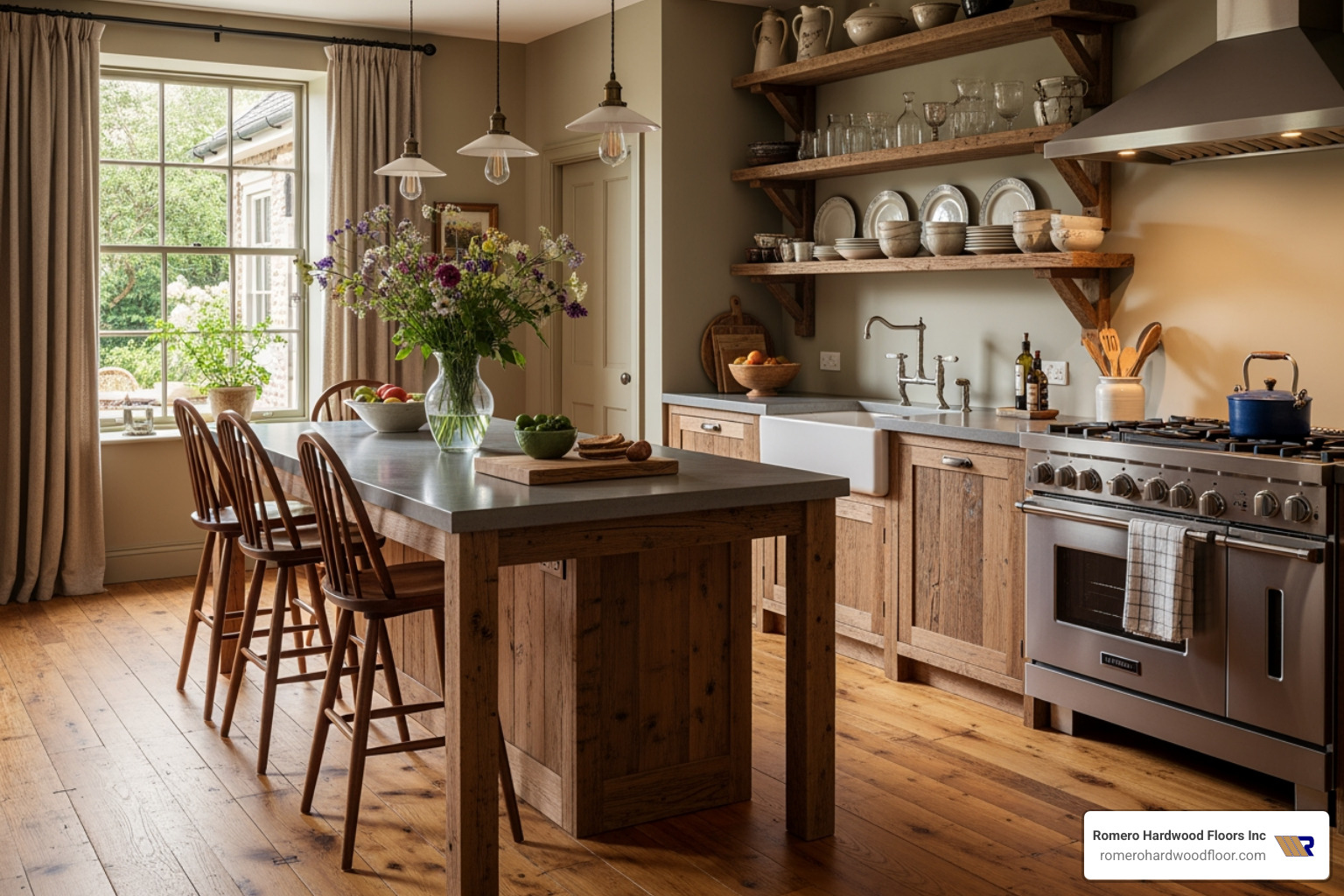
Reclaimed wood is timber that has been salvaged from old structures like barns, factories, warehouses, and even logs recovered from river and lake bottoms. Instead of being discarded or used as low-grade material, this wood is carefully processed and given a new life as stunning flooring.
The environmental benefits are significant:
- Reduces Demand for New Timber: By using existing wood, we lessen the pressure on virgin forests, helping to conserve natural resources.
- Minimizes Landfill Waste: It diverts perfectly good wood from ending up in landfills, reducing waste and associated environmental impacts.
- Low Embodied Energy: The energy required to reclaim, clean, and mill existing wood is often much lower than harvesting, transporting, and processing new timber.
Beyond its green credentials, reclaimed wood offers a unique aesthetic that cannot be replicated. Each plank carries the marks of its previous life – nail holes, saw marks, and a rich patina developed over decades or even centuries. This gives your floor a distinctive character, warmth, and a story that connects your home to the past. It’s an excellent choice for homes in Beverly, MA, Chelsea, MA, or any of our service areas where homeowners appreciate timeless beauty and a connection to heritage.
To learn more about the beauty and benefits of this exceptional material, check out our page on More about reclaimed wood flooring.
Other Eco-Conscious Wood Choices
Beyond certifications and reclaimed materials, there are other considerations that contribute to truly sustainable wood flooring options.
One often overlooked factor is local sourcing. Choosing timber that is harvested and processed closer to home – in our case, within New England or neighboring states – significantly reduces the carbon footprint associated with transportation. The less distance the wood has to travel from the forest to your home in Revere, MA, the less fuel is consumed and fewer emissions are generated. This not only benefits the environment but also supports regional economies and local forestry practices. We believe in providing options that are both beautiful and mindful of their journey to your doorstep.
When selecting any wood for your floors, we can guide you toward species known for their durability and suitability for our local climate, ensuring your investment lasts. Find out more about selecting the right species on our Best Wood for Floors guide.
Beyond the Plank: Health, Air Quality, and Lifecycle Impacts
Choosing sustainable wood flooring options isn’t just about the planet; it’s profoundly about the health and well-being of your family. The materials we bring into our homes, especially those covering large surface areas like floors, have a direct impact on our indoor environment. At Romero Hardwood Floors Inc., we prioritize choices that ensure a healthy home.
The connection between flooring and Indoor Air Quality (IAQ) is critical. Many conventional flooring materials, finishes, and adhesives can release Volatile Organic Compounds (VOCs) into the air. These are gases emitted from certain solids or liquids that can have short- and long-term adverse health effects. Common VOCs include formaldehyde, benzene, and toluene, and they can contribute to respiratory issues, headaches, and other health concerns.
Formaldehyde is a particularly notable VOC often found in glues used in composite wood products. While naturally occurring in wood at very low levels, added formaldehyde in some products can be problematic. This is why we pay close attention to the standards and certifications that limit these emissions, ensuring your family breathes easier.
The Role of Finishes and Adhesives
The finishes and adhesives used on wood flooring play a massive role in its overall environmental impact and, crucially, your home’s indoor air quality.
- Low-VOC and Zero-VOC Finishes: These are designed to emit minimal to no harmful VOCs during and after application. We always recommend these options to our clients in Revere, MA, and the surrounding towns.
- Water-based vs. Solvent-based Options: Traditional solvent-based finishes often release significant VOCs. Water-based finishes are a much healthier alternative, offering excellent durability with far lower emissions.
- Natural Oil and Wax Finishes: These finishes are often touted as “natural” and can be a good choice. However, check their specific VOC content, as some can still contain solvents. On the flip side, some advanced factory-applied finishes can surprisingly be more environmentally friendly.
- Factory-applied UV-cured Finishes: These finishes are applied and cured at the factory using ultraviolet light, meaning they are 100% solids and completely dry before they even arrive at your home. This eliminates any off-gassing during installation and throughout the life of the floor, contributing significantly to superior indoor air quality. Many natural oil and wax finishes, by contrast, may contain solvents and require reapplication with solvent-based products every few years. This makes UV-cured finishes a strong contender for the healthiest option.
- Importance of Formaldehyde-Free Glues: Especially for engineered wood, the adhesives used to bond the layers can be a source of formaldehyde. We actively seek out products that use formaldehyde-free glues and meet strict standards like CARB2 or E0 compliance. Sometimes the pressing method can affect emissions; for example, hot pressing can flash off formaldehyde from both glue and material, while cold pressing with formaldehyde-free glue might still result in higher emissions from the wood material itself. What truly matters is the product’s final emission level, not just the type of adhesive.
For more details on making healthy choices, visit our Eco-Friendly Wood Flooring page.
From Forest to Floor: The Lifecycle of Sustainable Wood Flooring Options
The sustainability of wood flooring goes beyond just the wood itself; it encompasses the entire journey from raw material to installation and beyond. Understanding the lifecycle helps us appreciate the full environmental impact.
- Energy Use in Manufacturing: Producing any product requires energy. For sustainable wood flooring options, manufacturers committed to eco-friendly practices look to minimize this. Many use wood residues and dust from their own production processes as a primary heat source, covering a significant portion of their energy needs (some up to 90%). Some even invest in biomass plants, windmills, and solar panels to convert wood waste into green energy, avoiding tens of thousands of tonnes of CO2 emissions annually.
- Waste Reduction Practices: Sustainable manufacturers aim for “zero waste.” This means using every part of the tree. For instance, in multi-layer hardwood flooring, slow-growing, valuable species are often reserved for the top wear layer, while the core is made from fast-growing species or recovered wood. Small pieces of wood that would otherwise be discarded are cleverly used to create unique flooring designs.
- Transportation Impacts: The distance wood travels from forest to factory to your home in Massachusetts has an environmental cost. Choosing locally sourced wood significantly reduces this footprint. We also work with suppliers who optimize their logistics to minimize transportation impacts.
- Durability and Lifespan: As we’ve discussed, the long lifespan of wood flooring (often 60 to 100+ years, and sometimes much longer) is a huge sustainability factor. A durable floor means fewer replacements, less manufacturing, and less waste over time. For example, some manufacturers highlight their floors’ 60+ year lifespan, meeting RIBA 2030 Climate Challenge criteria for longevity. This long-term durability is a core element of its sustainability.
- End-of-Life Options: What happens when a wood floor finally reaches the end of its useful life? Unlike many synthetic materials that persist in landfills for millennia, wood is biodegradable. It can also be recycled into new products or used as biofuel. Some high-quality floors are even designed for disassembly, allowing them to be easily lifted, reused as reclaimed flooring, or refurbished to extend their life even further. This circular approach minimizes waste and maximizes resource utility.
Our commitment to expert installation practices, as detailed in our Hardwood Flooring Installation Guide, also plays a role. Proper installation ensures the longevity of your floor, making your sustainable choice truly last.
Frequently Asked Questions about Sustainable Wood Flooring
We often get questions from homeowners in our service areas of Revere, MA, and beyond, who are keen on making environmentally conscious choices. Here are some of the most common inquiries about sustainable wood flooring options:
How much more do sustainable wood floors cost?
It’s a common misconception that sustainable options always come with a significantly higher price tag. While some premium certified or reclaimed wood options can have a higher initial cost, it’s often an investment in durability, health, and long-term home value. Prices for sustainable wood flooring options can vary widely based on the specific certification, wood species, construction (solid vs. engineered), and finish, ranging from approximately $5 to over $25 per square foot. Please note, these are average costs based on internet data and do not reflect actual costs for Romero Hardwood Floors Inc.
However, when you consider the lifespan of hardwood flooring—often well over 100 years—the lifetime cost can be significantly lower than flooring options that need frequent replacement. Hardwood also boosts home value; a report from the National Association of Realtors indicates new hardwood flooring can deliver a 118% return on investment, making it a wise financial decision as well.
Can I make my existing wood floor more sustainable?
Absolutely! This is one of the most sustainable choices you can make. Refinishing an existing hardwood floor is a fantastic way to renew its beauty without consuming new resources or contributing to landfill waste. Our team in Revere, MA specializes in floor sanding and refinishing, bringing old floors back to life. When refinishing, we can use low-VOC finishes that further improve your home’s indoor air quality, making your existing floor even more eco-friendly.
What is the single most important factor when choosing sustainable wood flooring?
While many factors contribute to sustainability, the single most important factor when choosing sustainable wood flooring options is to look for a credible, third-party certification like FSC (Forest Stewardship Council) or PEFC (Programme for the Endorsement of Forest Certification). These certifications verify that the wood comes from a responsibly managed forest, ensuring ethical sourcing, protection of biodiversity, and long-term forest health. This forms the fundamental basis of a truly sustainable wood product.
Conclusion: An Investment in Your Home and the Planet
Choosing sustainable wood flooring options is a powerful decision that benefits your family’s health, improves your home’s value, and contributes positively to a healthier planet. By prioritizing materials that are responsibly sourced, manufactured with minimal environmental impact, and designed for longevity, you’re making a choice that resonates for generations.
We’ve explored how wood’s natural renewability and carbon-storing capabilities make it an inherently eco-friendly material, far surpassing many synthetic alternatives. We’ve also highlighted the critical role of third-party certifications like FSC, PEFC, FloorScore, and LEED in ensuring transparency and genuine sustainability, helping you confidently steer away from greenwashing. Understanding the differences between solid and engineered wood, and embracing reclaimed timber, further empowers you to select the best option for your unique needs. Finally, paying attention to finishes and adhesives ensures that your beautiful new floor also contributes to a healthy indoor air quality.
At Romero Hardwood Floors Inc., we believe that a beautiful home doesn’t have to come at the planet’s expense. For expert guidance on selecting and installing the perfect eco-friendly hardwood flooring in the Revere, MA area, trust our experienced team to bring your vision to life. We’re here to help you create a healthy home and a happy planet, one beautiful floor at a time.
