
Warped Wood Repair: 5 Best Fixes to Boost Value
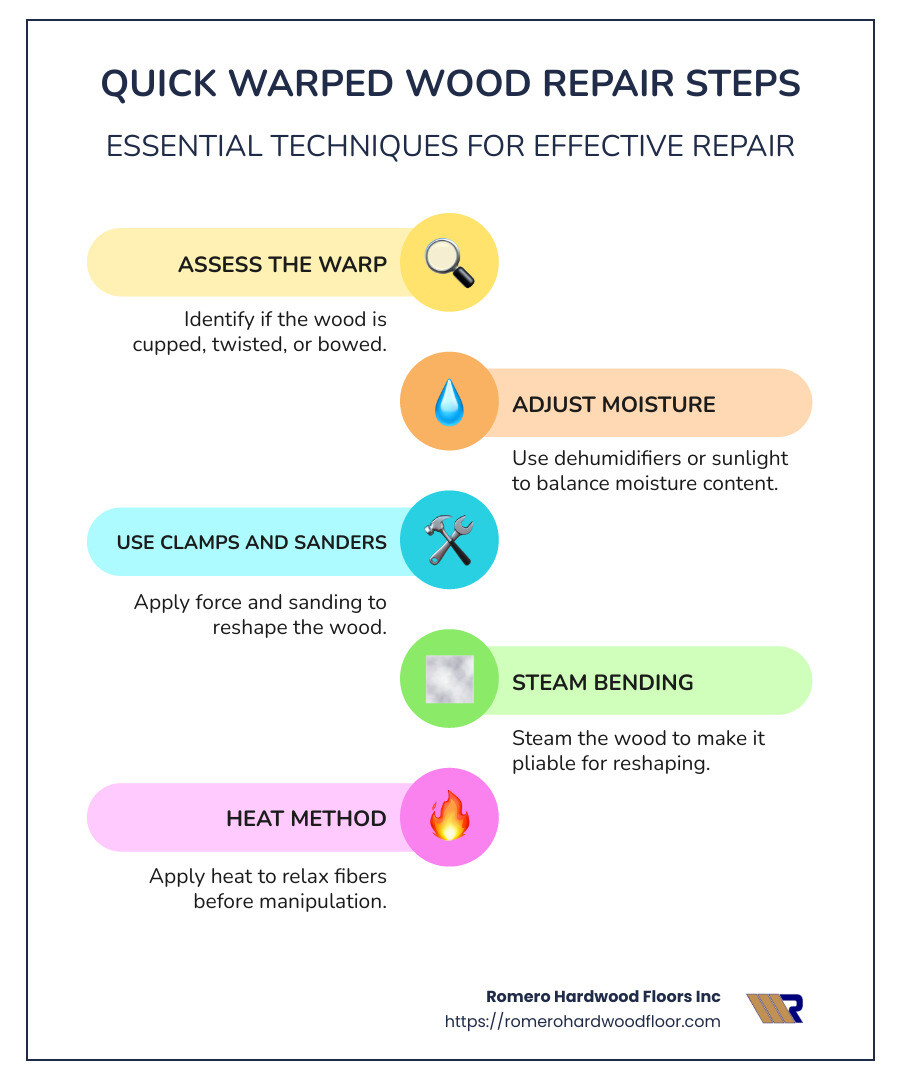
Warped wood repair is a crucial skill for anyone dealing with the challenges of maintaining beautiful hardwood floors. Many issues with warped wood stem from changes in moisture content due to environmental changes. To quickly address warped wood:
- Assess the Type of Warp: Determine if it’s cupped, twisted, or another type.
- Adjust Moisture Levels: Use dehumidifiers or exposure to sunlight.
- Employ Proper Tools: Consider clamps, sanders, or steam-bending for adjustments.
Wood warping happens when moisture levels in the wood change, causing it to expand or contract unevenly. This can lead to unwanted bends and twists that compromise the integrity and aesthetic of your floors. If your floors are becoming uneven due to warping, a solution is essential to maintain your home’s value and appearance.
As Francisco Romero, the proud owner of Romero Hardwood Floors Inc., I have over 15 years of experience specializing in hardwood flooring, including warped wood repair. My expertise ensures that each project, whether residential or commercial, meets the highest standards of craftsmanship and durability.
Quick warped wood repair terms:
– fixing warped hardwood floors
– hardwood floor lifting repair
Understanding Wood Warping
Wood warping is a common issue that can affect any wooden structure, from floors to furniture. It’s important to understand the types of warping, what causes them, and how moisture levels play a role.
Types of Wood Warping
There are several types of wood warping, each with its own characteristics:
- Bow: A warp along the length of the wood’s face.
- Crook: A warp along the edge of the wood.
- Kink: A localized crook, often due to a knot.
- Cup: A warp across the width, where edges are higher or lower than the center.
- Twist (or Wind): A distortion where the ends do not lie on the same plane.
- Curl: A warp in the center, creating a bow effect.
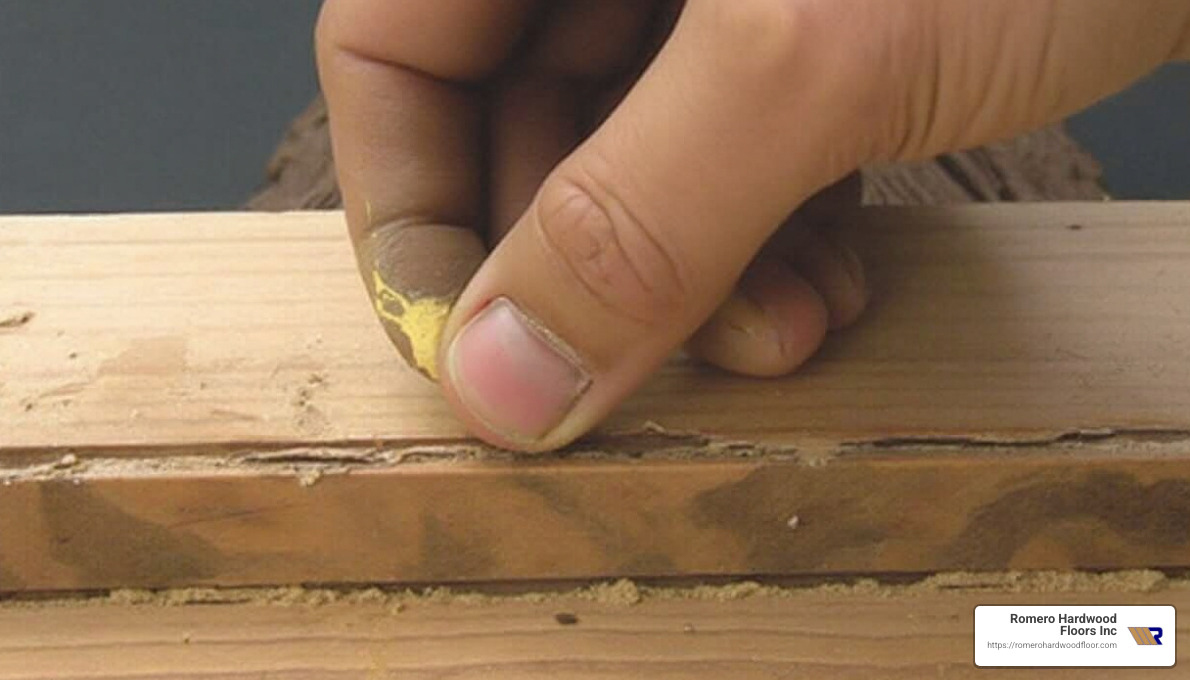
Causes of Wood Warping
Warping primarily occurs due to uneven moisture content in the wood. When wood absorbs or loses moisture unevenly, it expands or contracts in different areas, leading to warping. Factors contributing to this include:
- Environmental Changes: Rapid changes in humidity or temperature.
- Wood Quality: Poor-quality lumber with hidden defects is more prone to warping.
- Grain Orientation: The direction of the wood grain can affect how it absorbs moisture.
- Support and Installation: Insufficient support or improper installation can cause sagging and warping.
Moisture Levels and Their Impact
Moisture is a key player in wood warping. Wood is hygroscopic, meaning it absorbs and releases moisture based on the environment. Even “dry” wood can warp if it takes up moisture unevenly or returns to its dry state too quickly or slowly.
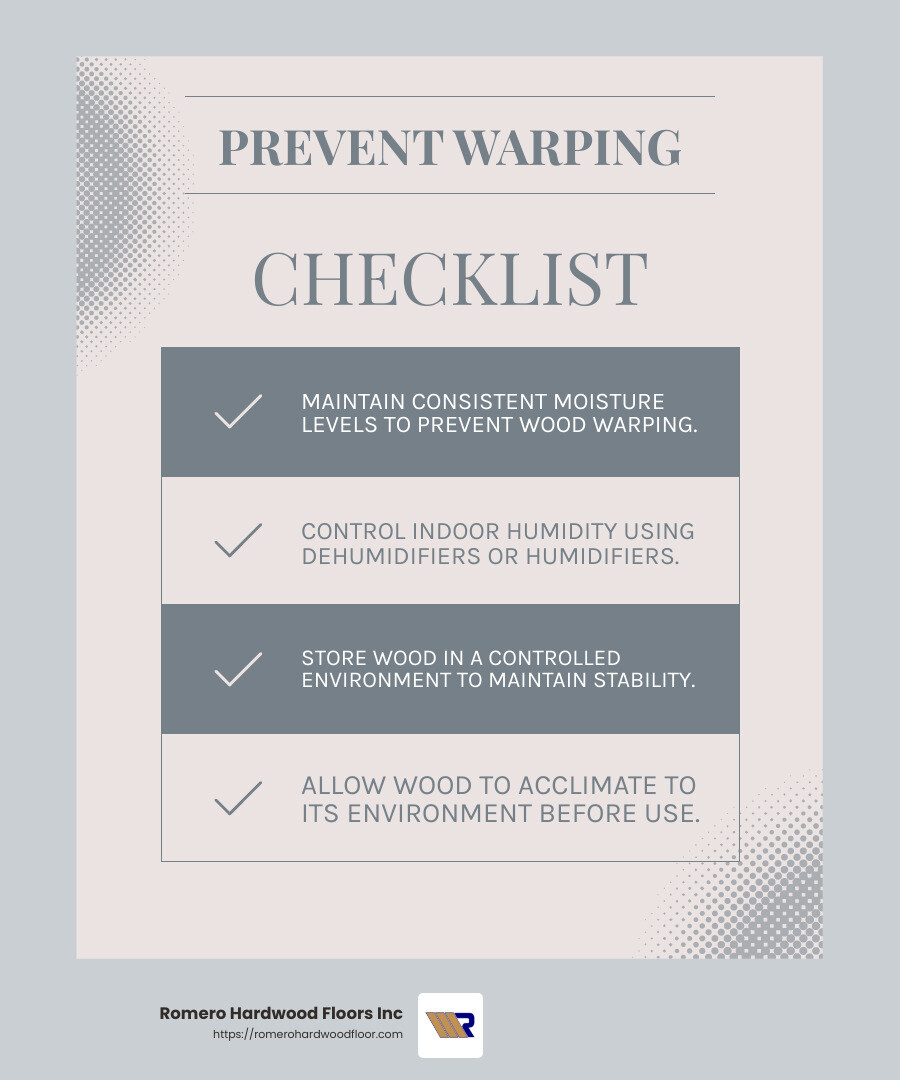
To prevent warping, maintaining consistent moisture levels is crucial. This can be achieved through:
- Humidity Control: Use dehumidifiers or humidifiers to keep indoor humidity stable.
- Proper Storage: Store wood in a controlled environment before use.
- Acclimation: Allow wood to adjust to the environment before installation.
Understanding these factors can help you prevent and address warping, ensuring your wood flooring remains beautiful and durable. In the next section, we’ll explore various techniques for warped wood repair.
Warped Wood Repair Techniques
Dealing with warped wood can be tricky, but with the right techniques, you can restore your wood to its original beauty. Here are some effective methods for warped wood repair:
Clamps
Clamps are a go-to solution for fixing warped wood. They apply steady pressure to flatten the wood over time. For cupped or twisted boards, use clamps along with a flat surface to gradually straighten the wood.
- Align the wood: Place the warped piece on a flat, stable surface.
- Apply clamps: Secure the clamps across the wood, ensuring even pressure.
- Wait: Leave the wood clamped for several hours to several days, depending on the severity of the warp.
Sanding
Sanding is ideal for minor warps, especially in thinner wood. It involves removing small amounts of material to level the surface.
- Use an orbital sander: Sand down the high points until they’re even with the low points.
- Start with coarse grit: Begin sanding with a coarse grit paper, then move to finer grits for a smooth finish.
Steam-Bending
Steam-bending is effective for twisted warps. It uses heat and moisture to make the wood pliable.
- Steam the wood: Use a steam box or a bowl of boiling water with a moistened cloth.
- Bend and clamp: Shape the wood to the desired form and clamp it until it dries.
Heat Method
The heat method works well for minor warping, using warmth to relax the wood fibers.
- Apply heat: Use a heat gun or hairdryer, focusing on the warped area.
- Bend gently: As the wood warms, gently bend it back into shape.
Iron Method
The iron method is a simple way to tackle small warps, using household items.
- Dampen a cloth: Wet a cloth and place it over the warped area.
- Iron the cloth: Set an iron to medium heat and press over the cloth.
- Repeat: Continue until the wood flattens.
Each of these methods can help address different types of warping. Choose the technique that best matches your wood’s needs. Next, we’ll look at how to prevent future warping and keep your wood in top condition.
Preventing Future Warping
Keeping wood from warping in the first place is all about smart planning and care. Let’s explore some key strategies:
High-Quality Lumber
Start with the best. Using high-quality lumber is your first line of defense against warping. Look for wood from reputable suppliers. Good lumber has fewer defects and a balanced moisture content, reducing the chances of future warping.
- Check for defects: Avoid wood with knots or cracks.
- Moisture content: Ensure the wood is properly dried and acclimated.
Humidity Control
Wood loves stability. Fluctuating humidity levels can wreak havoc, causing the wood to expand or contract.
- Use a dehumidifier: Keep indoor humidity levels consistent.
- Monitor with a hygrometer: Regularly check humidity levels to ensure they stay within a safe range (usually 30-50%).
Proper Storage
Store wood correctly to keep it in good shape. This means protecting it from moisture and temperature extremes.
- Lift and cover: Store wood off the ground and cover it with a breathable material.
- Ventilation: Ensure airflow around the wood to prevent moisture buildup.
Acclimation
Before using wood, let it get used to its new home. This is called acclimation.
- Time to adjust: Let wood sit in the environment where it will be used for at least a week.
- Stack properly: Lay boards flat with spacers between them to allow air circulation.
By following these steps, you can greatly reduce the chances of wood warping in your projects. Up next, we’ll tackle some frequently asked questions about warped wood repair.
Frequently Asked Questions about Warped Wood Repair
Can warped wood be fixed?
Yes, warped wood can be fixed. The key is applying the right techniques to reverse the warping process. One common method is using moisture application and clamping force. By applying moisture to the convex side of the warped wood, you can help the fibers expand and relax. Then, using clamps, you can apply force to bend the wood back into shape.
For example, if you’re dealing with a cupped board, you might use a damp cloth on the cupped side and then clamp it down flat. Over time, the wood can return to its original form.
Will water warped wood go back to normal?
Water can cause wood fibers to swell, leading to warping. However, with the right drying process, you can often get water-warped wood back to normal. The trick is to control the drying environment to ensure even moisture release.
- Slow and steady: Let the wood dry slowly in a controlled setting. This prevents further warping.
- Even drying: Make sure all sides of the wood dry at the same rate to avoid new warps.
Sometimes, additional techniques like using a dehumidifier or placing the wood in a sunny spot can help speed up the drying process without causing damage.
How to flatten a thick piece of wood?
Flattening a thick piece of wood can be a bit more challenging, but it’s definitely doable with the right tools. A jointer and a thickness planer are your best friends here.
- Jointer: Use a jointer to create one flat surface on the wood. This is your reference face.
- Thickness Planer: Once you have one flat side, use a thickness planer to make the opposite side parallel.
These tools help ensure that both sides of the wood are even and flat, which is crucial for projects requiring precision.
By understanding these techniques and applying them properly, you can effectively tackle warped wood issues and restore your wood to its original condition.
Conclusion
At Romero Hardwood Floors Inc, we pride ourselves on offering expert flooring solutions that not only address issues like warped wood repair but also improve the overall value of your property. Our team is dedicated to providing top-notch service, ensuring your floors are both beautiful and durable.
Why Choose Us?
- Expertise: With years of experience in the hardwood flooring industry, we know the ins and outs of wood behavior. Our techniques for repairing warped wood are time-tested and effective, ensuring your floors look and function like new.
- Comprehensive Solutions: We don’t just fix the problem; we prevent future issues by advising on proper wood care and maintenance. From selecting high-quality lumber to controlling humidity, we guide you every step of the way.
- Property Value Improvement: Well-maintained floors are a significant asset to any property. By investing in professional wood repair and maintenance, you not only preserve but also improve your home’s market value.
Whether you’re dealing with a minor warp or a major flooring overhaul, Romero Hardwood Floors Inc is here to help. Visit our hardwood floor repair service page to learn more about our offerings and schedule a consultation today.
Let us be your partners in creating a home that is both stunning and structurally sound. With our expertise, your floors will stand the test of time, adding to the beauty and value of your space for years to come.
