
Wide Plank Wood Flooring: Ultimate Guide 2025
Why Wide Plank Wood Flooring is Changing Modern Homes
Wide plank wood flooring has become a sought-after choice for homeowners looking to make a bold design statement while honoring traditional craftsmanship. This flooring style features planks that are significantly wider than standard options, creating a dramatic visual impact that can transform any space.
Quick Facts About Wide Plank Wood Flooring:
- Width Range: Typically 5-12 inches wide (some up to 20 inches)
- Historical Roots: Originally used in Early America when old-growth forests were abundant
- Modern Benefits: Fewer seams, showcases natural wood grain, makes rooms feel larger
- Cost: Generally more expensive than standard planks due to material requirements
- Installation: Often requires specialized techniques like glue-assist methods
- Durability: More susceptible to expansion/contraction but engineered options improve stability
The appeal of wide planks goes far beyond aesthetics. As one industry expert notes, “Wide plank flooring gives a rustic, natural charm that complements different interior styles, from farmhouse to contemporary.” This versatility explains its evolution from a colonial necessity into a modern luxury.
In Early America, wide planks were the norm, milled from massive old-growth trees. As these forests depleted, the industry shifted to narrower strips. Today’s resurgence is a return to this classic style, enabled by sustainable harvesting.
As Francisco Romero, owner of Romero Hardwood Floors Inc., my 15+ years of experience installing wide plank wood flooring have shown me their transformative power. While beautiful, they require careful consideration of humidity, installation, and maintenance.
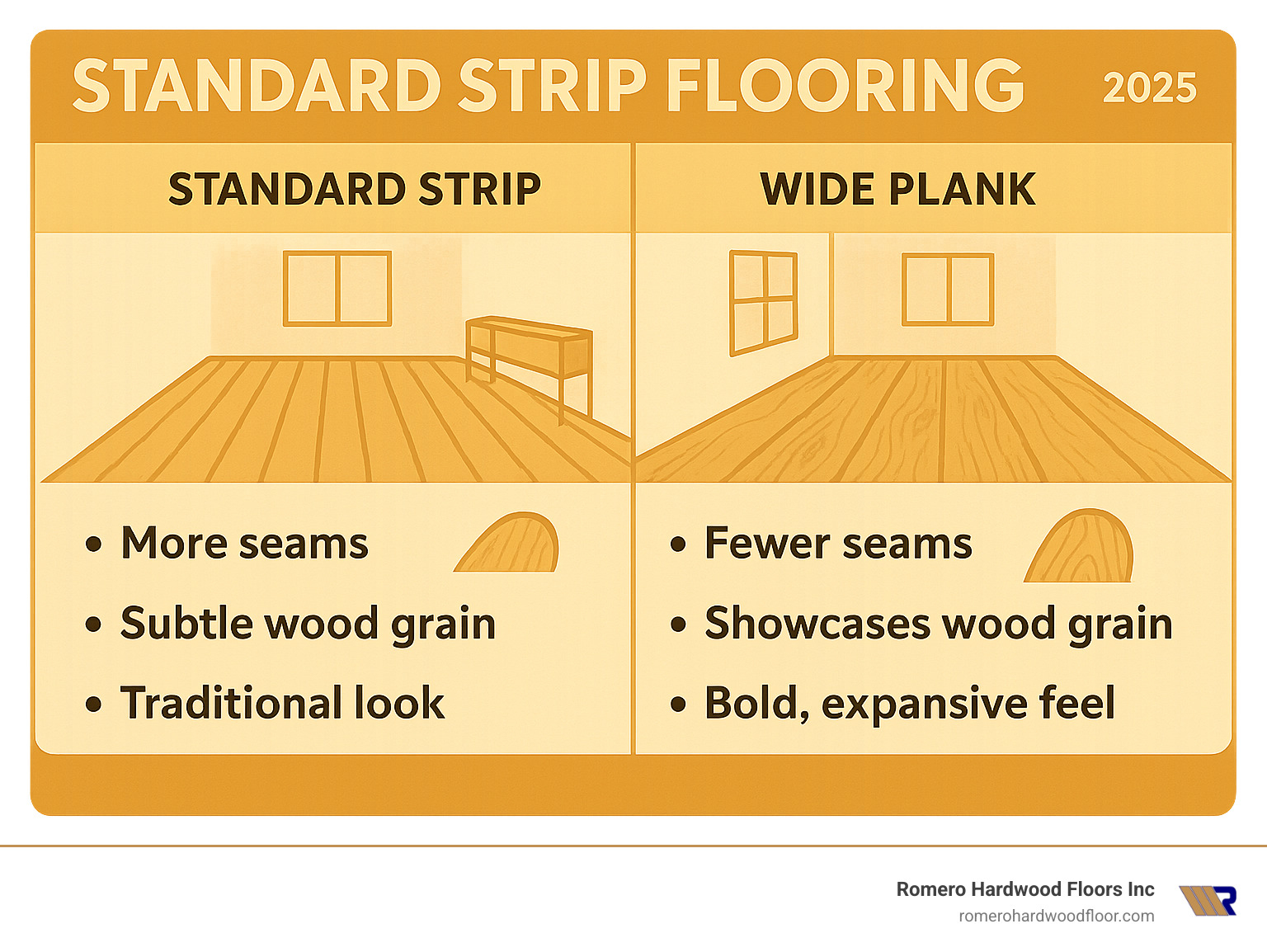
Wide plank wood flooring word guide:
What is Wide Plank Wood Flooring and Why is it Popular?
Ever walked into a room and felt more space and calm? That feeling often comes from the floor. Wide plank wood flooring is a star in home design, loved by homeowners who want to make a beautiful statement while embracing timeless style.
So, what exactly is it? Simply put, wide plank wood flooring means hardwood planks that are much wider than the standard 2-3 inch ones. Wide planks usually start at 5 inches and can go up to 12 inches or even wider. This generous size is what gives them such a distinct and popular appeal.
Defining Wide Plank Wood Flooring: Widths and Characteristics
The main feature of wide plank wood flooring is its impressive width. With planks typically ranging from 5 to 12 inches, they create a very different look than narrower strips. When we install these wider planks, the fewer seams make your room feel more open and expansive. It’s less “busy” and more serene, allowing the wood’s natural character to shine. You see more of the unique wood grain, knots, and variations that tell the tree’s story. This timeless look offers a rustic charm perfect for a farmhouse, but also lends a sleek, clean line that looks chic in modern or minimalist homes. This amazing versatility is why they are so beloved!
A Brief History: From Colonial Necessity to Modern Luxury
The history of wide plank wood flooring is rooted in Early America. Settlers used what was abundant: vast, old-growth forests with enormous trees. Milling the widest planks possible was practical, making boards of 12 to 20 inches the norm in historic buildings.
However, things shifted dramatically in the 19th century. As those immense forests became depleted, large trees became scarce. The lumber industry adapted, developing ways to mill narrower strips of wood, which then became the standard for many years.
Today, we’re seeing a wonderful renewed tradition. Thanks to modern technology and a focus on sustainable harvesting, we can once again enjoy the grand beauty of wide plank wood flooring. It’s not a fad; it’s a return to a classic, timeless style that works beautifully in today’s homes. For even more ways to bring unique flair to your space, be sure to explore our custom hardwood floor designs.
The Pros and Cons of Wide Plank Floors
Every design choice has its pros and cons, and wide plank wood flooring is no exception. While undeniably beautiful, it’s important to understand the advantages and potential challenges before deciding, as your floor is a major part of your home.
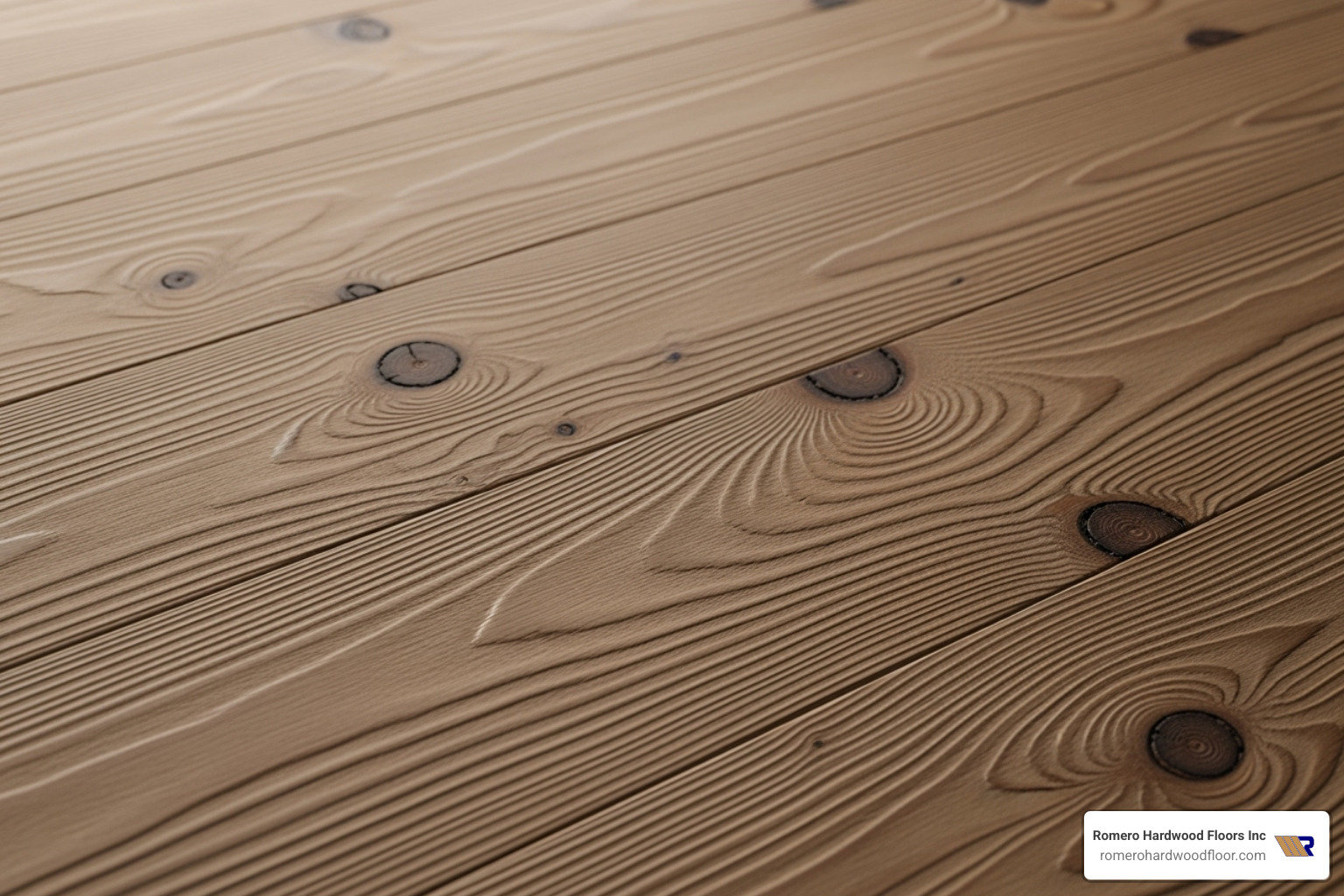
Advantages: A Seamless and Expansive Look
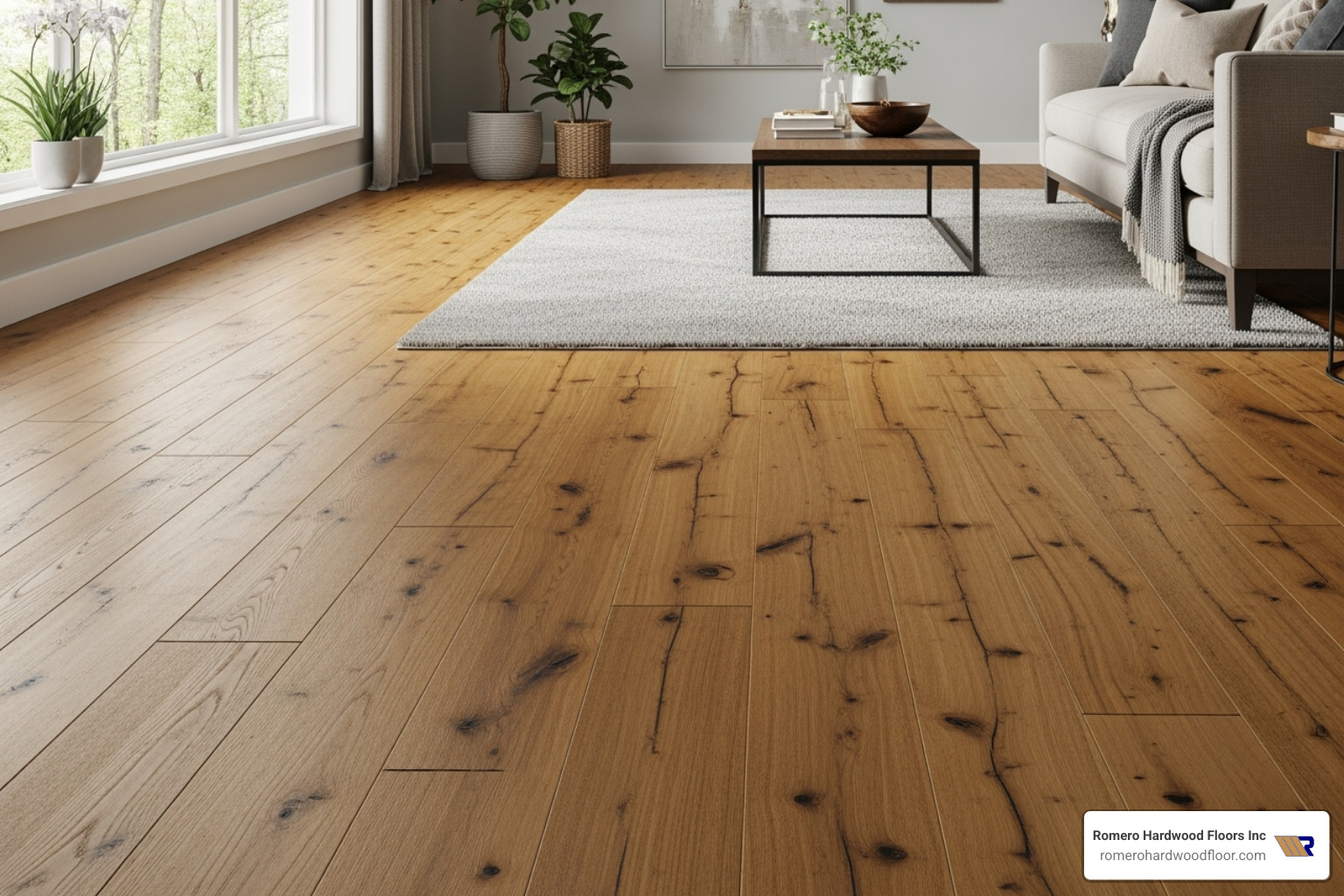
A key advantage of wide plank wood flooring is its ability to make a room feel larger and more open. With fewer seams, the floor has a less busy, more unified look, making any room feel more expansive. This effect is especially powerful in open-concept living areas, creating a beautiful flow.
Beyond making rooms feel bigger, wide planks are fantastic for showing off the wood’s natural beauty. The broad surface lets the unique grain patterns, charming knots, and inherent character of the timber shine through. This gives wide plank wood flooring a truly timeless design that blends with almost any interior style, whether you’re going for a cozy Farmhouse feel, sleek Contemporary lines, Minimalist beauty, Traditional elegance, or an Industrial look.
Another hidden bonus? Fewer boards can sometimes mean a faster installation process.
Disadvantages: Stability, Cost, and Wear
Now for the drawbacks. The main consideration for wide plank wood flooring is its reaction to environmental changes, especially humidity. As a natural material, wood breathes. Wider boards are more prone to expansion and contraction with fluctuations in temperature and humidity.
This movement can sometimes lead to issues like cupping (where board edges lift) or buckling if not managed correctly. For example, a wide pine board installed in a humid summer might show a small gap in a dry winter. While some seasonal movement is normal for wood, large swings can cause problems.
You might also notice that wide plank wood flooring tends to cost more than standard narrow-plank options. This is because wider planks require larger trees and more specialized manufacturing, contributing to a higher price tag.
Finally, while these floors are durable, the large surface of wide planks can make scratches and dents more noticeable than on a floor with many narrow strips. So, consider your household activity. Don’t worry too much, though, as many issues can be fixed. If you’re concerned about existing damage, our team is expert in hardwood floor repair. Also, finding wide plank wood flooring might be trickier for some exotic or less common woods.
Key Considerations Before You Buy
Choosing wide plank wood flooring requires balancing aesthetics with your lifestyle. Before deciding, consider the practical factors for your space and budget. Your home’s environment, including activity levels from kids and pets, is crucial. Humidity levels are especially important, as wide planks are more sensitive to moisture changes than narrower boards.
Solid vs. Engineered: Which Wide Plank is Right for You?
Wide plank wood flooring comes in two main types: solid and engineered. Solid planks are carved from a single piece of wood. Engineered planks have a real wood top layer bonded to multiple layers of plywood or fiberboard.
| Feature | Solid Wide Plank | Engineered Wide Plank |
|---|---|---|
| Construction | Single piece of solid wood | Real wood veneer over multiple layers of plywood/fiberboard |
| Stability | More susceptible to expansion/contraction with humidity | More stable, less prone to warping/cupping |
| Cost | Generally higher, especially for premium species/widths | Can be more cost-effective than solid wide planks |
| Installation Areas | Above grade, over wood subfloors. Not recommended for basements or concrete. | Below grade, over concrete subfloors, and in humid climates. |
| Refinishing | Can be sanded and refinished multiple times (many decades) | Can be sanded multiple times, depending on wear layer thickness |
| Moisture Resistance | Lower | Higher due to cross-ply construction |
Engineered wide plank wood flooring offers superior stability due to its cross-ply construction, which resists humidity changes. This makes it ideal for basements, concrete subfloors, and areas with seasonal weather swings. Engineered options can also be more budget-friendly. The wear layer thickness is key for longevity; a thicker layer allows for more refinishing opportunities, extending the floor’s life. For more details, see our guide to the best hardwood flooring options.
Wood Species, Cuts, and Finishes
Choosing the right wood species for your wide plank wood flooring is crucial, as each offers a unique combination of personality, durability, and visual appeal.
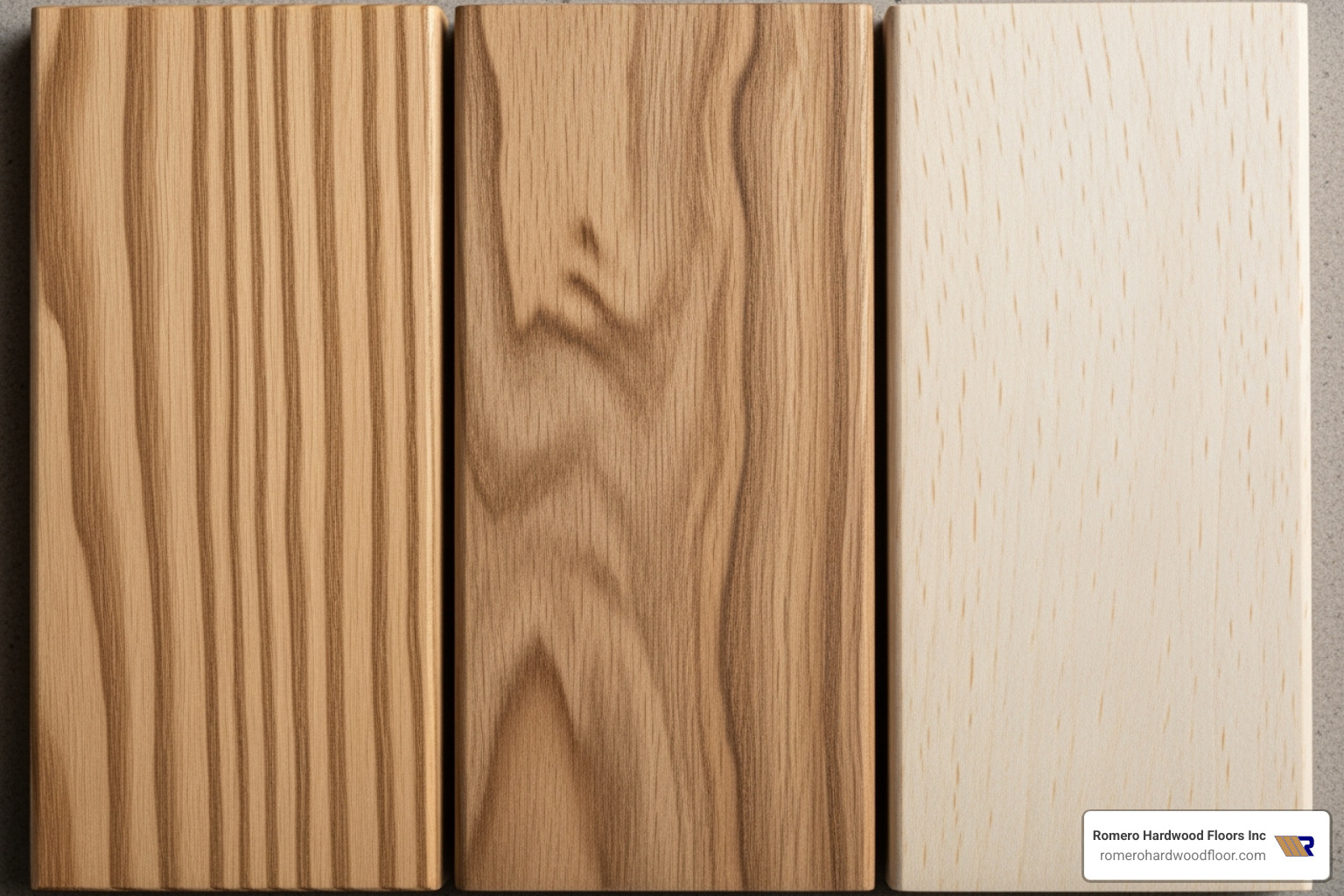
Oak (Red and White) is a popular choice. White Oak (Janka 1360) has excellent moisture resistance and a classic grain. Hickory (Janka 1820) is extremely durable, perfect for high-traffic areas. Maple (Janka 1450) offers fine grain patterns and light tones. Cherry (Janka 950) is softer but brings warmth and character, deepening in color over time. For a rustic, colonial look, Pine (Janka 380-690) is a charming, though softer, option with proven longevity.
The wood cut also matters. Live Sawn is an Old World European method that cuts straight through the log, capturing the tree’s full character and creating very stable boards. A 7-inch Live Sawn board moves about as much as a 4-inch plain-sawn board.
Finish choices have evolved. Matte and satin finishes are popular for a more natural feel. We’re big fans of penetrating sealers made from tung and linseed oils with phenolic resins because they soak into and harden the wood. This means a scratch can often be fixed on the spot, avoiding the need to patch surface coatings. For help finding your perfect match, our guide on choosing hardwood floor color has you covered.
Understanding the Cost of Wide Plank Wood Flooring
Let’s discuss cost. wide plank wood flooring is an investment, typically costing more than narrow strips for several reasons. Material costs are higher because wider planks require larger, premium trees. Sourcing is trickier, and specialized manufacturing is needed to ensure stability, all of which adds to the price.
The species and construction you choose will dramatically impact your budget. Exotic woods and solid wide planks are more expensive, while engineered options can be more budget-friendly.
Please note that the prices provided below are average costs based on internet data and not actual costs for Romero Hardwood Floors.
Industry averages show wide plank wood flooring materials ranging from $5 to $25+ per square foot, with installation adding to your total project cost. We’ve seen product listings with prices spanning from $5.05 to $25.00 per square foot for various wide plank options. Your final cost will depend on wood species, plank width, thickness, and whether you go solid or engineered.
The silver lining is that this investment often pays dividends. Hardwood floors consistently boost home resale values. According to a report on home value from the National Association of Realtors, new hardwood flooring can deliver returns on investment as high as 118%. Your beautiful floors aren’t just making your home more enjoyable – they’re making it more valuable. For a detailed cost breakdown, our hardwood flooring installation cost guide has all the specifics you need.
The Essential Guide to Installing and Maintaining Wide Plank Wood Flooring
Proper installation and maintenance are key to preserving the beauty of your wide plank wood flooring for decades. Due to their size, wide planks require special attention during acclimation, subfloor preparation, and humidity management to prevent issues like cupping or gapping. Our experience confirms these steps are vital for long-term stability. For more details, consult our hardwood flooring installation guide.
Recommended Installation Methods
Installing wide plank wood flooring requires specific methods because wider planks are more sensitive to moisture changes. Wood naturally “breathes,” so proper acclimation is essential. This involves letting the wood adjust to your home’s environment for several days before installation, a crucial step especially during seasonal changes.
For wide planks, we often suggest a nail and bead glue installation (or “glue-assist”). This technique uses both nails and adhesive for maximum stability and minimal movement. For very wide solid hardwoods, a traditional method using screws covered by matching wood plugs is also a fantastic choice. For classic pine, face nailing with cut-steel nails is a common and charming approach. While floating floors can work for some engineered options, we prefer glue-down or glue-assist methods for the extra stability they offer wider planks.
No matter the method, subfloor preparation is crucial. We ensure it’s clean, dry, level, and has the right moisture content. We also plan for “expansion gaps” around the room’s perimeter, allowing the wood to expand and contract naturally without buckling. This careful attention to detail is why professional expertise is invaluable for a successful wide plank wood flooring installation.
Long-Term Care and Maintenance
Once your wide plank wood flooring is installed, keeping it looking its best is simple. Daily sweeping or dust mopping prevents grit and dirt from scratching the surface.
When it’s time for a deeper clean, only use cleaners specifically designed for hardwood floors. Avoid harsh chemicals, abrasive cleaners, and home remedies like vinegar and water, as they can damage the finish and the wood. A golden rule: always wipe up spills immediately. Excessive moisture is the enemy of any hardwood floor.
Now, about scratches… all wood floors can get them! While a scratch might be more noticeable on a wide plank, don’t despair. Many can be repaired. For deeper scratches or general wear, refinishing is a fantastic option. Both solid and engineered wide plank wood flooring can be refinished, depending on the top layer’s thickness. Refinishing is often more cost-effective than replacing the floor and can restore its original glory. Learn more in our guide to hardwood floor refinishing.
Frequently Asked Questions about Wide Plank Flooring
When considering wide plank wood flooring, homeowners often have the same questions. It’s a significant investment, so let’s address the most common concerns.
Do wide planks make a room look smaller?
On the contrary, wide plank wood flooring makes rooms feel larger and more open. Fewer seams create a cleaner, less busy look, giving the illusion of more space. The uninterrupted surface feels more expansive. Pro tip: Combine wide planks with longer length boards to draw the eye and improve the feeling of spaciousness, even in compact rooms.
Will wide plank flooring cup or buckle?
Wider boards are more susceptible to moisture changes, which can lead to cupping or buckling with dramatic humidity shifts. However, this is preventable with proper preparation and installation. Key factors include proper acclimation, maintaining indoor humidity control (35-55% year-round), choosing stable engineered options, and using installation methods like glue-assist. Following these best practices makes cupping and buckling rare.
Is wide plank flooring a passing fad?
Not at all. Wide plank wood flooring is a timeless choice with centuries of history, not a passing trend. It’s a return to a classic American tradition that was standard in Early American homes. Its incredible versatility allows it to fit beautifully in styles from rustic farmhouses to sleek contemporary homes. The natural beauty, sense of space, and adaptability of wide planks are qualities that never go out of style. It is here to stay.
Conclusion
So, there you have it! Wide plank wood flooring truly offers a wonderful blend of history and modern style. It’s not just a floor; it’s a statement piece that brings a sense of spaciousness and showcases the unique, natural beauty of wood like nothing else. From rustic farmhouse charm to sleek contemporary elegance, these planks simply fit.
We know you might have had some thoughts about things like humidity or the initial cost. But as we’ve explored, thanks to clever modern engineering, smart cutting techniques like Live Sawn, and, most importantly, professional installation, many of those worries can be put to rest. Choosing wide plank wood flooring isn’t just about getting a beautiful floor now; it’s an investment that often adds real value to your home, creating a timeless beauty that can be enjoyed for many years to come.
Here at Romero Hardwood Floors Inc., we’re passionate about bringing these stunning floors to life in your home. Based right here in Revere, MA, we’ve been proudly serving our neighbors in areas like Beverly, Chelsea, Danvers, and Salem since 2006. We believe in honest pricing, showing up on time, and delivering workmanship that’s truly guaranteed. We understand all the ins and outs of working with wide plank wood flooring and are dedicated to making sure your project is absolutely perfect, from start to finish.
Ready to see how wide plank wood flooring can transform your space? For expert guidance and a flawless finish for your flooring project, explore our hardwood floor installation services. We’d love to help you create the floor of your dreams!
