
Wood Floor Varnish: Top 2 Stunning Picks 2025

Wood floor varnish offers vital protection and a stunning finish that improves the beauty and longevity of hardwood floors. Whether you’re a homeowner wanting to preserve your floorboards’ natural charm or a property manager aiming to maintain a sophisticated look for commercial properties, understanding the options available can make a significant difference.
To get straight to the point:
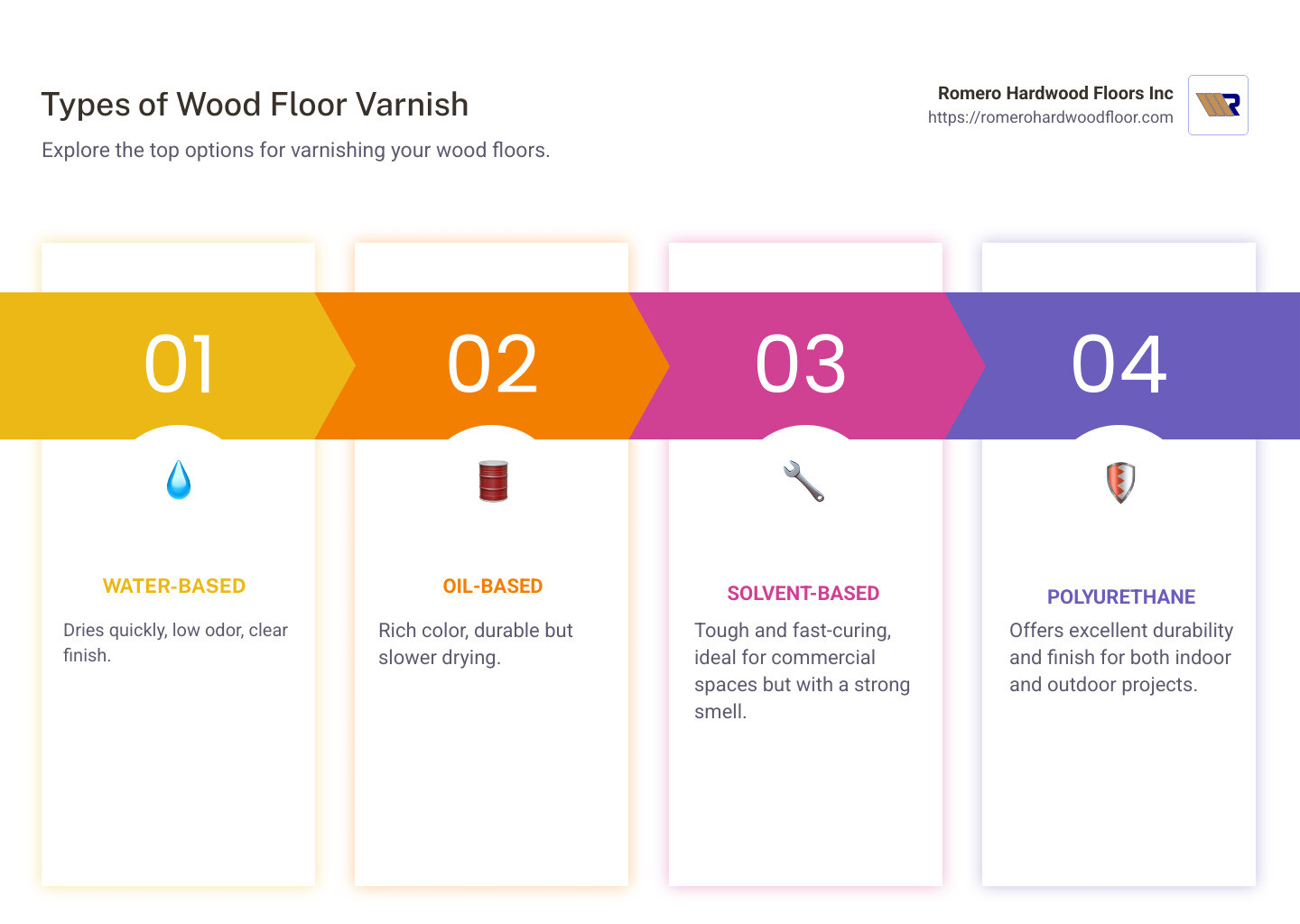
- Types of Varnish: Water-based, oil-based, and solvent-based polyurethanes are the top options, each with unique benefits and challenges.
- Water-Based: Dries quickly, low odor, clear finish.
- Oil-Based: Rich color, durable but slower drying.
- Solvent-Based: Tough and fast-curing, ideal for commercial spaces but with a strong smell.
As the owner of Romero Hardwood Floors Inc., I’ve spent over 15 years helping customers achieve the perfect finish with wood floor varnish. Our extensive experience ensures you receive quality installation and maintenance advice. Next, we dive into understanding your best varnish options for protecting those exquisite wood floors.
Understanding Wood Floor Varnish
Wood floor varnish is more than just a shiny coat; it’s the armor that protects your hardwood floors from daily wear and tear. Let’s break down what makes these finishes so essential and how you can choose the right one.
Polyurethane: The Durable Defender
Polyurethane is a popular choice for those seeking a tough, protective layer. It’s known for its durability, making it ideal for high-traffic areas. You can find it in two main types: water-based and oil-based.
- Water-Based Polyurethane: This type is favored for its quick drying time and low odor. It provides a clear finish, preserving the wood’s natural color. However, it may require more frequent maintenance compared to its oil-based counterpart.
- Oil-Based Polyurethane: Offers a rich, warm glow that improves the wood’s natural beauty. It’s more durable but takes longer to dry and can emit a stronger odor during application.
Varnish: The Versatile Protector
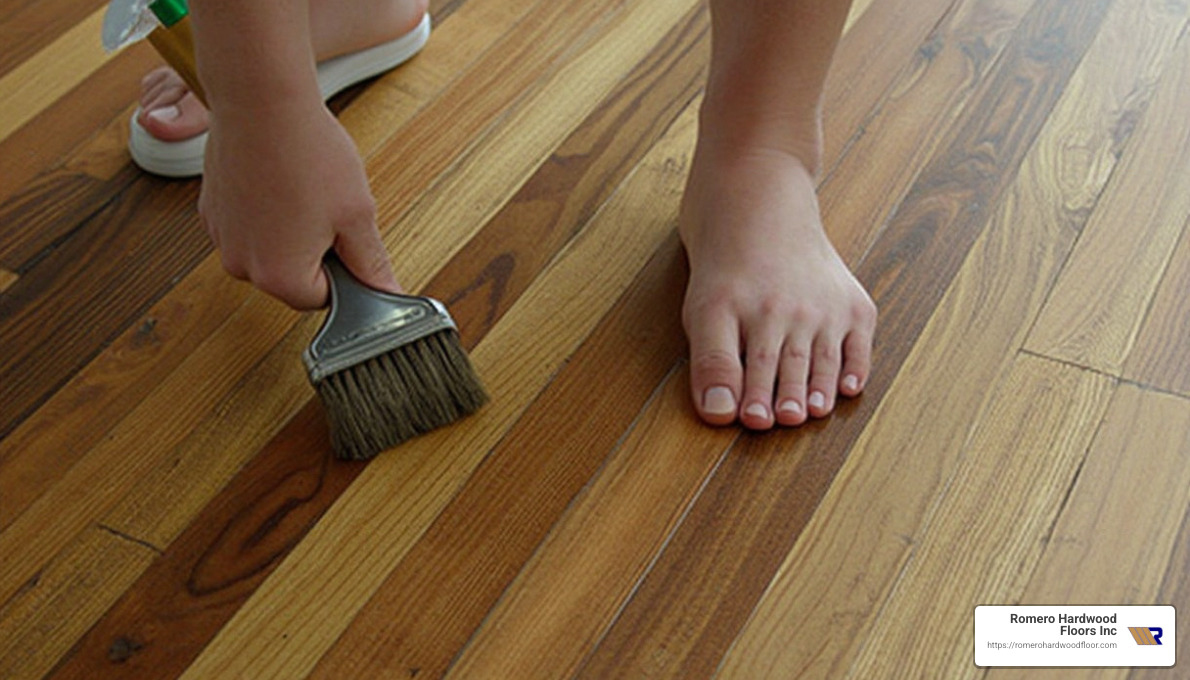
While polyurethane is a form of varnish, traditional varnish options are also available. These are often used for their aesthetic appeal and ability to bring out the wood’s grain. Varnish provides a hard finish but may not be as resistant to scratches as polyurethane.
Durability Matters
When choosing a wood floor varnish, consider the level of traffic your floor will endure. High-traffic areas benefit from the robust protection of polyurethane, while less frequented spaces might allow for more flexibility in finish choice.
In summary, understanding the nuances of polyurethane and varnish can help you make an informed decision that improves both the beauty and longevity of your hardwood floors. Up next, we’ll explore the top varnish options to consider for your wood floors.
Top Varnish Options for Wood Floors
When it comes to protecting and beautifying your wood floors, choosing the right varnish is crucial. Here, we spotlight two standout options: Ronseal Diamond Hard Floor and Sher-Wood® Flooring Conversion Varnish Topcoat.
Ronseal Diamond Hard Floor
Ronseal Diamond Hard Floor is renowned for its exceptional durability and resilience. This water-based varnish is designed to withstand the rigors of high-traffic areas, making it a top choice for busy households. Its formula offers a tough, scratch-resistant finish that not only protects your floors but also improves their natural beauty.
- Quick Drying: Ronseal Diamond Hard Floor dries quickly, allowing you to complete your project efficiently without long waiting periods.
- Low Odor: The low-odor formulation ensures a pleasant application experience, especially in indoor environments.
- Clear Finish: This varnish provides a clear finish that maintains the wood’s natural appearance without yellowing over time.
Sher-Wood® Flooring Conversion Varnish Topcoat
Sher-Wood® Flooring Conversion Varnish Topcoat is a fast-drying, acid-cured option known for its clarity and durability. It’s perfect for those seeking a professional-grade finish that offers excellent scratch resistance and longevity.
- Water-White Formulation: This varnish includes a UV absorber for added wood protection, ensuring your floors stay beautiful even with exposure to sunlight.
- Low VOCs: With a low VOC formulation, Sher-Wood® is an environmentally friendly choice that meets strict standards.
- Fast Drying: This varnish dries quickly to handle and sand, allowing for efficient application and finishing.
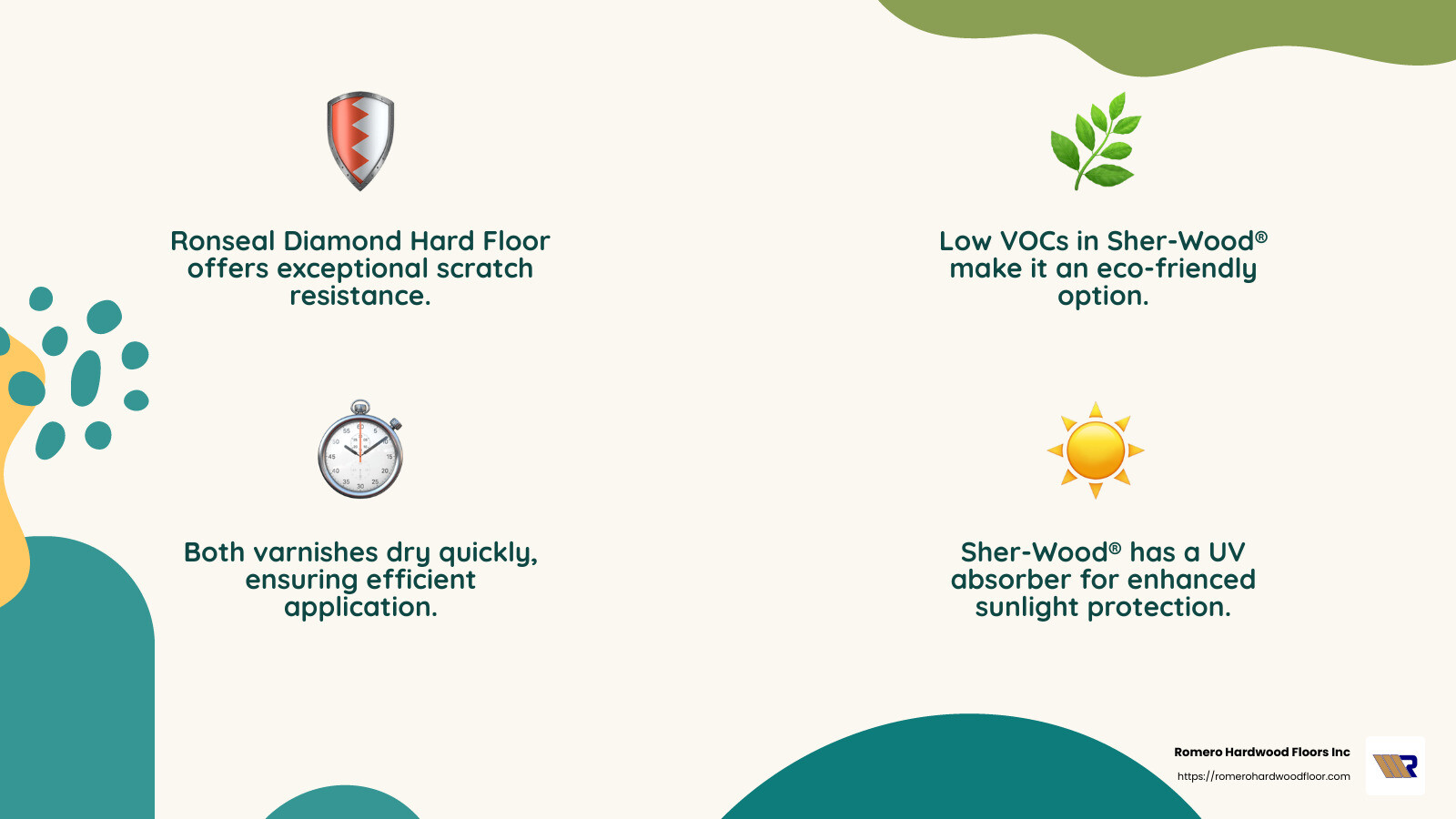
Both Ronseal Diamond Hard Floor and Sher-Wood® Flooring Conversion Varnish Topcoat offer unique benefits that cater to different needs and preferences. Whether you prioritize quick drying, low odor, or professional-grade durability, these varnishes provide excellent protection and aesthetic improvement for your wood floors.
In the next section, we’ll dig into the nuances of choosing between polyurethane and varnish, helping you decide which is better suited for your specific flooring needs.
Polyurethane vs. Varnish: Which is Better?
When it comes to finishing your wood floors, the choice between polyurethane and varnish boils down to their suitability for indoor surfaces versus outdoor projects, as well as their UV protection capabilities.
Indoor Surfaces
For indoor surfaces like hardwood floors, polyurethane is often the preferred choice. It’s a synthetic resin that forms a hard, protective layer over the wood, making it highly durable and resistant to scratches and wear. Polyurethane comes in both oil-based and water-based forms.
- Oil-Based Polyurethane: Known for its rich color and durability, it’s great for high-traffic areas. However, it has a strong odor and takes longer to dry.
- Water-Based Polyurethane: This option dries quickly and doesn’t alter the wood’s color, making it ideal for those who prefer a natural look. It’s more expensive but emits less odor.
Outdoor Projects
Varnish, on the other hand, excels in outdoor settings. It is a combination of resins, oils, and solvents, providing excellent protection against the elements. Its higher ratio of solids makes it less susceptible to UV light damage, which is crucial for outdoor projects like decks and exterior furniture.
- UV Protection: Varnish’s ability to resist UV rays helps prevent the wood from fading or discoloring over time, a common issue with outdoor wood surfaces.
- Application Challenges: While varnish offers great UV protection, it can be tricky to apply. It’s prone to cracking, peeling, and bubbling if not applied correctly, which can expose the wood to water damage.
Conclusion
The choice between polyurethane and varnish depends on where you plan to use them. For interior wood floors, polyurethane provides durability and a clear finish that improves the wood’s natural beauty. For outdoor projects, varnish offers superior UV protection, keeping your exterior wood surfaces looking vibrant and well-maintained.
Next, let’s explore some application tips for wood floor varnish to ensure a flawless finish.
Application Tips for Wood Floor Varnish
Applying wood floor varnish properly is key to achieving a stunning finish. Here are some tips to help you get the best results:
Proper Application
- Clean the Surface: Before applying varnish, make sure the floor is clean and free of dust. Vacuum thoroughly and wipe with a damp cloth to ensure a spotless surface.
- Choose the Right Tool: Use a fine brush or foam pad for water-based varnishes and a fine brush or microfibre roller for solvent-based varnishes. Always apply in the direction of the wood grain.
- Thin Coats: Apply thin coats to avoid drips and bubbles. It’s better to apply multiple thin coats rather than one thick coat.
- Long Strokes: Use long, even strokes to minimize brush marks and help eliminate bubbles.
Drying Time
- Water-Based Varnishes: These usually dry within a couple of hours. You can apply additional coats after this time, but make sure to follow the manufacturer’s recommendations for drying times.
- Solvent-Based Varnishes: These take longer to dry. Ensure good ventilation to speed up the process and reduce odors.
- Sanding Between Coats: Lightly sand (denib) between coats for a smoother finish. This step is optional for water-based varnishes but recommended for achieving professional results.
Mixing Ingredients
- Follow Instructions: Always follow the manufacturer’s instructions when mixing varnish with any additives or thinners.
- Catalyzation: Some varnishes, like the Sher-Wood® Flooring Conversion Varnish Topcoat, require catalyzation before application. Ensure proper mixing for optimal performance.
Final Thoughts
Applying wood floor varnish can transform your floors, providing beauty and protection. Remember to take your time and follow these tips for the best results.
Now that you’re equipped with application tips, let’s address some frequently asked questions about wood floor varnish.
Frequently Asked Questions about Wood Floor Varnish
What is the best varnish for wooden floors?
When it comes to choosing the best varnish for your wooden floors, Ronseal Diamond Hard Floor varnish is a popular choice among homeowners and professionals. This varnish is known for its exceptional durability and resistance to scuffs and scratches, making it ideal for high-traffic areas. It provides a clear finish that improves the natural beauty of wood without altering its color. Plus, it’s easy to apply and dries quickly, allowing you to enjoy your beautifully finished floors in no time.
Is polyurethane better than varnish on wood floors?
The debate between polyurethane and traditional varnish often centers around durability and application. Polyurethane is a highly durable synthetic resin that offers a robust protective layer over wood floors. It is especially favored for indoor surfaces due to its resistance to scratches and general wear. Varnish, on the other hand, is more flexible and can highlight the wood’s natural beauty with a rich, warm finish.
For those seeking maximum durability, especially in high-traffic areas, polyurethane is often the preferred choice. However, if you desire a finish that improves the wood’s natural appearance, a high-quality varnish like Ronseal Diamond Hard Floor might be your best bet.
Can you varnish hardwood floors without sanding?
Refinishing hardwood floors traditionally involves sanding to remove the old finish and prepare the surface for a new coat. However, there are methods to refresh your floors without extensive sanding. Buffing is one such method, where the floor is lightly abraded to allow the new varnish to adhere properly. This process can be less labor-intensive and is suitable for floors that are in relatively good condition but have lost their shine.
Another option is using a refinishing kit designed for floors that don’t require full sanding. These kits often include a cleaner and a revitalizing finish that can restore the floor’s luster. While these methods won’t fix deep scratches or significant damage, they are effective for minor touch-ups and maintaining the floor’s appearance.
By understanding these options, you can choose the best approach for maintaining your hardwood floors without the hassle of a full sanding process.
Next, we’ll explore how Romero Hardwood Floors Inc can help you improve your property with expert flooring solutions.
Conclusion
At Romero Hardwood Floors Inc, we understand that choosing the right finish for your wood floors is crucial for both aesthetics and durability. With our expertise in hardwood flooring solutions, we can help you steer the options and find the best fit for your home or business.
Whether you’re looking to improve the natural beauty of your floors with a high-quality wood floor varnish or seeking maximum durability with polyurethane, our team is here to guide you every step of the way. Our commitment to excellence ensures that your floors not only look stunning but also stand the test of time.
Investing in professional flooring solutions can significantly improve your property’s value. Beautiful, well-maintained floors add a touch of elegance and can be a major selling point if you ever decide to move. Our services are designed to provide long-lasting results, making your investment worthwhile.
For those in and around Revere, MA, we offer specialized varnishing and refinishing services custom to your specific needs. Our experienced team uses the latest techniques and environmentally friendly products to bring out the best in your hardwood floors.
Ready to transform your space? Learn more about how we can help by visiting our Refinish Hardwood Floors page. Let’s work together to improve the beauty and value of your property with our expert flooring solutions.
