
Wood look tile: Best 2025 Guide
Why Wood Look Tile is Taking Over Modern Homes
Wood look tile delivers the timeless beauty of natural hardwood with none of the drawbacks. Here’s what you need to know:
Key Features:
- Waterproof – Perfect for kitchens, bathrooms, and basements
- Scratch-resistant – Ideal for pets and high-traffic areas
- No maintenance – No refinishing, re-staining, or re-sealing needed
- Fire and UV resistant – Won’t fade or burn like real wood
- Long-lasting – Porcelain tile has the longest lifespan of any flooring
Popular Applications:
- Bathrooms and shower floors
- Kitchen flooring
- Commercial spaces
- Outdoor patios and pool decks
- Basements and mudrooms
The popularity of wood aesthetics in home design is undeniable, but few things can lift the look of a room like new wood floors. Traditional hardwood, however, isn’t practical for every space. Wood look tile solves this by combining advanced manufacturing with realistic design.
Made from clay and natural materials fired at high temperatures, wood look tile uses 3D inkjet printing to create surfaces nearly indistinguishable from real wood. The result is a durable alternative that handles moisture, scratches, and daily wear without constant upkeep.
This guide covers everything you need to know about wood look tile, from material types and installation to costs and design trends. You’ll find why this versatile material has become a go-to choice for designers and homeowners alike.
I’m Francisco Romero, owner of Romero Hardwood Floors Inc. in Revere, MA. With over 15 years of experience, I’ve helped many clients choose wood look tile for spaces where traditional hardwood isn’t suitable, ensuring they get the aesthetic they want with the durability they need.
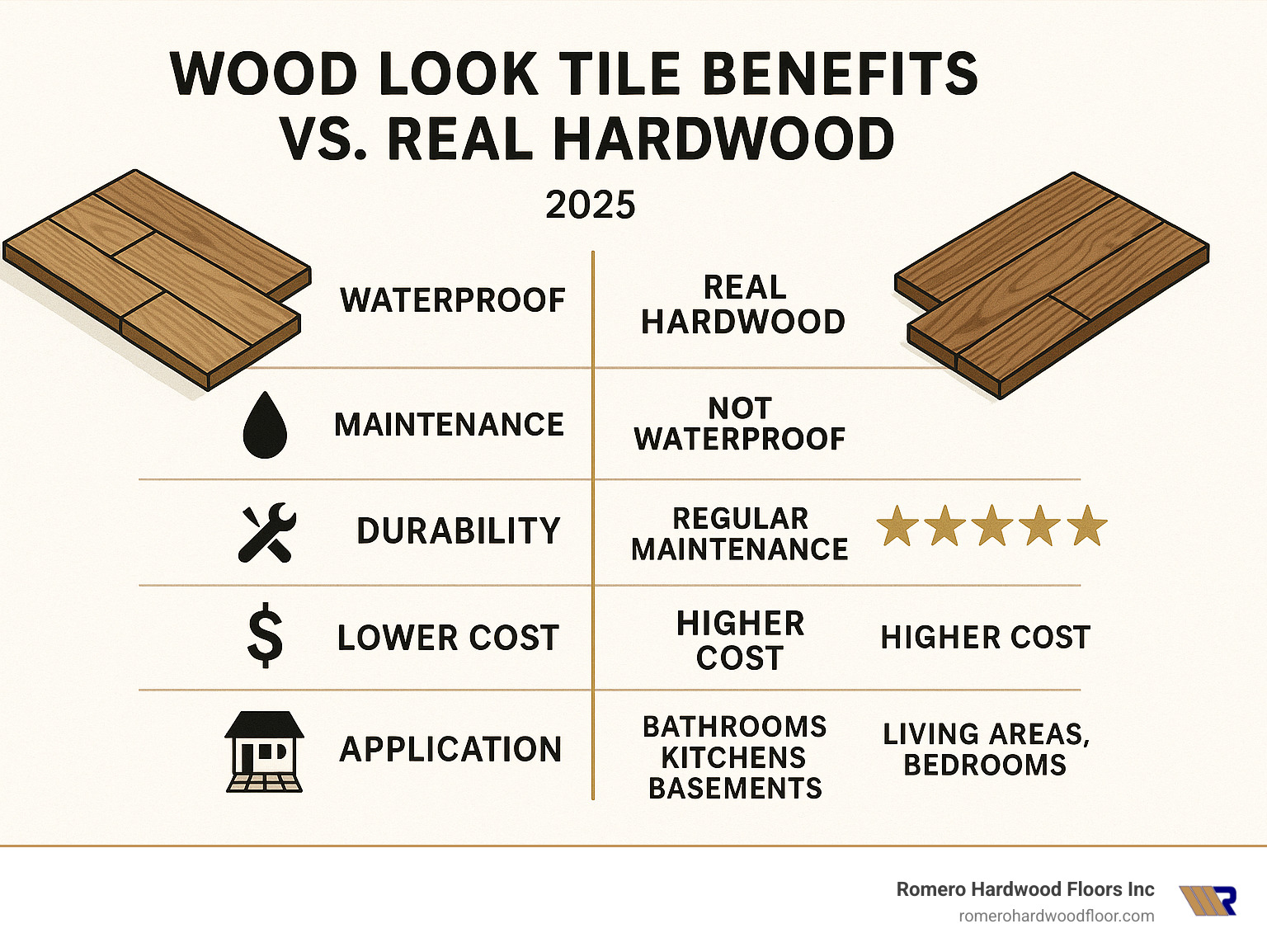
What is Wood Look Tile and Why Is It So Popular?
While we love the character of natural wood, it isn’t always the most practical choice for every room. That’s where wood look tile comes in, offering a stunning and durable alternative.
So what is wood look tile? It’s made from clay and natural materials fired at extremely high temperatures. This process creates a dense, durable tile body. Then, advanced 3D inkjet printing technology applies realistic wood grain patterns, knots, and textures. The technology is so advanced that the tiles are often mistaken for real wood.
The popularity of wood look tile comes from its ability to solve the common problems associated with real wood:
- Waterproof properties are a game-changer. Unlike hardwood, which can warp or swell, wood look tile is impervious to moisture, making it perfect for kitchens, bathrooms, and basements.
- Scratch and stain resistance is another huge win. For homes with pets or kids, this flooring can handle heavy use without showing wear. No more cringing when furniture is dragged or paws are muddy.
- Low maintenance is a major benefit. Forget re-sanding, re-staining, or re-sealing. Wood look tile only requires basic sweeping and mopping, freeing up your weekends.
- It’s also fire and UV resistant. It won’t fade in sunny spots like hardwood can, and it adds a layer of safety as it won’t fuel a fire.
The Best Durability of Wood Look Tile
When it comes to durability, porcelain wood look tile is in a league of its own. The porcelain vs. ceramic strength difference is significant; porcelain is fired at higher temperatures, making it denser and tougher. This makes it ideal for high-traffic areas like entryways and kitchens where hardwood would quickly show wear.
A key advantage is that there is no need for refinishing. Ever. While hardwood needs refreshing every few years, wood look tile maintains its appearance with just regular cleaning, saving you money over the long term. It’s incredibly pet and kid-friendly flooring, standing up to the chaos of family life without a mark. The longevity compared to other flooring is impressive, offering decades of great looks with minimal fuss.
A Practical Alternative to Hardwood
We install many beautiful hardwood floors, but we often recommend wood look tile for certain areas.
Its moisture resistance for kitchens and baths is best. These rooms have steam and spills that are tough on hardwood. With tile, you get the wood look without worrying about water damage. There’s no warping or splintering, so your floor stays perfectly flat and smooth.
The consistent appearance is another plus. Wood look tile offers realistic wood patterns with predictable variation, or a more uniform look if that’s your style. When we make a comparison with engineered hardwood, even our moisture-resistant engineered hardwood flooring can’t match the waterproof nature of tile. For areas with potential standing water, tile is the clear winner.
The simplified upkeep can’t be overstated. No special cleaners or seasonal maintenance. For busy families or anyone who wants gorgeous floors without the fuss, wood look tile is one of the best flooring for homes in moisture-prone areas.
A Guide to Types, Styles, and Design Trends
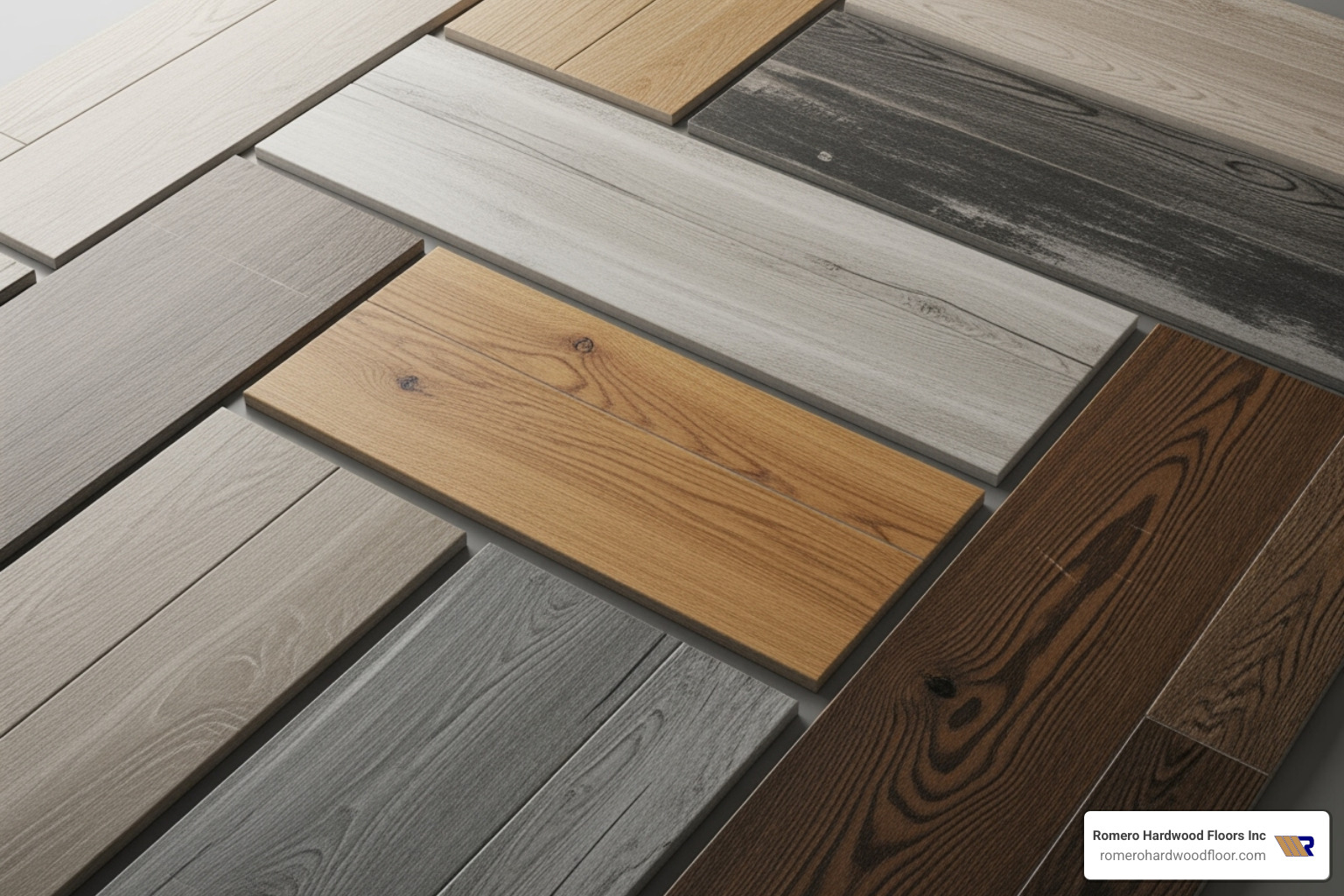
Today’s wood look tile has evolved far beyond early versions. Advanced manufacturing captures every detail, from the grain of oak to the knots in reclaimed barn wood, allowing you to achieve any wood aesthetic you desire. Current trends are pushing beyond traditional layouts to include herringbone and chevron patterns, while material choices like porcelain and ceramic offer distinct advantages.
Porcelain vs. Ceramic: Which is Right for You?
This is a common question. Both materials look stunning, but they have different strengths. The key is matching the material to your space and lifestyle.
| Feature | Porcelain Wood Look Tile | Ceramic Wood Look Tile |
|---|---|---|
| Water Absorption Rate | Very low (less than 0.5%), making it virtually impervious | Higher (greater than 0.5%), making it more porous |
| Durability (PEI Rating) | Generally higher (PEI 3-5), extremely hard and dense, highly resistant to wear and scratches | Generally lower (PEI 1-3), softer, more prone to chipping and wear in high-traffic areas |
| Cost | Tends to be slightly more expensive due to higher manufacturing costs and durability | Generally less expensive, offering a more budget-friendly option |
| Best Use Cases | High-traffic areas, kitchens, bathrooms, showers, outdoor spaces, commercial applications | Low to medium-traffic areas, walls, light-use residential floors |
| Installation Complexity | Heavier and denser, may be trickier to cut, often recommended for professional installation | Lighter and easier to cut, can be more DIY-friendly for experienced installers |
Porcelain is our go-to for spaces with heavy use or moisture, like kitchens and bathrooms. Ceramic shines in areas with lighter traffic, such as accent walls or bedrooms, offering the wood aesthetic at a friendlier price.
Popular Shapes, Sizes, and Patterns
The traditional plank remains popular and is the most realistic option, with modern planks often stretching 40 inches or more. These wide and long format tiles create fewer grout lines and a more seamless appearance. Rectangles and squares in wood-look finishes open up unique geometric pattern possibilities.
Pattern-wise, herringbone layouts add instant sophistication, while the chevron pattern offers a similar impact with a more contemporary edge. For a traditional look, staggered layouts are perfect. We recommend offsetting each plank by about one-third of its length to avoid unnatural step patterns. Current wood look tile trends also accept mixing plank widths to create an organic, reclaimed look.
Colors, Finishes, and Design Styles
The color and finish you choose can completely transform a room’s personality.
- Whitewashed and light tones make spaces feel larger and are foundational to the modern farmhouse look.
- Classic oak and walnut colors offer timeless warmth, perfect for creating a cozy, welcoming atmosphere.
- Modern gray and dark shades provide a contemporary edge that works well in urban-inspired or dramatic, luxurious designs.
Finishes are just as important. Matte finishes offer an authentic, natural feel with better slip resistance. Polished surfaces add elegance, while textured and hand-scraped finishes provide a tactile realism that can fool the most discerning eye.
Wood look tile adapts beautifully to any design style:
- Farmhouse: Distressed, whitewashed planks.
- Industrial: Darker grays with subtle texture.
- Scandinavian: Pale, matte planks with minimal grain.
- Contemporary: Sleek, long planks in neutral tones.
- Traditional: Classic wood tones in standard plank layouts.
Installation and Application Insights
The beauty of wood look tile is its adaptability. Unlike hardwood, it can be installed with confidence in almost any environment without compromising on style.
Bathrooms and kitchens are where wood look tile truly shines, offering a spa-like or warm wood atmosphere without the worry of water damage from splashes and spills. It’s also an excellent choice for basements and mudrooms, changing these utilitarian areas into welcoming spaces that can handle moisture.
For high-traffic commercial spaces like restaurants and retail stores, wood look tile delivers an upscale appearance with the durability business owners need. Certain thicker porcelain pavers are even engineered for outdoor patios and pool decks, resisting frost, stains, and fading without the annual maintenance of a wood deck.
Wood look tile also has impressive performance-enhancing features. Many tiles include slip-resistance technology, making them safer for wet areas. The PEI ratings (Porcelain Enamel Institute) help you choose the right tile durability for your specific application, ensuring your investment lasts.
Key Considerations for a Flawless Installation
A flawless result depends on expert preparation and technique. After years of installing floors in Revere and surrounding communities, we know that proper methods are crucial.
- Subfloor preparation is critical. The subfloor must be clean, dry, structurally sound, and perfectly level. Any imperfections can cause lippage, where one tile edge sits higher than another. We use leveling compounds to ensure a perfect foundation.
- Grout selection is key to an authentic wood look. Grout is required for stability, but the secret is matching grout color to the tile’s dominant tone. This makes the grout lines virtually disappear, creating the illusion of continuous wood planks.
- Rectified edges are a huge help. These precisely cut edges allow for very narrow grout lines (as thin as 3/16 inch), enhancing the realistic wood appearance.
- Professional installation is highly recommended, especially for long planks. Our experienced team at Romero Hardwood Floors knows how to prevent lippage and ensure a perfect finish for clients from Danvers to Peabody. Whether you’re considering hardwood flooring installation or tile, expert craftsmanship protects your investment.
Cost, Cleaning, and Long-Term Value
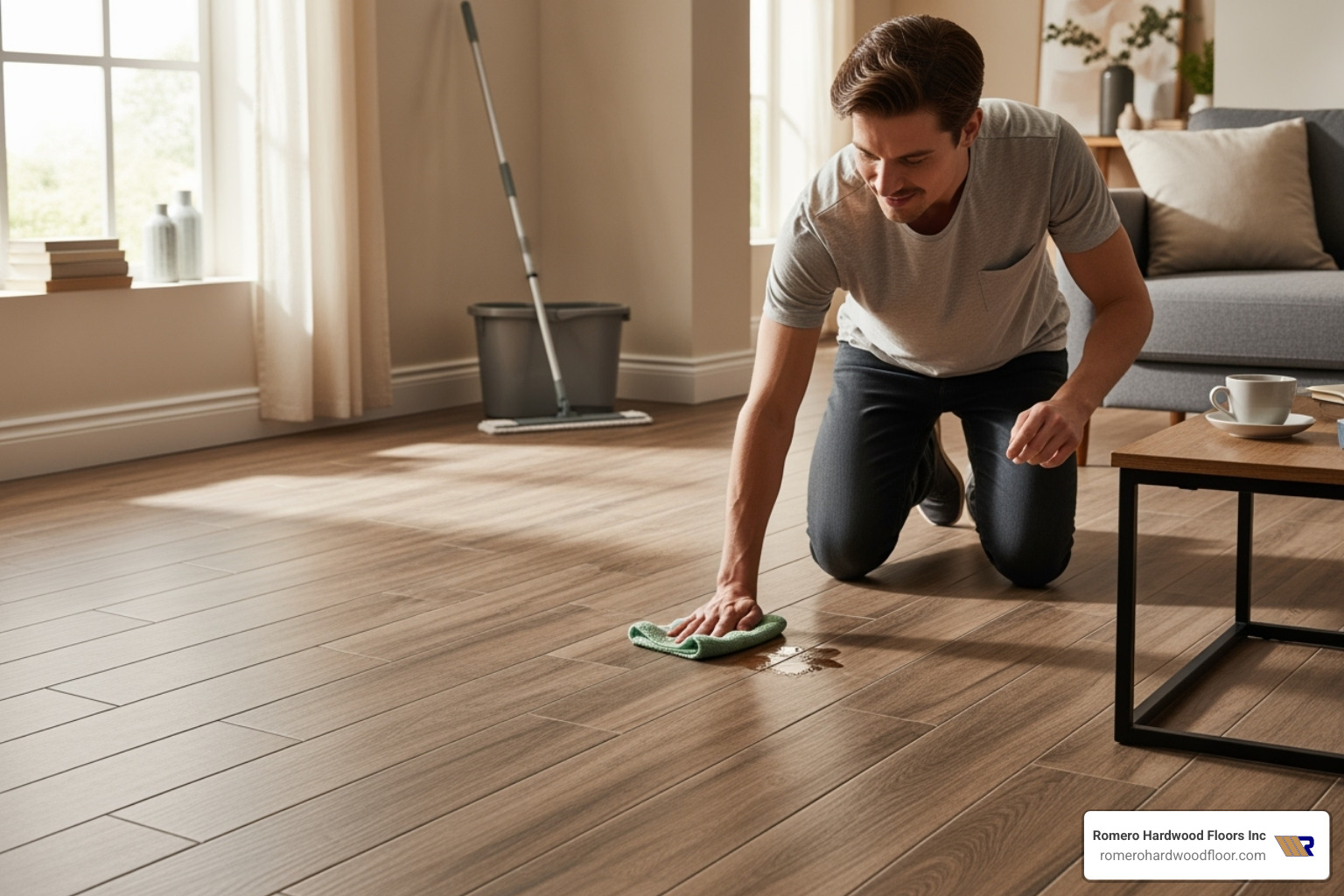
While wood look tile can have a higher upfront cost, its long-term value is exceptional. Thanks to minimal maintenance and incredible durability, it’s often more economical over time than traditional hardwood. The simple cleaning routine gives busy families more time to enjoy their beautiful floors instead of maintaining them.
Understanding the Cost of Wood Look Tile
The price for wood look tile can vary significantly based on material and style.
Disclaimer: These are average costs based on internet data and do not reflect the specific pricing of Romero Hardwood Floors Inc. For an accurate quote, please contact a professional.
- Material costs typically range from $3 per square foot for basic ceramic to $15 or more per square foot for premium, large-format porcelain tiles.
- Installation costs range from approximately $5 to $20 or more per square foot. Factors affecting price include subfloor preparation, layout complexity (e.g., herringbone), and tile size.
Professional installation is a wise investment. Our flooring installation services ensure your floor is installed correctly, preventing costly issues down the line. The key financial benefit is that you’ll never need to budget for refinishing, re-staining, or re-sealing, which can save thousands over the life of the floor compared to hardwood.
Cleaning and Maintaining Your Floor
This is where wood look tile is a hero for busy households. The cleaning routine is incredibly simple.
- Regular sweeping or vacuuming removes grit that can dull the surface over time.
- For deeper cleaning, damp mopping with a pH-neutral cleaner for tile is all you need. No special products or worrying about water damage.
Best of all, there is no waxing or sealing required. Glazed wood look tile maintains its finish indefinitely with just basic cleaning. This longevity and durability mean you get decades of beautiful floors with minimal effort, making the initial investment worthwhile for families with pets, kids, or busy lifestyles.
Frequently Asked Questions about Wood Look Tile
After helping hundreds of homeowners, we’ve noticed the same questions come up about wood look tile. Here are the answers to the most common concerns.
Is wood look tile a passing trend or a timeless choice?
Wood look tile is built on the timeless appeal of wood flooring, a design staple for centuries. It captures this classic aesthetic with modern durability and low maintenance. As manufacturing technology improves, creating even more realistic looks, its popularity as a long-term, practical design choice is set to continue. It has become a staple, not a fad.
Does wood look tile always require grout?
Yes, grout is necessary for a stable, long-lasting installation. It allows for natural expansion and contraction in the subfloor, preventing tiles from cracking. The good news is that you can achieve a nearly seamless look. Rectified tiles have perfectly straight edges that allow for very thin grout lines (as narrow as 3/16 inch). By matching the grout color to the tile, the lines become almost invisible.
Is wood look tile cold and slippery?
Tile can feel cool to the touch, which is often a benefit in hot summer months. That same thermal conductivity makes wood look tile a perfect partner for radiant floor heating systems, creating a luxuriously warm floor in the winter. Regarding safety, modern manufacturers offer tiles with impressive slip-resistant technologies. A textured or matte finish wood look tile can be safer than polished hardwood when wet. We help clients select the right tile to ensure both beauty and safety.
Conclusion
It’s clear why wood look tile has become a game-changer in modern homes. It’s not just about copying wood—it’s about improving on it by delivering the warmth and beauty of natural wood without the headaches. No more worrying about spills or spending weekends on maintenance.
The durability is exceptional, handling everything from pet claws to heavy foot traffic. Its water resistance opens up design possibilities for bathrooms, kitchens, and even patios that are impossible with real wood. The design versatility is equally impressive, with styles available to suit any aesthetic, from farmhouse rustic to sleek contemporary.
When you consider the long-term value—no refinishing costs, no special cleaners, no water damage repairs—it’s a smart investment. You get decades of beautiful floors, saving you time and money.
At Romero Hardwood Floors Inc., we are passionate about finding the right flooring for our clients. Wood look tile has earned our respect for solving real-world problems while delivering the aesthetic homeowners love. For those throughout the North Shore, from Revere to Beverly, we’re here to guide you through all your options.
Ready to see what beautiful, worry-free floors can do for your home?
Like us on Facebook!
