Hardwood Floor Lifting Repair: Top 5 Fast Solutions
Hardwood floor lifting repair can save both the beauty and functionality of your floors. Whether due to moisture exposure, poor installation, or everyday wear and tear, lifted floors are a common concern. If you’re looking to tackle this issue head-on, a few straightforward steps can restore your floors to their former glory.
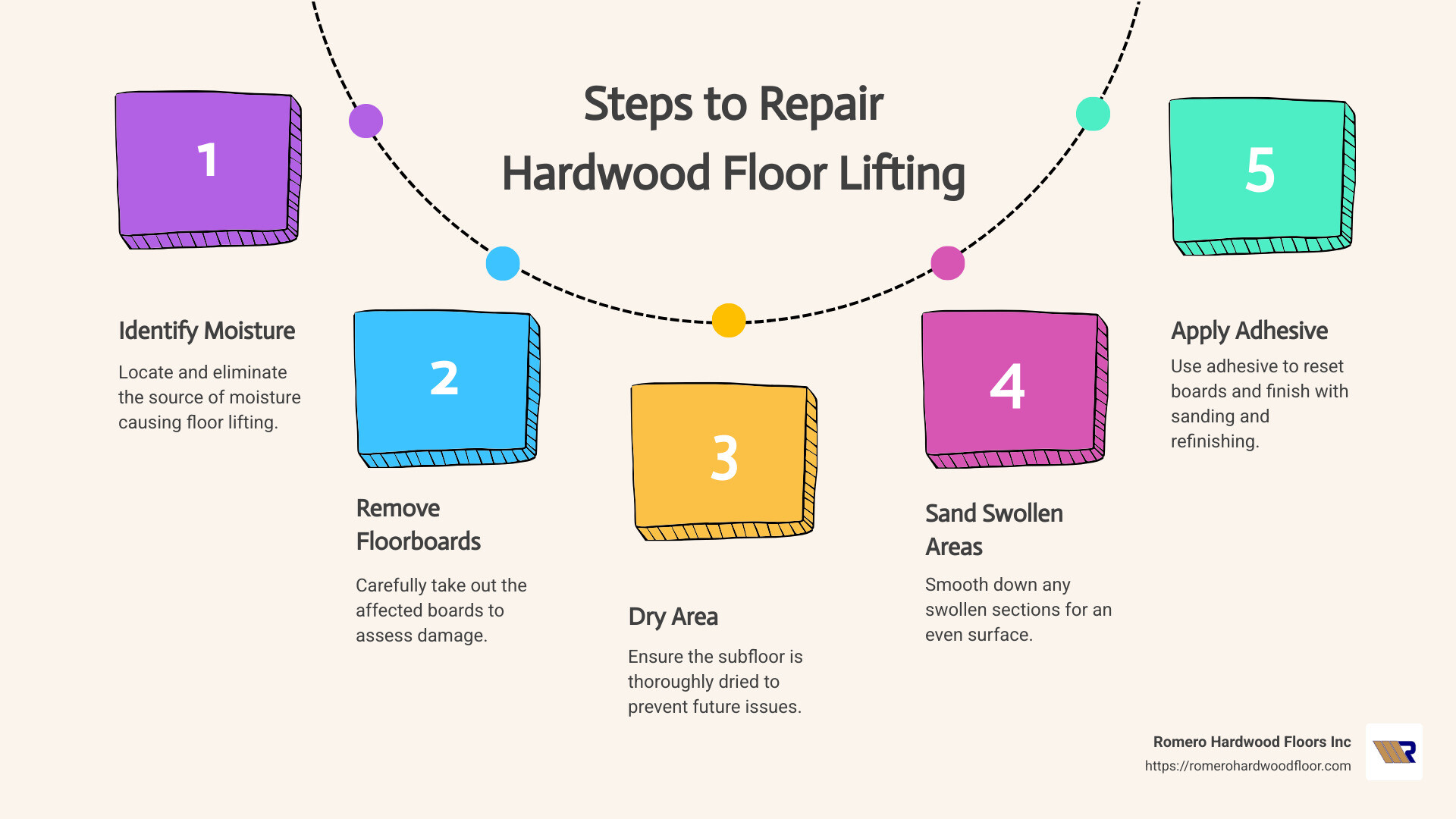
- Identify the source of moisture and eliminate it.
- Remove the affected floorboards carefully.
- Dry out the area thoroughly.
- Sand down any swollen areas.
- Apply adhesive to reset the boards in place.
- Finish with a sanding and refinishing touch-up.
I’m Francisco Romero, owner of Romero Hardwood Floors Inc. With over 15 years of experience, my team and I are dedicated to understanding every aspect of hardwood floor lifting repair. Our goal is to provide high-quality solutions that last and improve the overall value of your property while maintaining the highest standard of customer satisfaction.
Understanding Hardwood Floor Lifting
Hardwood floor lifting can manifest as buckling, cupping, or crowning. These issues usually arise from moisture exposure but can also result from other factors like improper installation. Let’s break down these terms to help you understand what might be happening to your floors.
Buckling
Buckling is the most severe form of floor lifting. It occurs when hardwood planks pull away from the subfloor, sometimes rising several inches. This can happen after a flood or a significant water leak. The key to resolving buckling is to address the moisture source quickly and professionally.
Cupping
Cupping is a milder issue where the edges of a board rise higher than the center, creating a concave shape. This often results from moisture imbalance, where the bottom of the board absorbs more moisture than the top. If you notice cupping, it’s crucial to check for any leaks or high humidity levels in your home.
Crowning
Crowning is the opposite of cupping. Here, the center of the board rises above the edges, forming a convex shape. Crowning can occur if cupped floors are sanded before they are completely dry. As with cupping, moisture control is essential to prevent and fix crowning.
Moisture Exposure
Moisture is the main culprit behind these issues. Whether from spills, leaks, or high humidity, water can wreak havoc on hardwood floors. It’s vital to keep humidity levels between 30% and 50% to avoid these problems. Regular checks and maintenance can help you catch moisture issues before they lead to significant damage.
Understanding these types of lifting can help you diagnose the problem and choose the right solution for your hardwood floors. Addressing moisture exposure and ensuring proper installation and maintenance are your best defenses against floor lifting.
Next, let’s explore the causes of hardwood floor lifting in more detail.
Causes of Hardwood Floor Lifting
Hardwood floor lifting is a common issue that can stem from several underlying causes. Understanding these causes is crucial for effective hardwood floor lifting repair.
Moisture Damage
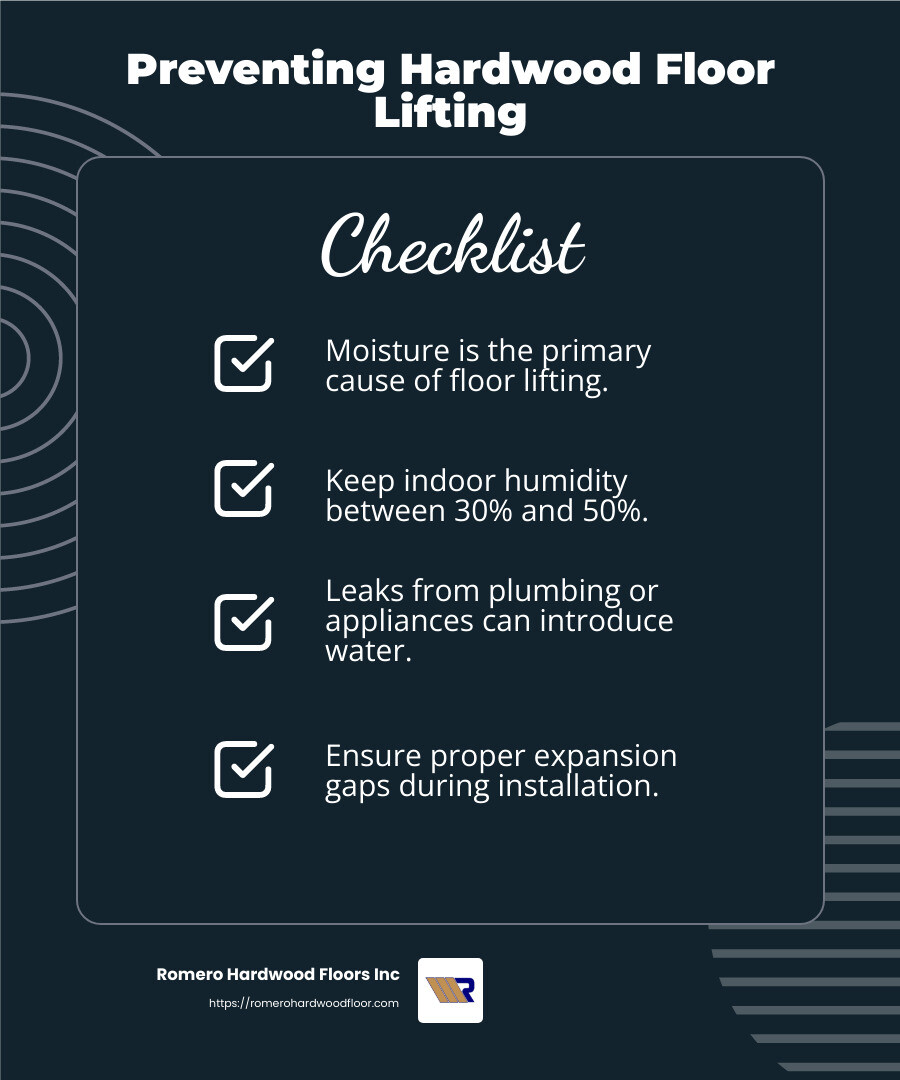
Moisture is the leading cause of floor lifting. Water can seep into your floors from various sources, including leaks, spills, or high humidity levels. When wood absorbs moisture, it expands, leading to buckling, cupping, or crowning.
- Leaks: Plumbing issues, leaky appliances, or poor drainage can introduce water to your floors.
- Humidity: In areas with high humidity, floors can absorb moisture from the air. It’s essential to keep indoor humidity between 30% and 50% to prevent problems.
Improper Installation
Incorrect installation can also lead to lifting. If the floorboards aren’t given enough space to expand, they might buckle over time. Here are some common installation mistakes:
- Lack of Expansion Gaps: Without sufficient gaps around the room’s perimeter, boards have no room to expand.
- Inadequate Acclimation: Wood must acclimate to the room’s temperature and humidity before installation. Skipping this step can cause floors to expand or contract post-installation.
Structural Issues
Structural problems in your home can also result in floor lifting. These issues might not be immediately visible but can cause significant damage over time.
- Foundation Shifts: Movement in your home’s foundation can lead to uneven subfloors, causing boards to lift.
- Subfloor Problems: A weak or damaged subfloor can fail to support the hardwood, leading to buckling.
Addressing these causes promptly can prevent further damage and reduce repair costs. In the next section, we’ll discuss effective hardwood floor lifting repair techniques to get your floors back in shape.
Hardwood Floor Lifting Repair
To effectively address hardwood floor lifting, follow a structured approach. Here’s how you can repair your floors and prevent further damage:
Identify the Moisture Source
The first step in any repair process is to identify where the moisture is coming from. Check for plumbing leaks, gaps in your home’s exterior, or high indoor humidity. Once the source is found, fix it to prevent future issues.
Remove Standing Water
If there’s visible water on the floor, remove it immediately. Use a mop, towels, or a wet/dry vacuum to ensure the area is completely dry. This helps prevent further moisture absorption.
Dry the Area Thoroughly
After removing standing water, focus on drying the area completely. Use fans, dehumidifiers, or open windows to improve air circulation. This step is crucial before proceeding with repairs, as lingering moisture can lead to more damage.
Sand Swollen Areas
Once the floor is dry, gently sand down any swollen areas. Use a sander with fine-grit sandpaper to avoid removing too much material. This will help level the surface and prepare it for further treatment.
Apply Wood Conditioner
A wood conditioner can help restore moisture balance and improve the absorption of subsequent treatments. Apply it evenly to the affected areas, following the manufacturer’s instructions.
Apply Wood Glue or Epoxy
If the lifting has created gaps between floorboards, fill these with wood glue or epoxy. This step helps secure the boards and prevent future movement. Ensure you follow the manufacturer’s instructions for the best results.
Sand and Refinish
After the glue or epoxy has cured, sand the repaired areas again to ensure a smooth finish. Finally, refinish the entire floor to restore its original appearance and protect it from future damage.
By following these steps, you can effectively repair lifted hardwood floors and maintain their beauty. In the next section, we’ll discuss how to prevent future lifting to keep your floors in top condition.
Preventing Future Lifting
Preventing hardwood floor lifting is all about proactive care and smart choices. Here’s how you can keep your floors looking great and avoid the hassle of repairs:
Humidity Control
Controlling humidity is key to preventing floor lifting. Wood naturally expands and contracts with changes in moisture levels. To keep this in check, aim for indoor humidity levels between 30% and 50%. Use a hygrometer to monitor humidity and adjust with dehumidifiers or humidifiers as needed.
Tip: In areas like Massachusetts, where seasons vary greatly, consider investing in a whole-home humidity control system.
Proper Installation
Good installation practices lay the foundation for durable hardwood floors. Make sure your flooring is installed with adequate expansion gaps around the perimeter. These gaps allow the wood to expand without causing buckling or lifting.
Tip: Always acclimate your wood before installation. Store it in the room where it will be installed for at least 48-72 hours. This helps the wood adjust to the room’s temperature and humidity.
Regular Maintenance
Routine maintenance can prevent minor issues from becoming major problems. Here are some simple maintenance tips:
- Clean Spills Immediately: Water is a common enemy of wood floors. Wipe up spills right away to prevent moisture absorption.
- Use Rugs and Mats: Place them in high-traffic areas and near entryways. They catch dirt and moisture, protecting the wood underneath.
- Avoid Wet Mops: Stick to a damp mop with a cleaner made for hardwood floors. Too much water can lead to swelling and lifting.
- Inspect Regularly: Keep an eye out for any changes in your floor’s appearance, like cupping or crowning. Early detection can save you time and money.
By focusing on these preventive measures, you can maintain the beauty and integrity of your hardwood floors for years to come. Up next, we’ll tackle some common questions about hardwood floor lifting repair.
Frequently Asked Questions about Hardwood Floor Lifting Repair
When your hardwood floors start to lift, it can be both frustrating and concerning. Here, we address some common questions to help you understand and tackle this issue effectively.
How to fix a lifted hardwood floor?
Fixing a lifted hardwood floor involves a few straightforward steps:
- Disassemble Floorboards: Carefully remove the affected floorboards. This allows you to access the subfloor and address the root cause.
- Clean Subfloor: Ensure the subfloor is clean and dry. Remove any debris or moisture, which could contribute to future lifting.
- Apply Adhesive: Use a quality adhesive suitable for hardwood floors. Apply it evenly to the subfloor before replacing the boards.
- Replace and Apply Pressure: Reinstall the floorboards, ensuring they are aligned properly. Apply pressure to ensure a strong bond with the adhesive.
- Allow Drying Time: Let the adhesive dry completely. Follow the manufacturer’s recommendations for drying time to ensure the best results.
- Recheck Humidity Levels: After repairs, monitor the room’s humidity. Keeping it within the ideal range (30%-50%) can prevent future issues.
Why is my floor bulging upwards?
Bulging floors can be a sign of underlying issues:
- Moisture Damage: Excess moisture is a common cause. It can stem from leaks, spills, or high humidity levels.
- Poor Structural Support: Inadequate support beneath the floor can lead to bulging. Ensure joists and subfloor materials are in good condition.
- Foundation Issues: Structural problems with your home’s foundation can also cause floor bulging. If you suspect this, consult a professional.
- Improper Installation: Incorrect installation techniques, such as insufficient expansion gaps, can lead to pressure buildup and bulging.
Will warped wood floor go back to normal?
Warped wood floors, including cupping and crowning, are often a result of moisture imbalance. Here’s how to address them:
- Sanding and Refinishing: For minor warping, sanding the affected area can help level the surface. Follow up with refinishing to restore the floor’s appearance.
- Replacement: If the warping is severe and sanding isn’t enough, replacing the damaged boards may be necessary.
It’s important to address the underlying moisture issues to prevent recurrence. Regular maintenance and humidity control are key to keeping your floors in top shape.
By understanding these common questions and their solutions, you can effectively manage and repair hardwood floor lifting issues. In our next section, we’ll dive into more specific repair techniques to ensure your floors stay beautiful and durable.
Conclusion
At Romero Hardwood Floors Inc, we understand that hardwood floors are more than just a part of your home—they’re an investment in beauty and value. When your floors start to lift or show signs of distress, it’s crucial to address these issues quickly and effectively.
Our team of experts is dedicated to providing top-notch hardwood floor lifting repair solutions. We combine years of experience with quality craftsmanship to ensure your floors are restored to their original glory. Whether it’s minor repairs or major restorations, we have the skills and knowledge to handle it all.
Improving Property Value
Well-maintained hardwood floors significantly improve the aesthetic appeal and value of your property. Investing in professional repair services not only restores the beauty of your floors but also safeguards your home’s value. Our commitment to excellence means you can trust us to deliver results that not only meet but exceed your expectations.
For those in the Revere, MA area and beyond, choosing Romero Hardwood Floors Inc means partnering with a team that cares about your home as much as you do. We’re here to help you keep your floors looking their best, ensuring they remain a cherished part of your home for years to come.
Ready to take the next step? Visit our hardwood floor repair service page for more information or to schedule a consultation. Let us help you preserve the beauty and integrity of your hardwood floors today.