
Hardwood Floor vs Laminate: Top 5 Flooring Secrets 2025
Hardwood floor vs laminate is a common consideration when homeowners and commercial property managers weigh their flooring options. If you’re looking for a quick answer:
- Aesthetic Appeal: Both offer the look of wood, but hardwood is the real deal, improving home value more.
- Durability: Hardwood lasts longer with the ability to be refinished, whereas laminate is more scratch-resistant.
- Water Resistance: Laminate wins here; it’s better for kitchens and bathrooms.
- Cost: Laminate is less expensive upfront, but consider the long-term return with hardwood.
Choosing the right flooring can significantly affect your home’s appearance and resale value. It’s a mix of style, functionality, and cost-effectiveness. Whether you’re renovating your home or managing a commercial property, understanding these differences helps make an informed decision. Dive deeper to find which is the best fit for your needs.
As Francisco Romero, owner of Romero Hardwood Floors Inc., I’ve spent over a decade helping homeowners and businesses in Revere, MA steer the decision between hardwood floor vs laminate. With experience in flooring installations, I aim to guide you through making the right choice for your property. Transitioning into the next section, we’ll explore the key differences that define these flooring options.
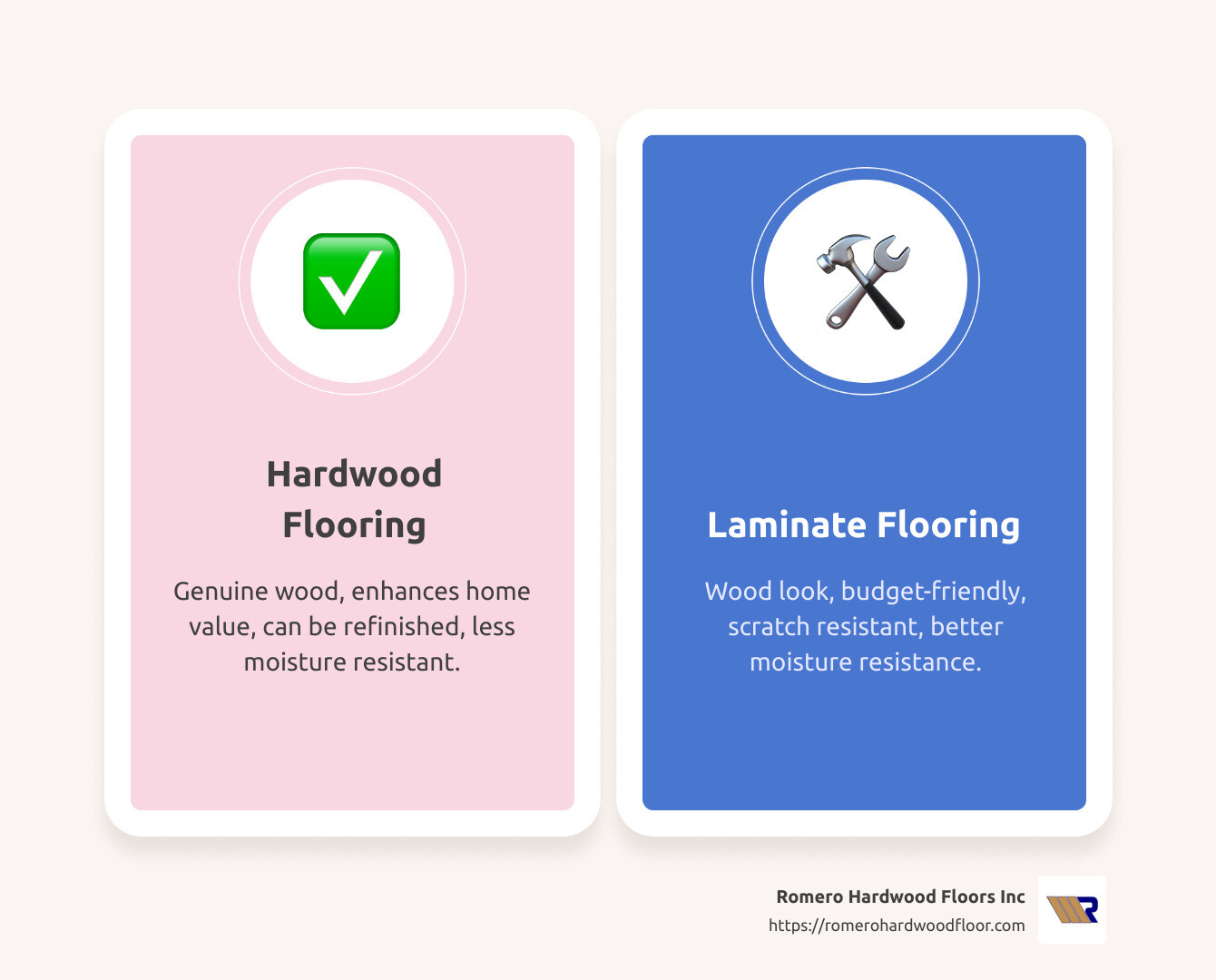
Hardwood Floor vs Laminate: Key Differences
When choosing between hardwood floor vs laminate, it’s crucial to understand the key differences in lifespan, cost, maintenance, appearance, and installation. These factors can significantly influence your decision-making process.
Lifespan and Durability
Hardwood flooring is known for its incredible longevity. Well-maintained hardwood can last up to 100 years or more, making it a long-term investment. The ability to refinish hardwood multiple times extends its life and keeps it looking fresh.
In contrast, laminate flooring typically lasts between 15 and 25 years. While it’s more prone to chipping and fading over time, laminate is generally more scratch-resistant. However, once damaged, laminate boards usually need to be replaced rather than refinished.
Cost Considerations
Cost is a major factor when deciding between these two flooring options. Hardwood flooring is more expensive upfront due to the cost of materials and professional installation. It involves paying for high-quality wood and the expertise of skilled installers.
On the other hand, laminate flooring is more affordable. It’s a budget-friendly option, especially for DIY enthusiasts, as it’s easier to install without professional help. While laminate saves money initially, hardwood can offer better long-term value by increasing home resale prices.
Maintenance and Care
Maintenance requirements differ significantly. Hardwood floors can be refinished to repair scratches and wear, making them a sustainable option over time. However, they are sensitive to moisture, which can cause warping or mold if not promptly addressed.
Laminate floors, while easier to clean due to their synthetic top layer, can’t be refinished. This means scratches or damage require board replacement. Laminate is more moisture-resistant than hardwood, making it suitable for areas like kitchens and bathrooms, though it’s not completely waterproof.
Choosing between hardwood floor vs laminate involves weighing these key differences to find the best fit for your lifestyle and budget. Next, we’ll dig into the pros and cons of each flooring type to help you make an informed decision.
Pros and Cons of Hardwood Flooring
When considering hardwood flooring, it’s important to weigh its advantages and disadvantages. This will help you decide if it’s the right fit for your home.
Advantages of Hardwood
Natural Beauty and Aesthetic Appeal
Hardwood floors are prized for their natural beauty and classic look. Each plank has unique grain patterns and a rich, warm appearance that can improve any room. This timeless aesthetic is hard to replicate with synthetic materials, making hardwood a popular choice for those who value elegance.
Long Lifespan and Home Value Increase
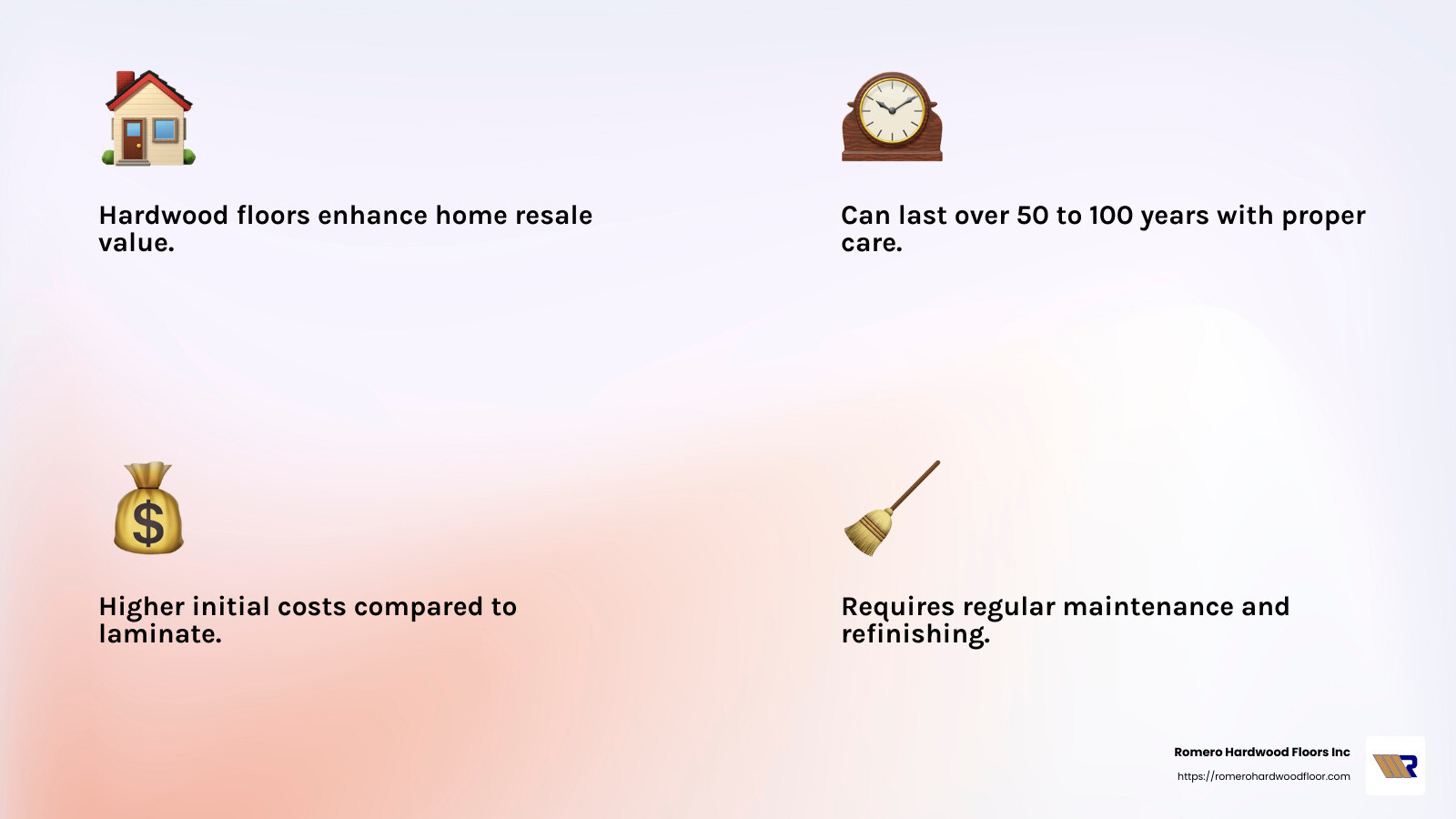
One of the biggest advantages of hardwood is its longevity. With proper care, hardwood floors can last 50 to 100 years or more. This durability makes them a smart long-term investment. Additionally, hardwood floors can significantly increase your home’s resale value. Many buyers are willing to pay more for homes with quality hardwood flooring, as it adds both charm and practicality.
Disadvantages of Hardwood
Cost and Maintenance Challenges
Despite its benefits, hardwood flooring comes with some drawbacks. The initial cost of hardwood is higher than laminate due to the price of materials and the need for professional installation. This makes it a more significant upfront investment.
Hardwood floors also require regular maintenance to keep them looking their best. They need periodic refinishing to repair scratches and wear, which can be time-consuming and costly.
Moisture Sensitivity
Another challenge with hardwood is its sensitivity to moisture. In humid environments, hardwood can warp or cup, leading to potential damage. This makes it less suitable for areas like bathrooms or basements where moisture levels are higher. Homeowners need to be vigilant about cleaning up spills promptly to avoid water damage.
Choosing hardwood flooring means appreciating its natural beauty and long-term value while being prepared for its maintenance needs and initial costs. Understanding these pros and cons will guide you in making the best decision for your home.
Next, we’ll explore the pros and cons of laminate flooring to provide a comprehensive comparison.
Pros and Cons of Laminate Flooring
When considering flooring options, laminate stands out for its unique advantages and disadvantages. Let’s explore these to help you make an informed decision.
Advantages of Laminate
Affordability and Cost-Effectiveness
Laminate flooring is often praised for its affordability. Compared to hardwood, laminate is much easier on the wallet, making it an attractive option for budget-conscious homeowners. You can get a stylish wood-look floor without breaking the bank.
Durability and Scratch Resistance
Laminate is known for its durability. It’s designed to resist scratches and dents, which is great if you have pets or kids. Unlike hardwood, which can show wear over time, laminate maintains its appearance longer in high-traffic areas.
For those who love a good DIY project, laminate is a fantastic choice. Many laminate floors are designed for easy installation, with click-and-lock systems that don’t require glue or nails. This can save you money on professional installation costs and give you a sense of accomplishment.
Disadvantages of Laminate
Appearance and Authenticity
While laminate has come a long way in mimicking the look of real wood, it still falls short in terms of authenticity. Some people can tell the difference, and for those who value the unique grain and texture of real wood, laminate might not fully satisfy.
Sound Issues
Laminate flooring can be noisy, especially in homes with high ceilings or minimal furnishings. It tends to produce a hollow, echo-like sound when walked on. To mitigate this, you might need to invest in a quality underlayment, which can add to the overall cost.
Replacement Challenges
If laminate gets damaged, repairs can be tricky. Unlike hardwood, which can be refinished, laminate requires replacing the entire board. This can be a hassle, especially if the damage is in the middle of the floor.
Laminate flooring offers a cost-effective and durable solution for many homeowners, but consider its limitations in appearance, sound, and repairability. Balancing these pros and cons will help you decide if laminate is the right fit for your space.
Frequently Asked Questions about Hardwood Floor vs Laminate
When deciding between hardwood floor vs laminate, homeowners often have several questions. Let’s address some of the most common concerns.
Why choose laminate over hardwood?
Affordability and Moisture Resistance
Laminate flooring is a popular choice for those on a budget. It’s generally more affordable than hardwood, offering a stylish appearance without the hefty price tag. This makes it a great option for areas like kitchens and basements where you might not want to invest heavily.
In terms of moisture resistance, laminate has the edge over hardwood. While hardwood can warp and swell in humid conditions, laminate is designed to handle moisture better. This makes it suitable for rooms like bathrooms where humidity can be a concern.
Does hardwood scratch easier than laminate?
Scratch Resistance and Repairability
When it comes to scratch resistance, laminate tends to be more durable than hardwood. It’s engineered to withstand wear and tear, making it a good choice for households with pets or kids. Hardwood, on the other hand, can scratch more easily.
However, hardwood has a significant advantage in terms of repairability. If a hardwood floor gets scratched, it can often be sanded and refinished to look like new again. With laminate, scratches usually mean replacing the entire affected board, which can be more cumbersome.
Is laminate flooring louder than hardwood?
Sound Absorption and Acoustic Underlayment
Laminate flooring can indeed be noisier than hardwood. It tends to produce a hollow sound when walked on, especially in rooms with high ceilings or minimal furnishings. This is because hardwood is naturally more sound-absorbent.
To combat this, you can use an acoustic underlayment beneath laminate floors. This helps to reduce noise and create a quieter environment. While this adds to the cost, it can make a significant difference in the overall sound quality of your space.
These FAQs highlight the key differences between hardwood and laminate flooring, helping you make an informed decision based on your specific needs and preferences.
Conclusion
Choosing between hardwood floor vs laminate is a significant decision for any homeowner. Both options have their unique advantages and drawbacks, making it essential to consider your specific needs, budget, and preferences.
At Romero Hardwood Floors Inc, we understand the importance of this decision. Investing in flooring is about more than just aesthetics; it’s about enhancing your home’s value and comfort. Hardwood floors are known for their timeless beauty and ability to increase property value. They’re a long-term investment, offering durability and the potential for refinishing to maintain their appeal over the years.
On the other hand, laminate flooring provides a cost-effective solution without compromising style. It’s perfect for those seeking affordability combined with durability, especially in moisture-prone areas like kitchens and bathrooms. Laminate’s scratch resistance makes it ideal for busy households, and its DIY-friendly installation can save you money on labor costs.
Regardless of your choice, expert installation is crucial to ensure your flooring looks great and lasts as long as possible. Our team at Romero Hardwood Floors Inc specializes in both hardwood and laminate installations. We pride ourselves on our craftsmanship and attention to detail, ensuring your new floors are a seamless addition to your home.
For those leaning towards laminate, we invite you to explore our laminate flooring installation services. Let us help you find the perfect flooring solution that fits your lifestyle and budget. With locations throughout Massachusetts, including Revere, Beverly, and Salem, we’re ready to transform your space with our expert flooring solutions.
In the end, whether you choose the elegance of hardwood or the practicality of laminate, you can rest assured that our team will deliver quality and satisfaction. Your home deserves the best, and at Romero Hardwood Floors Inc, we’re committed to providing just that.
