
Resurfacing Wood Floors: 1 Quick, Beautiful Fix
Why Understanding Resurfacing vs. Refinishing Matters for Your Floors
Resurfacing wood floors is a process that refreshes your hardwood by buffing the existing finish and applying a new protective top coat—without sanding down to bare wood. It’s faster and less expensive than refinishing, ideal for floors in good condition with only light scratches or dullness.
Quick Answer: Resurfacing vs. Refinishing
- Resurfacing (Recoating): Buffs the existing finish and applies a new coat. Maintains current color. Best for minor wear. Takes 1-2 days. Costs $478-$1,636 on average.
- Refinishing: Sands down to bare wood, removes old finish completely. Fixes deep damage. Allows color change. Takes 3-7 days. Costs $1,099-$8,000 on average.
Hardwood floors add timeless beauty to a home, but daily life eventually leads to scratches, dullness, and fading. When your floors look tired, you have two main restoration options: resurfacing or refinishing. Though they sound similar, they are very different processes with distinct costs, timelines, and results. Choosing the wrong one can be a costly mistake.
Resurfacing is a quick refresh for floors with light wear, while refinishing is a complete overhaul for deeper damage or a color change. Understanding the difference is key to saving time, money, and frustration.
As Francisco Romero, owner of Romero Hardwood Floors Inc. with over 15 years of experience, I’ve guided countless homeowners in Revere, MA through this decision. My team has restored floors in every condition imaginable, and I’m here to help you make the right choice for your space.
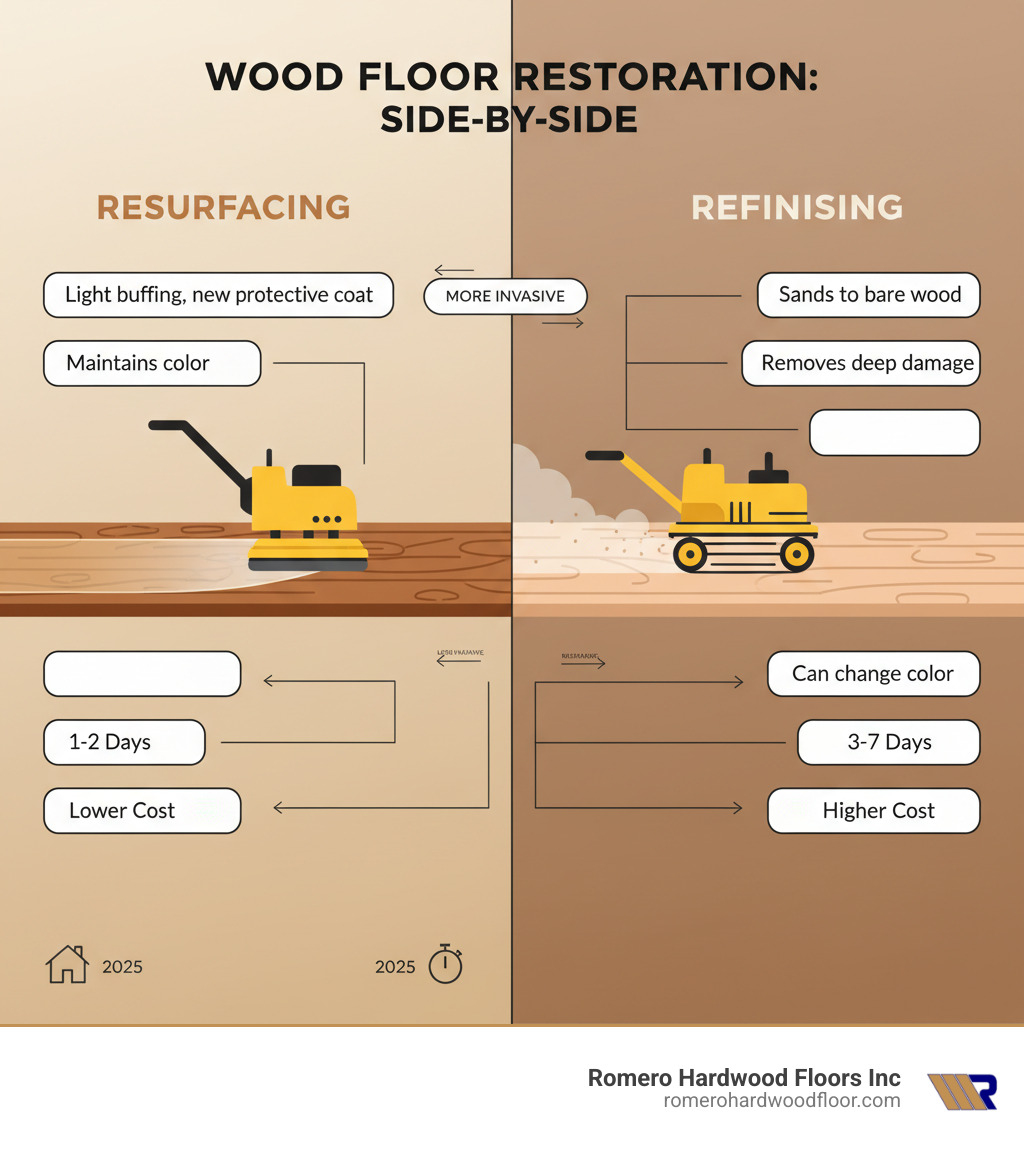
Quick look at resurfacing wood floors:
Understanding the Key Differences: Resurfacing vs. Refinishing
When your hardwood floors show their age, you must choose between resurfacing wood floors or a full refinish. They are fundamentally different approaches, and the right choice depends on your floor’s condition, your budget, and your desired outcome. Understanding these differences will save you from paying for more work than you need or choosing a solution that doesn’t fix the problem.
Resurfacing is a lighter touch for floors that are structurally sound but look tired. Refinishing is the heavy-duty option for when damage has penetrated the finish or when you want a complete change.
Here’s how they stack up against each other:
| Feature | Resurfacing (Recoating) | Refinishing |
|---|---|---|
| Process | Lightly abrades existing finish, applies new top coat. | Sands down to bare wood, removes old finish completely. |
| Cost | Lower (avg. $478-$1,636, can reach $5,000+) | Higher (avg. $1,099-$2,660, can reach $8,000+) |
| Time | Quicker (1-2 days) | Longer (3-7 days) |
| Durability | Adds a protective layer, good for minor wear. | Creates a completely new, highly durable finish. |
| Best For | Minor scuffs, dullness, refreshing shine, intact finish. | Deep scratches, gouges, water damage, color change, worn-through finish. |
| Color Change | No, maintains existing color. | Yes, allows for new stain application. |
| Disruption | Minimal, often can stay in home. | Significant, often requires vacating the home. |
Note: These are average costs based on internet research and not actual quotes from Romero Hardwood Floors. Your actual project cost will depend on your specific floor condition, square footage, and desired outcome.
What is Hardwood Floor Resurfacing?
Resurfacing wood floors—also called recoating or screen-and-recoat—is a maintenance procedure for floors with minor wear. It’s ideal if your floors are dull or have light scratches, but the finish is still intact. The process involves lightly buffing (or screening) the existing top coat to create a surface the new finish can adhere to. We then apply one or two fresh coats of polyurethane.
This method doesn’t sand down to the bare wood, so your floor’s color remains unchanged. It’s a fast (1-2 days), low-dust, and affordable way to restore shine and add a new protective layer. Regular resurfacing every 3-5 years can prevent the need for a more costly refinishing down the line.
What is Hardwood Floor Refinishing?
Refinishing is a complete makeover for floors with deep scratches, gouges, water stains, or areas where the finish has worn away to bare wood. It is also your only option if you want to change your floor’s color, such as updating an old honey oak to a modern dark walnut.
The process is intensive. We use professional sanders to remove the old finish, stain, and a thin layer of wood (about 1mm). This exposes a fresh, undamaged surface. From there, we can apply a new stain and seal it with multiple coats of durable polyurethane. The result is a floor that looks brand new, with all old damage erased. You can learn more about the complete process on our floor sanding and floor refinishing page. While it costs more and takes longer than resurfacing, refinishing is the only true solution for significant damage.
The Process of Resurfacing Wood Floors: A Step-by-Step Guide
If your floors are looking tired but are in good shape, resurfacing wood floors is a perfect solution. This process is less disruptive and quicker than a full refinish, making it a popular choice for busy households in areas like Beverly, Chelsea, and Danvers, MA.
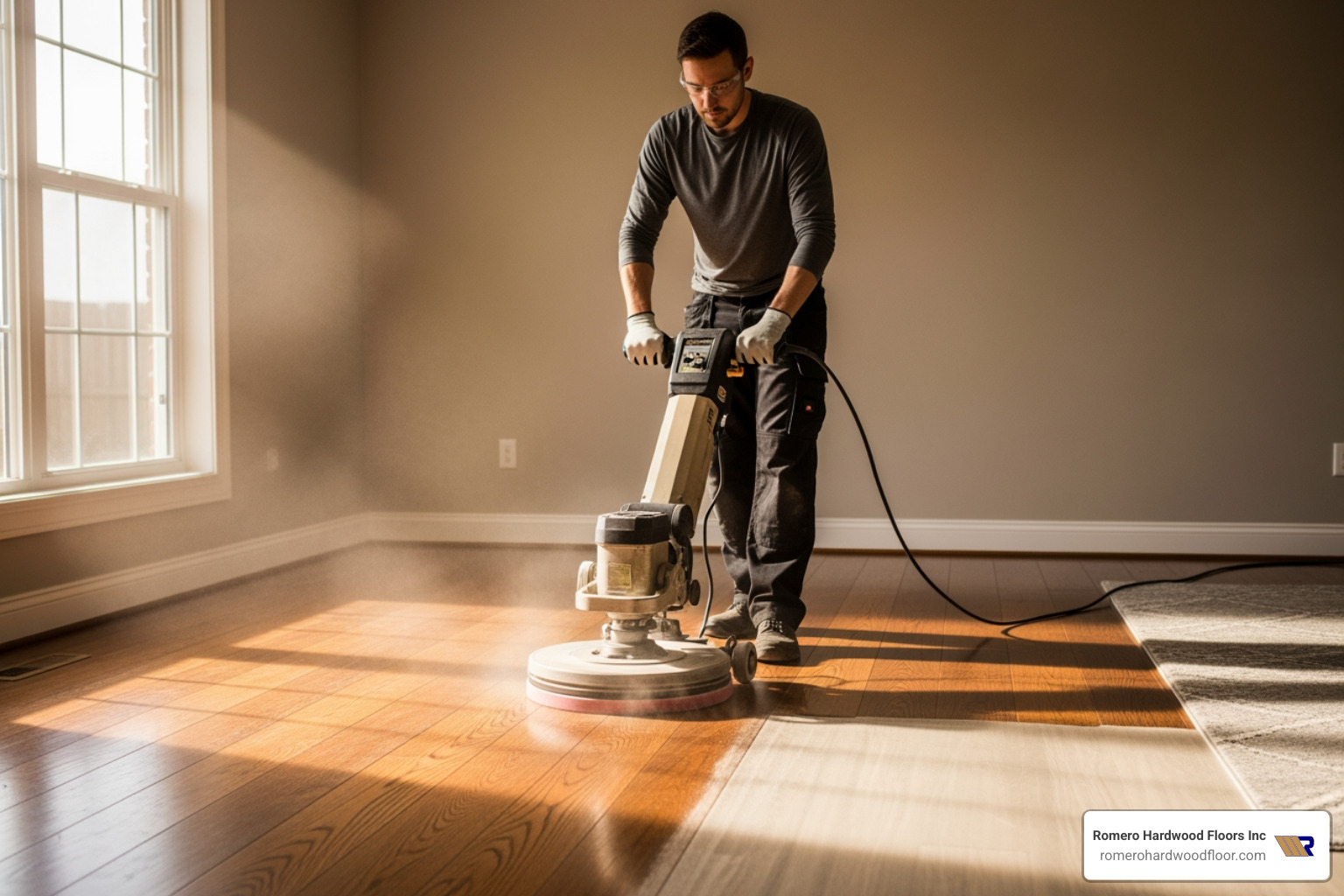
Resurfacing is like a spa day for your hardwood. It’s a straightforward process, but each step is crucial for professional results. Here’s how we approach it at Romero Hardwood Floors.
Step 1: Room and Floor Preparation
First, the room must be completely emptied of all furniture and decor. We then protect the room by covering vents and outlets and taping off baseboards with plastic sheeting. The next critical step is a deep cleaning. We thoroughly sweep, vacuum, and then wash the floor with a specialized wood cleaner to remove any dust, oils, or contaminants. A perfectly clean surface is essential for the new finish to adhere properly and avoid peeling or bubbling.
Step 2: Screening the Floor (Buffing)
This is the key step in resurfacing wood floors. We use a professional floor buffer with an abrasive screen pad (120-grit or higher) to gently scuff the existing finish. This process, also called screening, creates a slightly rough texture, or “mechanical bond,” that allows the new coat of finish to grip the old one. We work methodically across the entire floor, including corners and edges, to ensure an even result. Afterward, we carefully vacuum all the fine dust created during screening.
Step 3: Applying the New Finish
With the floor prepped and spotless, we do a final pass with a tack cloth to remove any remaining dust. We then apply a new finish, typically polyurethane. Water-based finishes dry faster (walkable in 4-6 hours) with low odor, while oil-based finishes are highly durable and provide a classic amber tone but take longer to dry (24 hours between coats).
Using a T-bar applicator, we apply one or two thin, even coats, allowing for proper drying time between them as specified by the manufacturer. We often use high-quality products like Bona 1 gal. Floor Sealer and Bona 1 gal. Floor Finish, Semi-Gloss for consistent results. Although the floor may be walkable in hours, the finish needs 3-7 days to cure before moving furniture back and 1-2 weeks before placing area rugs. This patience ensures maximum hardness and durability.
The Process of Refinishing Hardwood Floors: A Deeper Dive
When hardwood floors in Saugus, Somerville, or Stoneham, MA have deep scratches or significant damage, a full refinish is the most effective solution. Unlike resurfacing wood floors, which only refreshes the top coat, refinishing is a complete restoration that can make your floors look brand new.
This intensive process requires specialized equipment and expertise, but the payoff is a flawless floor with the option to change its color. Here’s a look at the steps involved.
Step 1: Preparation and Repairs
First, we clear the room and carefully remove baseboards. We then inspect the floor, setting any protruding nails and filling deep gouges or cracks with a quality wood putty. If any boards are warped, cracked, or severely damaged, we replace them to ensure a solid foundation for the new finish. This leverages our expertise in More info about floor installation.
Step 2: Sanding to Bare Wood
This is the most transformative step. Using a professional drum sander for the main area and an edger sander for the perimeter, we strip away the old finish, stain, and a thin layer of wood. We use a grit progression, starting with coarse sandpaper (36-40 grit) and moving to finer grits (up to 120 grit) to create a perfectly smooth surface. Each pass removes about 1mm of wood, which is why solid hardwood can be refinished multiple times. According to the Industry guidelines from the National Wood Flooring Association, a minimum wear layer is needed for safe sanding. We always sand with the grain and use advanced dust control systems to minimize mess.
Step 3: Staining and Sealing
After a final, thorough cleaning, we can apply a new stain if you’ve chosen to change your floor’s color. For some wood types, we may water-pop the floor—lightly dampening it to open the grain for a deeper, more even stain absorption. This is where the artistry of a professional truly shines. You can explore options on our More info about floor staining page.
Once the stain is dry (up to 24 hours), we apply a sealer and multiple coats of protective polyurethane. We lightly buff between coats for optimal adhesion and durability. The finish needs 24-72 hours before furniture can be moved back and 1-2 weeks to fully cure before placing rugs. This curing time is critical for achieving a hard, long-lasting finish.
Making the Right Choice for Your Floors
Deciding between resurfacing wood floors and refinishing becomes much clearer when you assess your floor’s type, your budget, and your long-term goals. Solid hardwood can be refinished 4-6 times, but engineered hardwood has a thinner top layer and may only handle 1-2 refinishes, if any. If the wear layer is too thin, resurfacing is the only safe option.
While resurfacing is a quicker, more affordable refresh, a full refinish may be a smarter long-term investment for floors with significant damage.
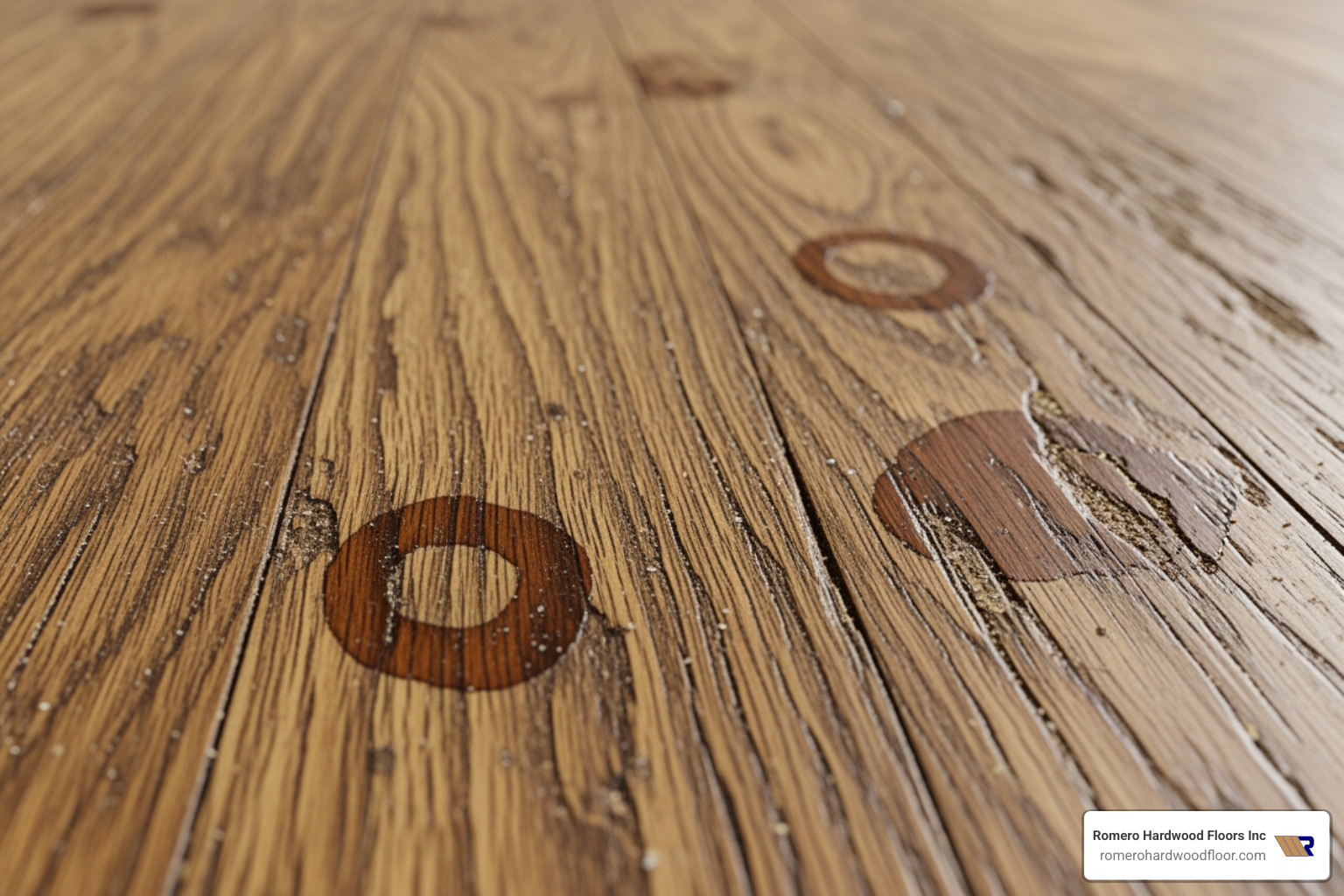
Signs Your Floor Needs Attention
Your floors will tell you what they need. Look for these common signs:
- Minor Issues (Ideal for Resurfacing): Light surface scratches, a dull finish in high-traffic areas, or minor fading from sunlight.
- Major Issues (Requires Refinishing): Deep gouges you can feel, dark water stains or black spots, graying areas, or spots where the finish has worn away to bare wood.
When to Choose Resurfacing
Resurfacing wood floors is the best choice when:
- Your floor is in good overall condition with only cosmetic wear.
- Scratches are light and haven’t penetrated the wood.
- The finish is dull but still intact (not peeling or worn through).
- You are happy with the current floor color.
- You need a fast (1-2 days) and budget-friendly update.
When to Choose Refinishing
Refinishing is necessary when:
- You have deep scratches, gouges, or dents in the wood.
- There is significant discoloration from water damage, pet stains, or sun.
- The finish is peeling, flaking, or worn through to bare wood.
- You want to change your floor’s color entirely.
Cost and Time Comparison
Budget and timeline are key factors. The following are general estimates based on internet data, not a quote for your specific project.
- Resurfacing wood floors: Averages around $1,024, with most projects falling between $478 and $1,636. Larger projects can exceed $5,000. The process is quick, typically taking only 1-2 days.
- Refinishing: This is a larger investment, with costs averaging $1,099 to $2,660 and potentially exceeding $8,000 for large or complex jobs. The timeline is longer, usually 3-7 days, to allow for sanding, staining, and multiple coats of finish to dry.
DIY vs. Hiring a Professional
The idea of a DIY floor project is tempting, but the risks are high. A staggering 90% of homeowners who attempt DIY refinishing end up calling a professional to fix costly mistakes like sander gouges, uneven finishes, or blotchy stain jobs. Fixing these errors often costs more than hiring a pro from the start.
Professionals bring years of experience, specialized equipment, and industrial-grade dust containment systems to keep your home clean. We understand how different woods react to products and have the skill to achieve a flawless finish. Furthermore, if your home was built before 1978, your floors may contain lead-based finishes. Professionals are certified in lead-safe work practices required by the EPA’s Renovation, Repair and Painting (RRP) Rule, protecting your family’s health.
DIY: Tools and Challenges
If you attempt resurfacing wood floors or refinishing yourself, you’ll need to rent or buy extensive equipment:
- Heavy Machinery: Drum sander, edger sander, and floor buffer.
- Hand Tools: Scrapers, putty knives, and applicators.
- Safety Gear: A P100 respirator, safety glasses, and knee pads are essential.
- Materials: Sandpaper, plastic sheeting, tape, stain, and polyurethane.
Renting equipment can cost hundreds, and the learning curve is steep. A drum sander can permanently gouge a floor in seconds. The work is physically demanding, and mistakes are often irreversible.
When to Hire a Professional
Hiring a professional is the wisest choice in several situations:
- Deep Damage: Extensive repairs for water stains, deep gouges, or board replacement require an expert eye.
- Color Change: Achieving a beautiful, even stain color is an art form that is difficult for a DIYer to master.
- Engineered Hardwood: A pro knows how to sand the thin veneer without destroying the floor.
- Guaranteed Results: If you want a flawless, durable finish without the risk, time, and physical labor, hiring a professional is the best investment.
At Romero Hardwood Floors Inc., we’ve been serving Revere, MA and surrounding communities since 2006. We stand behind our work and ensure the job is done right the first time.
Frequently Asked Questions about Resurfacing Wood Floors
Homeowners from Marblehead to Woburn, MA often ask the same questions about resurfacing wood floors and refinishing. Here are the answers to the most common concerns.
How many times can a hardwood floor be refinished?
The answer depends on your floor type. Solid hardwood floors (typically 3/4-inch thick) can usually be refinished 4-6 times. Each sanding removes about 1mm of wood, and you can sand down to the tongue-and-groove joint. The National Wood Flooring Association provides guidelines on safe wear layer thickness.
Engineered hardwood floors have a much thinner top layer of real wood. If the veneer is 3mm or thicker, it might be refinished once or twice. If it’s thinner than 2mm, it can only be safely resurfaced (recoated), not refinished. Sanding through the veneer will ruin the floor, which is why a professional assessment is crucial.
Can I change my floor’s color with resurfacing?
No. Resurfacing wood floors only applies a new clear, protective coat over your existing finish. It does not remove the old finish or stain, so the color of your floor will not change. To change your floor’s color, you must choose refinishing. This process involves sanding the floor down to bare wood, which allows us to apply a new stain before sealing. Learn more about color options on our floor staining page.
How long until I can walk on my newly finished floors?
Patience is key to a durable finish. The timeline depends on the type of polyurethane used:
- Water-based finish: You can typically walk on it with socks in 4-6 hours.
- Oil-based finish: Wait about 24 hours before light sock traffic.
However, “dry” is not the same as “fully cured.” The finish needs time to harden completely. Wait 3-7 days before moving furniture back and 1-2 weeks before placing area rugs. Rushing this step can leave permanent marks or damage the new finish.
Conclusion
Your hardwood floors are a valuable feature of your home. When they start to show wear, you have powerful options to restore their beauty.
Resurfacing wood floors is the smart, affordable choice for a quick refresh when damage is superficial and you like your current floor color. It extends your floor’s life without the disruption of a major project.
Refinishing is the answer for deeper damage like gouges and stains, or when you’re ready for a complete change of color. It’s a total restoration that makes your floors look brand new.
The key is to honestly assess what your floors need. While a DIY approach to resurfacing wood floors is tempting, the high rate of costly mistakes shows that professional expertise is a wise investment. Getting it done right the first time saves money and ensures a beautiful, lasting result.
At Romero Hardwood Floors Inc., we have been restoring floors in Revere, MA, and communities like Lynnfield, Malden, and Medford since 2006. Our team is passionate about helping homeowners make the right choice. We guarantee our workmanship and stand behind every floor we touch.
Your floors are worth the care. Request an estimate for your project today and let us bring your hardwood back to life.
