Engineered Hardwood Cost: Top 7 Smart Savings Tips 2025
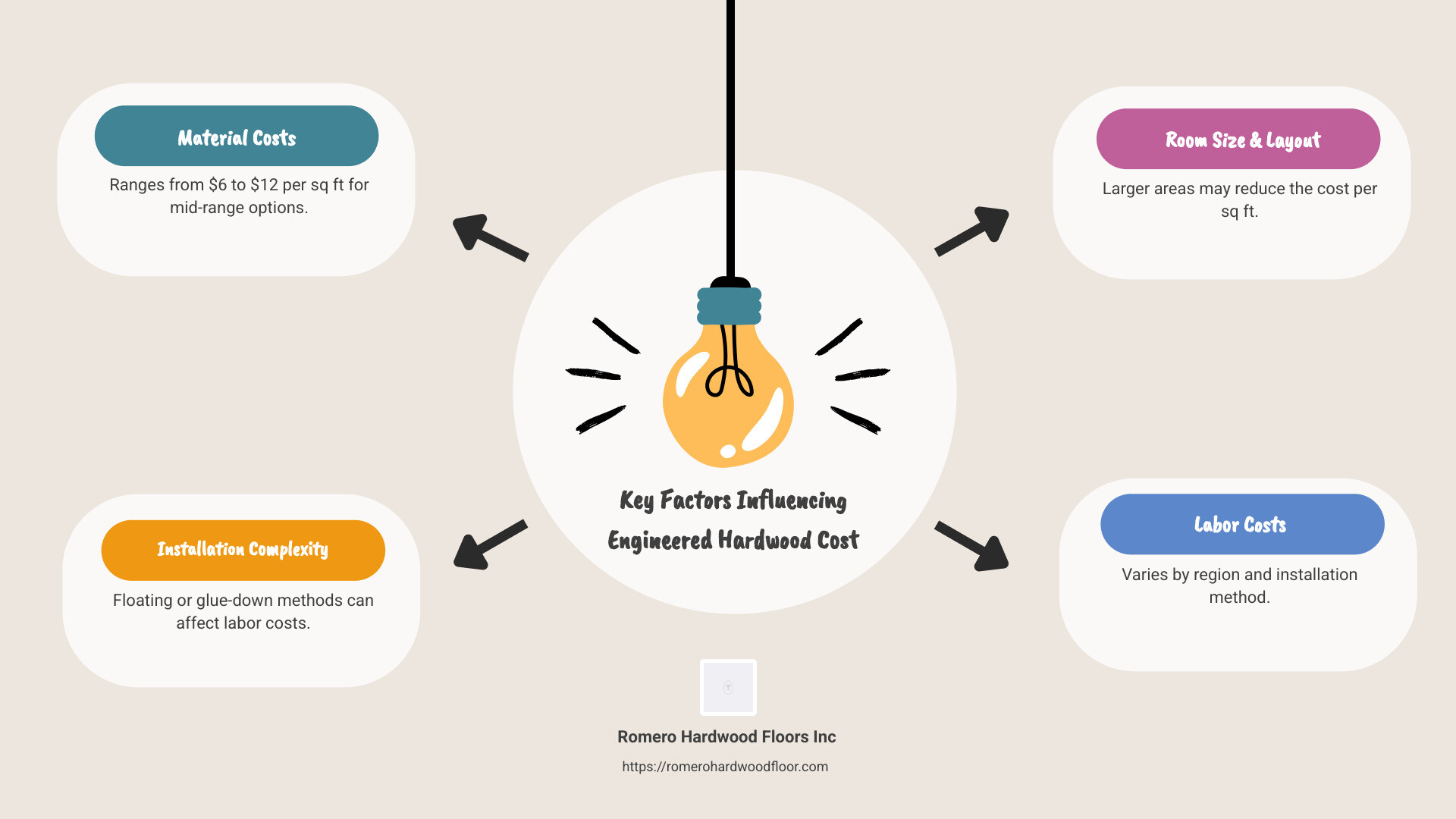
Engineered hardwood cost is an essential consideration for any flooring project. The cost depends on various factors such as material quality, installation complexity, and labor charges. Here’s a quick overview to guide you:
- Material Costs: Typically range from $6 to $12 per square foot for mid-range options.
- Installation Complexity: Methods like floating or glue-down can affect labor costs.
- Room Size and Layout: Larger areas may reduce the cost per square foot.
Homeowners and commercial property managers often find themselves navigating these costs when selecting flooring in Revere, MA. To make the best investment, understanding these factors is crucial.
I am Francisco Romero from Romero Hardwood Floors, with over 15 years of experience in engineered hardwood cost and installation services. My team and I specialize in crafting lasting and beautiful floors for homes and businesses.
Understanding Engineered Hardwood Flooring
Engineered hardwood flooring is a popular choice for homeowners looking for the elegance of natural wood combined with improved durability and versatility. Let’s explore what makes this flooring option stand out.
Materials and Construction
Engineered hardwood is constructed with a top layer of natural wood veneer, which gives it the authentic appearance of solid hardwood. Beneath this veneer lies a core made of multiple layers of plywood or high-density fiberboard. This layered construction provides excellent stability and resistance to moisture, making it a suitable option for various environments, including basements and kitchens.
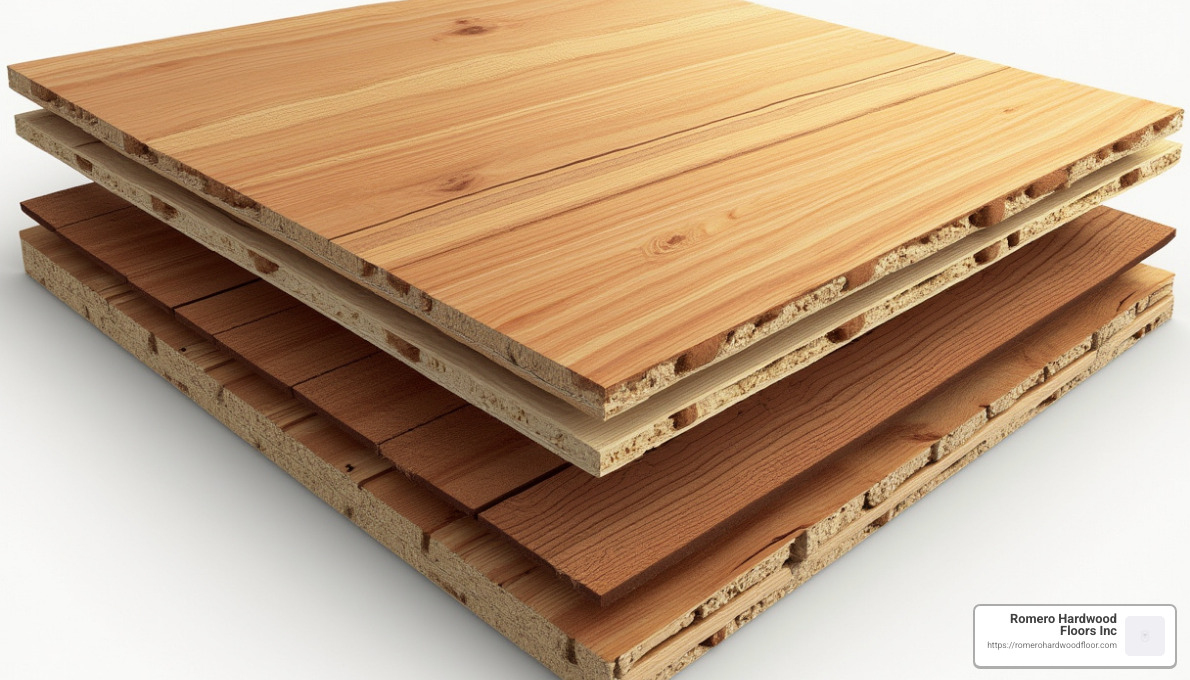
The natural wood layer on top varies in thickness, which can influence the flooring’s durability and cost. Thicker veneers can be sanded and refinished more times, extending the floor’s lifespan. The plywood core underneath contributes to the flooring’s strength and ability to withstand changes in temperature and humidity, reducing the risk of warping or buckling.
Benefits of Engineered Hardwood
Engineered hardwood offers several advantages over traditional solid wood flooring:
- Durability: The layered construction makes engineered hardwood more resistant to moisture and temperature fluctuations. This durability ensures that the flooring maintains its beauty and integrity over time, even in high-traffic areas.
- Versatility: This flooring can be installed over various subfloors, including concrete, making it a flexible choice for different home layouts. It is also available in a wide range of wood species, colors, and finishes, allowing homeowners to find the perfect match for their interior design.
- Cost-effectiveness: While engineered hardwood cost can vary, it is generally more affordable than solid hardwood, especially when considering long-term maintenance and potential refinishing. Its stability also reduces the need for frequent repairs, providing a cost-effective solution for homeowners.
Overall, engineered hardwood flooring combines the natural beauty of wood with modern engineering, offering a practical and stylish choice for any home. As we proceed, we’ll explore the factors that influence the cost of engineered hardwood, helping you make an informed decision for your flooring project.
Factors Influencing Engineered Hardwood Cost
When planning your flooring project, understanding the factors that influence engineered hardwood cost is crucial. Let’s break down the key elements that can impact your budget.
Room Size and Layout
The size and layout of the room significantly affect the cost of installing engineered hardwood. Larger spaces require more materials, which increases the overall cost. However, buying in bulk often reduces the price per square foot.
- Square footage: Calculate the total square footage of the area you plan to cover. This will help you estimate the amount of material you’ll need.
- Installation complexity: Rooms with irregular shapes, stairs, or multiple corners can complicate installation, potentially increasing labor costs.
Wood Grade and Species
The type of wood and its quality also play a significant role in determining the cost.
- Tree species: Exotic wood species, like Brazilian cherry or teak, are generally more expensive than domestic ones like oak or maple. These exotic woods offer unique colors and patterns but come with a higher price tag.
- Wood quality: The grade of the wood affects its appearance and price. Higher-grade woods have fewer knots and imperfections, making them more desirable and expensive.
Labor Costs
Labor costs can vary widely, depending on several factors.
- Regional variations: Labor rates differ across regions due to the cost of living and demand for flooring services. For example, installation costs in Massachusetts might differ from those in other states.
- Installation methods: Different methods, such as floating, glue-down, or nail-down, require varying levels of skill and time. Glue-down installations might be more labor-intensive and costly compared to floating floors.
By considering these factors, you can better estimate the engineered hardwood cost for your project. Understanding these variables will help you make informed decisions, ensuring you choose the best flooring option for your home and budget.
Average Costs of Engineered Hardwood Flooring
When considering engineered hardwood for your home, understand the cost variations across different product categories and installation methods. Here’s a breakdown of what you can expect.
Basic, Mid-Range, and High-End Options
Engineered hardwood flooring costs can vary significantly based on the quality and features of the planks you choose. Here are the typical price ranges:
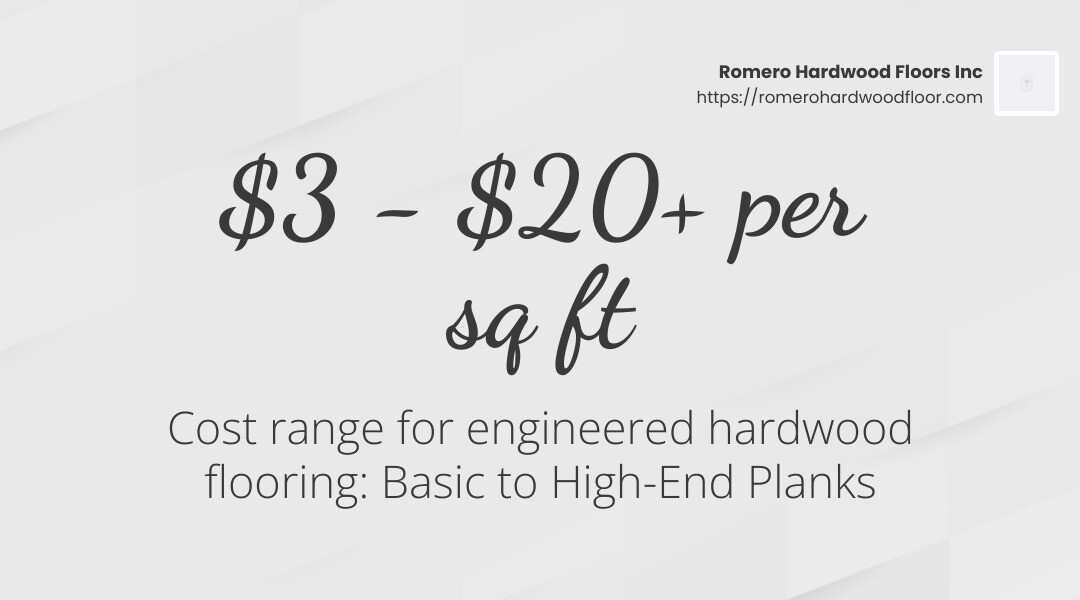
- Basic Planks: These are often the most budget-friendly option. Basic engineered hardwood planks typically cost between $3 and $6 per square foot. They offer essential features but may have a thinner top veneer and fewer design options.
- Mid-Range Planks: If you’re looking for a balance of quality and affordability, mid-range options usually fall between $6 and $12 per square foot. These planks often feature a thicker veneer and a wider selection of wood species and finishes.
- High-End Planks: Premium engineered hardwood planks can range from $12 to $20 or more per square foot. These top-tier options boast the thickest veneers, exotic wood species, and intricate designs, providing a luxurious and durable flooring solution.
Installation Costs
Beyond the cost of the materials, installation is a significant factor in your overall investment. Here’s what to consider:
- Average Costs: Professional installation of engineered hardwood can range from $3 to $10 per square foot, depending on the complexity of the job and local labor rates. This cost includes preparation, installation, and finishing.
- DIY vs. Professional: Opting for a DIY installation can save money, but it requires time, skill, and tools. For those who prefer to leave it to the experts, a professional installation ensures precision and quality, though it comes at a higher price.
Understanding these national averages and price ranges will help you make informed decisions about your flooring project. By weighing the cost against the quality and durability of the options available, you can choose the best engineered hardwood to fit your needs and budget.
How to Calculate Your Flooring Investment
When planning for new engineered hardwood flooring, understanding the full scope of costs is crucial. Here’s how to break it down to ensure a smooth budgeting process.
Measurements and Material Choices
Start by measuring the area where you want to install the flooring. Calculate the total square footage by multiplying the room’s length by its width. This will help you determine how much flooring material you need to purchase.
Material Choices play a big role in your investment. The cost of engineered hardwood can vary widely based on the wood species and plank quality. For example:
- Oak and Maple are popular choices for their durability and moderate pricing.
- Exotic species like Brazilian Cherry or Teak are more expensive but offer unique aesthetics.
Choose a wood species that fits both your style and budget. The veneer thickness can also affect the price. Thicker veneers tend to be more durable and costly.
Additional Costs
Beyond the flooring itself, there are additional expenses to consider:
- Underlayment: This is essential for cushioning, moisture protection, and sound insulation. The cost varies based on material, with options like foam, cork, and rubber. Expect to pay from $0.25 to $2 per square foot on average.
- Adhesives and Fasteners: Depending on your installation method, you might need glue or nails. Adhesive for glue-down installations can add $1 to $3 per square foot. For nail-down installations, consider the cost of fasteners.
- Transition Strips and Moldings: These are necessary for doorways and transitions between different flooring types. Costs can range from $1 to $5 per linear foot.
- Tools and Equipment: If you’re going the DIY route, you may need to rent or purchase tools like saws and nail guns. This can add a few hundred dollars to your project.
By considering these factors and calculating your total square footage, you can get a clearer picture of your overall engineered hardwood cost. This preparation will help you avoid surprises and ensure your flooring project stays within budget.
Next, we’ll address some frequently asked questions about engineered hardwood costs to further assist you in making informed decisions.
Frequently Asked Questions about Engineered Hardwood Cost
How much does it cost to install 1,000 square feet?
Installing engineered hardwood in a 1,000 square foot area generally costs between $3,000 and $16,000. This range accounts for both materials and labor, with variations due to factors like wood species and regional labor rates. On average, you might expect to pay around $4,730, but remember, these figures are based on national averages and not specific to Romero Hardwood Floors. Always get a detailed quote for your area and specific project needs.
Is engineered hardwood cheaper than solid hardwood?
In most cases, yes, engineered hardwood is more affordable than solid hardwood. While engineered hardwood typically costs between $3 and $16 per square foot, solid hardwood can go up to $23 per square foot. This makes engineered options a cost-effective choice for those wanting the look of real wood without the higher price tag. Factors like plank thickness and tree species can influence these costs, so it’s crucial to compare options based on your specific project requirements.
What is a good price for engineered hardwood?
A good price for engineered hardwood generally falls around the $4,730 mark, which averages out to about $3 to $16 per square foot. This price range reflects a balance between quality and affordability, encompassing basic to high-end options. That the final cost will depend on factors like wood species, plank thickness, and any additional installation expenses. Always consider these elements when evaluating the overall cost for your flooring investment.
By understanding these key questions, you can better steer your flooring project and make informed decisions about your engineered hardwood investment.
Conclusion
Investing in engineered hardwood flooring is a significant decision that can improve the beauty and value of your home. At Romero Hardwood Floors Inc, we understand the importance of making the right choice for your flooring needs. Our expertise, honed since 2006, ensures that we provide not just floors, but a foundation for future memories.
Value Addition
Choosing engineered hardwood offers several benefits. It’s durable, versatile, and often more cost-effective than solid hardwood. This makes it an excellent choice for both residential and commercial properties. Our team at Romero Hardwood Floors Inc is committed to delivering high-quality installations that meet your budget and aesthetic preferences. We offer competitive pricing and guaranteed workmanship, ensuring that your investment pays off in the long run.
Decision-Making Tips
When selecting engineered hardwood, consider the following tips to make an informed decision:
- Assess Your Needs: Consider the specific needs of your household, such as foot traffic and room use. Engineered hardwood is ideal for areas prone to moisture, like basements and kitchens.
- Evaluate Wood Grade and Species: Different wood grades and species come with varying costs and characteristics. Determine which options best suit your style and budget.
- Plan for Additional Costs: Remember to account for additional expenses like underlayment, adhesives, and fasteners. These can add to your overall project cost.
- Consult Professionals: Engage with experts like us at Romero Hardwood Floors Inc to get personalized advice and a detailed quote custom to your project needs.
By considering these factors, you can ensure that your flooring investment is both beautiful and practical. For more information on how we can assist with your engineered hardwood flooring needs, visit our engineered hardwood flooring service page. We look forward to helping you create a lasting and stylish foundation for your home.