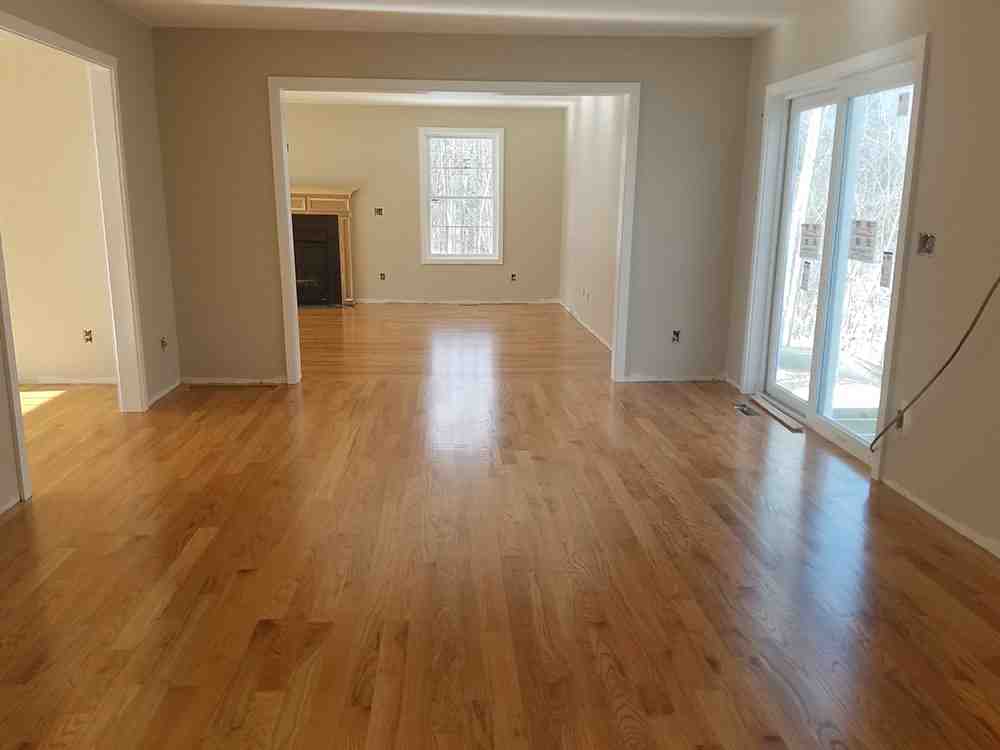
What Is Floor Refinishing — And Can You Do It Yourself?
Floor refinishing is the process of sanding down your hardwood’s worn surface and applying fresh stain and protective finish to make it look new again. Here’s what you need to know upfront:
- What it involves: Sanding, staining (optional), and sealing hardwood floors
- Who it’s for: Homeowners with solid hardwood showing scratches, dullness, fading, or water stains
- DIY feasibility: Yes — with rented equipment and a weekend, it’s doable for most solid hardwood floors
- Time required: Typically 3–5 days from start to finish, including drying time
- Average cost (DIY): Roughly $500–$1,000 in materials and rentals, based on internet data — not a quote from Romero Hardwood Floors
- Average cost (professional): Roughly $3.00–$24.00 per square foot depending on complexity, wood type, and finish, based on internet data
- When to skip refinishing: If boards are warped, rotted, or structurally damaged, replacement may be necessary
Your floors take a beating every day. Over time, even well-maintained hardwood loses its shine, picks up scratches, and starts to look tired. The good news? In most cases, you don’t need to replace them. A proper refinishing job can restore your floors to near-original condition — and add real value to your home — at a fraction of replacement cost.
I’m Francisco Romero, owner of Romero Hardwood Floors Inc., with over 15 years of hands-on experience in hardwood floor refinishing and installation across residential and commercial properties in the Revere, MA area. In this guide, I’ll walk you through exactly how the floor refinishing process works, step by step.
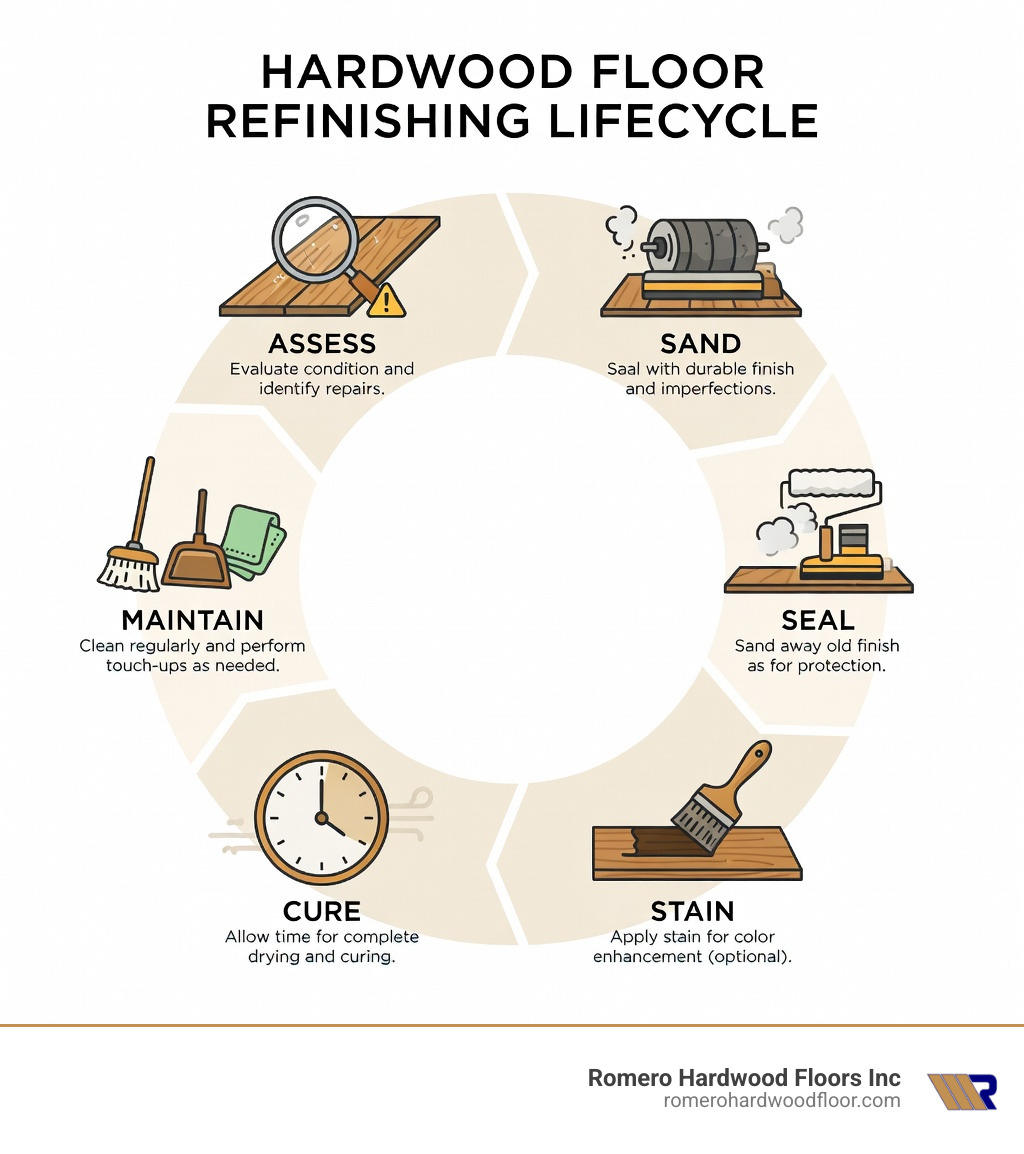
Simple floor refinishing glossary:
Assessing Your Wood: Refinish or Replace?
Before we start renting heavy machinery and turning your living room into a sawdust factory, we need to make sure your floors are actually candidates for a facelift. Not every floor can — or should — be sanded.
The Thickness Test (The 1/8-Inch Rule)
Solid hardwood is exactly what it sounds like: a solid piece of wood from top to bottom. However, you can’t sand it forever. Most 3/4-inch solid hardwood floors can be refinished up to 10 times in their lifespan. The critical factor is how much wood is left above the “tongue and groove” (the part where the boards lock together).
We recommend the “vent test.” Remove a floor register or a piece of baseboard to see a cross-section of the wood. If there is at least 1/8-inch of wood left above the groove, you’re in the clear. If it’s thinner than that, sanding might cause the boards to splinter or break. This is especially important for engineered floors, which often have a very thin veneer. To learn more about the nuances of older materials, check out our More info about restoring old floors guide.
The Water-Drop Test
Is your finish just dull, or is it completely gone? Find a high-traffic area and drop a few droplets of water on the wood.
- Beads up: Your finish is still intact. You might only need a “screen and recoat” (buffing) rather than a full sand.
- Soaks in slowly: The finish is wearing thin. It’s time to plan for floor refinishing.
- Soaks in immediately (turning the wood dark): The wood is unprotected. You need to sand and seal as soon as possible to prevent permanent rot.
For a deeper dive into evaluating your floor’s condition, How to Refinish Hardwood Floors offers excellent insights into identifying different types of wood damage.
Structural Damage: When to Replace
If your floors are cupping (edges are higher than the center), crowning (center is higher than the edges), or if you see large gaps and rotted sections, a simple sanding won’t save them. In these cases, you’re looking at Floor Restoration or full replacement.
Essential Tools and Preparation for Floor Refinishing

If you’ve decided to tackle this yourself, you’ll need more than just a hand sander and a dream. You are going to be operating some powerful equipment.
The Big Three Sanders
- Drum Sander: This is the beast of the operation. It’s used for the main part of the floor. Warning: if you stop moving while this is on, it will dig a hole in your floor faster than a dog looking for a bone.
- Edge Sander: Since the drum sander can’t get right up against the walls, the edger handles the perimeter. It’s heavy and requires a bit of muscle to control.
- Random Orbital Sander: For DIYers, this is often the “dummy-proof” option. It’s slower than a drum sander but much harder to mess up. It’s great for a final smooth finish or for beginners who are nervous about the drum sander.
Safety First (PPE)
Sanding creates an incredible amount of fine dust and the finishes give off potent fumes. Do not skip these:
- NIOSH-approved respirator: A simple paper mask won’t cut it. You need something that filters out fine particulates and chemical vapors.
- Eye protection: Safety glasses are a must.
- Hearing protection: These machines are loud enough to wake the neighbors in Salem or Saugus.
For a complete breakdown of the sanding phase, visit our page on Hardwood Floor Sanding.
Preparing for Dustless Hardwood Floor Refinishing
At Romero Hardwood Floors, we use advanced “dustless” systems that capture 99.9% of dust at the source. If you are doing this DIY, you won’t have a truck-mounted vacuum, but you can get close.
- Seal the Room: Use painter’s tape and heavy plastic sheeting to seal off doorways, vents, and even electrical outlets. You don’t want sawdust in your kitchen cabinets in Marblehead or your bedroom in Peabody.
- Vacuum Systems: Many rental sanders can be hooked up to a high-powered shop vacuum. It won’t be perfectly dustless, but it will save you days of cleaning later.
- Remove Everything: And we mean everything. Curtains, wall art, and furniture must go. Dust finds a way into every nook and cranny.
The Step-by-Step Refinishing Process
Now for the “elbow grease” part. The secret to a professional-looking floor is the grit progression. You can’t just jump to the smoothest paper.
Step 1: The Coarse Cut (36-40 Grit)
Start with a coarse sandpaper to strip away the old finish and level out minor scratches. If your floors are in rough shape, this is where the magic happens. Always sand with the grain of the wood. If you go across the grain, you’ll create deep scratches that are nearly impossible to remove later.
Step 2: The Medium Cut (60-80 Grit)
This pass removes the scratches left by the 36-grit paper. It starts to make the wood look like, well, wood again. Don’t rush this. Check your sandpaper every 20-30 minutes; if it’s “gummed up” with old wax or finish, it won’t work effectively.
Step 3: The Fine Cut (100-120 Grit)
The final sanding pass makes the floor feel smooth to the touch. This is the stage where you prepare the wood to accept stain or sealer. For more technical tips on achieving that “schoolhouse” smooth look, How To Refinish Hardwood Floors is a great resource for technique.
Step 4: Edging and Buffing
Use your edger or a palm sander to get into the corners and along the baseboards. Once the whole floor is sanded, we recommend using a buffer with a fine-grit screen to blend the edges with the center of the room. This ensures a uniform look. If you find deep gouges during this process, you may need Floor Sanding and Repair techniques like wood filling.
Step 5: The Deep Clean
This is the most important step before the finish goes on. Vacuum the floor, the walls, and even the windowsills. Then, use a tack cloth or a microfiber mop lightly dampened with mineral spirits to pick up the microscopic dust. If there is dust on the floor when you apply the sealer, it will be trapped there forever.
Applying the Final Coat for Professional Floor Refinishing Results
Now comes the reward. Whether you choose to apply a stain or keep the natural look, the finish is what protects your investment.
- Staining (Optional): If you want to change the color (like moving from a natural oak to a dark walnut), apply the stain in small sections and wipe away the excess immediately.
- Water-Based Polyurethane: This is very popular in homes across Medford and Somerville because it dries fast (3-4 hours) and has low odor. It stays clear and won’t yellow over time.
- Oil-Based Polyurethane: This takes much longer to dry (8-24 hours) and has a strong smell, but it provides a warm, amber glow and is generally more durable against heavy foot traffic.
We typically apply three coats of finish. Between the first and second coat, you’ll want to “scuff sand” with a very fine grit to ensure the next layer sticks perfectly.
Understanding the Costs: DIY vs. Professional
Is it worth doing it yourself? Let’s look at the numbers.
| Expense Item | DIY Estimated Cost | Professional Estimated Cost |
|---|---|---|
| Sander Rentals (3 days) | $250 – $400 | Included in Labor |
| Sandpaper & Supplies | $150 – $300 | Included in Labor |
| Finish & Stain (per gallon) | $50 – $100 | Included |
| Labor | $0 (Your sweat equity) | $3.00 – $24.00 per sq. ft. |
| Total (1,000 sq. ft.) | $500 – $1,000 | $3,000 – $24,000 |
Note: These are average costs based on internet data and not actual costs for Romero Hardwood Floors. Professional refinishing typically ranges from $3.00 to $24.00 per square foot depending on the complexity, wood species, and finish type.
While DIY saves you a lot of money (labor is roughly 80% of a professional quote), professionals have the experience to handle “surprises” like pet stains or old shellac that gums up sanders. If you’re curious about specific breakdowns for larger areas, see the Cost to Refinish Hardwood Floors 1000 Square Feet.
Maintaining Your Newly Restored Floors
You’ve spent days working on your floors — don’t let a heavy chair or a pair of high heels ruin them in five minutes.
- Felt Protectors: This is the #1 rule. Put felt pads on every single piece of furniture. Check them every few months, as they can pick up grit and turn into sandpaper themselves.
- Cleaning Schedule: Sweep or dust mop daily. Use a cleaner specifically designed for hardwood; avoid vinegar or harsh chemicals that can strip the finish. For more tips, read our Hardwood Floor Buffing Ultimate Guide.
- Humidity Control: Wood expands and contracts. In the humid summers of Gloucester or the dry winters of Winchester, try to keep your home’s humidity between 30% and 50% to prevent gaps or cupping.
- No Shoes: If possible, make your home a “shoes-off” zone. Small pebbles stuck in sneaker treads are the natural enemy of a fresh finish.
Frequently Asked Questions about Floor Refinishing
How often should hardwood floors be refinished?
Generally, hardwood floors should be refinished every 7 to 10 years. However, this depends heavily on your lifestyle. If you have three large dogs and kids playing hockey in the hallway in Woburn, you might need it sooner. If you live alone and wear slippers, you might get 15 years out of a finish.
Can engineered hardwood floors be sanded?
It depends on the “wear layer.” Most engineered floors can be sanded at least once, provided the veneer is at least 3mm thick. If it’s a very cheap engineered floor with a paper-thin veneer, sanding will destroy it. Always get a professional assessment if you aren’t sure. For more details, see Can You Refinish Prefinished Hardwood Floors?.
How long until I can move furniture back?
Patience is a virtue here!
- Walking: 24 hours with socks only.
- Furniture: Wait at least 72 hours. Even then, don’t drag anything; lift and place.
- Area Rugs: Wait a full 15 days. The finish needs to “breathe” to cure completely, and covering it too early can cause permanent discoloration.
Conclusion
Refinishing your floors is one of the most rewarding home improvement projects you can undertake. It breathes new life into your home, improves air quality by removing years of trapped allergens, and significantly boosts your property value. Whether you’re in a historic home in Salem or a modern condo in East Boston, those wood floors are a treasure worth preserving.
At Romero Hardwood Floors Inc., we’ve been helping homeowners across Massachusetts since 2006. We pride ourselves on punctuality, competitive pricing, and a workmanship guarantee that means we aren’t happy until you are. If the DIY route sounds a bit too daunting, or if you just want the peace of mind that comes with professional equipment and 15+ years of experience, we are here to help.
Ready to see your floors shine again? Start your project with Romero Hardwood Floors today for a free consultation and let us transform your space with expert floor refinishing.