
Affordable Water Damage Repair: 7 Essential Tips 2025
Why Affordable Water Damage Repair is Crucial for Homeowners
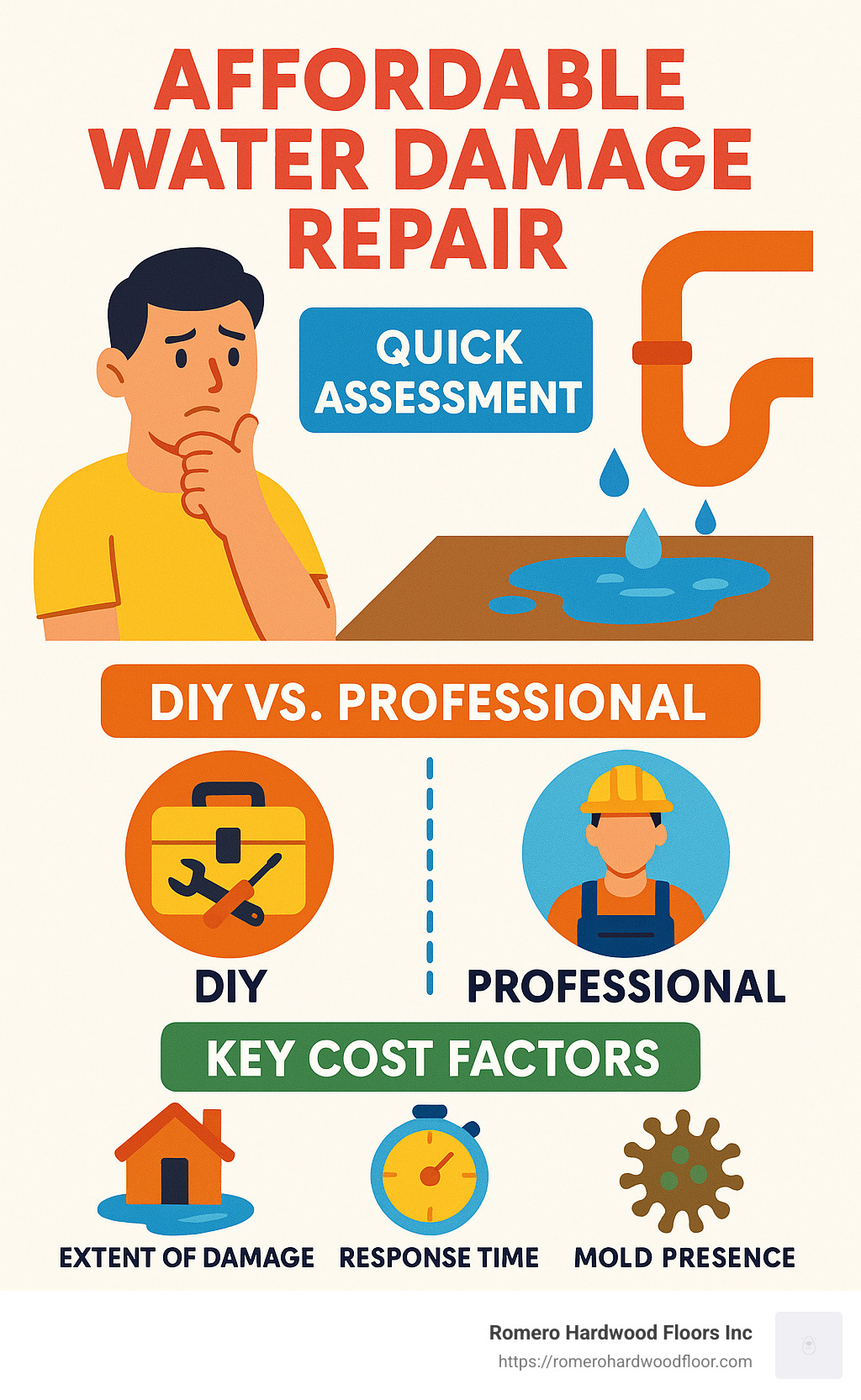
Affordable water damage repair doesn’t just protect your wallet—it safeguards your home’s structural integrity and your family’s health. Want a quick rundown? Here’s what you should know:
- Average Cost: $1,000–$10,000+ (depending on damage severity and affected area)
- DIY vs Pro: Small leaks can often be DIY repaired; extensive water damage usually needs professionals.
- Act Fast: Mold and structural issues can start within 24-48 hours of water exposure.
- Insurance: Document damage immediately for smoother claims processing.
Water damage often sneaks up unobtrusively—through hidden leaks, sudden pipe bursts, or even floods. If left untreated, moisture can warp floors, stain surfaces, and quickly become a breeding ground for mold spores. Timely intervention, especially with specialized materials like hardwood, can make the difference between an affordable fix and costly reconstruction.
I’m Francisco Romero, owner of Romero Hardwood Floors Inc., serving homeowners and businesses in Revere, MA since 2006. With over 15 years of experience addressing Affordable water damage repair for hardwood floors, my goal is to help you address water damage affordably, effectively, and quickly to protect your valuable property.
Understanding the Impact of Water Damage
Water damage goes far beyond just spoiling your décor—it can harm your home’s structure and put your family’s health at risk. When you understand the real effects of water damage, you can make smarter choices, focus your repair efforts, and even save money along the way.
Types of Water Damage
Not all water damage is created equal. Experts classify water damage into three main categories based on how clean (or not-so-clean) the water is:
Category 1 (Clean Water): Imagine a burst water pipe or an overflowing bathtub. This type of water is relatively clean and poses minimal health risks. However, leaving it untreated can still damage floors, drywall, and furniture.
Category 2 (Gray Water): Think dishwasher leaks, washing machine overflows, or backups from toilets (urine only, no feces). This water isn’t drinkable and might make you sick. You’ll need to handle it carefully and thoroughly clean the affected areas to prevent further issues.
Category 3 (Black Water): Here’s where things get messy—literally. This water is seriously contaminated. It includes sewage backups, floodwaters from rivers or streams, and stagnant water filled with bacteria or mold. This type of damage requires professional help immediately because of its potential health hazards.
David Ragsdale, a seasoned water damage expert, puts it succinctly: “When you cross the line to remediation, it’s more about removing contaminants from the space.” Knowing which type of water damage you’re dealing with helps you choose the safest, most affordable water damage repair solution.
For more detailed categories and standards, you can check out the latest research on water damage categories.
Health Risks Associated with Water Damage
Mold is the sneaky villain that loves water damage. Moisture left unattended for just 24-48 hours is enough to encourage mold growth. Once mold settles in, it can cause health issues like breathing problems, allergic reactions, and even infections.
Some people are more susceptible to mold-related health risks, especially those with asthma, allergies, or weak immune systems. Young kids and elderly individuals should also be extra cautious. But mold isn’t the only issue—water damage can breed harmful bacteria and microorganisms that may trigger health problems ranging from minor irritations to serious illnesses.
Simply put: the faster you tackle the water damage, the healthier (and happier) your home will stay.
Structural Damage to Property
Water doesn’t just sit nicely—it actively causes trouble. Even small amounts of water can weaken your home’s foundation, warp your beautiful hardwood flooring, or cause drywall to bubble, peel, and eventually crumble.
Your home’s electrical system is also at risk when water damage hits. Moisture can lead to short circuits, creating potential fire hazards and costly rewiring projects. And let’s not forget about metal fixtures and appliances: rust can quickly set in, turning a minor leak into permanent damage.
Wood is particularly vulnerable. Structural beams, subflooring, and framing can rot if moisture hangs around too long. This weakening can lead to costly repairs—or worse, dangerous living conditions.
According to the Insurance Information Institute, water damage and freezing make up almost 24% of all homeowners’ insurance claims. The average claim amount is several thousand dollars, highlighting just how important it is to address water damage quickly and affordably.
The bottom line? Understanding the full impact of water damage helps you act quickly, choose the right affordable water damage repair strategies, and keep your home safe and dry for years to come.
Affordable Water Damage Repair Strategies
Nobody wakes up excited to deal with water damage—let’s be real, it’s about as fun as stepping barefoot on a wet rug. But acting quickly and thoughtfully can help you minimize expenses and stress. Let’s explore some practical ways to keep your affordable water damage repair actually affordable, without compromising on results.
Early Detection and Response
When it comes to water damage, the clock is your enemy. As our research has consistently pointed out, the faster you react, the less you’ll spend in the long run. Remember: mold and structural issues start popping up as fast as 24-48 hours after water hits your floors or walls.
Begin by stopping the water source right away. Locate your home’s main water valve and shut it off if a pipe has burst or leaks are out of control. If the damage comes from flooding or drainage issues, address those immediately. Don’t wait, because every minute counts.
Next, grab your smartphone and document everything thoroughly. Take clear photos and videos to show the extent of the damage. Trust me, your insurance company will thank you—and your wallet will too!
With the documentation done, remove standing water as soon as possible. Towels or mops are fine for small areas, but you might want to rent a wet/dry vacuum or water extraction machine for bigger issues. Your local hardware store probably has affordable rentals available.
Once you’ve cleared the standing water, it’s time to start drying. Increase air circulation immediately—open windows, set up fans, and, if possible, use a dehumidifier to pull moisture out of the air. One water damage expert says, “The longer water sits, the more damage can be done,” and he’s spot-on. Early air circulation can save you thousands of dollars in structural repairs.
Cost-Effective Repair Methods
After you’ve handled the urgent steps, it’s time to tackle repairs in budget-friendly ways. Start by prioritizing repairs based on risk. Make mold-prone areas or structural safety issues your top priority, then work your way down to purely cosmetic fixes.
Try to salvage what you can. Furniture, flooring, and even drywall aren’t always goners just because they’re wet. With quick action and thorough drying, many items can be cleaned, disinfected, and restored at a fraction of the replacement cost.
When replacements are necessary, compare material options. Sometimes a slightly pricier but water-resistant option can save you money later by preventing future damage. On the other hand, temporary cosmetic fixes might be okay if budget constraints are tight, as long as you address health and safety first.
And don’t forget your insurance—leverage insurance coverage wisely. Work closely with your provider to maximize what’s covered, minimizing your out-of-pocket expenses. Insurance companies prefer quick action too, since early intervention is less costly overall.
One family right here in Revere learned this firsthand. By jumping into action within the first 12 hours of spilling water onto their hardwood floors, they managed to avoid a full-floor replacement. Thanks to immediate water extraction and professional drying, they saved over $3,000!
DIY Affordable Water Damage Repair Tips
DIY repairs can feel empowering (and save cash!), especially for smaller water damage incidents. If your damage seems manageable, here are some handy tips:
It’s usually cheaper to rent water cleanup equipment like dehumidifiers or water extraction machines than to buy them outright. Check your local hardware stores, as they usually have affordable daily or weekly rates.
For effective initial cleanup, skip pricey chemicals and use a household cleaning solution made from equal parts water and white vinegar. It disinfects safely and cheaply.
Need extra drying power? Create DIY drying chambers by sealing off smaller zones with plastic sheeting. Position fans strategically to focus airflow, speeding up the drying process significantly.
To avoid costly mistakes, consider investing in an inexpensive moisture meter. This handy little device (available at most hardware stores) lets you know exactly when surfaces and materials are dry enough to refinish or rebuild safely.
And if drywall gets wet, don’t panic. You can often replace only small damaged sections rather than entire walls. It’s manageable and significantly cheaper.
Hardwood floors require extra care after water damage. Dry them quickly by positioning fans at a 45-degree angle to gently speed drying without causing additional warping. For more detailed tips, check our hardwood floor water damage repair guide here.
Knowing When to Hire Professionals
Let’s be honest though: not every job is meant for DIY. Knowing when to call in the pros can save you money and frustration in the long run. If the affected area covers more than about 10 square feet, or if water has sat for longer than 24-48 hours, professional help becomes essential.
Also, any water damage involving potentially contaminated water (categories 2 and 3, like dishwasher overflow or sewage) should always involve professionals. In these cases, safe and thorough cleanup requires specialized equipment and knowledge.
Other red flags to watch out for include visible mold growth, impacted structural elements (like subfloors or support beams), compromised electrical systems, or extensive damage to specialized materials like hardwood flooring.
As one restoration expert reminded us: “Hiring water damage specialists can guarantee a complete and efficient remediation, ultimately conserving time and cash.” At Romero Hardwood Floors Inc., we’ve seen plenty of cases where delaying professional help ended up costing 3-5 times more than immediate intervention would have.
When you’re facing serious damage, calling in experts isn’t splurging—it’s a smart, cost-effective investment.
Finding Affordable Water Damage Repair Services
When you’re dealing with water damage, finding affordable water damage repair services you can trust might feel overwhelming. But don’t worry—it’s easier than you think. With a bit of smart research and planning, you can locate dependable professionals who won’t drain your wallet.
Tips for Locating Budget-Friendly Repairs
Let’s face it, nobody wants to pay more than they have to for repairs. To keep things affordable, always start by gathering several quotes—at least three is ideal. This step gives you a clear picture of what a fair price looks like and helps you spot those outliers who might be charging too much (or suspiciously too little).
Next, ask potential providers to clearly explain their service packages. Sometimes an offer that seems pricier includes essential services you’d otherwise have to pay extra for. Understanding exactly what’s included can save you money and prevent unpleasant surprises later.
Also, keep your eyes open for seasonal promotions. Some companies offer lower rates during their slower months, which could mean significant savings if your situation isn’t an emergency. And don’t be shy about asking if they have interest-free payment plans. Spreading out the cost over time can make even extensive repairs feel manageable.
If you have homeowners insurance, make sure to ask contractors if they’re experienced at coordinating with insurance companies. A knowledgeable provider can often help maximize your coverage and reduce your out-of-pocket cost.
Finally—and perhaps most importantly—don’t be afraid to negotiate. As our research found, “negotiating the price with restoration companies” can be very effective. Many companies appreciate honesty about budget limits and would rather accommodate you than lose your business. After all, they’re people too!
Verifying Credentials and Experience
Of course, price isn’t the only factor. Affordable doesn’t mean settling for a job poorly done. Always verify that the company you’re considering has the necessary licensing and insurance. This step protects you from unexpected liabilities and ensures the company meets basic industry standards.
Additionally, ask if their team holds certifications, such as those from the Institute of Inspection, Cleaning and Restoration Certification (IICRC). Certified technicians have proven knowledge and skills, meaning your repair is likely to go more smoothly.
It’s also wise to consider a company’s experience specifically in water damage repairs, not just general home repairs. A company that’s successfully handled water damage in the past knows exactly what to look for and how to avoid costly mistakes.
Don’t underestimate the power of good old-fashioned word-of-mouth, either. Check online reviews, talk to neighbors, or ask friends and family if they’ve had good experiences. A homeowner in Malden, MA shared this valuable lesson: “I almost went with the cheapest quote before realizing they weren’t properly insured. Choosing a slightly pricier—but fully insured—company saved me thousands by catching damage the others missed.”
Questions to Ask Potential Repair Companies
When you’re ready to talk with potential repair services, asking the right questions can help you find someone both experienced and affordable. Here are the most important points to cover:
- How much experience do they have with your specific type of damage? (Water damage often varies by source and material.)
- Can they give you a detailed, written itemized estimate? (Hidden costs aren’t fun surprises!)
- What’s the timeline for the project? (Thorough drying takes priority over speed.)
- Do they use moisture meters to ensure complete drying? (This step is essential for preventing mold.)
- What guarantees or warranties are provided? (A solid warranty shows confidence in their workmanship.)
- Will they help you document damages and coordinate with your insurance provider? (This can streamline the claims process significantly.)
- What’s their approach to mold prevention? (Preventing mold upfront is way cheaper than removing it later.)
- Are there any potential extra costs? (It’s better to know upfront and budget accordingly.)
At Romero Hardwood Floors Inc., we’ve learned from experience that clear, open communication makes all the difference. One of our happy customers from Revere mentioned, “The detailed explanation of the process and potential costs helped me make an informed decision and avoid unexpected expenses.”
The goal is affordable water damage repair that’s done right the first time—saving you headaches, hassles, and yes, money.
Preventing Future Water Damage on a Budget
An ounce of prevention is worth a pound of cure—especially when it comes to water damage. I’ve seen countless homeowners face expensive repairs that could have been avoided with some simple preventative measures. The good news? You don’t need to break the bank to protect your home from water damage.
Regular Home Inspections
Your home speaks to you—if you’re willing to listen. Developing a simple inspection routine costs nothing but a bit of your time and can catch problems before they turn into budget-busting disasters.
Take a monthly walk around your home to examine visible pipes, water heater connections, and appliance hoses. Look for even the tiniest drips or signs of corrosion—these small warning signs often precede major leaks. One of my clients in Revere noticed a small drip under their kitchen sink during a routine check and avoided what would have become significant damage to their kitchen cabinets and flooring.
When seasons change, pay special attention to your roof, gutters, and foundation. Fall leaves can clog drainage systems, and winter freezes can create ice dams—both leading to water finding its way into your home. I recommend checking these areas before and after rainy seasons for best protection.
While DIY inspections are valuable, consider having your plumbing system professionally checked once a year. Yes, this has a small cost—typically $75-200 depending on your home size—but it’s pennies compared to the thousands you might spend on affordable water damage repair after a major plumbing failure.
During all these inspections, trust your senses. Watch for water stains or discoloration on walls and ceilings. Sniff for musty odors that might indicate hidden moisture. Feel for soft spots in flooring or walls. And keep an eye on your water bill—an unexplained increase often signals a hidden leak somewhere in your system.
Affordable Prevention Methods
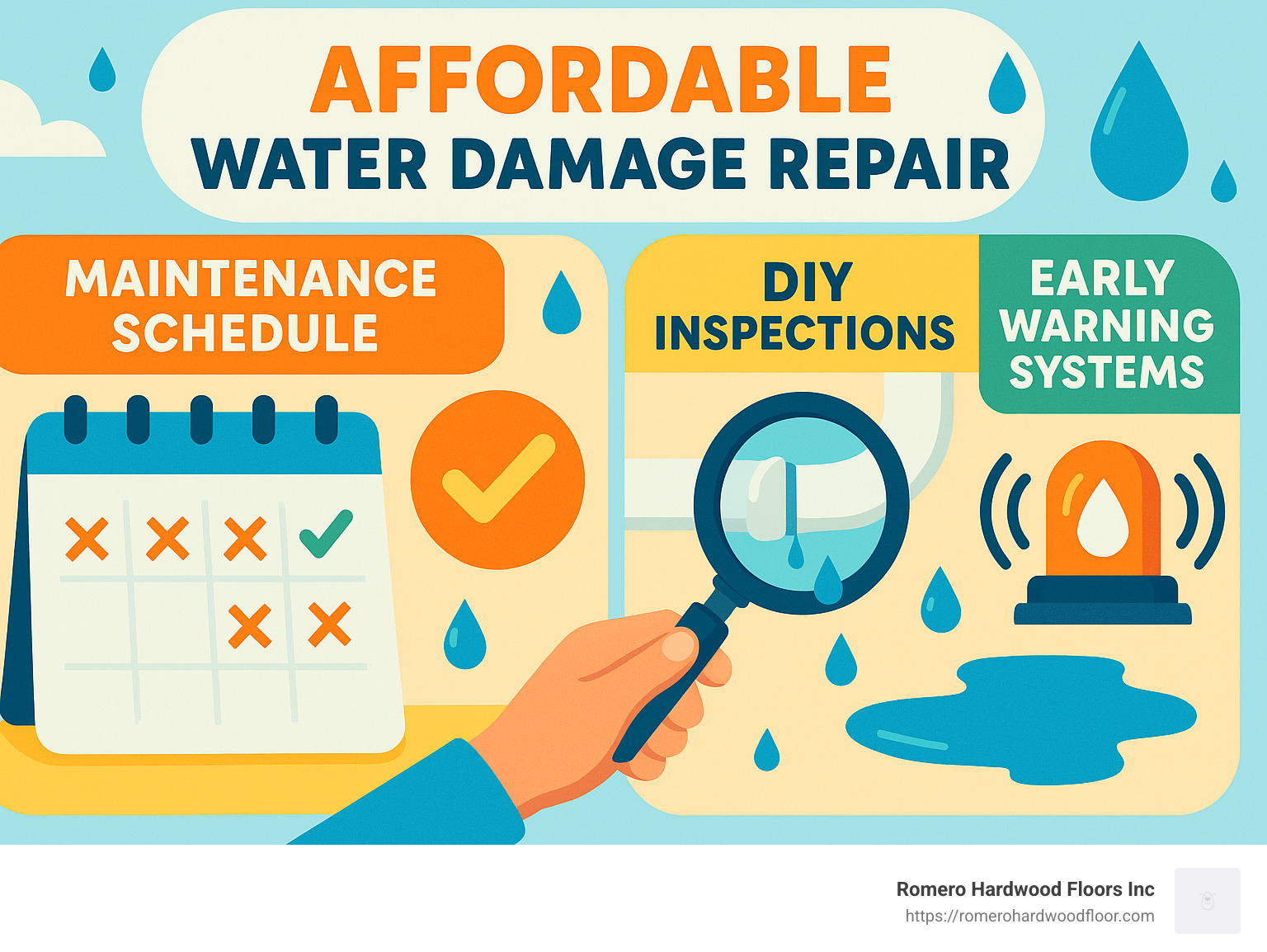
You don’t need fancy systems or expensive equipment to protect your home from water damage. Some of the most effective prevention methods are surprisingly affordable.
Water detection devices have become my go-to recommendation for homeowners. Basic water alarm sensors cost as little as $10-15 and can alert you to leaks before they cause significant damage. Place them near washing machines, water heaters, dishwashers, and under sinks—all common sources of unexpected water. Some of my clients have even invested in smart water sensors (around $50-100) that send alerts to their phones when water is detected.
Don’t underestimate the power of caulk! Refreshing the caulking around bathtubs, showers, and sinks every few years creates a water-tight seal that prevents moisture from seeping into walls and floors. A tube of quality silicone caulk costs under $10 and can prevent thousands in damage.
In our Massachusetts climate, pipe insulation is essential. Those foam pipe sleeves you see at hardware stores? They’re only a few dollars per length but can prevent frozen and burst pipes during our harsh winters. I always tell my clients this is one of the best investments they can make—especially for pipes in unheated areas like basements, crawl spaces, and garages.
Proper drainage around your home is critical too. Make sure the ground slopes away from your foundation, clean your gutters regularly (2-4 times per year), and consider extending your downspouts to carry water further from your home. These simple steps direct water away from your structure where it can’t cause damage.
One of my clients in Medford implemented several of these strategies after we repaired water damage to their hardwood floors. Their investment of approximately $200 in prevention has protected their home for years—potentially saving them thousands in future repairs.
Maintenance Tips for Hardwood Floors
As hardwood flooring specialists at Romero Hardwood Floors Inc., we’ve seen how water can wreak havoc on beautiful floors. But we’ve also seen how some simple preventative measures can keep them looking gorgeous for decades.
First and foremost, ensure your hardwood floors are properly sealed with quality products designed for your specific wood type. Different woods have different needs, and the right sealant creates a protective barrier against moisture. This isn’t a place to cut corners—quality sealants may cost more initially but provide far better protection.
Develop a “spill response plan” with your family. It sounds silly, but water sitting on hardwood for even 30 minutes can begin causing damage. Make sure everyone knows to wipe up spills immediately, even small ones. Keep absorbent cloths or paper towels easily accessible in water-prone areas.
Strategic placement of area rugs can work wonders in high-risk zones. Place water-absorbent mats near exterior doors, under sinks, around pet water bowls, and in other areas where water exposure is likely. Just remember to check under these rugs periodically to make sure no moisture is trapped underneath.
Many homeowners don’t realize that indoor humidity levels affect hardwood floor health. Aim to keep your home’s relative humidity between 35-55%. Too much humidity can cause wood to expand; too little can cause shrinking and cracks that allow water to penetrate. Inexpensive humidity gauges (hygrometers) can help you monitor levels, and humidifiers or dehumidifiers can help maintain the sweet spot.
Finally, consider scheduling professional maintenance for your hardwood floors. Periodic professional cleaning and resealing extends their life and improves resistance to water damage. At Romero Hardwood Floors Inc., we’ve seen how this regular care can prevent major restoration projects down the road.
As I often tell my clients, “Preventative maintenance is the most affordable form of water damage repair.” The small investments you make now can prevent costly restoration later—and keep your beautiful hardwood floors looking their best for generations to come.
Affordable Solutions for Water Damaged Hardwood Floors
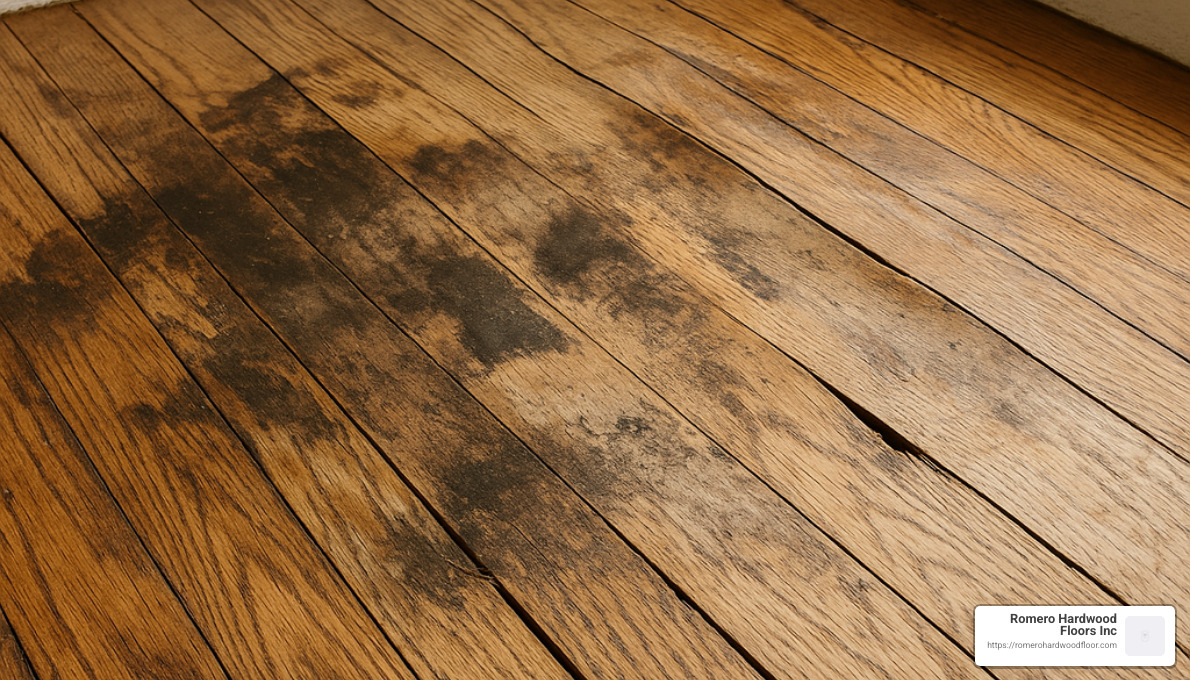
Ah, hardwood floors—beautiful, neat, and unfortunately, prone to turning into a nightmare if water damage strikes. Because wood is naturally porous, it loves to soak up water, causing it to warp, buckle, and stain. But don’t panic just yet! With the right approach, even badly damaged hardwood floors can often be repaired affordably, saving you from costly replacements.
Understanding Hardwood Floor Water Damage
When water meets hardwood flooring, things can get pretty dramatic. You might see something called cupping, where the edges of the wood boards curl upwards while the center stays lower—making your floors look like they’re trying to form a mini half-pipe skateboard ramp. Sometimes you’ll see the opposite effect: crowning, where the middle rises up while edges stay down. And trust us, neither version is a good look.
In severe cases, boards may start buckling—lifting completely off the subfloor and creating a hazardous, wavy mess. If you’re noticing dark or black stains, this usually signals mold or mildew has set up camp beneath or within the wood, causing discoloration and further damage.
The extent of this water-induced chaos depends on several factors, including the type of wood in your home (some species handle moisture better than others), how long the wood has been wet, and even the temperature and cleanliness of the water itself. All these details play a big role in determining the best—and most affordable—way to repair your floors.
Specialized Repair for Hardwood Floors
At Romero Hardwood Floors Inc., we’ve been rescuing water-damaged floors around Revere, MA, since 2006—so we’ve learned a thing or two about restoring hardwood affordably. Our approach starts by carefully assessing the damage using specialized moisture meters—a method called moisture mapping. This helps us pinpoint exactly how far moisture has spread beneath your floors, avoiding unnecessary (and costly) repairs.
For smaller, isolated areas of damage, our typical solution involves spot repairs, which means replacing only the affected boards rather than tearing out the entire floor. Combining this targeted approach with progressive drying techniques (slowly and carefully removing moisture to prevent further warping) often saves our customers hundreds, or even thousands, of dollars.
In cases where your hardwood floor’s surface is compromised but structurally sound, sanding and refinishing can work wonders. This method removes the surface damage, and after refinishing, your floor will look fresh and beautiful again without the price tag of new flooring.
We once had a homeowner from Salem, MA, whose refrigerator leaked overnight, soaking their beautiful oak hardwood floors. Instead of ripping everything out (which would have cost a small fortune), we replaced just the most damaged boards and refinished the rest to match seamlessly. They ended up paying about 40% of what a full floor replacement would have cost—and their floors looked good as new.
Cost Considerations for Hardwood Floor Repair
Let’s talk numbers—because we know cost matters when you’re facing water damage. These are average costs based on internet data and not actual costs for Romero Hardwood Floors. Actual costs can vary quite a bit depending on your specific situation.
For minor spot repairs involving just a few boards, homeowners typically pay around $200–$800. Moderate damage requiring partial replacement of larger areas averages between $800 and $3,000. If your entire floor is extensively damaged (hopefully not!), complete replacement costs range anywhere from $3,000 to over $15,000.
Several factors influence these numbers, including the overall extent of the damage, type of hardwood used (rare or exotic woods cost more), condition of the subfloor underneath, and the difficulty involved in reaching damaged areas. While these might seem intimidating, addressing the problem quickly and strategically can significantly lower your final bill.
Affordable Water Damage Repair for Hardwood Floors
Want to save money while still getting quality results? The secret is acting fast—immediately removing water and drying out the area can dramatically reduce the amount of repair needed later. If damage is moderate, always consider refinishing your existing hardwood floors rather than replacing them completely. Refinishing often restores floors beautifully at a fraction of replacement cost.
If your damage feels overwhelming financially, don’t worry. You can take a phased approach—handle critical structural issues first, and leave cosmetic refinements until later when your budget allows. And if you do need replacement boards, exploring recycled or reclaimed wood options can be both wallet-friendly and environmentally responsible.
Keep in mind: sometimes, small imperfections remain after repairs. But instead of looking at them as flaws, accept them as “character marks” and part of your home’s unique story. (Hey, perfection is overrated anyway, right?)
At Romero Hardwood Floors Inc., our favorite cost-effective approach is a thoughtful blend of targeted replacements for severely affected boards and refinishing across the rest of the damaged area. This gives you beautiful, uniform floors without breaking your budget.
Want more detailed guidance? Check out More info about Hardwood Floor Water Damage Repair or More info about Fix Wood Floor Water Damage, where we dive even deeper into affordable water damage repair strategies for wood flooring.
Frequently Asked Questions about Affordable Water Damage Repair
How much does water damage repair typically cost?
If you’re dealing with water damage, your first question probably is, “How much will this set me back?” Well, the answer depends on several factors—the size and severity of the damage, the materials affected, and even where you’re located.
For smaller issues like a minor water leak or spill, costs typically range from around $1,000 to $3,000 on average. However, if you’re dealing with moderate water damage covering larger areas or involving structural elements, you might be looking at anywhere from $3,000 to $8,000 in repairs. Severe cases, such as extensive flooding or significant structural damage, can run from $8,000 all the way up to $30,000 or more.
The type of water involved can also affect your budget. According to our research, clean water incidents (Category 1) typically cost less to repair—around $4 per square foot on average. In contrast, contaminated water situations (like gray or black water from sewage or floodwaters) can almost double your expenses to about $8 per square foot.
Specialized materials like hardwood floors usually carry their own pricing structure. Spot repairs to hardwood flooring might cost as little as $200 to $800, while extensive damage involving full replacement can range from $3,000 to over $15,000. These figures are average costs based on internet data and not actual prices from Romero Hardwood Floors.
The good news? Acting quickly and systematically tackling the problem can significantly reduce your overall cost. In fact, experts note that proper drying and early intervention can slash replacement costs by as much as 70%—making prompt, affordable water damage repair a smart investment.
Can I perform water damage repair myself to save money?
Ah, the DIY spirit—the trusty friend of budget-conscious homeowners everywhere! DIY repairs can certainly help manage minor water issues and keep your wallet happy, but it’s equally important to know when to step back and call the pros.
If you’re facing a small, contained spill from a clean water source (like a leaky faucet or minor appliance overflow), then DIY methods can often work wonders. You can safely handle these situations by quickly stopping the source of the leak, removing standing water immediately, thoroughly drying the area using fans and dehumidifiers, and carefully disinfecting affected surfaces.
But—here’s the big but—some scenarios simply shouldn’t be tackled alone. If the damage covers more than about 10 square feet, has been sitting for over 48 hours, involves contaminated water (Category 2 or Category 3), or affects electrical or structural systems, professional help becomes essential. Likewise, if you notice signs like visible mold or significant damage to valuable materials (especially hardwood flooring), it’s time to reach out to the experts.
One of our customers in Revere learned this firsthand. After successfully handling a minor bathroom leak himself (saving a good chunk of change—hooray!), he quickly called us when a burst pipe flooded his hardwood living room floor. Recognizing when to bring in professionals prevented costly mistakes and helped him achieve affordable water damage repair in the long run.
How can I prevent mold growth after water damage?
Mold—the unwelcome houseguest that always overstays its welcome. Preventing mold after water damage isn’t just about keeping your home looking nice; it’s crucial for your family’s health, especially if anyone has allergies or breathing issues.
According to the Environmental Protection Agency (EPA), mold can start growing within just 24-48 hours after water exposure. That means the clock is ticking the moment you notice the damage. The key to staying mold-free? Quick, thorough drying.
First, remove all standing water promptly using wet/dry vacuums or professional extraction equipment. Next, promote airflow by opening windows and positioning fans around the affected areas. You’ll also want to run dehumidifiers to keep indoor humidity levels below 50%, creating an unfriendly environment for mold spores.
Don’t forget to address hidden spaces—behind walls, under floors, and inside cabinets. Moisture loves to hide in sneaky areas, so use a moisture meter (inexpensive and available at most hardware stores) to confirm everything’s truly dry. If you have porous materials like carpet padding or insulation that got soaked, it’s often best to replace them completely.
Applying EPA-approved antimicrobial treatments is another affordable method to help prevent mold from taking hold. And remember—if you have hardwood floors, ensuring both the surface and subfloor are fully dried is essential. At Romero Hardwood Floors Inc., we use specialized moisture detection equipment designed specifically for hardwood flooring to catch any hidden moisture issues early.
By acting swiftly and following these simple steps, you’ll drastically reduce the odds of mold paying you a visit—and you’ll keep your home safe, healthy, and dry after any water damage event.
Conclusion
Facing water damage in your home can feel overwhelming—and, let’s be real, pretty stressful. But here’s the good news: with swift action, smart strategies, and a clear understanding of your options, affordable water damage repair is entirely within reach. It doesn’t have to break your budget or disrupt your life for long.
When it comes to water damage, timing truly is everything. Acting quickly is your secret weapon to keeping costs down. Water left untreated—even for just 24 to 48 hours—can turn a small issue into a major headache. Early detection and rapid response can be the difference between a simple cleanup job and extensive (and expensive!) restoration work.
As we’ve seen throughout this guide, knowledge is power. Knowing exactly what type of water damage you’re dealing with helps you decide whether it’s something you can handle yourself (think small spills or minor surface dampness) or whether it’s time to call in the pros (extensive flooding, contaminated water, or structural damage). Making informed decisions early on can save you considerable hassle and money down the line.
Of course, the only thing better than affordable repairs is avoiding damage altogether! Prevention truly is your most cost-effective strategy. Regular home inspections, routine maintenance (especially for hardwood floors), and small investments like water detection devices can prevent costly emergencies. Spending a little now can save thousands later and offer priceless peace of mind.
At Romero Hardwood Floors Inc., we’ve seen how professional help can actually be the most budget-friendly option for significant water damage—particularly when dealing with specialized flooring like hardwood. DIY solutions have their place, but professionals know exactly how to identify hidden moisture, prevent mold, and provide lasting repairs. Investing in professional help early on often costs far less in the long run than dealing with recurring or secondary damage.
Don’t forget to document everything. Taking clear photos and videos of the initial damage and all repairs not only helps with insurance claims but also provides valuable information for future maintenance. (Your future self will thank you!)
Water damage certainly isn’t enjoyable, but it doesn’t have to be devastating either. With the right approach, even serious water issues can be resolved affordably, effectively, and safely.
Since 2006, Romero Hardwood Floors Inc. has been helping homeowners across Revere, MA, and surrounding cities like Beverly, Chelsea, Medford, Salem, and Somerville restore their beautiful hardwood floors after water damage. We’re proud of our reputation for competitive pricing, punctuality, and guaranteed craftsmanship.
If you’re currently facing water damage—or just want to protect your home from potential future incidents—our experienced team is here for you. We specialize in affordable, lasting solutions custom specifically to your home’s unique needs. And because we believe prevention is worth every penny, we’ll gladly share tips to help you keep your floors safe and sound.
For more detailed information, explore our handy guide on how to repair a water-damaged hardwood floor. And if you have specific questions or need professional guidance custom to your situation, don’t hesitate to reach out—we’re here to help restore your floors (and your peace of mind).
With prompt action and smart choices, affordable water damage repair is well within your grasp. Let’s get your home back on solid footing together.
