
Floor Squeaks Under Hardwood: Top 3 Easy Fixes
Understanding Squeaky Hardwood Floors
If you’re dealing with floor squeaks under hardwood, you’re not alone. This common household annoyance can disrupt your peace and make you wince with every step. But don’t despair! Most squeaks have straightforward causes and fixes.
Here’s a quick overview of why your floors might be squeaking and what generally needs to be done:
- Common Causes: Squeaks happen when wood parts rub together. This can be due to:
- Seasonal changes: Wood expands and contracts with humidity.
- Loose floorboards: Boards aren’t tightly fastened to the subfloor.
- Subfloor issues: Gaps or movement between the subfloor and joists.
- Joist problems: Warped or loose structural supports.
- General Fixes: Solutions usually involve:
- Securing loose components: Using screws or shims.
- Reducing friction: Applying lubricants between rubbing parts.
- Addressing structural gaps: Reinforcing from above or below.
Everyone knows the frustration of squeaky floors. You wince when you walk around late at night, trying not to wake up the whole house. While hardwood floors are a beautiful addition and a valuable investment, their lifespan and appeal can be diminished by persistent noise.
Whether your home is old or new, squeaks are a common issue. They often appear after a house settles, or as the wood dries and shrinks over time. The good news? You can identify the cause and quiet your floors, restoring peace to your home.
As Francisco Romero, owner of Romero Hardwood Floors Inc., I’ve spent over 15 years changing spaces and resolving issues like floor squeaks under hardwood for homeowners in Revere, MA. My team and I are committed to ensuring your floors improve your home’s beauty and value, providing lasting solutions and meticulous craftsmanship.
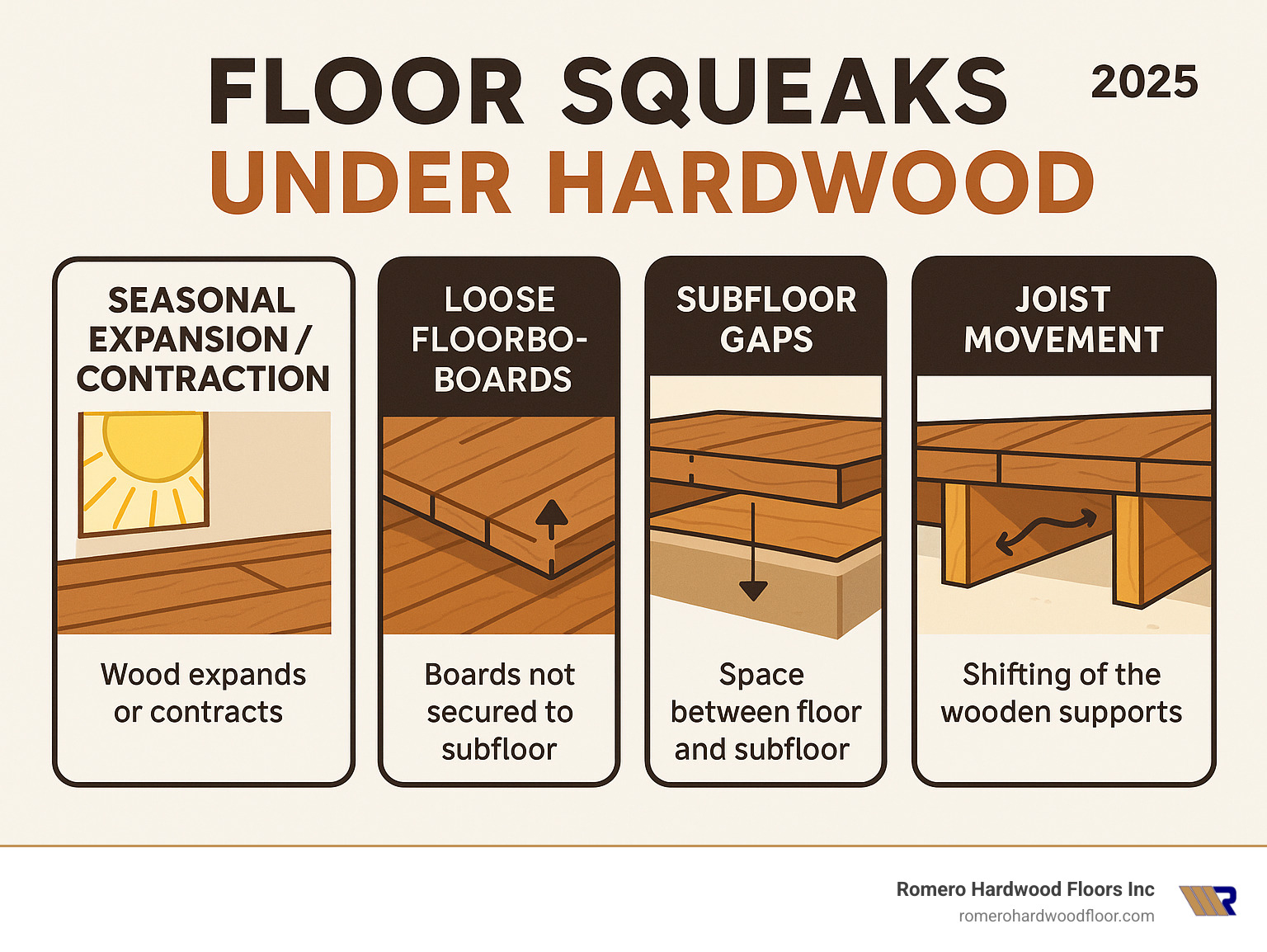
Common floor squeaks under hardwood vocab:
Understanding the Common Causes of Floor Squeaks Under Hardwood
Ah, the dreaded squeak! That sudden “SQUEAK!” when you walk across your beautiful hardwood floors can be startling, especially when you’re trying to sneak a midnight snack. At its heart, any squeak is a sign of movement – specifically, wood rubbing against wood, or against the fasteners holding it down. This friction is what creates that irritating sound. While it’s true that older homes often develop more creaks and pops as they gracefully age, even relatively new homes can start to squeak as they settle into their foundations.
The Role of Temperature and Humidity
One of the most frequent culprits behind floor squeaks under hardwood is the natural dance of expansion and contraction that wood performs due to changes in temperature and humidity. Think of your hardwood floors like a living, breathing thing!
They absorb moisture from the air, causing them to swell (expand), and release moisture, causing them to shrink (contract). This is particularly noticeable with seasonal changes. In humid summer months, your wood planks will swell, possibly pressing against each other or their fasteners. Come dry winter, especially with indoor heating blasting, they’ll shrink. This constant push and pull can create tiny gaps, allowing boards to rub and squeak. You might even notice slight gaps appearing between your floorboards in winter that magically disappear in summer – a sure sign of this natural movement.
To keep these wood dances to a minimum and reduce friction, maintaining a stable indoor humidity level is key. Most experts agree that keeping your home’s relative humidity between 40% and 60% is ideal for hardwood floors. A simple tool called a hygrometer can help you monitor this. Using humidifiers in the winter and dehumidifiers in the summer can help regulate your home’s environment, giving your floors a much happier, quieter life.
Joist and Subfloor Problems
Beyond the hardwood planks themselves, the unsung heroes beneath your floor – the joists and subfloor – play a huge role in keeping things quiet. When they’re not happy, they can certainly make some noise!
- Joist Problems: These are the sturdy horizontal beams that form the skeleton of your floor. If your joists become warped, loose, or develop gaps where they meet the subfloor, they can cause those irritating squeaks. Movement between a joist and the subfloor above it is a very common source of noise. Sometimes, especially in older homes, the very framework of the house can be the source of the squeak, not just the flooring itself.
- Subfloor Issues: The subfloor is the layer of plywood or solid boards laid directly over the joists, providing the base for your beautiful hardwood. Issues here often include:
- Uneven Subfloor: If the subfloor isn’t perfectly flat, it can create hollow spots or areas that aren’t fully supported by the joists. When you step on these spots, the subfloor can flex and rub, leading to a squeak.
- Loose Fasteners: Over time, the nails or screws holding the subfloor to the joists can loosen. This can happen due to normal house settling, the wood drying out and shrinking, or even past water damage. When fasteners loosen, the subfloor moves, and voilà – you have a squeak! In older homes, nails can even rust and holes can widen, reducing their holding power.
- Inadequate Fasteners: Sometimes, during installation, the subfloor wasn’t adequately secured. This might mean too few fasteners were used, they were improperly spaced, or nails were used instead of screws. Screws generally provide a much tighter, more secure hold than nails, which can prevent future squeaks.
- Water Damage: Any past water damage can weaken the subfloor materials, making them less able to hold fasteners securely and much more prone to movement and squeaking.
Understanding these common causes is the first step toward a quieter, more peaceful home. Next, we’ll learn how to pinpoint exactly where that annoying noise is coming from.
How to Pinpoint the Exact Source of the Squeak
Before you can fix a squeak, you need to find it! This might sound obvious, but a squeak can sometimes be elusive, seeming to come from one spot but actually originating elsewhere. Think of it like playing hide and seek with your floor – that sneaky squeak might be coming from a completely different board than you think.

Identifying the exact location and cause of floor squeaks under hardwood is crucial for an effective repair. You don’t want to spend your weekend fixing the wrong spot!
The most effective approach is the helper method. Have someone slowly walk across the squeaky area while you listen carefully. If you have basement or crawl space access, position yourself below the floor. Otherwise, get down close to the floorboards from above. Your goal is to narrow down the exact board or section making the noise.
Pay close attention to the specific sound you’re hearing. Is it a sharp pop? A long creak? A grinding rub? Each type of sound gives you clues about what’s happening underneath. A quick pop might indicate a loose nail, while a grinding sound suggests wood rubbing against wood.
Once you’ve identified the general area, grab a bright flashlight for a detailed inspection. Look for visible gaps between boards, loose nails sticking up, or areas where boards seem to flex when you step on them. If you’re checking from below, watch for gaps between the subfloor and joists, or any movement when your helper walks above.
Now comes the hands-on detective work. Walk slowly over the area yourself, applying pressure to different spots. Try pressing down on individual boards, especially near where they meet or close to support beams. Sometimes simply shifting your weight from one foot to the other can reveal the precise troublemaker.
The key is determining whether you’re dealing with a subfloor issue or a floorboard problem. If the squeak stays put when you step on a specific board, you’re likely looking at loose floorboards or friction between planks. But if the squeak seems to travel or affects a larger area when you walk, that’s usually a sign of subfloor trouble – like a loose panel or movement against the joists below.
Taking the time to accurately pinpoint the source might feel tedious, but trust me – it’ll save you hours of frustration and ensure you’re applying the right fix to the right spot. There’s nothing worse than “fixing” a squeak only to have it laugh at you the next time you walk by!
Silencing Squeaks: Repair Methods
Once you’ve identified the culprit, it’s time to silence that squeak! The method we choose depends largely on whether you have access to the underside of your floor (from a basement or crawlspace) or if you need to work from above.
Methods for fixing floor squeaks under hardwood from below (Basement/Crawlspace Access)
If you have the luxury of accessing the underside of your floor, fixing floor squeaks under hardwood can be quite straightforward. This approach allows you to address the problem directly at its source, often where the subfloor meets the joists.
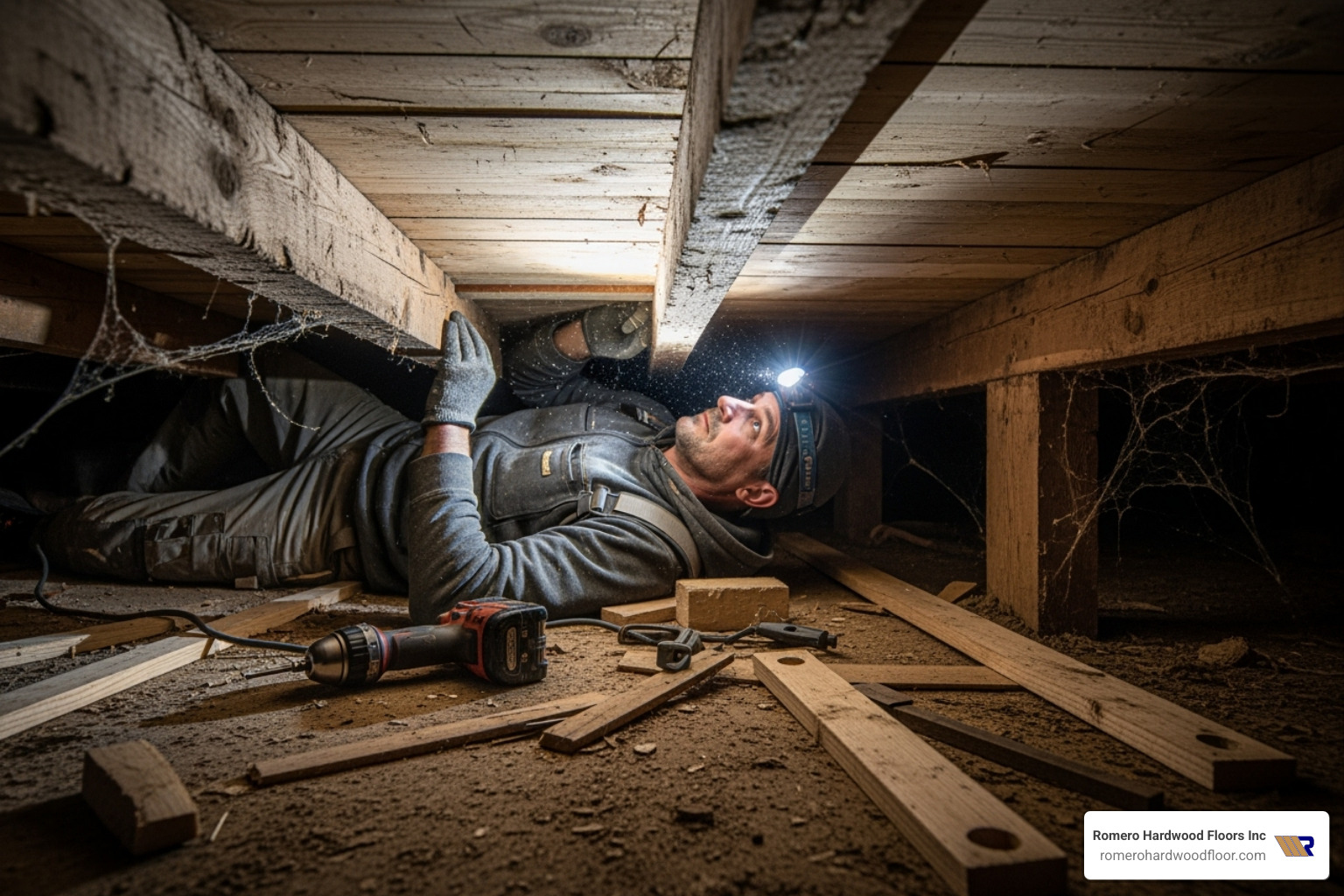
Tools Needed:
- Hammer
- Thin wood shims (cedar shingles work well)
- Construction adhesive (e.g., Liquid Nails, Loctite PL Premium)
- Drill
- Drywall screws or trim-head screws (1.5-2 inches, depending on subfloor thickness)
- Flashlight
- Safety glasses and gloves
Here are some effective methods:
- Using Shims to Fill Gaps:
- Identify the Gap: Have a helper walk on the squeaky spot above while you look for any gaps between the subfloor and the top of the joist from below.
- Insert Shims: Gently tap a thin wood shim (like a cedar shingle) into the exact source of the noise and gap. You can apply a small amount of carpenter’s glue or construction adhesive to the shim before inserting it for extra stability.
- Caution: Do not drive the shim in too far, as this can lift the finished flooring above and create new problems. The goal is to fill the gap just enough to stop the movement. If you drive it too hard, you risk creating a hump in your floor.
- Secure (Optional but Recommended): Once the shim is in place and the squeak is gone, you can optionally drive a drywall screw at an angle through the joist and shim into the subfloor for a more permanent hold.
- Using Construction Adhesive for Longer Gaps:
- For longer or wider gaps where shims might not be ideal, construction-grade adhesive can be very effective.
- Apply a bead of construction adhesive along the top of the joist where it meets the subfloor in the squeaky area. The adhesive will fill the void and bond the two surfaces, preventing movement.
- Important: Ensure you apply heavy weight to the area being glued from above until the adhesive cures, to ensure a strong bond.
- Stabilizing Warped or Noisy Joists (Cleating the Subfloor):
- If the joist itself is warped or the subfloor is moving significantly across multiple joists, you can “cleat” the subfloor.
- Method 1 (Wood Blocks): Cut 1×4 pieces of wood or similar lumber. Apply construction adhesive to one side, then screw the wood block securely to the side of the joist and firmly against the underside of the subfloor in the squeaky area. This provides additional support and prevents movement.
- Method 2 (Steel Bridging): Steel bridging can also be used between joists to stiffen the floor system and reduce flexing that causes squeaks.
- Squeak-Ender Hardware: Specialized products like the Squeak-Ender are designed for this purpose. This hardware piece screws into the subfloor and has a bracket that hooks onto the joist. By tightening a nut, it pulls the subfloor snugly against the joist, eliminating the squeak.
- Screwing from Underneath:
- If the squeak is due to the subfloor or even the hardwood planks being loose from the joists, you can drive screws from below.
- Pilot Holes: Drill pilot holes through the subfloor and into the hardwood (be careful not to drill through the finished surface!).
- Drive Screws: Use short trim-head screws to secure the subfloor and hardwood to the joist. This pulls everything together tightly.
- Caution: Take extra care not to drill too far through the finished top floor.
These methods, when performed correctly, can provide lasting relief from those annoying noises. If you’re considering a more extensive overhaul or persistent issues with your hardwood floors, we offer comprehensive More info about hardwood floor repair services in the greater Boston area.
Methods for fixing floor squeaks under hardwood from above (No Underside Access)
Sometimes, accessing the underside of your floor isn’t an option, especially in homes with finished basements or no crawl space. Don’t worry, there are still effective ways to fix floor squeaks under hardwood from above, though they require a bit more precision to maintain your floor’s aesthetics.
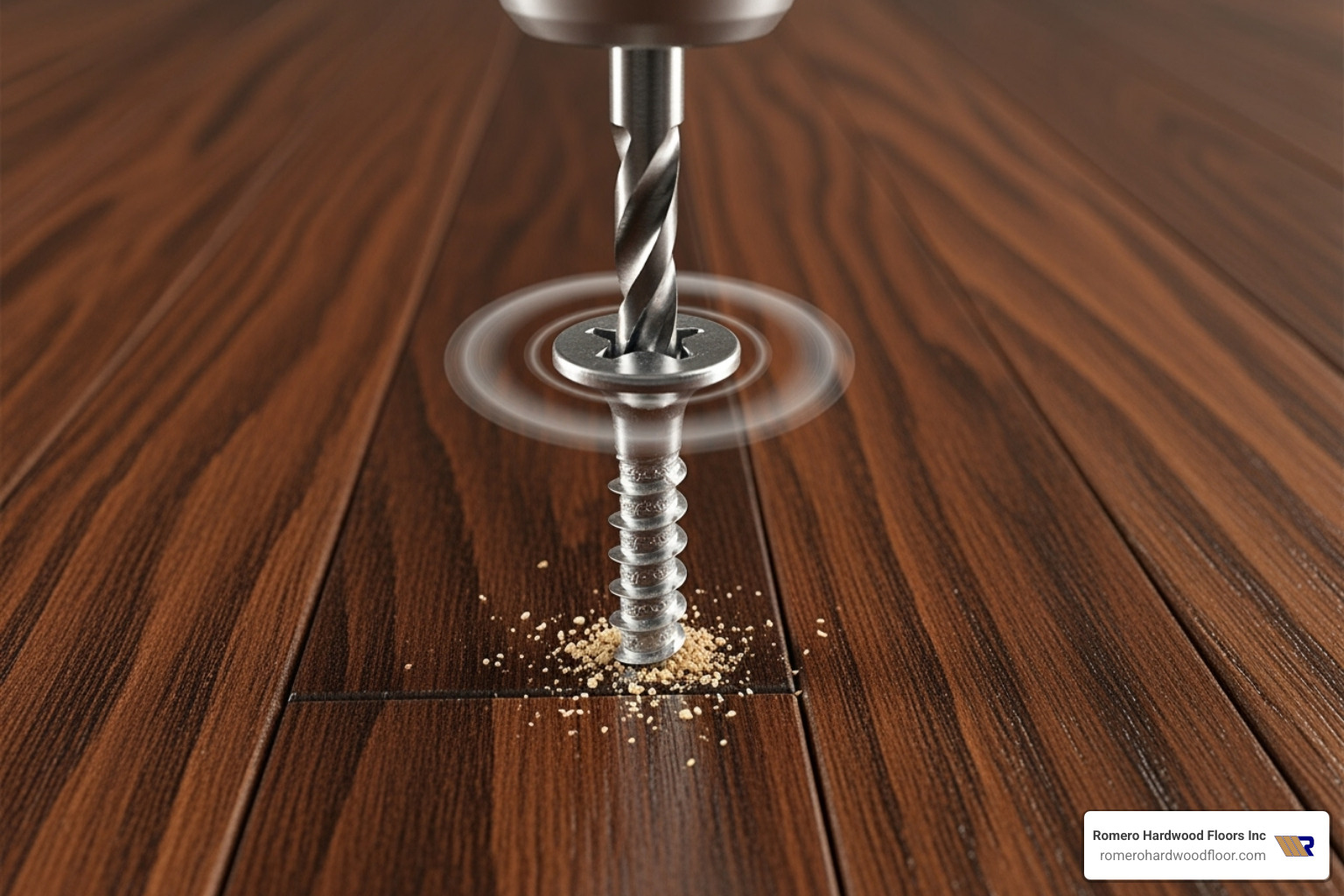
Tools Needed:
- Stud finder
- Drill
- Small drill bit (for pilot holes)
- Trim-head screws or specialized breakaway screws (like those in Counter-Snap Kit)
- Countersink bit (optional, but helpful)
- Wood putty or color-matching wood filler
- Putty knife
Here’s how to tackle squeaks from above:
- Locate Joists: The key to fixing squeaks from above is to secure the loose floorboard or subfloor directly to the joist. Use a reliable stud finder to locate the joists closest to the squeaky area. Mark their location lightly with a pencil. If your joists run parallel to the floorboards, this method may be less effective, and you might need to consider sistering a joist if possible.
- Drill Pilot Holes: Once you’ve identified the joist, drill a small pilot hole through the hardwood floor and into the joist. This prevents the hardwood from splitting when you drive the screw. Ensure the pilot hole is slightly smaller than the screw’s diameter.
- Drive Trim-Head Screws: Use specialized trim-head screws. These screws have very small heads that are designed to sink flush or just below the surface of the wood. Drive the screw until it pulls the floorboard firmly down against the subfloor and joist.
- Countersinking: If your screws don’t have self-countersinking heads, you might use a countersink bit to create a small recess for the screw head to sit flush or slightly below the surface.
- Breakaway Screws: Some kits, like the Counter-Snap Kit, come with specialized breakaway screws. You drive these screws with a depth-control fixture, and once they’ve secured the floor, the head snaps off cleanly below the surface, leaving a minimal hole.
- Conceal the Hole: After the screw is in place, fill the small hole with wood putty or a color-matching wood filler. Use a putty knife to apply and smooth it out. Once dry, you can lightly sand and potentially touch up the finish for a seamless look.
This method effectively secures loose boards and eliminates friction. While it creates small holes, with careful execution and proper concealment, the repairs are nearly undetectable. For those considering a refresh of their hardwood floors, perhaps after a series of these small repairs, we also offer exceptional More info about floor sanding and refinishing services to restore their original beauty.
Lubricating Minor Squeaks
For very minor floor squeaks under hardwood, particularly those caused by two boards rubbing together, a simple lubrication trick might do the job. This is a temporary fix, but it can offer quick relief.
- Powdered Graphite: Sprinkle powdered graphite (available at hardware stores) directly into the seam between the squeaking floorboards.
- Work it In: Use a soft cloth, an old toothbrush, or even a squeegee to gently work the graphite powder down into the crack. The graphite acts as a lubricant, reducing the friction that causes the squeak.
- Clean Up: Once the squeak subsides, vacuum up any excess powder.
A Note on Talcum Powder: While talcum powder was once a common recommendation for this purpose, we advise caution. Some talcum powder products may contain asbestos, which poses health risks. Powdered graphite is a safer and effective alternative.
This method is best for isolated, minor squeaks that are clearly originating from board-to-board friction, rather than structural issues with the subfloor or joists.
Prevention and When to Call a Professional
Fixing squeaks is satisfying, but preventing them in the first place is even better! And sometimes, despite your best DIY efforts, a squeak signals a deeper problem that requires expert attention.
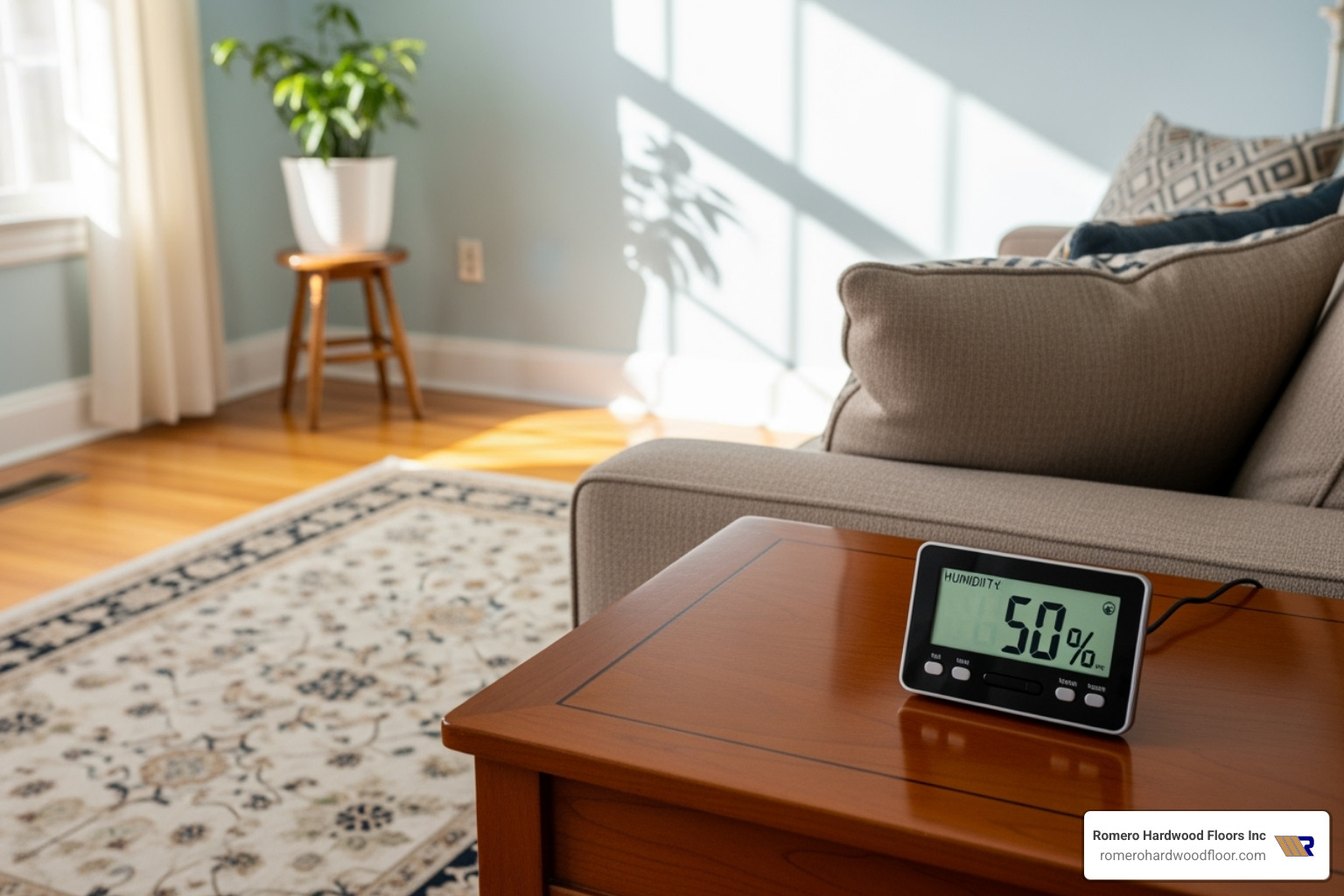
Preventative Measures for Long-Lasting, Quiet Floors
The secret to avoiding floor squeaks under hardwood isn’t magic – it’s understanding what your floors need to stay happy and quiet. Think of it like taking care of a classic car: regular maintenance and the right conditions make all the difference.
Humidity control is your first line of defense. We can’t stress this enough – wood is like a sponge that constantly breathes with the seasons. Keep your home’s humidity between 35% and 55% year-round, and you’ll dramatically reduce the expansion and contraction that leads to squeaks. A good humidifier in winter and dehumidifier in summer are small investments that pay big dividends in floor longevity.
When it comes to installation, the foundation matters tremendously. Proper subfloor preparation means ensuring everything is level, secure, and gap-free before the first hardwood plank goes down. This is where using screws instead of nails makes a huge difference – screws hold tight through years of seasonal movement, while nails can work loose over time.
Wood acclimation is another crucial step that’s often rushed. New hardwood needs time to adjust to your home’s specific temperature and humidity conditions. This patience during installation prevents major movement surprises later on.
Smart homeowners also make regular inspection part of their routine. Walk your floors occasionally and listen for new sounds. Catching a minor squeak early is much easier than dealing with a major structural issue down the road.
At Romero Hardwood Floors Inc., we’ve learned that meticulous attention to these details during installation creates floors that stay beautiful and quiet for decades. Our hardwood floor installation services focus on these preventative measures from day one, giving you peace of mind along with gorgeous floors.
When DIY Isn’t Enough: Calling a Flooring Expert
While many floor squeaks under hardwood respond well to DIY fixes, some situations call for professional expertise. Knowing when to put down the drill and pick up the phone can save you time, money, and potential headaches.
Widespread squeaking across large areas of your floor often signals something more serious than a few loose boards. When multiple rooms or entire sections start making noise, you’re likely looking at subfloor issues or even structural concerns that need professional assessment.
Watch for signs of structural damage like floors that feel bouncy underfoot, visible sagging, or areas where furniture seems to tilt slightly. These red flags suggest problems with joists or support beams that go way beyond a simple squeak fix.
Sometimes the issue isn’t complexity – it’s access. If you don’t have a basement or crawlspace, or if you’re not comfortable working with power tools, a professional can solve your squeak problems without the risk of damaging your beautiful hardwood surface.
Persistent squeaks that keep coming back after multiple DIY attempts are telling you something important: there’s an underlying cause you haven’t addressed yet. Professional flooring contractors have specialized tools and experience to diagnose these tricky situations.
Water damage deserves special mention because it can turn a simple squeak into a serious safety issue. If you suspect moisture problems – whether from past flooding, plumbing leaks, or basement seepage – don’t guess. Water damage can compromise structural integrity and create health hazards that require immediate professional attention.
At Romero Hardwood Floors Inc., we’ve been solving complex flooring puzzles since 2006 throughout Massachusetts communities like Beverly, Chelsea, and Danvers. Our team brings the right combination of experience, specialized equipment, and diagnostic skills to identify exactly what’s causing your floor squeaks under hardwood and implement lasting solutions. Sometimes the peace of mind that comes with professional expertise is worth every penny.
Conclusion
Those annoying floor squeaks under hardwood don’t have to be a permanent part of your home’s soundtrack! As we’ve finded together, most squeaks have straightforward explanations and equally straightforward solutions. Whether it’s wood naturally expanding and contracting with the seasons, loose floorboards that need securing, or gaps between your subfloor and joists, you now have the knowledge to tackle these issues head-on.
The DIY approaches we’ve covered can work wonders for many situations. From carefully placed shims in your basement to strategically driven trim-head screws from above, these methods often restore that blissful silence you’ve been missing. Even something as simple as a little powdered graphite can quiet those minor friction squeaks between boards.
But remember, prevention truly is worth a pound of cure. Keeping your home’s humidity steady between 35% and 55% is probably the single best thing you can do for your hardwood floors. It’s like giving them a comfortable environment where they won’t feel the need to move around and make noise! Proper installation techniques – like using screws instead of nails and ensuring your subfloor is rock-solid – set the stage for years of quiet walking.
Of course, sometimes those squeaks are telling you about bigger issues that need professional attention. Widespread squeaking across large areas, signs of water damage, or persistent noise after you’ve tried multiple fixes are all signals that it’s time to call in the experts.
At Romero Hardwood Floors Inc., we’ve been helping homeowners throughout the greater Boston area solve these exact problems since 2006. Our team understands that your floors are more than just a surface to walk on – they’re part of what makes your house feel like home. We’re committed to providing solutions that not only eliminate those frustrating squeaks but also preserve and improve the beauty and value of your investment.
Ready to enjoy peaceful, squeak-free floors again? Request an estimate for your flooring project and let us help you restore the quiet comfort your home deserves.
Like us on Facebook!
