
Hardwood Floor Buffing: 1-Day Flawless
Why Hardwood Floor Buffing Can Save You Thousands
Hardwood floor buffing is a cost-effective maintenance technique that removes surface scratches and restores shine without the expense of full refinishing. Here’s what you need to know:
Quick Answer for Hardwood Floor Buffing:
- What it is: Light sanding of the top finish layer followed by a new protective coat
- Best for: Surface scratches, dull finish, minor scuffs
- Cost: $50-$100 DIY vs $200-$600 professional (based on internet averages)
- Time: 6-8 hours for an average room
- Results: Restored shine and extended floor life
Hardwood floors are a beautiful investment, but daily wear can leave them dull and scratched. Fortunately, you don’t always need expensive refinishing. Buffing gently abrades the polyurethane finish—not the wood itself—creating a fresh surface for a new protective coat to bond to.
The benefits are clear:
- Extends floor life by 3-5 years
- Costs significantly less than full refinishing
- Takes one day instead of several
- Removes surface damage effectively
However, buffing won’t fix deep scratches that penetrate the wood or address water damage. These issues require professional sanding and refinishing.
I’m Francisco Romero, owner of Romero Hardwood Floors Inc. in Revere, MA. With over 15 years of experience, I’ve helped countless homeowners restore their floors with professional hardwood floor buffing and refinishing services.
Understanding Hardwood Floor Buffing vs. Sanding
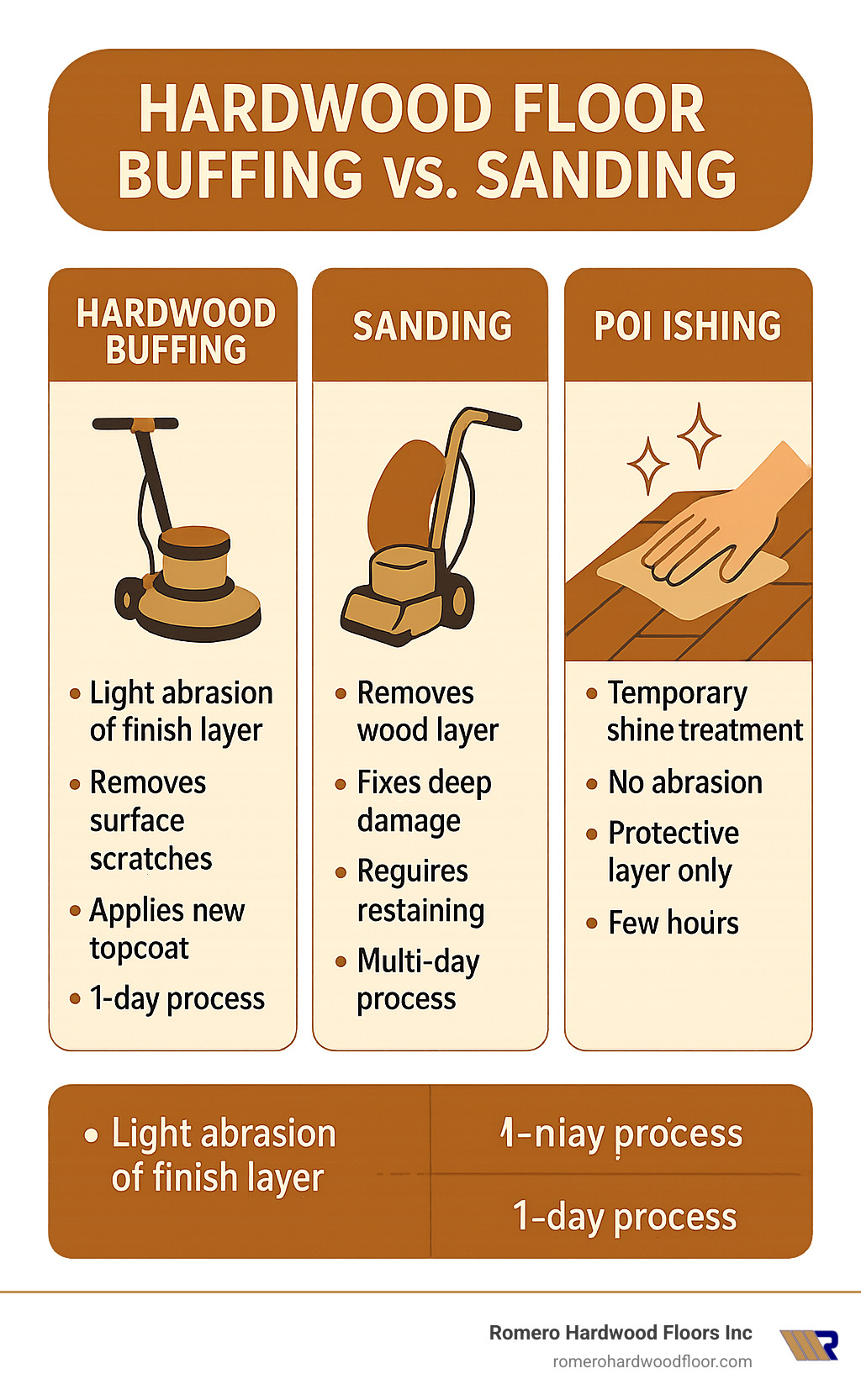
Knowing whether your floors need hardwood floor buffing or a full sanding can save you time and money. Many homeowners assume they need expensive refinishing when a simple buff and recoat would suffice.
What is Hardwood Floor Buffing?
Hardwood floor buffing, also called “screen and recoat,” is a process that refreshes your floor’s polyurethane finish. Using a floor buffer with a screening pad, we lightly scuff the existing finish. This light abrasion creates a texture that helps a fresh coat of polyurethane bond properly to the surface.
The key is that we’re only touching the finish layer, never the actual wood. This makes it perfect for removing surface scratches, restoring shine, and extending the life of your floors. If your floors look tired but the wood underneath is undamaged, buffing is an excellent, cost-effective solution.
Buffing vs. Sanding: Knowing the Difference
The primary difference is depth. Buffing is a surface-level treatment that smooths minor scratches and scuffs within the polyurethane layer. It’s a quick, one-day process.
Sanding, however, removes a thin layer of the wood itself. This is necessary for deep scratches you can feel with a fingernail, stubborn stains, or areas where the finish has worn away to bare wood. Sanding is also required to fix water damage that’s created gray patches or to change the floor’s color. It’s a more intensive, multi-day process.
When to Call a Pro
While buffing can be a DIY project, some situations require professional help. Deep scratches that catch your fingernail, visible bare wood, or gray patches from water damage are signs that buffing won’t be enough. If the damage is more than just a dull finish or light scuffs, it’s time to call an expert. At Romero Hardwood Floors Inc., we can assess your floors and determine if they need a simple buff or our more intensive Floor Sanding and Refinishing services.
Benefits of Buffing
The main benefits of hardwood floor buffing are improved floor longevity and significant cost savings. Regular buffing protects the wood from moisture and wear, preventing more expensive repairs. It typically costs a fraction of a full sand and refinish and is completed in a single day with minimal disruption. A fresh coat of polyurethane also helps seal out allergens and makes cleaning easier.
Gearing Up: Tools and Supplies for Your Buffing Project
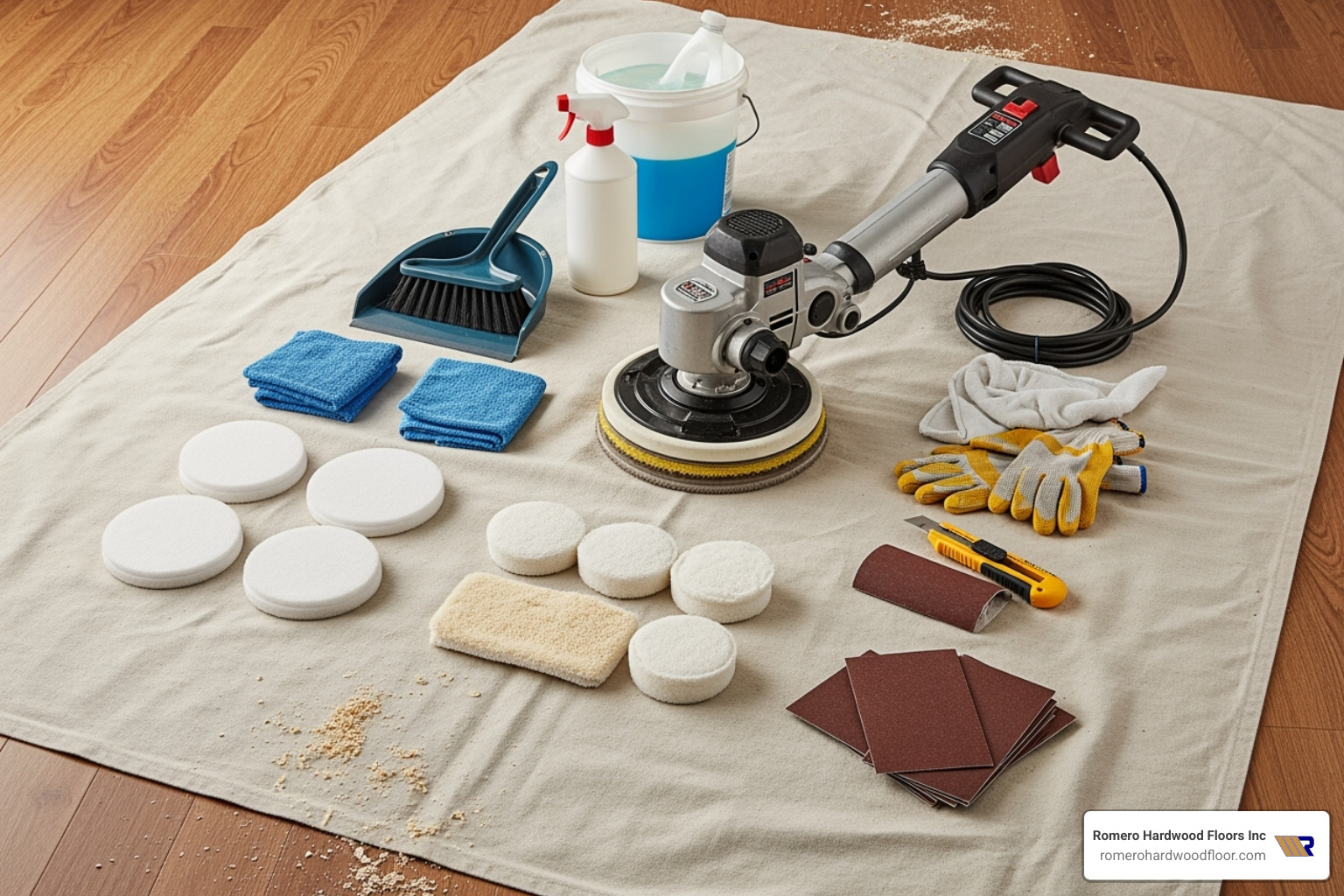
Proper preparation is key to a smooth hardwood floor buffing project. Gather all your tools and supplies before you begin to avoid interruptions.
Essential Equipment
- Floor Buffer Machine: Rent this tool. Orbital buffers (or square buffers) are user-friendly and great for beginners, as their random pattern prevents swirl marks. Rotary buffers are powerful but require more skill to control.
- Buffing Pads: You’ll need screening pads (120-180 grit) to abrade the old finish and soft white polishing pads for applying the new coat.
Cleaning and Prep Supplies
- pH-Neutral Hardwood Floor Cleaner: Crucial for prepping the floor. Avoid any cleaners with wax, silicone, or oil, as they will prevent the new finish from adhering.
- Shop Vacuum: Necessary for thorough dust removal after screening.
- Tack Cloths: To pick up the finest dust particles your vacuum might miss.
- Painter’s Tape & Plastic Sheeting: To protect baseboards and contain dust.
Finishing and Safety
- Water-Based Polyurethane: Dries faster and has fewer fumes than oil-based options. Choose your desired sheen (satin, semi-gloss, or gloss).
- Applicator Pad or T-Bar: For a smooth, even application of the finish.
- Safety Gear: Don’t skip safety glasses, a dust mask (N95 or better), and gloves.
- Ventilation: Open windows and use fans to ensure good airflow for drying and safety.
Other Helpful Tools
- Utility Knife/Scraper: For removing dried paint or debris.
- Small Brushes: For applying finish in corners.
- Extension Cord: A heavy-duty cord for the buffer.
- Microfiber Mops/Cloths: For lint-free cleaning.
The Complete DIY Hardwood Floor Buffing Process
With patience and the right technique, you can achieve a professional-looking finish. Follow these steps for a successful hardwood floor buffing project.
Step 1: Prepare the Room and Floor for Buffing
Proper preparation is the key to a great result.
- Clear the Room: Remove all furniture, area rugs, and curtains.
- Protect Surfaces: Apply painter’s tape to baseboards and hang plastic sheeting in doorways to contain dust.
- Inspect the Floor: Use a nail set to sink any protruding nails or staples. Scrape off any dried paint or debris.
- Clean Thoroughly: This is the most critical prep step. First, sweep and vacuum every corner to remove all grit. Any debris left behind will get ground into the floor during buffing.
- Deep Clean: Use a pH-neutral hardwood floor cleaner recommended for polyurethane finishes, with a lightly dampened microfiber mop. Never flood the floor with water. Let it dry completely before proceeding.
Step 2: The Proper Technique for Hardwood Floor Buffing
This is where the change happens. Always wear your safety gear (glasses, mask, gloves) and ensure good ventilation.
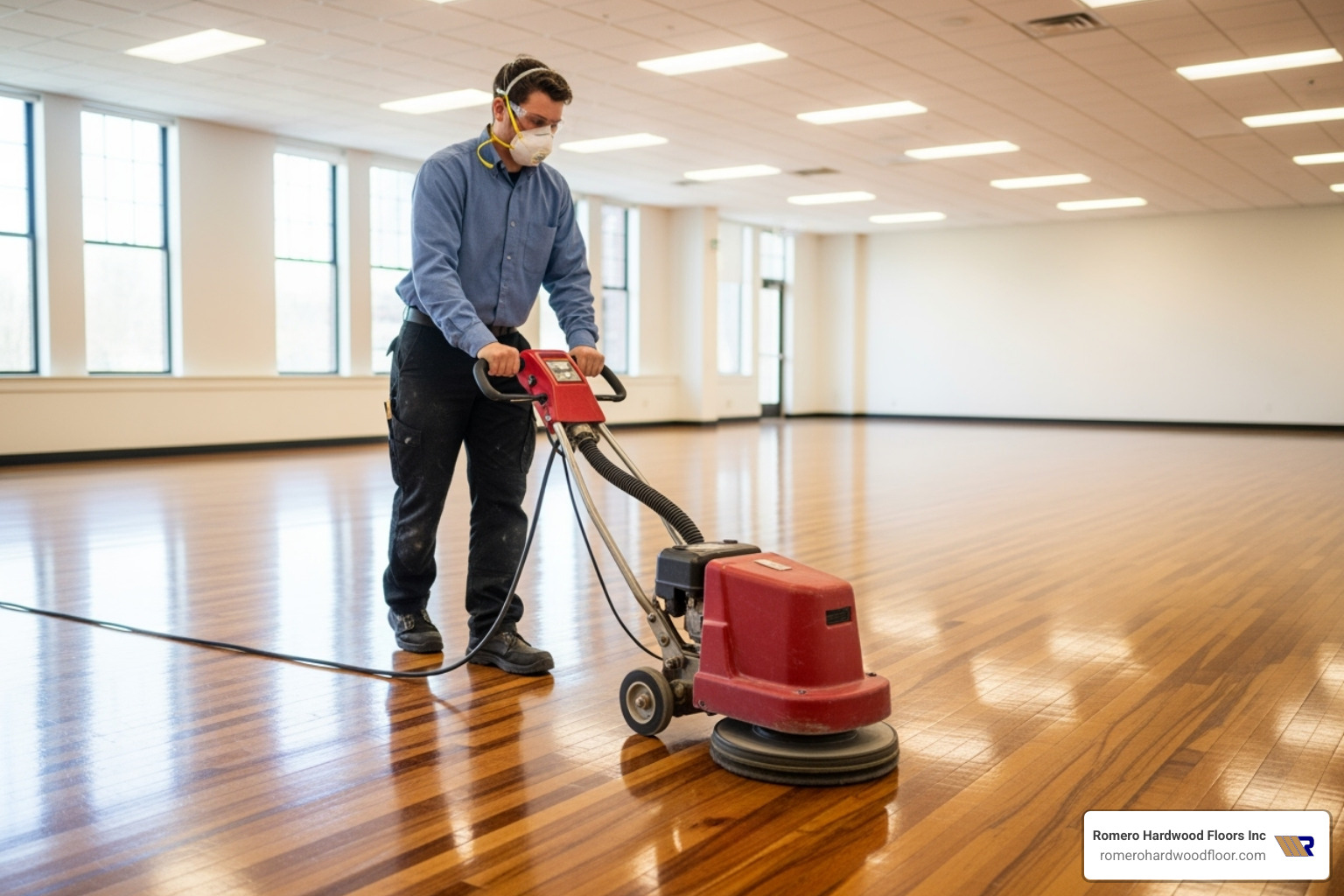
- Attach the Pad: Attach a 120-180 grit screening pad to the buffer.
- Plan Your Route: Start in the corner farthest from your exit and work your way out.
- Operate the Buffer: Use steady, side-to-side motions, overlapping each pass by about half the machine’s width. If using a rotary buffer, apply gentle counter-pressure to move in a straight line. An orbital buffer is more forgiving and less likely to leave swirl marks.
- Keep Moving: Never let the buffer rest in one spot while it’s running, as this will create an uneven patch. Let the machine’s weight do the work; don’t apply extra pressure. The goal is an evenly dull, opaque finish.
- Do the Edges: Hand-sand corners and edges with 180-220 grit sandpaper where the machine can’t reach.
- Check Your Pads: Replace screening pads when they become clogged or torn.
Step 3: Clean Up and Apply the New Finish Coat
This final cleaning is crucial. Any remaining dust will be sealed into the new finish.
- Vacuum Everything: Use a shop vacuum on the floor, baseboards, and windowsills. Pay close attention to gaps between floorboards.
- Use Tack Cloths: Wipe the entire floor with tack cloths to pick up the finest dust particles.
- Apply the Finish: Gently stir (never shake) your polyurethane. Pour a small amount on the floor and spread it evenly with a T-bar applicator, moving with the wood grain. Maintain a “wet edge” by overlapping each pass while it’s still wet to avoid lap lines.
- Apply a Second Coat (Recommended): For best results and durability, let the first coat dry (usually 2-4 hours), then lightly screen it with a fine-grit (220-grit) pad. Vacuum and tack cloth again before applying the final coat.
After the Buff: Curing Times and Cost Analysis
After buffing, patience is crucial for a durable finish. It’s tempting to use the room immediately, but waiting for the finish to cure properly is essential.
Drying and Curing: When Can You Use the Room?
There’s a critical difference between “dry to the touch” and fully cured. High humidity or cool temperatures can extend these times.
- Dry to the Touch: Water-based polyurethane feels dry in 2-4 hours, but the finish is still soft.
- Light Foot Traffic: Wait 4-6 hours before walking on the floor in socks only.
- Moving Furniture: Wait at least 24-72 hours. Always lift furniture; never drag it. Apply felt pads to all furniture legs.
- Full Cure: The finish continues to harden for 5-14 days. Avoid placing area rugs or using harsh cleaners during this period.
DIY vs. Professional Hardwood Floor Buffing Costs
Let’s break down the costs of DIY versus professional hardwood floor buffing.
| Feature | DIY Hardwood Floor Buffing | Professional Hardwood Floor Buffing |
|---|---|---|
| Cost | Low: $50 – $100 (for an average room, mostly rental & supplies) | Moderate: $1.00 – $4.00 per square foot ($200 – $600 per room) |
| Time | 6-8 hours (working time) + drying/curing | 1 day (for service) + drying/curing |
| Skill Level | Intermediate (requires patience and attention to detail) | Expert (trained technicians, specialized equipment) |
| Typical Results | Good to Excellent (with proper technique) | Excellent to Flawless (consistent, durable finish) |
DIY Costs: Expect to spend $50 to $100 for an average room, which covers machine rental (under $50/day) and supplies (polyurethane, pads, cleaner, etc.).
Professional Costs: Based on internet averages, professional services range from $1.00 to $4.00 per square foot. Some high-end or complex jobs can cost up to $8.00 per square foot. For a typical room, this translates to $200 to $600, though costs can reach $1,800 or more for floors needing extensive prep.
All prices are based on internet averages and do not reflect actual costs for Romero Hardwood Floors Inc. Please contact us for a personalized quote.
The DIY route saves money, but professional expertise ensures consistent results and helps avoid costly mistakes, offering peace of mind for your investment.
Frequently Asked Questions about Buffing Hardwood Floors
Here are answers to some of the most common questions about hardwood floor buffing.
Will buffing remove all scratches from my hardwood floor?
No, buffing only removes surface-level scratches that are in the polyurethane finish. If you can run your fingernail over a scratch without it catching, buffing will likely remove it.
However, buffing cannot fix deep gouges that have penetrated the finish and damaged the wood itself. These deeper issues require more intensive solutions like our Hardwood Floor Scratch Repair services. For comprehensive solutions, we also offer Fixing Scratched Floors and Hardwood Floor Clear Coat Repair.
How often should I buff my hardwood floors?
The frequency depends on foot traffic.
- High-traffic areas (kitchens, hallways): Every 1-2 years.
- Average-use rooms (living rooms, bedrooms): Every 3-5 years.
The key is to be proactive. Buff your floors when you first notice widespread dullness or minor scratches, before the finish wears through. Proper maintenance as outlined in our Hardwood Floor Care Guide can also extend the time between buffing sessions.
What’s the difference between buffing and polishing?
These terms are often confused, but they are very different.
- Buffing is an abrasive process. It uses a screening pad to lightly scuff the existing finish to prepare it for a new, durable coat of polyurethane. It’s a restorative maintenance step.
- Polishing is a non-abrasive treatment. It involves applying a product to add temporary shine. Polishes do not fix wear and can sometimes cause buildup or cloudiness on polyurethane finishes.
For lasting protection and a restored appearance, hardwood floor buffing with a new topcoat is the correct professional procedure.
Conclusion
You now have the knowledge to tackle hardwood floor buffing as a rewarding DIY project that can save you money and restore your floor’s shine. By abrading only the finish and applying a new protective coat, this one-day project can extend your floor’s life by 3-5 years.
However, knowing your limits is crucial. Hardwood floor buffing is ideal for surface scratches and dullness. For deep gouges, water damage with gray patches, or areas worn to bare wood, professional help is necessary.
At Romero Hardwood Floors Inc., we have been the trusted flooring specialists in Revere, MA, since 2006. Our team serves homeowners throughout Beverly, Chelsea, Danvers, Gloucester, Lynnfield, Malden, Manchester by the Sea, Marblehead, Medford, Melrose, Nahant, Peabody, Reading, Rockport, Salem, Saugus, Somerville, Stoneham, Swampscott, Wakefield, Winchester, Winthrop, and Woburn.
We understand that some damage goes beyond what buffing can fix. Our expertise in comprehensive floor restoration combines competitive pricing with guaranteed workmanship to protect your investment. Whether you choose the DIY route or need a professional assessment, taking action before minor issues become major problems is key.
For a professional evaluation and flawless results, explore our Floor Sanding and Refinishing services. We also offer specialized Floor Resurfacing and Floor Sanding and Repair for more complex situations.
Like us on Facebook!
