Signs of mold under hardwood floors: 3 Essential Tips
Hidden Dangers Beneath Your Beautiful Hardwood
Signs of mold under hardwood floors can be subtle at first, but they signal a serious problem that demands immediate attention. Mold can begin growing within just 24-72 hours when moisture levels exceed 16%, making early detection crucial for protecting both your health and your flooring investment.
Quick Reference: Key Signs to Watch For
Visual Signs:
- Dark spots or discoloration on floorboards
- Warping, cupping, or buckling of planks
- Peeling or flaking finish
- Gaps appearing between boards
Non-Visual Signs:
- Persistent musty or earthy odor
- Soft or spongy spots when walking
- Increased allergy symptoms or respiratory issues
- Insect infestations (carpenter ants, termites)
Environmental Indicators:
- Recent water damage or leaks
- High humidity levels (above 60%)
- Poor ventilation in the affected area
Imagine walking into your home one morning and noticing a musty odor that wasn’t there before. As days pass, the smell persists and intensifies. Some family members start experiencing respiratory issues, and you notice the hardwood floors feel slightly damp with visible discoloration. This scenario plays out more often than you might think.
The challenge with mold under hardwood floors is that it often develops in hidden spaces where moisture can accumulate undetected. Wood is naturally porous, absorbing moisture from leaks, spills, high humidity, or condensation. Once moisture penetration occurs, mold spores can colonize quickly in these dark, damp conditions beneath your floors.
As Francisco Romero, owner of Romero Hardwood Floors Inc. with over 15 years of experience, I’ve helped countless homeowners identify signs of mold under hardwood floors and restore their properties to safe, beautiful condition. Through my extensive work in the Revere, MA area, I’ve learned that early detection and professional assessment are key to preventing costly damage and health risks.
Signs of mold under hardwood floors vocab to learn:
What Causes Mold to Grow Under Hardwood Floors?
Understanding why mold takes hold beneath your beautiful hardwood floors starts with one simple truth: moisture is the enemy. While we often think of dramatic flooding or burst pipes as the main culprits, the reality is that mold can begin its unwelcome journey with surprisingly small amounts of water.
Wood is naturally porous, which makes it both beautiful and vulnerable. When your hardwood floors absorb moisture—whether from a tiny leak you haven’t noticed yet or humidity that’s just a bit too high—they create the perfect environment for mold spores to settle in and multiply.
Water leaks are the most obvious troublemakers. That slow drip from your dishwasher, the washing machine that occasionally overflows, or even a roof leak that only shows up during heavy storms can silently seep beneath your floors. These hidden moisture sources often go undetected for weeks or months, giving mold plenty of time to establish itself in the dark spaces under your flooring.
But here’s what catches many homeowners off guard: high humidity alone can trigger signs of mold under hardwood floors. When indoor humidity consistently stays above 60%—or even above 55% in some cases—moisture naturally penetrates the wood. This causes floorboards to swell and creates those damp conditions mold absolutely loves. We always recommend keeping your home’s humidity between 30% and 50% for optimal floor health.
Don’t underestimate the impact of everyday spills and condensation either. That overwatered plant, your pet’s water bowl getting knocked over, or wet feet after a shower might seem harmless. However, if moisture isn’t cleaned up promptly, it can seep into the wood and start the mold growth process.
Poor ventilation makes everything worse by trapping moisture in place. Basements, crawl spaces, and areas with limited airflow become stagnant humidity traps. Without proper air circulation, even small amounts of moisture linger much longer than they should.
The subfloor condition plays a crucial role too. If moisture has already compromised the subfloor beneath your hardwood, it creates a direct pathway for mold to spread upward into your beautiful flooring.
Here’s the concerning part: when wood floors are exposed to moisture, they can absorb water until their moisture content jumps from a normal 12% to dangerous levels above 15%—the point where mold growth becomes likely. In flood conditions, moisture content can skyrocket to 40% or more, making mold almost inevitable without immediate professional intervention.
The good news? Understanding these causes puts you ahead of the game in prevention and early detection. For comprehensive solutions when moisture damage occurs, our Hardwood Floor Water Damage Repair services can help restore your floors to their original beauty.
Telltale Signs of Mold Under Hardwood Floors
Your floors are trying to tell you something important. Mold might be a sneaky intruder, but it rarely goes completely unnoticed. The trick is knowing what to look for before a small problem becomes a big headache.
Visual Signs of Mold Under Hardwood Floors
Sometimes the signs of mold under hardwood floors are right there in front of you, even when the mold itself is hiding beneath the surface.
Discoloration and dark spots are often your first warning. These can appear as black, brown, green, or even white patches on your floorboards. You might notice them as small clusters near baseboards or corners, or as larger grayish areas that make the wood look permanently damp. The mold enzymes actually break down the wood material, causing these telltale stains.
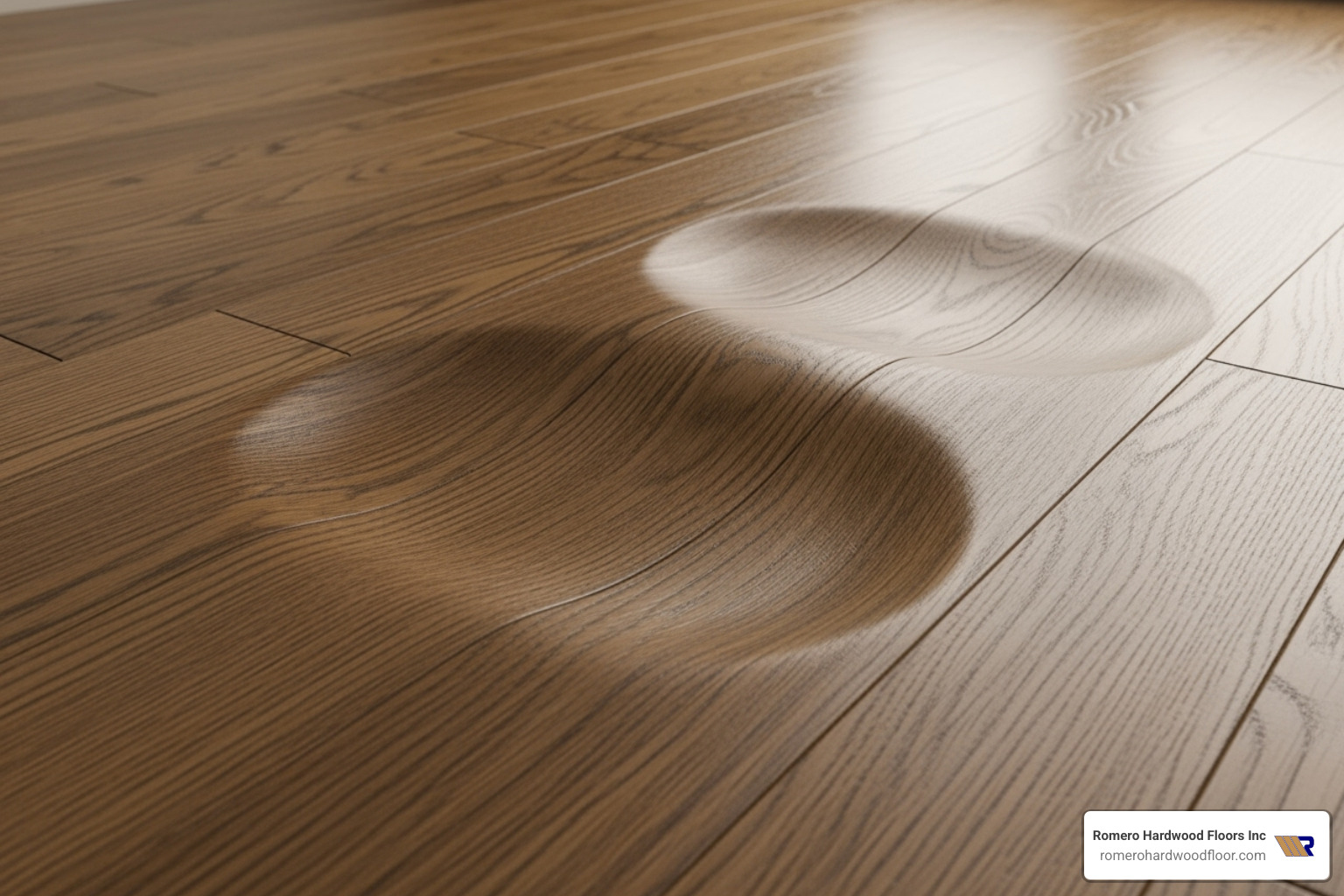
Warping and cupping are classic red flags that moisture has invaded your floors. When you see cupping, the edges of your floorboards curl up, creating a washboard effect. This happens when moisture gets to the unfinished bottom of the boards, causing them to expand more than the finished top. Buckling is even more dramatic—boards can actually lift 4 to 5 inches off the subfloor. If you’re dealing with these issues, our guides on fixing warped hardwood floors and how to repair buckled hardwood floors can help you understand your options.
Peeling or flaking finish tells another part of the story. When mold grows beneath your floors, it weakens the bond between the wood and its protective coating. You’ll see the finish bubble, peel, or chip away, especially in areas where moisture has been lurking.
Gaps between boards can be tricky to interpret. While gaps sometimes mean the wood is drying out, they can also signal that boards have swelled from moisture and pushed against each other, creating unusual spacing patterns.
In advanced cases, you might actually see the mold itself—fuzzy, powdery, or slimy textures on the wood surface or around board edges. If you clean these areas and they reappear within days, you’re looking at active mold growth.
Non-Visual Signs of Mold Under Hardwood Floors
Your nose often knows there’s trouble before your eyes catch on. That persistent musty or earthy smell is mold’s calling card. It’s produced by microbial volatile organic compounds (MVOCs) that create a very distinct odor—like rotting leaves, a damp basement, or sometimes even sweaty socks. When mold is just starting to form, this slightly earthy, stale scent lingers until it’s properly treated. Once you smell it, regular cleaning and airing out the room won’t make it disappear.
Soft or spongy spots under your feet are serious warning signs. When you walk across your floor and feel areas that give way or feel springy, moisture has likely broken down the wood fibers. This often means wood rot is setting in, and mold isn’t far behind.
Unexplained health symptoms can be your body’s way of alerting you to mold exposure. If family members start experiencing persistent sneezing, runny noses, skin rashes, or asthma attacks when they’re in certain rooms, airborne mold spores could be the culprit. These symptoms are especially telling if they improve when you leave the house.
Insect infestations might seem unrelated, but carpenter ants and termites love wet, decaying wood. An unusual increase in these pests, especially combined with other warning signs, often points to moisture and mold problems in your subfloor or floorboards.
The key is not to ignore these signs of mold under hardwood floors. Early detection can save you thousands in repairs and protect your family’s health. Trust your senses—if something seems off with your floors, it probably is.
The Unseen Dangers: Health Risks and Common Mold Types
When you find signs of mold under hardwood floors, you’re not just looking at a cosmetic issue that needs cleaning up. You’re facing a serious health threat that can affect everyone in your home, especially children, elderly family members, and anyone with breathing problems.
The scary truth? Mold doesn’t need to be visible to make you sick. Those tiny spores floating around can trigger problems even when the mold is hiding beneath your beautiful hardwood floors.
Health Risks of Mold Exposure
Mold releases allergens, irritants, and in some cases, toxic substances called mycotoxins into your home’s air. The U.S. Environmental Protection Agency takes mold exposure seriously, and for good reason.
Allergic reactions are the most common problem we see with our customers. If family members suddenly start experiencing persistent sneezing, runny or stuffy noses, or red, watery eyes that seem to get worse at home, mold could be the culprit. Many homeowners also notice skin rashes or sore throats that don’t seem to go away with typical treatments.
Respiratory problems can be even more concerning. When mold spores get into your lungs, they can cause persistent coughing, wheezing, and shortness of breath. For family members with asthma, mold exposure often triggers severe asthma attacks that require immediate medical attention.
Here’s what really worries us as flooring professionals: people with weakened immune systems, chronic lung disease, or other health conditions face much more serious risks. Exposure to black mold can cause shortness of breath and chest tightness, and it may even lead to fungal infections for those with compromised immune systems. Even worse, dead mold spores can still trigger health problems, which is why proper professional remediation is so important.
If you’re experiencing any of these symptoms and suspect mold damage, don’t wait to address it. Our hardwood floor damage repair services can help restore your home to a safe, healthy condition.
Common Molds Found Under Floors
Not all mold is created equal. Some types are more dangerous than others, and knowing what you might be dealing with can help you understand the urgency of the situation.
Stachybotrys chartarum, also known as black mold, is the one that makes headlines, and for good reason. This greenish-black, slimy mold releases mycotoxins that can cause serious neurological problems, severe breathing issues, and in extreme cases, can even be fatal. It loves the cellulose in wood, making your hardwood floors a perfect target. If you see anything that looks like greenish-black slime, don’t try to handle it yourself—call a professional immediately.
Aspergillus is probably the most common mold we encounter under floors. It’s a chameleon that can appear white, yellow, green, brown, or black. While it might not sound as scary as black mold, it can still trigger serious allergic reactions and breathing problems, especially if you’re sensitive to mold.
Penicillium typically shows up as blue or green fuzzy patches. Yes, this is related to the antibiotic, but that doesn’t make it harmless in your home. It spreads quickly and can cause allergic reactions and worsen asthma symptoms.
White mold can be tricky because homeowners often mistake it for salt deposits or regular mildew. It appears as fuzzy or powdery white patches and thrives in the cool, damp conditions often found under hardwood floors. Common white mold species include certain types of Penicillium, Cladosporium, and Aspergillus.
Green mold encompasses several species that can appear as fuzzy or powdery green patches. Like white mold, this category includes various Penicillium, Cladosporium, and Aspergillus species.
Mold isn’t always the dramatic black or green you see in scary photos. Some species appear brown, yellow, or even orange. The key is that any unusual discoloration, especially when combined with musty odors or health symptoms, deserves immediate professional attention.
The bottom line? When you spot signs of mold under hardwood floors, you’re not just protecting your investment in beautiful flooring—you’re protecting your family’s health.
What to Do When You Suspect Mold
Finding signs of mold under hardwood floors can feel overwhelming, but don’t panic. Taking swift, smart action is your best defense against both health risks and costly damage. The key is knowing how to investigate without causing unnecessary destruction to your beautiful floors.
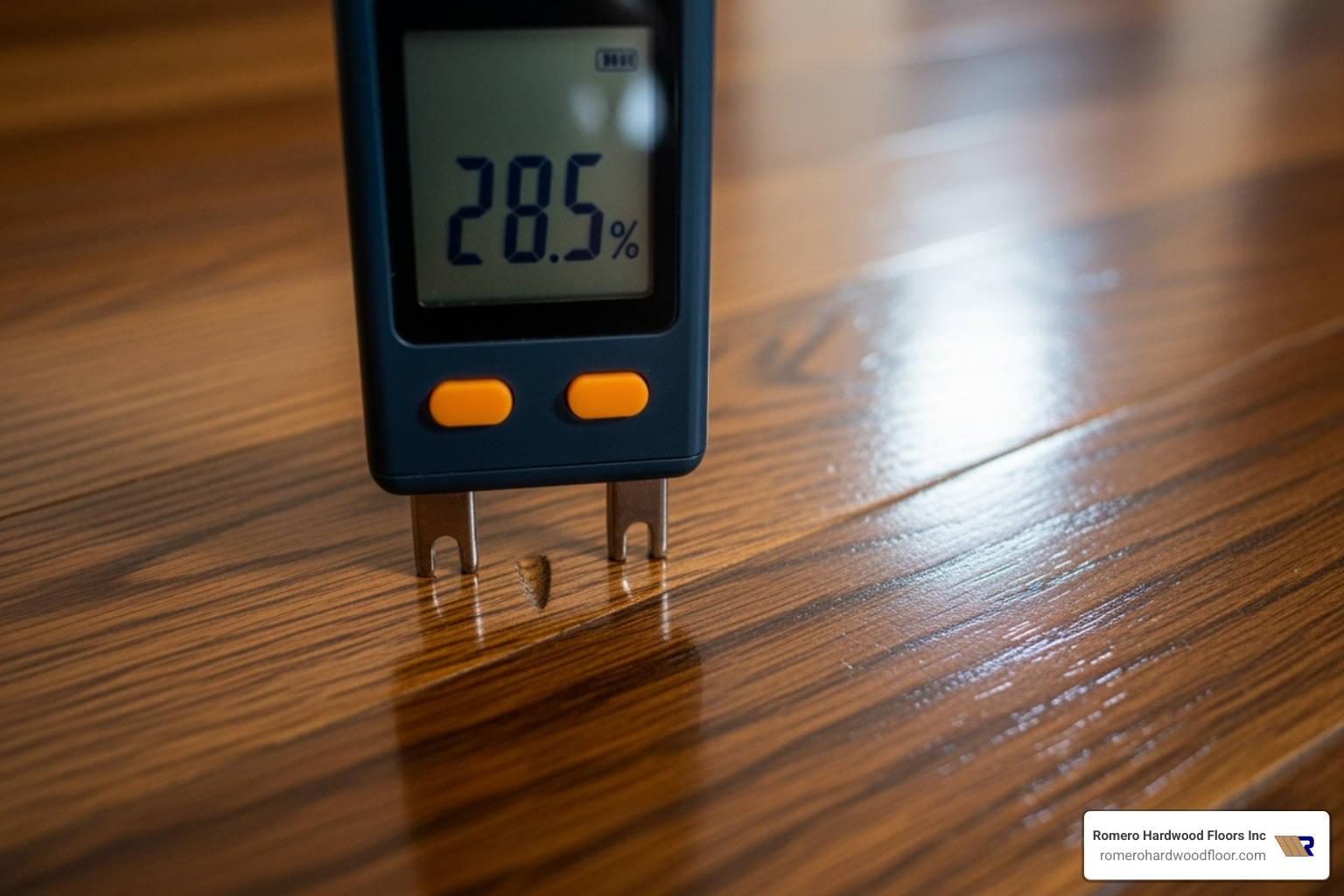
Detecting Mold Without Destroying Your Floors
Before you grab a crowbar and start ripping up planks, there are several detective tools that can help you confirm your suspicions without damaging your investment.
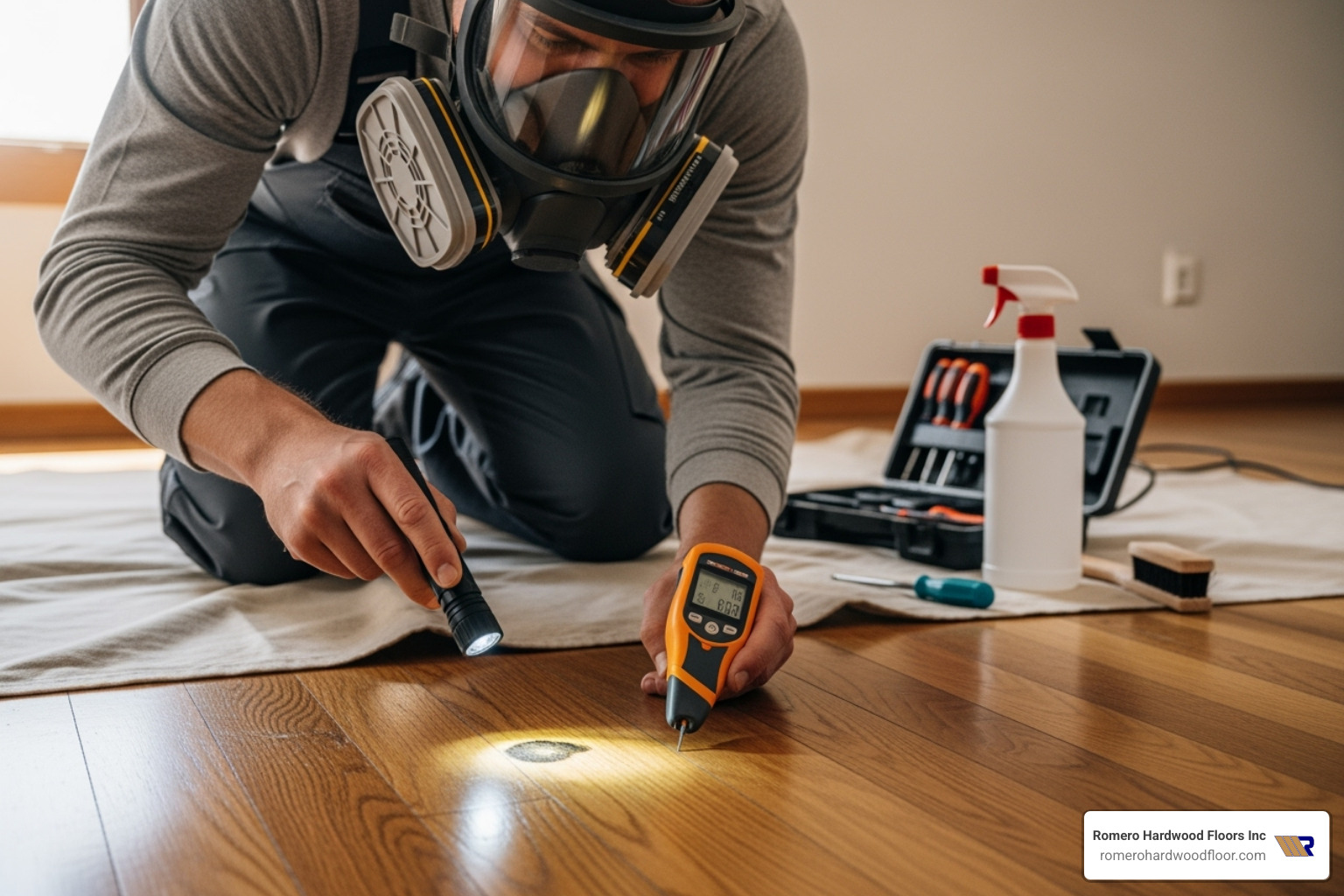
A moisture meter is absolutely your best friend in this situation. This handy device can detect liftd moisture levels in your floorboards and subfloor without any invasive testing. When readings climb above 15%, you’re looking at conditions ripe for mold growth. Anything over 20% is a serious red flag that demands immediate attention.
Thermal imaging cameras offer another high-tech solution. Since mold typically retains moisture, it often appears as cooler spots in thermal images. These cameras can reveal hidden moisture pockets behind walls or beneath flooring, giving you a clear picture of the problem areas.
Sometimes the simplest approach works best. Carefully removing a section of baseboard or quarter-round trim in a corner or less visible area can provide a small window to peek underneath your flooring. This gives you visual access to inspect the subfloor or the underside of your hardwood planks without major disruption.
For a more thorough investigation, consider a professional inspection. At Romero Hardwood Floors, we can assist with non-destructive inspection and assessment, using advanced tools and years of experience to locate hidden moisture and potential mold growth. Sometimes having expert eyes on the problem saves both time and money in the long run.
DIY Treatment vs. Calling a Professional
Once you’ve confirmed mold presence, you’ll face the big question: can you handle this yourself, or is it time to call in the professionals?
The EPA has a helpful guideline: mold outbreaks under 10 square feet that are localized to one area might be suitable for DIY treatment. If you’re dealing with a small, surface-level patch from a recent spill, you might tackle it yourself.
For minor DIY attempts, start with safety gear including plastic work gloves, eye protection, and a respirator mask. Ventilation is crucial—open windows and doors while using fans to maximize airflow. Clean affected areas with equal parts warm water and white vinegar, which penetrates porous wood better than bleach. For stubborn spots, try a baking soda paste. Thorough drying is essential—use fans and dehumidifiers until your moisture meter confirms levels below 15%. Most importantly, fix the moisture source that caused the problem in the first place.
However, many situations call for professional help. Extensive damage covering more than 10 square feet, suspected black mold, persistent musty odors, or ongoing health symptoms all warrant expert intervention. If you suspect HVAC contamination or have a history of significant water damage, don’t risk DIY methods.
For significant or persistent mold issues, or if you suspect mold has spread beneath the floor or into the subfloor, contact Romero Hardwood Floors for professional assistance. We understand the complexity of signs of mold under hardwood floors and can provide comprehensive solutions.
Professional Inspection and Remediation Costs
Understanding potential costs helps you plan and make informed decisions. The cost for professional services can vary widely based on the severity, location, and extent of the mold damage.
A professional mold inspection will include a thorough visual assessment, moisture readings, and sometimes air or surface sampling to identify the type and extent of mold present.
Mold remediation costs are influenced by several factors, including the type of mold involved, the size of the affected area, how accessible the mold is, and whether structural repairs like flooring or subfloor removal are needed. For example, extensive infestations or the presence of certain types of mold may require additional safety precautions, affecting the overall price.
For an accurate estimate tailored to your specific situation, it’s best to schedule a professional assessment. Addressing mold problems early almost always costs less than waiting until the damage spreads. When you catch signs of mold under hardwood floors quickly, you’re protecting both your health and your wallet.
How to Prevent Future Mold Growth
Think of mold prevention like brushing your teeth—it’s so much easier (and cheaper!) than dealing with cavities later. Once you’ve tackled existing signs of mold under hardwood floors, the real victory comes from making sure it never comes back.
The golden rule of mold prevention is simple: control moisture. Mold needs water to survive, so cut off its supply and you’ve won half the battle.
Humidity control is your first line of defense. Keep your indoor humidity between 30% and 50%—this sweet spot makes your home comfortable for you but uninhabitable for mold. Invest in a good dehumidifier for humid climates or during those sticky summer months. Basements and crawl spaces especially benefit from these moisture-fighting heroes. Don’t forget about proper ventilation either—use exhaust fans in bathrooms and kitchens, open windows when weather permits, and keep air moving with fans.
Water leaks are mold’s best friend, so become a detective in your own home. Prompt leak repair isn’t just good housekeeping—it’s essential mold prevention. Check under sinks monthly, inspect around toilets and bathtubs, and keep an eye on appliance connections. Even that tiny drip from your refrigerator’s ice maker can create a mold paradise if left unchecked.
When spills happen (and they will), act fast. Immediate cleanup means grabbing that towel within minutes, not hours. Never let water sit on your hardwood floors, and avoid using excessive water when cleaning. A damp mop that’s well-wrung is your friend; a soaking wet one is mold’s invitation to the party.
Regular inspections should become part of your routine. Walk around your home monthly, especially in moisture-prone areas. Look for any discoloration, check for soft spots, and trust your nose—that musty smell is often the first warning sign.
Consider investing in water-resistant sealers during your next floor refinishing. These protective coatings act like an umbrella for your wood, giving you extra time to clean up spills before they penetrate. Romero Hardwood Floors offers Hardwood Floor Repair and Refinishing services that include protective sealing options during our Floor Staining processes.
Don’t overlook your crawl space maintenance. These forgotten areas under your home can be moisture magnets. Ensure they’re well-ventilated and dry, and check them seasonally for any signs of water intrusion or excessive dampness.
Finally, think about airflow throughout your home. Avoid cramming closets too tightly—clothes and belongings need breathing room too. Blocked vents and restricted air circulation create those stagnant pockets where mold loves to set up shop.
Prevention might not be as exciting as dramatic before-and-after photos, but it’s infinitely more rewarding than dealing with mold damage. A little vigilance now saves you from major headaches (and expenses) down the road.
Frequently Asked Questions about Mold Under Floors
When homeowners find potential signs of mold under hardwood floors, they often have urgent questions that need clear, honest answers. After helping countless families in the Revere area deal with these situations, I’ve noticed the same concerns come up repeatedly. Let me address the most common questions we hear.
How fast does mold grow under hardwood floors?
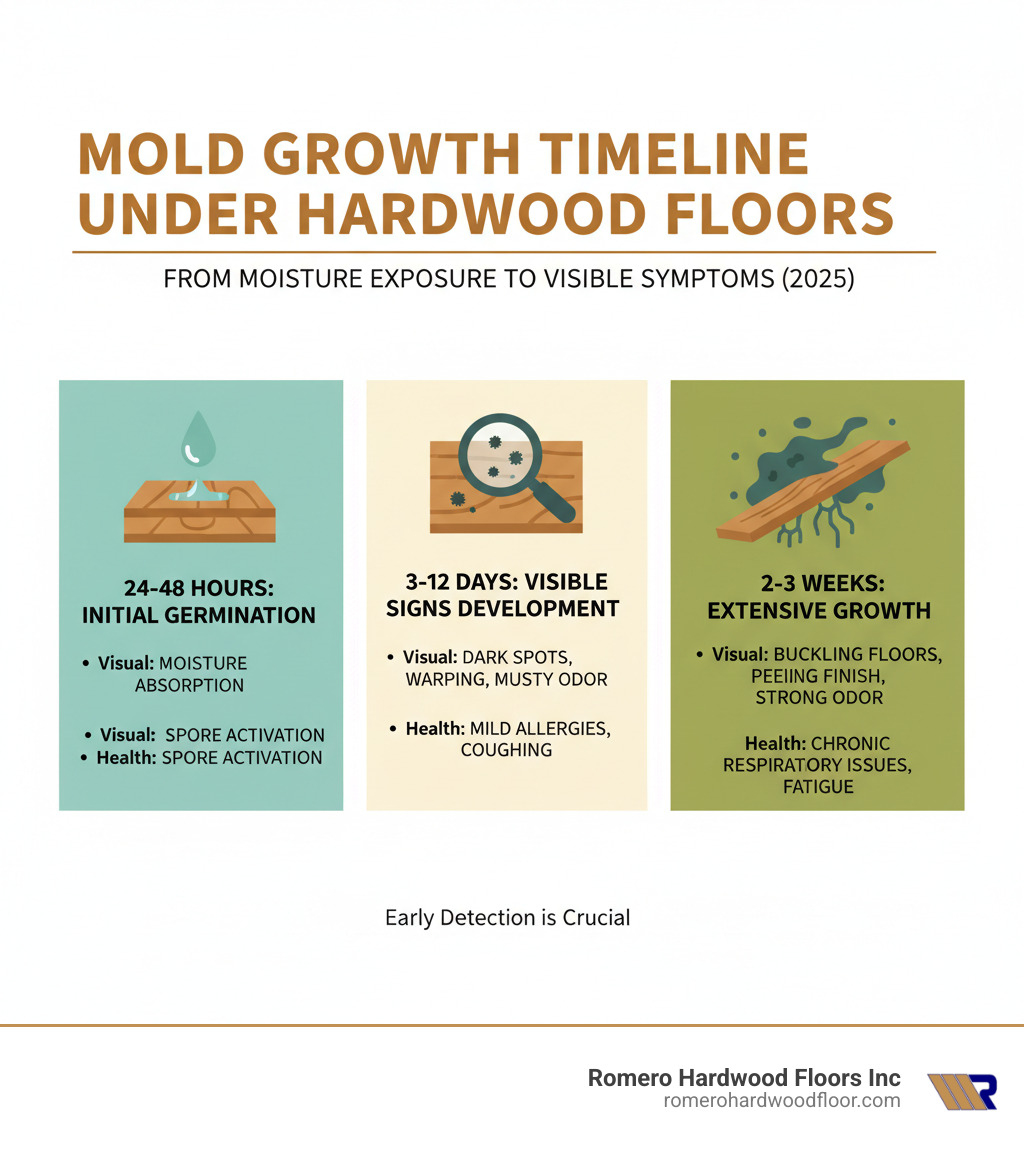
The speed at which mold develops is honestly quite alarming. Mold spores begin germinating within just 24 to 48 hours when they encounter the right moisture conditions under your floors. Think about it this way: if you have a small leak on Sunday night, mold could already be starting its growth process by Tuesday morning.
While the growth begins almost immediately, the visible signs of mold under hardwood floors typically start appearing within 3 to 12 days. You might notice that distinctive musty smell first, followed by discoloration or changes in your floor’s texture. However, it can sometimes take up to a week before that telltale funky odor becomes noticeable.
Here’s where it gets really concerning: within 2 to 3 weeks, mold growth can become extensive and penetrate deeply into both the flooring and subflooring. At this point, remediation becomes much more complex and expensive. This rapid timeline is exactly why we always tell our clients that time is of the essence when dealing with moisture issues.
Can you save hardwood floors with mold?
This is probably the question that causes homeowners the most anxiety, and I understand why. The good news is that hardwood floors can sometimes be saved, but it depends on several critical factors that we evaluate during our assessment.
The extent of damage plays the biggest role in salvageability. Small, localized patches of mold that are caught early often respond well to professional treatment. However, if the mold has spread extensively, caused significant structural problems like widespread cupping or buckling, or created soft spots in your flooring, replacement might be your only safe option.
The type of wood matters too. Real hardwood can sometimes be cleaned, sanded, and refinished if the mold hasn’t penetrated too deeply. Laminate flooring, with its absorbent fiberboard core, is unfortunately much harder to save once mold has taken hold.
Response time is absolutely crucial. The faster you address both the moisture source and begin remediation, the better your chances of saving your investment. We’ve seen floors that looked hopeless make remarkable recoveries when homeowners acted quickly.
Don’t forget about subfloor condition either. Even if your hardwood looks salvageable, if the subfloor underneath is heavily contaminated or structurally compromised, it will need replacement regardless. This is why professional assessment is so important.
Restoring old floors may be possible depending on the situation, and we’d be happy to provide an assessment. Our Restoring Old Floors services have helped many homeowners save floors they thought were lost forever.
Is the black stuff on my wood floor always mold?
This might surprise you, but the answer is definitely not always! This is one of the biggest misconceptions we encounter, and it can lead to unnecessary panic or, worse, ignoring a real moisture problem.
Especially with oak wood, black discoloration is often tannin bleed rather than actual mold. Oak contains natural compounds called tannins, and when oak gets exposed to moisture, these tannins react and leach out, creating dark, blackish stains that can look remarkably similar to black mold.
The key difference is in the texture and appearance. Tannin stains are typically flat against the wood surface and don’t have that fuzzy, slimy, or raised texture that characterizes actual mold growth. However, here’s the important point: tannin bleed still indicates a moisture problem that needs your attention, because those same wet conditions can create the perfect environment for real mold to develop.
Professional identification is recommended whenever you see black discoloration on your floors. We can quickly determine whether you’re dealing with tannin stains or actual mold, ensuring you get the right treatment for the right problem. Don’t let uncertainty keep you from taking action – it’s always better to know for sure what you’re facing.
Protect Your Home and Floors from Mold
Your hardwood floors are more than just a beautiful feature—they’re a significant investment in your home’s value and your family’s comfort. When signs of mold under hardwood floors appear, it’s natural to feel overwhelmed. But here’s the good news: you’re not powerless against mold, and you don’t have to face this challenge alone.
Throughout my 15+ years helping homeowners in the Revere, MA area, I’ve seen families catch mold early and save their floors with minimal intervention. I’ve also witnessed the relief on homeowners’ faces when they realize that even extensive mold damage doesn’t mean their home is ruined—it just means it’s time for professional help.
Early detection truly makes all the difference. That musty smell you’ve been ignoring? The slight warping near the kitchen sink? Those unexplained allergy symptoms that seem worse at home? These aren’t just minor inconveniences—they’re your home’s way of asking for help.
The key is addressing moisture issues before they become mold catastrophes. Whether it’s fixing that slow leak under the bathroom vanity, improving ventilation in your basement, or simply maintaining proper humidity levels, small actions today prevent major headaches tomorrow.
Don’t let mold compromise your family’s health or your home’s structural integrity. Mold doesn’t get better on its own, and waiting often transforms a manageable situation into an expensive emergency. The sooner you act, the more likely you are to save your beautiful hardwood floors and protect your loved ones.
If you’re facing potential mold or water damage, don’t wait another day. Contact our experts at Romero Hardwood Floors Inc. for a professional assessment that puts your mind at ease. We’ll help you understand exactly what you’re dealing with, explore all your options, and create a plan that works for your budget and timeline.
Learn more about our Hardwood Floor Water Damage Repair services and find how our competitive pricing, punctuality, and guaranteed workmanship can restore not just your floors, but your peace of mind. Your home deserves expert care, and your family deserves a healthy, beautiful living space.
Like us on Facebook!