Hardwood Floor Replace: 3 Perfect Steps 2025
Understanding When Your Hardwood Floor Needs Board Replacement
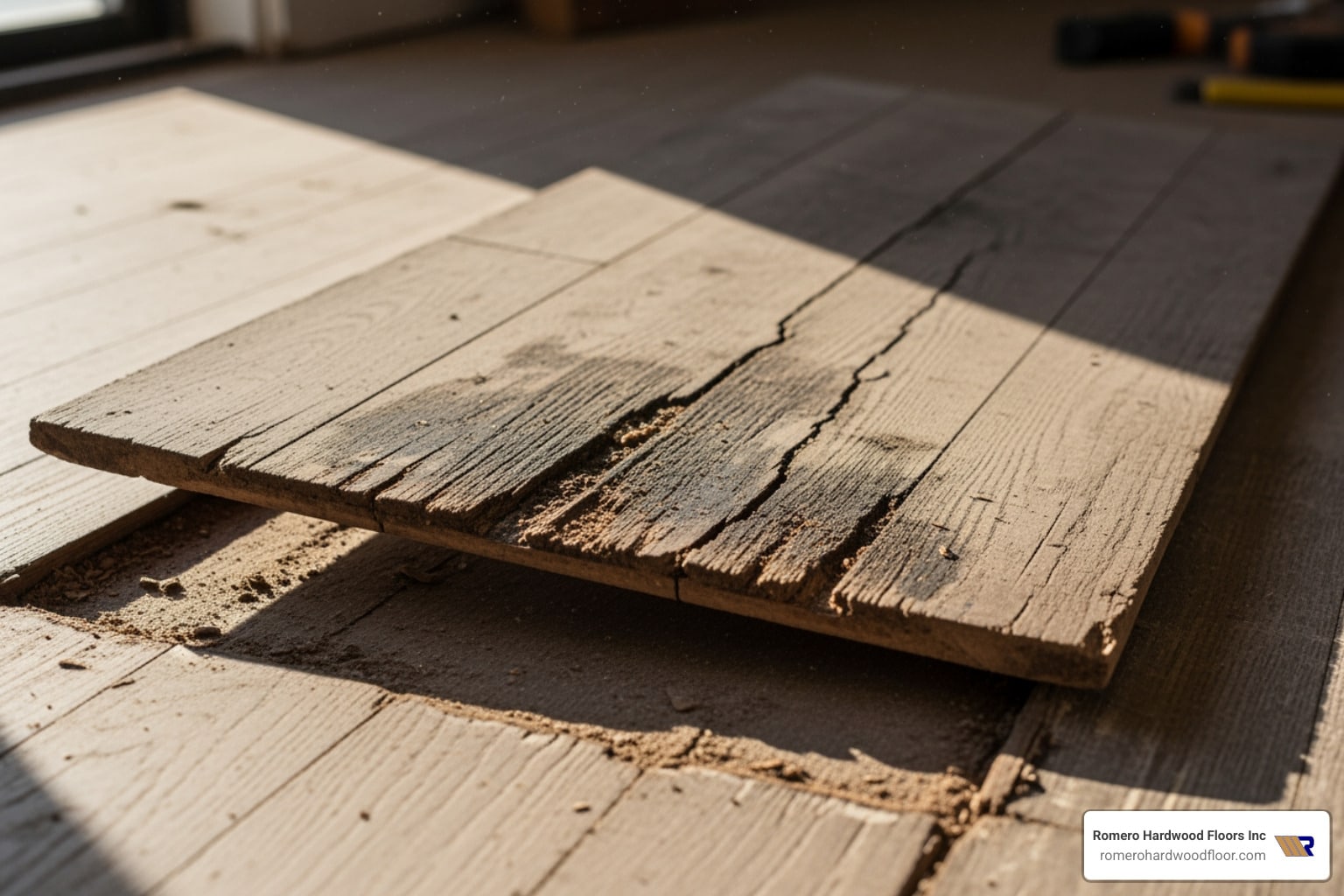
While hardwood floors can last for decades, damage from water, deep scratches, or structural issues can occur. A hardwood floor replace becomes necessary when this damage goes beyond a simple refinish. The good news is that you often don’t need to replace the entire floor. Replacing a single board can save thousands compared to a full replacement.
Here’s when board replacement is the right choice:
- Deep structural damage: Blackened wood, soft or spongy boards, severe warping or cupping.
- Water damage: Boards that have turned gray or black from prolonged moisture exposure.
- Beyond repair: Cracks, splits, or gouges that penetrate through the wood.
- Multiple issues: Buckling, persistent squeaking, or significant gaps between boards.
- Refinishing limit reached: Boards too thin to sand again (less than 1/8 inch above the tongue and groove).
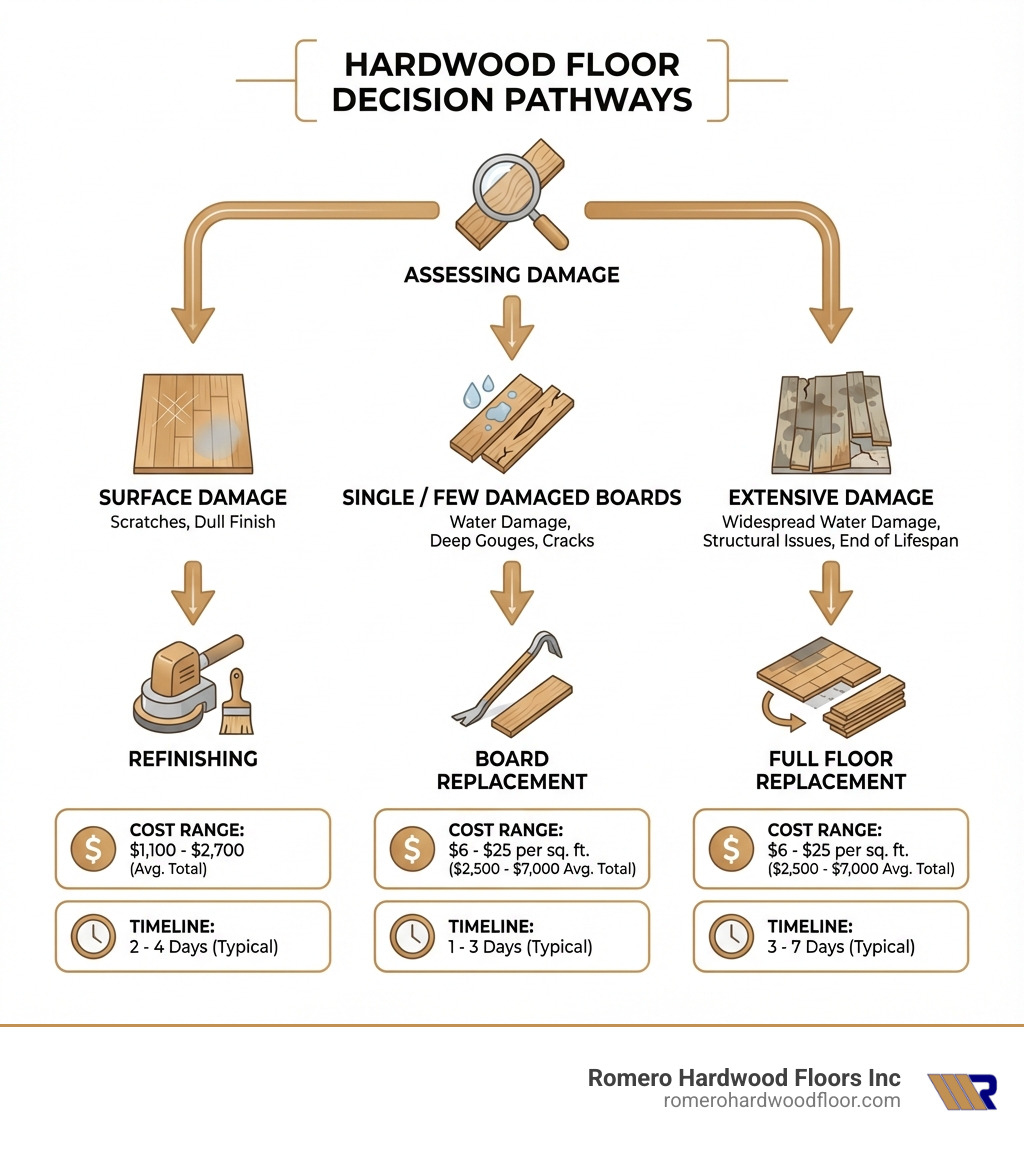
According to industry data, the average cost to replace hardwood floors ranges from $6 to $25 per square foot including labor. In contrast, refinishing costs about $1,100 to $2,700 on average, making it a more economical option when your floor’s structure is sound.
I’m Francisco Romero, owner of Romero Hardwood Floors Inc. With over 15 years of experience helping homeowners in Revere, MA, I know that the right choice depends on the specific type and extent of damage. We can help you decide whether to repair, refinish, or replace.
Know your hardwood floor replace terms:
Assessing the Damage: When Does a Board Need Replacement?
When we assess hardwood floors in homes from Chelsea, MA, to Gloucester, MA, we look for clues that tell us whether a board is scuffed, damaged, or hiding a deeper problem. Understanding these signs is key to deciding if a simple repair, a refinish, or a full hardwood floor replace is necessary.
Signs of Surface-Level Damage
Surface-level damage is often cosmetic but can worsen if ignored. These issues can sometimes be fixed by refinishing, but severe cases may require board replacement.
- Scratches and Gouges: Scratches that only break the topcoat can often be refinished. However, deep gouges from moving furniture that penetrate the wood itself usually require the board to be replaced.
- Graying from Water Spills: If a water spill isn’t cleaned up quickly, it can cause a grayish discoloration. If caught early and the damage is isolated, a single board replacement can solve the problem.
- Finish Wear: In high-traffic areas, the protective finish can wear thin, exposing the raw wood. While this often calls for refinishing, severe localized wear can lead to deeper damage, potentially requiring a board replacement.
Identifying Deeper Structural Problems
Structural problems require more than a cosmetic fix and often mean replacement is the only option. These are critical signs that demand professional attention.
- Blackened or Soft Wood: Wood that has turned black or feels soft and spongy has lost its structural integrity, usually from prolonged moisture or rot. These boards must be replaced, and the subfloor should be inspected.
- Warping, Cupping, or Buckling: When boards bend, lift at the edges (cupping), or rise from the subfloor (buckling), it’s a sign of a major moisture imbalance. This severe warping requires immediate attention and replacement of the affected boards.
- Cracks and Splits: While minor seasonal gaps are normal, deep cracks or splits in the wood grain indicate stress or extreme moisture changes and often necessitate replacement.
- Pet Stains: Deep-set pet stains can cause dark discoloration and odors that sanding cannot remove, making board replacement the best solution.
- Mold or Mildew: A musty odor or visible mold indicates a significant moisture problem that compromises air quality and the floor’s structure. The affected boards and potentially the subfloor must be replaced.
If you’re noticing any of these deeper issues in your home in Medford, MA, or any of our service areas, it’s time to call in professionals. Ignoring these signs can lead to more extensive and costly repairs. To learn more, visit our page on More info about our repair services.
Repair, Refinish, or Replace? Making the Right Call
Deciding whether to repair, refinish, or replace your hardwood floor is a balance of cost, effort, and long-term results. We guide our clients in Stoneham, MA, through this decision by considering the damage type, its extent, and the floor’s overall condition.
- Cost: Refinishing is the most budget-friendly option for eligible floors. A full hardwood floor replace is the most significant investment, with single board replacement falling in the middle.
- Damage Scope: If damage is confined to a few boards, replacement makes sense. If it’s widespread or affects the subfloor, a full replacement is more practical.
- Floor Type: Solid hardwood can be refinished multiple times over its 50-100 year lifespan. Engineered hardwood has a thinner top layer and can typically only be refinished once or twice in its 20-30 year lifespan.
Here’s a quick comparison:
| Criteria | Refinishing | Single Board Replacement | Full Floor Replacement |
|---|---|---|---|
| Best For | Surface scratches, fading, dullness, minor water stains, changing stain color, preserving solid wood. | Isolated deep gouges, pet stains, severe water damage to a few boards, cracks/splits in a small area. | Widespread structural damage, extensive water damage to subfloor, multiple unmatchable damaged boards, desire for new style/species, end of floor’s lifespan. |
| Average Cost | $1,100 – $2,700 | Varies greatly by labor and board cost, typically $150 – $500+ per board. | $2,500 – $7,000+ (materials & labor), up to $25,000+ for large or premium projects. |
| Project Time | 3-7 days (including drying time) | 1-3 days | 1-2 weeks or more (including removal, subfloor prep, installation, and finishing). |
The Cost to Replace Hardwood Floors
For our clients in Lynnfield, MA, cost is a major factor. Please remember, these are average costs based on internet data and not actual costs for Romero Hardwood Floors. Our pricing is competitive and custom to your project.
- Replacement Cost Per Square Foot: Industry averages range from $6 to $25 per square foot, including materials and labor.
- Material Costs: Hardwood materials typically cost $6 to $12 per square foot, but non-native or premium woods can be $13 to $25 per square foot.
- Labor Costs: Professional installation labor averages $3 to $6 per square foot.
- Full Replacement Project Cost: A total installation typically costs between $2,500 and $7,000, but can exceed $20,000 for larger projects or premium materials.
- Refinishing Cost: If your floors are structurally sound, refinishing is more economical, averaging $1,100 to $2,700. Learn about professional floor refinishing
When to Replace a Larger Section or the Entire Floor
Sometimes, a single board replacement isn’t enough. It’s more practical to replace a larger section or the entire floor when:
- Multiple boards are damaged in one area.
- Water damage has spread to the subfloor, requiring its repair or replacement.
- You want a new style, wood species, or plank width for a home renovation.
- The floor has reached the end of its lifespan and is too thin to be refinished again.
When these situations arise, we can help you explore new flooring solutions. Explore new installation options
The Process for a Single Hardwood Floor Board Replace
If you’ve decided a single hardwood floor replace is the right solution for your Saugus, MA, home, this is a common and effective repair. While it can be a DIY project for those with advanced skills, we recommend professional help for a flawless result. Always wear safety gear like eye protection, gloves, and a dust mask.
Tools and Materials You’ll Need
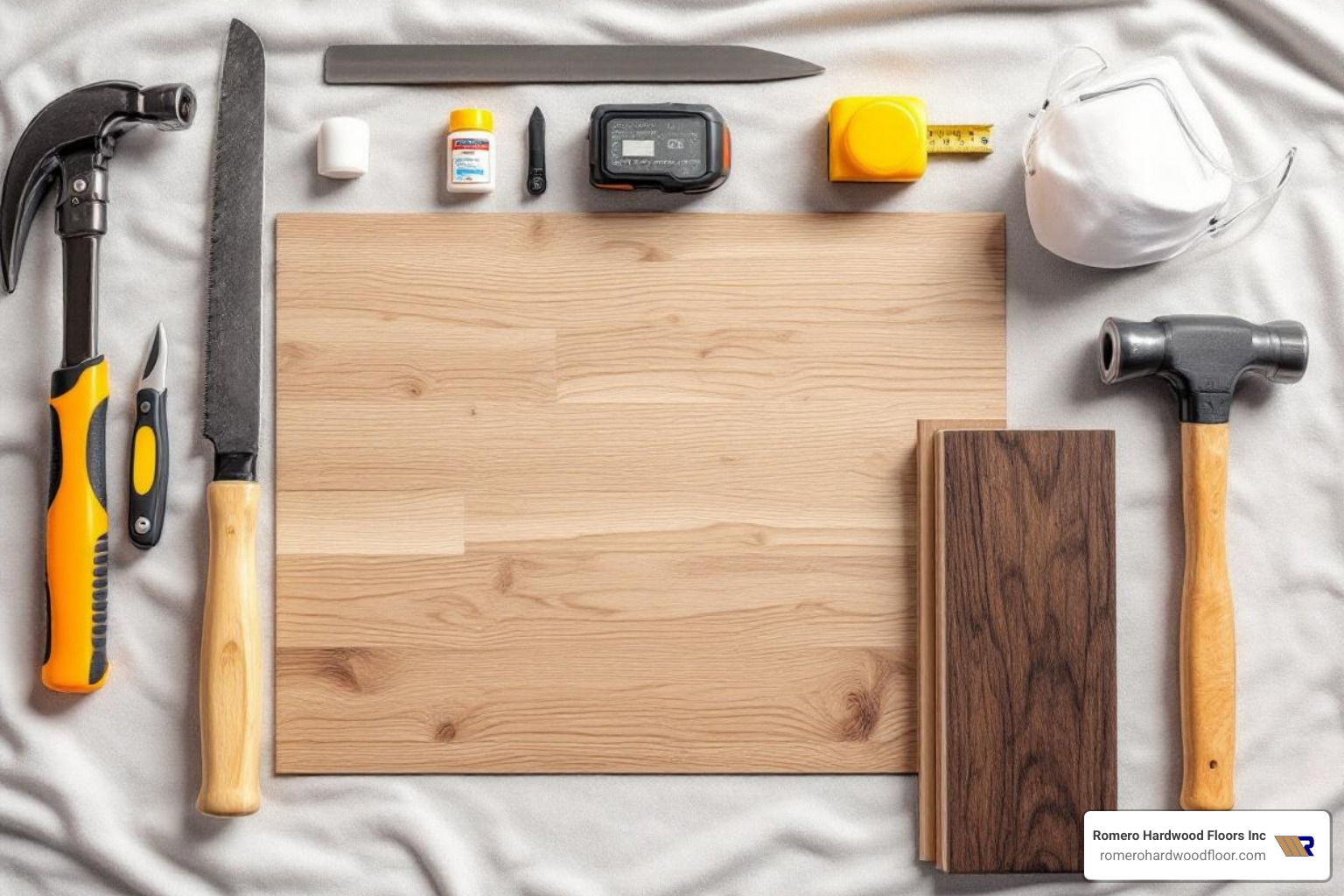
- Tools: Circular saw with depth gauge, sharp chisel, hammer, pry bar, oscillating multi-tool, drill, and a shop vacuum.
- Materials: A matching replacement board, construction adhesive, wood filler, and painter’s tape.
Step-by-Step Guide to Replace a Tongue-and-Groove Board
Replacing a tongue-and-groove board requires precision. Here’s the process:
- Set the saw depth: Adjust your circular saw blade to match the thickness of the hardwood, preventing cuts into the subfloor.
- Make relief cuts: Make two parallel cuts down the center of the damaged board, stopping an inch from each end. Then, make angled cuts from the center line to the edges.
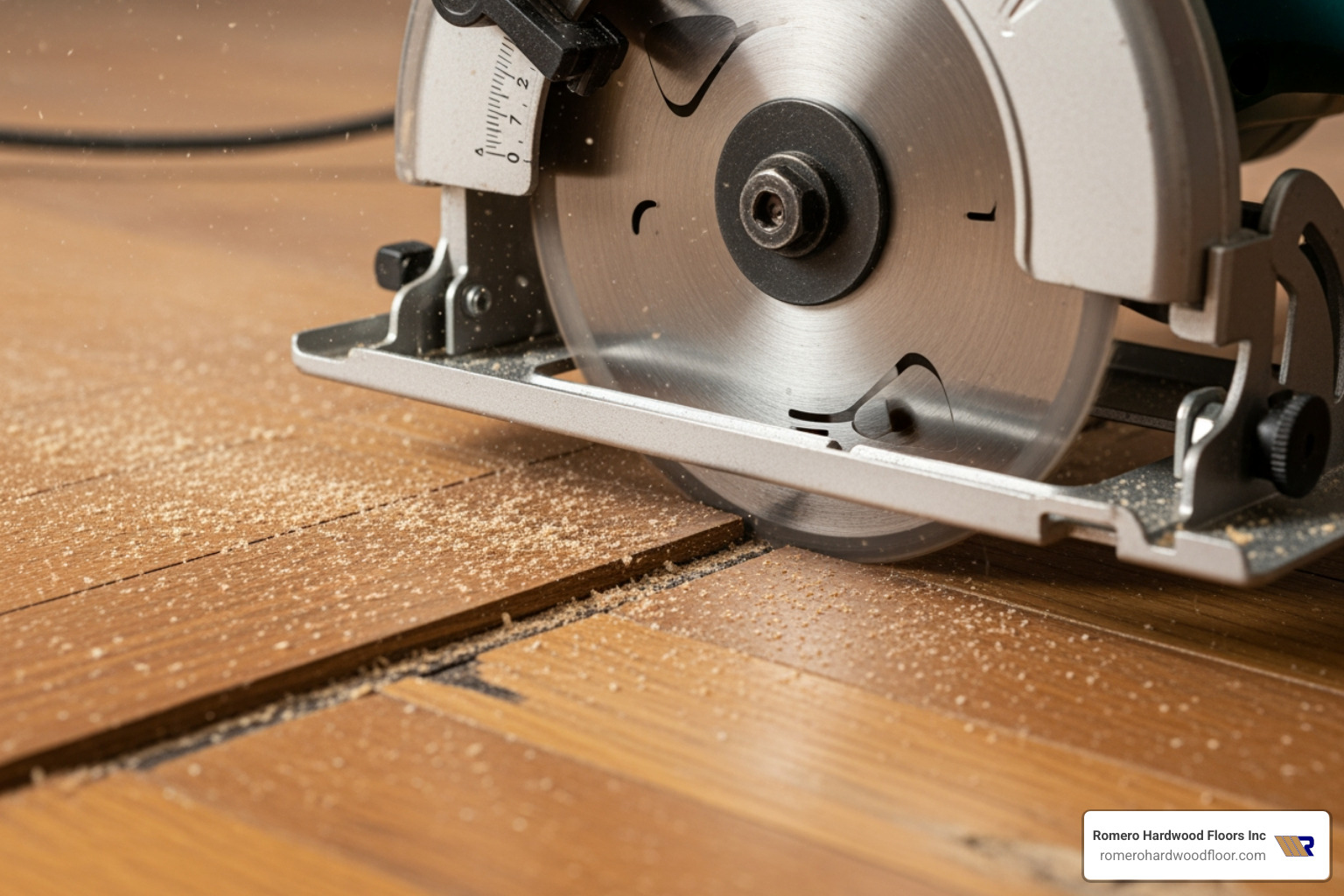
- Chisel out the damaged piece: Use a chisel and hammer to carefully remove the cut sections of the board, avoiding damage to adjacent planks.
- Clean the subfloor: Vacuum all dust and debris from the exposed subfloor.
- Prepare the new board: On the replacement board, carefully cut away the bottom side of the groove. This allows the board to be dropped into place.
- Test fit: Dry fit the new board to ensure it sits snugly.
- Apply adhesive: Run a bead of construction adhesive on the subfloor and the adjacent board’s tongue.
- Secure the new board: Slide the board’s tongue into the adjacent groove, then press the modified groove side down firmly. Weigh it down until the adhesive cures. For extra security, face-nail the board and fill the holes.
Special Considerations for Floating vs. Nailed-Down Floors
The replacement method varies by floor type:
- Nailed/Glued-Down (Tongue-and-Groove): These require the cutting method detailed above. The new board’s groove must be modified to fit.
- Floating Floors (Click-and-Lock): These are not attached to the subfloor. For a damaged board near a wall, you can disassemble the floor to that point. For a board in the middle, the same cutting method is often used to avoid taking the entire floor apart.
- Nailed-Down Floors: Older, nailed-down floors can be challenging. We use the same cutting and chiseling method, then secure the new board with adhesive and face-nails.
Ensuring a Seamless Repair: Matching and Finishing
Once the new board is in, the goal is to make it disappear. This is where the artistry of a professional hardwood floor replace comes in, especially in older homes in Marblehead, MA, with unique flooring.
How to Match the New Board to Your Existing Floor
A mismatched board will stand out, so matching is critical.
- Identify Wood Species: First, determine if your floor is red oak, white oak, maple, or another species. Each has a distinct grain and color.
- Match Plank Dimensions: Measure your existing planks’ width and thickness precisely. If you have leftover boards from the original installation, use them for a perfect match.
- Account for Variations: Wood is a natural product with variations in grain and color. Select a replacement board that mimics the grain of its neighbors. Existing floors change color over time due to UV exposure.
- Get a Professional Opinion: If you can’t find a match, a flooring specialist can help. A small physical sample of the damaged board is invaluable for identification.
- Acclimate the New Board: Let the new board sit in your home for at least three days (72 hours) before installation. This allows it to adjust to your home’s temperature and humidity, preventing future gapping or buckling.
Finishing Touches for a Perfect Hardwood Floor Replace
With the board in place, the final step is to blend it in.
- Sand the Board Flush: If the new board isn’t perfectly level, carefully sand it down to create a smooth transition with the surrounding planks.
- Apply Stain and Finish: This is the key to an invisible repair. We test stain shades to find the perfect match for your existing floor. After staining, we apply a protective finish (like polyurethane) that matches the sheen of the surrounding floor. Our Custom floor staining services are essential for this step.
- Fill Small Gaps: Any tiny gaps along the edges can be filled with a color-matched wood filler for a clean, seamless look.
Frequently Asked Questions about Hardwood Floor Replacement
We get many questions from homeowners in East Boston, MA, about a hardwood floor replace. Here are the most common ones:
Can a single damaged hardwood floor board be replaced?
Yes. It is a common and effective repair for isolated damage like deep scratches, pet stains, or localized water damage. The process involves carefully removing the damaged plank and fitting a new one in its place.
How do you ensure the new board matches the old ones?
Matching is a multi-step process. We identify the wood species, plank width, and grade. If leftover boards aren’t available, we source the closest possible match. The new board is then acclimated to the home’s environment before being expertly stained and finished to blend in with the existing floor’s color and sheen.
When is it better to hire a professional for a board replacement?
While it can be a DIY project for those with advanced skills, hiring a professional is recommended. Professionals have the specialized tools and expertise to avoid damaging surrounding boards, address underlying issues like subfloor moisture, and ensure a seamless color and finish match for a durable, invisible repair.
Conclusion
Deciding on a hardwood floor replace doesn’t have to be overwhelming. Whether in Beverly, MA, or Manchester by the Sea, MA, we’ve seen and repaired it all.
The key takeaways are:
- Single board replacement is feasible for isolated damage and is a cost-effective solution.
- A proper damage assessment is crucial to identify underlying issues and choose the right approach.
- Professional help ensures a quality, seamless repair that protects your investment.
At Romero Hardwood Floors Inc., we’ve provided competitive pricing, punctuality, and guaranteed workmanship since 2006. When you’re ready to restore your hardwood floors, we’re here to help.
Request an estimate for your hardwood floor repair
Like us on Facebook!