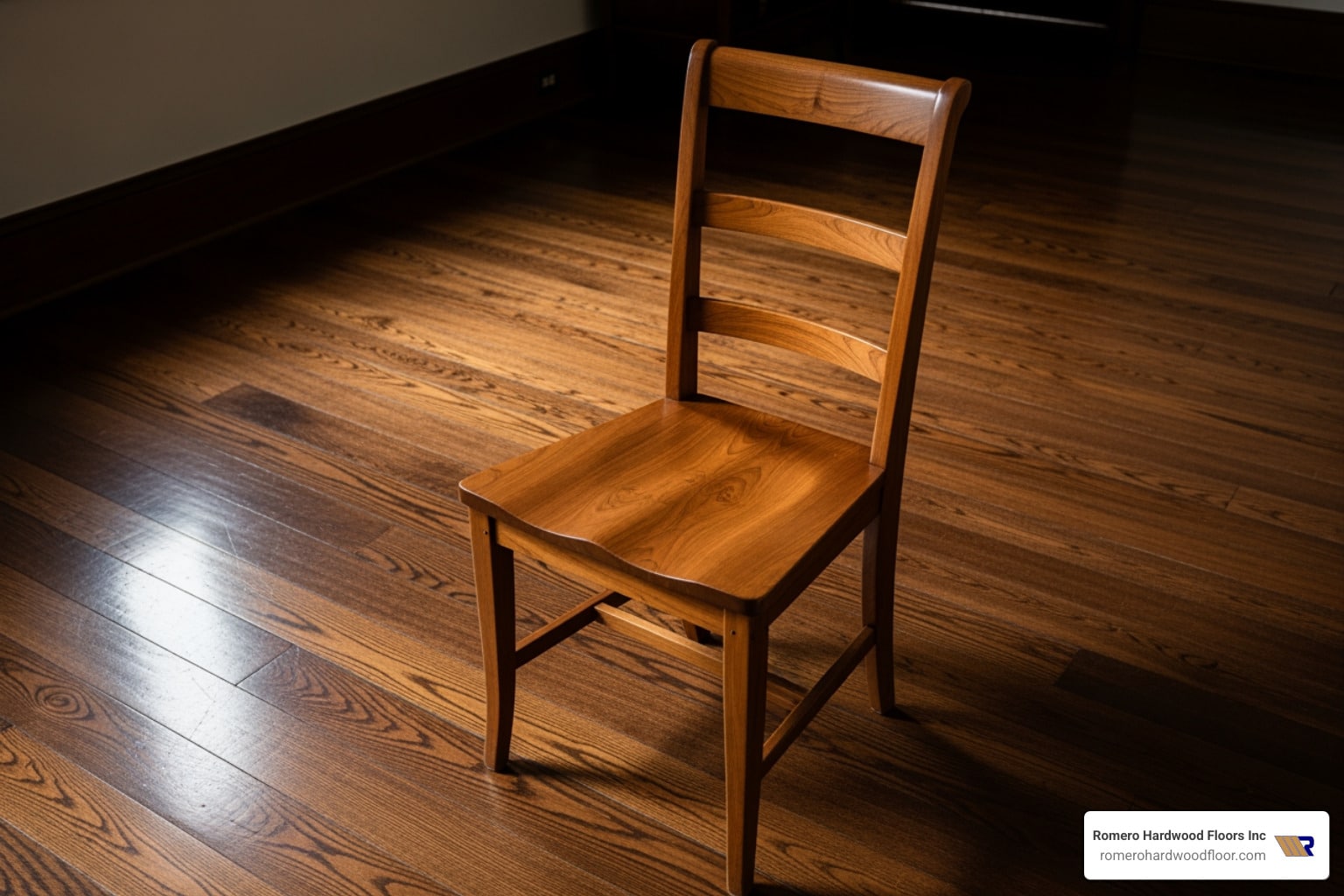
Your Guide to Protecting Hardwood Floors from Furniture
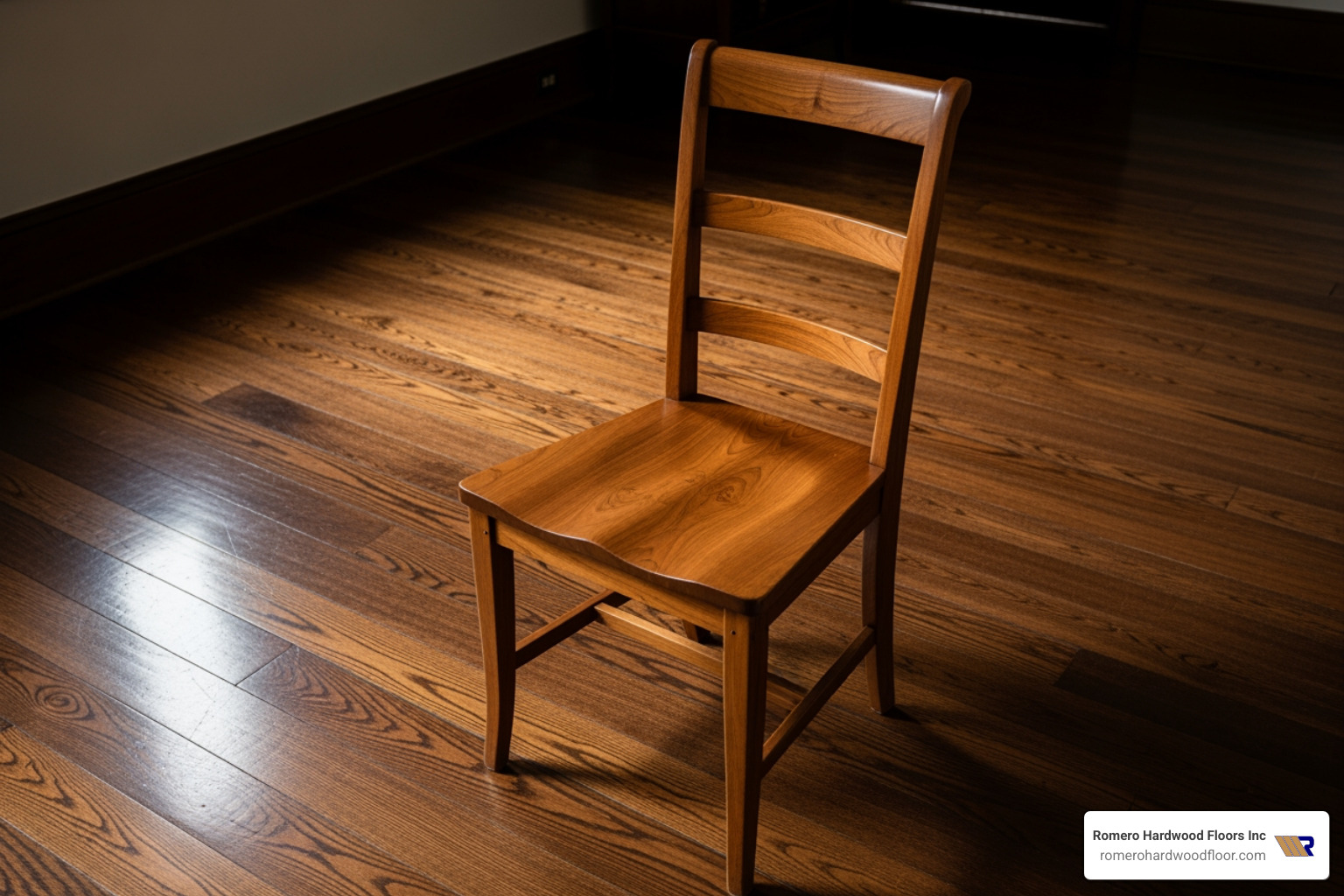
Chair glides for hardwood floors are protective caps or pads attached to furniture legs to prevent scratches, reduce noise, and make movement easier. Finding ugly scratches on beautiful hardwood floors is a common frustration, but it’s easily preventable.
Furniture glides are a simple, economical way to protect your flooring, taking just minutes to install but potentially saving thousands in floor refinishing costs. Even brand-new furniture needs glides from day one to prevent instant damage.
Key Considerations:
- Material: For hardwood, soft felt-lined glides are the gold standard. Avoid hard plastic glides, which are meant for carpet and will damage wood.
- Furniture Type: Choose felt for light to medium furniture and durable PTFE (Teflon) for heavy or frequently moved items. Silicone caps are great for angled legs.
- Installation: Options include adhesive, nail-on, screw-in, or slip-on caps, depending on your furniture and needs.
I’m Francisco Romero, owner of Romero Hardwood Floors Inc. For over 15 years, I’ve seen countless floors damaged by missing chair glides. The good news is that protecting your investment is straightforward with the right products and proper installation.
Why Chair Glides Are a Non-Negotiable for Hardwood Floors
The awful scraping sound of a chair leg dragging across a hardwood floor is a familiar and preventable problem. In homes and businesses across the North Shore of Massachusetts, from Revere to Beverly, daily furniture movement can cause significant damage over time.
The Problem of Scratches
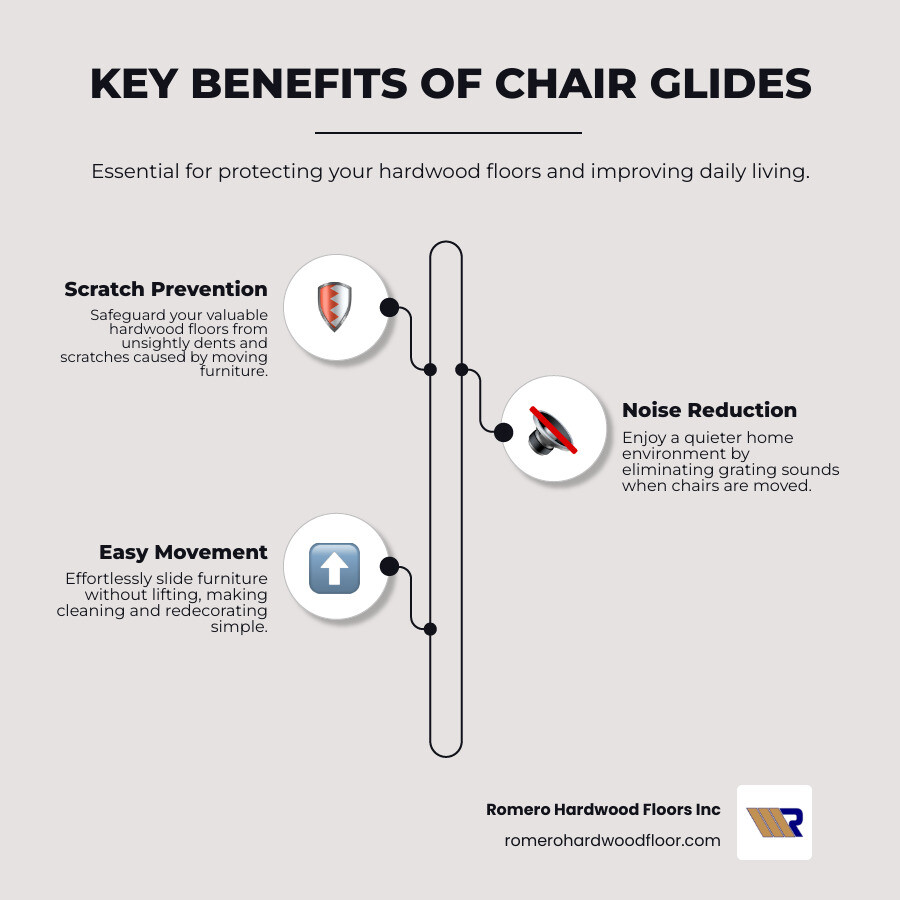
Hardwood floor damage is rarely from a single event; it’s the result of daily wear and tear. A dining chair moved multiple times a day adds up to thousands of movements per year. Each time an unprotected leg slides, trapped dirt particles act like sandpaper, dulling the finish and creating scratches. These marks often require professional hardwood floor scratch repair, which costs time and money.
Preserving Floor Value
Your hardwood floors are a significant investment. Quality flooring can last for generations, but only with proper protection. Installing chair glides for hardwood floors takes minutes per chair, while refinishing a damaged room costs hundreds or thousands of dollars and causes days of disruption. It’s a small, proactive step that preserves your home’s value. For more tips, see our Hardwood Floor Care Guide.
Noise Reduction
Beyond protection, chair glides bring peace and quiet. The jarring scrape of furniture is replaced by a whisper-quiet slide, especially with felt-bottomed glides. This improves the atmosphere in homes, offices, and restaurants by reducing distracting noise.
Ease of Movement
Glides make moving furniture effortless. The reduced friction allows heavy chairs and tables to move smoothly with a light touch, making it easy to rearrange rooms or accommodate extra guests. This convenience also improves safety, as you’re less likely to strain your back wrestling with stubborn furniture.
Extending Furniture Life
Chair glides protect your furniture as well as your floors. Unprotected legs can splinter, chip, and wear down unevenly from grinding against the floor. Glides act as a shield, preserving the integrity of your furniture legs and keeping chairs and tables stable for longer. This two-way protection makes glides an essential, affordable measure for any homeowner with hardwood floors.
The Best Types of Chair Glides for Hardwood Floors
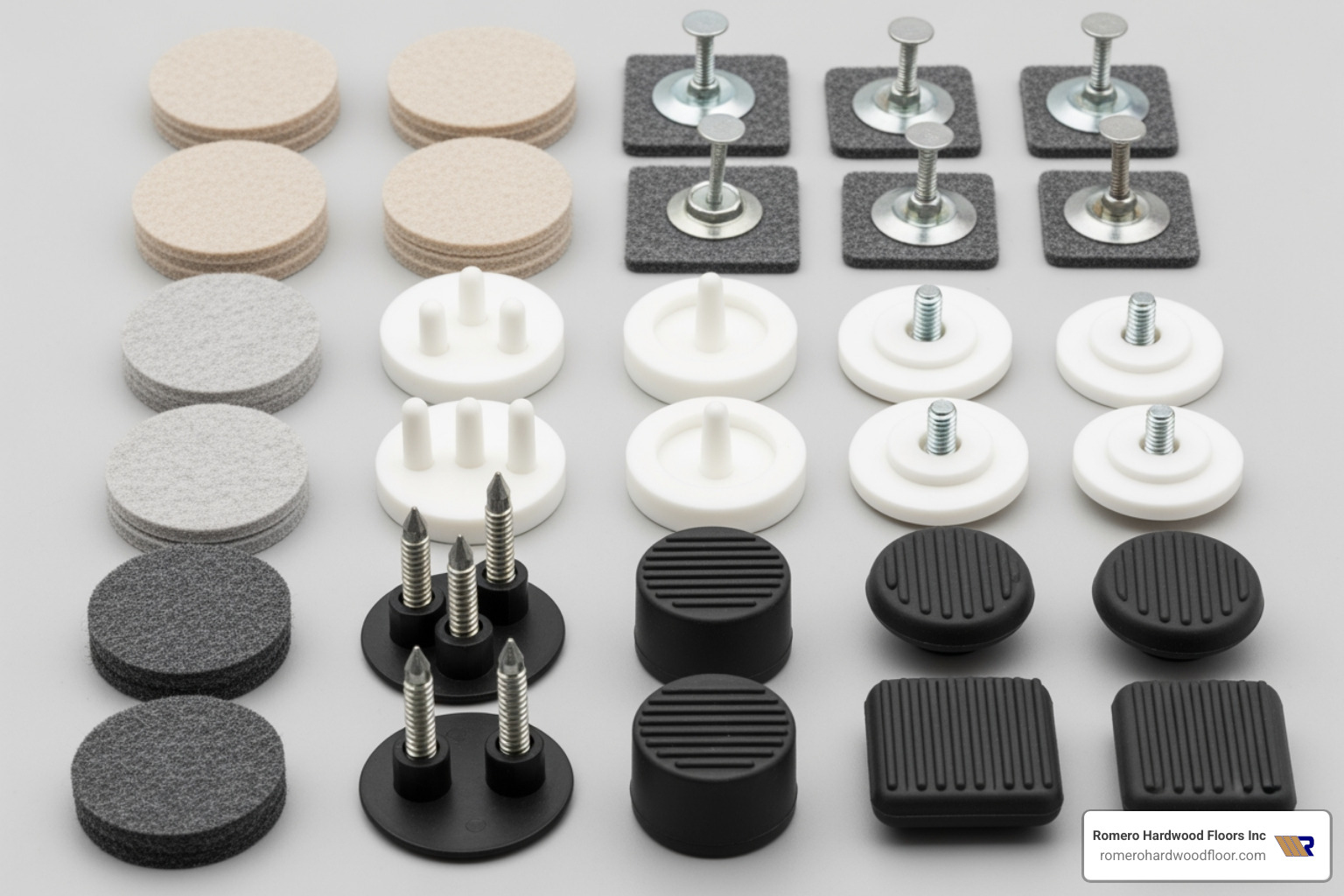
Understanding the main types of chair glides for hardwood floors makes choosing the right one simple. Let’s review the most effective options to keep your floors safe and furniture moving smoothly.
Felt Glides: The Classic Choice
Felt glides are the traditional choice for hardwood, creating a soft cushion that allows furniture to slide quietly without scratching.
- Attachment Types: They come as simple adhesive-backed pads for light furniture, more secure nail-on/tap-on versions, or robust screw-in glides for heavy-use items like dining chairs.
- Pros: Felt is soft, quiet, affordable, and provides excellent scratch prevention.
- Cons: The adhesive on pads can fail over time. Felt can collect dust and debris, which requires occasional cleaning to prevent it from becoming abrasive. It may also wear out faster than harder materials.
If you find a scratch, our professional Hardwood Floor Scratch Repair services can restore your floor’s beauty.
PTFE (Teflon) Glides: The Smooth Operator
Known by the brand name Teflon, PTFE (Polytetrafluoroethylene) offers an ultra-slick, low-friction surface that makes furniture feel like it’s floating.
- Best For: These glides are excellent for heavy furniture like solid wood tables, bookshelves, or armoires, making them surprisingly easy to move.
- Pros: PTFE is extremely durable and long-lasting, even under heavy loads. The effortless movement is ideal for frequently repositioned furniture. They are available in secure nail-on and screw-in options.
- Cons: Lighter furniture may slide too easily on polished floors. They are also generally more expensive than felt pads.
While upgrading your glides, consider addressing any floor imperfections. We can help with Fixing Dents in Wood.
Silicone & Rubber Caps: The Secure Fit
For furniture with angled or oddly shaped legs, flexible silicone or rubber caps are the perfect solution. These slip-on designs stretch over the leg for a snug fit without any tools, adhesives, or nails.
- Versatility: The flexible material conforms to various leg shapes, including round, square, rectangular, and angled legs.
- Features: Many caps integrate a felt bottom, combining a secure fit with soft floor protection. Transparent options are available to remain virtually invisible and not clash with your furniture’s design.
- Cons: You must find the correct size for a secure fit. The felt bottom can collect dust, and lower-quality silicone may stretch over time.
Combination & Swivel Glides
These premium glides combine the best features for ultimate protection, making them ideal for challenging situations or commercial use.
- Design: They typically feature a durable plastic or metal casing with a felt bottom, offering both structural strength and soft protection.
- Key Feature: The swivel mechanism is perfect for angled legs, as it allows the felt pad to pivot and remain flat on the floor. This ensures even wear and prevents pressure points that could dent hardwood.
- Pros: They offer superior, long-lasting protection and stability, especially the heavy-duty options.
- Cons: They are more expensive and can have a more complex installation and visible design. However, the investment is often worth it for preserving valuable floors.
How to Select and Install the Perfect Glides
A little preparation ensures your chair glides for hardwood floors provide maximum protection. This simple guide will help you choose the right product and install it correctly.
Choosing the Right Material
Your choice of material depends on your furniture and floor type.
| Material | Floor Protection | Durability | Noise Level | Best Use Case |
|---|---|---|---|---|
| Felt | Excellent (soft, gentle) | Moderate | Very Low | Light to medium furniture, everyday use |
| PTFE (Teflon) | Excellent (low friction) | High | Low | Heavy or frequently moved furniture |
| Silicone/Rubber Caps | Good (with felt bottoms) | Moderate to High | Low | Angled or uniquely shaped legs |
Consider your hardwood finish; highly polished floors benefit most from soft felt, while matte finishes work well with durable PTFE. The weight of your furniture is also key. Lightweight chairs are fine with adhesive felt, but a heavy oak table needs the security of screw-in felt or PTFE glides. Always avoid hard plastic, which is designed for carpet and will scratch wood.
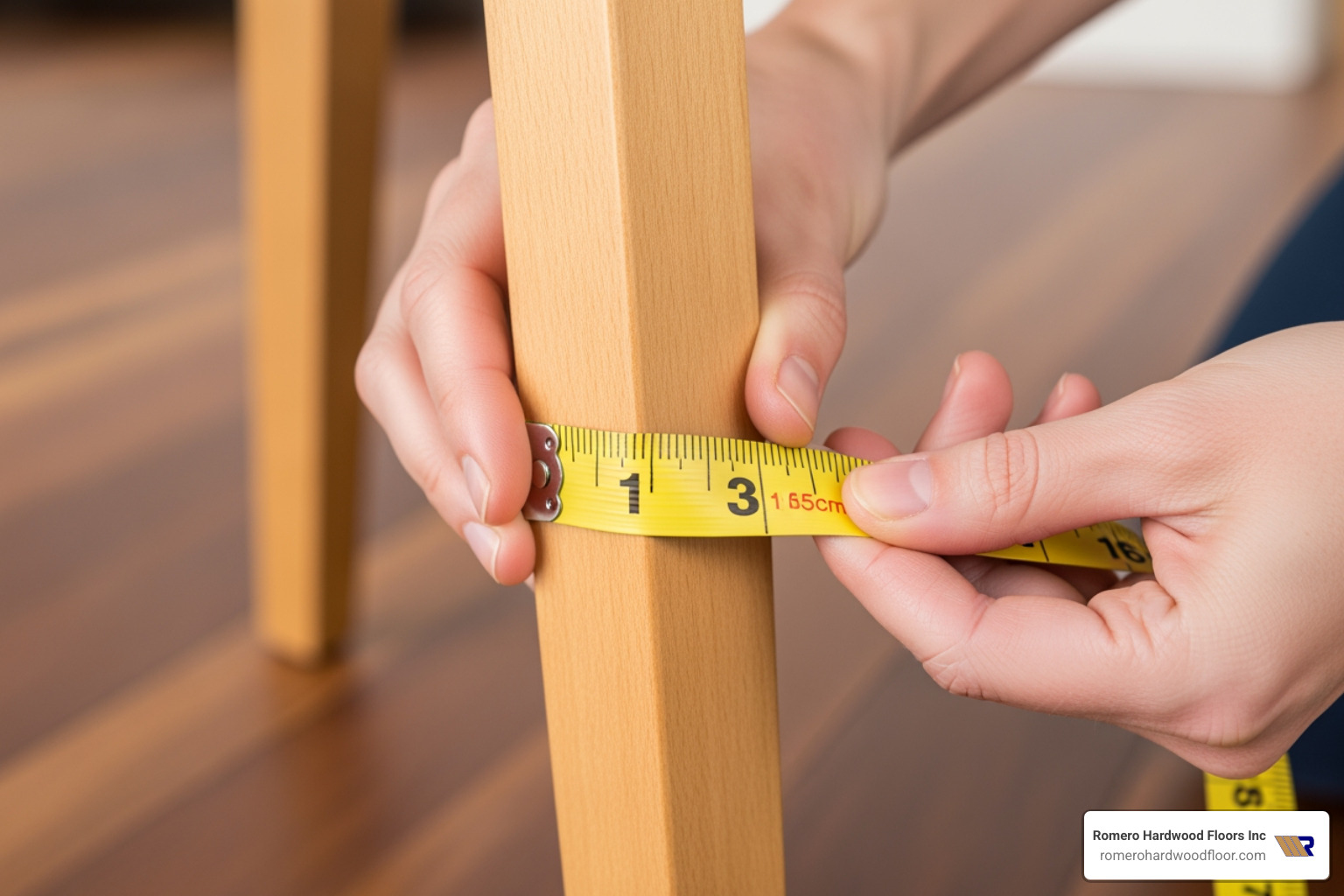
Measuring for a Perfect Fit
An improper fit can cause glides to fail. Precision is crucial.
- Round Legs: Measure the exact diameter at the bottom of the leg.
- Square/Rectangular Legs: Measure both the width and length.
- Angled Legs: Choose glides that can adapt, such as swivel glides or flexible silicone caps. These maintain flat contact with the floor, preventing damage.
Taking a moment to measure correctly prevents frustration later. For more maintenance advice, see our Wooden Floor Maintenance Tips.
Installation Tips
Proper installation is essential for effective floor protection.
- Clean the Leg: Always start by cleaning the bottom of the furniture leg. Remove any old adhesive, dirt, or dust, and ensure the surface is dry. A clean surface ensures a secure bond.
- Adhesive Pads: Peel, center the pad, and press firmly. Allow the adhesive to cure for at least an hour before moving the furniture.
- Nail-on/Tap-on Glides: Center the glide and gently tap it in with a hammer. For very hard wood, pre-drill a small pilot hole to prevent splitting.
- Screw-in Glides: Pre-drill a pilot hole slightly smaller than the screw’s diameter. This prevents splitting and makes installation easier. Tighten until snug, but do not overtighten.
- Slip-on Caps: Simply slide the cap over the leg until it fits snugly and is fully seated.
For more on floor protection from the start, our Hardwood Floor Installation Guide is a valuable resource.
Glides vs. Sliders vs. Casters: What’s the Difference?
While they all help move furniture, chair glides for hardwood floors, sliders, and casters serve different purposes. Using the right tool for the job is key to protecting your floors.
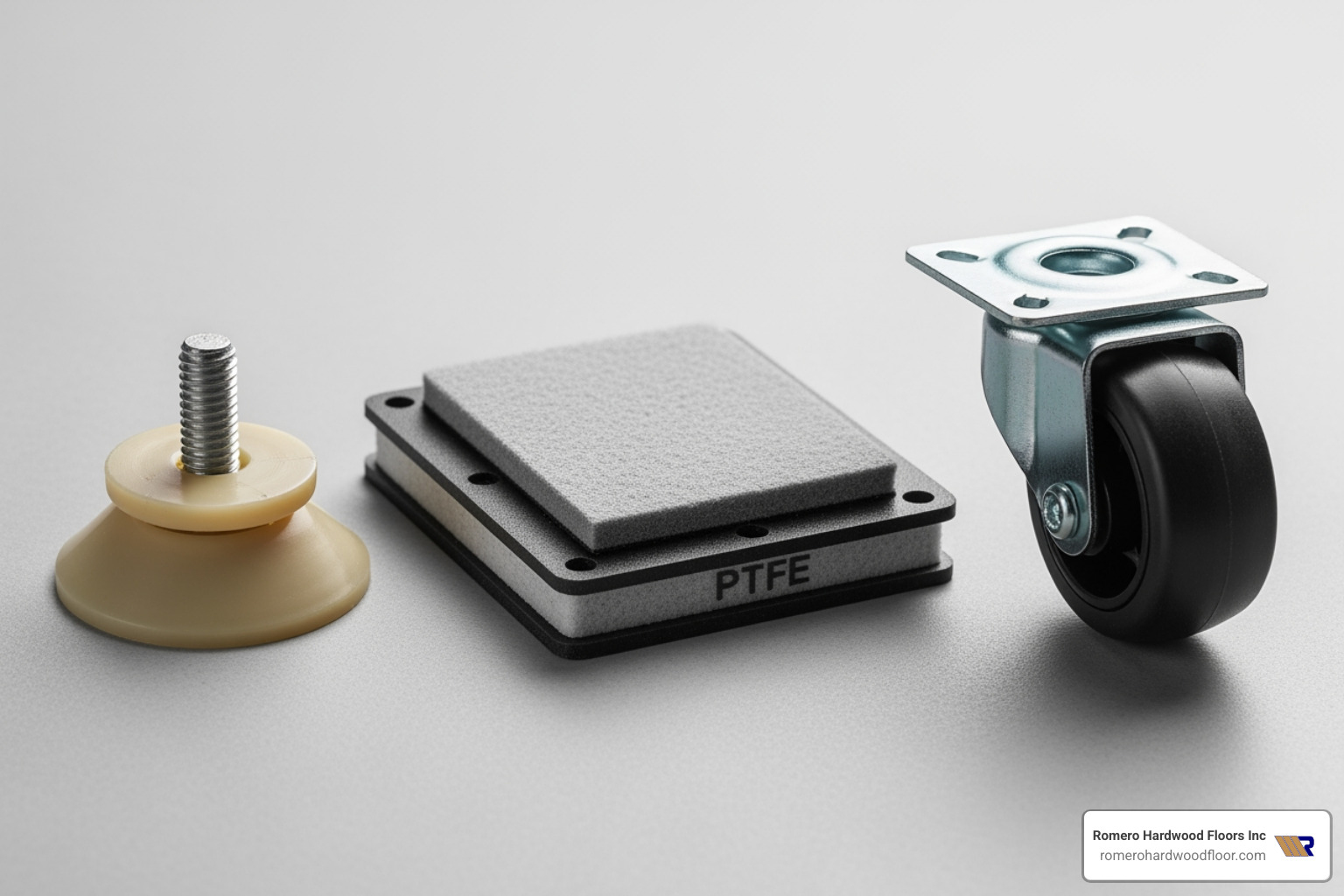
Chair Glides
Glides are permanent attachments for furniture that moves frequently.
- Use: Designed for everyday use on items like dining chairs and stools.
- Function: They provide continuous protection from constant movement and reduce noise, becoming an integral part of the furniture.
Furniture Sliders
Sliders are temporary tools for moving heavy, bulky items.
- Use: Placed under furniture legs for temporary use during rearranging or moving.
- Function: Their large surface area distributes weight, making it easier to move heavy pieces like sofas or bookshelves. They are removed after the move.
Caster Wheels
Casters are rolling wheels that provide maximum mobility in any direction.
- Use: Commonly found on office chairs.
- Function: While they offer great mobility, standard hard plastic casters can damage hardwood. For wood floors, always choose soft polyurethane wheels, which are gentler and prevent scratches. If you have an office chair on hardwood, check its casters.
Choosing the right flooring is also important. For homes with extra wear and tear, see our guide on the Best Hardwood for Pets.
Frequently Asked Questions about Chair Glides
Here are answers to common questions about chair glides for hardwood floors.
How often should I replace my chair glides?
Replacement frequency depends on usage. Glides on high-traffic furniture like dining chairs will wear out faster than those on a rarely moved accent chair.
Check your glides every few months. Look for these signs that it’s time for a replacement:
- The felt is compressed, hard, or dirty. Gritty, flattened felt can scratch floors.
- The glide is loose, cracked, or damaged. A failed glide offers no protection.
High-use furniture may need new glides every 6-12 months, while glides on other pieces can last for years. Quality also matters; premium glides last longer. Regular checks are a small time investment that prevents costly repairs.
Can I use glides meant for carpet on my hardwood floors?
No, absolutely not. Carpet glides are made of hard plastic or metal to slide over soft fibers. On a hardwood surface, these materials act like sandpaper, causing deep scratches and gouges that often require professional repair.
Always choose soft-bottomed glides like felt for hard floors. PTFE (Teflon) is another excellent choice due to its slick, non-abrasive surface. Using the correct material is critical for protecting your floors.
What’s the best option for very heavy furniture like a solid wood dining table?
For heavy pieces like a solid dining table or a loaded bookshelf, you need a heavy-duty solution.
Screw-in PTFE (Teflon) glides are an excellent choice. The durable, low-friction PTFE material combined with a secure screw-in attachment prevents the glide from compressing or detaching under pressure. This makes moving heavy items easier and safer for your floors.
For heavy furniture with angled legs, consider heavy-duty glides with a swivel feature. This allows the glide to stay flat against the floor, distributing weight evenly and preventing dents. Investing in quality glides is a small price to pay for protecting your floors. For more on durable flooring, see our guide on Long Lasting Hardwood Flooring.
Preserve Your Floors for a Lifetime
Your hardwood floors are a significant investment in your home’s beauty and value. At Romero Hardwood Floors Inc., we’ve helped homeowners across the North Shore of Massachusetts, from Revere to Salem, protect their floors since 2006. We know that simple prevention is the key to lifelong beauty.
Chair glides for hardwood floors are a small, affordable solution with a huge impact. For a few dollars and a few minutes of installation, you can prevent costly repairs and keep your floors looking pristine. This guide has shown you how to choose the right glide—from reliable felt and smooth PTFE to flexible silicone caps—and install it correctly.
The benefits are clear: scratch prevention, noise reduction, and effortless furniture movement. Glides also protect your furniture legs, extending their lifespan. It’s a simple, smart choice that eliminates the worry of damaging your floors during daily life.
By making this small investment, you ensure your hardwood floors remain a source of pride and value for years to come. For more advice, explore our Hardwood Floor Care Guide. When you need expert installation, refinishing, or repairs, Romero Hardwood Floors Inc. is here to help you maintain the stunning look of your hardwood for generations.