
Why Boston Homeowners Choose Professional Hardwood Floor Installation
Hardwood floor installation boston is a specialized service that requires expert knowledge of historic home structures, local building codes, and premium materials suited to New England’s climate. If you’re searching for professional installation, here’s what you need to know:
- Average cost range: $9 to $17 per square foot (materials + labor)
- Typical project timeline: 1-2 weeks including acclimation and finishing
- Best installation methods: Nail-down for solid wood, floating for engineered options
- Key considerations: Subfloor preparation, moisture barriers, Suffolk County permits
- Expected value increase: $7,000+ added to your home’s resale value
Boston’s unique housing stock—from historic brownstones in Back Bay to modern condos in Dorchester—demands installers who understand the challenges of older architecture, narrow staircases, and strict condo association regulations. Professional installation ensures your floors meet local building codes, acclimate properly to Boston’s humid summers and dry winters, and last for decades with proper care.
The cost difference between DIY and professional work becomes clear when you factor in specialized tools, permit requirements, and the risk of costly mistakes on subfloor preparation or moisture control. According to industry data, professional installations in Boston typically range from $10,800 to $20,400 for an average 1,200 square foot home, with prices varying based on wood species, installation method, and existing floor conditions.
I’m Francisco Romero, owner of Romero Hardwood Floors Inc., and I’ve been delivering expert hardwood floor installation boston services since 2006, working with both residential homeowners and commercial property managers across the Greater Boston area. My team specializes in transforming spaces with premium hardwood while navigating the unique challenges of New England properties.
Understanding the Cost of Hardwood Floor Installation in Boston
When we talk about upgrading your home, the first question is almost always: “What’s the damage going to be to my wallet?” In a city like Boston, where the cost of living is as high as the Green Monster at Fenway, it’s important to have a clear picture of the investment required.

Before we dive into the numbers, we have to include a quick disclaimer: the prices listed here are average costs based on internet data and not actual costs for Romero Hardwood Floors Inc. Every home in neighborhoods like Back Bay or the South End is unique, and your specific quote will depend on an on-site evaluation.
In Boston, the total average cost for materials and installation typically falls between $9 and $17 per square foot. However, because we believe in transparency, you should know that high-end custom projects involving rare exotic woods or intricate patterns can reach much higher. When you look at the Hardwood Floor Cost Estimate, you’ll see that prices can fluctuate wildly based on your choices. For a deep dive into these variables, check out our guide on the Cost of Hardwood Floor Installation.
Estimated Total Project Costs
To help you visualize your budget, we’ve put together a table based on current 2025 market data for the Boston area. That for luxury estates or complex historic restorations, the price can climb significantly—sometimes reaching $55 per square foot or more for specialized labor and rare materials.
| Project Type | Average Square Footage | Estimated Total Cost Range |
|---|---|---|
| Small Apartment / Studio | 200 sq ft | $1,800 – $6,800 |
| Large Condo / Suite | 500 sq ft | $4,500 – $17,000 |
| Small Residential Floor | 800 sq ft | $7,200 – $27,200 |
| Average Boston House | 1,200 sq ft | $10,800 – $40,800 |
| Large Family Home | 2,000 sq ft | $18,000 – $68,000 |
Data based on current market estimates for the Boston area.
Material vs. Labor Breakdown
Breaking down the Hardwood Flooring Cost, you are looking at two main pillars:
- Materials: In Boston, material costs generally range from $6 to $12 per square foot. Traditional oak or maple sits on the lower end, while premium species like Brazilian Cherry or Walnut command higher prices.
- Labor: Professional labor for hardwood floor installation boston typically costs between $3 and $5 per square foot. This covers the actual laying of the planks, but doesn’t always include extras like removing old carpet, fixing a wonky subfloor, or installing new baseboards.
Factors Influencing Hardwood Floor Installation Boston Prices
Why does a floor in Revere or Chelsea cost what it does? It isn’t just about the wood itself; it’s about the environment we live in.
Several factors can sway your final invoice. For instance, the grade of the wood matters. “Clear” grade wood (the highest quality with no knots) is far more expensive than “common” grade wood. Then there’s the labor market. Boston has a high demand for skilled tradespeople, and that expertise comes at a premium. Attention to detail and craftsmanship are the foundations of a lasting floor.
Local Building Codes and Permits for Hardwood Floor Installation Boston
We can’t talk about Boston without talking about the paperwork. If you live in a multi-unit building in Suffolk County, you’re likely dealing with more than just your own preferences.
- Permits: Depending on the scope of work (especially in commercial spaces or major structural renovations), a building permit may be required.
- Condo Association Rules: Many Boston condos have strict “quiet hours” for construction and mandate specific soundproofing underlayments to prevent your footsteps from bothering the neighbors downstairs.
- Inspections: In some cases, local Hardwood Flooring Contractors must ensure the work meets fire safety and accessibility codes.
Why Boston Costs Are Higher
If you’ve ever tried to move a sofa into a North End apartment, you know why Boston is “different.”
- Older Architecture: Many homes here are over 100 years old. Subfloors are rarely level, and “standard” 90-degree angles are more of a suggestion than a reality.
- Urban Logistics: Parking a van full of wood planks in Beacon Hill is an Olympic sport. Contractors factor these logistical headaches into their pricing.
- Narrow Staircases: Getting materials up to a fourth-floor walk-up requires extra muscle and time.
Choosing the Right Materials and Installation Methods
Choosing your wood is the fun part! But it’s also the most critical decision for the longevity of your home.
- Solid Hardwood: The gold standard. It’s a single piece of wood from top to bottom. It can be sanded and refinished many times, lasting 50 to 100 years.
- Engineered Wood: This consists of a real wood veneer over layers of plywood. It’s much more stable in Boston’s humid summers. If you’re curious about the technical side, read about Engineered Hardwood Flooring Installation.
- Species: Oak is the most popular due to its durability and classic look. Maple is harder and has a finer grain, while Walnut offers a rich, dark elegance.
If you are dealing with a basement or a modern condo, you might need to know How to Install Hardwood Floors on Concrete, which requires specific moisture barriers and adhesives.
Professional Hardwood Floor Installation Boston Techniques
We don’t just “throw down” wood. There is a science to it. We follow our Hardwood Floor Installation Guide to ensure every plank stays put.
- Nail-Down: The most common for solid wood. We use a pneumatic nailer to secure planks to a wood subfloor.
- Glue-Down: Often used for engineered wood over concrete. It provides a very solid feel underfoot.
- Floating: Planks click together and “float” over an underlayment. This is great for condos with soundproofing requirements.
Eco-Friendly and Sustainable Options
We love Boston’s history, and what better way to honor it than with reclaimed wood? Sourced from old barns or factories, this wood has a character you just can’t manufacture. Other green options include:
- FSC-Certified Timber: Wood harvested from responsibly managed forests.
- Bamboo and Cork: Highly renewable resources that offer unique textures.
- Low-VOC Finishes: We use finishes that don’t off-gas harmful chemicals, keeping your indoor air quality clean.
The Installation Process: From Preparation to Maintenance
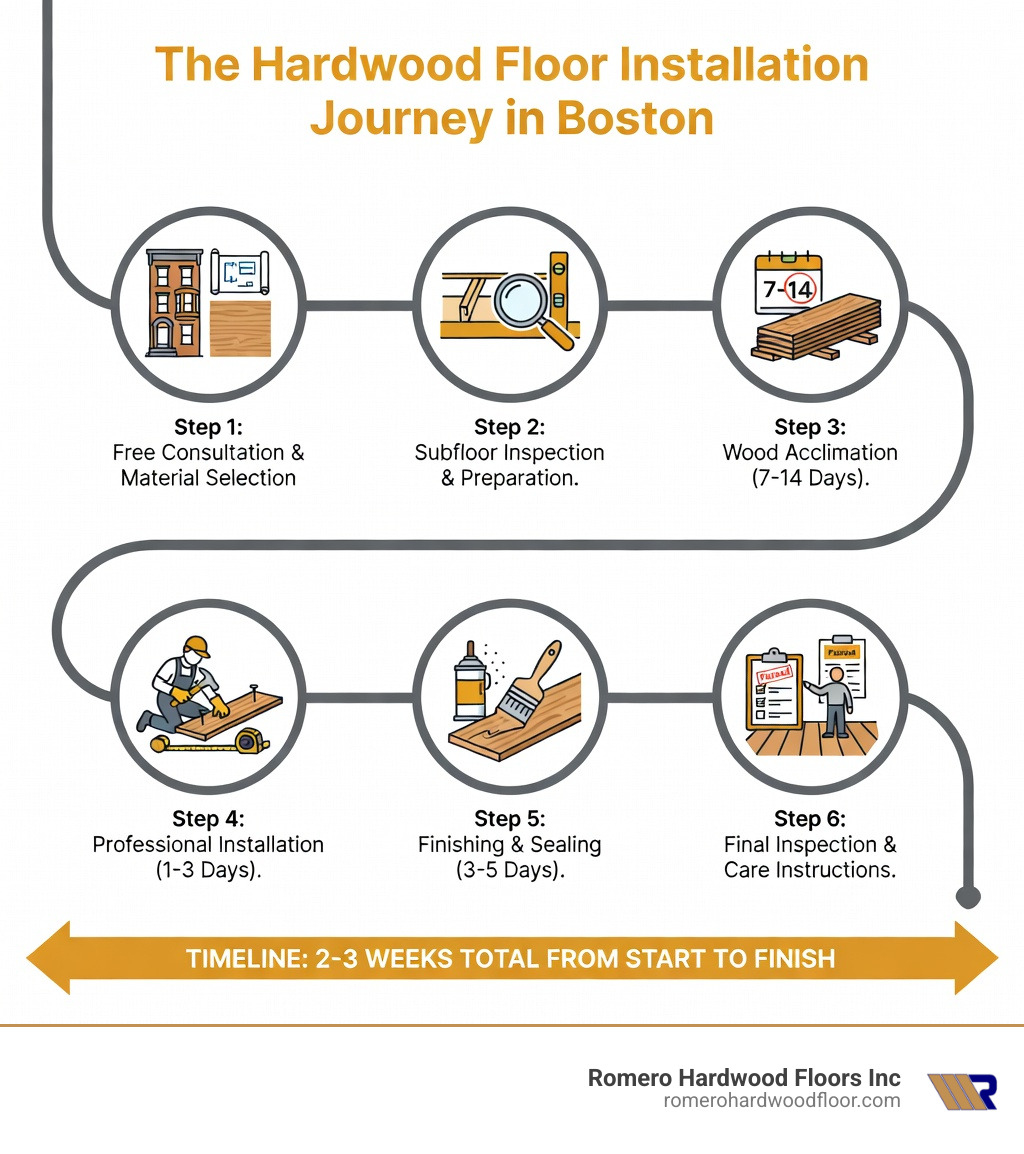
A great floor is 70% preparation and 30% installation. If you skip the prep, you’re asking for squeaks and gaps later.
Preparation and Acclimation
Wood is a living material. It breathes. Before we even think about a hammer, the wood must sit in your home for at least 7 days. This is called acclimation. It allows the wood to match the moisture levels of your specific environment.
We also perform rigorous moisture testing on your subfloor. If the subfloor is damp or uneven, we fix it first. While some might consider DIY Hardwood Floor Installation, the specialized moisture meters and leveling compounds we use are often the difference between a beautiful floor and a warped mess. For a full breakdown of what we do, see our Hardwood Floor Installation service page.
Long-Term Care and Maintenance
Once we’re done, the floor is yours to protect. We recommend:
- Humidity Control: Use a humidifier in the winter to prevent the wood from shrinking and a dehumidifier in the summer to prevent swelling.
- Cleaning: Use a dry microfiber mop. Avoid soaking the floor with water!
- Protection: Put felt pads on all furniture legs. Your chairs are the natural enemies of your finish.
Working with experienced Hardwood Floor Installation Contractors means you’ll get a floor that’s easier to maintain because it was installed correctly from day one.
Frequently Asked Questions about Boston Flooring
How long does the hardwood installation process take?
Generally, for a standard 1,200 sq ft home, you’re looking at:
- Acclimation: 7 days.
- Installation: 2-4 days.
- Sanding/Finishing (if unfinished): 3-5 days. Total time is usually around 2 weeks. Finding the Best Hardwood Floor Installers Near Me ensures this timeline is managed efficiently without cutting corners.
Can hardwood be installed in moisture-prone areas?
We generally advise against solid hardwood in bathrooms or basements. However, engineered hardwood is a fantastic alternative for these areas because its layered construction resists warping. We also use advanced moisture mitigation systems to protect the wood from below. If you’re looking for Flooring Contractors Near Me who understand these moisture challenges, we’ve got you covered.
What is the expected lifespan and value added?
Hardwood is one of the few home improvements that actually pays for itself. Industry data suggests that a new hardwood floor can increase your home’s value by over $7,000. With proper care, these floors can last 50 to 100 years. It’s not just a floor; it’s an heirloom. That is why choosing the right Contractor for Hardwood Flooring is so important.
Conclusion
At Romero Hardwood Floors Inc, we take pride in being a part of the Boston community. Since 2006, we’ve been based in Revere, MA, and have served neighbors from Beverly to Winthrop and everywhere in between. Our commitment is simple: competitive pricing, punctuality, and workmanship that we stand behind with a guarantee.
Whether you are looking to revitalize a historic Medford home or install modern wide-plank oak in a Somerville condo, we have the expertise to get it “Done Right.”
Ready to transform your space? Request an Estimate today and let’s get started on your dream floors!
